
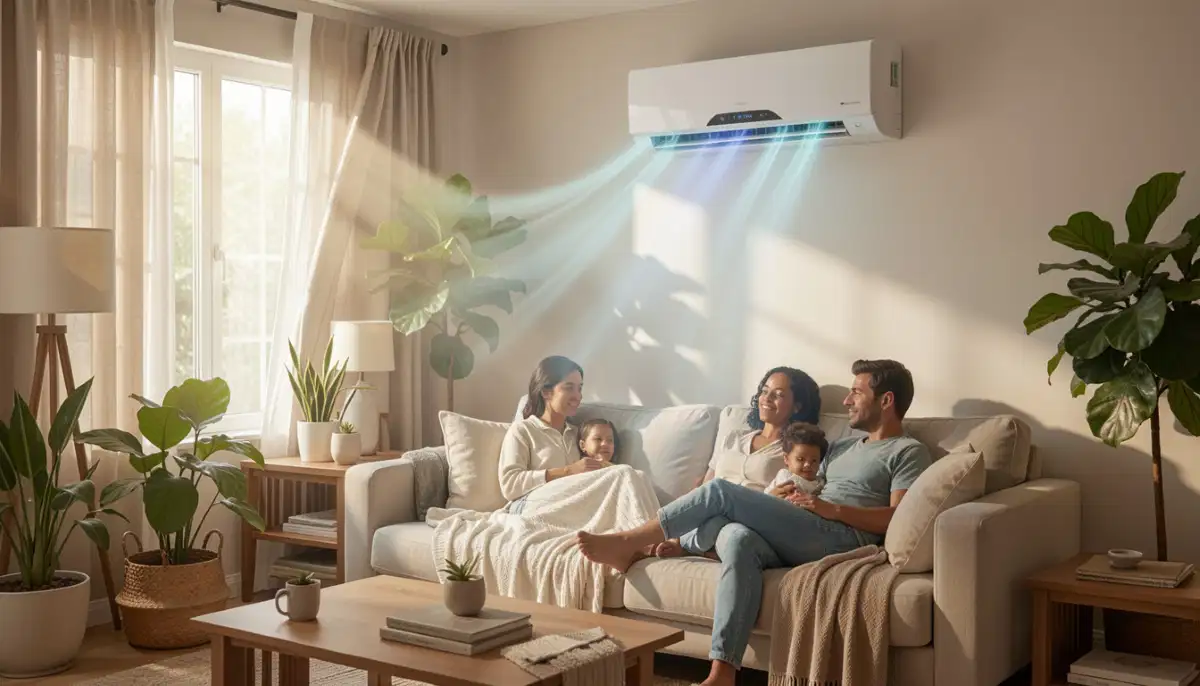
Want Better Sleep with Your Aircon?
Get free quotes from verified local specialists for smart AC controllers and aircon installation.
Find Aircon Specialists Near Me
Servicing Johannesburg, Pretoria, Cape Town, Durban, and across South Africa
Best Aircon Settings for Sleeping: The Perfect Night’s Sleep (No More Waking Up Cold)
🌙❄️ The complete guide to temperature, sleep mode, and timer settings for uninterrupted, comfortable sleep
You set the aircon to 20°C before bed. It feels great as you drift off. Then, at 3 AM, you wake up shivering. You reach for the remote, turn it off, and fall back asleep. An hour later, you wake up sweating. You turn it back on. The cycle repeats.
Sound familiar? You’re not alone. Millions of South Africans struggle with night-time aircon settings. The wrong settings mean disrupted sleep, morning dry throat, and higher electricity bills.
I’ve helped hundreds of homeowners solve this exact problem. The solution isn’t complicated—it’s about understanding how your body temperature changes during sleep and using your aircon’s features correctly.
In this guide, I’ll show you the optimal best aircon temperature for sleep, how to use sleep mode effectively, timer strategies for different bedtimes, and how to avoid common night-time aircon problems.
For more comfort guidance, check daytime temperature settings and humidity control guide. Ready for perfect sleep? Let’s go.
📋 Table of Contents
🧠 The Science: Why Your Body Needs Different Temperatures at Night
Your body’s temperature naturally changes during sleep. Understanding this helps you set your aircon correctly.
The natural sleep temperature cycle: As you fall asleep, your core body temperature drops by 1-2°C. This temperature drop is essential for initiating and maintaining sleep. Your body reaches its coolest point around 4-5 AM. As morning approaches, your temperature gradually rises, helping you wake up.
Why you wake up cold at 3 AM: You set the aircon to a temperature that feels comfortable when you first go to bed (say 20°C). But by 3 AM, your body temperature has dropped. That same 20°C now feels too cold. You wake up shivering.
The solution: Your aircon should be WARMER in the middle of the night than when you first go to bed. This is exactly what sleep mode does—it gradually increases the temperature as your body cools.
📌 The Key Insight:
Your ideal aircon temperature at bedtime (22-23°C) is NOT the same as your ideal temperature at 3 AM (24-25°C). Sleep mode automatically makes this adjustment. Use it every night.
Read Sleep Foundation temperature research.
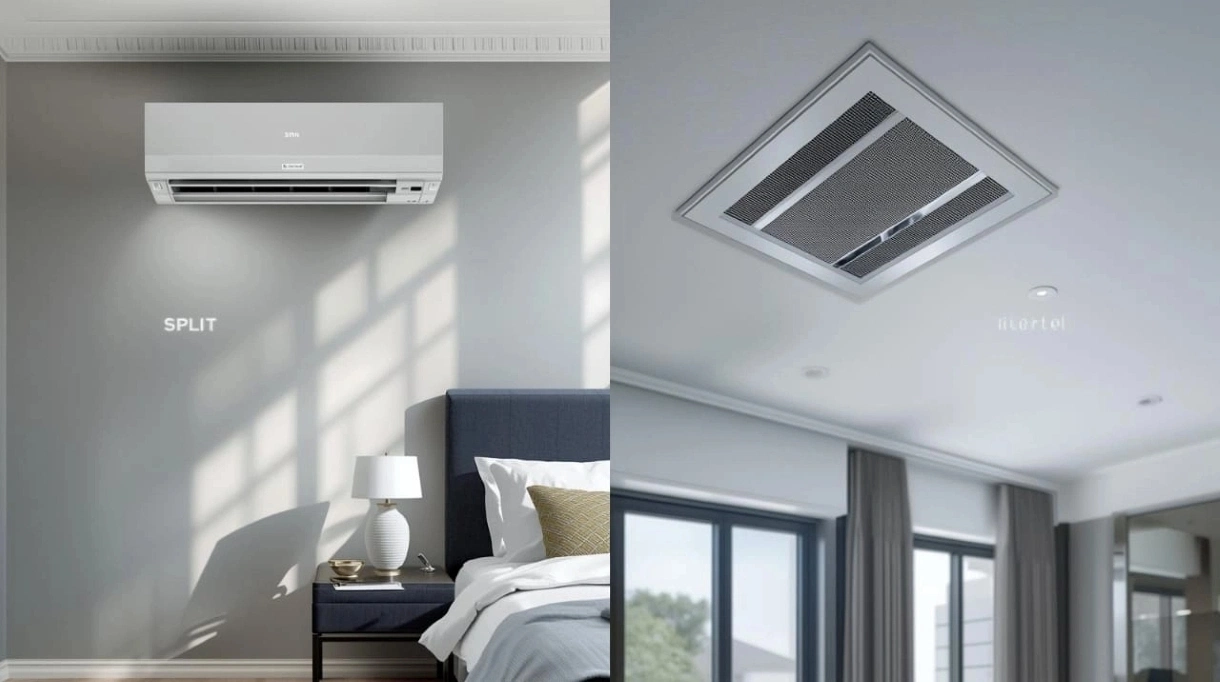
🌡️ The Optimal Temperature Range for Sleep
Research shows the ideal best temperature for sleeping with aircon is 18-22°C. However, this range depends on several factors.
General recommendations: For most adults, start at 22-23°C at bedtime. Use sleep mode to gradually increase to 24-25°C by early morning. This matches your body’s natural temperature drop.
Factors that affect your ideal temperature: Bedding thickness (thicker blankets allow higher temperatures). Pyjamas vs sleeping naked (less clothing needs cooler temperatures). Personal preference (some people run hot, others cold). Room humidity (higher humidity needs cooler temperatures). Age (elderly and infants need narrower temperature ranges).
How to find YOUR ideal temperature: Start at 22°C with sleep mode. If you wake up cold, increase starting temperature to 23°C. If you wake up hot, decrease starting temperature to 21°C. Adjust in 1°C increments until you find your sweet spot.
Read our daytime temperature guide.
😴 Sleep Mode Explained (And Why You Should Use It)
Aircon sleep mode is your best friend for night-time comfort. Here’s how it works and why you should use it every night.
What sleep mode does: When you activate sleep mode, your aircon gradually increases the temperature by 1-2°C over several hours. For example, if you set it to 22°C at 10 PM, sleep mode might increase to 23°C at 12 AM, then to 24°C at 2 AM. You won’t notice the gradual changes, but you’ll stop waking up cold at 3 AM.
Additional benefits of sleep mode: The fan runs slower and quieter (less noise disturbance). The compressor runs more efficiently (saves electricity). Some units also dim the display lights. Humidity control is optimised for night-time.
How to activate sleep mode: Look for a crescent moon icon on your remote (🌙). Press it before bed. On some remotes, it’s labelled “Sleep” or “Good Night.” On smart AC controllers, you can schedule sleep mode automatically.
Do all aircons have sleep mode? Most modern aircons (past 10-15 years) have sleep mode. Check your remote for the moon icon. If your unit doesn’t have sleep mode, use the timer to manually increase temperature (see next section).
✅ Pro Tip:
Use sleep mode EVERY night, not just when it’s hot. Even on mild nights, sleep mode maintains comfortable temperatures and saves electricity. Set it and forget it.
Want Automated Night-Time Aircon Control?
Get free quotes from verified local specialists for smart AC controllers and aircon installation.
Get Free Quotes From Local Specialists
Smart controllers from R1,500-R2,500 installed.
⏰ Timer Settings for Different Bedtimes
If your aircon doesn’t have sleep mode, or you want more control, use the timer function.
For a fixed bedtime (e.g., 10 PM – 6 AM): Set the “off timer” for 6 AM (turns off when you wake up). Set the temperature to 22-23°C. If you wake up cold, increase the starting temperature. Without sleep mode, you may still wake up cold—consider upgrading to a unit with sleep mode.
For variable bedtimes (using timer + manual adjustment): Set a timer to increase temperature by 1°C after 3 hours, and another 1°C after 6 hours. Most aircons only have one timer setting. For multiple adjustments, you need a smart AC controller.
For early morning cooling (summer only): Set a timer to turn ON 30 minutes before you wake up. This pre-cools the room for a comfortable morning. Only needed on very hot nights.
Read our smart AC setup guide for advanced timer programming.
📋 Complete Nighttime Settings Guide
Here’s your complete checklist for optimal air conditioner sleep settings:
Temperature: Start at 22-23°C. Use sleep mode to increase to 24-25°C by morning. Adjust based on your personal comfort.
Fan speed: Set to Auto or Low. High fan speeds create cold drafts and noise that disturb sleep. Auto allows the unit to adjust fan speed based on cooling demand.
Mode: Cool mode in summer. Heat mode in winter (if you have a heat pump). Never use Dry mode at night (doesn’t cool enough for hot nights).
Swing/Air direction: Set to the highest position (air blows toward the ceiling, not directly at the bed). Direct airflow causes dry eyes, dry throat, and stiff neck. Angle louvers upward.
Sleep mode: ON (always). This is the most important setting.
Timer: Set to turn off 30-60 minutes before you wake up (saves electricity, morning is cooler).
Display lights: Dim or turn off if possible. Light pollution disrupts sleep. Some remotes have a “Display Off” button.
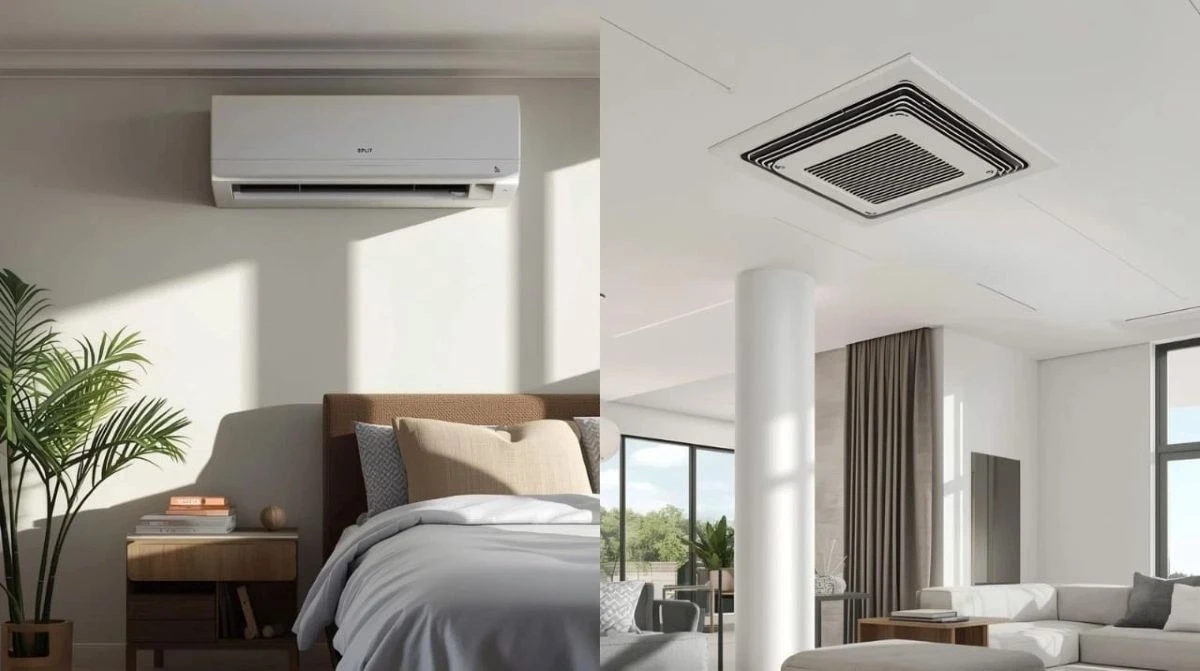
🔧 Solving Common Nighttime Problems
Problem #1: “I wake up with a dry throat and stuffy nose.” Solution: Your aircon is removing too much humidity or blowing directly on you. Angle louvers upward. Set temperature higher (23-24°C). Use a humidifier if humidity drops below 30%. Drink water before bed.
Problem #2: “The aircon is too noisy at night.” Solution: Use sleep mode (slower fan speed = quieter). Clean your filter (dirty filters cause noise). Check for loose panels or debris in the unit. If the unit is old, consider replacing with a quieter inverter model (18-22 dB vs 35-45 dB).
Problem #3: “I wake up sweating in the middle of the night.” Solution: Your starting temperature is too high, or sleep mode isn’t working. Decrease starting temperature by 1-2°C. Check that sleep mode is activated. If you have a non-inverter unit, it may be short cycling (not running long enough to dehumidify).
Problem #4: “The room feels clammy even though it’s cool.” Solution: Your aircon isn’t removing enough humidity. Likely oversized (cools too quickly). Run the aircon for longer periods at a higher temperature (e.g., 24°C for 2 hours instead of 20°C for 1 hour). Consider a dehumidifier for very humid climates (Durban).
Problem #5: “My electricity bill is high from running the aircon all night.” Solution: Use sleep mode (saves 10-20%). Set a timer to turn off 1 hour before you wake up. Set temperature to 23-24°C (not 18-20°C). Ensure your room is well-sealed (no cool air escaping).
Read our humidity control guide and energy-saving guide.
👶 Special Considerations for Children and Babies
Children and babies have different temperature needs and are more vulnerable to temperature extremes.
Recommended temperature for babies (0-12 months): 20-22°C (slightly warmer than adults). Use sleep mode. Never blow air directly on the baby. Dress baby in a sleep sack or appropriate pyjamas. Check baby’s chest and neck for signs of being too hot or cold. Follow SIDS prevention guidelines (avoid overheating).
Recommended temperature for toddlers and young children: 20-23°C. Use sleep mode. Ensure air doesn’t blow directly on the child. Use a room thermometer to monitor temperature. Children are less able to regulate their body temperature than adults.
Safety tips for children’s rooms: Ensure the aircon is installed out of reach. Use a guard or cover if the unit is low-mounted. Set a timer to turn off after bedtime (saves energy while child sleeps). Check that the drain line is clear (prevents water leaks).
Signs your child is too cold: Cold hands and feet, shivering, waking frequently, curling into a ball. Increase temperature by 1-2°C.
Signs your child is too hot: Sweaty hair or neck, flushed cheeks, restless sleep, heat rash. Decrease temperature by 1-2°C.
Read our small room aircon guide for nursery recommendations.
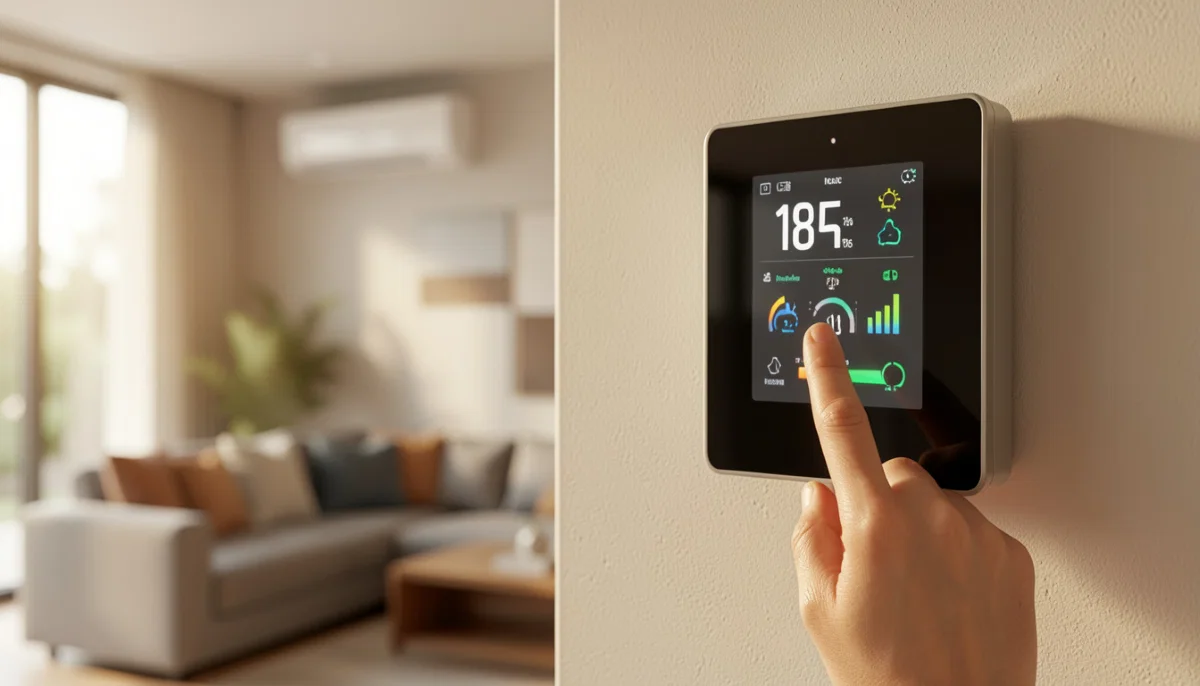
📱 Using Smart Controls for Automated Night Settings
Smart AC controllers (R1,500-R2,500) take the guesswork out of night-time settings.
What smart controllers can do: Schedule different temperatures for different times of night (e.g., 10 PM: 22°C, 12 AM: 23°C, 2 AM: 24°C, 5 AM: off). Geofencing turns off the aircon when you leave the bedroom (if you have motion sensors). Energy monitoring shows exactly what your night cooling costs. Remote control lets you adjust settings without getting out of bed.
Recommended smart AC controllers for South Africa: Sensibo (R1,800-R2,500) works with most aircons, excellent scheduling features. Ambi Climate (R1,500-R2,000) focuses on comfort optimisation. Tado (R2,000-R2,500) good for whole-home systems.
Smart features worth paying for: Weekly scheduling (different settings for weekdays vs weekends). Temperature graphing (see how your room temperature changes overnight). Humidity monitoring (alerts if humidity is too high or low). Integration with Google Home or Alexa (voice control).
Read our smart thermostat guide and home Wi-Fi guide.
💰 Energy Savings from Night Settings
Using sleep mode and proper night settings saves significant electricity. Here’s how:
Sleep mode savings: By increasing temperature by 2°C overnight, sleep mode saves 10-20% on night-time cooling. For a typical 12,000 BTU aircon used 8 hours nightly, that’s R20-R40 per month saved.
Timer savings: Turning off the aircon 1 hour before waking saves another 5-10% (R10-R20 per month).
Higher temperature savings: Setting to 23°C instead of 20°C saves 15-30%. This is the biggest factor.
Total potential savings: By combining sleep mode, timer, and proper temperature settings, you can save 30-50% on night-time cooling. For a household running aircon 8 hours nightly during summer, that’s R100-R200 per month saved.
Read our energy-saving guide and running costs guide.
Read Energy Department night cooling savings guidelines.
📋 Quick Reference: Ideal Night Settings by Season
Summer (hot nights, 25°C+): Mode: Cool. Start temperature: 22-23°C. Sleep mode: ON. Fan speed: Auto or Low. Timer: Off at 5-6 AM. Air direction: Upward (not at bed).
Mild summer (warm nights, 20-25°C): Mode: Cool or Fan only. Start temperature: 23-24°C. Sleep mode: ON. Fan speed: Low. Timer: Off 1 hour before waking. Consider using only a ceiling fan instead.
Winter (cold nights, for heat pump models): Mode: Heat. Start temperature: 18-20°C. Sleep mode: ON (gradually decreases temperature). Fan speed: Auto. Timer: Off 30 minutes before waking. Wear warm pyjamas rather than increasing temperature.
Shoulder seasons (spring/autumn): Use natural ventilation when possible (open windows). Only use aircon on extreme temperature nights. Consider a fan instead.
Read our seasonal maintenance guide.
❓ Frequently Asked Questions
What is the best temperature for sleeping with aircon?
The best temperature for sleeping with aircon is 22-23°C at bedtime, gradually increasing to 24-25°C by early morning. Use sleep mode to make this automatic. This matches your body’s natural temperature drop during sleep. Adjust 1-2°C based on personal preference and bedding thickness.
What does sleep mode do on an air conditioner?
Aircon sleep mode gradually increases the temperature by 1-2°C over several hours as your body cools during sleep. It also runs the fan slower and quieter, dims display lights, and saves electricity. Use it every night for better sleep and lower bills.
Should I leave my aircon on all night?
Yes, if you use sleep mode and proper settings. Running your aircon all night with sleep mode (22-23°C starting temperature) is comfortable and energy-efficient. Use a timer to turn it off 30-60 minutes before you wake up. For non-inverter units, consider turning off after 4-5 hours.
Why do I wake up with a dry throat when using aircon?
Air conditioners remove humidity from the air. If humidity drops too low (below 30%), you experience dry throat, stuffy nose, and dry eyes. Solutions: angle louvers upward (not at your face), set temperature higher (23-24°C), use a humidifier, drink water before bed.
Is it safe to sleep with aircon on every night?
Yes, with proper settings. Maintain temperature between 20-24°C. Ensure air doesn’t blow directly on you. Keep humidity between 40-60%. Clean filters monthly to prevent mould and bacteria. Most health concerns about aircons come from dirty units, not the technology itself.
What temperature should a baby’s room be with aircon?
For babies (0-12 months), set aircon to 20-22°C. Use sleep mode. Never blow air directly on the baby. Dress baby in a sleep sack (not loose blankets). Check baby’s chest and neck for signs of being too hot or cold. Follow SIDS prevention guidelines—overheating is a risk factor.
Why does my aircon turn off and on repeatedly at night?
This is short cycling. Common causes: oversized unit (cools too quickly), dirty filter (restricted airflow), thermostat issues, or low refrigerant. Short cycling disrupts sleep and damages your compressor. Read our short cycling guide for solutions.
Can I use a fan instead of aircon at night?
Yes, on mild nights (below 25°C). Ceiling fans use much less electricity (20-50 watts vs 1,000+ watts for aircon). Fans also create white noise that helps some people sleep. However, fans don’t dehumidify—on humid nights, aircon is better.
How do I stop my aircon from blowing directly on me at night?
Angle the louvers upward toward the ceiling. The cool air will circulate without direct draft. If your unit has a “Swing” button, set it to a fixed upward position (not swinging). Consider repositioning your bed if possible. For night cooling comfort, indirect airflow is best.
What is the most energy-efficient way to use aircon at night?
For sleep comfort and efficiency: set temperature to 23°C, activate sleep mode, use a timer to turn off 1 hour before waking, ensure room is well-sealed, clean filter monthly. This combination saves 30-50% on night-time cooling compared to running at 18°C without sleep mode.
✅ Final Thoughts: Sleep Better Tonight
Perfect air conditioner sleep settings aren’t complicated. Use sleep mode. Set the right starting temperature. Angle louvers upward. Clean your filter monthly.
Key takeaways for night-time aircon use:
- Start at 22-23°C – this matches your bedtime comfort needs.
- Use sleep mode every night – gradually increases temperature as your body cools.
- Angle louvers upward – prevents direct drafts and dry throat.
- Set fan to Auto or Low – quieter and avoids cold drafts.
- Use a timer – turn off 30-60 minutes before waking.
- For babies: 20-22°C – never blow air directly on them.
- Clean filters monthly – prevents mould and ensures efficient operation.
Your action plan: First, check your remote for the sleep mode button (moon icon). Second, set your bedtime temperature to 22-23°C. Third, activate sleep mode. Fourth, angle louvers upward. Fifth, request quotes from local specialists for a smart AC controller if you want automated scheduling.
Ready for Perfect Sleep Temperatures?
Get free quotes from verified local specialists for smart AC controllers and aircon installation.
📞 Call us: 073 138 4726 for immediate help finding aircon specialists near you.
Free site inspections •
Smart thermostat guide •
Our guarantees
📚 Official resources & standards referenced:
- Sleep Foundation – Sleep temperature research and optimal bedroom conditions
- Department of Energy – Night cooling savings and energy efficiency guidelines
- ASHRAE – Thermal comfort standards for sleeping environments
Information provided for general guidance based on sleep research and South African climate conditions. Consult a paediatrician for specific baby sleep temperature recommendations.
Written by: Innocent T Hanyani
Construction & Home Services Industry Specialist | 21+ Years Experience
Innocent T Hanyani has over two decades of experience working across South Africa’s construction, maintenance, and home services sectors. Throughout his career, he has worked closely with contractors, service providers, and property owners, gaining practical insight into how projects are quoted, managed, and completed. His work focuses on helping homeowners understand how to find reliable contractors, compare quotes, and avoid common industry pitfalls when hiring service professionals. His insights are based on practical industry experience as well as ongoing research into contractor platforms, service marketplaces, and hiring trends across South Africa.