

Struggling with Humidity in Your Home?
Get free quotes from verified local specialists for aircon installation and humidity control solutions.
Find Aircon Specialists Near Me
Servicing Durban, Cape Town, Johannesburg, and across South Africa
How Aircon Reduces Humidity: Beat SA’s Sticky Summers
💧🌊 The complete guide to how air conditioners remove moisture—essential reading for Durban and coastal homeowners
You live in Durban. It’s 28°C outside. Your aircon is set to 22°C and running constantly. But something feels wrong. The air feels clammy. Your skin feels sticky. You’re still uncomfortable even though the temperature is fine.
That’s humidity. And in South Africa’s coastal regions—Durban, KZN, parts of the Eastern Cape—humidity is a year-round battle. An aircon that only cools without removing moisture leaves you with a cool but clammy room. That’s not comfort.
I’ve helped hundreds of coastal homeowners understand that temperature is only half the story. The other half is aircon humidity reduction. A properly functioning aircon removes moisture as it cools. But if your unit is oversized, poorly maintained, or incorrectly set, it won’t dehumidify effectively.
In this guide, I’ll explain exactly how air conditioner removes humidity, why it matters for your comfort and health, and how to optimise your system for maximum moisture removal—especially in hot, humid climates.
For more humidity guidance, check humidity control guide and air quality benefits. Ready to beat the sticky summers? Let’s go.
📋 Table of Contents
🔬 The Science: How Air Conditioners Remove Moisture
Understanding how air conditioner removes humidity helps you use it more effectively.
The process step by step: Your aircon pulls warm, humid air from your room through a filter. This air passes over freezing-cold evaporator coils (typically 4-10°C). The cold coils cause moisture in the air to condense—just like water droplets form on a cold glass of iced tea on a hot day. These water droplets drip into a drain pan and flow out through a drain pipe to the outside of your home. The now-drier, cooler air is blown back into your room.
Why this is called “latent cooling”: The energy used to turn water vapour into liquid (latent heat of vaporisation) is significant. This energy is removed from your room along with the moisture. This is why dehumidification also cools the air—it’s a two-for-one benefit.
Key point: Dehumidification happens naturally during normal cooling operation. The longer your aircon runs, the more moisture it removes. Short cycles (on/off frequently) remove very little humidity.
📌 The Critical Insight:
Your aircon removes the MOST humidity when it runs for LONG periods at MODERATE temperatures. Short bursts at very low temperatures (18°C) remove very little moisture, leaving your room cool but clammy.
Read our humidity control guide.
🌡️ Why Humidity Matters More Than Temperature
In hot, humid climates, humidity affects your comfort as much as—or more than—temperature.
The heat index (feels-like temperature): On a 32°C day with 80% humidity (typical Durban summer), the “feels like” temperature is 42°C. Your body can’t cool itself efficiently because sweat doesn’t evaporate. This is why you feel miserable even when the aircon is running.
The comfort-cost connection: Because high humidity makes you feel warmer, you’re tempted to set your aircon to a lower temperature (18°C instead of 23°C). This wastes electricity. Proper humidity control allows you to set the temperature higher while feeling just as comfortable.
Health impacts of high humidity: Mould growth on walls, ceilings, and furniture. Dust mites thrive (allergy trigger). Respiratory issues worsen. Musty odours throughout the home. Condensation on windows (can damage window frames).
Health impacts of low humidity (from over-dehumidification): Dry skin and eyes. Respiratory irritation. Static electricity. Damage to wooden furniture.
⚠️ The Durban Reality:
In coastal KZN, humidity often exceeds 80% in summer. A correctly sized, well-maintained inverter aircon is not a luxury—it’s essential for comfort and mould prevention. An oversized unit that short cycles will leave your home cool but damp, leading to mould problems.
📊 Ideal Humidity Levels for South African Homes
The ideal indoor relative humidity (RH) for comfort and health is 40-60%. Here’s what different ranges mean for you:
Below 30% (too dry): Dry skin, irritated eyes, static electricity, respiratory irritation. More common in Johannesburg’s dry winters. Run a humidifier or use houseplants.
30-40% (slightly dry): Acceptable but not ideal. Most people are comfortable. Fine for short periods.
40-60% (IDEAL): Optimal comfort, health, and mould prevention. This is your target range. Most people feel comfortable at 23-24°C in this humidity range.
60-70% (too humid): Clammy feeling, mould risk increases, dust mites thrive, musty smells may appear. You may feel uncomfortable even at 22°C. Take action to reduce humidity.
Above 70% (problematic): High mould risk, significant health concerns, condensation on windows, potential structural damage. Immediate action needed.
How to measure humidity: Buy a hygrometer (R100-R300 at hardware stores or online). Place it in your living area. Check it regularly, especially during humid seasons. Without one, you’re guessing.
Need Help with Humidity Control?
Get free quotes from verified local specialists for aircon installation, maintenance, and dehumidification solutions.
Get Free Quotes From Local Specialists
Free site inspections available.
⚙️ How to Maximise Your Aircon’s Dehumidification
To get the best air conditioner moisture control, follow these guidelines, especially in humid climates:
1. Don’t oversize your aircon (CRITICAL). An oversized aircon cools the room too quickly (5-10 minutes) then shuts off. It never runs long enough to remove significant humidity. You end up with a cool but clammy room. Use our BTU calculator to size correctly.
2. Run longer, not colder. Instead of setting to 18°C to feel cooler, set to 23°C but run for longer periods. The extended run time removes more moisture. You’ll feel more comfortable at a higher temperature because the air is drier.
3. Clean your filter monthly. A dirty filter restricts airflow across the coils. Reduced airflow means less moisture condenses. Your dehumidification drops by 30-50%. Clean your filter every 2-4 weeks in humid climates.
4. Use an inverter aircon. Inverter units run continuously at low speed, providing excellent dehumidification. Non-inverter units cycle on and off, reducing moisture removal. In humid climates, inverter is essential.
5. Use Dry mode on mild humid days. When it’s humid but not extremely hot, use Dry mode (water droplet icon). This prioritises dehumidification over cooling. The fan runs slower, allowing more moisture to condense on the coils.
6. Ensure proper drain line function. A blocked drain line prevents water from exiting your home. The water backs up and can leak inside. Worse, it stops your aircon from removing more moisture. Flush your drain line with vinegar every 3 months. Read our drain line cleaning guide.
Read our inverter guide.
🔄 The Short Cycling Problem (Oversized Units)
Short cycling is the #1 cause of poor dehumidification. Here’s why it’s so damaging in humid climates:
What is short cycling? Your aircon turns on, runs for 5-10 minutes, turns off, then turns back on 5-10 minutes later. This pattern repeats constantly. The unit never runs long enough to remove significant moisture.
Why oversized units short cycle: An oversized aircon has too much cooling capacity for the room size. It cools the room to the set temperature in 5-10 minutes. The thermostat says “target reached” and shuts off. But the room still has high humidity. You end up cool but clammy.
The solution: Replace with a correctly sized unit. For a 15m² bedroom in Durban, you need 9,000 BTU—not 12,000 or 18,000 BTU. Use our BTU calculator.
If you already have an oversized unit: Try running it at a higher temperature (24-25°C) to extend run times. Consider opening doors to adjacent rooms to increase the cooling load. For a permanent solution, replace with a correctly sized inverter unit.
Read our short cycling guide.
💧 The Drain Line: Where Removed Moisture Goes
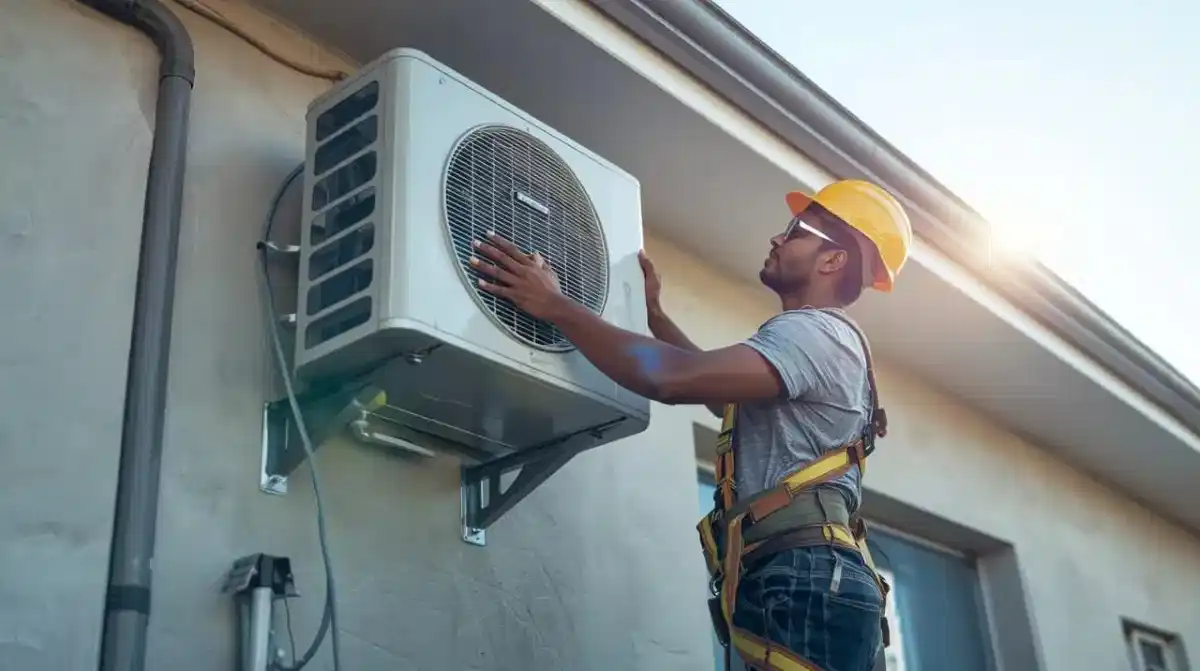
Your aircon’s drain line is the unsung hero of humidity management. If it’s blocked, your aircon stops removing moisture.
Why the drain line matters: Every litre of water your aircon removes from the air flows through the drain line. In humid climates, a single aircon can remove 10-20 litres of water per day. That’s a lot of moisture that would otherwise be in your home.
Signs of a blocked drain line: Water leaking from indoor unit. No water dripping from outside drain pipe (on a humid day). Musty smell from aircon. Standing water in drain pan.
How to check your drain line: On a humid day, run your aircon for 30 minutes. Go outside and look at the drain pipe exit. Is water dripping? If not, your drain line is likely blocked.
How to clear a blocked drain line: Use a wet/dry vacuum to suck the blockage from the outside end. Pour a mixture of 1 part white vinegar to 2 parts water down the pipe. Flush with clean water. Repeat every 3 months for prevention.
Read our complete drain line cleaning guide and water leak guide.
🌍 Regional Guide: Humidity by South African Region
Different parts of South Africa face different humidity challenges. Here’s what you need to know for indoor climate control:
Durban / KwaZulu-Natal (High humidity year-round, 70-90%): This is South Africa’s most humid region. You need excellent dehumidification. Oversized units perform terribly here. Choose a correctly sized inverter aircon. Clean filters every 2 weeks. Flush drain lines monthly. Consider a standalone dehumidifier for the rainy season. Check for mould regularly.
Cape Town / Western Cape (Moderate humidity, wet winters, 60-80%): Winter humidity and dampness can cause mould. Use Dry mode during rainy winter days. Ensure proper ventilation. Check for condensation on windows. Clean filters monthly.
Port Elizabeth / Eastern Cape (Moderate coastal humidity, 60-75%): Similar to Cape Town but less extreme. Standard practices work well. Clean filters monthly. Ensure proper drain line function.
Gauteng (Low humidity, dry summers, 30-50%): Humidity is rarely a problem. Focus on cooling. However, during summer thunderstorms, brief humidity spikes occur. Your aircon will handle them naturally in Cool mode. In winter, you may need a humidifier.
Mpumalanga / Lowveld (High humidity in summer, 60-80%): Similar to KZN but seasonal. Summer humidity can be oppressive. Follow Durban recommendations during summer months.
Read our seasonal maintenance guide.
💨 When Your Aircon Isn’t Enough
Sometimes, even a properly sized aircon can’t keep up with extreme humidity. Consider these additional solutions:
Standalone dehumidifier (R2,000-R5,000): Ideal for basements, laundry rooms, or homes in extremely humid areas (Durban). Uses less electricity than running your aircon just for dehumidification (300-500 watts vs 1,000+ watts). Can run 24/7 independently of temperature. Empty the water tank or connect to a drain.
Improve home sealing: Gaps around windows and doors let humid outside air in. Seal with weatherstripping. This reduces the moisture load on your aircon. Check for gaps under doors—use draft stoppers.
Use exhaust fans: Run bathroom exhaust fans during and after showers (major moisture source). Run kitchen exhaust fans when cooking. Remove moisture at the source before it spreads through your home.
Fix structural issues: Damp rising through floors or leaking roofs adds significant moisture. Address these separately from your aircon. Check for leaks in the roof, foundation, or plumbing.
Use moisture-absorbing products: In cupboards and wardrobes, use silica gel or calcium chloride dehumidifiers (R50-R200). These are cheap and effective for small spaces.
Read our damp-proofing guide and waterproofing cost guide.
❌ Common Humidity Control Mistakes
Avoid these common errors that reduce ac reduce humidity effectiveness:
Mistake #1: Setting the temperature too low (18°C). This causes short cycling, which reduces dehumidification. Set to 23-24°C for longer run times and better moisture removal.
Mistake #2: Buying an oversized aircon. “More power must be better” is wrong in humid climates. An oversized unit cools quickly but doesn’t dehumidify. Size correctly using our BTU calculator.
Mistake #3: Ignoring the drain line. A blocked drain line stops moisture removal. Check that water is dripping outside on humid days. Flush with vinegar every 3 months.
Mistake #4: Using a non-inverter aircon in humid climates. Non-inverter units cycle on and off, reducing dehumidification. Inverter units run continuously, removing more moisture.
Mistake #5: Setting fan speed to High. High fan speed moves air across the coils faster, reducing contact time and moisture removal. Use Auto or Low fan speed for better dehumidification.
Mistake #6: Closing all doors and windows too tightly. While you want to keep humid air out, some ventilation is still needed. Stale air can become stuffy. Consider an HRV (heat recovery ventilator) for fresh air without humidity.
Read our maintenance checklist.
✅ Quick Checklist for Humid Climates
Use this checklist to optimise aircon humidity reduction in your home:
- Buy a hygrometer (R100-R300) to measure indoor humidity
- Ensure your aircon is correctly sized (use BTU calculator)
- Upgrade to an inverter aircon if you have non-inverter
- Clean filters every 2 weeks during humid season
- Set temperature to 23-24°C (not 18°C)
- Use Auto or Low fan speed (not High)
- Check drain line drip monthly—flush with vinegar quarterly
- Use Dry mode on mild humid days
- Run bathroom and kitchen exhaust fans when producing moisture
- Seal gaps around windows and doors
- Consider a standalone dehumidifier for extreme humidity
- Schedule annual professional service (includes coil cleaning)
❓ Frequently Asked Questions
How does an air conditioner remove humidity?
How air conditioner removes humidity is through condensation. Warm, humid air passes over cold evaporator coils. Moisture condenses on the coils (like water on a cold glass), drips into a drain pan, and flows outside through a drain pipe. The drier air is then blown back into your room. This happens naturally during cooling.
What is the best temperature for humidity control?
For optimal air conditioner moisture control, set your temperature to 23-24°C. This allows the unit to run for longer periods, removing more moisture. Lower temperatures (18°C) cause short cycling, which reduces dehumidification. In humid climates, run longer at moderate temperatures.
Why is my house still humid with the aircon running?
Common causes: your aircon is oversized (cools too quickly, doesn’t dehumidify), the filter is dirty (reduces airflow), the drain line is blocked (water can’t exit), or you have a significant moisture source (leak, poor sealing). Start by cleaning your filter and checking your drain line drip.
Should I use dry mode or cool mode for humidity?
Use Dry mode when it’s humid but not extremely hot (24-28°C). Dry mode prioritises dehumidification over cooling. Use Cool mode on hot days (over 28°C)—it still removes humidity while cooling. For most Durban summers, Cool mode at 23-24°C is sufficient.
What size aircon do I need for a humid climate?
The same BTU calculation applies (600 BTU per m²), but DO NOT oversize. In humid climates, an oversized unit is worse than an undersized one because it short cycles and doesn’t dehumidify. Size correctly using our BTU calculator. Inverter units are strongly recommended.
Why is Durban so humid and how do I manage it?
Durban’s subtropical climate and proximity to the warm Indian Ocean create consistently high humidity (70-90%). To manage it: use a correctly sized inverter aircon (not oversized), clean filters every 2 weeks, flush drain lines monthly, set temperature to 23-24°C, consider a standalone dehumidifier, and use exhaust fans.
Can a dirty aircon filter cause humidity problems?
Yes. A dirty filter restricts airflow across the evaporator coils. Reduced airflow means less moisture condenses on the coils. Your aircon removes less humidity, leaving your home clammy. Clean your filter every 2-4 weeks—in humid climates, every 2 weeks.
How do I know if my aircon is removing enough humidity?
Buy a hygrometer (R100-R300). Measure humidity while the aircon runs. Aim for 40-60%. Also check: water should drip from the outside drain pipe on humid days. The room should feel comfortable, not clammy. Trust how you feel—your body knows.
Does fan speed affect dehumidification?
Yes. Lower fan speeds improve dehumidification because air spends more time in contact with the cold coils, allowing more moisture to condense. Use Auto or Low fan speed for better humidity control. High fan speed prioritises cooling over dehumidification.
Do I need a dehumidifier if I have an aircon?
In most of South Africa, no—a properly sized, well-maintained aircon handles humidity effectively. However, in extremely humid areas (Durban, KZN) or for basements, a standalone dehumidifier can help. Dehumidifiers use less electricity (300-500 watts) than running your aircon just for dehumidification (1,000+ watts).
✅ Final Thoughts: Beat the Sticky Summers
In hot, humid climates like Durban, aircon humidity reduction is just as important as cooling. A clammy 22°C feels worse than a dry 24°C. Focus on dehumidification, not just temperature.
Key takeaways for humid climates:
- Size matters—don’t oversize. Oversized units short cycle and don’t dehumidify.
- Inverter aircons are essential – they run continuously, removing more moisture.
- Set to 23-24°C, not 18°C – longer run times = better dehumidification.
- Clean filters every 2 weeks – dirty filters kill dehumidification.
- Check drain line drip monthly – no drip = no dehumidification.
- Use Auto or Low fan speed – slower airflow = more moisture removal.
- Consider a standalone dehumidifier – for extreme humidity or basements.
Your action plan: First, buy a hygrometer and measure your home’s humidity. Second, check that water is dripping from your outside drain pipe. Third, clean your filter today. Fourth, ensure your aircon is correctly sized (not oversized). Fifth, request quotes from local specialists for inverter aircon installation or maintenance.
Ready to Beat the Sticky Summers?
Get free quotes from verified local specialists for aircon installation and humidity control solutions.
📞 Call us: 073 138 4726 for immediate help finding aircon specialists near you.
Free site inspections •
Drain line cleaning •
Our guarantees
📚 Official resources & standards referenced:
- ASHRAE – Humidity control standards for hot climates and indoor environmental quality
- SABS – Moisture management standards and indoor air quality guidelines
- Department of Energy – Humidity and energy efficiency guidelines
Information provided for general guidance based on South African climate conditions, particularly coastal regions. Always consult a certified professional for system sizing and installation.
Written by: Innocent T Hanyani
Construction & Home Services Industry Specialist | 21+ Years Experience
Innocent T Hanyani has over two decades of experience working across South Africa’s construction, maintenance, and home services sectors. Throughout his career, he has worked closely with contractors, service providers, and property owners, gaining practical insight into how projects are quoted, managed, and completed. His work focuses on helping homeowners understand how to find reliable contractors, compare quotes, and avoid common industry pitfalls when hiring service professionals. His insights are based on practical industry experience as well as ongoing research into contractor platforms, service marketplaces, and hiring trends across South Africa.