
Planning an Industrial Facility?
Get free quotes from verified industrial aluminium specialists. Compare industrial doors options for your warehouse or factory.
Get Free Industrial Door Quotes
Servicing Gauteng, Mpumalanga, Johannesburg, Pretoria, and industrial areas
Aluminium Doors for Warehouses & Factories: Industrial Guide SA
🏭 The complete guide to specifying, installing, and maintaining doors for industrial environments
Let me describe a problem I see all too often. A warehouse manager in Gauteng calls me in frustration. Their standard domestic-grade aluminium sliding door lasted barely two years in their factory. The rollers wore out. The track bent. The frame is damaged. Forklifts accidentally bumped it, and the lightweight frame couldn’t take the impact. Now they’re facing a full replacement – and downtime that costs them thousands per hour.
Here’s the truth. Residential and even standard commercial doors are NOT designed for industrial environments. Warehouses and factories have unique demands: heavy traffic, forklift impacts, dust, temperature variations, and security requirements. You need industrial doors built for the job.
In this complete guide to factory doors, I’ll cover everything you need to know about selecting aluminium doors warehouses factories. You’ll learn about door types (sliding, folding, swing, high-speed), frame specifications, hardware requirements, safety features, cost factors, and maintenance. By the end, you’ll know exactly what heavy duty doors to specify for your industrial facility.
For more industrial guidance, read our commercial doors guide, sliding doors guide, or garage doors guide. Ready to spec industrial doors? Let’s dive in.
📋 Table of Contents – Industrial Door Guide
🏭 Industrial vs Commercial vs Residential Doors
Understanding the differences helps you specify the right industrial doors.
| Feature | Residential | Commercial | Industrial (Warehouse/Factory) |
|---|---|---|---|
| Frame thickness | 1.2-1.4mm | 1.6-2.0mm | 2.0-3.0mm (reinforced) |
| Impact resistance | Low | Moderate | High (forklift bumps, pallet strikes) |
| Cycle life (operations per day) | 5-20 | 20-100 | 100-500+ (high-frequency) |
| Weather sealing | Good | Good | Heavy-duty (dust, temperature control) |
| Dust resistance | Low | Moderate | High (sealed tracks, gaskets) |
| Automation | Optional | Common | Essential (often with sensors) |
| Safety features | Basic | Standard | Advanced (safety edges, photocells, warning lights) |
| Expected lifespan | 20-30 years | 25-35 years | 25-40 years (with maintenance) |
| Cost per m² (installed) | R4,500 – R8,000 | R6,000 – R12,000 | R8,000 – R20,000+ |
Why industrial doors cost more: Heavier frames (2.0-3.0mm vs 1.2-1.4mm), reinforced hardware, higher cycle ratings, advanced safety features, and specialised installation. The premium is worth it – an industrial door will last decades under heavy use, while a residential door would fail within months.
According to SANS 10400 industrial building standards and SABS door safety standards, industrial doors must meet stricter safety and durability requirements.
⚠️ Warning: Never Use Residential Doors in Industrial Settings
Residential-grade aluminium doors warehouses factories applications will fail rapidly. Forklift impacts, high-frequency operation, dust, and temperature variations will destroy lightweight doors. Always specify industrial-grade products designed for daily heavy use. The upfront savings are not worth the downtime and replacement costs.
🚪 Best Door Types for Warehouses & Factories
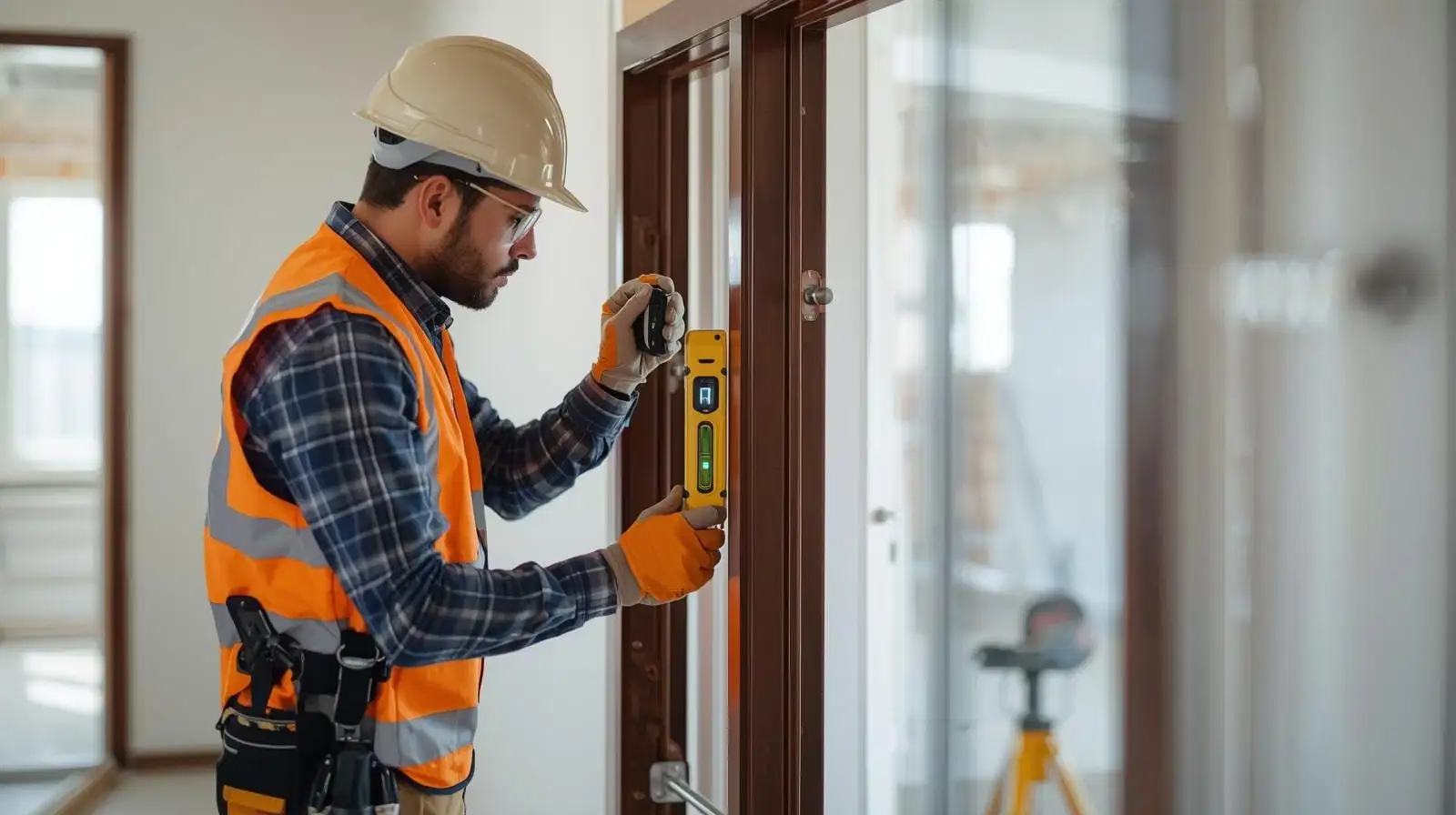
Different industrial applications require different factory doors. Here’s what works where.
| Door Type | Suitability | Pros | Cons | Best For |
|---|---|---|---|---|
| Heavy-duty sliding | Excellent | Space-saving, smooth operation, high cycle life | Track maintenance required, floor space for stacking | Warehouse bay doors, internal partitions |
| High-speed roll-up | Excellent | Very fast (1-2 m/s), energy-efficient, minimal space | Higher cost, requires power (battery backup for load shedding) | High-traffic doorways, temperature-controlled areas |
| Bi-folding | Good | Wide openings, fast operation | Complex mechanism, higher maintenance | Large equipment access, emergency exits |
| Swing (hinged) | Fair | Simple, robust, no power required | Swing path requires space, slower for high traffic | Personnel doors, low-traffic access |
| Sectional overhead | Good | Insulated, space-saving overhead | Requires headroom, springs need maintenance | Loading docks, temperature-controlled warehouses |
Recommendation for most warehouses: Heavy-duty sliding doors for bay doors, high-speed roll-up doors for high-traffic areas, and swing doors for personnel access.
Read our sliding doors guide and bifold doors guide.
🔩 Frame Specifications for Industrial Use
Heavy duty doors require stronger frames than standard doors.
Minimum frame thickness for industrial applications:
- Light industrial (office-warehouse, low traffic): 1.6-2.0mm aluminium
- Medium industrial (regular forklift traffic, daily use): 2.0-2.5mm aluminium
- Heavy industrial (constant traffic, impact risk): 2.5-3.0mm aluminium or steel-reinforced
Frame reinforcement options:
- Steel inserts inside aluminium frame – adds strength without visible change
- Thicker extrusions (2.5-3.0mm wall thickness)
- Reinforced corners (welded + gusset plates)
- Impact-resistant profiles (rounded corners, reinforced strike faces)
Frame anchoring for industrial buildings:
- Concrete floor anchors for overhead doors – minimum 150mm embedment
- Heavy-duty expanding bolts for wall-mounted frames (every 400-500mm)
- Through-bolts where possible (strongest option)
Corrosion protection for industrial environments: Industrial settings may have chemicals, moisture, or extreme conditions. Specify marine-grade powder coating (80-120 microns) and stainless steel fixings. Read our corrosion protection guide.
🔧 Hardware Requirements – Rollers, Hinges & Tracks
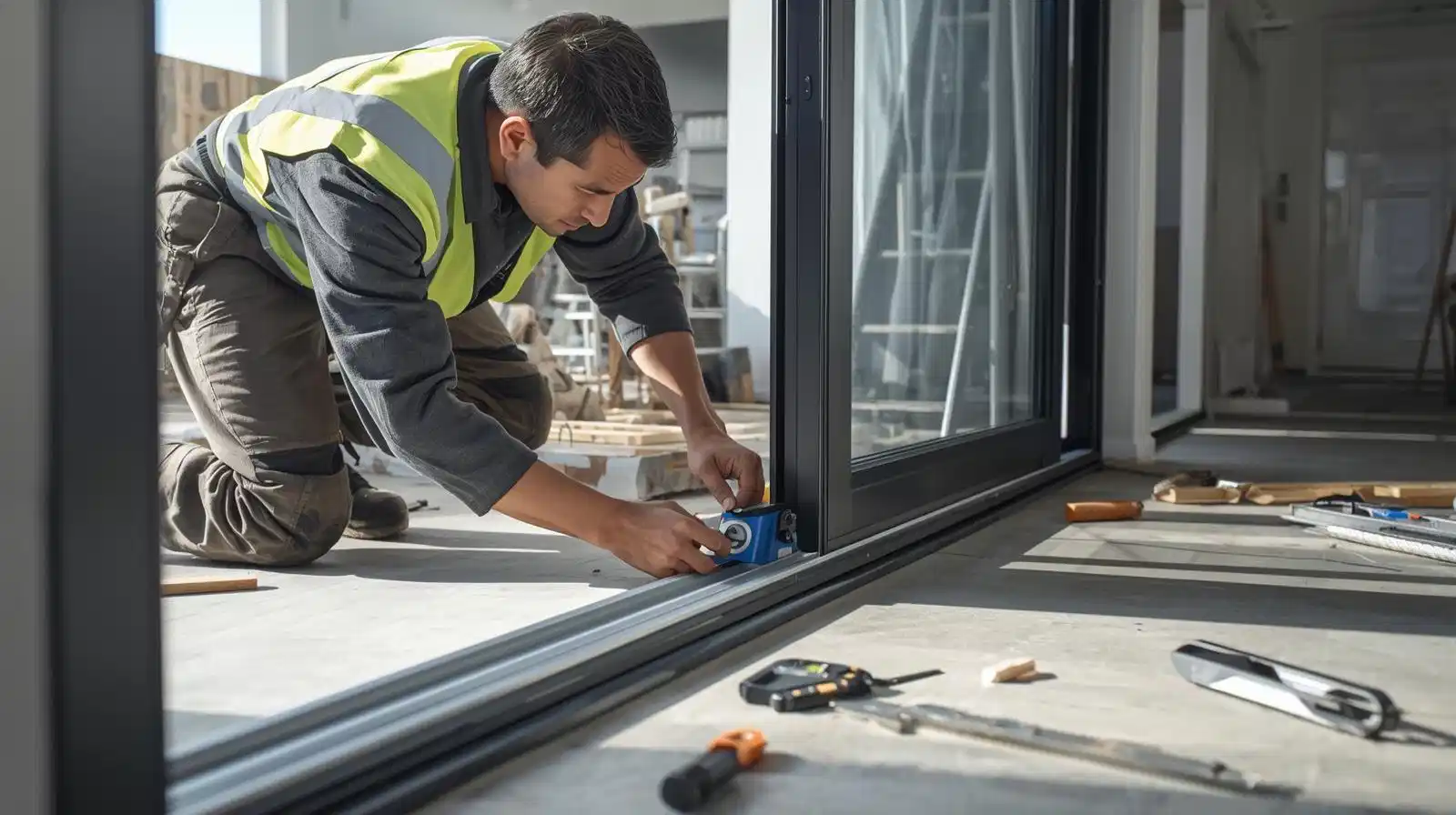
Hardware is the most critical component for aluminium doors warehouses factories applications.
Roller systems for sliding doors:
- Light industrial: Sealed ball-bearing rollers (nylon or steel wheels)
- Medium industrial: Heavy-duty steel rollers with hardened bearings
- Heavy industrial: Tandem roller systems (multiple wheels per door)
Hinge requirements for swing doors:
- Standard duty: 100-150kg capacity per hinge
- Heavy duty: 200-300kg capacity per hinge (stainless steel for corrosive environments)
- Continuous (piano) hinges for very heavy doors
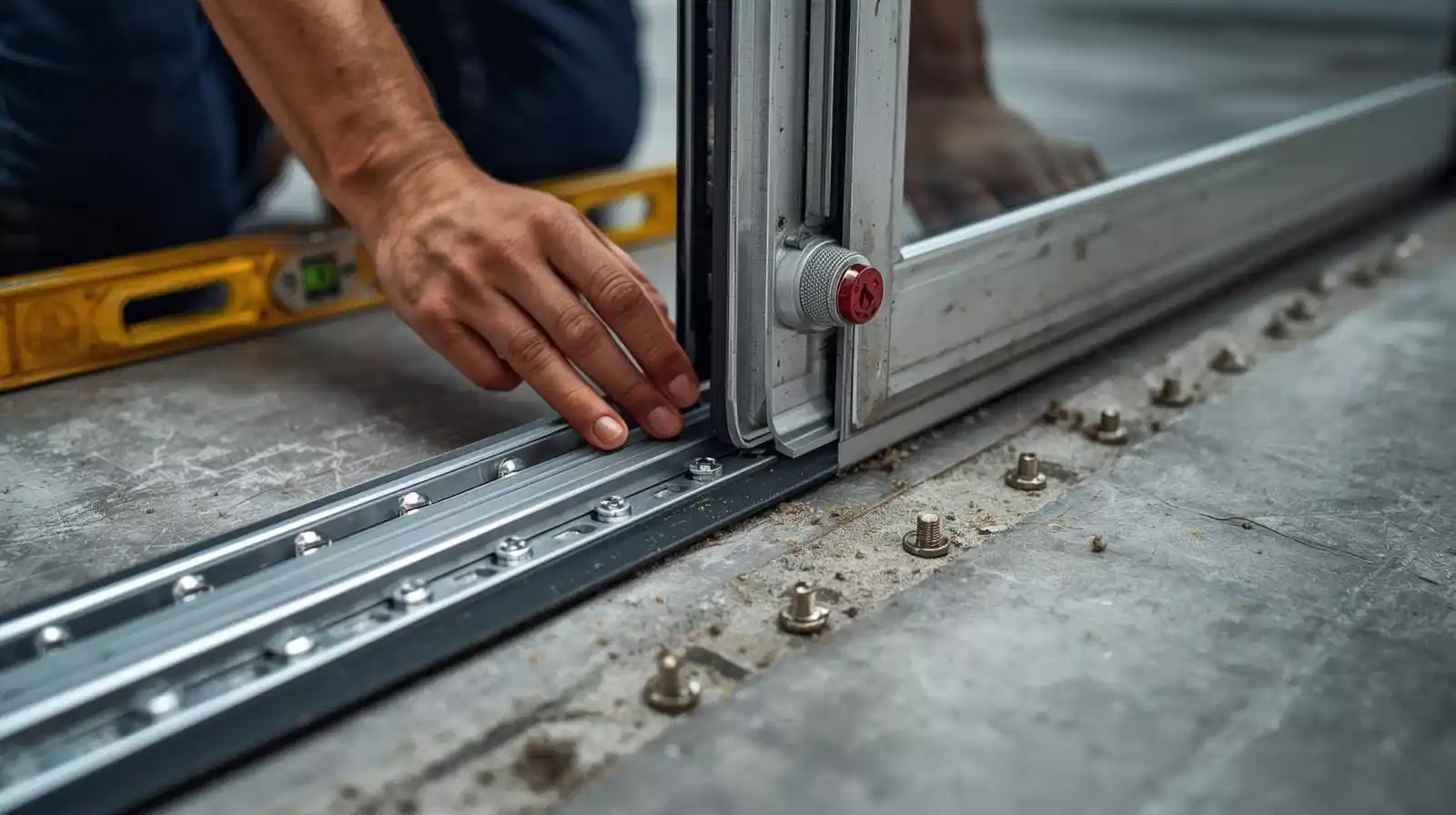
Track systems for sliding and roll-up doors:
- Standard track: 2.0mm galvanised steel
- Heavy-duty track: 3.0mm stainless steel or reinforced aluminium
- High-cycle track: Hardened steel with replaceable wear strips
What to look for in industrial hardware: Stainless steel (Grade 316 for corrosive environments), sealed bearings (dust protection), and grease fittings for maintenance. Cheap hardware fails – don’t compromise.
Read our roller replacement guide for maintenance.
🛡️ Safety Features for Industrial Doors
Safety is paramount in industrial settings. Here’s what factory doors need.
| Safety Feature | Required For | Description | Cost Impact |
|---|---|---|---|
| Safety edges (sensors) | All powered doors | Detects obstruction and reverses door | R2,000-5,000 per door |
| Photocells (light curtains) | High-traffic powered doors | Creates invisible beam – door reverses if broken | R3,000-8,000 per door |
| Warning lights / alarms | Large or fast-moving doors | Audible/visual alert when door operates | R1,000-3,000 per door |
| Manual release (load shedding) | All powered doors | Allows door operation during power outage | R500-1,500 per door (usually included) |
| Safety signage | All doors | Warning decals, pinch point warnings | R200-500 per door |
OHSA compliance: Industrial doors must comply with Occupational Health and Safety Act (OHSA) requirements. This includes proper guarding, safety edges on powered doors, and clear warning signage.
For security integration, read our CCTV guide.
🔒 Security Considerations for Warehouses
Industrial doors must balance access with security.
Locking systems for warehouse doors:
- Multi-point locking (standard for security)
- Keyed security cylinders (anti-drill, anti-pick)
- Electronic access control (card reader, keypad, biometric)
- Remote monitoring (door status sensors linked to security system)
Access control integration: Industrial doors can integrate with building security systems:
- Card reader access for personnel doors
- Vehicle tracking integration for loading bay doors
- Time-based access restrictions (door only opens during certain hours)
- Interlocking systems (one door must close before another opens)
Secondary security measures:
- Security grilles or gates for high-risk areas
- Anti-lift blocks for sliding doors
- Reinforced locking points (hardened steel plates)
Read our security features guide and garage/gate guide.
⚡ Load-Shedding & Backup Solutions
Powered industrial doors need backup power for warehouses factories operations during outages.
Manual release (minimum requirement):
All powered doors should have a manual release mechanism. This allows you to operate the door during power outages. Ensure your team knows how to use it – and practice regularly.
Battery backup (recommended for critical doors):
- Provides 20-50 operations during load shedding
- Automatic switchover (no manual intervention)
- Cost: R3,000-8,000 per door (depending on door size and weight)
- Essential for main access doors, emergency exits, and cold storage doors
Solar-ready systems: Some industrial door operators can integrate with solar power systems. Ask your supplier about solar compatibility.
Emergency planning: Document procedures for manual door operation during outages. Train staff. Post instructions near each door.
Read our remote control guide for automation advice.

Planning an Industrial Facility?
Get free quotes from verified industrial aluminium specialists. Compare industrial doors options for your warehouse or factory.
💰 Cost Breakdown & Budgeting
Here’s what aluminium doors warehouses factories cost for industrial installations.
| Door Type | Typical Size | Supply Only | Installed | Notes |
|---|---|---|---|---|
| Heavy-duty sliding | 3m x 3m | R15,000 – R25,000 | R20,000 – R35,000 | Manual operation |
| Electric sliding (incl. motor) | 3m x 3m | R25,000 – R40,000 | R32,000 – R50,000 | Add battery backup: R3,000-8,000 |
| High-speed roll-up | 3m x 3m | R30,000 – R60,000 | R38,000 – R75,000 | Fast operation, includes motor |
| Bi-folding (manual) | 4m x 4m | R25,000 – R45,000 | R32,000 – R55,000 | Wide openings |
| Sectional overhead | 3m x 3m | R18,000 – R35,000 | R24,000 – R45,000 | Insulated option available |
| Personnel swing door (heavy-duty) | 1m x 2.1m | R6,000 – R12,000 | R8,000 – R15,000 | Single or double |
Volume discounts for multi-door projects: For warehouses with 10+ identical doors, expect 10-20% discount on supply costs.
Additional costs to consider:
- Structural modifications: R5,000 – R25,000 per opening
- Electrical supply for powered doors: R2,000 – R10,000 per door
- Safety sensors and edges: R2,000 – R8,000 per powered door
- Battery backup: R3,000 – R8,000 per door
- Access control integration: R3,000 – R15,000 per door
Read our replacement guide for retrofit projects.
🛠️ Installation Requirements for Industrial Settings
Industrial factory doors installation is more complex than residential or commercial.
Key differences:
- Structural anchoring: Doors must be anchored to concrete floors and steel structures – not just brick walls.
- Heavy lifting: Industrial doors are heavy (100-500kg+). Requires mechanical lifting equipment.
- Power supply: Powered doors need dedicated electrical circuits – coordinate with electrical services.
- Safety systems: Photocells, safety edges, and warning lights require proper setup and testing.
- Multiple trades coordination: Door installers, electricians, and structural engineers may need to coordinate.
Installation timeline:
- Standard sliding door (manual): 1-2 days
- Electric sliding or roll-up door: 2-3 days (including electrical)
- Multiple doors in a warehouse: 1-2 weeks depending on quantity
Choosing an industrial door installer: Use contractors with industrial experience. Ask for references from similar facilities (warehouses, factories, distribution centres). Ensure they understand OHSA safety requirements.
Read our contractor guide.
🧹 Maintenance & Longevity
Regular maintenance extends the life of your heavy duty doors.
Monthly checks (user-maintained):
- Inspect tracks – remove debris
- Check rollers – look for wear or flat spots
- Test safety features (photocells, safety edges)
- Lubricate moving parts (silicone spray – never oil)
- Check for unusual noises during operation
Quarterly maintenance (user-maintained):
- Tighten all visible bolts and fixings
- Clean tracks thoroughly
- Test battery backup (if installed)
- Inspect weather seals – replace if damaged
Annual professional inspection (recommended):
- Comprehensive inspection of all components
- Spring tension check (for overhead doors – dangerous, do not DIY)
- Safety system calibration
- Structural anchor inspection
- Track alignment check
Expected lifespan with proper maintenance:
- Heavy-duty industrial doors: 25-40 years
- High-speed roll-up doors: 15-25 years (higher cycle rate)
- Hardware (rollers, hinges, tracks): 10-20 years (replaceable)
Read our full maintenance guide.
❓ Frequently Asked Questions About Aluminium Doors for Warehouses and Factories
What are the best aluminium doors for warehouses?
The best aluminium doors for warehouses are heavy-duty sliding doors for bay access, high-speed roll-up doors for high-traffic areas, and personnel swing doors for staff entry. All industrial doors require reinforced frames (2.0-3.0mm), heavy-duty hardware, and proper safety features. Avoid residential or standard commercial doors – they will fail in industrial environments.
How much do industrial aluminium doors cost?
Aluminium doors warehouses factories cost R8,000-20,000+ per m² installed depending on specification. A standard 3m x 3m heavy-duty sliding door (manual) costs R20,000-35,000 installed. An electric sliding door (with motor, safety features) costs R32,000-50,000. A high-speed roll-up door costs R38,000-75,000. Add battery backup for load shedding (R3,000-8,000 per door).
What safety features are required for powered industrial doors?
Required safety features for powered industrial doors include: safety edges (sensors that reverse the door on contact), warning lights or alarms, manual release for power outages, and clear warning signage. For high-traffic areas, photocells (light curtains) are recommended. All powered doors must comply with OHSA regulations.
Do industrial doors need battery backup for load shedding?
Strongly recommended – especially for main access doors, emergency exits, and temperature-controlled areas. Battery backup provides 20-50 operations during power outages, avoiding costly downtime. Cost: R3,000-8,000 per door. For critical operations, backup power is essential. Manual release is the minimum requirement (included with most powered doors).
What is the difference between industrial and commercial doors?
Industrial doors are built for higher demands: heavier frames (2.0-3.0mm vs 1.6-2.0mm), higher cycle life (100-500+ operations per day vs 20-100), better impact resistance (forklift bumps), and advanced safety features. Industrial doors also have better dust sealing and can handle temperature variations. Commercial doors are suitable for office buildings, retail, and light commercial – not warehouses or factories.
How long do industrial aluminium doors last?
Quality industrial doors last 25-40 years with proper maintenance. The aluminium frame lasts 40-50+ years. Maintenance items: rollers (5-10 years depending on cycle count), seals (5-10 years), and motors (10-15 years). Regular maintenance dramatically extends lifespan. Annual professional inspections are recommended for industrial facilities.
Can aluminium doors be used in high-heat or chemical environments?
Yes – but specify appropriate specifications. For high-heat areas, use aluminium with thermal barriers to prevent expansion issues. For chemical environments, specify marine-grade powder coating (80-120 microns) and stainless steel hardware (Grade 316). For extreme conditions, consult a specialist. Read our corrosion protection guide.
How do I find an industrial door installer?
Use ServiceLink SA’s free quote service to find verified industrial aluminium specialists. Look for: experience with similar facilities (warehouses, factories), knowledge of OHSA safety requirements, references from industrial clients, and workmanship warranties. For Gauteng or Mpumalanga industrial areas, ask for local references from similar operations.
✅ Final Thoughts: Industrial Doors Are an Investment in Productivity
After reading this guide on aluminium doors warehouses factories, you understand that industrial doors are fundamentally different from residential or commercial doors.
Your warehouse or factory can’t afford downtime from door failures. Every hour a loading bay door is stuck, your operations suffer. Invest in properly specified industrial doors with heavy-duty frames, quality hardware, safety features, and battery backup for load shedding. Yes, they cost more upfront – R8,000-20,000+ per m². But the long-term savings in avoided downtime and extended lifespan make them the smart choice.
Work with experienced industrial installers who understand the demands of your facility. Specify for your specific use case: high-traffic areas need high-speed doors, impact-prone areas need reinforced frames, security-sensitive areas need access control integration.
Key takeaways for industrial doors:
- Industrial doors require heavier frames (2.0-3.0mm) and reinforced hardware
- High-speed roll-up doors are best for high-traffic areas (100-500+ cycles/day)
- Heavy-duty sliding doors are best for bay access and large openings
- Safety features (safety edges, photocells, warning lights) are non-negotiable
- Battery backup is strongly recommended for load shedding (R3,000-8,000 per door)
- Costs: R8,000-20,000+ per m² installed depending on specification
- Expected lifespan: 25-40 years with proper maintenance
- Never use residential or standard commercial doors in industrial settings
- Use ServiceLink SA to find verified industrial specialists
Your next step: Planning a warehouse or factory facility? Get free quotes from verified industrial aluminium specialists in your area.
Ready to Specify Industrial Doors?
Get free, no-obligation quotes from verified industrial aluminium specialists. Compare industrial doors options for your warehouse or factory.
📞 Call us: 073 138 4726 for industrial door advice.
Free site assessments •
Hiring tips •
Beat Your Quote •
Our guarantees
📚 Official resources & standards referenced:
- SANS 10400 – South African National Standard for industrial building standards and safety regulations.
- SABS – South African Bureau of Standards for door safety standards and product certification.
Information provided for general guidance. Industrial doors require professional installation and must comply with OHSA regulations. Always consult qualified specialists for your specific facility.
Written by: ServiceLink SA Research Team
Specialist Industrial Doors & Facility Safety Experts
The ServiceLink SA Research Team has extensive experience with industrial door installations across warehouses, factories, and distribution centres in South Africa’s industrial hubs – from Gauteng to Mpumalanga. Our team has worked closely with facility managers, safety officers, and certified installers to develop this comprehensive industrial doors guide. This guide is based on real installation data, OHSA requirements, and feedback from industrial facility operators across South Africa. We update our information regularly to reflect current safety standards and industry best practices.
For more information about industrial aluminium doors, explore our related resources: commercial doors guide, office windows guide, shopfront guide, sliding doors guide, and garage doors and gates. Learn about our process on what is ServiceLink SA and why contractors join us. Find industrial specialists in your area: Gauteng, Mpumalanga, Johannesburg, Pretoria, Emalahleni, and Secunda. For integrated security, see our CCTV and garage door security guides.