
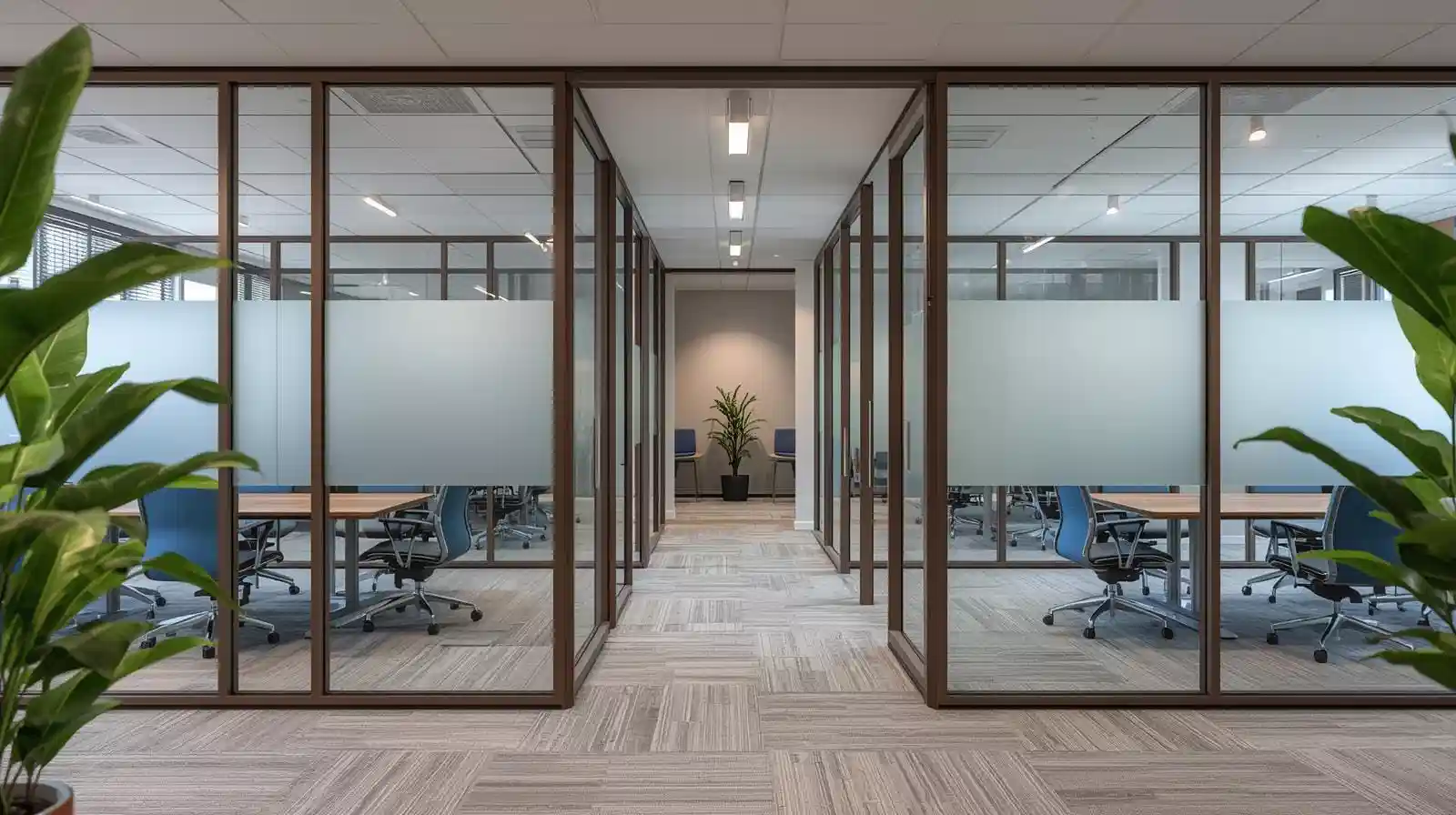
Building or Renovating an Office?
Get free quotes from verified commercial aluminium specialists. Compare commercial office windows options for your project.
Servicing Gauteng, Johannesburg, Pretoria, Sandton, and Centurion
Aluminium Windows for Office Buildings: Commercial Guide for Businesses
🏢 The complete guide to specifying, costing, and installing aluminium windows for corporate and commercial buildings
Let me tell you something that separates successful commercial projects from costly failures. Office windows are NOT the same as residential windows. The requirements are different – higher performance standards, stricter safety regulations, greater durability demands, and longer lifespans. Yet I still see architects and building owners specifying residential-grade windows for commercial buildings. The result? Premature failure, water leaks, high energy costs, and unhappy tenants.
In Johannesburg‘s corporate high-rises, Sandton‘s office parks, and Pretoria‘s commercial developments, the right aluminium windows office buildings make the difference between a premium asset and a maintenance nightmare. You need commercial office windows designed for higher wind loads, better thermal performance, and years of daily operation.
In this complete guide to corporate windows, I’ll cover everything you need to know: commercial-grade specifications, thermal and acoustic performance, safety regulations, cost factors, installation requirements, and maintenance. You’ll learn about commercial glazing standards, how to specify windows for office environments, and what to budget for your project.
For more commercial guidance, read our commercial doors guide, curtain wall guide, or shopfront guide. Ready to specify office windows? Let’s dive in.
📋 Table of Contents – Office Windows Guide
🏢 Commercial vs Residential Windows – Key Differences
Understanding the differences helps you specify the right commercial office windows.
| Feature | Residential Windows | Commercial Office Windows |
|---|---|---|
| Frame thickness | 1.2-1.4mm | 1.6-2.5mm (heavier duty) |
| Wind load rating | 1.0-1.5 kPa | 1.5-3.5+ kPa (building height dependent) |
| Thermal performance | Optional | Required (SANS 10400-XA compliance often mandatory) |
| Safety glazing | Near floors, doors | All windows (commercial code requirements) |
| Fire safety | Basic | Strict – fire-stopping, egress requirements |
| Accessibility | N/A | Window opening heights, hardware reach ranges |
| Expected lifespan | 20-30 years | 30-50 years (commercial use requires higher durability) |
| Cost per m² | R4,500 – R8,000 | R6,000 – R12,000+ |
Why commercial windows cost more: Heavier frames, stronger glass, better seals, thermal breaks, and higher installation standards. A commercial office window is built to last 30-50 years under daily use – not worth cutting corners.
According to SANS 10400 commercial building standards and SABS window safety standards, commercial windows must meet stricter requirements than residential.
🎁 Pro Tip: Don’t Use Residential Windows in Commercial Buildings
I’ve seen building owners try to save money by installing residential-grade aluminium windows office buildings. It always ends badly – premature failure, water leaks, high energy costs, and unhappy tenants. Commercial windows cost more upfront, but they’re designed for the higher demands of office environments. The long-term savings far outweigh the initial premium.

📊 Performance Requirements for Office Buildings
Aluminium windows office buildings must meet specific performance standards.
Wind load requirements (by building height):
- Ground to 10m: 1.0-1.5 kPa minimum
- 10m to 30m: 1.5-2.5 kPa
- 30m to 60m: 2.5-3.5 kPa
- 60m+ (high-rise): 3.5-5.0+ kPa (structural engineer to specify)
Air infiltration (leakage): Commercial windows must have lower air leakage rates than residential. Maximum 0.5-1.0 L/s per m² at 75 Pa (vs 1.5-2.5 for residential). Lower air leakage = better energy efficiency and occupant comfort.
Water penetration resistance: Commercial windows must resist water penetration under wind pressure. Minimum 300 Pa (residential is 150-200 Pa). For high-rise or exposed locations, specify 450-600 Pa.
Structural load (deflection): Maximum deflection of frame under design wind load: L/175 (where L is span). Stiffer frames prevent glass breakage and seal failure.
Forced entry resistance: Commercial windows require stronger locking mechanisms. Multi-point locks are standard on ground floor windows; upper floors may use single-point locks with higher security specifications.
Read our high wind guide for more on wind load requirements.
⚡ Thermal Efficiency & Energy Savings
Office buildings have significant heating and cooling loads. Energy-efficient corporate windows reduce operating costs.
SANS 10400-XA requirements: New commercial buildings must meet energy efficiency standards. For windows, this typically requires:
- Thermal break frames (polyamide strip between inner and outer aluminium)
- Double glazing (minimum 4+12+4mm)
- Argon gas fill (improves insulation by 5-10%)
- Low-E coating (reflects heat – improves by 15-25%)
Target U-values for office buildings:
- Basic compliance (SANS 10400-XA): U ≤ 2.2 W/m²K
- Green Star rated: U ≤ 1.8 W/m²K
- Premium / Passive house: U ≤ 1.2 W/m²K
Solar heat gain (SHGC) considerations:
- North-facing offices: Higher SHGC (0.5-0.6) for passive solar heating in winter
- West-facing offices: Lower SHGC (0.3-0.4) to reduce afternoon heat gain
- South-facing: SHGC less important – focus on U-value
Energy cost impact: A poorly performing curtain wall or commercial window can add R50-150 per m² per year to HVAC costs. For a 5,000m² office building, that’s R250,000-750,000 annually – far more than the cost of upgrading to high-performance glazing.
Read our thermal break guide and energy ratings guide.
🔇 Acoustic Performance for Noisy Locations
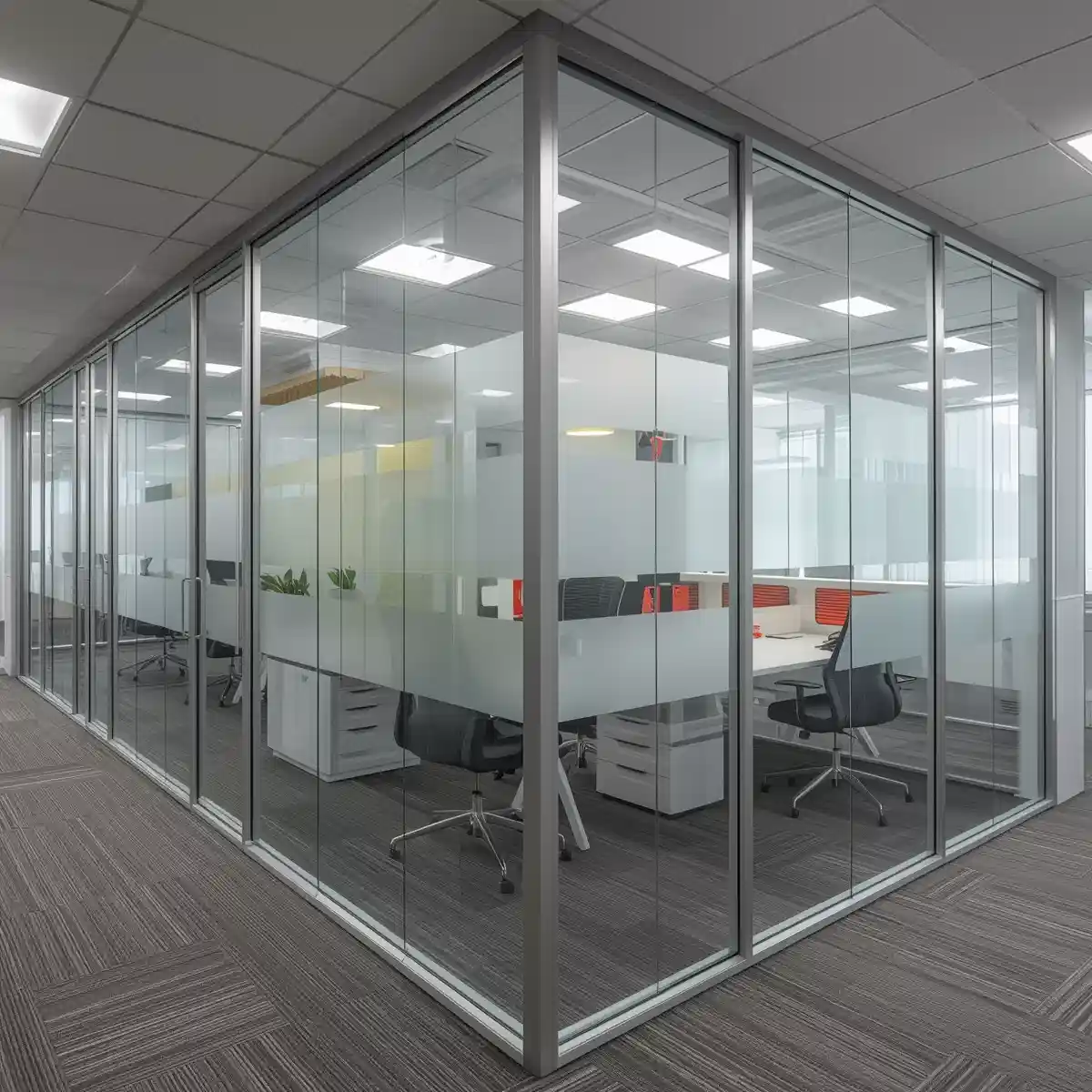
Office buildings in busy areas need commercial office windows with good noise reduction.
Typical noise levels in office locations:
- CBD (city centre): 65-75 dB – requires Rw 35-40 windows
- Busy arterial road: 60-70 dB – requires Rw 32-38 windows
- Office park (quiet): 50-60 dB – standard double glazing sufficient
- Near highway or flight path: 70-80+ dB – requires Rw 40-45+ windows
Glazing options for noise reduction:
- Standard double glazing: Rw 30-33 dB (adequate for quiet locations)
- Asymmetric double glazing (different glass thicknesses): Rw 33-38 dB (better for busy streets)
- Laminated glass double glazing: Rw 38-45 dB (excellent for highways/aircraft)
- Acoustic double glazing (specialised PVB interlayer): Rw 40-50 dB (premium)
Frame and seal considerations: Even the best glass is useless if air leaks. Specify high-compression gaskets and ensure professional installation. For commercial glazing in noisy locations, every detail matters.
Read our soundproof windows guide for more detail.
📜 Safety & Building Regulations
Commercial aluminium windows office buildings must comply with strict safety regulations.
SANS 10400 requirements for commercial windows:
- Safety glazing: Toughened or laminated glass required in all locations (not just near floors/doors as in residential)
- Fire safety: Windows must not compromise fire compartmentation. Fire-stopping between floors is critical.
- Egress (escape): Windows that serve as fire escapes must meet minimum opening sizes (typically 850mm x 500mm)
- Accessibility: Window hardware must be reachable from wheelchair (maximum height 1,200mm for operable parts)
- Fall protection: Opening windows above ground floor require restrictors to limit opening (typically 100mm)
Building occupancy classification matters: Office buildings (occupancy type A2 or A3) have different requirements than residential. Always consult a professional for your specific occupancy class.
Compliance documentation: For new builds, you’ll need test certificates for wind load, air infiltration, and water penetration. Keep these for your building file.
Read our buying checklist for more compliance guidance.
🚪 Best Window Types for Office Buildings
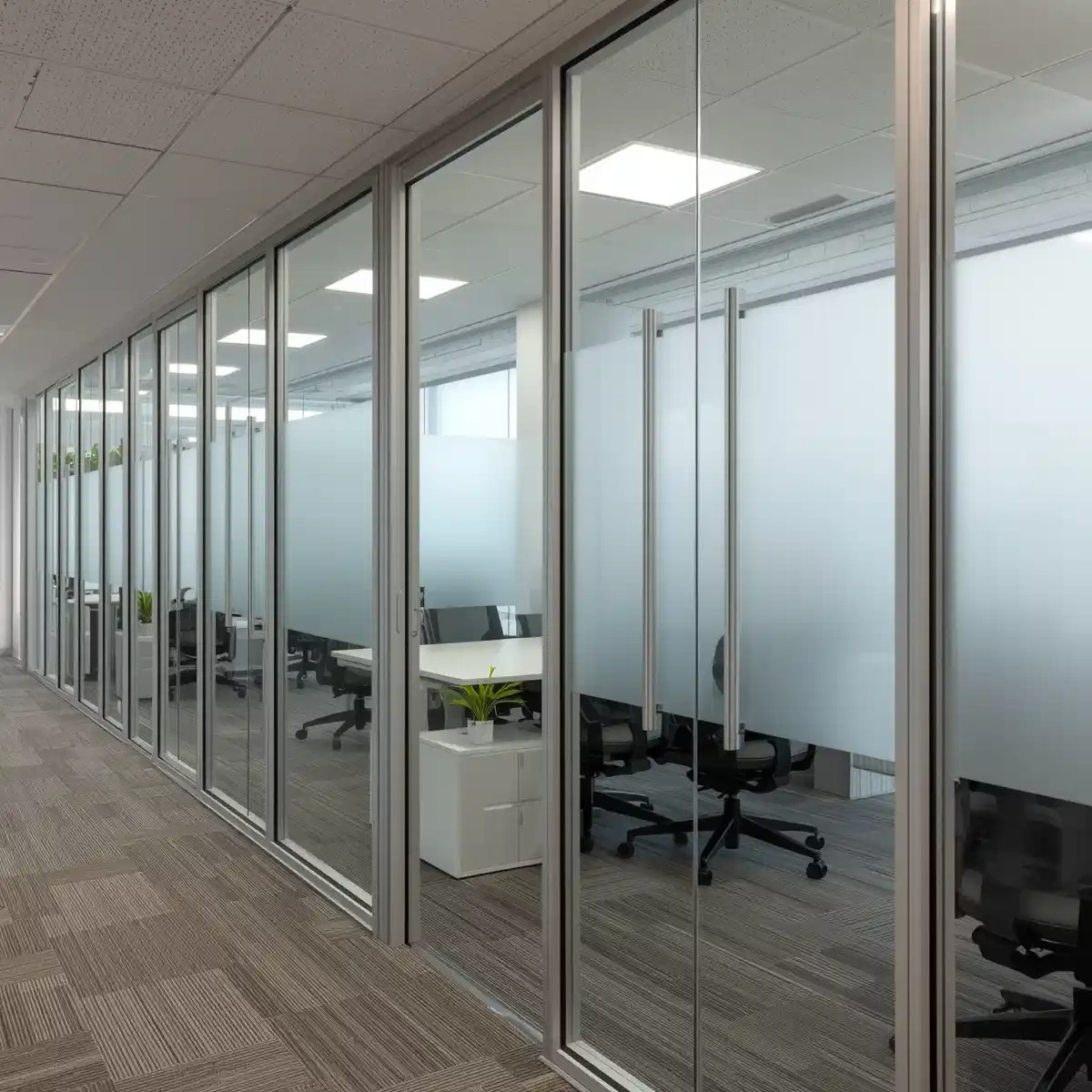
Not all window types suit office environments. Here’s what works for commercial office windows.
| Window Type | Suitability for Offices | Pros | Cons | Best For |
|---|---|---|---|---|
| Fixed (non-opening) | Excellent | Best thermal performance, no maintenance, maximum glass area | No ventilation | Most office windows (ventilation via HVAC) |
| Awning (top-hung) | Good | Good seals, can be left open in rain, secure | Limited opening size | Offices needing occasional ventilation |
| Tilt & turn | Good | Tilt for ventilation, turn for cleaning, excellent seals | Complex mechanism, higher cost | Premium offices, high-rise |
| Casement (side-hung) | Fair | 100% opening, good seals | Protrudes outward (wind can catch) | Ground floor only |
| Sliding | Poor | Space-saving | Poor seals, lower thermal performance, rattles | Not recommended for commercial offices |
| Glass Specification | U-value | Cost Premium | Best For |
|---|---|---|---|
| Single glazing (not recommended) | 5.7 | Base | Not for commercial use |
| Double glazing (air-filled) | 2.8 | Base for double | Budget commercial, mild climates |
| Double + argon + Low-E | 1.8-2.2 | +15-25% | Standard commercial (best value) |
| Triple glazing | 0.8-1.2 | +50-80% | Premium projects, passive house, extreme climates |
| Laminated (security) | Varies | +30-50% | Ground floor, high-risk areas |
Recommended specification for most office buildings: Double glazing (4+12+4mm) with Low-E coating and argon gas fill. U-value ~2.0 W/m²K. This meets SANS 10400-XA requirements and provides good value.
Read our single vs double glaze guide and double glazing cost guide.
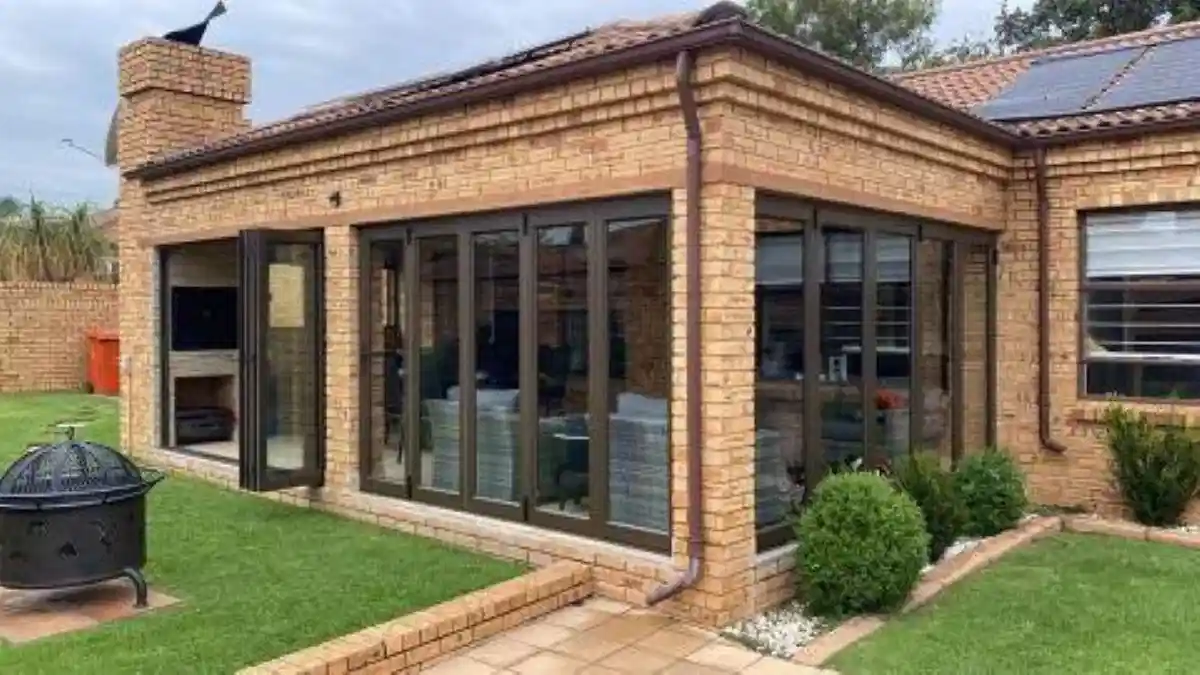
Planning an Office Development?
Get free quotes from verified commercial aluminium specialists. Compare commercial office windows options for your project.
💰 Cost Breakdown & Budgeting
Here’s what aluminium windows office buildings cost for commercial projects.
| Window Specification | Cost per m² (Supply & Install) | Typical Application |
|---|---|---|
| Basic commercial (single glazing, standard frame) | R5,000 – R7,000 | Not recommended – poor energy performance |
| Standard commercial (double glazing, air-filled) | R6,000 – R8,500 | Budget projects, mild climates |
| Energy efficient (double + argon + Low-E, thermal break frame) | R7,500 – R11,000 | Standard commercial – best value |
| Premium (triple glazing, thermal break, Low-E) | R10,000 – R15,000+ | Green Star rated, premium offices |
Project budgeting examples:
- Small office building (200m² windows, standard commercial): R1.5 – R2.2 million
- Medium office building (1,000m² windows, energy efficient): R7.5 – R11 million
- Large corporate building (5,000m² windows, premium): R50 – R75 million
Additional costs to consider:
- Structural engineering for wind loads: R50,000 – R200,000
- Fire-stopping between floors: R50 – R150 per linear metre
- Access equipment (scaffolding, cranes): Significant for high-rise
- Testing and certification: R20,000 – R100,000 depending on scope
Read our replacement guide for retrofit projects.
🛠️ Installation Requirements for Commercial Buildings
Commercial glazing installation is more complex than residential.
Key differences from residential installation:
- Access equipment: Scaffolding, swing stages, or cranes for high-rise
- Structural connections: Anchors must be engineered for wind loads at height
- Fire-stopping: Gaps between floors must be sealed to prevent fire spread
- Quality control: Regular testing during installation (air, water, structural)
- Multiple trades coordination: Windows interface with curtain wall, cladding, and interior finishes
Installation steps for commercial buildings:
- Structural survey and anchor installation
- Frame installation (starting from lowest floor, working up)
- Fire-stopping installation at each floor level
- Glass installation
- Sealing and gasket installation
- Testing (air, water, structural)
- Interior finishing and trim
Choosing an installer: Use contractors with commercial high-rise experience. Ask for references from similar building heights. Read our contractor guide.
🧹 Maintenance & Longevity
Proper maintenance extends the life of your corporate windows.
Quarterly maintenance:
- Clean frames and glass with non-abrasive cleaners
- Check weep holes – clear any blockages
- Inspect gaskets for damage
Annually:
- Professional inspection of all windows
- Check sealant joints – reapply where cracked
- Test operable windows – lubricate hinges and locks with silicone spray
- Check for signs of water penetration
Every 5-10 years:
- Major sealant replacement
- Gasket replacement
- Inspect structural anchors for corrosion
For coastal high-rise buildings: Increase inspection frequency. Read our corrosion protection guide.
Expected lifespan: Quality commercial office windows last 30-50+ years with proper maintenance. The main maintenance items are sealants (10-15 years) and gaskets (15-20 years).
Read our full maintenance guide.
❓ Frequently Asked Questions About Aluminium Windows for Office Buildings
What are the best aluminium windows for office buildings?
The best aluminium windows for office buildings are fixed windows (non-opening) for most applications, with awning or tilt & turn windows where ventilation is required. Commercial-grade specifications: 1.6-2.0mm frame thickness, thermal break profiles, double glazing with Low-E coating and argon gas fill. Avoid sliding windows – their seals are poor for commercial applications.
How much do commercial office windows cost per square metre?
Commercial office windows cost R6,000-8,500 per m² for standard double glazing, R7,500-11,000 for energy-efficient (double + argon + Low-E + thermal break), and R10,000-15,000+ for premium triple glazing. Installation accounts for 20-30% of total cost. For a typical 1,000m² office building, budget R7.5-11 million for energy-efficient windows.
Do office windows need thermal breaks?
Yes – for energy compliance (SANS 10400-XA), aluminium windows office buildings require thermal breaks. Without a thermal break, aluminium conducts heat and cold, causing high energy costs and condensation. Thermal break profiles (polyamide strip between inner and outer aluminium) reduce heat transfer by 50-70%. For commercial buildings, thermal breaks are essential, not optional.
What glass specification is best for office buildings?
For most office buildings, double glazing (4+12+4mm) with Low-E coating and argon gas fill provides the best value – U-value ~2.0 W/m²K. For noise reduction (busy streets), add laminated glass or asymmetric panes. For premium energy efficiency (Green Star rated), specify triple glazing (U=0.8-1.2). Read our double glazing guide.
What safety regulations apply to commercial office windows?
Commercial glazing must comply with SANS 10400. Key requirements: safety glazing (toughened or laminated) on all windows, fire-stopping between floors, egress requirements for escape windows, accessibility (hardware within reach), and fall protection (restrictors on opening windows above ground floor). Always consult a professional for your specific occupancy classification.
Can I use residential windows in an office building?
No – residential-grade windows are not suitable for commercial use. They have thinner frames (1.2-1.4mm vs 1.6-2.5mm), lower wind load ratings, poorer seals, and shorter lifespans. Using residential windows in commercial office windows applications leads to premature failure, water leaks, high energy costs, and building code violations. Always specify commercial-grade products.
How do I find a commercial window installer?
Use ServiceLink SA’s free quote service to find verified commercial aluminium specialists. Look for: experience with similar building heights, knowledge of SANS 10400 requirements, wind load testing capability, references from completed commercial projects, and workmanship warranties. For Gauteng, Johannesburg, Pretoria, or Sandton, ask for corporate building references.
How long do commercial aluminium windows last?
Quality corporate windows last 30-50+ years with proper maintenance. The aluminium frames last 50+ years. Maintenance items: sealants need replacement every 10-15 years, gaskets every 15-20 years. For high-rise buildings, professional facade inspections every 5-10 years are recommended. Regular cleaning and sealant maintenance dramatically extends lifespan.
✅ Final Thoughts: Quality Windows Define Quality Buildings
After reading this guide on aluminium windows office buildings, you understand that commercial windows are fundamentally different from residential.
Office windows must withstand higher wind loads, provide better thermal performance, meet stricter safety regulations, and last for decades under daily use. Don’t cut corners by specifying residential-grade products. The upfront savings are tiny compared to the long-term costs of premature failure, high energy bills, and unhappy tenants.
Work with experienced commercial glazing specialists who understand building codes, wind load engineering, and proper installation. Invest in thermal breaks, double glazing with Low-E coating, and argon gas fill. Your building’s performance – and your bottom line – will thank you.
Key takeaways for office windows:
- Commercial windows require heavier frames (1.6-2.5mm), higher wind load ratings, and better seals
- Thermal breaks and double glazing with Low-E are essential for energy compliance
- Fixed windows are best for most offices (ventilation via HVAC)
- Costs: R6,000-15,000+ per m² depending on specification
- SANS 10400 compliance is mandatory – safety glazing, fire-stopping, egress
- Installation requires commercial specialists – not residential window fitters
- Regular maintenance extends lifespan to 30-50+ years
- Never use residential windows in commercial applications
- Use ServiceLink SA to find verified commercial specialists
Your next step: Planning an office building or renovation? Get free quotes from verified commercial aluminium specialists in your area.
Ready to Specify Office Windows?
Get free, no-obligation quotes from verified commercial aluminium specialists. Compare commercial office windows options for your project.
📞 Call us: 073 138 4726 for commercial window advice.
Free project assessments •
Hiring tips •
Beat Your Quote •
Our guarantees
📚 Official resources & standards referenced:
- SANS 10400 – South African National Standard for commercial building standards, energy efficiency (Part XA), and safety regulations.
- SABS – South African Bureau of Standards for window safety standards and product certification.
Information provided for general guidance. Commercial buildings have specific regulatory requirements. Always consult qualified professionals for your specific project.
Written by: ServiceLink SA Research Team
Specialist Commercial Glazing & Building Envelope Experts
The ServiceLink SA Research Team has extensive experience with commercial aluminium window installations across office buildings of all scales – from small office parks to high-rise corporate towers in Sandton, Johannesburg, and Pretoria. Our team has worked closely with architects, developers, and certified installers to develop this comprehensive commercial glazing guide. This guide is based on real project data, building code requirements, and feedback from commercial property owners across Gauteng and nationwide. We update our information regularly to reflect current building regulations and industry best practices.
For more information about commercial aluminium windows, explore our related resources: commercial doors guide, curtain wall guide, shopfront guide, replacement guide, and buying checklist. Learn about our process on what is ServiceLink SA and how ServiceLink SA works. Find commercial specialists in your area: Gauteng, Johannesburg, Pretoria, Sandton, Centurion, and Midrand. For integrated building services, see our air conditioning and electrical services guides.