
Confused by Energy Ratings?
Get free quotes from verified aluminium fabricators. Compare window efficiency rating options and find the best value for your home.
Servicing Gauteng, Johannesburg, Pretoria, and Cape Town
Aluminium Window Energy Ratings: What to Look For in SA (Save on Bills)
📊 The complete guide to understanding U-values, SHGC, and choosing energy-efficient windows
Let me be honest with you. Most people buying aluminium windows have no idea what energy ratings mean. Salespeople throw around terms like “U-value” and “thermal performance” and homeowners nod along, not wanting to seem uninformed. But here’s the truth – if you don’t understand these ratings, you could end up with windows that leak your money out the frame every winter.
The good news? Understanding aluminium window energy ratings isn’t complicated. There are three key numbers to look for, and once you know them, you can compare any window from any supplier. You’ll know exactly what you’re paying for and whether it’s worth the extra cost.
In this complete energy rating guide, I’ll explain what window efficiency rating means, break down U-value, SHGC, and air leakage, show you how to how to check aluminium window energy rating, and give you target numbers for South African climates. By the end, you’ll confidently compare quotes and choose the most energy-efficient windows for your budget.
For more energy guidance, read our thermal break guide, single vs double glaze guide, or double glazing cost guide. Ready to understand ratings? Let’s dive in.
📋 Table of Contents – Energy Ratings Guide
📋 Why Aluminium Window Energy Ratings Matter
Aluminium window energy ratings tell you how well a window performs – not how it looks.
What energy ratings measure: How much heat is lost through the window, how much solar heat enters, how much air leaks around the seals, and how much light passes through.
Why they matter for your wallet: A poorly rated window can cost you R500-1,500+ per year in extra heating and cooling. Over 20 years, that’s R10,000-30,000 – often more than the cost of the window itself.
The three key ratings you need to know:
- U-value (thermal transmittance): Measures how much heat escapes through the window. Lower is better.
- SHGC (solar heat gain coefficient): Measures how much solar heat enters. Choose based on your climate.
- Air leakage: Measures how much air leaks around the frame. Lower is better.
According to Department of Energy energy rating standards and SABS certification standards, energy-rated windows are required for new buildings in many municipalities.
🎁 Pro Tip: Ask for Certified Ratings
When comparing window efficiency rating quotes, always ask for certified ratings (NFRC or SABS). Any supplier who can’t provide certified ratings is likely selling unverified products. Certified ratings are independently tested – you can trust the numbers. For how to check aluminium window energy rating, certified is the only reliable way.
📉 U-Value – Understanding Heat Loss Rating
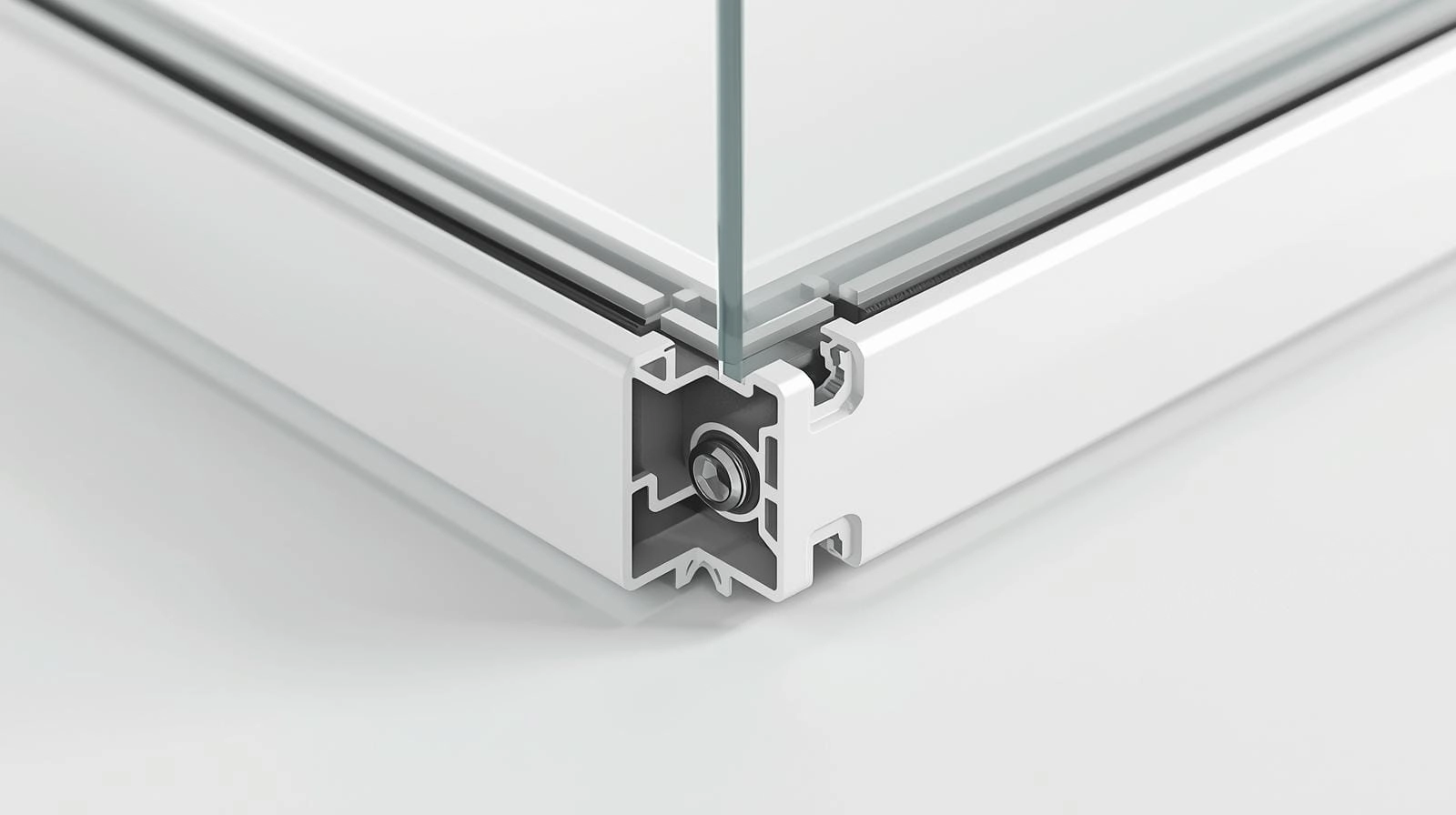
The most important thermal performance rating is the U-value.
What is U-value? U-value (thermal transmittance) measures how much heat passes through a window. The lower the U-value, the better the insulation. U-value includes the entire window – frame, glass, and spacers.
Units: Watts per square metre per Kelvin (W/m²K).
U-value ranges for aluminium windows:
- Standard single glazing: U = 5.0 – 7.0 W/m²K (very poor)
- Double glazing (air-filled): U = 2.8 – 3.5 W/m²K (moderate)
- Double glazing (argon-filled): U = 2.5 – 3.0 W/m²K (good)
- Double glazing + Low-E: U = 1.8 – 2.5 W/m²K (excellent)
- Double glazing + thermal break + Low-E: U = 1.5 – 2.0 W/m²K (outstanding)
- Triple glazing (premium): U = 0.8 – 1.2 W/m²K (overkill for SA)
What U-value should you aim for?
- Gauteng, Free State, Mpumalanga highveld: Aim for U ≤ 2.0 W/m²K (thermal break + double glazing recommended)
- Western Cape, Cape Town: Aim for U ≤ 2.5 W/m²K (double glazing minimum)
- KZN coastal, Lowveld: U ≤ 3.0 W/m²K acceptable (double glazing optional)
Remember: Lower U-value = better insulation = lower heating bills. Every 0.5 reduction in U-value saves approximately 10-15% on heating costs.
Read our thermal break guide for improving U-value.
☀️ SHGC – Solar Heat Gain Coefficient
SHGC measures how much solar heat passes through the window – important for South Africa’s sunny climate.
What is SHGC? Solar Heat Gain Coefficient measures the fraction of solar radiation admitted through a window. SHGC ranges from 0 to 1. Higher SHGC means more solar heat enters; lower SHGC means less solar heat enters.
Choosing the right SHGC for your situation:
- North-facing windows (passive solar heating): Higher SHGC (0.5-0.7) allows winter sun to warm your home. Choose higher SHGC if you want free heating.
- East/West-facing windows (morning/afternoon sun): Lower SHGC (0.3-0.5) reduces harsh summer heat gain. West-facing afternoon sun is particularly intense – choose lower SHGC.
- South-facing windows (minimal direct sun): SHGC less important – focus on U-value instead.
- Hot climates (KZN coastal, Lowveld): Lower SHGC (0.25-0.4) to reduce cooling loads.
- Cold climates (Gauteng, Free State): Higher SHGC (0.5-0.7) to capture free solar heating in winter.
How to control SHGC:
- Low-E coatings can be tailored to have high SHGC (for cold climates) or low SHGC (for hot climates)
- Tinted glass reduces SHGC (also reduces visible light)
- External shading (awnings, trees) is even more effective
The trade-off: Lower SHGC also reduces visible light. For north-facing windows, you may want higher SHGC for winter warmth and accept some summer heat (manage with shading).
Read our Low-E glass guide for more.
💨 Air Leakage – Draught Rating
Air leakage measures how much air passes through gaps in the window – draughts cost you money.
What is air leakage? Air leakage measures the volume of air (cubic metres) passing through a square metre of window per hour under standard pressure. Lower is better.
Air leakage ratings (AL) for aluminium windows:
- AL ≤ 1.0 m³/(h·m²) at 75 Pa: Excellent (high-quality, well-sealed windows)
- AL 1.0 – 2.0 m³/(h·m²): Good (acceptable for most homes)
- AL 2.0 – 3.0 m³/(h·m²): Poor (noticeable draughts)
- AL > 3.0 m³/(h·m²): Very poor (significant air leaks)
What affects air leakage:
- Quality of weather seals (rubber vs brush)
- Frame construction (welded vs screwed corners)
- Installation quality (sealing around the frame)
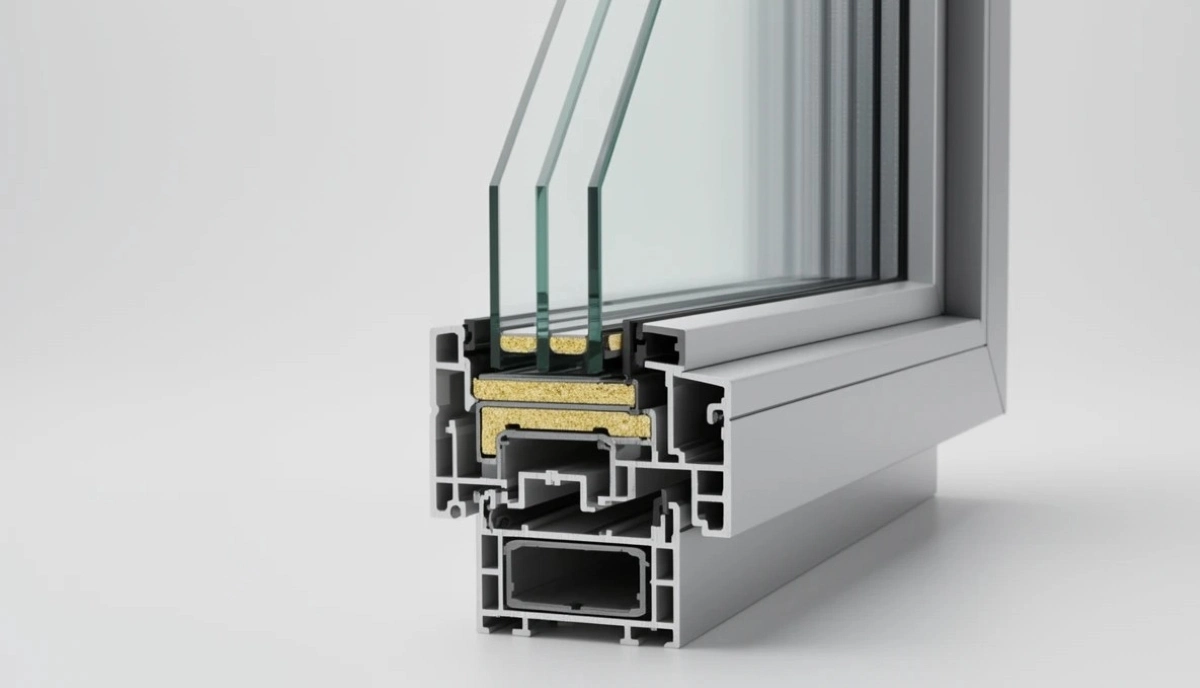
- Window type (casement seals better than sliding)
Why air leakage matters: Even with double glazing, if air leaks around the frame, your energy savings disappear. Air leakage can account for 30-50% of heat loss in poorly sealed windows.
What to look for: Ask potential suppliers for air leakage test results. Look for AL ≤ 1.5 m³/(h·m²) for good performance. Casement windows typically have lower air leakage than sliding windows.
Read our seal replacement guide for improving air leakage.

💡 Visible Transmittance – Light Rating
Visible transmittance (VT) measures how much light passes through the window.
What is VT? Visible Transmittance measures the fraction of visible light transmitted through the window. VT ranges from 0 to 1. Higher VT means more natural light.
Typical VT values:
- Clear single glazing: VT = 0.85 – 0.90 (excellent)
- Clear double glazing: VT = 0.75 – 0.80 (good)
- Double glazing + Low-E: VT = 0.65 – 0.75 (acceptable)
- Tinted or reflective glass: VT = 0.30 – 0.60 (reduced light)
The trade-off with SHGC: Reducing SHGC (to block summer heat) usually also reduces VT (less light). You need to balance heat control with light. For most homes, aim for VT ≥ 0.65 with Low-E coatings.
When VT matters most: North-facing rooms (already bright), rooms with small windows, or homes where you want maximum natural light. For south-facing rooms, higher VT is beneficial.
🇿🇦 South African Standards & Certifications
Understanding how to check aluminium window energy rating includes knowing SA standards.
SANS 10400-XA (Energy efficiency in buildings):
Part XA of the National Building Regulations sets minimum energy performance requirements for new buildings. For windows, this includes U-value and SHGC limits depending on climate zone.
SABS certification: SABS (South African Bureau of Standards) tests and certifies windows for thermal performance, air leakage, and structural integrity. Look for the SABS mark.
NFRC (North American standard – widely used here):
Many South African fabricators use NFRC (National Fenestration Rating Council) ratings. These are internationally recognised and reliable. NFRC labels show U-value, SHGC, VT, and air leakage.
What to ask suppliers:
- Do you have SABS or NFRC certification for your windows?
- Can you provide energy rating certificates?
- What are the U-value, SHGC, and air leakage ratings for this specific window?
- Is the rating for the whole window (frame + glass) or just the glass?
⚠️ Warning: Beware Uncertified Claims
Some suppliers claim “energy efficient” without any certified ratings. This is meaningless – every window is “energy efficient” compared to an open hole. Only trust certified window efficiency rating from SABS or NFRC. If they can’t provide a certificate, walk away. For how to check aluminium window energy rating, certification is non-negotiable.

Confused by Energy Ratings?
Get free quotes from verified aluminium fabricators who provide certified aluminium window energy ratings. Compare and save.
🎯 Target Energy Ratings by SA Climate Zone
Use this energy rating guide to set targets for your location.
| Climate Zone | Target U-value | Target SHGC (N-facing) | Target Air Leakage | Recommended Spec |
|---|---|---|---|---|
| Gauteng, Free State, Highveld | ≤ 2.0 W/m²K | 0.5 – 0.7 | ≤ 1.5 | Thermal break + double glazing (argon) + Low-E |
| Western Cape, Cape Town | ≤ 2.5 W/m²K | 0.4 – 0.6 | ≤ 1.5 | Double glazing (argon) + Low-E (thermal break optional) |
| KZN coastal (Durban, Umhlanga) | ≤ 3.0 W/m²K | 0.3 – 0.5 | ≤ 2.0 | Double glazing (air-filled) or standard + Low-E |
| Lowveld (Nelspruit, Hoedspruit) | ≤ 3.0 W/m²K | 0.25 – 0.4 | ≤ 2.0 | Standard + Low-E or tinted glass (focus on SHGC) |
| Eastern Cape interior | ≤ 2.5 W/m²K | 0.5 – 0.6 | ≤ 1.5 | Double glazing (argon) recommended |
Remember: These are targets for whole-window performance (frame + glass). Some suppliers quote only glass performance, which is misleading – the frame matters equally.
Read our single vs double glaze guide for more.
📝 How to Compare Window Quotes Using Energy Ratings
When suppliers provide aluminium window energy ratings, use this checklist.
Step 1: Ask for the rating certificate
Don’t accept verbal claims. Request the NFRC or SABS certificate for the specific window model.
Step 2: Check what’s included
Is the rating for the whole window (frame + glass) or just the glass? Frame matters greatly – whole-window rating is what you need.
Step 3: Compare U-values
Lower is better. For Gauteng, target ≤ 2.0. For Western Cape, ≤ 2.5. For KZN coastal, ≤ 3.0.
Step 4: Compare SHGC for your orientation
For north-facing, higher SHGC (0.5-0.7) for free winter heat. For east/west, lower SHGC (0.3-0.5) to block harsh sun.
Step 5: Compare air leakage
Target ≤ 1.5 for good performance. Higher numbers mean draughts.
Step 6: Balance cost vs performance
Premium windows (U=1.5) cost 50-100% more than standard (U=5.0). Calculate payback. For many homeowners, U=2.0-2.5 is the sweet spot – good performance without premium pricing.
Use our Beat Your Quote guarantee for competitive pricing.
🚫 Common Mistakes When Evaluating Energy Ratings
⚠️ Warning: These Mistakes Cost You Money
Avoid these errors when comparing window efficiency rating quotes.
- Accepting verbal claims without certificates: “Energy efficient” is marketing fluff without certified ratings. Always demand certificates.
- Comparing glass-only ratings: Some suppliers quote only glass performance (U=1.0) but the whole window (including frame) is U=3.5. Always ask for whole-window ratings.
- Ignoring air leakage: Even with great U-value, if air leaks around the frame, your savings disappear. Air leakage matters as much as U-value.
- Choosing wrong SHGC for orientation: North-facing windows should have higher SHGC (winter heating). West-facing should have lower SHGC (summer cooling). One size doesn’t fit all.
- Focusing only on U-value in hot climates: In hot climates (KZN coastal, Lowveld), SHGC is more important than U-value. Blocking solar heat is the priority.
- Assuming all double glazing is equal: Argon gas, Low-E coating, and thermal break frames make huge differences. Basic double glazing (air-filled) is only moderately better than single.
- Not calculating payback: Premium windows cost much more – ensure the energy savings justify the investment for your climate and planned ownership period.
Read our buying checklist for more.
📊 Complete Aluminium Window Energy Ratings Comparison Table
Use this as your final reference for aluminium window energy ratings.
| Window Specification | U-value (W/m²K) | SHGC (typical) | Air Leakage (AL) | Cost Premium | Best For |
|---|---|---|---|---|---|
| Single glazing (standard) | 5.0 – 7.0 | 0.85 | 2.0 – 3.0 | Base | Budget, mild climates, rentals |
| Single + thermal break | 4.0 – 5.5 | 0.85 | 1.5 – 2.5 | +20% | Moderate improvement |
| Double glazing (air-filled) | 2.8 – 3.5 | 0.75 | 1.5 – 2.5 | +30% | Mild climates, budget energy upgrade |
| Double glazing (argon) | 2.5 – 3.0 | 0.70 | 1.5 – 2.0 | +40% | Good value for cold climates |
| Double + Low-E | 1.8 – 2.5 | 0.40 – 0.70* | 1.0 – 1.5 | +60% | Excellent – best for most homes |
| Thermal break + double + Low-E | 1.5 – 2.0 | 0.40 – 0.70* | 0.5 – 1.0 | +80%+ | Outstanding – new builds, cold climates |
*SHGC varies based on Low-E coating type – choose high SHGC for cold climates, low SHGC for hot climates.
❓ Frequently Asked Questions About Aluminium Window Energy Ratings
What is a good U-value for aluminium windows in South Africa?
For aluminium window energy ratings, target U-values: Gauteng ≤ 2.0 W/m²K (thermal break + double glazing), Western Cape ≤ 2.5 W/m²K (double glazing), KZN coastal ≤ 3.0 W/m²K (single glazing + Low-E acceptable). Lower U-value = better insulation = lower energy bills. A U-value of 5.7 (standard single glazing) is very poor.
What does SHGC mean and why does it matter?
SHGC (Solar Heat Gain Coefficient) measures how much solar heat enters through the window. For thermal performance rating, choose SHGC based on orientation: north-facing = higher SHGC (0.5-0.7) for free winter heating; east/west-facing = lower SHGC (0.3-0.5) to block harsh summer sun; hot climates = lower SHGC overall.
How do I check if a window has certified energy ratings?
To how to check aluminium window energy rating, ask the supplier for NFRC or SABS certification for the specific window model. Certified ratings are independently tested. If the supplier can’t provide a certificate, they’re likely selling unverified products. The certificate should show U-value, SHGC, air leakage, and visible transmittance for the whole window (frame + glass).
What is the difference between glass-only and whole-window ratings?
Glass-only ratings ignore the frame – but the frame can account for 20-40% of heat loss. Whole-window ratings (which include frame and glass) are what you need for accurate window efficiency rating comparison. A supplier quoting “U=1.0” is almost certainly quoting glass-only. Always ask for whole-window ratings.
Does double glazing always have better energy ratings than single?
Yes for U-value – double glazing is always better at reducing heat loss. However, for hot climates, SHGC matters more than U-value. Single glazing with Low-E coating and external shading may perform acceptably in mild climates. But for energy rating guide in cold climates (Gauteng), double glazing is essential.
What is the payback period for upgrading to energy-efficient windows?
In Gauteng (cold winters), upgrading from single to thermal break + double glazing costs R30,000-60,000 extra and saves R1,500-2,500 annually → payback 12-30 years. However, this doesn’t include comfort, noise reduction, and resale value. For new builds, the cost difference is smaller (10-15% of window budget). Read our cost guide.
Are SABS energy ratings mandatory for windows?
SABS 10400-XA sets minimum energy performance requirements for windows in new buildings. However, enforcement varies by municipality. Many new buildings must comply, but existing homes have no requirements. For new builds, ask your architect about energy compliance. For retrofits, ratings are voluntary but strongly recommended.
How do I find a supplier who provides certified energy ratings?
Use ServiceLink SA’s free quote service to find verified aluminium fabricators. Ask potential suppliers: Do you have NFRC or SABS certification for your windows? Can you provide the certificate? What is the whole-window U-value? For Gauteng, Johannesburg, Pretoria, or Cape Town, ask for references from energy-efficient projects.
✅ Final Thoughts: Know the Numbers, Save Money
After reading this aluminium window energy ratings guide, you understand the three key numbers: U-value (heat loss), SHGC (solar gain), and air leakage (draughts).
Armed with this knowledge, you can confidently compare quotes from different suppliers. You’ll know which questions to ask and what certificates to demand. You won’t be fooled by marketing claims or glass-only ratings.
For most South African homeowners in cold climates (Gauteng, Free State, Western Cape), target U-value ≤ 2.5 and air leakage ≤ 1.5. For hot climates (KZN coastal), focus on SHGC ≤ 0.4 and accept higher U-value.
Remember: certified ratings matter. If a supplier can’t provide a certificate, walk away. Your energy bills – and your comfort – depend on it.
Key takeaways for window energy ratings:
- Three key ratings: U-value (heat loss), SHGC (solar gain), air leakage (draughts)
- Lower U-value = better insulation (target ≤ 2.5 for cold climates)
- SHGC depends on orientation – higher for north-facing (winter heating), lower for west-facing (summer cooling)
- Lower air leakage = fewer draughts (target ≤ 1.5)
- Always ask for whole-window ratings (frame + glass), not glass-only
- Demand certified ratings (NFRC or SABS) – don’t accept verbal claims
- Thermal break + double glazing + Low-E = best performance (U ≤ 2.0)
- Payback varies by climate – but comfort and noise reduction add value
- Use ServiceLink SA to find certified fabricators
Your next step: Ready to buy energy-efficient windows? Get free quotes from verified aluminium fabricators who provide certified ratings.
Ready to Compare Energy-Efficient Windows?
Get free, no-obligation quotes from verified aluminium fabricators who provide certified aluminium window energy ratings. Save on energy bills and stay comfortable.
📞 Call us: 073 138 4726 for energy efficiency advice.
Free energy assessments •
Hiring tips •
Beat Your Quote •
Why choose us
📚 Official resources & standards referenced:
- Department of Energy – Energy rating standards and building efficiency regulations.
- SABS – South African Bureau of Standards for certification standards and product testing.
Information provided for general guidance. Energy ratings vary by manufacturer and specific product. Always request certified ratings for the exact window model you’re considering.
Written by: ServiceLink SA Research Team
Specialist Energy Efficiency & Aluminium Window Experts
The ServiceLink SA Research Team has extensive experience with aluminium window energy ratings and thermal performance across thousands of South African homes. Our team has worked closely with certified testing laboratories, energy efficiency specialists, and homeowners to develop this comprehensive energy rating guide. This guide is based on real performance data, certified ratings, and feedback from across Gauteng, Johannesburg, Pretoria, Cape Town, and nationwide. We update our information regularly to reflect current energy standards and market conditions.
For more information about energy-efficient windows, explore our related resources: thermal break guide, single vs double glaze, double glazing cost guide, heat loss reduction guide, and Low-E glass guide. Learn about our process on what is ServiceLink SA and how ServiceLink SA works. Find fabricators in your area: Gauteng, Johannesburg, Pretoria, Cape Town, and Sandton. For related services, see our air conditioning and building construction guides.