
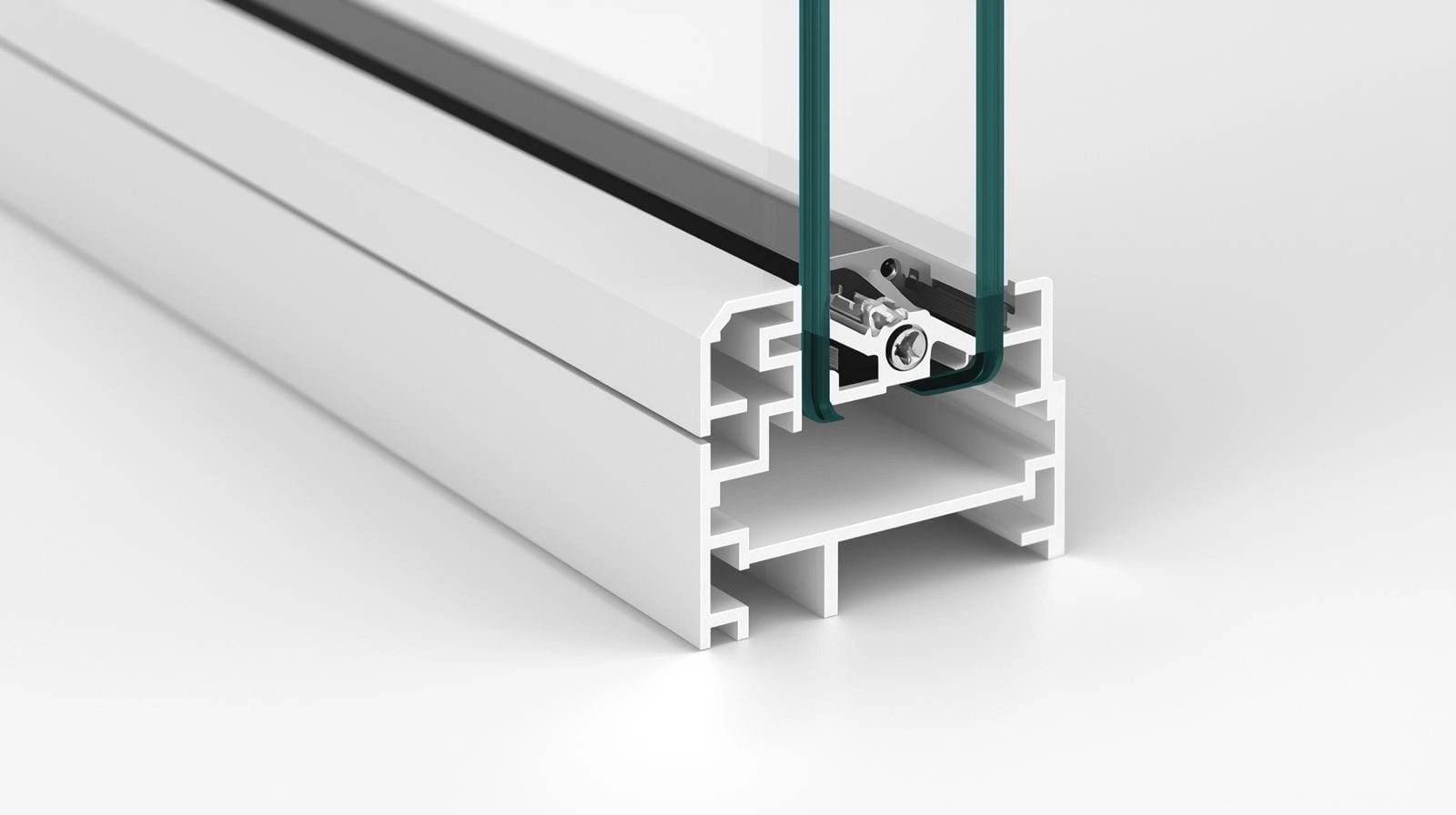
Want to Cut Energy Bills?
Get free quotes from verified aluminium fabricators. Compare low emissivity glass options and find the best value for your home.
Servicing Gauteng, Johannesburg, Pretoria, and Sandton
Low-E Glass for Aluminium Windows: Benefits, Cost & Is It Worth It SA?
🪟 The complete guide to energy-efficient glass – everything you need to know about Low-E coatings
Let me ask you something. You’ve heard about double glazing. You know it saves energy. But the cost makes you hesitate. What if I told you there’s a technology that can improve your window’s energy efficiency by 30-50% for a fraction of the cost of double glazing?
That technology is Low-E glass. Short for “low emissivity,” it’s a microscopic coating applied to glass that reflects heat back into your home in winter and keeps solar heat out in summer. It’s one of the most cost-effective energy upgrades you can make.
In this complete guide to low-e glass aluminium windows, I’ll explain what is low-e glass for aluminium windows, explore low emissivity glass benefits, compare costs vs savings, and help you decide if this energy efficient glass is right for your home.
For more energy guidance, read our thermal break guide, single vs double glaze guide, or energy ratings guide. Ready to understand Low-E? Let’s dive in.
📋 Table of Contents – Low-E Glass Guide
🔬 What Is Low-E Glass?
To answer what is low-e glass for aluminium windows, start with basic physics.
The problem with standard glass: Standard glass allows heat to pass through easily. In winter, your indoor heat escapes through the glass. In summer, outdoor heat enters. Your heating and cooling systems work overtime.
The Low-E solution: Low-E (low emissivity) glass has a microscopic, transparent coating – thinner than a human hair – applied to the glass surface. This coating reflects heat while allowing visible light to pass through. It acts like a thermal mirror.
How it’s made: The coating is applied during glass manufacturing using a process called “sputtering” or “pyrolytic deposition.” The result is a durable, long-lasting coating that won’t degrade over time.
What “low emissivity” means: Emissivity measures how well a surface radiates heat. Standard glass has high emissivity (it radiates heat easily). Low-E glass has low emissivity (it reflects heat rather than radiating it).
According to Department of Energy Low-E glass benefits and SABS glass quality standards, Low-E glass is recommended for energy-efficient homes.
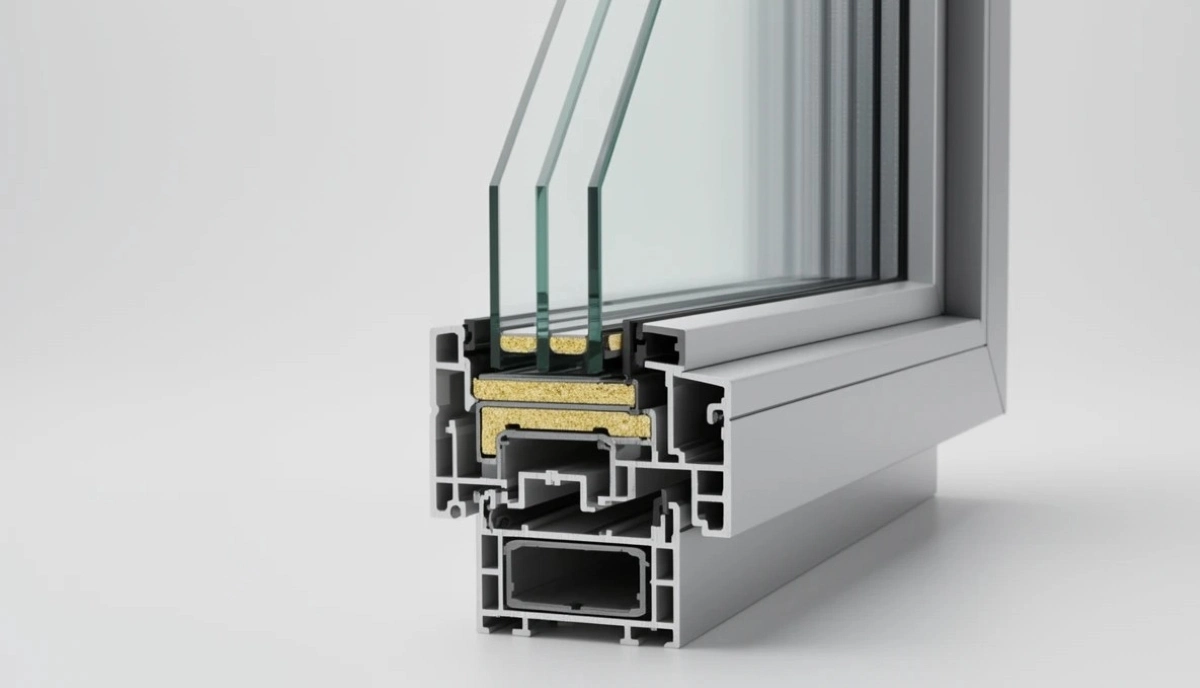
⚙️ How Low-E Coating Works
Understanding the science helps you choose the right energy efficient glass for your needs.
The physics simplified:
Heat moves in three ways: conduction (through solids), convection (through air), and radiation (invisible waves). Standard glass allows radiative heat to pass through easily. Low-E coating reflects radiative heat – like a mirror for heat.
Winter performance (heat retention):
Indoor heat radiates toward the window. The Low-E coating reflects this heat back into the room. Result: warmer rooms, less heating required.
Summer performance (heat rejection):
Solar heat radiates from outside. The Low-E coating reflects this heat back outside. Result: cooler rooms, less air conditioning required.
What about visible light?
The coating is designed to allow visible light to pass through while reflecting heat. You get natural light without the heat.
How much does it help?
- Standard single glazing: U-value ~5.7 W/m²K
- Single glazing + Low-E: U-value ~3.5 W/m²K (40% improvement)
- Double glazing (air-filled): U-value ~2.8 W/m²K
- Double glazing + Low-E: U-value ~1.8 W/m²K (70% improvement over single)
Read our energy ratings guide for more on U-values.
📋 Types of Low-E Glass – Passive vs Solar Control
Not all low emissivity glass is the same – choose the right type for your climate.
Passive Low-E (high SHGC) – for cold climates:
- Designed to let solar heat in while reflecting indoor heat back
- Higher SHGC (Solar Heat Gain Coefficient) – 0.5 to 0.7
- Best for: Cold climates where winter heating is the priority (Gauteng, Free State, Mpumalanga highveld)
- Effect: Captures free solar heat in winter; still reflects indoor heat
Solar Control Low-E (low SHGC) – for hot climates:
- Designed to reflect solar heat out while still reflecting indoor heat
- Lower SHGC – 0.25 to 0.4
- Best for: Hot climates where summer cooling is the priority (KZN coastal, Lowveld, Northern Cape)
- Effect: Blocks summer heat; still retains indoor heat in winter
Dual-climate Low-E (balanced SHGC) – for mixed climates:
- Balances solar heat gain and reflection
- Moderate SHGC – 0.4 to 0.55
- Best for: Mixed climates like Western Cape or areas with both cold winters and hot summers
- Effect: Good year-round performance
Which should you choose?
- Gauteng (cold winters, hot summers): Dual-climate or passive Low-E on north side, solar control on west side
- Cape Town (cool wet winters, mild summers): Dual-climate Low-E
- Durban (hot, humid): Solar control Low-E
Read our single vs double glaze guide for more on SHGC.
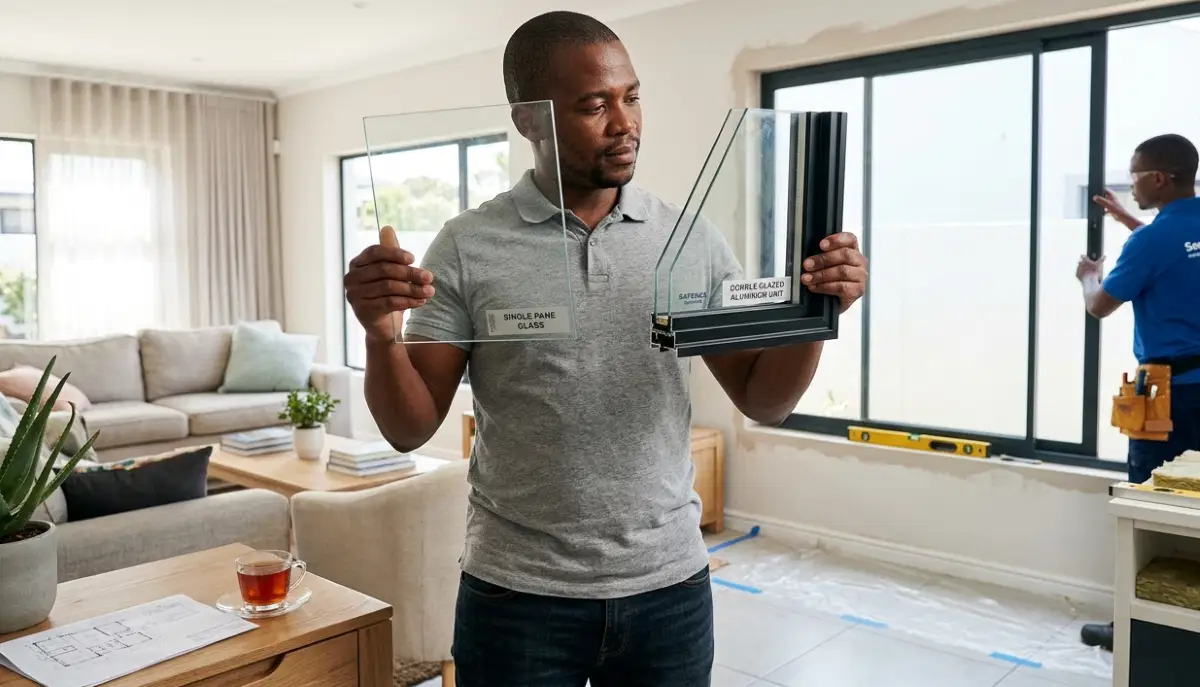
✅ Key Benefits of Low-E Glass
Here’s why energy efficient glass is worth considering.
1. Lower energy bills (20-40% reduction)
By reflecting heat back into your home in winter and blocking solar heat in summer, Low-E reduces heating and cooling costs. For a typical house, annual savings of R800-2,000+.
2. Improved comfort – no more cold spots near windows
Low-E glass keeps the inner pane warmer in winter. You can sit near a window without feeling a cold draught or chill.
3. Reduced condensation (up to 80% less)
Warmer glass means less condensation. Less mould, less window sill damage, healthier home.
4. UV protection (blocks up to 70% of UV rays)
Low-E coatings block most UV radiation, which causes fading of furniture, carpets, and curtains. Protects your interior.
5. No visible difference (clear and transparent)
Quality Low-E glass is virtually invisible. You can’t tell it’s coated just by looking. Some lower-quality Low-E has a slight tint – ask to see samples.
6. Works with single or double glazing
Low-E can be applied to single glazing (moderate improvement) or double glazing (excellent improvement).
7. Long-lasting – doesn’t wear out
The coating is durable and won’t degrade over the life of the window. No maintenance required.
🎁 Pro Tip: Best Value Energy Upgrade
If you can’t afford double glazing, low-e glass aluminium windows with single glazing is an excellent compromise. You get 40% of the benefit of double glazing at 20% of the cost. For homeowners in mild climates (Western Cape), single glazing + Low-E may be all you need. In colder climates (Gauteng), double glazing + Low-E is best.
💰 Cost Breakdown – Low-E vs Standard Glass
Here’s what low-e glass aluminium windows cost in South Africa.
| Glass Type | Cost per m² (Supply) | Cost per m² (Installed in frame) | Premium vs Standard |
|---|---|---|---|
| Standard single glazing | R150 – R300 | Included in window price | Base |
| Single glazing + Low-E | R400 – R800 | +R300 – R600 per m² | +20% to +30% |
| Double glazing (air-filled) | R900 – R1,500 | +R900 – R1,500 per m² | +30% to +40% |
| Double glazing + Low-E (argon) | R1,500 – R2,500 | +R1,500 – R2,500 per m² | +50% to +70% |
Typical house example (12m² of windows):
- Standard single glazing: R0 extra (base)
- Single glazing + Low-E: R3,600 – R7,200 extra
- Double glazing + Low-E: R18,000 – R30,000 extra
Use our Beat Your Quote guarantee for competitive pricing.
Ready to Upgrade to Low-E Glass?
Get free quotes from verified aluminium fabricators. Compare low-e glass aluminium windows options and start saving on energy bills.
📊 Energy Savings – Real-World Data
Here’s what low emissivity glass can save you annually.
| Upgrade | Annual Saving (Gauteng) | Annual Saving (Western Cape) | Payback (Gauteng) |
|---|---|---|---|
| Single glazing + Low-E | R400 – R800 | R300 – R600 | 4-8 years |
| Double glazing (air-filled) | R600 – R1,200 | R400 – R800 | 8-12 years |
| Double glazing + Low-E (argon) | R800 – R1,600 | R600 – R1,200 | 10-15 years |
Important note: Energy savings alone rarely justify premium upgrades (payback 10-15 years). But combined with comfort, noise reduction, UV protection, and increased home value, premium upgrades make sense for long-term homeowners.
The best value option: Single glazing + Low-E. For a modest investment (R3,600-7,200 extra for a typical house), you get 40% of the benefit of double glazing at 20% of the cost. Payback 4-8 years.
Read our heat loss reduction guide for complementary strategies.
📊 Low-E vs Double Glazing – Which Is Better?
This is the most common comparison in energy efficient glass decisions.
| Factor | Single + Low-E | Double Glazing (air-filled) |
|---|---|---|
| Cost premium (per m²) | R300 – R600 | R900 – R1,500 |
| U-value improvement | 5.7 → 3.5 (40% better) | 5.7 → 2.8 (50% better) |
| Noise reduction | Minimal (same as single) | Good (30-35 dB reduction) |
| Condensation reduction | Good | Excellent |
| Best for | Budget, mild climates, existing windows | Cold climates, noise reduction, long-term |
Our verdict: If budget is tight, single glazing + Low-E is excellent value. If you can afford it and need noise reduction, double glazing is better. For maximum performance, combine Low-E with double glazing.
Read our single vs double glaze guide for more detail.
🔧 Low-E + Double Glazing – The Ultimate Combination
For maximum energy efficient glass, combine Low-E coating with double glazing.
Why they work together:
- Double glazing traps a layer of air/argon gas – stops conduction and convection
- Low-E coating reflects radiant heat – stops radiation
- Together, they address ALL forms of heat transfer
Performance vs standard single glazing:
- Single glazing: U = 5.7 W/m²K (baseline)
- Double glazing + Low-E (argon): U = 1.8 W/m²K (70% better)
- Double glazing + Low-E (argon) + thermal break frame: U = 1.5 W/m²K (75% better)
Cost: Double glazing + Low-E costs R1,500-2,500 per m² extra over standard single glazing. For a typical house (12m² windows), R18,000-30,000 extra.
Is it worth it? For long-term homeowners in cold climates, yes. For new builds, the cost difference is small relative to total build cost. For rental properties or short-term ownership, single + Low-E may be sufficient.
Read our double glazing cost guide for more.
📽️ Retrofit Low-E Film – An Alternative for Existing Windows
If you can’t replace your windows, retrofit Low-E film is an option.
What is retrofit Low-E film? A thin film applied to existing glass. It reflects heat like Low-E coating, but it’s less effective and less durable.
Performance vs true Low-E glass:
- True Low-E glass: U-value improvement 40-70% (depending on configuration)
- Retrofit film: U-value improvement 15-25% (noticeable but limited)
Pros of retrofit film:
- Low cost (R300-600 per m² installed)
- Can be applied to existing windows
- DIY possible (but professional installation is better)
- No need to replace windows
Cons of retrofit film:
- Less effective than true Low-E glass
- May have visible tint or reflection
- Can bubble or peel over time (5-10 year lifespan)
- Not as durable as factory-coated glass
Is it worth it? For renters or homeowners who can’t replace windows, yes. For long-term owners, save for true Low-E glass – the performance and durability are worth the extra cost.
📊 Complete Low-E Glass Comparison Table
Use this as your final reference for low-e glass aluminium windows decisions.
| Glass Type | U-value (W/m²K) | Cost Premium (per m²) | Noise Reduction | Best For |
|---|---|---|---|---|
| Standard single glazing | 5.7 | Base | Poor (25 dB) | Budget, rentals, mild climates |
| Single + Low-E (passive) | 3.5 | R300 – R600 | Poor (25 dB) | Cold climates, budget upgrade |
| Single + Low-E (solar control) | 3.5 | R300 – R600 | Poor (25 dB) | Hot climates, budget upgrade |
| Double glazing (air-filled) | 2.8 | R900 – R1,500 | Good (30-32 dB) | Cold climates, noise reduction |
| Double + Low-E (argon, passive) | 1.8 | R1,500 – R2,500 | Good (30-35 dB) | Cold climates, maximum efficiency |
| Double + Low-E (argon, solar control) | 1.8 | R1,500 – R2,500 | Good (30-35 dB) | Hot climates, maximum efficiency |
❓ Frequently Asked Questions About Low-E Glass
What is Low-E glass and how does it work?
What is low-e glass for aluminium windows? It’s glass with a microscopic, transparent coating that reflects heat while letting light through. In winter, it reflects indoor heat back into your home. In summer, it reflects outdoor heat away. This keeps your home warmer in winter and cooler in summer, reducing energy bills by 20-40%.
How much does Low-E glass cost in South Africa?
Low-e glass aluminium windows cost R400-800 per m² for the glass itself, or R300-600 per m² premium over standard glass when installed in new windows. For a typical house (12m² windows), Low-E adds R3,600-7,200 to the window cost. Double glazing + Low-E adds R18,000-30,000. Use our free quote service to compare prices.
Is Low-E glass worth the extra cost?
Yes – for most homeowners, low emissivity glass is worth it. Single glazing + Low-E pays back in 4-8 years through energy savings, plus improves comfort and reduces condensation. For long-term homeowners in cold climates, double glazing + Low-E is an excellent investment. Even if payback is longer (10-15 years), the comfort, noise reduction, and home value increase justify the cost.
Can I see the difference between Low-E and standard glass?
Quality Low-E glass is virtually invisible – you cannot tell it’s coated just by looking. Some lower-quality Low-E may have a slight tint (usually slightly green or grey). Always ask for samples before ordering. For double glazing, the coating is on the inside surface, so you never touch or see it directly. The performance difference is dramatic – but visually, energy efficient glass looks normal.
Does Low-E glass reduce condensation?
Yes – significantly. Condensation forms when warm, moist air hits a cold surface. Low-E glass keeps the inner pane warmer (closer to room temperature). Warmer glass = less condensation. Low-E glass can reduce condensation by 50-80%. For bathrooms and kitchens (high moisture areas), Low-E is especially beneficial. However, proper ventilation is still important.
What is the difference between passive and solar control Low-E?
Passive Low-E (high SHGC) lets more solar heat in – good for cold climates where winter heating is the priority. Solar control Low-E (low SHGC) blocks more solar heat – good for hot climates. Dual-climate Low-E balances both. For Gauteng (cold winters, hot summers), use passive Low-E on north-facing windows and solar control on west-facing windows. Read our energy ratings guide.
Can I add Low-E film to existing windows?
Yes – retrofit Low-E film can be applied to existing windows. Cost: R300-600 per m² installed. However, film is less effective than true Low-E glass (15-25% improvement vs 40-70% for glass) and may bubble or peel over time (5-10 year lifespan). For renters or when window replacement isn’t possible, film is a good option. For long-term owners, true Low-E glass is better value.
How do I find a supplier of Low-E glass windows?
Use ServiceLink SA’s free quote service to find verified aluminium fabricators who supply Low-E glass. Ask potential suppliers: What type of Low-E do you offer (passive/solar control)? Can you provide U-value and SHGC ratings? Do you have samples to view? For Gauteng, Johannesburg, Pretoria, or Sandton, ask for references from homes with Low-E windows.
✅ Final Thoughts: Low-E Is a Smart Investment
After reading this guide on low-e glass aluminium windows, you understand why Low-E is one of the smartest energy upgrades you can make.
For a modest investment (R3,600-7,200 extra for a typical house), single glazing + Low-E delivers 40% of the benefit of double glazing at 20% of the cost. Payback is 4-8 years – faster than almost any other home energy upgrade.
If you’re building new or replacing windows, specify Low-E as standard. The cost difference is small relative to total window cost. For retrofit Low-E film, it’s a good temporary solution for renters or when replacement isn’t possible.
Don’t waste energy through your windows. Low-E glass pays for itself while keeping you comfortable year-round.
Key takeaways for Low-E glass:
- Low-E coating reflects heat while letting light through – invisible but effective
- Single glazing + Low-E costs R300-600 per m² extra – payback 4-8 years
- Double glazing + Low-E costs R1,500-2,500 per m² extra – payback 10-15 years
- Passive Low-E (high SHGC) for cold climates; solar control (low SHGC) for hot climates
- Benefits: lower energy bills, improved comfort, less condensation, UV protection
- Best value: single glazing + Low-E for budget; double glazing + Low-E for maximum efficiency
- Retrofit Low-E film is an option but less effective and less durable
- Quality Low-E glass is virtually invisible – no aesthetic downside
- Use ServiceLink SA to find verified Low-E glass suppliers
Your next step: Ready to upgrade to Low-E glass? Get free quotes from verified aluminium fabricators specialising in energy-efficient windows.
Ready to Upgrade to Low-E Glass?
Get free, no-obligation quotes from verified aluminium fabricators. Compare low-e glass aluminium windows options and start saving on energy bills.
📞 Call us: 073 138 4726 for energy efficiency advice.
Free energy assessments •
Hiring tips •
Beat Your Quote •
Our guarantees
📚 Official resources & standards referenced:
- Department of Energy – Low-E glass benefits and energy efficiency guidelines.
- SABS – South African Bureau of Standards for glass quality standards and certification.
Information provided for general guidance. Energy savings vary based on climate, window orientation, and existing insulation. Always get multiple quotes for your specific project.
Written by: ServiceLink SA Research Team
Specialist Energy Efficiency & Aluminium Window Experts
The ServiceLink SA Research Team has extensive experience with Low-E glass installations across thousands of South African homes. Our team has worked closely with certified glass manufacturers, energy efficiency specialists, and homeowners to develop this comprehensive low emissivity glass guide. This guide is based on real energy data, thermal performance tracking, and feedback from across Gauteng, Johannesburg, Pretoria, Sandton, Centurion, and nationwide. We update our information regularly to reflect current energy standards and market conditions.
For more information about energy-efficient windows, explore our related resources: thermal break guide, single vs double glaze, double glazing cost guide, energy ratings guide, and heat loss reduction guide. Learn about our process on what is ServiceLink SA and how ServiceLink SA works. Find fabricators in your area: Gauteng, Johannesburg, Pretoria, Sandton, and Centurion. For related services, see our air conditioning and building construction guides.