
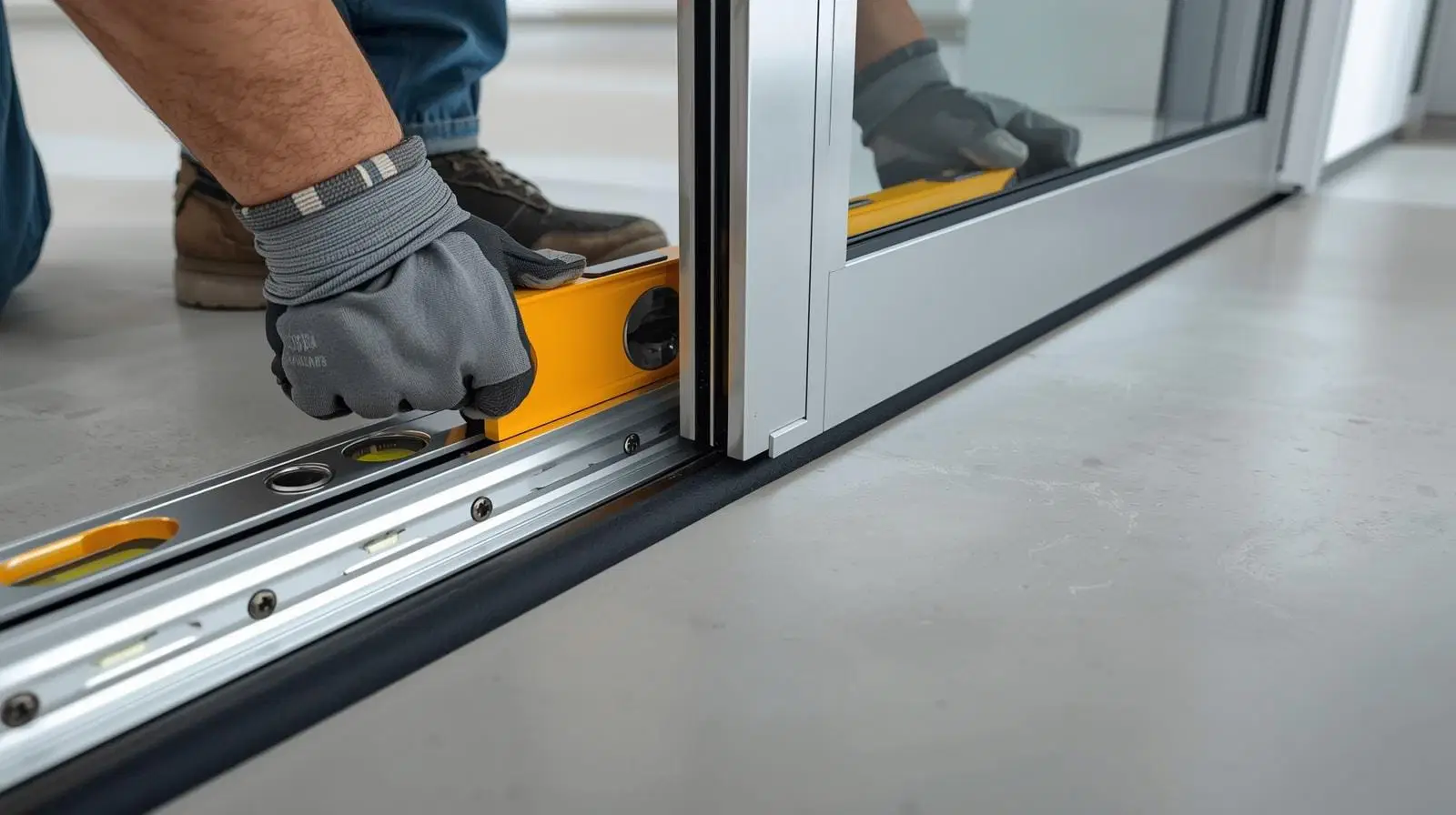
Opening or Renovating a Restaurant?
Get free quotes from verified commercial aluminium specialists. Compare cafe sliding doors options for your hospitality venue.
Get Free Hospitality Door Quotes
Servicing Gauteng, Western Cape, KwaZulu-Natal, and hospitality venues nationwide
Aluminium Sliding Doors for Restaurants & Cafes: Commercial Guide SA
🍽️ The complete guide to choosing, installing, and maintaining sliding doors for hospitality venues
Let me paint a picture that every restaurateur dreams of. A beautiful sunny day in Cape Town. Your cafe is buzzing. The patio is full. And your aluminium sliding doors restaurants are wide open – creating a seamless indoor-outdoor flow that makes customers feel like they’re dining al fresco while still having shelter from the wind.
I’ve helped restaurant owners across Johannesburg, Cape Town, and Durban transform their venues with the right door systems. The hospitality industry demands durability, aesthetics, smooth operation, and often the ability to completely open up a space. Cafe sliding doors and stacking systems are the perfect solution.
In this complete guide to restaurant doors, I’ll cover everything you need to know: door types (sliding vs stacking vs bifold), glass options (clarity, safety, energy efficiency), frame finishes, operation systems (manual vs electric), durability for high-traffic hospitality use, and cost factors. You’ll learn about hospitality doors designed for commercial food service environments.
For more commercial guidance, read our sliding door guide, sliding vs stacking comparison, or stacking door pricing guide. Ready to create the perfect indoor-outdoor dining experience? Let’s dive in.
📋 Table of Contents – Restaurant Door Guide
🍽️ Why Restaurants Need Specialty Doors
Standard doors aren’t designed for the unique demands of restaurant doors.
Unique hospitality requirements:
- High traffic volume: Staff, customers, and delivery personnel pass through doors hundreds of times daily. Residential doors wear out quickly.
- Indoor-outdoor flow: Restaurants need to transition seamlessly between indoor dining and patios during good weather – then close tightly during bad weather.
- Visibility: Customers want to see the outdoor dining area from inside (and vice versa). Glass should be clear, not tinted.
- Aesthetics: Your door system is part of your brand identity. Modern, clean lines matter.
- Durability: Restaurant environments have grease, moisture, heavy use, and potential impacts from trolleys and equipment.
- Noise control: When closed, doors should block kitchen noise from the dining area and street noise from inside.
Why aluminium is the best choice for hospitality:
- Corrosion-resistant (important for coastal restaurants and kitchens)
- Lightweight yet strong – easy to operate daily
- Low maintenance – no painting or sealing required
- Modern aesthetic – slim profiles maximise glass area
- Customisable – any RAL colour to match your brand
According to SANS 10400 commercial door standards and SABS glass safety standards, hospitality doors must meet specific safety requirements.
🎁 Pro Tip: First Impressions Matter
Your cafe sliding doors are the first thing customers notice. A smooth, quiet, well-designed door system signals quality. A sticky, noisy, or dated door system signals neglect. Invest in quality doors – they pay for themselves in customer perception and operational efficiency.
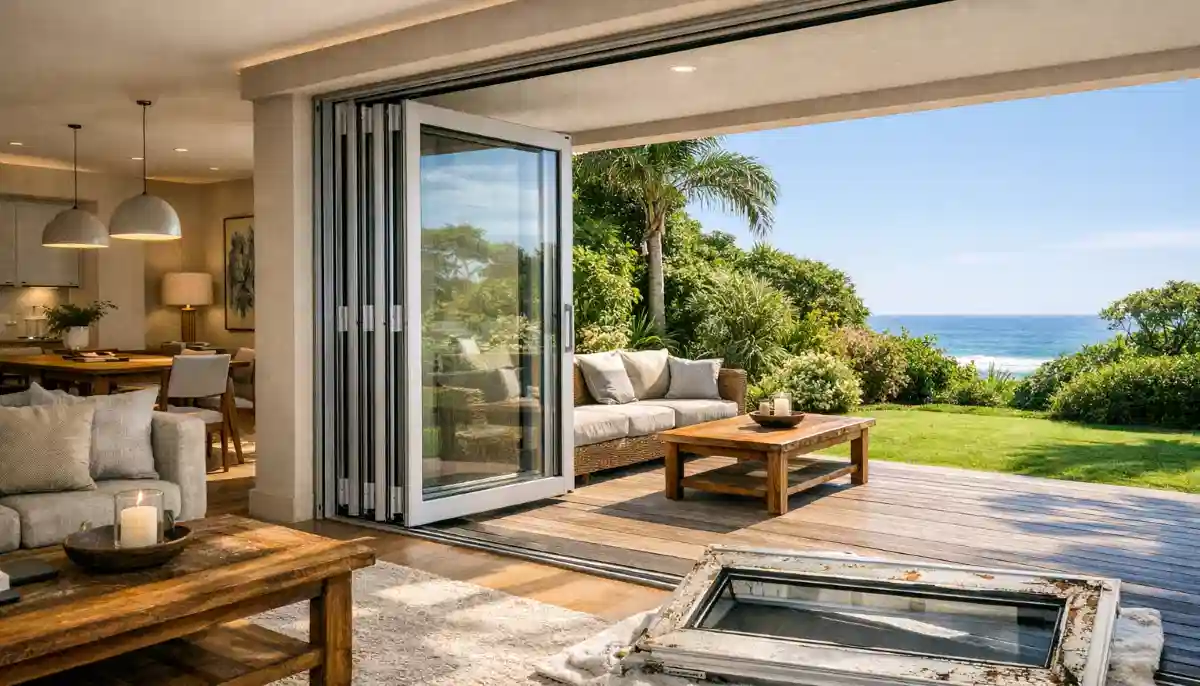
🚪 Best Door Types for Restaurants & Cafes
Different hospitality venues need different hospitality doors. Here’s what works where.
| Door Type | Suitability | Opening Percentage | Pros | Cons | Best For |
|---|---|---|---|---|---|
| Standard sliding (2-3 panel) | Good | 50-66% | Affordable, space-saving, easy operation | Limited opening, fixed panel blocks view | Smaller cafes, budget projects |
| Stacking (multi-slide) | Excellent | 75-90% | Large opening, seamless indoor-outdoor flow | Higher cost, requires wall space for stack | Medium to large restaurants, patio dining |
| Bi-fold | Excellent | 90-100% | Maximum opening, dramatic effect | Most expensive, complex mechanism | High-end restaurants, flagship venues |
| French doors | Fair | 100% (swing) | Classic look, simple mechanism | Swing path requires space, limited width | Smaller openings, traditional styling |
| Lift & slide | Excellent | 50-100% | Superior sealing, smooth heavy-duty operation | Expensive, heavier operation | Premium venues, coastal locations (excellent sealing) |
Recommendation for most restaurants: Stacking (multi-slide) doors offer the best balance of opening percentage, aesthetics, and cost. For smaller cafes, standard sliding doors work well. For high-end venues, consider bi-fold or lift & slide systems.
Read our sliding vs stacking comparison for detailed analysis.
📊 Sliding vs Stacking vs Bifold – Comparison for Restaurants
This is the most common decision for restaurant doors. Here’s how they compare.
| Feature | Standard Sliding | Stacking (Multi-Slide) | Bi-fold |
|---|---|---|---|
| Maximum opening % | 50-66% | 75-90% | 90-100% |
| Indoor-outdoor flow | Good | Excellent | Excellent |
| Space required on sides | None (panels overlap within frame) | 250-400mm per panel (stacking space) | Minimal (folded stack is compact) |
| Weather sealing | Fair | Good | Good (with compression seals) |
| Noise reduction | Fair | Good | Good |
| Maintenance complexity | Low | Moderate | Higher (hinges require lubrication) |
| Cost (4m opening) | R25,000 – R40,000 | R45,000 – R80,000 | R50,000 – R90,000+ |
| Best for restaurant size | Small (under 3m opening) | Medium to large (3-6m opening) | Large (4-8m opening), panoramic views |
Recommendation: For most restaurants with a 4m+ opening, stacking doors offer the best value. For smaller cafes under 3m, standard sliding doors are sufficient. For flagship venues with spectacular views, bi-fold doors create the ultimate indoor-outdoor experience.
Read our bifold installation guide for more on folding systems.
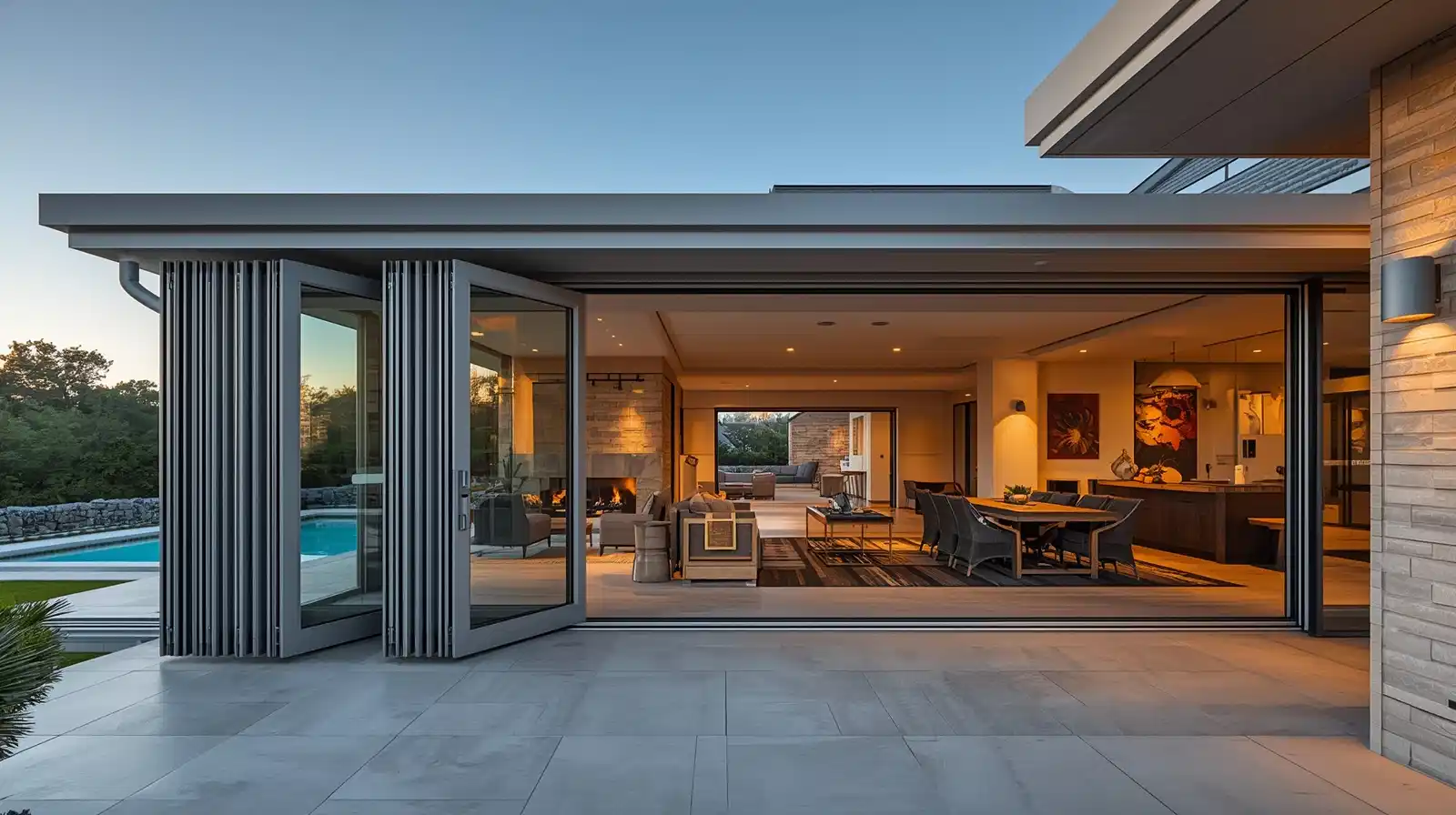
🪟 Glass Options for Hospitality Venues
Glass specification is critical for restaurant doors. Here’s what to consider.
| Glass Type | Clarity | Safety | Energy Efficiency | Cost Impact | Best For |
|---|---|---|---|---|---|
| Standard 4mm toughened | Excellent | Good | Poor | Base | Budget cafes, sheltered patios |
| 5-6mm toughened | Excellent | Very Good | Fair | 10-20% | Standard restaurants, good value |
| Double glazing (standard) | Good | Good | Good | 30-40% | Energy efficiency, noise reduction |
| Low-E double glazing | Good | Good | Excellent | 40-60% | South-facing patios, sun control |
| Laminated safety glass | Excellent | Excellent | Moderate | 30-50% | Security, impact resistance, premium venues |
Recommendation for most restaurants: 5-6mm toughened glass offers the best balance of safety, clarity, and cost. For venues with significant sun exposure or noise issues, upgrade to double glazing with Low-E coating. For beachfront restaurants, consider laminated glass for storm protection.
Read our glass safety guide.
🎨 Frame Finishes & Aesthetics
Your cafe sliding doors should complement your brand.
Standard finishes (no additional cost):
- Silver anodised (classic industrial look)
- White powder coat (clean, modern, versatile)
- Black powder coat (contemporary, dramatic)
Premium finishes (adds 20-35% to frame cost):
- Any RAL colour – match your brand colours exactly
- Wood grain finish – timber look without maintenance
- Textured finishes – hide fingerprints (good for high-touch areas)
- Matte vs gloss options – matte hides smudges better
Finish durability considerations:
- Coastal or humid locations: Specify marine-grade powder coating (80-120 microns)
- High-touch areas (handles, push bars): Specify scratch-resistant finish
- Outdoor exposure: UV-resistant powder coating prevents fading
Read our colour coating guide for more options.
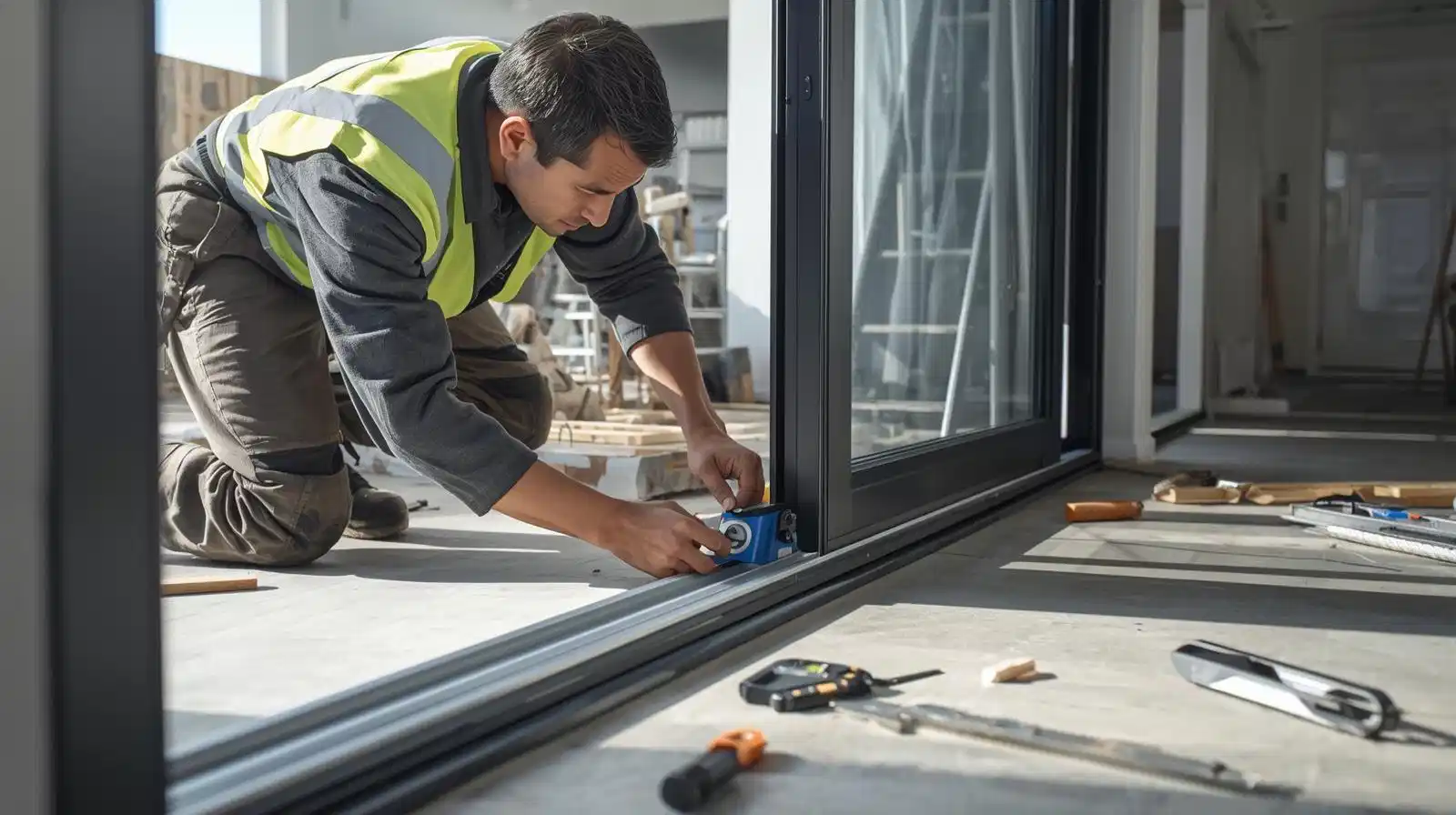
⚙️ Operation Systems – Manual vs Electric
How your hospitality doors operate affects both staff efficiency and customer experience.
Manual operation (most common):
- Staff or customers push/pull doors open
- Lower cost, no power required, simpler maintenance
- Best for: Smaller doors, moderate traffic
- Cost: Included in door price
Electric operation (premium):
- Motorised opening with remote control or wall switch
- Effortless operation – great for heavy doors or frequent use
- Can be integrated with access control or timers
- Cost: Add R8,000-20,000 per door (plus electrical installation)
- Load shedding consideration: Add battery backup (R3,000-8,000)
Sensor operation (automatic):
- Motion sensor or pressure mat activates door
- Best for: High-traffic entrances, accessibility requirements
- Cost: Add R15,000-30,000 per door (plus electrical)
Load shedding advice for electric doors: In South Africa, specify battery backup for any powered restaurant door. Without it, the door won’t operate during power outages – potentially trapping customers or staff. Battery backup adds R3,000-8,000 per door and provides 20-50 operations.
Read our automation guide for more on powered systems.
🔧 Durability for High-Traffic Hospitality Use
Restaurant doors get heavy use. Here’s what to specify for aluminium sliding doors restaurants.
Cycle life requirements:
- Residential standard: 5,000-10,000 cycles (not enough)
- Commercial standard: 20,000-50,000 cycles (adequate for restaurants)
- Heavy-duty commercial: 50,000-100,000 cycles (recommended for high-traffic venues)
Hardware upgrades for hospitality:
- Stainless steel rollers (Grade 304 or 316 for coastal) – resists corrosion from cleaning chemicals
- Sealed bearings – prevents dust and moisture ingress
- Heavy-duty tracks – thicker gauge material (2.5-3.0mm)
- Reinforced handles – withstand daily pulling/pushing
Chemical resistance: Restaurant environments have cleaning chemicals, food acids, and grease. Specify powder coating rated for chemical resistance. Stainless steel hardware is essential – standard steel will corrode.
Impact resistance: Trolleys, serving carts, and busy staff can bump doors. Specify reinforced lower tracks and impact-resistant corners.
Read our roller replacement guide for maintenance.
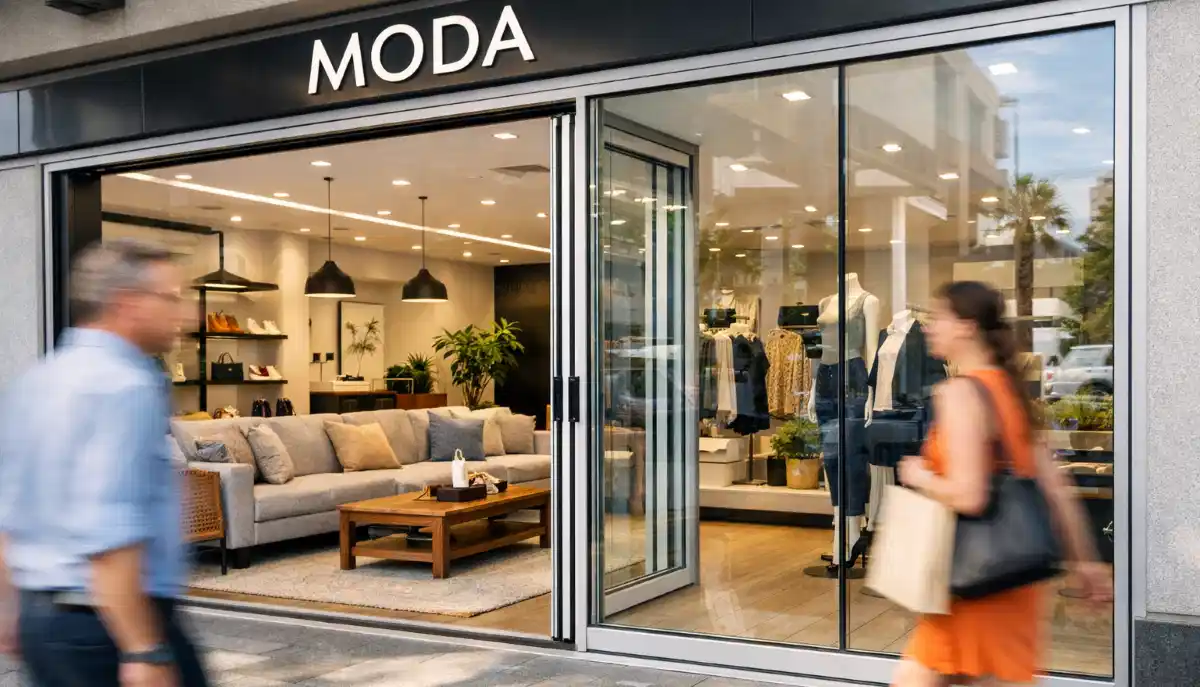
Planning a Restaurant or Cafe Renovation?
Get free quotes from verified commercial aluminium specialists. Compare cafe sliding doors options for your venue.
📜 Safety & Building Regulations for Restaurants
Restaurant doors must comply with commercial building codes and safety regulations.
Key SANS 10400 requirements for hospitality doors:
- Safety glazing: Glass within 900mm of floor must be toughened or laminated
- Egress (escape): Doors must allow easy exit in an emergency – sliding doors must have emergency opening mechanisms
- Accessibility: Door opening force limits (maximum 25N for interior doors), clear opening widths (minimum 850mm)
- Fire safety: Fire-rated doors required in certain locations (kitchen connections, escape routes)
- Visibility markings: Glass panels must have visual markings at eye level to prevent collisions
Accessibility considerations: If your restaurant serves the public, door hardware must be accessible. Lever handles (not round knobs), maximum opening force, and clear manoeuvring space are required. Automatic doors are the gold standard for accessibility.
Collision prevention: Apply decals or frosted bands at adult and child eye level on large glass panels. This prevents customers from walking into the glass – a common injury in restaurants.
Read our security guide for more.
💰 Cost Breakdown & Budgeting
Here’s what aluminium sliding doors restaurants cost for hospitality venues.
| Door System | Typical Opening | Supply Only | Installed | Notes |
|---|---|---|---|---|
| Standard sliding (2-3 panel) | 2.4-3.6m | R15,000 – R25,000 | R20,000 – R35,000 | Best for smaller cafes |
| Stacking (4-5 panel) | 4-6m | R30,000 – R55,000 | R40,000 – R70,000 | Best value for most restaurants |
| Bi-fold (4-6 panel) | 4-8m | R35,000 – R65,000 | R45,000 – R80,000+ | Premium option, maximum opening |
| Lift & slide | 3-6m | R40,000 – R80,000 | R50,000 – R95,000+ | Best sealing, heavy-duty |
Additional costs for hospitality applications:
- Electric operation (motor + control): R8,000-20,000
- Battery backup (load shedding): R3,000-8,000
- Sensor operation (automatic): R15,000-30,000
- Double glazing upgrade: 30-40% premium on glass
- Custom colour (RAL): 20-35% premium on frame
- Fly screens: R2,000-5,000 per opening
- Night locks / security bars: R1,500-4,000
Read our stacking door pricing guide for detailed costs.
📅 Installation Timeline & Business Disruption
Plan your restaurant renovation around hospitality doors installation.
Typical timeline for a restaurant door system (4m opening):
- Week 1 – Design & quoting: Site survey, design approval, material selection (2-5 days)
- Week 2-3 – Fabrication: Frames manufactured, glass ordered, hardware prepared (10-15 days)
- Week 4 – Installation Day 1: Removal of old doors, frame installation (6-8 hours)
- Week 4 – Installation Day 2: Glass installation, hardware fitting, operation testing (6-8 hours)
- Week 4 – Installation Day 3: Finishing, sealing, final adjustments (4 hours)
- Total timeline: 3-4 weeks from deposit to completion
Minimising restaurant disruption:
- Schedule installation during off-hours (Monday-Tuesday quiet days, after-hours, or closed days)
- After-hours installation may cost 25-50% premium
- Temporary hoarding or plastic sheeting to contain dust
- Communicate with customers – signage explaining renovations (customers appreciate transparency)
- Consider phased installation for larger venues (do one section at a time)
🧹 Maintenance & Longevity
Proper maintenance keeps your cafe sliding doors operating smoothly for years.
Quarterly maintenance (staff can perform):
- Clean tracks with vacuum and brush – remove debris, food particles, dust
- Wipe frames with mild detergent and water – avoid abrasive cleaners
- Clean glass with standard glass cleaner
- Lubricate rollers and tracks with silicone spray (never oil – oil attracts dust)
Annual maintenance (professional recommended):
- Inspect and tighten all hardware (rollers, hinges, locks)
- Check that door operates smoothly – no sticking or grinding
- Inspect weather seals – replace if cracked or perished
- For electric doors, service motor and sensors
- Check battery backup (test during power disconnection)
What damages hospitality doors:
- Grease and oil buildup – attracts dust and gums up tracks
- Abrasive cleaners – damage powder coating
- Impact from trolleys and serving carts – specify reinforced lower tracks
- Corrosion from coastal salt or cleaning chemicals – specify stainless steel hardware
Expected lifespan with proper maintenance: 20-30 years for the frame, 10-15 years for hardware (rollers, tracks), 5-10 years for seals. In high-traffic venues, expect to replace rollers every 5-8 years.
Read our full maintenance guide.
❓ Frequently Asked Questions About Aluminium Sliding Doors for Restaurants
What are the best sliding doors for restaurants?
The best sliding doors for restaurants are stacking (multi-slide) systems for medium to large venues (4m+ opening). They offer 75-90% opening, seamless indoor-outdoor flow, and good weather sealing. For smaller cafes (under 3m), standard sliding doors are sufficient. For premium venues, consider bi-fold or lift & slide systems. All hospitality doors should use commercial-grade hardware rated for high-cycle use.
How much do aluminium sliding doors cost for a restaurant?
Aluminium sliding doors restaurants cost R20,000-35,000 installed for a standard 3-panel system, R40,000-70,000 for a 4-5 panel stacking system, and R45,000-80,000+ for bi-fold systems. Additional costs: electric operation (R8,000-20,000), battery backup (R3,000-8,000), double glazing (30-40% premium), and custom colours (20-35% premium). Use our free quote service to compare prices.
What’s the difference between stacking and sliding doors for restaurants?
Standard cafe sliding doors have one or two sliding panels with fixed panels, opening only 50-66% of the width. Stacking (multi-slide) doors have all panels sliding, stacking behind each other, opening 75-90% of the width. For restaurants wanting true indoor-outdoor flow, stacking doors are superior. However, stacking doors need wall space for the stacked panels (250-400mm per panel). Read our comparison guide.
Do restaurant sliding doors need battery backup for load shedding?
Yes – for electrically operated doors. Without battery backup, powered restaurant doors won’t operate during load shedding. This can trap staff or customers and disrupt service. Battery backup adds R3,000-8,000 per door and provides 20-50 operations. For manually operated doors, battery backup is not needed. Always specify battery backup for any powered door in a hospitality venue.
What glass specification is best for restaurant doors?
For most restaurants, 5-6mm toughened glass offers the best balance of safety, clarity, and cost. For venues with significant sun exposure (west-facing patios), specify double glazing with Low-E coating (reduces heat gain). For restaurants on busy streets, double glazing also reduces noise. For beachfront venues, consider laminated glass for storm protection and security.
How do I maintain sliding doors in a restaurant environment?
Quarterly: clean tracks with vacuum/brush (remove food debris), lubricate with silicone spray, clean glass and frames. Never use oil-based lubricants (attract dust) or abrasive cleaners (damage powder coating). Annual: professional inspection of hardware, seals, and operation. For coastal restaurants, increase cleaning frequency. Read our maintenance guide.
Do restaurant sliding doors need safety markings?
Yes – SANS 10400 requires visual markings on large glass panels to prevent collisions. Apply decals or frosted bands at adult and child eye level (approx 900mm and 1500mm from floor). This is especially important in restaurants where customers may not expect a glass door. Failure to comply can result in liability for injuries and building code violations.
How do I find a reliable installer for restaurant doors?
Use ServiceLink SA’s free quote service to find verified commercial aluminium specialists. Look for: hospitality experience, references from restaurants or cafes, knowledge of SANS 10400 requirements, and workmanship warranties. For Western Cape, Gauteng, or KZN, ask for local hospitality references.
✅ Final Thoughts: Great Doors Create Great Dining Experiences
After reading this guide on aluminium sliding doors restaurants, you understand how the right door system transforms your venue.
Great restaurant doors do more than just open and close. They create seamless indoor-outdoor flow, enhance your brand aesthetic, improve staff efficiency, and increase seating capacity on good-weather days. They’re an investment in your customer experience.
Don’t settle for residential or light-commercial doors in your restaurant. Specify commercial-grade systems with heavy-duty hardware rated for high-cycle use. Consider stacking (multi-slide) doors for maximum opening. Add battery backup for electric doors. And work with installers who understand hospitality environments.
Your customers will notice the difference – and so will your bottom line.
Key takeaways for restaurant doors:
- Stacking (multi-slide) doors offer the best value for most restaurants (75-90% opening)
- Specify commercial-grade hardware rated for high-cycle use (20,000+ cycles)
- 5-6mm toughened glass is the standard recommendation
- Double glazing with Low-E for sun control or noise reduction
- Stainless steel hardware is essential – resists corrosion from cleaning chemicals
- Battery backup is essential for electrically operated doors (load shedding)
- Safety markings on glass are required by law
- Regular maintenance (quarterly cleaning, annual professional inspection) extends lifespan
- Costs: R20,000-35,000 (standard sliding) to R40,000-70,000 (stacking) to R45,000-80,000+ (bi-fold)
- Use ServiceLink SA to find verified hospitality door specialists
Your next step: Planning a restaurant or cafe renovation? Get free quotes from verified commercial aluminium specialists in your area.
Ready to Transform Your Restaurant’s Entrance?
Get free, no-obligation quotes from verified commercial aluminium specialists. Compare cafe sliding doors options for your hospitality venue.
📞 Call us: 073 138 4726 for hospitality door advice.
Free site assessments •
Hiring tips •
Beat Your Quote •
Our guarantees
📚 Official resources & standards referenced:
- SANS 10400 – South African National Standard for commercial door standards and building regulations.
- SABS – South African Bureau of Standards for glass safety standards and product certification.
Information provided for general guidance. Restaurant doors must comply with local building codes and health regulations. Always consult qualified professionals for your specific venue.
Written by: ServiceLink SA Research Team
Specialist Hospitality Doors & Commercial Glazing Experts
The ServiceLink SA Research Team has extensive experience with door installations for restaurants, cafes, and hospitality venues across South Africa – from trendy Cape Town cafes to bustling Johannesburg eateries and coastal Durban restaurants. Our team has worked closely with restaurateurs, interior designers, and certified installers to develop this comprehensive hospitality doors guide. This guide is based on real project data, customer feedback, and operational requirements from venues across Gauteng, Western Cape, KwaZulu-Natal, and nationwide. We update our information regularly to reflect current building codes and hospitality trends.
For more information about hospitality doors, explore our related resources: sliding door guide, sliding vs stacking comparison, stacking door pricing, industrial doors guide, and bifold installation guide. Learn about our process on what is ServiceLink SA and how ServiceLink SA works. Find hospitality specialists in your area: Gauteng, Western Cape, KwaZulu-Natal, Johannesburg, Cape Town, and Durban. For related services, see our tiling services and air conditioning guides.