
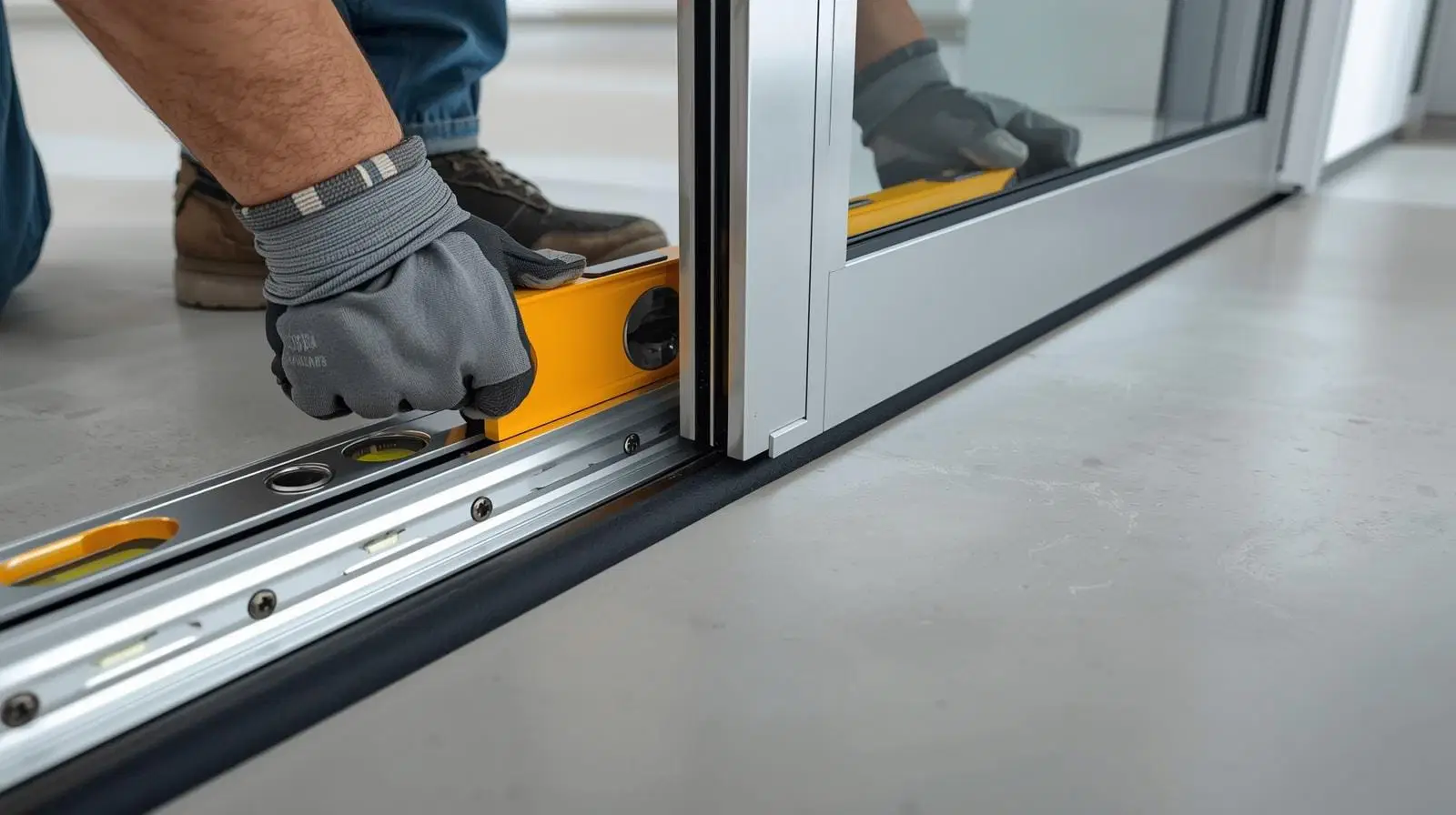
Not Sure Which Door Type Is Right for You?
Get free quotes from verified aluminium fabricators. Compare sliding doors vs stacking doors and find the best solution for your home.
Servicing Gauteng, Western Cape, KwaZulu-Natal, and across South Africa
Aluminium Sliding Doors vs Stacking Doors: Which Is Better for Your Home?
🚪 The complete door type comparison for wide openings – cost, space, ventilation, and performance
Let me settle a debate I have with homeowners almost weekly. You have a wide opening – maybe 3m, 4m, or even 6m across. You want to open up your home to the patio, garden, or pool area. But which door type do you choose? The standard answer has always been sliding doors. But is that still correct?
After helping hundreds of homeowners across Gauteng, Western Cape, and KwaZulu-Natal with this exact decision, I can tell you that sliding doors vs stacking doors is not a simple answer. It depends on your budget, your space, your need for ventilation, and your aesthetic preferences.
In this complete door comparison guide, I’ll help you answer which is better – sliding or stacking doors. You’ll learn how each door type comparison affects cost, opening percentage, space requirements, security, and energy efficiency. By the end, you’ll know exactly which door is right for your home.
For more aluminium guidance, check out our aluminium services, read our sliding door guide, or explore stacking door pricing. Ready to compare? Let’s dive in.
📋 Table of Contents – Sliding vs Stacking Door Guide
📋 Quick Overview – Sliding vs Stacking Doors
Before diving deep, here’s a snapshot of which is better – sliding or stacking doors for different priorities.
| Priority | Winner | Why |
|---|---|---|
| Budget (lower cost) | Sliding Doors | 40-60% cheaper than stacking doors for same opening size |
| Maximum opening percentage | Stacking Doors | Opens 75-90% vs only 50% for standard sliding |
| Space required on sides | Sliding Doors | No stacking space needed – one panel slides behind another within the frame |
| Ventilation & airflow | Stacking Doors | 75-90% open area vs 50% for sliding – dramatically better airflow |
| Energy efficiency | Similar | Both can be specified with thermal break and double glazing |
| Maintenance | Sliding Doors | Fewer moving parts, simpler track system |
| Best for narrow openings (under 3m) | Sliding Doors | Stacking doors need width for multiple panels to stack |
| Best for wide openings (4m+) | Stacking Doors | Can open 75-90% of a very wide opening – spectacular effect |
According to SANS 10400 door operation standards and thermal performance guidelines, both door types must meet specific safety and energy requirements.
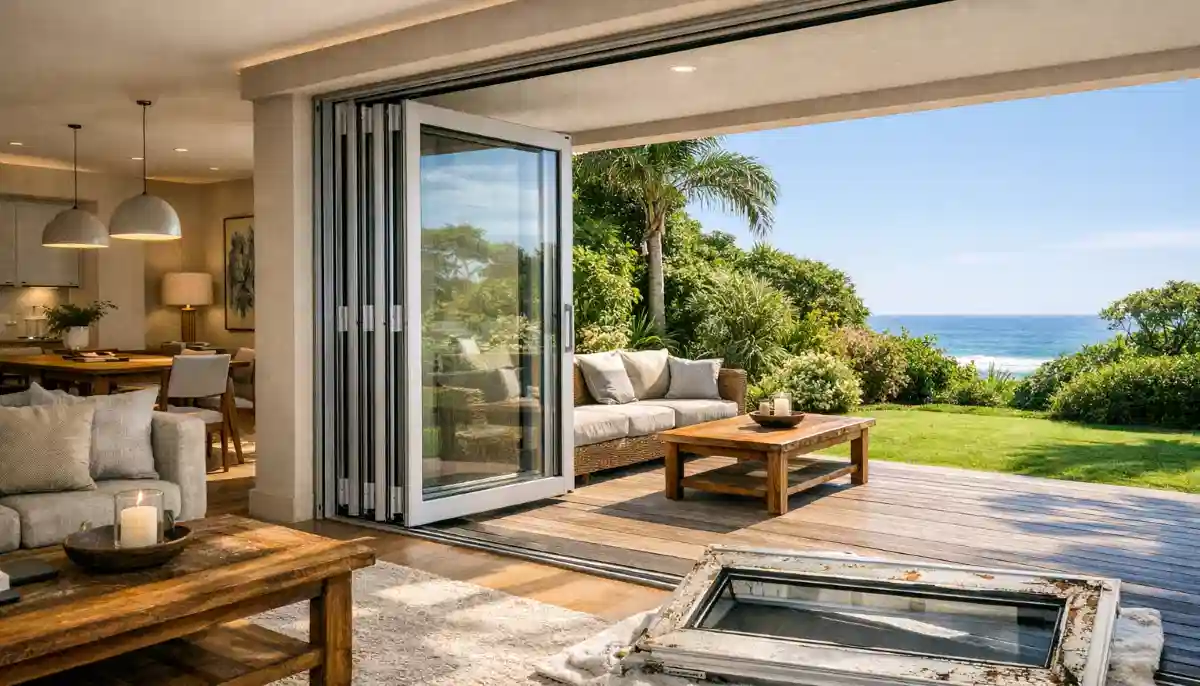
🪟 Standard Aluminium Sliding Doors – Explained
Standard sliding doors are what most South Africans know. Here’s how they work in the door comparison.
How sliding doors work: Two or three panels in a frame. One panel is fixed (doesn’t move), one or two panels slide horizontally on a track. When you open the door, the sliding panel moves behind the fixed panel. Maximum opening is 50% of the total width (one panel slides behind the fixed panel).
Common configurations:
- 2-panel (most common): One fixed, one sliding – opens 50%
- 3-panel: Centre fixed, two sliding – opens up to 66% (but centre panel remains)
- Double sliding (rare): Both panels slide – opens 100% but requires both sides to have space
Pros of sliding doors:
- Affordable – 40-60% cheaper than stacking doors
- Space-saving – no stacking space needed outside the frame
- Simple mechanism – fewer moving parts, less to go wrong
- Easy to install – more installers have sliding door experience
- Low maintenance – quarterly track cleaning, annual roller lubrication
- Good for narrow openings (under 3m)
Cons of sliding doors:
- Limited opening – only 50% of the width opens
- The fixed panel always blocks part of the opening
- Less suitable for very wide openings (over 4m)
- Track collects dirt and debris
Read our full sliding door guide for detailed information.
🏗️ Stacking (Multi-Slide) Doors – Explained
Also called multi-slide or stacking doors, these are the premium option in this door type comparison.
How stacking doors work: Multiple panels (3,4,5,6 or more) slide on a track system. Unlike standard sliding doors where panels overlap within the frame, stacking doors have a “parking” area where panels stack behind each other when open. The more panels, the wider the opening.
Common configurations:
- 3-panel: One fixed (or all sliding) – opens 66-100% depending on configuration
- 4-panel: Most common – can open 75-100% depending on stacking design
- 5-panel and 6-panel: For very wide openings – dramatic 80-90% opening
- Lift-slide: Premium system where panels lift off track for sliding, then drop down to seal
Pros of stacking doors:
- Massive opening – up to 90% of the total width can open
- Spectacular indoor-outdoor flow – transforms living spaces
- No fixed panels blocking the view when open
- Ideal for wide openings (4m+)
- Excellent for entertaining – open the entire wall
- Lift-slide systems offer superior sealing
Cons of stacking doors:
- Expensive – 40-60% more than standard sliding doors
- Requires stacking space on one or both sides
- More complex mechanism – more potential failure points
- Heavier panels – may need 2-3 installers
- Longer installation time
- Track collects debris (like sliding doors)
Read our full stacking door pricing guide and installation guide.
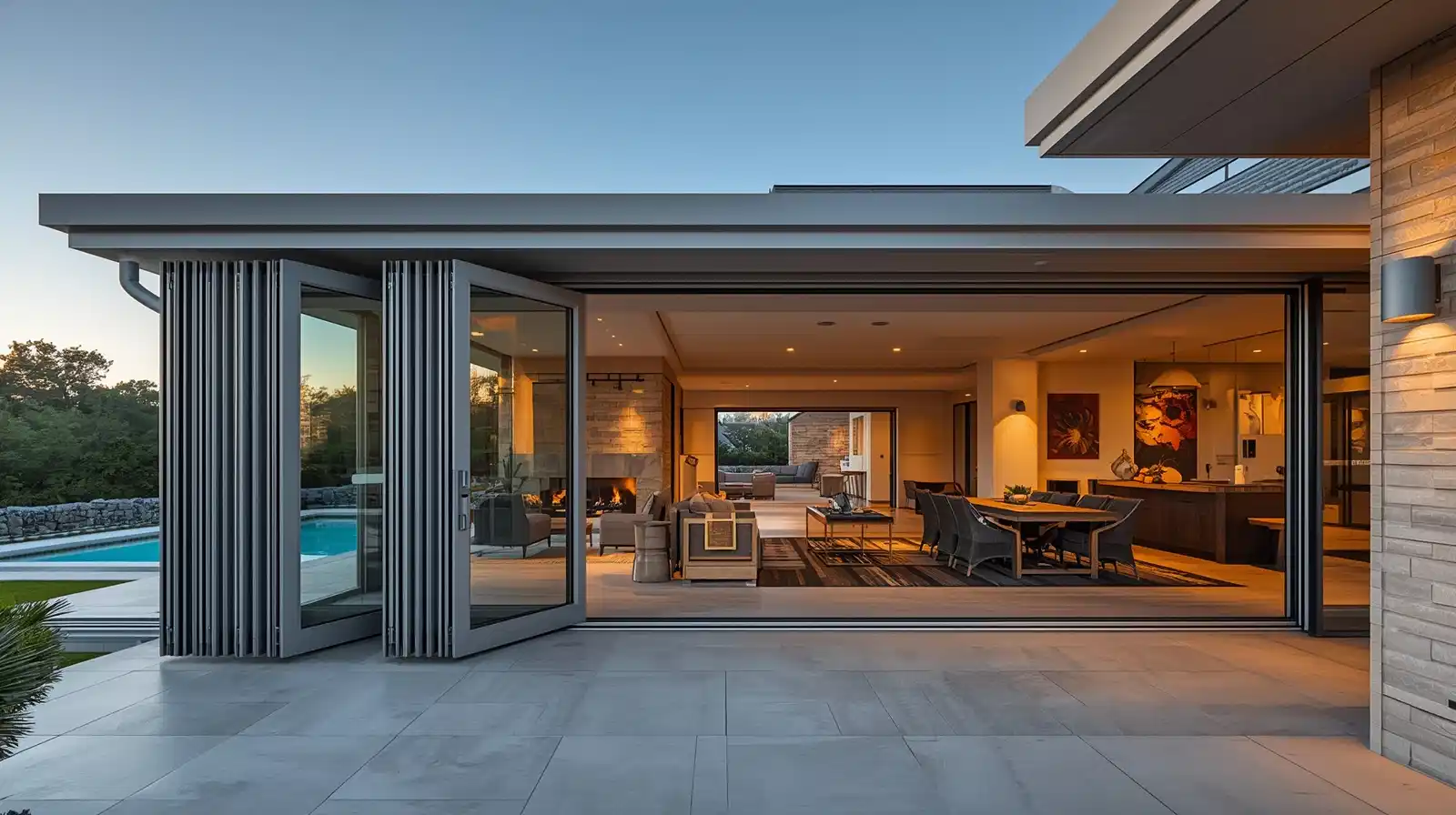
📊 Sliding vs Stacking Doors – Complete Comparison Table
Use this detailed door comparison table for your final decision.
| Feature | Standard Sliding Doors | Stacking (Multi-Slide) Doors |
|---|---|---|
| Typical cost (4-panel, 4m opening) installed | R25,000 – R40,000 | R45,000 – R80,000+ |
| Maximum opening percentage | 50% (one panel slides behind fixed panel) | 75-90% (panels stack behind each other) |
| Fixed panels when open | Yes – at least one panel always fixed | No – all panels can open (depending on config) |
| Space required on sides | None – panels slide within frame | 250-400mm per stacking panel – needs wall space |
| Best for opening width | 1.5m – 3.5m (good value) | 3.5m – 8m+ (where stacking shines) |
| Number of panels | Typically 2 or 3 panels | 3,4,5,6 or more panels |
| Energy efficiency (standard) | Fair (track allows some air leakage) | Fair to Good (similar to sliding, lift-slide better) |
| Security (standard locks) | Good (multi-point locks available) | Good (multi-point locks standard on quality units) |
| Maintenance complexity | Low (tracks, rollers) | Moderate (more rollers to maintain) |
| Installation time (4-panel) | 4-6 hours | 8-12 hours (more complex alignment) |
| Aesthetics when closed | Clean, standard look | More glass, less frame – premium look |
| Aesthetics when open | One side clear, other side blocked | Massive clear opening – spectacular |
| Suitable for rental properties | Yes – affordable, durable, simple | Less common – expensive for rentals |
| Coastal suitability | Good with marine-grade coating | Good with marine-grade, stainless steel hardware |
💰 Cost Comparison – Which Is Cheaper?
For which is better – sliding or stacking doors, budget is often the deciding factor.
Standard sliding doors – cost breakdown:
- 2-panel (1.8m opening): R12,000 – R20,000 installed
- 3-panel (2.7m opening): R18,000 – R30,000 installed
- 4-panel (3.6m opening): R25,000 – R40,000 installed
- Cost per m²: R3,500 – R5,500
Stacking doors – cost breakdown:
- 3-panel (2.7m opening): R25,000 – R40,000 installed
- 4-panel (3.6m opening): R40,000 – R65,000 installed
- 5-panel (4.5m opening): R55,000 – R85,000 installed
- 6-panel (5.4m opening): R70,000 – R110,000+ installed
- Cost per m²: R6,000 – R10,000+
Key cost insights:
- For the same opening width, stacking doors cost 40-60% more than sliding doors
- Example: A 3.6m opening – sliding doors R25k-40k vs stacking doors R40k-65k
- The gap widens as openings get wider – stacking doors for 6m openings are 2-3x sliding door prices
- However, stacking doors open much wider – you’re paying for the additional functionality
For detailed pricing, read our sliding door cost guide and stacking door price guide.
Still Deciding Between Sliding and Stacking Doors?
Get free quotes from verified aluminium fabricators for both options. Compare sliding doors vs stacking doors pricing side by side.
📏 Opening Percentage & Space Requirements
This is where the door comparison shows the biggest difference.
Opening percentage – real-world example (4m opening):
- Standard sliding doors (2-panel): Opens 2m (50%). The other 2m is fixed glass panel – you cannot walk through it.
- Standard sliding doors (4-panel sliding): With 2 sliding panels, you can open approx 2.5m (62%). Still have fixed panels.
- Stacking doors (4-panel): Opens 3.2m – 3.6m (80-90%). All panels can stack, leaving a massive clear opening.
- Stacking doors (6-panel): Opens 4.8m – 5.4m (80-90% of 6m opening). Spectacular.
Space required on sides – critical difference:
- Sliding doors: No space needed – panels slide behind each other within the frame. This is a major advantage for tight spaces, corners, or where wall space is limited.
- Stacking doors: Need 250-400mm of wall space per panel that stacks. For a 4-panel door stacking to one side, you need approximately 400-600mm of clear wall space for the stack. If you don’t have this space, stacking doors won’t work.
Ventilation comparison:
- Sliding doors: Limited airflow (50% of opening). Fine for mild climates, insufficient for hot rooms.
- Stacking doors: Excellent airflow (75-90% of opening). Can create powerful cross-ventilation.
⚡ Performance – Energy, Security & Noise
How do these options compare on key performance metrics?
Energy efficiency:
- Standard sliding doors: Fair – track allows some air leakage
- Standard stacking doors: Fair to Good – similar to sliding
- Lift-slide stacking doors: Excellent – panels lift off track and compress against seals
- Both can be upgraded with thermal break (+R1,500-3,000 per m²) and double glazing (+R900-1,500 per m²)
- Winner: Similar for standard models; lift-slide stacking superior for premium
Security:
- Sliding doors: Multi-point locks available (hooks into frame at 2-3 points). Good security.
- Stacking doors: Multi-point locks standard on quality units. One lock per moving panel. Very good security.
- Both can be fitted with security film, laminated glass, or burglar bars
- Winner: Stacking doors (more locking points)
Noise reduction:
- Sliding doors: Fair – track allows sound to leak
- Stacking doors: Good (standard) to Excellent (lift-slide with compression seals)
- Winner: Stacking doors (especially lift-slide systems)
Durability and lifespan:
- Sliding doors: 20-30+ years with regular maintenance
- Stacking doors: 20-30+ years – hardware may need replacement sooner due to more moving parts
- Winner: Sliding doors (simpler mechanism, fewer failure points)
Read our material comparison for more on durability.
✅ When to Choose Standard Sliding Doors
Based on this sliding doors vs stacking doors analysis, here’s when sliding is the right choice.
Choose sliding doors when:
- Budget is a primary constraint – they’re 40-60% cheaper
- Your opening width is under 3.5m – sliding doors offer good value
- You don’t have wall space for stacking panels
- You’re installing in a rental property – affordable and durable
- You’re replacing existing sliding doors – easiest fit
- Maximum opening isn’t critical – 50% opening is sufficient for your needs
- You have a corner installation where stacking doors can’t stack
- You prefer simpler mechanisms with fewer moving parts
Sliding doors are NOT ideal when:
- You need maximum airflow (kitchens, hot rooms)
- You have a spectacular view that should be unobstructed when open
- You entertain frequently and want indoor-outdoor flow
- Your opening is very wide (4m+ and you want most of it open)
✅ When to Choose Stacking (Multi-Slide) Doors
Here’s when the premium cost of stacking doors is justified in this door comparison.
Choose stacking doors when:
- You want maximum indoor-outdoor flow – create a seamless transition between inside and outside
- Your opening width is 3.5m+ – stacking doors transform wide openings
- You have wall space for panels to stack (250-400mm per panel)
- Budget allows for the premium (40-60% more than sliding)
- You have a spectacular view that should be completely unobstructed when open
- You entertain frequently and want an “open wall” effect
- You prioritise ventilation and airflow for hot rooms
- You’re building a new home or doing a major renovation where you can design around the stacking space
Consider bifold doors instead of stacking when:
- You have very limited stacking space – bifolds fold into a smaller stack
- You want 100% opening (bifolds can achieve this)
- Read our bifold door guide for comparison
For more, read our why choose aluminium doors guide.
🏠 Real-World Case Studies – Sliding vs Stacking Doors
Real examples from homes across South Africa.
Case Study 1: Mid-century home in Johannesburg (3m opening)
Homeowner had a 3m opening to the garden. Budget was R35,000. Installed 3-panel sliding doors (R32,000). Two panels slide, one fixed. Opens 2m (66%). Happy with result – enough airflow, good value. Budget constraint drove the decision.
Case Study 2: Modern farmhouse in Stellenbosch (5m opening with mountain view)
Homeowner wanted to maximise the view of Simonsberg. Installed 5-panel stacking doors (R95,000). Opens 4.5m (90%). When open, the entire wall disappears. Spectacular result. The view justified the premium cost.
Case Study 3: Beach house in Umhlanga (4m opening, coastal)
Homeowner needed corrosion resistance and wanted to capture sea breezes. Installed 4-panel stacking doors with marine-grade stainless steel hardware (R72,000). Opens 3.4m (85%). Perfect for coastal living – can open up to the ocean breeze while keeping salt spray manageable.
Case Study 4: Townhouse in Pretoria (2.5m opening, tight space)
Homeowner had a narrow patio with no wall space for stacking panels. Installed 2-panel sliding doors (R22,000). Opens 1.25m (50%). Sliding doors were the only option due to space constraints. Works well for the small patio.
The decision often comes down to: budget, opening width, available wall space, and how much you value the “open wall” effect.
❓ Frequently Asked Questions About Sliding vs Stacking Doors
Which is better – sliding or stacking doors for a 3m opening?
For a 3m opening, both work. Sliding doors vs stacking doors decision: sliding doors cost R18k-30k and open 1.5m (50%). Stacking doors cost R35k-55k and open 2.4m-2.7m (80-90%). If budget allows and you want maximum opening, choose stacking. If budget is tight, sliding doors are good value. For tight wall spaces, sliding doors don’t need stacking space.
Which is cheaper – sliding doors or stacking doors?
Standard sliding doors are significantly cheaper – 40-60% less than stacking doors for the same opening width. For a 4m opening, sliding doors cost R25k-40k installed vs stacking doors R45k-80k+. For budget-conscious projects, sliding doors are the clear winner in this door comparison. For those prioritising maximum opening, the premium cost of stacking doors buys dramatically better performance.
Do sliding doors or stacking doors open wider?
Which is better – sliding or stacking doors for opening percentage? Stacking doors win decisively. Standard sliding doors open a maximum of 50-66% of the total width. Stacking doors can open 75-90% depending on configuration. For a 4m opening, sliding opens 2m, stacking opens 3.2m-3.6m – almost double the clear opening. This is the biggest functional difference between the two.
Do stacking doors need a lot of wall space?
Yes – this is the main limitation of stacking doors. You need 250-400mm of clear wall space per panel that stacks. For a 4-panel door stacking to one side, you need approximately 400-600mm of wall space for the stack. If you don’t have this space (e.g., a corner installation), stacking doors won’t work – choose sliding or bifold doors instead.
Which is more secure – sliding or stacking doors?
Both offer good security with multi-point locks. Stacking doors have a slight edge because each moving panel has its own locking mechanism – a 4-panel stacking door has 2-4 locking points vs 1-2 for sliding doors. For maximum security, specify laminated glass and multi-point locks on both options. In high-risk areas, consider adding security film or burglar bars. Read our security guide.
Are stacking doors more energy efficient than sliding doors?
Standard models are similar – both have tracks that allow some air leakage. However, premium lift-slide stacking doors (where panels lift off track and compress against seals) are significantly more energy efficient than any sliding door. If energy efficiency is a priority, specify lift-slide stacking doors with thermal break and double glazing. Read our thermal break guide.
Which lasts longer – sliding or stacking doors?
Sliding doors typically last longer due to their simpler mechanism – fewer moving parts means fewer failure points. Quality sliding doors last 20-30+ years with regular maintenance. Stacking doors also last 20-30 years, but the more complex roller systems on multiple panels may need attention sooner (10-15 years). For rental properties or homeowners wanting minimal long-term maintenance, sliding doors are the better choice.
How do I get the best price for sliding or stacking doors?
To get the best sliding doors vs stacking doors pricing: 1) Get quotes from at least 3 fabricators via ServiceLink SA’s free service. 2) Choose standard sizes. 3) Stick to standard colours (white or silver). 4) Order multiple doors for volume discount. 5) Use our Beat Your Quote guarantee. 6) Install during off-peak season. 7) For stacking doors, compare quotes carefully – prices vary significantly between manufacturers.
✅ Final Thoughts: Choose Based on Your Priorities
After this comprehensive door type comparison, you now understand the trade-offs between sliding and stacking doors.
Sliding doors are the practical choice: affordable, space-efficient, low-maintenance, and perfect for openings up to 3.5m. If budget is tight, you have limited wall space, or you don’t need maximum airflow, sliding doors deliver excellent value.
Stacking doors are the premium choice: spectacular 75-90% opening, seamless indoor-outdoor flow, ideal for wide openings (3.5m+), and perfect for entertaining. If you have the budget, the wall space, and you want to transform how you use your home, stacking doors are worth the investment.
For most homeowners with openings under 3.5m and typical budgets, sliding doors are the better choice. For those with wide openings, spectacular views, or who entertain frequently, stacking doors are transformational.
Key takeaways for sliding vs stacking doors:
- Sliding doors: 40-60% cheaper, open 50%, no stacking space needed
- Stacking doors: 80-90% opening, spectacular indoor-outdoor flow, needs wall space
- For openings under 3.5m, sliding doors offer good value
- For openings 3.5m+, stacking doors transform the space
- Budget plays a huge role – stacking doors cost 2x sliding for the same width
- If wall space is limited, sliding doors are your only option
- Both are durable, secure, and can be upgraded with thermal break/ double glazing
- Use ServiceLink SA to find verified fabricators and compare quotes for both options
Your next step: Ready to install new doors? Get free quotes from verified aluminium fabricators for both sliding and stacking options.
Ready to Compare Quotes for Both Door Types?
Get free, no-obligation quotes from verified aluminium fabricators. Compare sliding doors vs stacking doors pricing and find the best solution for your home.
📞 Call us: 073 138 4726 to discuss your door project.
Free inspections •
Hiring tips •
Beat Your Quote •
Our guarantees
📚 Official resources & standards referenced:
- SANS 10400 – South African National Standard for door operation standards and building regulations.
- Department of Energy – Thermal performance guidelines for doors and windows.
Information provided for general guidance based on industry research. Prices vary by location, quality, and market conditions. Always get multiple quotes for your specific project.
Written by: ServiceLink SA Research Team
Specialist Aluminium Doors & Home Design Experts
The ServiceLink SA Research Team has extensive experience with both sliding and stacking door installations across thousands of South African homes. Our team has worked closely with certified fabricators, architects, and homeowners to develop this comprehensive door comparison guide. This guide is based on real project data, fabricator quotes, and long-term performance tracking from across Gauteng, Western Cape, KwaZulu-Natal, and nationwide. We update our information regularly to reflect current market conditions and material costs.
For more information about aluminium doors, explore our related resources: sliding door guide, stacking door pricing, why choose aluminium, material comparison, and buying checklist. Learn about our process on what is ServiceLink SA and how we verify contractors. Find fabricators in your area: Gauteng, Western Cape, KwaZulu-Natal, Johannesburg, Cape Town, and Durban. For related services, see our garage doors and gates and flooring services guides.