
Looking for Maximum Ventilation in Your Home?
Get free quotes from verified aluminium fabricators. Explore louvre window benefits and find the best solution for your home.
Servicing Gauteng, Johannesburg, Pretoria, and Sandton
Aluminium Louvre Windows Guide: Benefits, Applications & Installation SA
🪟 The complete guide to South Africa’s best ventilation window – also known as jalousie or louvered windows
Let me tell you about a window type that doesn’t get enough attention. Walk through any older home in Gauteng, Johannesburg, or Pretoria, and you’ll see them – aluminium louvre windows. Also called jalousie windows or louvered windows, they’ve been a South African favourite for decades. And for good reason.
Why? Because in our climate, ventilation is everything. Jalousie windows with their horizontal glass slats offer something no other window can match: the ability to fine-tune airflow while maintaining privacy. You can open them a crack for gentle ventilation, halfway for moderate airflow, or fully for a breeze that feels like the whole window is open.
In this complete aluminium louvre windows guide, I’ll answer are aluminium louvre windows energy efficient, explore their unique benefits and drawbacks, compare them to casement and sliding alternatives, and help you decide if these louvered windows are right for your home.
For more aluminium guidance, check out our aluminium services, read our installation cost guide, or explore maintenance tips. Ready to master louvre windows? Let’s dive in.
📋 Table of Contents – Louvre Window Guide
📐 What Are Aluminium Louvre Windows?
Aluminium louvre windows – also called jalousie windows or louvered windows – consist of multiple horizontal glass slats (louvers) held in an aluminium frame. A single control mechanism (usually a crank handle or lever) opens and closes all the slats simultaneously.
How they work: When you turn the handle, all the glass slats rotate in unison. Fully closed, the slats overlap to create a water-resistant seal. Fully open, they rotate to become almost horizontal, allowing maximum airflow – typically 80-90% of the window area can be open for ventilation.
Key components:
- Aluminium outer frame (fits into your wall opening)
- Horizontal glass slats (typically 4-6mm toughened glass)
- End clips that hold each slat in place
- Control mechanism (handle, crank, or lever)
- Linkage bars that connect all slats together
- Weather seals between slats (when closed)
Common configurations:
- Standard louvre windows – slats fill the entire opening
- Louvre with fixed top panel – for additional height
- Combination windows – louvre section below fixed glass
- Full-height louvres – slats from top to bottom
According to SANS 10400 ventilation standards and natural ventilation guidelines, louvre windows are recognised as one of the most effective solutions for passive cooling.
✅ Key Benefits of Aluminium Louvre Windows
Here’s why louvre window benefits make them a unique and valuable option for South African homes.
1. Unmatched Ventilation Control
This is the #1 reason people choose louvre windows. You can adjust the slats from fully closed to fully open in tiny increments. Need a gentle breeze while you sleep? Open them a crack. Cooking smells in the kitchen? Open them wide. No other window type gives you this level of fine-tuned airflow control.
2. Privacy While Ventilating
Unlike casement or sliding windows that must be fully open to get airflow, louvre windows can be partially opened. The slats can be angled to direct airflow upward or downward. More importantly, you can maintain privacy while still getting ventilation – people outside can’t see directly into your home when slats are partially open.
3. Rain Protection (can stay open in light rain)
When slightly open, the downward-angled slats deflect light rain while still allowing airflow. This is perfect for bathrooms, laundry rooms, and kitchens where you want continuous ventilation even during summer showers.
4. Excellent for Passive Cooling
In South Africa’s warm climate, passive cooling is crucial. Louvre windows allow hot air to escape from the top of a room while drawing cooler air in from below. This natural convection reduces reliance on air conditioning – good for your wallet and the environment. Read our air conditioning guide for comparison.
5. Slim Profile = More Glass
Because the frame doesn’t need to accommodate sliding mechanisms or heavy hinges, louvre windows have a slim profile. More glass means more natural light.
6. Affordable Option
Louvre windows are generally more affordable than casement windows – typically 15-25% cheaper. They’re simpler in design with fewer complex moving parts than casements, which keeps costs down.
7. Easy to Clean
Each glass slat can be cleaned individually from inside. No leaning out of windows or hiring professionals. In multi-storey homes, this is a significant advantage.
🎁 Pro Tip: Perfect for Coastal Breezes
In coastal areas like Sandton isn’t coastal, but for Cape Town and Durban, louvre windows are ideal. You can angle the slats to capture cooling sea breezes while keeping salt spray out. For coastal applications, specify marine-grade hardware.
❌ Drawbacks to Consider Before Buying
Honest assessment means acknowledging where jalousie windows fall short.
1. Poor Energy Efficiency (Standard Models)
This is the biggest drawback. When fully closed, louvre windows don’t seal as tightly as casement windows. Small gaps between slats allow air leakage. For homes in cold climates or those prioritising energy efficiency, this is a real issue. However, double-glazed louvre slats and improved seals are now available (at higher cost).
2. Not as Secure as Casement Windows
The glass slats are held in place by end clips. While secure, a determined intruder could potentially remove slats. For ground-floor windows, additional security measures are recommended. Some manufacturers now offer security louvres with reinforced frames and anti-theft clips.
3. Limited Insulation
Even when closed, the small gaps between slats allow some sound and temperature transfer. If you live on a noisy street, louvre windows may not be ideal. For bedrooms facing busy roads, consider casement or fixed windows instead.
4. Hardware Can Wear Over Time
The control mechanism and linkage bars have moving parts that can wear, especially in dusty environments. Regular lubrication is essential. In coastal areas, standard steel hardware corrodes – pay extra for stainless steel.
5. Not Ideal for Very Cold Climates
In areas with freezing winters (Highveld, Free State), the gaps between slats allow cold air infiltration. For these climates, casement windows with compression seals are better. Louvre windows work best in moderate to warm climates.
6. Smaller View When Closed
The horizontal slats break up the view. When closed, you’re looking through multiple horizontal lines. This bothers some homeowners but others don’t mind.
⚠️ Warning: Not for Extreme Weather Areas
In areas with severe storms, high winds, or freezing winters, aluminium louvre windows may not be suitable. The slats can rattle in strong winds, and cold air seeps through gaps. For the Highveld’s freezing winters, consider casement or double-glazed sliding windows instead.
📊 Louvre vs Casement vs Sliding – Which Is Best?
Here’s how aluminium louvre windows compare to the main alternatives.
| Feature | Louvre Windows | Casement Windows | Sliding Windows | Best Option |
|---|---|---|---|---|
| Ventilation control | Excellent (fine-tuned slats) | Good (0–100% opening) | Poor (limited opening) | Louvre |
| Privacy while ventilating | Excellent (adjustable slats) | Poor (fully exposed when open) | Poor (fully exposed when open) | Louvre |
| Energy efficiency (standard) | Poor (air gaps between slats) | Good (compression seals) | Fair (track leakage) | Casement |
| Security | Fair (slats can be removed) | Excellent (multi-point locks) | Good (lock upgrades available) | Casement |
| Noise reduction | Poor (air gaps allow sound) | Excellent (tight seal) | Fair (track noise leakage) | Casement |
| Cost (per m²) | R4,000 – R6,000 | R5,000 – R7,500 | R3,500 – R5,500 | Sliding (most affordable) |
| Best use cases | Bathrooms, kitchens, laundry areas | Bedrooms and living spaces | Rental units and budget builds | Depends on use case |
Verdict: Choose louvre for maximum ventilation control, privacy-while-ventilating, and warm climates. Choose casement for energy efficiency, security, and noise reduction. Choose sliding for budget projects and tight spaces.
Read our casement windows guide and sliding windows guide for detailed comparisons.
🏠 Best Applications for Louvre Windows
Based on their unique characteristics, aluminium louvre windows excel in specific areas of the home.
1. Bathrooms (Most Popular Application)
Bathrooms need ventilation to remove moisture and odours. Louvre windows are perfect – you can leave them slightly open for continuous airflow while maintaining privacy. The downward-angled slats prevent rain from entering. For many South Africans, the bathroom is where louvre windows shine brightest.
2. Kitchens
Cooking smells, steam, and heat need to escape. Louvre windows can be opened fully while cooking, then partially closed while still allowing airflow. The fine control is unmatched for kitchen ventilation.
3. Laundry Rooms
Like bathrooms, laundry rooms need moisture ventilation. Louvre windows provide continuous airflow without compromising security or privacy.
4. Walk-in Cupboards and Storerooms
These spaces need ventilation to prevent mustiness. Small louvre windows are ideal – they can be left slightly open 24/7 for background airflow.
5. Enclosed Patios and Sunrooms
In warmer months, these spaces can become unbearably hot. Louvre windows allow you to control airflow and create cross-ventilation.
6. Garages and Workshops
Ventilation for fumes, dust, and heat control. Louvre windows are affordable and effective for these utility spaces.
7. Coastal Homes (with marine-grade hardware)
The ability to angle slats to capture sea breezes while keeping out salt spray makes louvres popular in coastal areas. Read our coastal windows guide for more.
For other areas of your home, consider our aluminium windows and doors range.
⚡ Are Aluminium Louvre Windows Energy Efficient?
This is the most common question: are aluminium louvre windows energy efficient? The honest answer is nuanced.
Standard louvre windows: Poor energy efficiency
Even when fully closed, standard louvre windows have small gaps between the glass slats. These gaps allow air leakage – warm air escapes in winter, hot air enters in summer. In cold climates like the Highveld, this can significantly increase heating costs.
However, modern improvements have changed the game:
- Double-glazed louvre slats: Two panes of glass bonded together, dramatically improving insulation. Adds R800 – R1,500 per m².
- Improved weather seals: Better seals between slats reduce air leakage by 60-80%. Minimal cost increase.
- Thermal break frames: Polyamide strip in the frame reduces heat transfer. Adds R1,500 – R3,000 per m².
- Low-E glass coating: Reflects heat back into the room. Adds R400 – R800 per m².
Energy efficiency verdict: Standard louvre windows are not energy efficient. But upgraded louvres (double glazing + improved seals) can approach the performance of standard casement windows. For cold climates, casement remains better. For warm climates, louvre’s natural ventilation may reduce air conditioning use enough to offset lower insulation.
For more on energy efficiency, read our material comparison and profiles guide.
Ready to Install Louvre Windows in Your Home?
Get free quotes from verified aluminium fabricators. Compare aluminium louvre windows pricing and find the best value for your home.
💰 Cost Breakdown – What to Budget for Louvre Windows
Here’s a realistic breakdown of aluminium louvre windows costs in South Africa.
| Window Size | Supply Only (Standard) | Supply + Install | With Double Glazing | Notes |
|---|---|---|---|---|
| Small (0.9m x 0.9m)RSU | R2,800 – R4,000+RSU | R4,000 – R5,800+RSU | R5,500 – R8,000+RSU | Typical bathroom window+? |
| Standard (1.2m x 1.2m) | R4,000 – R5,800+RSU | R5,500 – R8,000+RSU | R7,500 – R11,000+RSU | Kitchen or laundry window+? |
| Large (1.8m x 1.2m) | R6,000 – R9,000+RSU | R8,000 – R12,000+RSU | R11,000 – R16,000+RSU | Patio or sunroom window+? |
Additional costs:
- Stainless steel hardware (coastal or high-humidity areas): add 10-15%
- Security clips (prevents slat removal): add R200 – R500 per window
- Motorised louvre operation (remote control): add R3,000 – R8,000
- Custom colours (powder coating): add 20-35%
For a complete pricing guide, read our installation cost guide.
🛠️ Aluminium Louvre Window Installation & Maintenance
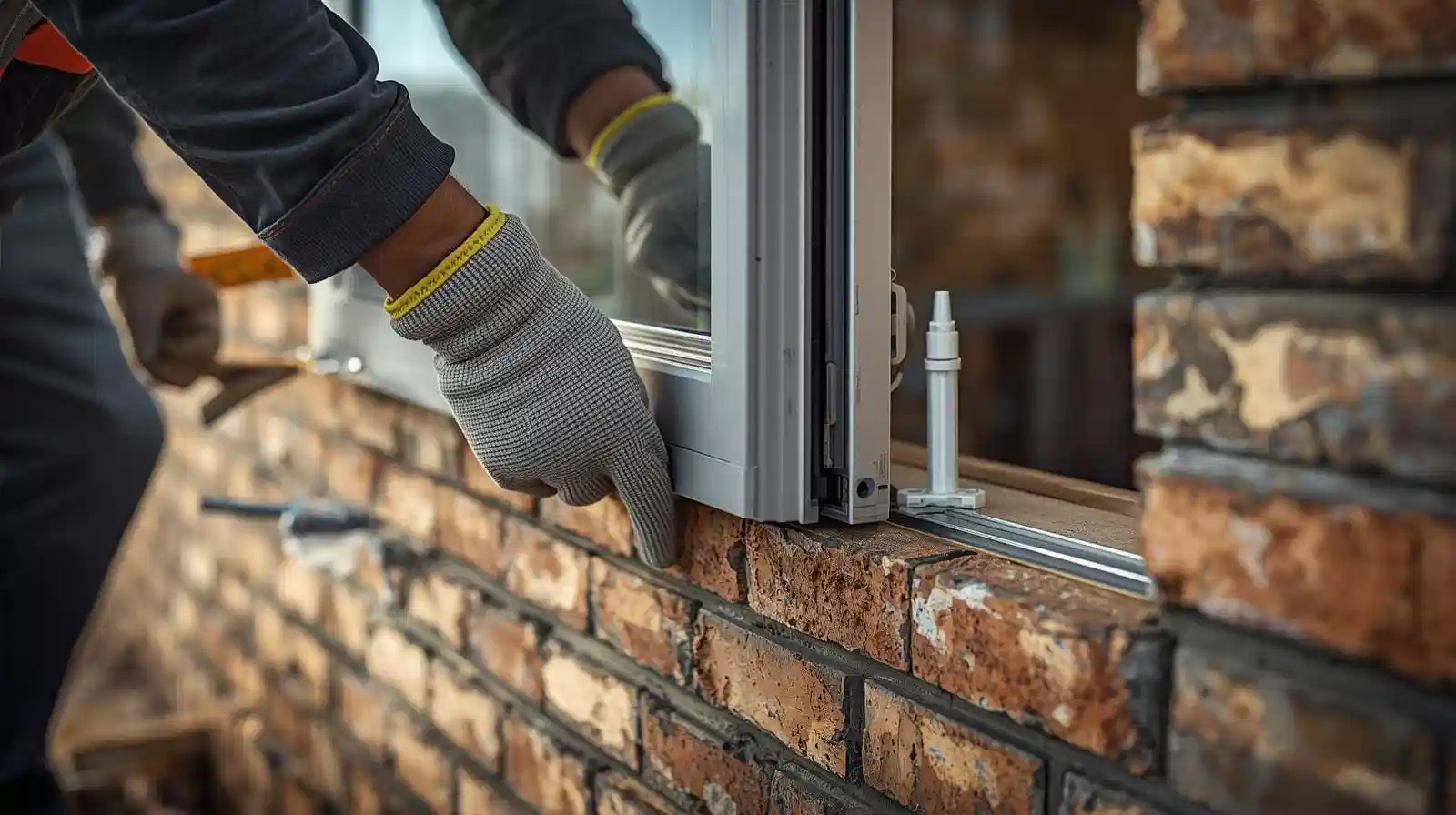
Proper installation and care keep your jalousie windows operating smoothly for decades.
Installation considerations:
- Frame must be level and square – the control mechanism needs precise alignment
- Installation time: 2-4 hours per window (similar to sliding, faster than casement)
- Professional installation recommended – the linkage bar must be correctly adjusted
- For multi-storey homes, ensure safe access for external slat cleaning
Quarterly maintenance:
- Clean glass slats with standard glass cleaner – each slat individually
- Clean frames with mild soap and water
- Check that the control mechanism operates smoothly
- Remove debris from between slats and from tracks
Annual maintenance:
- Lubricate control mechanism with silicone spray (never oil)
- Check and tighten any loose screws on the handle and linkage
- Inspect weather seals – replace if cracked or brittle
- Check end clips for security – replace any that are loose or broken
- For coastal areas, clean hardware more frequently (every 3 months)
Common repairs:
- Broken slat: Glass slats can be replaced individually without replacing the whole window
- Stiff operation: Usually needs cleaning and silicone lubrication
- Slat won’t close fully: Linkage bar may need adjustment
For repair issues, read our repair guide or contact repair services.
🚫 Common Mistakes to Avoid with Louvre Windows
⚠️ Warning: These Mistakes Ruin Louvre Window Performance
Avoid these errors when selecting or installing aluminium louvre windows.
- Installing in cold climates without upgrades: Standard louvres leak air. For the Highveld’s freezing winters, upgrade to double-glazed slats and improved seals. Better yet, choose casement windows for bedrooms.
- Skipping coastal hardware: In coastal areas, standard hardware corrodes within 2-3 years. Pay the premium for stainless steel or marine-grade components.
- Using oil-based lubricants: Oil attracts dust and gums up the mechanism. Use only silicone spray on louvre controls.
- Not securing ground-floor louvres: Standard louvres can be vulnerable. Request security clips that prevent slat removal from outside.
- Placing louvres where you need clear views: When closed, the horizontal slats break up the view. Don’t put louvres in rooms where you want unobstructed scenery.
- Ignoring noise concerns: Louvre windows let in more noise than casement windows. For bedrooms facing busy streets, consider casement or double-glazed louvres.
- DIY installation without experience: The linkage bar and control mechanism require precise adjustment. Improper installation causes slats to close unevenly.
For more, read our maintenance guide and buying checklist.
✅ When Should You Choose Aluminium Louvre Windows?
Based on this guide, here’s my practical advice on when aluminium louvre windows are the right choice.
Choose louvre windows when:
- You need superior ventilation control – bathrooms, kitchens, laundry rooms
- You want to ventilate while maintaining privacy – slats can be angled
- You live in a warm or moderate climate (not extreme cold)
- You want to leave windows open during light rain
- You’re on a budget but want better ventilation than sliding windows
- You need easy cleaning from inside (multi-storey homes)
- You’re in a coastal area (with marine-grade hardware) – capture sea breezes
Avoid louvre windows when:
- You live in a cold climate (Highveld, Free State) – air leakage increases heating costs
- You live on a noisy street – louvres let in more noise
- Security is your top priority – casement windows are much more secure
- You need unobstructed views – the horizontal slats break up the view
- Energy efficiency is critical – casement with thermal break outperforms
- You’re installing on ground floor in a high-risk area without security upgrades
For other window types, read our sliding windows guide and casement windows guide.
❓ Frequently Asked Questions About Aluminium Louvre Windows
Are aluminium louvre windows energy efficient?
Are aluminium louvre windows energy efficient? Standard models are not – small gaps between slats allow air leakage. However, upgraded louvres with double-glazed slats and improved weather seals are significantly better. For cold climates like the Highveld, casement windows remain the best choice for energy efficiency. For warm climates, louvre’s natural ventilation may reduce AC use enough to offset lower insulation.
What is the difference between louvre and jalousie windows?
None – jalousie windows and louvre windows are the same product. “Jalousie” is the French term, commonly used in older South African homes. Both refer to windows with horizontal glass slats that open and close together via a control mechanism. “Louvered windows” is another term for the same design.
Are louvre windows secure?
Standard aluminium louvre windows offer fair security – the glass slats are held by end clips that could potentially be removed. For ground-floor windows, request security clips that prevent slat removal from outside. For maximum security, consider casement windows with multi-point locking. For first-floor and above, standard louvres are generally adequate.
Can louvre windows be left open in the rain?
Yes – one of the key louvre window benefits. When partially open, the downward-angled slats deflect light to moderate rain while still allowing airflow. This is perfect for bathrooms, kitchens, and laundry rooms where continuous ventilation is beneficial. In heavy rain or wind, close them fully.
How much do aluminium louvre windows cost in South Africa?
Aluminium louvre windows cost R4,000 – R6,000 per m² supply only, or R5,500 – R8,000 per m² installed for standard sizes. A small bathroom louvre (0.9m x 0.9m) costs R4,000 – R5,800 installed. Double glazing adds R1,500 – R3,000 per m². They’re typically 15-25% cheaper than casement windows and 10-20% more expensive than sliding windows.
How do you clean louvre windows?
Cleaning is easier than other window types – you can do it entirely from inside. Open the slats fully, then clean each glass slat individually with standard glass cleaner and a cloth or squeegee. Clean the frame with mild soap and water. The ability to clean both sides of the glass from inside is a major advantage for multi-storey homes.
Can louvre windows be used in coastal areas?
Yes, but with one critical requirement: specify stainless steel or marine-grade hardware. Standard steel hardware corrodes rapidly in salt air. With marine-grade components, louvered windows are excellent for coastal homes – you can angle the slats to capture cooling sea breezes while keeping salt spray out. Read our coastal windows guide for more.
How do I get the best price for louvre windows?
To get the best aluminium louvre windows pricing: 1) Get quotes from at least 3 fabricators via ServiceLink SA’s free service. 2) Choose standard sizes. 3) Stick to standard colours (white or silver). 4) Use our Beat Your Quote guarantee. 5) For coastal areas, invest in marine-grade – cheap hardware fails quickly. 6) Consider your climate carefully – in cold areas, the energy savings from better windows may justify higher upfront cost.
✅ Final Thoughts: Louvre Windows – The Ventilation Specialists
After reading this aluminium louvre windows guide, you now understand why they remain so popular in South African homes – especially in bathrooms, kitchens, and laundry rooms.
No other window type offers the same fine-tuned ventilation control. No other window lets you maintain privacy while still getting airflow. No other window can be left open in light rain. For these reasons, louvre windows are the undisputed champions of ventilation.
But they’re not perfect. Standard louvres are not energy efficient and let in more noise than casement windows. They’re also less secure. For cold climates, noisy streets, or high-security ground floors, consider alternatives.
For the right application – bathrooms, kitchens, warm climates – louvre windows are an excellent choice.
Key takeaways for aluminium louvre windows:
- Budget R5,500 – R8,000 for a standard bathroom louvre (1.2m x 1.2m) installed
- Unmatched ventilation control and privacy-while-ventilating
- Not energy efficient in standard form – upgrade to double glazing for cold climates
- Fair security – add security clips for ground-floor installations
- Excellent for bathrooms, kitchens, laundry rooms, and coastal homes
- Poor choice for noisy streets, cold climates, or rooms requiring clear views
- Easy to clean from inside – perfect for multi-storey homes
- Coastal areas need stainless steel hardware – standard steel corrodes
- Use ServiceLink SA to find verified fabricators and compare quotes
Your next step: Ready to install aluminium louvre windows in your home? Get free quotes from verified fabricators in your area.
Ready to Install Louvre Windows?
Get free, no-obligation quotes from verified aluminium fabricators. Compare aluminium louvre windows prices and find the best value for your home.
📞 Call us: 073 138 4726 to discuss your louvre window project.
Free inspections •
Hiring tips •
Beat Your Quote •
Our guarantees
📚 Official resources & standards referenced:
- SANS 10400 – South African National Standard for ventilation standards and building regulations.
- Department of Energy – Natural ventilation guidelines and passive cooling recommendations.
Information provided for general guidance based on industry research. Prices vary by location, quality, and market conditions. Always get multiple quotes for your specific project.
Written by: ServiceLink SA Research Team
Specialist Aluminium Windows & Home Ventilation Experts
The ServiceLink SA Research Team has extensive experience with aluminium louvre windows across thousands of South African homes – from coastal cottages to Highveld houses. Our team has worked closely with certified fabricators, ventilation specialists, and homeowners to develop this comprehensive aluminium louvre windows guide. This guide is based on real project data, fabricator quotes, and long-term performance tracking from across Gauteng, Johannesburg, Pretoria, Sandton, and nationwide. We update our information regularly to reflect current market conditions and material costs.
For more information about aluminium windows, explore our related resources: installation costs, maintenance guide, material comparison, window profiles guide, and coastal windows guide. Learn about our process on what is ServiceLink SA and how ServiceLink SA works. Find fabricators in your area: Gauteng, Johannesburg, Pretoria, Sandton, and Centurion. For related services, see our air conditioning and ceiling services guides.