
Not Sure Which Aluminium Profile to Choose?
Get free quotes from verified aluminium specialists. They’ll help you understand aluminium window profiles and recommend the best option for your home.
Get Free Profile Selection Advice
Servicing Gauteng, Johannesburg, Pretoria, Sandton, and across South Africa
Aluminium Window Profiles Explained: What to Choose for Your Home SA
🏠 From standard extrusions to thermal breaks – your complete guide to aluminium window profile selection
Walking into an aluminium showroom can be overwhelming. Rows of different shapes, sizes, and finishes. Technical terms like “thermal break,” “polyamide strip,” and “extrusion profiles” get thrown around. And somewhere in the back of your mind, you’re wondering: what aluminium window profile should I choose for my home in Johannesburg or Cape Town?
I’ve been there. When I renovated my own home a few years back, I spent weeks researching aluminium window profiles before placing an order. The difference between a standard 50mm profile and a thermal break 70mm profile wasn’t just R15,000 – it was the difference between a home that stayed warm in winter and one that leaked heat like a sieve.
This comprehensive guide to aluminium window profiles will explain everything you need to know about frame profiles, extrusion profiles, thermal breaks, finishes, and how to match the right profile to your specific needs – whether you’re building a new home in Pretoria, replacing old windows in Sandton, or upgrading a coastal property in the Western Cape.
For related guidance, check our aluminium windows and doors overview and measuring guide before ordering.
📋 Table of Contents – Aluminium Window Profiles Guide
🔧 What Are Aluminium Window Profiles?
Before diving into profile selection, let’s understand what aluminium window profiles actually are.
Aluminium window profiles are the shaped aluminium sections that make up your window or door frame. They’re created through an extrusion process where heated aluminium billets are forced through a specially shaped die, creating long, continuous shapes with specific cross-sections. These extrusion profiles are then cut to size, machined, assembled, and finished to become your windows.
Why profile choice matters:
- Energy efficiency: Thermal break profiles dramatically reduce heat transfer, keeping your home warmer in winter and cooler in summer
- Strength & durability: Larger profiles generally offer more structural strength, important for large windows or coastal areas with high wind loads
- Security: Profile wall thickness and internal reinforcement affect how secure the window is against forced entry
- Aesthetics: Profile shape, size, and finish determine how your windows look – from slim modern lines to chunkier traditional styles
- Acoustic performance: High-quality profiles with proper sealing systems reduce outside noise significantly
- Condensation resistance: Thermal break profiles reduce interior condensation in cold conditions
According to SABS profile standards and SANS 10400 extrusion standards, quality aluminium window profiles must meet specific dimensional tolerances and material specifications. Always ask your fabricator for SABS certification.
🌡️ Standard vs Thermal Break Profiles – The Critical Difference
This is the single most important decision in profile selection. Understanding the difference between standard and thermal break aluminium window profiles will save you money and dramatically improve your home’s comfort.
Standard (non-thermal) profiles:
Standard frame profiles are single-piece aluminium extrusions. Aluminium is an excellent conductor of heat – meaning in summer, heat from outside transfers directly through the frame to indoors, and in winter, indoor heat escapes outward. Standard profiles are cheaper but significantly less energy efficient.
Thermal break profiles:
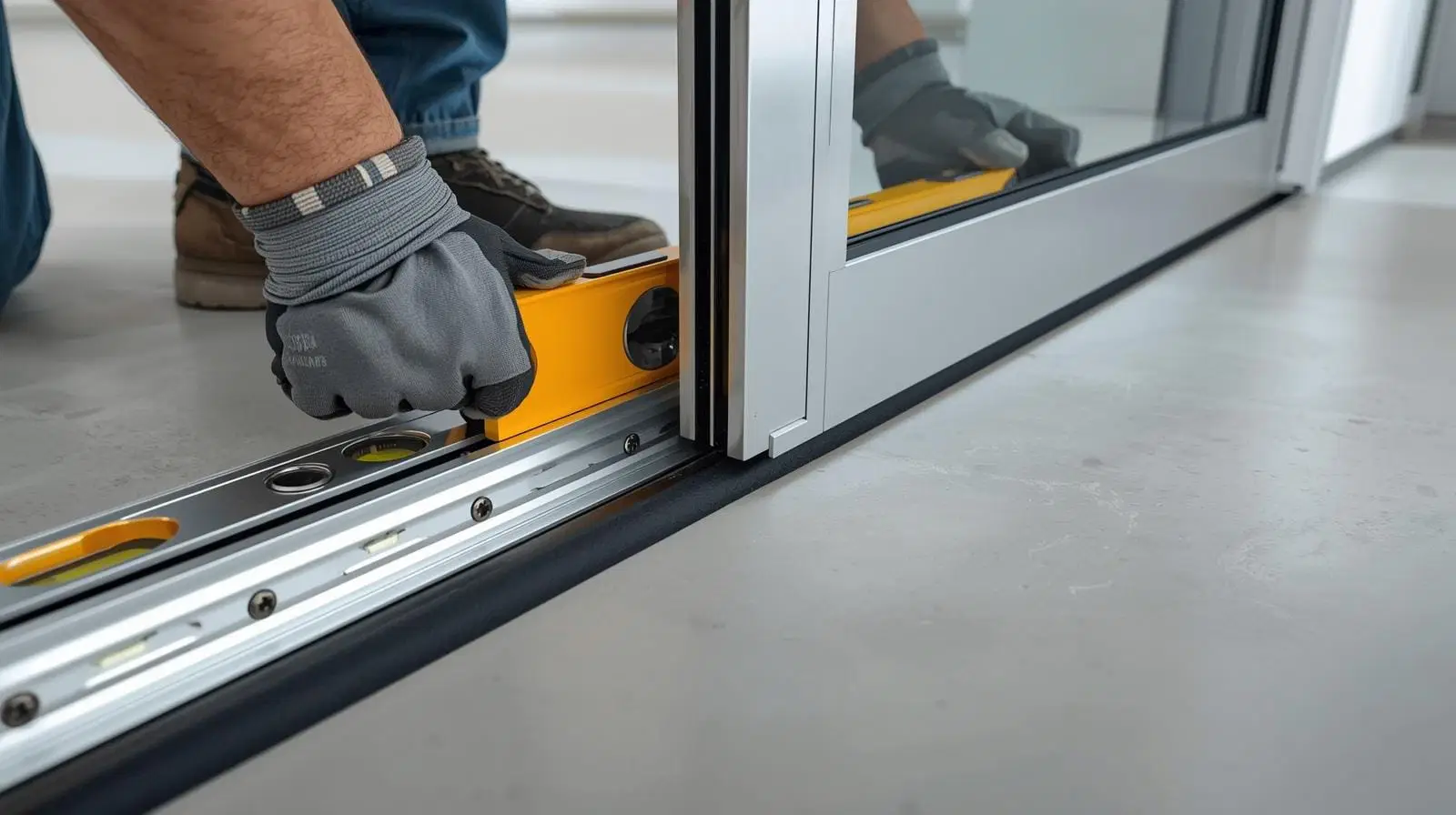
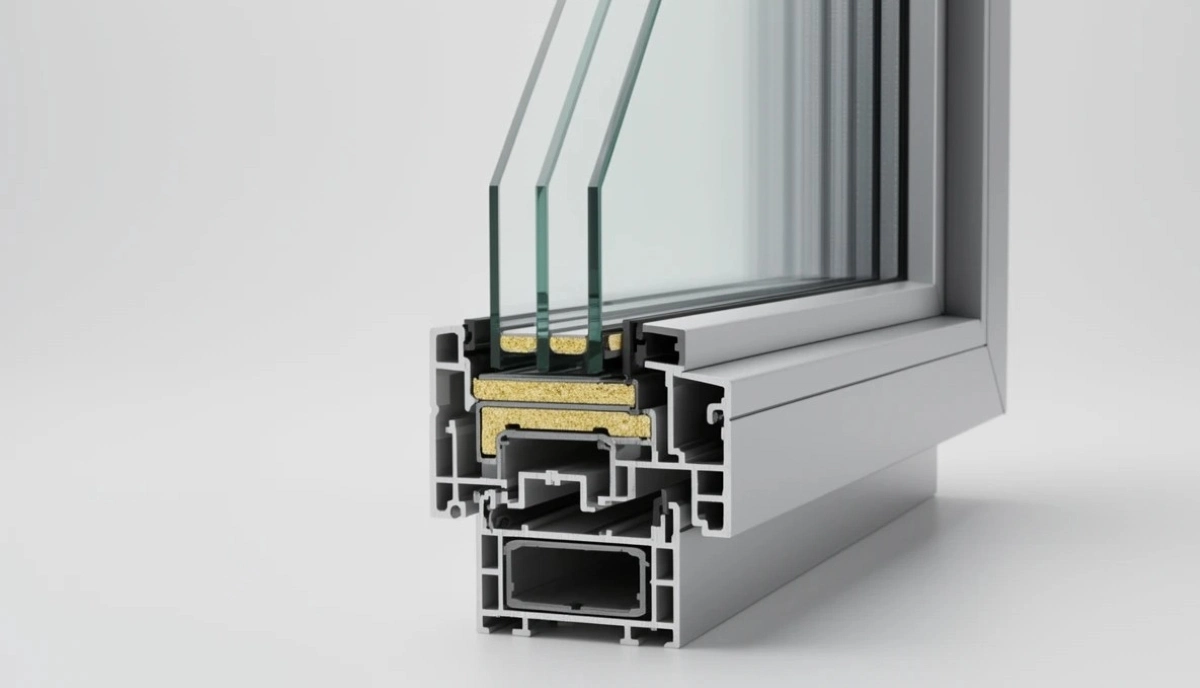
Thermal break profiles feature a polyamide strip (a high-strength plastic thermal barrier) inserted between the interior and exterior aluminium sections. This “break” stops heat transfer through the frame. The interior and exterior can be different colours, and the thermal barrier dramatically improves energy efficiency.
Real-world performance difference:
- Standard profile U-value (heat transfer): 5.5-6.5 W/m²K (poor)
- Thermal break profile U-value: 2.0-3.5 W/m²K (good to excellent)
- Energy saving: Thermal break profiles reduce heat loss/gain by 40-60% compared to standard
Which should you choose?
- Thermal break recommended for: Homes in cold regions (Pretoria, Johannesburg winters), air-conditioned homes, coastal properties, anyone concerned with energy bills
- Standard profiles acceptable for: Unheated outbuildings, garages, very budget-conscious projects in mild climates
For detailed performance data, read our thermal break aluminium windows guide and aluminium vs steel comparison.
🔍 Anatomy of an Aluminium Window Profile – Understanding the Parts
When you look at extrusion profiles, you’ll see various chambers and sections. Here’s what each part does:
Key components of aluminium window profiles:
- Outer frame profile: The main frame fixed into the wall opening. This supports everything else.
- Sash profile: The moving part (for casement, sliding windows) that holds the glass.
- Transom & mullion profiles: Horizontal and vertical dividers for larger windows.
- Glazing bead: The removable section that holds the glass in place.
- Thermal break (if applicable): Polyamide strip separating interior and exterior sections.
- Gasket grooves: Channels where rubber seals are inserted for weather-tightness.
- Drainage channels: Internal pathways that allow water to escape, preventing pooling.
- Reinforcement chambers: Hollow sections that can accept steel inserts for extra strength.
Wall thickness matters:
Quality frame profiles have a minimum wall thickness of 1.2mm for residential use, 1.5mm for commercial, and 2.0mm+ for high-wind coastal areas. Cheaper profiles use thinner aluminium (0.8-1.0mm) – they’re weaker, more likely to warp, and less secure. Always confirm wall thickness with your supplier.
For installation guidance, see our window replacement guide.

📏 Common Profile Sizes & Dimensions – What Do the Numbers Mean?
When you see “50mm profile” or “70mm thermal break,” the number refers to the frame depth – the distance from the front to back of the frame. This is a critical factor in profile selection.
Standard profile depths:
- 38-45mm: Very slim profiles, mostly historical or budget options. Poor thermal performance, minimal weather sealing. Rarely used in modern residential construction.
- 50mm: Standard residential profile. Most common in non-thermal applications. Adequate strength for typical windows up to 1.5m². Limited double-glazing capability.
- 60-65mm: Medium-depth profile. Often available in thermal break versions. Better thermal performance, can accommodate double glazing easily. Good for most residential applications.
- 70-75mm: Deep thermal break profile. Excellent thermal performance. Can accommodate double or triple glazing. Suitable for large windows, sliding doors, and coastal areas.
- 80mm+: Heavy-duty commercial profiles. Used for large-span sliding doors, shopfronts, and high-wind applications. Maximum strength and thermal performance.
Which depth should you choose for what aluminium window profile should I choose?
For most South African homes, 60-70mm thermal break profiles offer the best balance of performance, aesthetics, and cost. They work for inland areas like Gauteng and are suitable for coastal regions. If budget is very tight, standard 50mm profiles are acceptable for non-airconditioned spaces.
For cost comparisons, read aluminium window installation costs.
🎨 Finishes & Coatings – More Than Just Colour
The finish on your aluminium window profiles affects durability, maintenance, and appearance. Here’s what you need to know:
Mill finish (raw aluminium):
Uncoated aluminium – cheapest but rarely recommended. It oxidises to a dull grey and shows marks easily. Only suitable for industrial applications where appearance doesn’t matter.
Powder coating (most common):
Electrostatically applied coloured powder that’s baked onto the profile. Durable, weather-resistant, and available in hundreds of colours (including wood grain effects). Expected lifespan: 15-25 years before fading or chalking. Most residential aluminium window profiles use powder coating.
Anodising:
Electrochemical process that creates a protective oxide layer. Very durable and scratch-resistant but limited colour options (mostly silver, bronze, black). Often used in coastal areas because it doesn’t chalk or fade like powder coating.
PVDF coating (premium):
High-performance liquid coating used in commercial and high-end residential projects. Extremely durable, colour-stable for 30+ years. More expensive but virtually no maintenance.
Colour considerations:
- Darker colours absorb more heat – if choosing dark profiles, thermal break is highly recommended
- Lighter colours show dirt less and fade more slowly
- Wood grain finishes look great but may cost 20-30% more than solid colours
- Always ask for colour swatches and test them in different lighting conditions
For coastal property recommendations, see our coastal aluminium windows guide.
Need Expert Advice on Profile Selection?
Get free quotes from verified aluminium specialists who understand aluminium window profiles and can recommend the best option for your home and budget.
Get Free Profile Selection Quotes
Free inspections | Beat Your Quote guarantee | Custom fabrication
✅ How to Choose the Right Profile – A Decision Framework
When considering what aluminium window profile should I choose, work through these factors in order:
Factor 1: Location and Climate
Inland (Gauteng, Mpumalanga, Limpopo): Wide temperature variations – thermal break profiles recommended, especially for north-facing windows. 60mm+ depth ideal.
Coastal (Western Cape, KZN, Eastern Cape): Salt exposure and high winds – marine-grade powder coat or anodised finish, thicker walls (1.5mm+), thermal break beneficial for condensation control. See our coastal guide.
Highveld (Johannesburg, Pretoria, Centurion): Sometimes hail and UV exposure – high-quality powder coating, thermal break strongly recommended for comfort and energy savings.
Factor 2: Building Type
New build: You can design openings to suit standard profile sizes – often cheaper than retrofitting. Consider thermal break for whole-home efficiency. Read new build vs retrofit.
Retrofit / replacement: Existing openings may restrict profile depth. Measure carefully – deeper profiles might not fit. Seek professional advice.
Factor 3: Window Size and Configuration
Small windows (under 1m²): Any profile works – choose based on other factors.
Medium windows (1-2m²): 50-60mm profiles adequate, but thermal break recommended.
Large windows (2-4m²): 60-75mm profiles required. Thermal break essential. Consider steel reinforcement for very large sashes.
Sliding doors (up to 6m opening): Heavy-duty 70-80mm profiles with reinforced tracks.
Factor 4: Performance Priorities
Rank your priorities: Energy efficiency → Thermal break. Noise reduction → Thermal break + acoustic glazing. Security → Thicker walls + multi-point locking. Aesthetics → Slim sightlines (choose profiles with narrow visible frame).
Factor 5: Budget
Standard profiles cost 30-50% less than thermal break. However, a thermal break premium of R15,000-30,000 on a typical house pays back in energy savings within 3-7 years, plus comfort benefits. If budget is tight, prioritise thermal break on north-facing windows and doors first.
For budget planning, see best aluminium window brands and cost guide.
📊 Profile Comparison Table – Standard vs Thermal Break vs Heavy-Duty
This comparison helps with informed profile selection for your project.
| Profile Type | Typical Depth | Thermal Performance | Best For | Relative Cost |
|---|---|---|---|---|
| Standard residential | 50mm | Poor (U-value 5.5-6.5) | Garages, outbuildings, budget projects | Base (1x) |
| Thermal break residential | 60-65mm | Good (U-value 2.5-3.5) | Most SA homes – best value | 1.4-1.6x |
| Premium thermal break | 70-75mm | Excellent (U-value 2.0-2.5) | Energy-efficient homes, coastal areas | 1.8-2.2x |
| Heavy-duty commercial | 80mm+ | Excellent (U-value 1.8-2.2) | Large sliding doors, shopfronts | 2.5-3.5x |
U-value measures heat transfer – lower numbers mean better insulation. For reference, a standard single-glazed timber window is about 4.5-5.0, double-glazed uPVC is 1.8-2.2. Good aluminium window profiles with thermal break can match uPVC performance while offering better strength and slimmer sightlines.
💰 Cost Implications – What You’ll Pay for Different Profiles
Understanding costs helps with profile selection that fits your budget. These are approximate costs for supply only (window openings of 1200mm x 1200mm):
| Profile Type | Typical Cost per Window | Extra for Thermal Break | Powder Coating Extra |
|---|---|---|---|
| Standard 50mm (no thermal) | R1,500 – R2,500 | N/A | R300 – R500 |
| Thermal break 60mm | R2,500 – R4,000 | R1,000 – R1,500 | R400 – R600 |
| Thermal break 70mm | R3,500 – R5,500 | R2,000 – R3,000 | R400 – R600 |
| Heavy-duty 80mm+ | R5,000 – R8,000+ | R3,000 – R5,000 | R500 – R800 |
Payback calculation example:
Suppose you upgrade from standard to thermal break 60mm profiles for a 3-bedroom house with 12 windows. Additional cost: approx R18,000. Expected energy saving on heating/cooling: 30-40% on window-related losses. If you spend R500/month on heating and cooling, savings of R150-200/month = payback in 7-10 years, plus immediate comfort improvement and higher resale value.
For accurate project quotes, use our free quote request service – we’ll connect you with fabricators who can price your specific aluminium window profiles requirements.
🔨 Custom vs Standard Profiles – What’s Possible?
Most residential projects use standard extrusion profiles from major systems (e.g., Alusaf, Wispeco, Hulamin, Centurion Systems). These are off-the-shelf, readily available, and more affordable. However, custom aluminium fabrication is possible for special projects.
Standard profiles (recommended for most):
- Proven designs with documented performance
- Readily available – standard lead times 2-4 weeks
- Wide range of finishes and colours
- Lower cost (by 30-50%) than custom
- Compatible with standard hardware (handles, hinges, locks)
- Easy to replace parts if damaged
Custom profiles (for special projects):
- Unique shapes, sizes, or sightlines
- Heritage restorations matching original profiles
- Very large or unusual structural requirements
- Minimum order quantities typically apply (often 50-100m of extrusion)
- Lead times 6-12 weeks
- Significantly higher cost (minimum R20,000-50,000 tooling fees plus higher per-meter cost)
Pro tip: For 99% of residential projects, standard aluminium window profiles from reputable systems are the right choice. Custom profiles only make sense for very specific architectural requirements or large commercial projects. Read our custom aluminium fabrication guide for more detail.
🚫 6 Common Profile Selection Mistakes That Cost Homeowners
⚠️ Warning: Avoid These Profile Selection Errors
When deciding what aluminium window profile should I choose, these mistakes can cost you comfort, durability, and money.
- Choosing standard profiles for energy efficiency expectations: Standard non-thermal profiles can’t deliver good thermal performance. If you want energy savings or comfort, you need thermal break – no exceptions.
- Ignoring coastal requirements: Standard powder coating fails prematurely in salt air. Coastal homes need anodised finishes or marine-grade powder coating with proper warranty. Read our coastal guide.
- Prioritising slim profiles over performance: Very slim profiles (under 50mm) can’t accommodate proper thermal breaks or double glazing. Aesthetic gain isn’t worth the performance sacrifice.
- Not verifying wall thickness: Some fabricators use thinner aluminium (0.8-1.0mm) to cut costs. Insist on minimum 1.2mm for residential, 1.5mm for coastal or large windows.
- Assuming all thermal breaks are equal: Polyamide strip quality varies. Ask about strip width – wider is better (minimum 20mm for meaningful performance). Cheap thermal breaks use narrow strips or lower-grade materials.
- Forgetting about hardware compatibility: Different aluminium window profiles use different hardware systems. Ensure your chosen profile supports the locking mechanism, handles, and hinges you want.
For a complete buying strategy, see our buying checklist.
❓ Frequently Asked Questions About Aluminium Window Profiles
What are the best aluminium window profiles for South African homes?
For most South African homes, 60-65mm thermal break aluminium window profiles offer the best balance of performance and cost. In coastal areas, add marine-grade finishes. For very cold inland regions or energy-passive homes, 70-75mm thermal break is better. Standard 50mm profiles are only recommended for garages, outbuildings, or very budget-conscious projects where energy efficiency isn’t a concern.
What’s the difference between standard and thermal break profiles?
Standard frame profiles are single-piece aluminium – excellent conductor of heat, so they transfer outdoor temperatures indoors. Thermal break profiles have a polyamide plastic strip inserted between interior and exterior sections. This “breaks” the thermal bridge, reducing heat transfer by 40-60%. Thermal break profiles cost 30-50% more but pay back through energy savings (typically 3-7 years) and dramatically improve home comfort.
What aluminium window profile should I choose for coastal areas?
For coastal homes (Cape Town, Durban, Port Elizabeth), choose thermal break profiles with anodised finishes (most salt-resistant) or marine-grade powder coating. Minimum 1.5mm wall thickness for wind load resistance. 60-70mm depth recommended. Avoid standard powder coating in high-salt areas – it fails prematurely. For detailed guidance, read our coastal aluminium windows guide.
How do I know if a profile has good thermal performance?
Look for two key indicators: U-value (lower is better – below 3.0 is good, below 2.5 is excellent) and thermal break width (minimum 20mm for meaningful performance). Ask your fabricator for certified thermal test reports. SABS certification adds confidence. Be wary of claims without documentation – some “thermal break” products use narrow or low-quality polyamide that performs poorly.
What’s the most durable finish for aluminium window profiles?
PVDF coating is most durable overall (30+ years) but expensive. For residential, powder coating (15-25 years) is standard and adequate for most inland areas. Anodising (20-30 years) is best for coastal areas because it doesn’t chalk or fade. Mill finish (uncoated) is not recommended for any visible application. Always ask about warranty – quality finishes offer 10-15 year warranties against fading and chalking.
Can I mix different profile types in one house?
Yes, but carefully. Common strategy: thermal break profiles on north-facing windows and living areas (where energy efficiency matters most), standard profiles on south-facing or service areas (garage, storage). However, ensure visual consistency – different profiles may have different sightlines (visible frame width) and finishes might not match perfectly. Discuss with your fabricator before mixing systems.
What does profile depth (50mm vs 70mm) actually affect?
Profile depth affects: thermal performance (deeper = more room for insulation), structural strength (deeper = stronger frames for larger windows), double/triple glazing capacity (deeper = thicker glass units), and aesthetics (deeper = chunkier appearance). For standard homes in Gauteng, 60-65mm is ideal. 70mm+ is for large windows (over 2.5m²), sliding doors, or maximum energy efficiency. 50mm is outdated technology – avoid except for budget applications.
Are thicker aluminium profiles always better?
Generally yes, with diminishing returns. Minimum acceptable wall thickness is 1.2mm for residential. 1.5mm provides better strength and security for large windows or coastal areas. 2.0mm+ is overkill for most homes – extra cost (30-50% more) offers minimal benefit unless you’re in extreme wind zones or installing massive windows (over 4m²). Focus on thermal break technology and glass quality before obsessing over wall thickness beyond 1.5mm.
Where can I find SABS-certified aluminium window profiles?
Ask your fabricator or supplier for SABS certification documentation. Major profile systems (Alusaf, Wispeco, Hulamin) generally produce SABS-certified extrusion profiles. SABS website maintains a list of certified manufacturers. SANS 10400 provides the installation standards. Always verify certification – some suppliers claim “meets SABS standards” without actual certification, which isn’t the same.
How much more do thermal break profiles cost?
Thermal break aluminium window profiles cost 30-50% more than standard profiles. On a typical 3-bedroom house with 12-15 windows, the premium ranges from R15,000 to R30,000. Payback period is 3-7 years through energy savings (reduced heating and cooling costs). For new builds, financing the upgrade into your bond costs only R100-200/month extra – well worth the immediate comfort improvement and long-term savings.
✅ Final Thoughts: Choose Wisely, Live Comfortably
Your choice of aluminium window profiles affects your home’s comfort, energy bills, security, and appearance for the next 20-30 years. Cutting corners on profile quality to save R10,000 today will cost you more in discomfort and higher energy bills every year.
Key takeaways for profile selection:
- Thermal break profiles are worth the investment for most South African homes – the energy savings and comfort justify the premium
- 60-65mm depth is the sweet spot – adequate performance without over-spending
- Coastal homes require specialised finishes – anodised or marine-grade powder coating
- Minimum wall thickness 1.2mm – don’t accept thinner profiles
- Consider custom aluminium fabrication only for unique architectural requirements
- Always verify SABS certification and ask for thermal performance documentation
- Get quotes from multiple fabricators – compare not just price but profile quality and warranty
- Use ServiceLink SA to find verified specialists who can guide your profile selection
Your next step: Ready to choose aluminium window profiles for your project? Get free quotes from verified specialists who can advise on the best profiles for your specific location, budget, and performance requirements.
Ready to Choose the Right Aluminium Profiles?
Get free quotes from verified aluminium specialists. They’ll help you understand aluminium window profiles and recommend the best option for your home.
📞 Call us: 073 138 4726 to discuss your aluminium window project.
Free inspections •
Beat Your Quote guarantee •
Warranty protection •
Custom fabrication
Are You an Aluminium Window Fabricator or Installer?
Join ServiceLink SA’s network of verified aluminium specialists. Get qualified leads for residential and commercial projects in your area.
📚 Official resources & standards referenced:
- SABS – South African Bureau of Standards for profile standards, extrusion quality, and product certification.
- SANS 10400 – South African National Standard for extrusion standards, building regulations, and window performance requirements.
Information provided for general guidance. Aluminium window profile selection should consider local climate, building regulations, and professional advice. Always consult qualified specialists for your specific project.
Written by: ServiceLink SA Research Team
Aluminium Window & Building Envelope Specialists
The ServiceLink SA Research Team has extensive experience with aluminium window profiles, extrusion technologies, and building envelope performance across South Africa’s diverse climate zones. Our team has worked with architects, fabricators, and energy efficiency experts to develop best practices for profile selection in residential and commercial applications. This guide distills technical knowledge from industry standards, manufacturer specifications, and real-world installation experience into practical advice for South African homeowners and builders.
For more information about aluminium windows and doors, explore our related resources: aluminium windows and doors overview, measuring guide, thermal break guide, aluminium vs steel comparison, and cost guide. Our custom fabrication guide and contractor verification process provide additional guidance. Find aluminium services in your area: Gauteng, Johannesburg, Pretoria, Sandton, or Centurion. For related home improvement services, see our building construction and tiling services guides.