
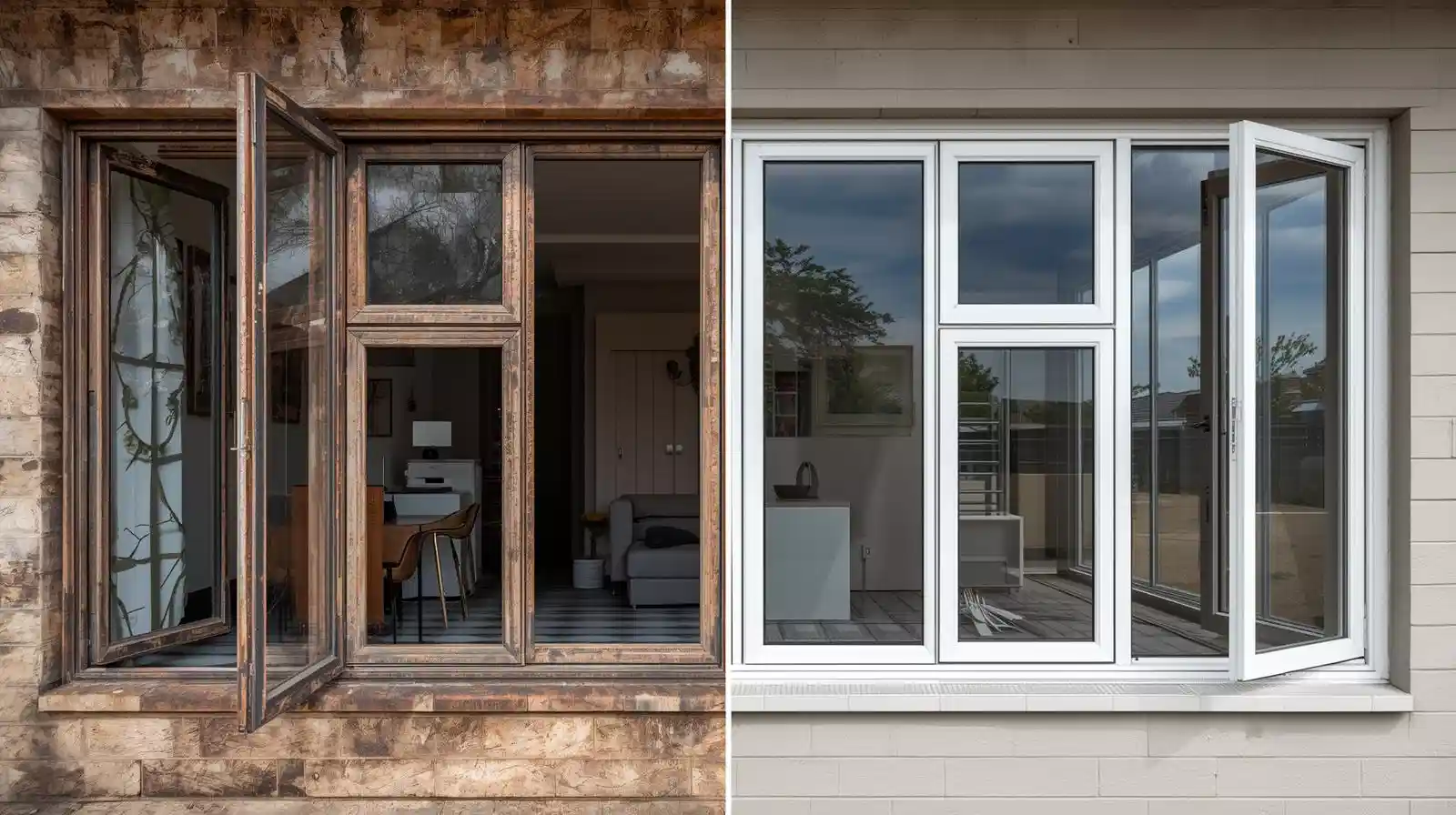
Not Sure Whether to Retrofit or Install New Construction Windows?
Get free quotes from verified aluminium specialists. They’ll assess your property and recommend the best approach for new build vs retrofit aluminium windows.
Servicing Gauteng, Johannesburg, Pretoria, Cape Town, and across South Africa
New Build vs Retrofit Aluminium Windows: Pros, Cons & Which to Choose SA
🏗️ Everything you need to know about replacement windows vs new construction – and which is right for your project
Here’s a conversation I have almost weekly with homeowners across Gauteng, Johannesburg, Pretoria, and Cape Town. They want aluminium windows. They’ve seen the benefits – durability, security, modern aesthetics. But they’re confused about the installation approach.
“Do I need to rip out the entire frame?” “Can I just slide new windows into my existing openings?” “What’s the difference between replacement windows and new construction windows?”
I’ve guided hundreds of homeowners through this decision. The answer to retrofit or new build aluminium windows which is better depends on your specific situation – your budget, your home’s condition, your timeline, and your long-term goals. Both approaches have their place, but choosing wrong can add thousands to your project or create problems down the line.
This comprehensive guide to new build vs retrofit aluminium windows will explain exactly what each approach involves, the pros and cons of each, cost implications, timelines, and help you decide which is right for your South African home. We’ll cover full-frame replacement for window replacement projects, insert retrofits, steel-to-aluminium conversions, and new construction installations.
For context, you might want to read our aluminium windows overview, measuring guide, and replacement guide before diving in.
📋 Table of Contents – New Build vs Retrofit Guide
🔄 What Is Retrofit Window Installation? (Insert Replacement)
When discussing new build vs retrofit aluminium windows, retrofit (also called insert replacement) is the most common approach for existing homes.
How retrofit works:
In a retrofit installation, the existing window frame remains in place. The old sashes (the moving parts that hold the glass) are removed, and a new aluminium frame is installed inside the existing frame opening. The new window fits within the old frame’s footprint. This is the standard approach for replacement windows in occupied homes.
What’s involved:
- Remove old window sashes and hardware (glass, hinges, handles)
- Leave the existing outer frame in the wall
- Prepare the opening – clean, repair any rot or damage
- Install new aluminium frame inside the existing opening
- Secure, seal, and finish with trims or beads
- No brickwork, plastering, or external finishing required
When retrofit is appropriate:
- The existing frame is structurally sound (not rotten, rusted through, or damaged)
- You want minimal disruption to your home
- Your budget is moderate
- You’re not changing window sizes or shapes
- The existing opening is square and level enough
According to SANS 10400 retrofit standards, proper sealing and flashing are critical in retrofit installations to prevent water ingress between the old and new frames.
🏗️ What Is New Construction Window Installation? (Full-Frame Replacement)
New construction windows (also called full-frame replacement) involve completely removing the existing window – frame and all – down to the rough opening in the wall.
How new construction installation works:
The entire existing window assembly is removed, including the outer frame that’s embedded in the wall. This exposes the structural rough opening. A new aluminium window with its own nailing fin or mounting frame is installed directly into the rough opening, then flashed, sealed, and the interior/exterior finishes are repaired.
What’s involved:
- Remove entire existing window (frame, sashes, all components)
- Inspect and repair the rough opening structure if needed
- Install new window with mounting fins or brackets
- Proper flashing and waterproofing around the perimeter
- Exterior finishing: brickwork, cladding, or render repairs
- Interior finishing: plaster, drywall, or trim replacement
- May involve temporary weatherproofing during installation
When new construction windows are appropriate:
- The existing frame is damaged, rotten, or structurally unsound
- You want to change window sizes or shapes
- You’re undertaking major renovations (walls are already exposed)
- Maximum energy efficiency and performance are priorities
- You’re replacing very old windows (steel, timber with rot)
- New build construction (obviously)
According to SABS building standards, new construction installations must meet stricter structural and weatherproofing requirements than retrofits.
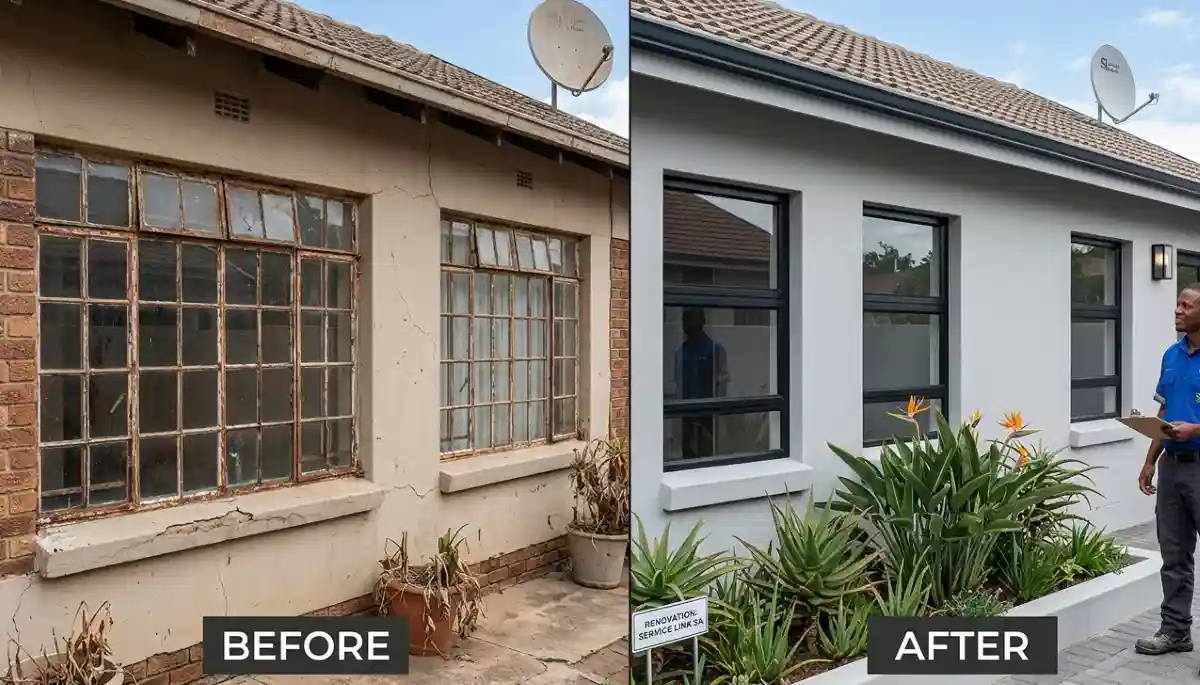
📊 New Build vs Retrofit Aluminium Windows – Comparison Table
This comparison helps you understand the key differences between new build vs retrofit aluminium windows at a glance.
| Factor | Retrofit (Insert) | New Construction (Full-Frame) |
|---|---|---|
| Existing frame removed? | No – frame stays | Yes – complete removal |
| Interior disruption | Minimal (sashes only) | Significant (plaster/drywall repair) |
| Exterior disruption | Minimal (sealing only) | Significant (brick/rendering repair) |
| Window size change? | No – same opening | Yes – can enlarge or reduce |
| Time per window | 1-3 hours | 4-8 hours (plus finishing) |
| Relative cost | Base (1x) | 1.5-2.5x |
| Thermal performance | Good (depends on old frame) | Excellent (full insulation possible) |
| Visible glass area | Slightly reduced (frame in frame) | Maximum possible |
| Best for | Sound existing frames, occupied homes | Damaged frames, renovations, new builds |
✅❌ Retrofit Aluminium Windows – Detailed Pros and Cons
When evaluating replacement windows via retrofit, consider these factors carefully.
Pros of retrofit installation:
- Lower cost: Retrofit typically costs 30-50% less than full-frame replacement because there’s less labour, no structural work, and no finishing trades required.
- Faster installation: Most retrofits take 1-3 hours per window. A whole house can be done in 2-3 days instead of 1-2 weeks.
- Less disruption: No dust from brick cutting or plaster removal. No need to repaint or replaster interior walls. No temporary weatherproofing needed.
- Preserves existing finishes: Your interior trims, exterior paint, and surrounding finishes remain untouched. Great for heritage homes or where matching finishes is difficult.
- Lower risk of weather exposure: Since the old frame stays in place during installation, your home is never exposed to the elements.
- Suitable for occupied homes: You can live in your home normally during installation – no need to move out or vacate rooms for extended periods.
Cons of retrofit installation:
- Slightly reduced glass area: Because the new frame fits inside the old one, you lose 10-30mm of glass visibility on each side. For small windows, this is noticeable.
- Limited by existing frame condition: If your existing frame has rot, rust, or structural issues, retrofit isn’t possible. You’ll need full-frame replacement.
- Potential hidden issues: The old frame stays in the wall, so any hidden rot, insect damage, or water ingress behind it remains unaddressed.
- Cannot change window size: Retrofit locks you into existing opening sizes. You cannot make windows larger or change shapes.
- Lower maximum performance: Even with thermal break aluminium window profiles, the old frame behind can still transfer some heat or cold.
- Not suitable for steel frames: Steel to aluminium conversion almost always requires full-frame removal – see our steel to aluminium conversion guide.
✅❌ New Construction Windows – Detailed Pros and Cons
New construction windows (full-frame replacement) offer different advantages and trade-offs.
Pros of new construction installation:
- Maximum performance: Full insulation around the frame, proper flashing, and a complete thermal break deliver the best possible energy efficiency and weather resistance.
- Maximum glass area: No frame-in-frame reduction – you get the full glass size that the rough opening allows. For views and natural light, this is superior.
- Can change window sizes: Want larger windows? Different shapes? Full-frame replacement allows you to modify the rough opening (subject to structural engineering).
- Addresses hidden issues: Removing the old frame reveals any rot, insect damage, or structural problems behind it. These can be fixed before new windows go in.
- Modern installation standards: Full-frame installations use modern flashing and sealing techniques that meet current SABS standards, not whatever was done decades ago.
- Better for coastal areas: Full removal allows proper corrosion protection and drainage – critical for coastal properties.
- Ideal for new builds: Obviously for new construction windows in new homes, there’s no alternative – you start from rough openings.
Cons of new construction installation:
- Higher cost: Expect to pay 50-150% more than retrofit. Labour is higher, plus finishing trades (bricklayers, plasterers, painters) add cost.
- Longer timeline: Each window takes 4-8 hours minimum, plus exterior finishing. A whole house can take 1-3 weeks.
- Significant disruption: Dust, noise, and workers inside and outside your home. Some rooms may be unusable during installation.
- Temporary weather exposure: With the old frame removed, your home may be exposed to elements until the new window is installed and sealed.
- Requires finishing trades: After windows are installed, you need brickwork/rendering repairs outside and plaster/drywall repairs inside – often additional contractors.
- Potential for weather delays: Rain can halt installation because you can’t leave openings exposed. This extends timelines.
- May require permits: Changing window sizes or structural modifications may require municipal approval – check with your local authority in Johannesburg, Pretoria, or Cape Town.
Still Deciding Between Retrofit and New Construction?
Get free quotes from verified aluminium specialists who will assess your home and recommend the best approach for new build vs retrofit aluminium windows.
Get Free Quotes & Expert Advice
Free site inspections | Beat Your Quote guarantee | Replacement services
💰 Cost Comparison – Retrofit vs New Construction Windows
Understanding the financial difference between new build vs retrofit aluminium windows is crucial for budgeting.
| Cost Component | Retrofit (Insert) | New Construction (Full-Frame) | Difference |
|---|---|---|---|
| Window supply (1200x1200mm) | R2,500 – R4,000 | R2,500 – R4,500 | Similar (slight premium for nailing fin) |
| Installation labour per window | R800 – R1,500 | R1,500 – R3,500 | 2-3x higher |
| Exterior finishing (brick/rendering) | R0 (none needed) | R500 – R1,500 per window | Significant |
| Interior finishing (plaster/trim) | R0 (none needed) | R300 – R800 per window | Significant |
| Painting (interior & exterior) | R0 (touch-up only) | R500 – R1,000 per window | Significant |
| Total per window (installed) | R3,500 – R5,500 | R5,500 – R11,000+ | 1.5-2x higher |
Realistic project examples (3-bedroom house, 12 windows):
- Retrofit approach: R42,000 – R66,000 total installed. Project completed in 2-3 days. Minimal disruption.
- New construction approach: R66,000 – R132,000+ total installed. Project takes 1-3 weeks. Significant disruption but maximum performance.
- Premium upgrade (thermal break profiles + double glazing): Add 30-60% to both scenarios. Read our cost guide for detailed breakdowns.
For larger projects, consider our Pay Later option to manage cash flow.
🔧 Special Case: Steel to Aluminium Conversion
If you’re converting from old steel windows to aluminium, this is a special case in the new build vs retrofit aluminium windows decision.
Steel frame challenges:
Old steel window frames (common in South African homes built before 1990) are typically much thinner than aluminium frames. A steel frame might be 30-40mm deep, while an aluminium frame needs 50-75mm. This means you cannot simply do a retrofit – the new aluminium frame won’t fit inside the steel frame opening.
Your options for steel conversion:
- Full-frame replacement (recommended): Remove the entire steel frame down to the rough opening. Install new aluminium windows properly. This is essentially a new construction approach. Higher cost but correct and long-lasting.
- Adaptor frame retrofit (compromise): Some fabricators offer adaptor frames that fit over steel frames, then aluminium windows into those. This is possible but reduces glass area significantly and may look bulky. Not recommended for most situations.
- Windows resizing: Since you’re removing the old frame anyway, consider making windows larger while you’re at it – cost-effective during full-frame replacement.
Read our detailed steel to aluminium conversion guide for complete information, including costs and step-by-step process.
🤔 Which Approach Should You Choose? A Decision Framework
To answer retrofit or new build aluminium windows which is better for YOUR home, work through this decision tree:
Choose retrofit (insert replacement) if:
- Your existing window frames are in good condition (no rot, rust, or damage)
- You’re happy with your current window sizes and shapes
- You want to minimise cost and disruption
- Your home is occupied and you can’t tolerate extended work
- You’re on a tighter budget but still want aluminium benefits
- Your existing frames are timber or aluminium (not steel)
- You’re not planning any other major renovations nearby
Choose new construction (full-frame) if:
- Your existing frames are damaged, rotten, or rusted through
- You want to change window sizes or add new window openings
- Maximum energy efficiency and performance are top priorities
- You’re doing other major renovations (walls are already exposed)
- You’re converting from steel to aluminium
- Maximum glass area and unobstructed views matter most
- Your home is unoccupied or you can tolerate significant disruption
- Budget allows for the premium approach
When retrofit isn’t possible (you must do new construction):
- Severe rot or structural damage to existing frames
- Steel frames (as discussed above)
- Significantly out-of-square openings that need correction
- Condensation or water damage behind existing frames
- Termite damage in timber frames
For professional guidance, our contractor selection guide helps you find specialists who can assess your specific situation.
⏱️ Timeline & Disruption Comparison – What to Expect
Beyond cost, understanding the timeline for window replacement helps with planning.
| Factor | Retrofit | New Construction |
|---|---|---|
| Installation time per window | 1-3 hours | 4-8 hours (plus drying time) |
| Whole house (12 windows) | 2-3 days | 1-3 weeks |
| Dust levels | Low (minimal cutting) | High (brick/plaster cutting) |
| Noise levels | Moderate | High (grinding, cutting) |
| Rooms unusable during work? | No (just during active window change) | Yes (dust, safety concerns) |
| Need to move out? | No | Possibly for extensive work |
| Weather dependency | Low (old frame stays) | High (openings exposed) |
| After-work cleanup | Minimal | Extensive (dust throughout) |
🚫 6 Common Decision Mistakes When Choosing Between Retrofit and New Build
⚠️ Warning: Avoid These Costly Decision Errors
When evaluating new build vs retrofit aluminium windows, these mistakes cost homeowners thousands.
- Assuming retrofit always works: Many homeowners assume they can retrofit any window. If your existing frame has rot, rust, or damage, you can’t – and installing over a compromised frame leads to bigger problems later.
- Ignoring steel frame limitations: Attempting retrofit over steel frames is almost always a bad idea. The mismatch in frame depths leads to poor fit, reduced glass area, and potential water ingress. Full-frame replacement is the correct approach for steel conversion.
- Underestimating disruption of full-frame: New construction new construction windows create significant dust and noise. If you have young children, work from home, or can’t tolerate disruption, retrofit may be worth the compromises.
- Overestimating retrofit glass loss: Some homeowners reject retrofit because they fear losing glass area. In most cases, the loss is 10-20mm per side – barely noticeable except on very small windows. Don’t reject retrofit for this reason alone.
- Not checking behind frames: Before deciding on retrofit, have a professional inspect behind a sample frame. Hidden rot or damage forces you into full-frame replacement. Discovering this after ordering retrofit windows is expensive.
- Forgetting about future renovations: If you’re planning other major renovations (kitchen, bathroom, exterior cladding), do full-frame windows at the same time. The walls will already be exposed, saving you from paying for finishing twice.
Read our complete buying checklist for more guidance.
❓ Frequently Asked Questions About New Build vs Retrofit Aluminium Windows
What’s the difference between retrofit and new construction aluminium windows?
In new build vs retrofit aluminium windows, retrofit (insert replacement) installs new windows inside existing frames – cheaper, faster, less disruptive. New construction (full-frame replacement) removes the entire old frame down to the rough opening – more expensive, more disruptive, but offers maximum performance and allows size changes. Choose based on your existing frame condition, budget, and tolerance for disruption.
Can I retrofit aluminium windows into old steel frames?
Generally no. Steel frames are much thinner than aluminium frames – a steel frame might be 30-40mm deep while aluminium needs 50-75mm. Attempting retrofit leads to poor fit, reduced glass area, and potential water ingress. Steel to aluminium conversion almost always requires full-frame replacement (new construction windows). Read our steel conversion guide for details.
How much does retrofit vs new construction cost in South Africa?
For a standard 1200x1200mm window: retrofit costs R3,500-5,500 installed; new construction costs R5,500-11,000+ installed. For a 3-bedroom house with 12 windows: retrofit R42,000-66,000 (2-3 days); new construction R66,000-132,000+ (1-3 weeks). The 50-100% premium for new construction delivers maximum performance and allows size changes. Get accurate quotes through our free quote service.
When should I choose retrofit over new construction?
Choose retrofit when: existing frames are in good condition (no rot/rust), you’re happy with current window sizes, budget matters, you want minimal disruption, your home is occupied, and you’re not planning other major renovations. Retrofit delivers 80-90% of the benefits of new construction at 50-60% of the cost – excellent value for many homeowners.
When is new construction (full-frame) necessary?
New construction replacement windows (full-frame) is necessary when: existing frames are rotten, rusted, or damaged; converting from steel to aluminium; changing window sizes or shapes; maximum energy efficiency is priority; you’re doing other major renovations; or the opening is significantly out of square. Also required by SANS standards for certain building types – consult your specialist.
Does retrofit reduce my glass area significantly?
Retrofit reduces visible glass by 10-30mm per side because the new frame sits inside the old one. On a 1200x1200mm window, this is about 2-5% glass loss – barely noticeable. On very small windows (under 600mm), the loss is more noticeable. For most homeowners, the cost savings and reduced disruption of retrofit outweigh the minor glass loss.
Can I install new construction windows myself?
Not recommended. New construction windows require removing old frames, potentially modifying rough openings, proper flashing, and exterior/interior finishing. Mistakes cause water leaks, structural issues, and voided warranties. Hire SABS-certified professionals through ServiceLink SA. Retrofit is also best left to professionals – measuring and fitting errors are costly. Read our contractor guide.
What’s involved in steel to aluminium window conversion?
Steel to aluminium conversion requires full-frame replacement (new construction approach). Old steel frames are removed down to the rough opening. The opening may need modification because steel frames are thinner. New aluminium windows are installed, flashed, and sealed. Expect higher costs due to structural work. Read our detailed conversion guide for complete information.
How do I know if my existing frames are suitable for retrofit?
Have a professional inspect your frames. Signs that retrofit won’t work: soft or crumbling timber (rot), rust holes or severe corrosion (steel), visible water damage around frames, frames that are visibly warped or out of square, or previous poor repairs. A thorough inspection costs nothing through ServiceLink SA’s free inspection service – well worth the peace of mind.
What SANS standards apply to window replacement?
SANS 10400 covers retrofit standards, building regulations, and structural requirements for window openings. SABS building standards cover installation quality and product certification. Full-frame replacements must meet stricter structural and weatherproofing standards than retrofits. Always use SABS-certified installers and ask for compliance documentation.
Which approach is better for coastal properties?
For coastal homes (Cape Town, Durban, Port Elizabeth), new construction (full-frame) is generally better. Why? It allows proper flashing, drainage, and corrosion protection around the entire frame. Retrofit can trap moisture between old and new frames, accelerating corrosion. Coastal properties also need marine-grade finishes – see our coastal guide for specific recommendations on both approach and materials.
✅ Final Thoughts: The Right Choice Depends on Your Situation
There’s no universal winner in new build vs retrofit aluminium windows. The best choice depends on your existing frames, your budget, your timeline, and your long-term goals.
Retrofit is often the smart choice for homeowners with sound existing frames who want aluminium benefits without the cost and disruption of full replacement. It delivers excellent value – most of the benefits at half the cost.
New construction (full-frame) is necessary when existing frames are compromised, when you want to change window sizes, or when maximum performance matters most. Yes, it costs more and takes longer, but you get a completely new window system with no compromises.
Key takeaways for decision making:
- Retrofit is cheaper (R3,500-5,500 per window), faster (2-3 days), and less disruptive
- New construction costs more (R5,500-11,000+ per window), takes longer (1-3 weeks), but delivers maximum performance
- Steel frames almost always require full-frame replacement – retrofit isn’t feasible
- Damaged or rotten frames force new construction – don’t retrofit over problems
- Consider your tolerance for dust, noise, and having workers in your home
- Factor in other planned renovations – bundling work saves money
- Get professional inspection before deciding – free inspections available
- Use ServiceLink SA to find verified specialists who can advise on your specific situation
Your next step: Ready to upgrade your windows? Get free quotes from verified aluminium specialists. They’ll inspect your existing frames, discuss your goals, and recommend whether retrofit or new construction aluminium windows is right for your home.
Ready to Upgrade Your Windows?
Get free quotes from verified aluminium specialists. They’ll assess your home and recommend the best approach for new build vs retrofit aluminium windows.
📞 Call us: 073 138 4726 to discuss your aluminium window project.
Free inspections •
Beat Your Quote guarantee •
Workmanship guarantees •
How it works
Are You an Aluminium Window Installer or Renovation Specialist?
Join ServiceLink SA’s network of verified aluminium professionals. Get qualified leads for retrofit and new construction projects in your area.
📚 Official resources & standards referenced:
- SANS 10400 – South African National Standard for retrofit standards, building regulations, and window installation requirements.
- SABS – South African Bureau of Standards for building standards, installation quality, and product certification.
Information provided for general guidance. Window installation approach should be based on professional assessment of your specific property. Always consult qualified specialists and follow SANS regulations.
Written by: Innocent T Hanyani
Construction & Home Renovation Specialist | 21+ Years Experience
Innocent T Hanyani has over two decades of experience working across South Africa’s construction, renovation, and home improvement sectors. Throughout his career, he has guided hundreds of homeowners through new build vs retrofit aluminium windows decisions, from small retrofits in Johannesburg bungalows to full-frame replacements in Cape Town coastal properties and steel-to-aluminium conversions in Pretoria period homes. His expertise helps homeowners understand the true costs, trade-offs, and long-term implications of each approach, ensuring they make informed decisions that balance budget, disruption, and performance.
For more information about aluminium windows and replacement options, explore our related resources: window replacement guide, measuring guide, cost guide, steel conversion guide, frame replacement costs, and buying checklist. Our aluminium services overview and how ServiceLink SA works pages explain how we connect you with verified specialists. Find aluminium services in your city: Gauteng, Johannesburg, Pretoria, Cape Town, or Sandton. For related home improvement services, see our building construction and roofing services guides.