
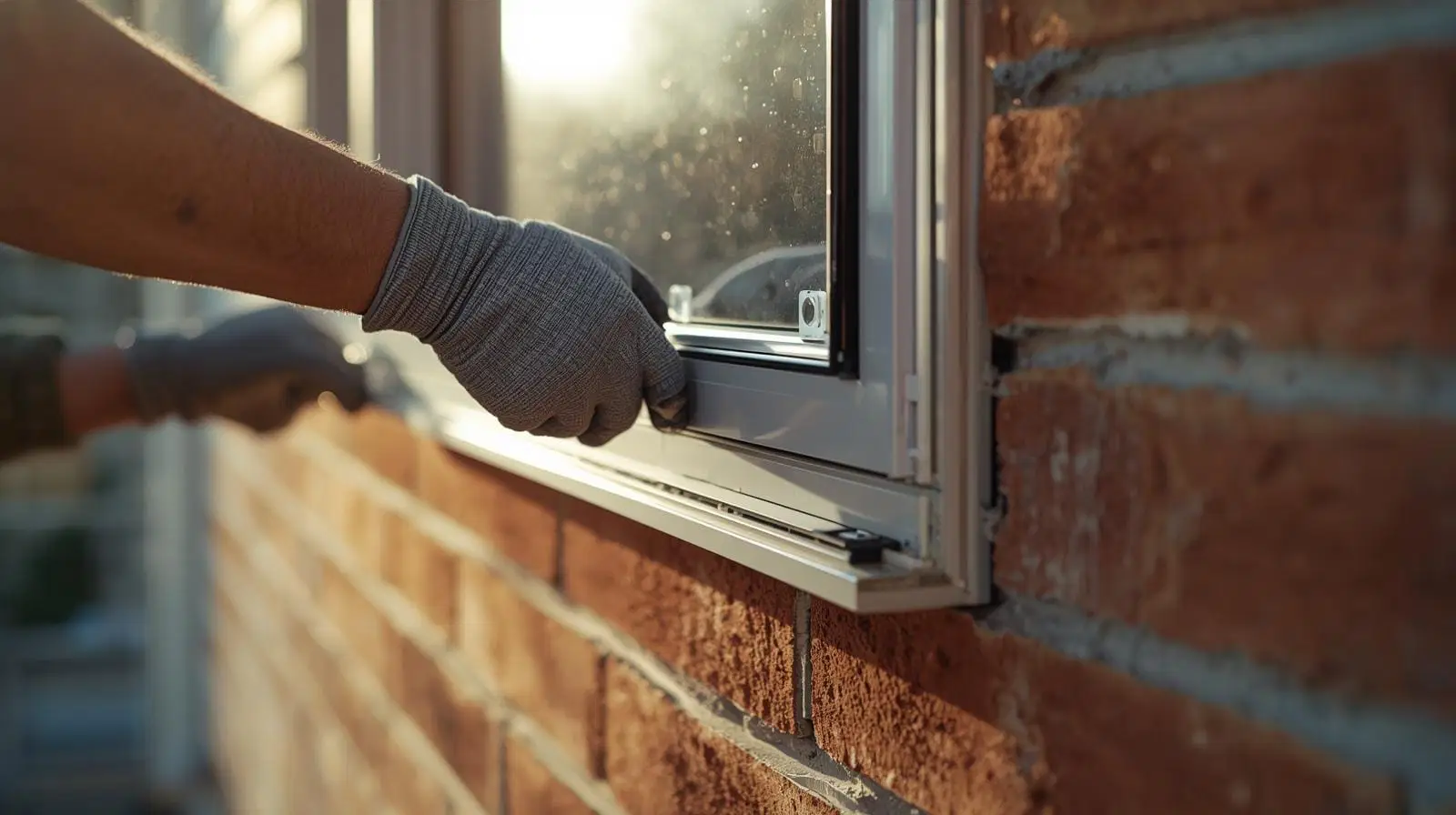
Window Sagging or Not Closing Properly?
Get free quotes from verified aluminium repair specialists. Let professionals handle your hinge adjustment and window repair.
Servicing Gauteng, Johannesburg, Pretoria, and Sandton
Aluminium Window Hinge Repair & Adjustment: Fix Sagging Windows
🔧 The complete guide to adjusting and replacing hinges on casement and awning windows
Let me describe a scene I encounter every week. You close your casement window, but there’s a gap at the top corner. You can see daylight. Worse, you feel a cold draught. Or maybe the window is hard to close – you have to push hard to get the latch to engage.
These are classic signs of hinge problems. Over time, window hinges can sag, wear out, or go out of adjustment. The result? Draughty rooms, water leaks, security risks, and frustrating operation.
The good news? Most aluminium window hinge repair jobs are simple adjustments that take 5-10 minutes with an Allen key. Even hinge replacement is manageable for a competent DIYer. In this complete window hinge fix guide, I’ll show you how to identify hinge problems, adjust 3D hinges, replace worn hinges, and restore your windows to like-new condition.
For more window repair guidance, read our window closing guide, handle replacement guide, or seal replacement guide. Ready to fix those sagging windows? Let’s dive in.
📋 Table of Contents – Hinge Repair Guide
⚠️ Signs Your Window Hinges Need Attention
Before attempting hinge adjustment, confirm that hinges are the problem.
Common signs of hinge issues:
- Window sags – gap at the top corner: When closed, there’s a visible gap at the top corner opposite the hinges. You can see daylight or feel a draught.
- Window is hard to close: You have to push hard to get the latch to engage. The window may be rubbing against the frame.
- Window doesn’t seal properly: Weather seals don’t make full contact. The window closes but you still feel air coming through.
- Latch doesn’t align with strike plate: The latch misses the strike plate entirely or hits the edge.
- Visibly damaged hinge: You can see bent metal, broken parts, or severe corrosion.
- Window has dropped over time: A window that used to close perfectly now requires effort. This is gradual hinge wear or building settlement.
- Grinding or squeaking when opening: Lack of lubrication or worn bearings.
Try the paper test: Close the window on a piece of paper at various points (top, middle, bottom). If you can pull the paper out easily at any point, the hinge isn’t providing even compression.
| Symptom | Likely Cause | DIY Fix | Professional? |
|---|---|---|---|
| Gap at top corner (window sagging) | Hinge sag or building settlement | Adjust 3D hinges (up/down) | No – simple adjustment |
| Window won’t close – hits frame | Hinge shifted or window dropped | Adjust 3D hinges (left/right) | No – simple adjustment |
| Latch doesn’t reach strike plate | Window dropped or frame shifted | Adjust 3D hinges | No – simple adjustment |
| Visible damage – bent or broken hinge | Impact damage or wear | Replace hinge | DIY moderate / Pro |
| Severe corrosion (coastal areas) | Salt spray damage | Replace with stainless steel hinges | DIY moderate / Pro |
According to SANS 10400 hinge standards and SABS hardware standards, window hinges must support the weight of the sash safely.
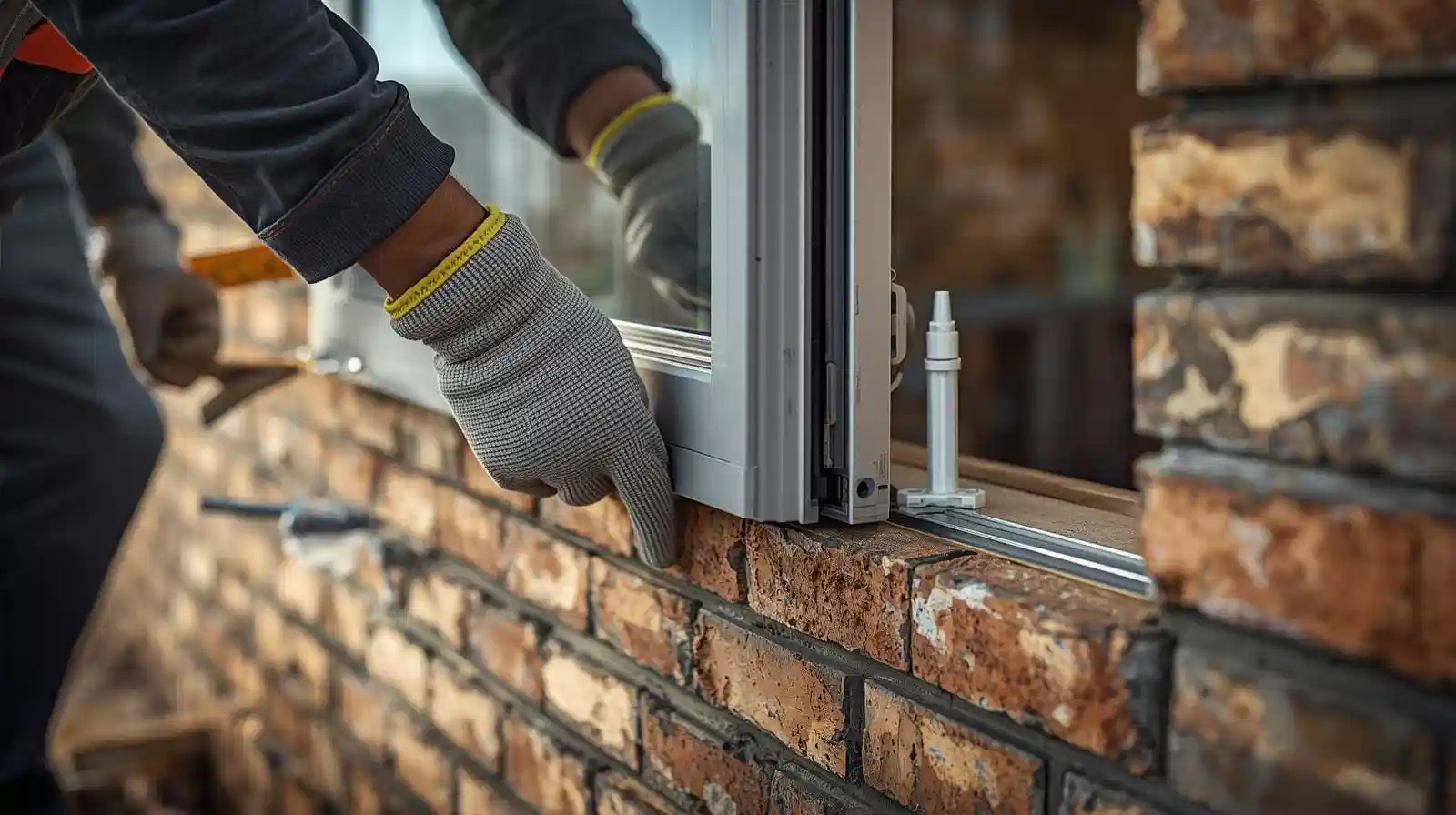
🔩 Types of Aluminium Window Hinges
Understanding your hinge type helps you perform the correct window hinge fix.
Standard friction hinges (most common):
- Description: Simple hinges with friction stays that hold the window open at various angles.
- Where used: Casement and awning windows, especially older models.
- Adjustment: Limited or no adjustment – replacement is often the only option when they fail.
- Lifespan: 5-10 years depending on use and exposure.
3D adjustable hinges (modern standard):
- Description: Hinges with screw adjustments for up/down, left/right, and in/out (compression).
- Where used: Most modern casement windows (last 10-15 years).
- Adjustment: Highly adjustable – can correct sagging, alignment, and sealing issues.
- Lifespan: 10-20 years. The best type for easy repair.
Parallel hinges (for awning windows):
- Description: Hinges that allow the window to open outward and parallel to the wall.
- Where used: Awning windows (top-hinged).
- Adjustment: Limited – mostly replacement.
Easy-clean hinges (for upper floors):
- Description: Hinges that allow the window to tilt inward for cleaning from inside.
- Where used: Multi-storey homes, apartments.
- Adjustment: Complex – professional repair recommended.
How to identify your hinge type: Look at the hinge – if you see adjustment screws (usually Allen key or Torx), you have 3D adjustable hinges. If you see no adjustment screws, you have standard friction hinges.
🛠️ Tools Required for Hinge Repair
For successful aluminium window hinge repair, gather these items.
Essential tools:
- Allen key set (hex keys) – sizes 2.5mm, 3mm, 4mm, 5mm most common
- Torx screwdriver set (T10, T15, T20 – some European hinges)
- Phillips head screwdriver (PH2)
- Flathead screwdriver
- Measuring tape or ruler
- Level (optional, for checking alignment)
For hinge replacement (additional tools):
- Power drill with appropriate bits
- Countersink bit (for new screw holes)
- Replacement hinges (must match old exactly)
- New screws (if old are corroded)
- A helper (window sash can be heavy)
Safety equipment:
- Work gloves (to protect from sharp edges)
- Safety glasses
Silicone spray lubricant: For lubricating hinges after adjustment or replacement. Never use oil or WD-40.
⚙️ How to Adjust 3D Hinges (Step-by-Step)
Most modern windows have 3D adjustable hinges. Here’s how to perform hinge adjustment for common problems.
Understanding the 3 adjustment axes:
- Height adjustment (up/down): Raises or lowers the window sash. Fixes sagging (gap at top) or bottom rubbing.
- Lateral adjustment (left/right): Moves the sash left or right. Fixes the latch missing the strike plate.
- Compression adjustment (in/out): Pulls the sash tighter against the frame or pushes it out. Fixes draughts and poor sealing.
Step-by-step adjustment process:
- Open the window fully to access the hinges.
- Locate the adjustment screws on each hinge. They are usually Allen key or Torx screws.
- Identify which axis you need to adjust (see problem diagnosis above).
- Make small adjustments – 1/4 turn at a time. Don’t overtighten.
- Close and test after each adjustment. Check the seal with the paper test.
- Repeat until the window operates smoothly and seals properly.
- Adjust both hinges equally – if you adjust the top, adjust the bottom by the same amount.
Important note: Different hinge brands use different adjustment mechanisms. Some have visible adjustment screws; others have caps that need removal. If you’re unsure, look up the manufacturer’s instructions online or call a professional.
🎁 Pro Tip: Make Small Adjustments Only
When performing window hinge fix adjustments, small turns make big differences. Never turn an adjustment screw more than 1/4 turn without testing. If you need more than 2 full turns of adjustment, there may be another problem (worn hinge or frame damage). At that point, consider hinge replacement instead.

📏 Fixing a Sagging Window – Hinge Adjustment
A sagging window (gap at the top corner) is the most common aluminium window hinge repair issue.
Diagnosis: Close the window. Look at the top corner opposite the hinges. If there’s a gap, the window has dropped. This is usually caused by the hinges sagging over time.
How to fix (3D hinges):
- Open the window fully.
- Locate the height adjustment screw on each hinge (usually at the top or side of the hinge).
- Turn the screw clockwise on both hinges to raise the window (or counter-clockwise to lower – depends on brand).
- Turn both hinges equally (e.g., 1/2 turn on top, 1/2 turn on bottom).
- Close and test. The gap should reduce or disappear.
- Repeat until the window seals evenly at all corners.
For standard (non-adjustable) hinges: If the window is sagging and you have non-adjustable hinges, you have two options:
- Replace the hinges with new ones (same size). New hinges won’t have the sag.
- Add a washer under the hinge to shim it (temporary fix – not recommended).
What not to do: Don’t try to “bend” the hinge back into shape – you’ll damage it permanently. Use the adjustment screws or replace the hinge.
Read our window closing guide for related troubleshooting.
🔧 Fixing a Stiff or Hard-to-Close Window
If your window is hard to close or feels stiff, the hinges may need lateral adjustment or lubrication.
Step 1: Lubricate the hinges
- Open the window fully.
- Apply silicone spray lubricant to all hinge pivot points.
- Open and close the window several times to work in the lubricant.
- Wipe away excess lubricant.
Step 2: Adjust lateral (left/right) position
- If lubrication doesn’t help, the window may be rubbing against the frame.
- Locate the lateral adjustment screw on the hinge (often at the side).
- Turn the screw to move the window slightly away from the frame.
- Test – the window should close without rubbing.
Step 3: Check compression (in/out)
- If the window still feels stiff, the compression may be too tight.
- Loosen the compression adjustment slightly (turn counter-clockwise).
- Test – the window should close with firm resistance but not be hard to push.
For standard friction hinges: Stiffness is often due to lack of lubrication or dirt. Clean and lubricate. If still stiff, the friction mechanism may be worn – replace the hinge.

🔄 Hinge Replacement – When Adjustment Isn’t Enough
Sometimes hinge adjustment isn’t enough – you need full hinge replacement.
When to replace hinges (not adjust):
- The hinge is visibly bent, cracked, or broken.
- The hinge is severely corroded (white powder or rust).
- You’ve adjusted fully but the window still doesn’t seal.
- The window won’t stay open (friction hinges have lost their friction).
- The hinge makes grinding or crunching sounds when moving.
Step-by-step hinge replacement:
- Remove the window sash: Open the window fully. Remove the hinge pins or unscrew the hinges from the frame. Have a helper support the window – it’s heavy.
- Note the orientation: Take photos of how the old hinges are positioned before removing.
- Remove the old hinge: Unscrew the hinge from both the frame and the sash.
- Take the old hinge to the shop: Match the size, stack height, and screw hole pattern exactly. Different brands are not interchangeable.
- Install the new hinge: Attach to the sash first, then to the frame. Use new screws if old ones are corroded.
- Adjust the new hinge: Set to mid-range adjustment initially.
- Reinstall the sash with your helper.
- Fine-tune adjustment for perfect sealing and operation.
Tips for successful replacement:
- Buy identical replacement hinges – don’t assume “similar” will work.
- Use stainless steel screws for coastal areas (prevents future corrosion).
- Apply silicone spray to moving parts after installation.
- If you can’t find matching hinges, call a professional – they have access to more suppliers.
Read our repair services guide for professional help.
🌊 Coastal Corrosion & Hinge Replacement
In coastal areas, hinge corrosion is a major window hinge fix issue.
Why coastal areas destroy standard hinges: Salt spray corrodes standard steel and even some stainless steel hinges. The white powder (aluminium oxide) or red rust indicates the hinge is failing.
For coastal homes (within 5km of ocean):
- Always replace with stainless steel hinges – Grade 304 or 316 (marine grade).
- Grade 316 is essential within 500m of ocean – it resists pitting corrosion from salt.
- Check hinges annually for early signs of corrosion – replace at first sign.
- Lubricate every 3 months – more frequent than inland.
How to identify corrosion:
- White powdery deposits on aluminium parts
- Red/brown rust on steel parts
- Pitting (small holes) in the metal surface
- Stiff or grinding operation
Don’t wait – a corroded hinge that fails can cause the window to fall, risking injury and broken glass.
Read our corrosion repair guide for more coastal advice.
Hinge Adjustment Not Working?
Get free quotes from verified aluminium repair specialists. Let professionals handle your aluminium window hinge repair and get your windows working perfectly.
✅ Prevention – How to Extend Hinge Life
Proper maintenance prevents most window hinge fix situations.
Quarterly maintenance (every 3 months):
- Apply silicone spray lubricant to all hinge pivot points.
- Open and close the window several times to work in lubricant.
- Wipe away excess lubricant.
- Clean dirt and debris from hinge crevices with a soft brush.
Annually:
- Check for loose screws – tighten if needed.
- Inspect hinges for signs of wear, corrosion, or damage.
- Check that the window seals evenly (paper test).
- For coastal areas, inspect every 3 months (more frequent).
What damages hinges:
- Slamming windows – shock damages hinge bearings.
- Hanging heavy items on the window handle – puts sideways pressure on hinges.
- Lack of lubrication – dry hinges wear faster.
- Salt spray (coastal) – corrodes standard steel hinges.
- Forcing a window that won’t close – bends hinges.
When to replace preemptively: If your hinges are 10+ years old and showing signs of wear (slight sag, stiffness), replace them before they fail. It’s easier to replace working hinges on your schedule than to deal with a collapsed window.
Read our full maintenance guide for more tips.
📞 When to Call a Professional for Hinge Repair
Some aluminium window hinge repair situations need expert help.
Call a professional if:
- You’ve adjusted the hinges but the window still doesn’t seal properly.
- The window is very large or heavy (over 50kg) – risk of injury when removing.
- The frame is damaged where the hinge attaches (stripped screws, cracked frame).
- You can’t find replacement hinges that match the old ones (professionals have supplier contacts).
- The window is on the second floor or higher and difficult to access safely.
- You’re not comfortable removing the window sash (it can be heavy and awkward).
- The window has easy-clean hinges that need specialist knowledge.
What a professional will do:
- Safely remove heavy window sashes (proper lifting techniques, extra helpers).
- Source exact replacement hinges (including discontinued models).
- Repair damaged frames or screw holes (fill, drill, tap).
- Adjust hinges for perfect alignment and sealing.
- Provide warranty on parts and labour.
Use our repair services for professional help.
💰 Aluminium Window Hinge Repair Cost Estimates
Here’s what hinge replacement and adjustment costs.
| Service | Cost Range | Includes | DIY or Pro? |
|---|---|---|---|
| DIY – 3D hinge adjustment | Free (just time) | Allen key or Torx tool (R50-150 if you need to buy) | DIY – 5-15 minutes |
| DIY – Standard friction hinge replacement (pair) | R150 – R400 per pair | Replacement hinges only | DIY moderate (requires removing sash) |
| DIY – 3D adjustable hinge replacement (pair) | R300 – R800 per pair | Replacement hinges only – more expensive | DIY moderate |
| DIY – Stainless steel hinges (coastal) | R400 – R1,200 per pair | Grade 304 or 316 stainless steel | DIY moderate |
| Professional hinge adjustment (labour only) | R300 – R600 per window | Diagnosis, adjustment, testing | Pro only |
| Professional hinge replacement (parts + labour) per window | R800 – R1,800</td | Hinges, removal, installation, adjustment, warranty | Pro only |
| Emergency call-out fee (after-hours)</td | R500 – R1,500 | Waived if repair proceeds | Pro only |
Use our Beat Your Quote guarantee for competitive pricing.
❓ Frequently Asked Questions About Aluminium Window Hinge Repair
How do I know if my window hinges need adjustment or replacement?
You need hinge adjustment if: the window sags (gap at top corner), is hard to close, or doesn’t seal properly. Most modern 3D hinges can be adjusted to fix these problems. You need hinge replacement if: the hinge is visibly bent, broken, severely corroded, or you’ve adjusted fully but the problem persists. For coastal areas, corroded hinges should be replaced rather than adjusted.
How do you adjust aluminium window hinges?
To perform how to repair aluminium window hinges on 3D hinges: open the window fully, locate the adjustment screws (Allen key or Torx), make small 1/4 turn adjustments, close and test. Adjust height (up/down) for sagging, lateral (left/right) for latch alignment, and compression (in/out) for sealing. Adjust both hinges equally. If you have standard friction hinges (no adjustment screws), you can’t adjust them – replace instead.
Why is my window hard to close even after hinge adjustment?
If your window is still hard to close after hinge adjustment, check: 1) Lubrication – hinges may need silicone spray. 2) Compression adjustment – the window may be too tight against the frame. 3) Frame damage – the window frame itself may be out of square (building settlement). 4) Worn hinges – if adjustment screws are maxed out, the hinges may need replacement. Read our window closing guide for more troubleshooting.
Can I replace window hinges myself?
Yes – hinge replacement is a moderate DIY job. You’ll need: matching replacement hinges (take old to shop), screwdriver, and a helper (window sashes are heavy). Remove the window sash (lift out after removing hinge pins or screws), unscrew old hinges, install new hinges, reinstall sash. Allow 30-60 minutes per window. If the window is very large, heavy, or on an upper floor, hire a professional for safety.
How much does it cost to replace window hinges professionally?
Professional aluminium window hinge repair costs R800 – R1,800 per window including parts and labour. This includes removal of the old window, hinge replacement, adjustment, and testing. Standard hinges (friction) cost R150-400 per pair; 3D adjustable hinges cost R300-800 per pair. Stainless steel hinges for coastal areas cost more (R400-1,200 per pair). Use our free quote service to compare prices.
What type of hinges do I need for coastal areas?
For coastal homes (within 5km of ocean), use stainless steel hinges – Grade 304 is good, Grade 316 (marine grade) is essential within 500m of ocean. Standard steel hinges corrode within 2-3 years in coastal areas. Stainless steel costs 30-50% more but lasts 10-20+ years. For Cape Town, Durban, or other coastal cities, always specify marine-grade hardware. Read our coastal guide for more.
Why does my window not stay open? (Friction hinge failure)
If your window won’t stay open (it falls closed), the friction hinges have worn out. The friction mechanism inside the hinge has lost its grip. This is common on older windows or windows that are opened/closed frequently. Replacement is the only solution – you cannot “adjust” friction back into worn hinges. Buy new friction hinges of the same size (R150-400 per pair) and replace them.
How do I find a reliable window hinge repair specialist?
Use ServiceLink SA’s free quote service to find verified aluminium repair specialists. Look for: verified contractors, customer reviews, experience with your window type, transparent pricing, and workmanship guarantees. For Gauteng, Johannesburg, Pretoria, or Sandton, ask for local references. Read our contractor guide for more.
✅ Final Thoughts: Don’t Live with Sagging Windows
After reading this aluminium window hinge repair guide, you have everything you need to fix sagging, draughty windows.
A window that doesn’t close properly isn’t just annoying – it’s wasting energy, letting in water, and compromising security. The good news? Most hinge problems are solved with a few turns of an Allen key. 3D adjustable hinges make repair simple and quick.
If you have standard hinges without adjustment, replacement is affordable (R150-800 for parts) and manageable for a competent DIYer. And for coastal homeowners, upgrading to stainless steel hinges is an investment that pays off in longevity.
Don’t live with draughty, hard-to-close windows. Adjust those hinges today. Your comfort, energy bills, and peace of mind will thank you.
Key takeaways for hinge repair:
- Most hinge problems are solved with 5-10 minutes of 3D hinge adjustment
- Make small 1/4 turn adjustments and test – don’t overtighten
- Sagging windows = height adjustment; latch misalignment = lateral adjustment; draughts = compression adjustment
- If hinges have no adjustment screws, replacement is the only option
- Always use a helper when removing window sashes – they’re heavy
- Coastal areas need stainless steel hinges (Grade 304 or 316)
- Lubricate hinges with silicone spray every 6 months
- Don’t ignore hinge problems – they get worse and can lead to window failure
- Use ServiceLink SA to find professional help when needed
Your next step: Got a sagging or stiff window? Try adjusting the hinges today. Or get free quotes from verified professionals in your area.
Need Help With Your Window Hinges?
Get free, no-obligation quotes from verified aluminium repair specialists. Let professionals handle your aluminium window hinge repair and get your windows working perfectly.
📞 Call us: 073 138 4726 for immediate help with window repairs.
Free inspections •
Hiring tips •
Beat Your Quote •
Our guarantees
📚 Official resources & standards referenced:
- SANS 10400 – South African National Standard for hinge standards and building regulations.
- SABS – South African Bureau of Standards for hardware quality standards and product certification.
Information provided for general guidance. DIY repairs are at your own risk. For heavy windows or complex hinge systems, always consult a qualified professional.
Written by: ServiceLink SA Research Team
Specialist Aluminium Window & Hardware Repair Experts
The ServiceLink SA Research Team has extensive experience with aluminium window hinge repairs across thousands of South African homes. Our team has worked closely with certified repair specialists, hinge manufacturers, and homeowners to develop this comprehensive hinge adjustment guide. This guide is based on real repair data, common failure patterns, and feedback from across Gauteng, Johannesburg, Pretoria, Sandton, Midrand, and nationwide. We update our information regularly to reflect current best practices for hinge maintenance and replacement.
For more information about aluminium window repairs, explore our related resources: window closing guide, handle replacement, seal replacement, and maintenance guide. Learn about our process on what is ServiceLink SA and how ServiceLink SA works. Find specialists in your area: Gauteng, Johannesburg, Pretoria, Sandton, and Midrand. For related services, see our garage doors and gates and roofing services guides.