

Suspected Asbestos Tiles?
Get free quotes from verified asbestos removal specialists who understand safe removal procedures and legal requirements.
Get Professional Asbestos Removal Quotes
Servicing Gauteng, Johannesburg, Pretoria, and across South Africa
Asbestos Tile Removal South Africa: Safety Guidelines & Regulations
⚠️ The complete guide to identifying, handling, and safely removing asbestos-containing floor tiles
You’re renovating an older home. Under the carpet or old vinyl, you find 9×9 inch tiles. They look old – maybe from the 1970s or 80s. You start to pry one up, and someone mentions: “Those might be asbestos tiles.” Your heart sinks. What do you do now?
I’ve encountered this situation countless times across Gauteng, Johannesburg, and Pretoria. Asbestos in floor tiles is common in homes built before the mid-1980s. And mishandling it is dangerous – not just for you, but for your family and anyone who enters your home.
In this complete guide to asbestos tile removal south africa safety, I’ll cover everything you need to know about asbestos floor tiles. You’ll learn how to identify asbestos-containing tiles, why they’re dangerous, the legal regulations governing removal, and most importantly – how to safely remove asbestos tiles in south africa with professional help. This is not a DIY guide – it’s a guide to keeping you safe and finding qualified professionals.
For more removal guidance, check out our guides on tile removal and replacement costs, insurance claim process, and emergency tile repair.
📋 Table of Contents – Asbestos Tile Removal Guide
⚠️ What Is Asbestos and Why Is It Dangerous?
Understanding this hazardous material is the first step in asbestos tile removal south africa safety:
What Is Asbestos?
Asbestos is a naturally occurring mineral fibre that was widely used in building materials from the 1950s to the mid-1980s. It was valued for its heat resistance, strength, and insulating properties. Common uses included floor tiles, ceiling tiles, pipe insulation, roofing materials, and cement sheeting.
Why Is It Dangerous?
When asbestos-containing materials are disturbed, microscopic fibres become airborne. When inhaled, these fibres lodge in the lungs and can cause serious diseases decades later:
- Asbestosis: Scarring of lung tissue – progressive and incurable
- Mesothelioma: Cancer of the lung lining – almost always fatal
- Lung cancer: Significantly increased risk, especially for smokers
- Pleural plaques: Thickening of lung lining – can cause breathing difficulties
Latency Period: Diseases typically appear 20-50 years after exposure. There is no safe level of asbestos exposure.
When Is Asbestos Dangerous?
Asbestos is most dangerous when it becomes “friable” (crumbly) or when disturbed during demolition, renovation, or removal. Intact, undamaged asbestos tiles pose minimal risk – but removal disturbs them.
According to DWS asbestos regulations and SANS 10400 hazardous material standards, professional handling is required.
🔍 Identifying Asbestos-Containing Floor Tiles
Knowing how to identify potential asbestos floor tiles is crucial for safe removal:
Common Characteristics of Asbestos Tiles:
- Size: 9×9 inches (230x230mm) – most common size for asbestos tiles
- 12×12 inches (300x300mm) – also common, but not all 12×12 tiles contain asbestos
- Age: Homes built or renovated between 1950-1985 are at highest risk
- Appearance: Often beige, grey, or brown with a “marbled” or “speckled” pattern
- Black mastic adhesive: The black glue under tiles often contains asbestos
- Brittleness: Old tiles may be brittle and break easily
Where Asbestos Tiles Are Found:
- Bathroom floors (under vinyl or carpet)
- Kitchen floors
- Basement floors
- Hallways and entryways
- Under existing carpet or vinyl flooring
Testing for Asbestos:
The ONLY way to know for sure is laboratory testing. Do not rely on visual identification alone. Steps:
- Contact an accredited asbestos testing laboratory
- Follow their sampling instructions (wear PPE, wet the sample area)
- Send sample for analysis (R300-800 per sample)
- Receive results in 3-7 days
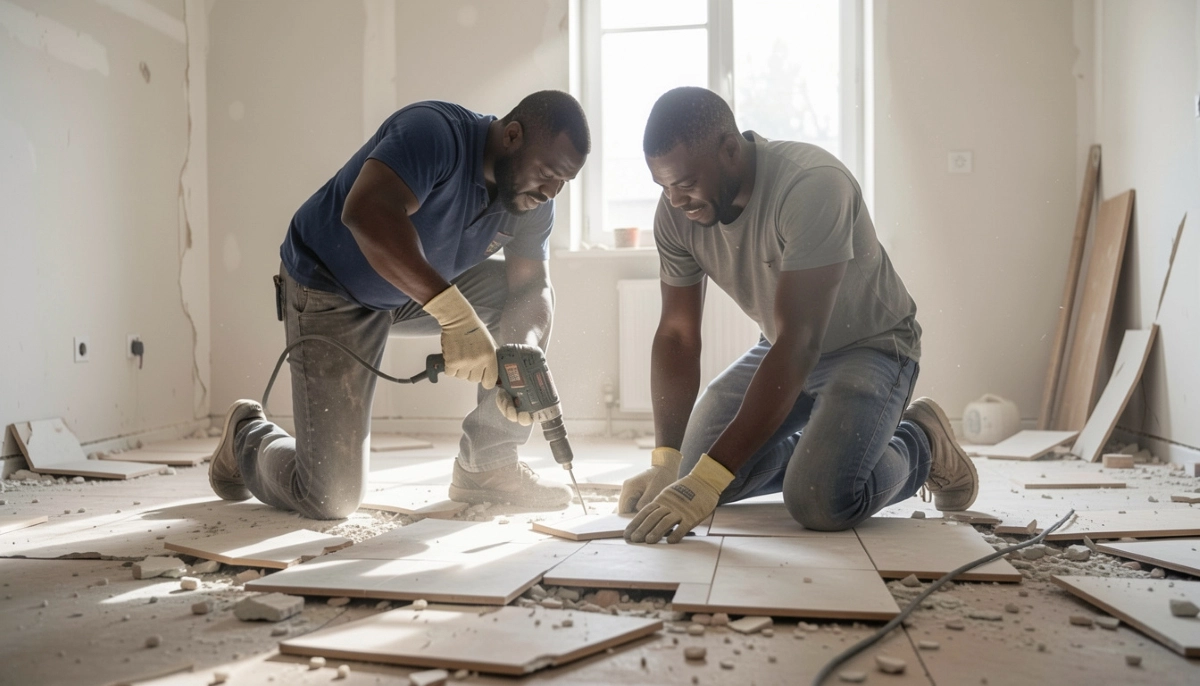
What NOT to Do: Never break, drill, sand, or scrape suspected asbestos tiles. This releases fibres.
🩺 Health Risks of Asbestos Exposure
Understanding the dangers reinforces why asbestos tile removal south africa safety is critical:
| Disease | Description | Latency Period | Outcome |
|---|---|---|---|
| Asbestosis | Scarring of lung tissue, progressive breathing difficulty | 10-30 years | Progressive, incurable |
| Mesothelioma | Cancer of the pleura (lung lining) | 20-50 years | Almost always fatal within 1-2 years |
| Lung Cancer | Malignant lung tumours | 15-35 years | High mortality rate |
| Pleural Plaques | Thickened areas on lung lining | 20-30 years | Usually benign but indicates exposure |
Who Is at Risk:
- Homeowners doing DIY renovations on older homes
- Construction workers and tilers
- Family members through second-hand exposure (dust on clothing)
- Anyone living in a home with disturbed asbestos materials
No Safe Level: There is no known safe level of asbestos exposure. Even brief, low-level exposure can cause disease decades later.
Read our how we protect homeowners guide for safety information.
Suspected Asbestos in Your Home?
Get free quotes from verified asbestos removal specialists who are licensed and insured for hazardous material handling.
Get Professional Asbestos Removal Quotes
Free inspections available. Emergency services.
⚖️ Legal Regulations for Asbestos in South Africa
Asbestos tile removal south africa safety is governed by strict regulations:
Key Regulations:
- Asbestos Regulations, 2020 (under OHSA): Governs all asbestos-related work
- National Environmental Management: Waste Act: Controls disposal of hazardous waste
- SANS 10248: Management of asbestos-containing materials in buildings
- Department of Water and Sanitation: Regulations for asbestos waste disposal – DWS guidelines
Legal Requirements:
- Asbestos removal must be done by a registered asbestos contractor
- Workers must wear appropriate PPE and undergo medical surveillance
- Area must be sealed and under negative pressure during removal
- Air monitoring may be required
- Asbestos waste must be disposed of at licensed hazardous waste sites
- Documentation must be kept for 40 years
Penalties for Non-Compliance:
Homeowners who disturb asbestos without proper procedures can face fines and liability for health damages. Contractors can lose licenses and face criminal charges.
Landlord Responsibilities: Property owners must disclose known asbestos to tenants and workers.
Read our building regulations guide for more on legal requirements.
🔧 Professional Asbestos Removal – What to Expect
Professional safe removal follows strict protocols:
Step-by-Step Professional Process:
Step 1: Site Assessment and Testing
Licensed contractor takes samples for laboratory analysis to confirm asbestos presence and type.
Step 2: Work Plan Development
Contractor creates detailed removal plan including containment procedures, air monitoring, and disposal methods.
Step 3: Site Preparation
Area is sealed with polyethylene sheeting. Negative air pressure units are installed. Warning signs posted. Workers suit up in full PPE (tyvek suits, respirators, gloves).
Step 4: Wet Removal
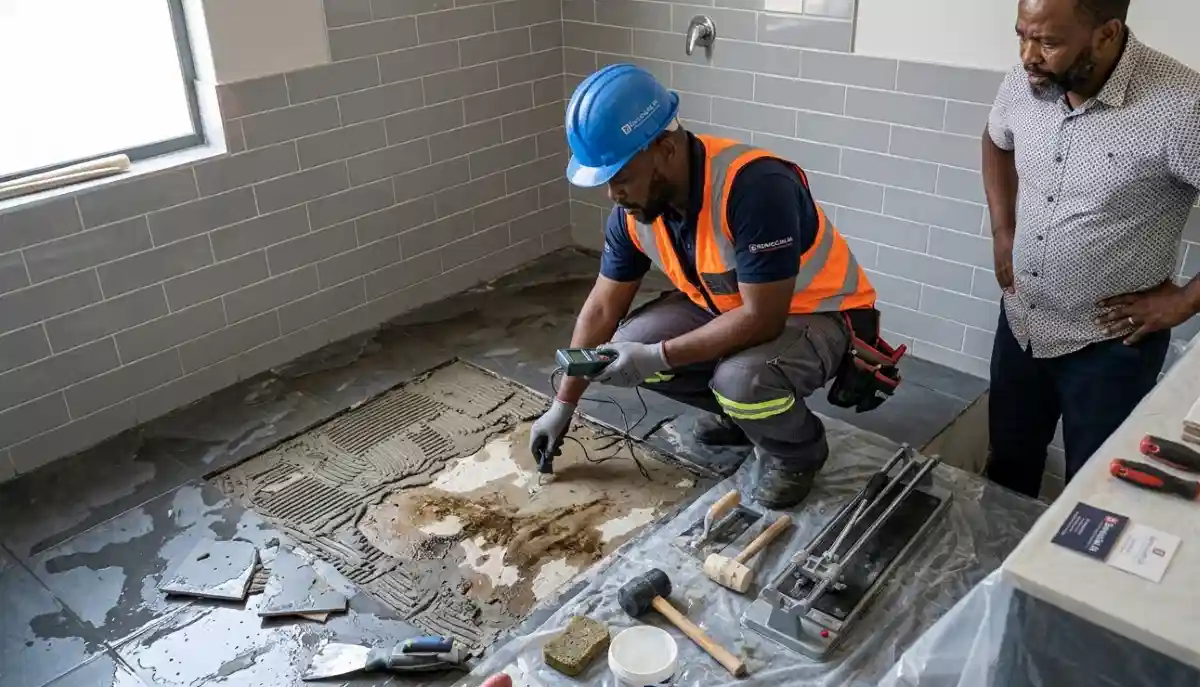
Tiles are wetted to suppress dust. Removed by hand – never using power tools. Placed in sealed bags or containers.
Step 5: Decontamination
Area is cleaned with HEPA vacuums and wet wiping. Air monitoring confirms area is safe. Workers decontaminate through airlock.
Step 6: Waste Disposal
Sealed asbestos waste transported to licensed hazardous waste landfill. Manifest documentation provided.
Step 7: Clearance Certificate
Air tests confirm area is safe for re-occupancy. Certificate issued for your records.
How Long It Takes: Small room (15m²): 1-2 days. Large area: 3-7 days.
For emergency services if asbestos is disturbed accidentally, call professionals immediately.
🛡️ Encapsulation vs Removal – Alternative Solutions
Removal isn’t always necessary. Sometimes encapsulation is safer and more cost-effective:
What Is Encapsulation?
Sealing asbestos-containing materials with a specialised coating to prevent fibre release. The asbestos remains in place but is no longer hazardous.
When Encapsulation Is Appropriate:
- Tiles are in good condition (not crumbling or damaged)
- You’re installing new flooring over the tiles (not removing them)
- The area is low-traffic and unlikely to be disturbed
- You want to avoid the cost and disruption of removal
When Removal Is Necessary:
- Tiles are damaged, crumbling, or “friable”
- You need to access the subfloor for repairs
- You’re doing major renovations that will disturb the tiles
- You prefer permanent removal for peace of mind
Installing Over Asbestos Tiles:
If tiles are in good condition, you can install new flooring directly over them (encapsulation). Options include:
- New vinyl or laminate flooring
- Self-levelling compound then new tiles
- Carpet
Always inform your contractor about the asbestos tiles before they start work.
Read our tile removal cost guide for comparison.
💰 Asbestos Tile Removal Cost Guide
Professional asbestos tile removal south africa safety costs more than standard demolition – for good reason:
| Service | Cost Range | Notes |
|---|---|---|
| Asbestos testing (per sample) | R300 – R800 | Essential before any work |
| Professional removal (per m²) | R300 – R600 | Includes containment, PPE, disposal |
| Small bathroom (5m²) removal | R1,500 – R3,000 | Minimum call-out fees apply |
| Medium room (15m²) removal | R4,500 – R9,000 | Full professional removal |
| Large area (50m²) removal | R15,000 – R30,000 | Includes air monitoring |
| Encapsulation/sealing (per m²) | R100 – R250 | Alternative to removal |
| Hazardous waste disposal | R1,000 – R5,000 | Often included in removal quote |
| Clearance certificate | R500 – R1,500 | Air quality testing after removal |
Why Professional Removal Costs More:
- Specialised training and licensing
- PPE (disposable suits, respirators)
- Containment materials (plastic sheeting, tape)
- Negative air machines and HEPA vacuums
- Licensed hazardous waste disposal fees
- Insurance and liability coverage – read insurance guide
- Documentation and clearance testing
For standard tile removal costs (non-asbestos), read our tile removal cost guide.
🗑️ Disposal Requirements for Asbestos Waste
Asbestos waste cannot go in regular trash:
Legal Disposal Requirements:
- Must be disposed of at a licensed hazardous waste landfill
- Waste must be double-bagged in labelled asbestos waste bags
- Transport requires special permits
- Manifest documentation must be kept for 40 years
- Never mix asbestos waste with regular construction debris
Prohibited Disposal Methods (Illegal):
- ❌ Regular municipal landfill
- ❌ Dumping on vacant land
- ❌ Burning (extremely dangerous – releases fibres)
- ❌ Burying on your property
DIY Disposal Is Illegal: Homeowners cannot transport or dispose of asbestos waste themselves. Only licensed asbestos contractors with proper permits can handle disposal.
For insurance implications, read our insurance claim guide.
👷 How to Choose an Asbestos Removal Contractor
Selecting the right professional for asbestos tile removal south africa safety:
Must-Have Credentials:
- Valid asbestos removal license from Department of Employment and Labour
- Proof of public liability and asbestos-specific insurance – read insurance guide
- Workers with current medical certificates and training records
- Written work plan and risk assessment
- References from previous asbestos removal projects
Questions to Ask:
- “Are you licensed for asbestos removal? Can I see your license?”
- “Do you have insurance that covers asbestos work?”
- “Will you provide a written work plan and risk assessment?”
- “How will you contain the work area?”
- “What PPE will your workers use?”
- “Will you provide air monitoring and a clearance certificate?”
- “Where will the waste be disposed of? Can I see the disposal manifest?”
- “Can you provide references from recent asbestos removal projects?”
Red Flags:
- Contractor who says “it’s safe, we do it all the time” without credentials
- Significantly cheaper quotes (cutting corners on safety)
- Unwilling to provide license or insurance proof
- Proposing to use power tools on asbestos tiles
- No containment or PPE plans
Learn about how we verify contractors and is ServiceLink SA legit.
🚫 Common Mistakes to Avoid with Asbestos Tiles
⚠️ Critical Warning: These Mistakes Are Dangerous and Often Illegal
Never attempt these when dealing with suspected asbestos floor tiles.
- DIY removal: “I’ll save money by doing it myself” – you’ll risk your health and your family’s health for decades. Asbestos diseases have no cure.
- Using power tools: Saws, grinders, sanders, or hammer drills create asbestos dust. Never use power tools on asbestos materials.
- Dry removal: Removing tiles without wetting them first releases fibres. Always wet asbestos materials before handling.
- No PPE: Working without proper respirators and disposable suits exposes you to fibres. Regular dust masks do NOT protect against asbestos.
- No containment: Letting dust spread throughout your home contaminates the entire property. Professional containment is essential.
- Improper disposal: Throwing asbestos tiles in regular trash is illegal and exposes waste workers to danger.
- Not testing first: Assuming tiles are safe without testing. Only laboratory analysis can confirm asbestos presence.
- Hiring unlicensed contractors: “He said he’s done it before” – without a license, they’re illegal and uninsured.
❓ Frequently Asked Questions About Asbestos Tile Removal
How do I know if my tiles contain asbestos?
The only way to know for sure is laboratory testing. Common indicators: 9×9 inch size, installed between 1950-1985, black mastic adhesive underneath. However, visual identification is not reliable. Contact an accredited asbestos testing laboratory for sampling instructions. Never break or disturb tiles to take a sample yourself – hire a professional or follow safe sampling procedures (wet the area, wear PPE).
Can I remove asbestos tiles myself?
NO. How to safely remove asbestos tiles in south africa – you don’t. DIY asbestos removal is extremely dangerous and illegal in many cases. Asbestos fibres are invisible and can remain airborne for days. Professional removal with proper containment, PPE, and disposal is the only safe method. The health risks (asbestosis, mesothelioma, lung cancer) are not worth saving money.
How much does asbestos tile removal cost in South Africa?
Professional asbestos tile removal south africa safety costs R300-600/m². A small bathroom (5m²): R1,500-3,000. A medium room (15m²): R4,500-9,000. A large area (50m²): R15,000-30,000. Costs include containment, PPE, removal, disposal, and clearance testing. This is more expensive than standard demolition, but your health is priceless. Get free quotes from licensed contractors.
Is it safe to put new flooring over asbestos tiles?
Yes – if tiles are in good condition (not crumbling or damaged). This is called encapsulation. You can install new vinyl, laminate, carpet, or even pour self-levelling compound over them. Always inform your contractor about the asbestos tiles before they start. Never sand, grind, or disturb the tiles during installation. Encapsulation is often safer and cheaper than removal.
What should I do if I accidentally broke an asbestos tile?
Stop immediately. Evacuate the area – get everyone out. Seal the room – close doors and windows. Turn off HVAC systems to prevent spreading fibres. Wet the area gently with a spray bottle (water with a few drops of dish soap). Call a licensed asbestos removal contractor for emergency services. Do not vacuum – regular vacuums spread fibres. Do not try to clean up yourself.
Are asbestos tiles still dangerous if they’re intact?
Intact, undamaged asbestos tiles pose minimal risk because fibres are bound within the material. The danger comes when tiles are disturbed – during removal, cutting, sanding, or if they become crumbly (friable). If tiles are in good condition and you’re not planning renovations, leaving them undisturbed and covering them with new flooring (encapsulation) is often the safest approach.
Do I need to disclose asbestos tiles when selling my house?
Yes – South African law requires sellers to disclose known asbestos-containing materials to buyers. Failure to disclose can result in legal liability and claims for remediation costs. If you’ve had asbestos professionally removed, keep the clearance certificate for disclosure. If tiles are encapsulated (covered), disclose that asbestos remains beneath the new flooring.
How do I find a licensed asbestos removal contractor?
Use ServiceLink SA’s free quote service to connect with verified asbestos removal specialists. Ask for proof of license from Department of Employment and Labour, insurance certificates, and references. Never hire unlicensed contractors – they’re illegal and uninsured. Read our contractor guide for more tips.
✅ Final Thoughts: Your Health Is Worth More Than Savings
Asbestos tile removal south africa safety is not a place to cut corners. Asbestos fibres are invisible killers – they can cause fatal diseases decades after exposure. No amount of money saved is worth your health or your family’s health.
If you suspect asbestos in your home:
- Don’t panic – intact tiles pose minimal risk
- Don’t disturb them – leave them alone
- Get professional testing to confirm
- If removal is needed, hire licensed professionals
- Consider encapsulation (covering) instead of removal if tiles are in good condition
Key takeaways for asbestos tile removal:
- Only laboratory testing can confirm asbestos – never assume
- DO NOT attempt DIY asbestos removal – it’s dangerous and often illegal
- Hire licensed asbestos removal contractors only
- Professional removal costs R300-600/m² – worth every cent
- Encapsulation (covering) is a safe alternative if tiles are intact
- Asbestos waste must go to licensed hazardous landfills
- Keep documentation for 40 years (testing, removal, clearance)
- Use ServiceLink SA to find verified asbestos removal specialists
Your next step: If you suspect asbestos tiles in your home, don’t risk your health. Get free quotes from licensed asbestos removal specialists who understand asbestos tile removal south africa safety regulations.
Suspected Asbestos in Your Home?
Get free quotes from licensed asbestos removal specialists who understand safe removal procedures and legal requirements.
📞 Call us: 073 138 4726 for immediate asbestos concerns.
Free inspections •
Fully insured contractors •
Homeowner protection
Are You a Licensed Asbestos Removal Specialist?
Join ServiceLink SA’s network of verified hazardous material contractors. Get qualified leads for asbestos removal projects.
📚 Official resources & standards referenced:
- Department of Water and Sanitation – Asbestos regulations and hazardous waste disposal guidelines.
- SANS 10400 – South African National Standard for hazardous material standards and building regulations.
Information provided for general guidance. Asbestos removal must comply with all applicable laws – always consult licensed professionals.
Written by: ServiceLink SA Research Team
Hazardous Materials & Building Safety Specialists
The ServiceLink SA Research Team has worked with environmental health specialists, licensed asbestos contractors, and legal experts to develop this guide. We understand the serious health risks of asbestos exposure and the complex regulations governing its removal. Our goal is to help homeowners make safe, informed decisions – never to encourage DIY asbestos handling. If you suspect asbestos in your home, always consult licensed professionals.
For more information about asbestos and tile removal, explore our related resources: tile removal cost guide, insurance claim guide, and emergency tile repair. Learn about our process on how we protect homeowners and is ServiceLink SA legit. Find asbestos removal specialists in your area: Gauteng, Johannesburg, and Pretoria. For related services, see our building construction and cleaning services guides.