
☀️ Ready to Cut Your Electricity Bill?
Get quotes from verified solar geyser installers. Save 30-50% on water heating costs. Free inspections available.
Get Solar Geyser Quotes Near You
Servicing Gauteng, Western Cape, KwaZulu-Natal, and across South Africa
Solar Geyser Installation Cost in South Africa: Save Money on Hot Water
☀️ From upfront costs to long-term savings—complete guide to solar geyser pricing, installation, and payback periods
Every month, you look at your electricity bill and wonder where all the money goes. Then you remember: the geyser. In most South African homes, water heating accounts for 30-50% of the monthly electricity bill. That’s R500-R1,500 every month—just for hot water.
What if you could cut that by 60-80%? What if you could heat your water for free using the sun that shines on your roof every day? That’s the promise of solar water heating.
I’ve helped hundreds of homeowners across Gauteng, the Western Cape, and KwaZulu-Natal make the switch to solar geysers. The upfront solar geyser installation cost can seem daunting—R25,000 to R55,000+. But the long-term savings are substantial. A properly sized solar geyser can pay for itself in 3-7 years, then deliver free hot water for another 10-15 years.
This comprehensive guide will teach you everything about solar water heater price options, system types, installation requirements, payback periods, and available rebates. Whether you’re in sunny Gauteng, Western Cape, or KwaZulu-Natal, this solar hot water guide will help you decide if solar is right for your home.
For related information, read our electric geyser installation guide, geyser costs guide, heat pump vs electric geyser guide, and geyser troubleshooting guide. Let’s harness the sun’s power.
📋 Table of Contents – Solar Geyser Installation Cost Guide
☀️ Why Install a Solar Geyser?
Switching to a solar geyser offers compelling benefits for South African homeowners:
💰 Reduce Electricity Bills by 30-50%
Water heating typically accounts for 30-50% of household electricity consumption. A solar geyser can cover 60-80% of your hot water needs, dramatically reducing your monthly bill.
📈 Protection Against Eskom Tariff Hikes
Electricity prices have increased 8-12% annually for years. Solar protects you from future hikes—sunlight is free.
🌍 Environmental Benefits
Reduce your carbon footprint. A typical solar geyser saves 2-4 tons of CO2 emissions annually—equivalent to planting 30-60 trees.
🏠 Increased Property Value
Solar geysers are attractive to homebuyers. Studies show solar water heaters can increase property value by R20,000-R50,000.
⚡ Load-Shedding Resilience
During load-shedding, your solar geyser still produces hot water during daylight hours—no electricity required.
💧 Consistent Hot Water
Modern solar systems provide reliable hot water even on cloudy days (with electric backup).
💡 The Bottom Line:
While solar geyser installation cost is higher upfront than electric, the long-term savings are substantial. Most homeowners recoup their investment in 3-7 years and enjoy free hot water for 10-15 years after that.
🔧 How Solar Water Heating Works
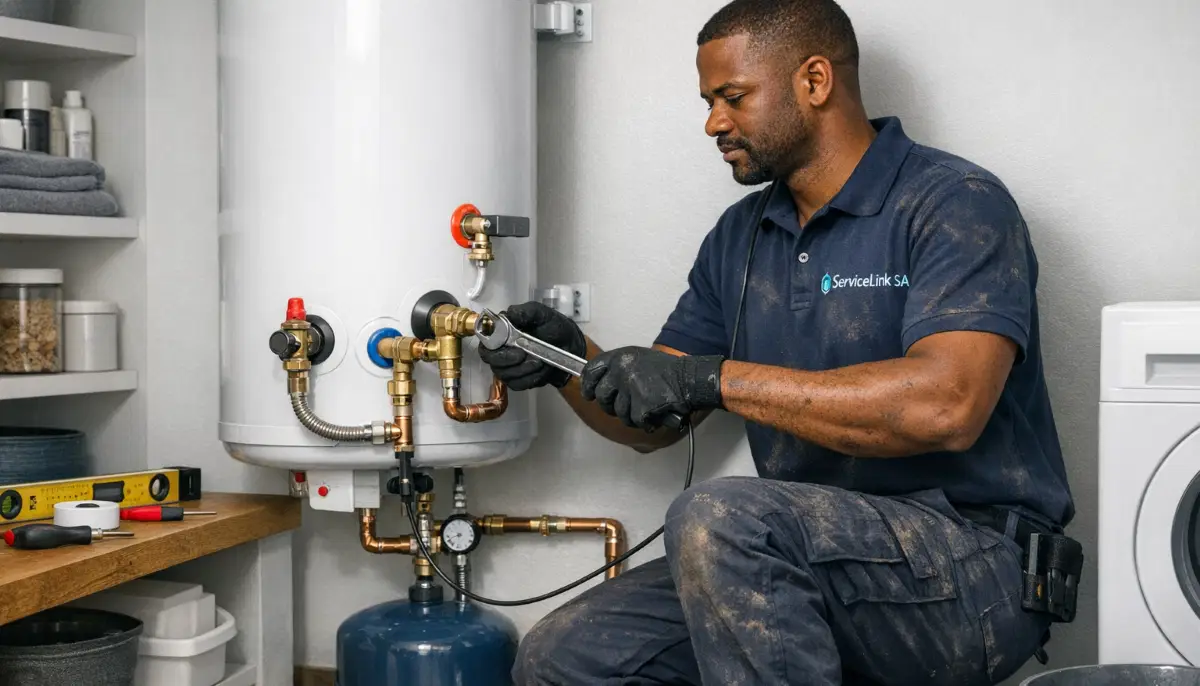
A solar water heater system has three main components:
- Solar collectors (panels or tubes) – Installed on your roof, these absorb sunlight and convert it to heat.
- Storage tank (geyser) – Stores the heated water for use throughout the day.
- Circulation system – Moves water between collectors and tank (pumped or thermosiphon).
- Electric backup element – Provides supplementary heating on cloudy days or during high demand.
How heat is transferred:
- Direct (open-loop) systems: Water circulates directly through the collectors. Best for areas without freezing risk (coastal areas).
- Indirect (closed-loop) systems: Antifreeze fluid circulates through collectors, transferring heat to water via a heat exchanger. Essential for freezing areas (Gauteng highveld, inland).
Circulation types:
- Thermosiphon (passive): Hot water naturally rises to the tank (no pump). Most common in South Africa. Simpler, no electricity for pump.
- Pumped (active): A pump circulates water. Allows more flexible installation (tank can be lower than collectors). Requires small amount of electricity.
📊 Types of Solar Geysers
Different solar water heater price options suit different needs and budgets:
| System Type | How It Works | Best For | Pros | Cons | Cost Range |
|---|---|---|---|---|---|
| Flat Plate Collector (Thermosiphon)同 | Flat panel on roof, tank above. Water circulates naturally.同 | Most homes, all regions同 | Simple, no pump, reliable, affordable同 | Tank must be above collectors (roof mounting)同 | R18,000-R35,000同 |
| Evacuated Tube Collector (Thermosiphon)同 | Glass vacuum tubes, higher efficiency. Tank above.同 | Colder regions, cloudy areas同 | Higher efficiency, works in cold, good in overcast同 | More expensive, tubes can break同 | R22,000-R40,000同 |
| Split System (Pumped)同 | Collectors on roof, tank on ground/inside. Pump circulates.同 | Aesthetic concerns, heavy roof limitations同 | Tank not on roof, better aesthetics同 | Requires pump (uses small electricity), more complex同 | R25,000-R50,000同 |
| High-Pressure System同 | Works with municipal pressure. Tank rated for high pressure.同 | Areas with good water pressure同 | Strong flow, works with existing plumbing同 | More expensive, requires pressure control同 | R20,000-R40,000同 |
| Low-Pressure (Gravity) System同 | Requires gravity feed from tank. Lower flow.同 | Outbuildings, areas with low pressure同 | Cheapest option同 | Weak water flow, not suitable for most homes同 | R12,000-R25,000同 |
Recommendation: For most South African homes, a flat plate or evacuated tube thermosiphon system (150-200 litres) is the best choice—reliable, efficient, and cost-effective.
💰 Solar Geyser Installation Cost Breakdown
Understanding solar geyser installation cost components helps you compare quotes:
| Cost Component | Typical Range (ZAR) | Notes |
|---|---|---|
| Solar Collector (panels/tubes)同 | R8,000 – R20,000同 | Flat plate cheaper, evacuated tube more expensive同 |
| Storage Tank (geyser)同 | R6,000 – R15,000同 | 150-200L range. Solar tanks are specialised (double-walled, corrosion-resistant)同 |
| Mounting Frame同 | R1,500 – R4,000同 | Roof mounting structure, varies by roof type同 |
| Piping & Fittings同 | R2,000 – R5,000同 | Copper pipes, insulation, valves同 |
| Installation Labour同 | R3,000 – R8,000同 | 2-3 person team, 1-2 days同 |
| Electrical Work (backup element)同 | R1,000 – R3,000同 | Connect backup element, timer, geyserwise controller同 |
| Certificate of Compliance (COC)同 | R350 – R600同 | Mandatory for plumbing and electrical同 |
| Total Installed (150L system)同 | R22,000 – R40,000同 | Complete installation, ready to use同 |
| Total Installed (200L system)同 | R28,000 – R55,000+同 | Larger system for bigger families同 |
☀️ Ready to Cut Your Electricity Bill?
Get quotes from verified solar geyser installers. Save 30-50% on water heating costs. Free inspections available.
Free quotes • Verified installers • Beat Your Quote guarantee • Pay Later option
📏 Cost by System Type & Size
How much does a solar geyser cost in south africa depends on system type and size:
| System Type | 100L | 150L | 200L | 300L |
|---|---|---|---|---|
| Flat Plate Thermosiphon同 | R18,000-R25,000同 | R22,000-R32,000同 | R28,000-R40,000同 | R35,000-R50,000+同 |
| Evacuated Tube Thermosiphon同 | R20,000-R28,000同 | R25,000-R35,000同 | R32,000-R45,000同 | R40,000-R55,000+同 |
| Split System (Pumped)同 | R22,000-R30,000同 | R28,000-R40,000同 | R35,000-R50,000同 | R45,000-R65,000+同 |
Sizing recommendation: 150L for 2-3 people, 200L for 3-4 people, 300L for 5+ people.
📈 Savings Calculator & Payback Period
Here’s how solar geyser installation cost compares to long-term savings:
| Household Size | Current Monthly Electricity Bill | Water Heating Portion (40%) | Solar Savings (70% of heating) | Monthly Saving | Annual Saving |
|---|---|---|---|---|---|
| 2 people (apartment)同 | R1,200同 | R480同 | R336同 | R336同 | R4,032同 |
| 3-4 people (standard home)同 | R2,000同 | R800同 | R560同 | R560同 | R6,720同 |
| 4-5 people (large family)同 | R3,000同 | R1,200同 | R840同 | R840同 | R10,080同 |
| 5+ people (very large)同 | R4,000+同 | R1,600+同 | R1,120+同 | R1,120+同 | R13,440+同 |
Payback period calculation: Installation cost ÷ Annual savings = Payback years
Example: 150L flat plate system R28,000 installed ÷ R6,720 annual savings = 4.2 years payback. After payback, free hot water for 10-15 years.
📊 The 7-Year Rule:
Most solar geysers pay for themselves within 3-7 years. With a lifespan of 15-20 years, you get 8-15 years of virtually free hot water. That’s R50,000-R150,000 in savings over the system’s life.
🔧 Solar Geyser Installation Process
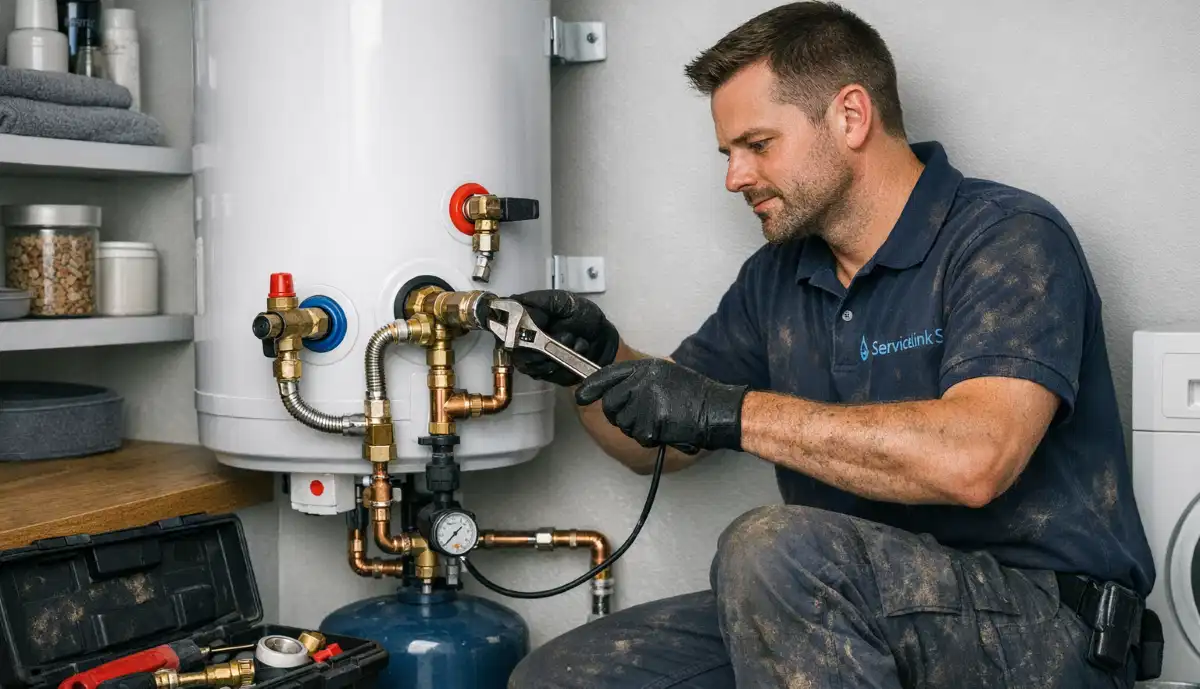
Professional install solar geyser projects follow these steps:
- Site assessment (1-2 hours) – Installer inspects roof orientation, pitch, shading, and structural integrity. Assesses existing plumbing and electrical.
- System sizing – Determines collector size and tank capacity based on household size and usage patterns.
- Roof preparation (2-4 hours) – Mounting frames installed, roof penetrations waterproofed.
- Collector installation (2-4 hours) – Solar panels or tubes mounted on roof.
- Tank installation (2-4 hours) – Storage tank installed (on roof for thermosiphon, on ground for split systems).
- Pipe connections (2-4 hours) – Copper pipes run between collectors and tank, fully insulated.
- Electrical connection (1-2 hours) – Backup element connected, geyserwise controller installed (optional).
- Testing & COC (1-2 hours) – System filled, tested for leaks, pressure tested. Plumbing and electrical COCs issued.
Total time: 1-2 days for most installations.
💰 Rebates & Incentives in South Africa
Several programs can reduce your solar water heater price:
- Eskom Solar Water Heating Rebate (past program – check current status) – Previously offered R3,000-R5,000 rebates for approved systems. Check current availability.
- Municipal rebates – Some municipalities (Cape Town, Johannesburg) offer rebates or rates reductions for solar installations. Contact your local municipality.
- Tax incentives (businesses only) – Businesses can claim accelerated depreciation on solar water heating assets (Section 12B of Income Tax Act).
- Green loans – Some banks offer reduced interest rates for energy-efficient home improvements, including solar geysers.
💡 Pro Tip:
Always ask your installer about current rebates and incentives before purchasing. They may know about local programs not widely advertised. Also ask about financing options through ServiceLink SA’s Pay Later option.
🌍 Regional Suitability: Gauteng vs Cape Town vs Durban
Solar geyser installation cost and performance vary by region:
| Region | Solar Resource | Freezing Risk | Recommended System | Expected Savings |
|---|---|---|---|---|
| Gauteng (JHB/PTA)同 | Excellent (high altitude, sunny)同 | High (winter frost)同 | Evacuated tube or flat plate (indirect system with antifreeze)同 | Very high (60-80%)同 |
| Western Cape (Cape Town)同 | Good (sunny summer, cloudy winter)同 | Low (coastal)同 | Flat plate (direct system) or evacuated tube同 | High (50-70%)同 |
| KwaZulu-Natal (Durban)同 | Good to excellent同 | None (subtropical)同 | Flat plate (direct system)同 | Very high (60-80%)同 |
Key takeaway: Solar geysers work well in all regions of South Africa, but system type matters. In freezing areas (Gauteng, inland), indirect systems with antifreeze are essential. In coastal areas (Cape Town, Durban), direct systems are sufficient.
🔧 Maintenance & Lifespan
Proper maintenance extends the life of your solar water heater:
- Annual professional inspection – Check collectors, pipes, tank, and pump (if applicable). Cost R500-R1,000.
- Clean collectors annually – Dust and bird droppings reduce efficiency. Clean with soapy water and soft brush.
- Check antifreeze level (indirect systems) – Every 2-3 years. Top up if needed.
- Test pressure valve annually – Same as electric geyser. Lift lever for 2-3 seconds.
- Replace sacrificial anode every 3-5 years – Extends tank life by 5+ years.
- Flush system every 3-5 years – Removes sediment and scale.
Expected lifespan: Solar collectors: 20-25 years. Storage tank: 10-15 years (with proper maintenance). Backup element: 5-8 years.
Read our home plumbing maintenance checklist for more.
❌ 5 Costly Mistakes to Avoid With Solar Geyser Installation
Mistake #1: Undersizing the System
Buying a smaller system to save upfront cost. Result: constant electric backup use, minimal savings, frustration. Size for your household’s peak demand, not average.
Mistake #2: Choosing the Cheapest Installer Without Verification
Unqualified installers may not understand freezing protection, proper sizing, or SANS standards. Poor installation leads to poor performance and premature failure. Always use PIRB-registered installers.
Mistake #3: Ignoring Roof Orientation and Shading
North-facing collectors (southern hemisphere) are optimal. East or west-facing reduces efficiency by 20-30%. Shading from trees or neighbouring buildings dramatically reduces output. Assess before buying.
Mistake #4: Not Insulating Pipes
Uninsulated pipes lose significant heat between collectors and tank. This is especially problematic for split systems with long pipe runs. Always insist on fully insulated pipes.
Mistake #5: Skipping the Geyserwise Controller
A geyserwise controller (R1,500-R3,000) optimises when your backup element runs, saving additional electricity. It pays for itself within 6-12 months. Don’t skip it.
📋 Real-World Solar Geyser Case Studies
☀️ Case 1: Family of 4 in Johannesburg
Location: Johannesburg | Homeowner: The Mokoena Family
System: 200L evacuated tube thermosiphon with geyserwise controller. Installation cost: R38,000.
Before: Monthly electricity bill R2,400 (approx R960 for water heating).
After: Monthly electricity bill R1,500 (saving R900/month). Water heating portion now R200-R300.
Savings: R10,800/year. Payback: 3.5 years.
Lesson: Solar works excellently in Gauteng’s sunny climate. The family enjoys free hot water on sunny days.
🌊 Case 2: Retired Couple in Cape Town
Location: Cape Town | Homeowner: The Smiths
System: 150L flat plate thermosiphon. Installation cost: R28,000.
Before: Monthly electricity bill R1,600 (approx R640 for water heating).
After: Monthly electricity bill R1,050 (saving R550/month).
Savings: R6,600/year. Payback: 4.2 years.
Lesson: Even in Cape Town’s cloudy winters, solar provides significant savings. Backup element handles cloudy days.
❓ Frequently Asked Questions About Solar Geyser Costs
How much does a solar geyser cost in South Africa?
How much does a solar geyser cost in south africa depends on system type and size. A 150L flat plate system costs R22,000-R32,000 installed. A 200L evacuated tube system costs R32,000-R45,000 installed. Split systems cost more (R28,000-R50,000). The investment typically pays for itself in 3-7 years through electricity savings.
What is the payback period for a solar geyser?
Payback period for solar geyser installation cost is typically 3-7 years, depending on household size, electricity tariff, and system cost. A family of 4 saving R6,700-R10,000 annually on a R28,000-R38,000 system achieves payback in 3-5 years. After payback, you get 10-15 years of virtually free hot water.
How much can I save with a solar geyser?
A solar water heater typically saves 60-80% of your water heating electricity costs. For a family of 4 spending R800-R1,200 monthly on water heating, that’s R560-R960 saved per month (R6,700-R11,500 annually). Savings are highest in sunny regions like Gauteng and lowest in cloudy coastal winters.
Are there rebates for solar geysers in South Africa?
Eskom previously offered rebates (R3,000-R5,000) for approved solar water heater price systems. Check current status with your installer—programs may have resumed. Some municipalities offer rebates or rates reductions. Green loans are available from some banks. Always ask your installer about current incentives.
What size solar geyser do I need?
Sizing: 150L for 2-3 people, 200L for 3-4 people, 300L for 5+ people. Consider your usage patterns—teenagers who take long showers, multiple bathrooms, or a bath (not just showers) may require larger size. Undersizing leads to constant electric backup use and minimal savings.
Do solar geysers work on cloudy days?
Yes—all solar hot water systems include an electric backup element. On cloudy days, the system will use electricity to supplement solar heating. The geyserwise controller optimises this, running the element only when needed. Even in cloudy climates like Cape Town winters, solar provides 30-50% of hot water needs.
What’s the difference between flat plate and evacuated tube collectors?
Flat plate collectors are more affordable and durable but less efficient in cold or overcast conditions. Evacuated tube collectors are more efficient (especially in cold weather) but more expensive and tubes can break. For Gauteng’s freezing winters, evacuated tubes are recommended. For coastal areas, flat plates are sufficient.
How do I find a reliable solar geyser installer?
To find a reliable install solar geyser professional: 1) Verify PIRB registration, 2) Ask for solar-specific experience and references, 3) Get detailed written quotes specifying system type, size, and components, 4) Check reviews. ServiceLink SA connects you with verified solar geyser installers in your area.
✅ Final Thoughts: The Sun Pays for Itself
Switching to a solar geyser is one of the smartest investments a South African homeowner can make. Yes, the upfront solar geyser installation cost is higher than an electric replacement. But the long-term savings are substantial, the environmental benefits are real, and the protection against rising electricity prices is invaluable.
Key takeaways for South African homeowners:
- Solar geyser cost: R22,000-R55,000+ installed depending on size and type
- Annual savings: R6,000-R12,000+ for typical families
- Payback period: 3-7 years – then free hot water for 10-15 years
- 150L for 2-3 people, 200L for 3-4 people, 300L for 5+
- Evacuated tubes for freezing areas (Gauteng), flat plates for coastal areas
- Always use PIRB-registered installers and get a COC
- Add a geyserwise controller – it pays for itself in months
Your action plan: If you’re tired of high electricity bills, get quotes from 3 verified solar geyser installers through ServiceLink SA. Compare system types, sizing recommendations, and pricing. Factor in current electricity tariffs (which will only increase). Then make the switch to solar—your wallet and the planet will thank you.
☀️ Ready to Cut Your Electricity Bill?
Get quotes from verified solar geyser installers. Save 30-50% on water heating costs. Free inspections available.
📞 Call us: 073 138 4726 for immediate help finding a solar installer near you.
Electric geyser guide •
Heat pump vs electric •
Pay Later option •
Beat Your Quote guarantee
📚 Official resources & standards referenced:
- SANS 10400 – Solar geyser installation standards and building regulations.
- Department of Energy – Solar rebates and energy efficiency programs.
- Plumbing Industry Registration Board (PIRB) – Find registered solar geyser installers.
Information provided for general guidance based on industry research and SANS/DoE standards. For specific solar geyser installation cost estimates for your home, consult multiple verified installers.
Written by: ServiceLink SA Research Team
Solar Water Heating & Energy Efficiency Specialists
The ServiceLink SA Research Team comprises solar water heating experts, energy efficiency specialists, and plumbing industry professionals with decades of experience in solar geyser installation cost analysis and system design across South Africa. Our team works directly with PIRB-registered installers, geyser manufacturers, and energy authorities to bring you accurate, actionable information about solar water heater price options, payback calculations, and installation requirements. We continuously update our guides to reflect current technology, rebate programs, and real-world best practices for install solar geyser projects.
For more information about solar geysers and hot water systems, explore our related resources:
electric geyser installation guide,
geyser costs guide,
heat pump vs electric geyser guide,
solar geyser costs guide,
and geyser troubleshooting guide.
Our what is ServiceLink SA and
ServiceLink SA review pages explain our verification process.
See our service areas page for solar geyser installation coverage in your region.