🔥 Need a New Geyser Installation?
Get quotes from verified, PIRB-registered plumbers for electric geyser installation. Free inspections available.
Get Geyser Installation Quotes Near You
Servicing Gauteng, Johannesburg, Pretoria, Sandton, Centurion, Midrand, and across South Africa
Electric Geyser Installation Guide: Step-by-Step for Homeowners (Safety First)
🔥 From sizing to installation to compliance—everything you need to know about installing a new electric geyser in your South African home
Your geyser has finally given up. After years of faithful service, it’s leaking, making strange noises, or simply not producing hot water anymore. Now you face a decision: replace it yourself or hire a professional?
Let me be direct: electric geyser installation is NOT a DIY job for most homeowners. It involves electrical work (risk of electrocution), pressurised water systems (risk of explosion), and legal compliance (mandatory COC). A mistake can cost you your home—or your life.
I’ve been involved in geyser installations across Gauteng for over two decades. I’ve seen the consequences of DIY installations: flooded ceilings, electrical fires, geysers that burst within months, and insurance claims denied because there was no Certificate of Compliance.
This guide will teach you everything you need to know about install electric geyser projects—sizing, choosing the right unit, understanding the installation process, costs, and legal requirements. You’ll learn how to install an electric geyser safely (by hiring a professional who knows what they’re doing), and how to avoid costly mistakes.
For related information, read our geyser installation and repair costs guide, solar geyser costs guide, heat pump vs electric geyser guide, and geyser troubleshooting guide. Let’s get your hot water flowing safely.
📋 Table of Contents – Electric Geyser Installation Guide
⚠️ Why Professional Electric Geyser Installation Is Essential
Installing a geyser is not like changing a light bulb. Here’s why you need a professional for electric geyser installation:
⚡ Electrical Safety
Geysers use high-amperage electrical circuits (typically 15-30 amps). Incorrect wiring can cause electrical fires, electrocution, or damage to your home’s electrical system.
💧 Pressurised Water System
Geysers operate under pressure (400-600 kPa). Improper installation can cause catastrophic bursting, flooding your home with hundreds of litres of hot water.
📜 Legal Compliance (COC)
All geyser installations require a Certificate of Compliance from a PIRB-registered plumber. Without a COC, your insurance may deny claims and you cannot legally sell your property.
🔧 Warranty Protection
Most geyser manufacturers require professional installation for warranty coverage. DIY installation voids the warranty—leaving you liable for replacement costs.
⚠️ Critical Warning:
Electric geyser installation is legally required to be performed by a PIRB-registered plumber. DIY installation is illegal, dangerous, and voids your insurance and warranty. Don’t risk your home or your family’s safety.
📏 Geyser Sizing Guide: What Size Do You Need?
Choosing the right size for your install electric geyser project is critical for performance and efficiency:
| Household Size | Recommended Geyser Size | Typical Usage | Recovery Time |
|---|---|---|---|
| 1-2 people (apartment/small house) | 100 litres | Showers, dishes, handwashing | 60-90 minutes |
| 2-3 people (2-bedroom home) | 150 litres | Multiple showers, daily usage | 90-120 minutes |
| 3-4 people (3-bedroom home) | 150-200 litres | Family of 4, peak morning/evening | 120-150 minutes |
| 4-5 people (4-bedroom home) | 200-250 litres | Large family, high demand | 150-180 minutes |
| 5+ people (large family) | 250-300+ litres | Multiple bathrooms, heavy usage | 180+ minutes |
Sizing tips: If you have a bath (not just showers), size up. If you have a rainwater tank or solar pre-heat, you may size down. When in doubt, go one size larger—running out of hot water is frustrating.
💡 Pro Tip:
For a family of 4 in a standard 3-bedroom home, a 150-litre hot water heater is usually sufficient. However, if you have teenagers who take long showers or multiple bathrooms used simultaneously, consider upgrading to 200 litres.
🔧 Types of Electric Geysers
Several types of hot water heater systems are available for South African homes:
| Type | Pros | Cons | Best For | Cost Range |
|---|---|---|---|---|
| Standard Storage Geyser | Affordable, widely available, simple | Standby heat loss, limited hot water volume | Most homes | R3,500-R12,000 |
| High-Pressure Geyser | Handles higher pressure, durable | More expensive | Areas with high water pressure | R5,000-R15,000 |
| Low-Pressure Geyser (Gravity) | Inexpensive, simple | Low flow rate, requires gravity feed | Outbuildings, staff quarters | R2,500-R5,000 |
| Instant / Tankless Geyser | Endless hot water, no standby loss, compact | High electrical demand, expensive, complex installation | Small households, point-of-use | R4,000-R12,000 (unit only) |
Recommendation: For most South African homes, a standard storage or high-pressure electric geyser (150-200 litres) is the best choice—affordable, reliable, and sufficient for family needs.
🔥 Need a New Geyser Installation?
Get quotes from verified, PIRB-registered plumbers for electric geyser installation. Free inspections available.
Get Geyser Installation Quotes
Free quotes • Verified PIRB plumbers • Beat Your Quote guarantee • Pay Later option
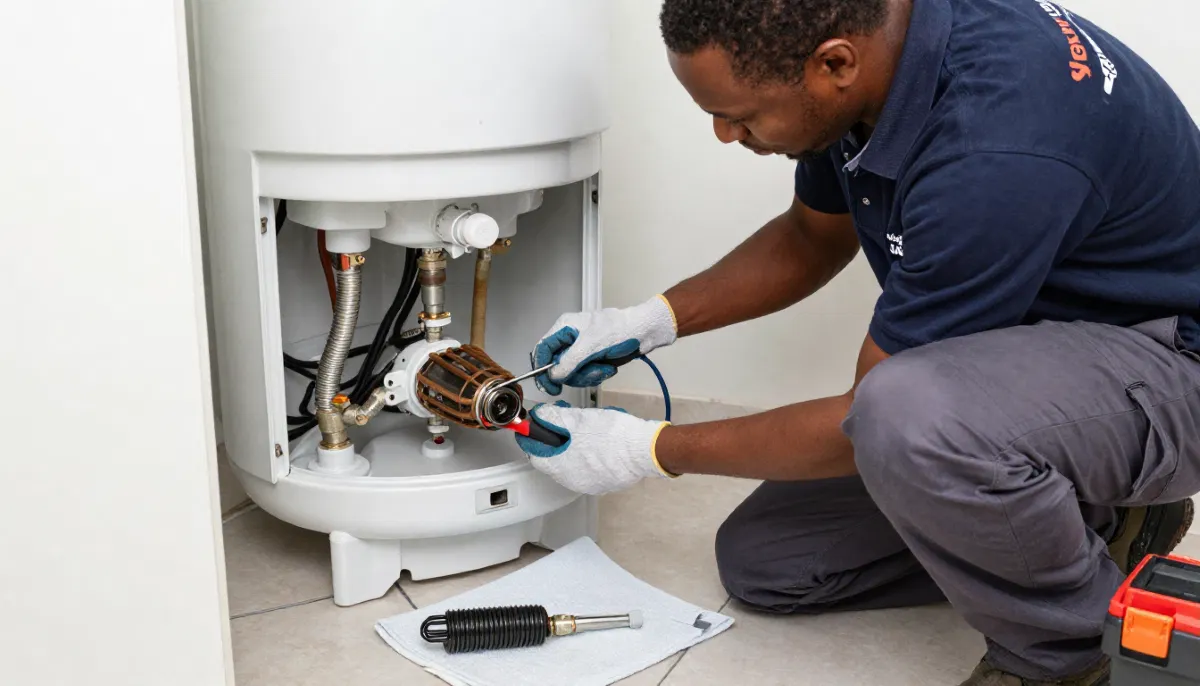
🔧 Professional Electric Geyser Installation Process
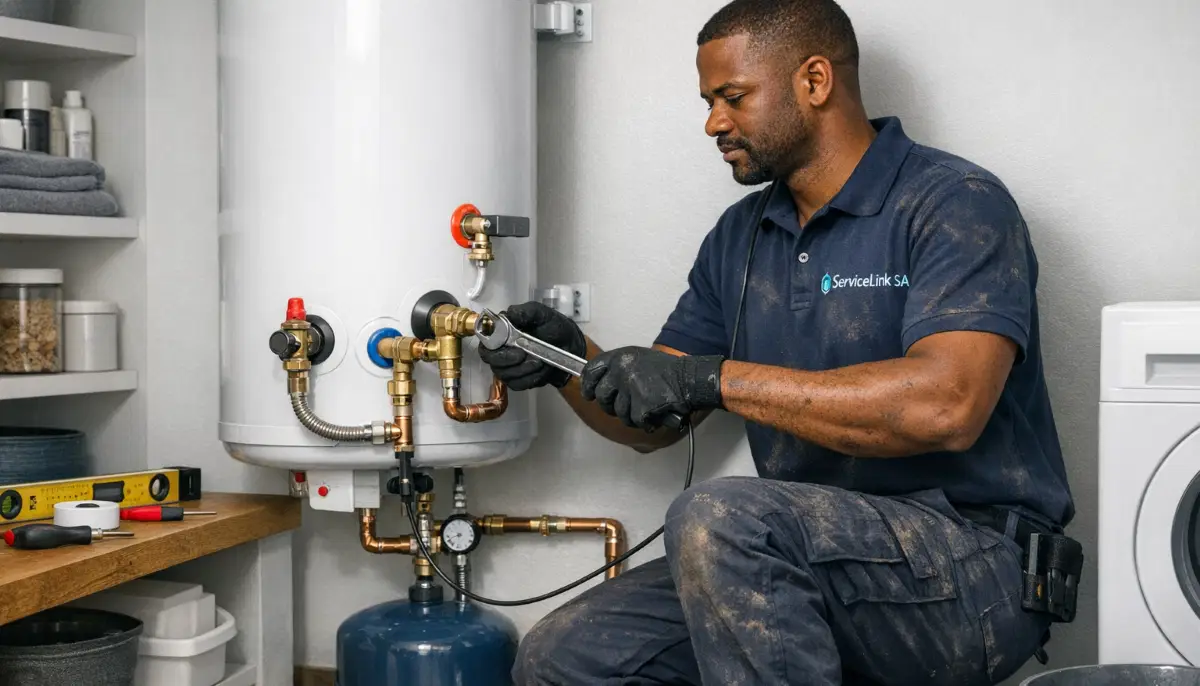
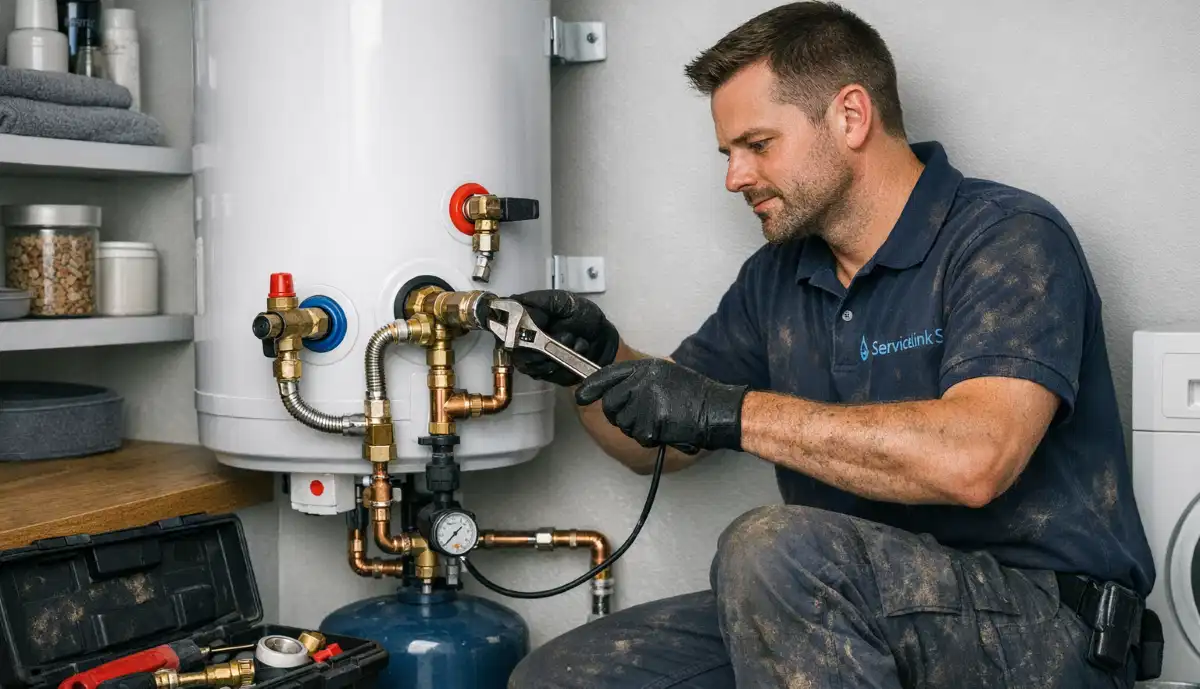
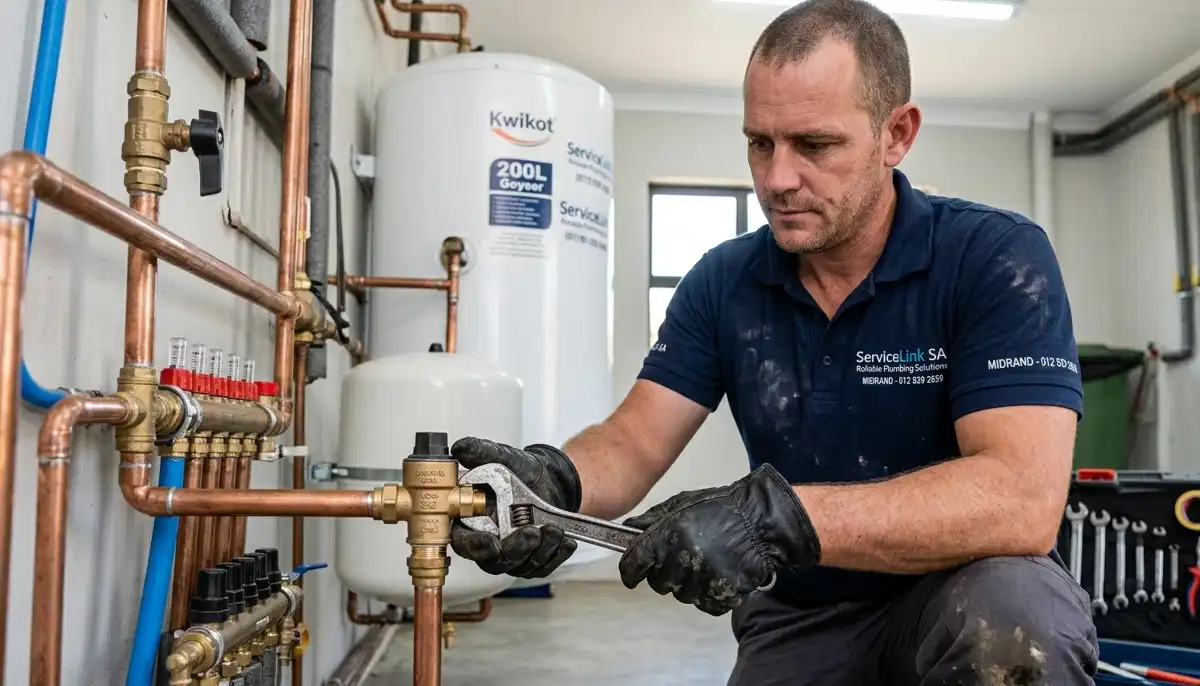
Here’s what happens during a professional geyser installation guide process:
- Site assessment (30-60 minutes) – Plumber inspects existing installation, checks water pressure, assesses access, and confirms geyser size needed.
- Disconnection of old geyser (30-60 minutes) – Water supply shut off, electrical disconnected, old geyser drained and removed.
- Preparation (30 minutes) – New mounting brackets installed, pipes cleaned or replaced as needed.
- New geyser mounting (30 minutes) – New geyser lifted into place (often requires two people—geysers are heavy when full).
- Pipe connections (1-2 hours) – Cold water inlet, hot water outlet, pressure control valve, vacuum breaker, and drip tray installed and connected.
- Electrical connection (30-60 minutes) – Electrical supply connected, earth bonding checked, circuit breaker verified.
- Filling and testing (30 minutes) – Geyser filled with water (air bled out), checked for leaks, electrical turned on.
- COC issuance – Certificate of Compliance provided upon successful installation.
Total time: 3-6 hours for a straightforward replacement (same location). New installations or moving geysers take 5-8 hours.
📋 Important:
Never turn on the electricity to a new geyser until it is completely full of water. Running a geyser without water burns out the element within seconds. Your plumber will ensure the geyser is full before restoring power.
💰 Electric Geyser Installation Cost Guide
Here’s what to budget for install electric geyser projects in South Africa:
| Item | Cost Range (ZAR) | Notes |
|---|---|---|
| 100L Geyser (unit only) | R3,500 – R6,500 | Brand dependent |
| 150L Geyser (unit only) | R5,000 – R9,000 | Most common size |
| 200L Geyser (unit only) | R7,000 – R12,000 | For larger families |
| Installation Labour (replacement) | R1,500 – R3,500 | Same position |
| Installation Labour (new position) | R3,000 – R6,000 | Requires new pipe runs |
| Fittings & Materials | R500 – R1,500 | Valves, pipes, connectors |
| Certificate of Compliance (COC) | R350 – R600 | Mandatory |
| Total Installed (150L replacement) | R8,500 – R15,000 | Complete installation |
Real-world example: A 150L geyser replacement in Sandton with accessible ceiling space: Labour R2,500 + geyser R6,500 + fittings R800 + COC R450 = R10,250 total. Read our geyser installation costs guide for more details.
📜 Legal Requirements: COC & Regulations
Any electric geyser installation must comply with South African regulations:
- PIRB-registered plumber required – Only registered plumbers can legally install geysers and issue COCs.
- Certificate of Compliance (COC) mandatory – Without a COC, your insurance is void and you cannot legally sell your property.
- SANS 10252 compliance – Installation must meet South African National Standards for water supply and drainage.
- Electrical compliance – Must comply with SANS 10142 (electrical installations). Earth bonding is essential.
- Pressure control valve required – Every geyser must have a properly installed pressure control valve and vacuum breaker.
- Drip tray required – Geysers installed in ceilings must have a drip tray with drainage to the outside.
Read our plumbing COC certificate guide for more information.
👨🔧 How to Choose a Geyser Installation Professional
Selecting the right professional for electric geyser installation is critical:
Read our how to choose a contractor guide and questions to ask a plumber guide for more.
🚫 Why DIY Electric Geyser Installation Is Dangerous
⚠️ Electrocution Risk
Geysers operate on 15-30 amp circuits. Incorrect wiring can cause fatal electrocution. Even with the power off, capacitors can hold dangerous charges.
⚠️ Explosion Risk
Without proper pressure valve installation, a geyser can over-pressurise and explode—releasing hundreds of litres of boiling water and steam with tremendous force.
⚠️ Flood Risk
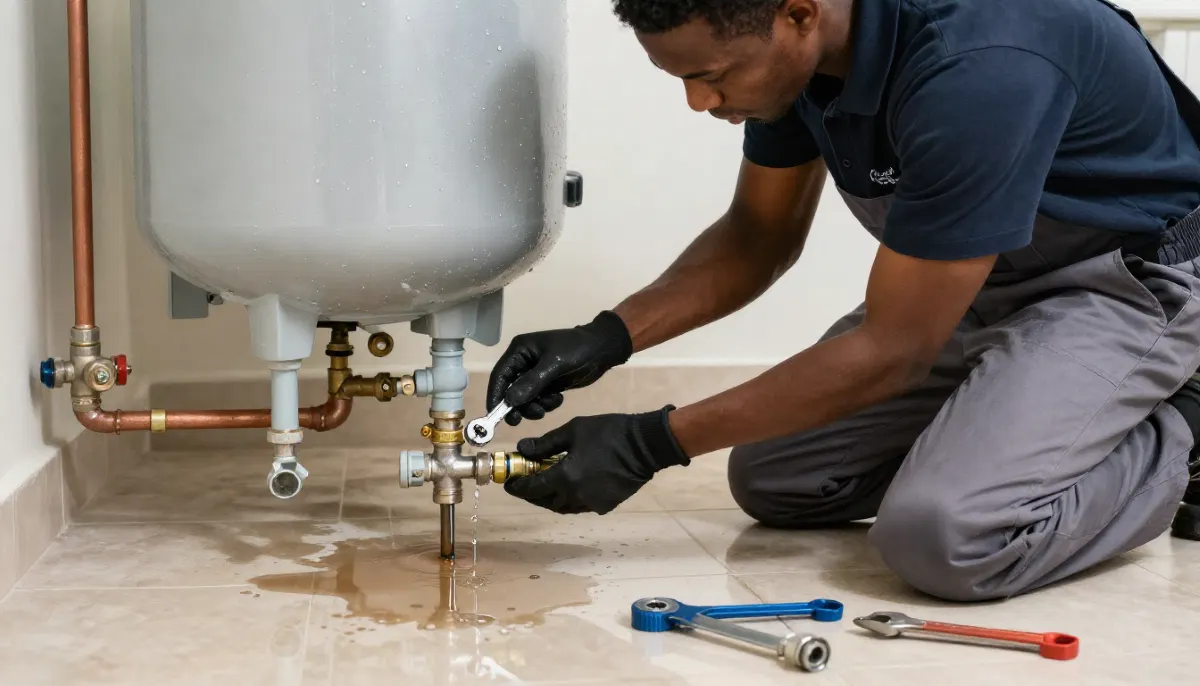
Improper pipe connections or missing drip trays can cause catastrophic flooding, destroying ceilings, walls, and floors.
⚠️ Fire Risk
Incorrect electrical connections can cause overheating, arcing, and electrical fires in your ceiling.
⚠️ Legal Consequences
DIY installation is illegal. No COC means no insurance coverage and inability to sell your property.
⚠️ The Bottom Line:
How to install an electric geyser safely? You don’t—you hire a licensed professional. The R1,500-R3,500 labour cost is cheap insurance against death, fire, flood, and legal consequences.
🔧 Maintenance After Electric Geyser Installation
Once your new geyser is installed, follow these maintenance tips:
- Test pressure valve quarterly – Lift the lever for 2-3 seconds. Water should flow into the drip pipe. If not, call a plumber.
- Check drip tray monthly – Any moisture indicates a problem.
- Flush the geyser every 2-3 years – Removes sediment buildup, improves efficiency, extends life.
- Replace sacrificial anode every 3-5 years – Extends geyser life by 5+ years.
- Set thermostat to 55-60°C – Saves energy, prevents scalding.
- Consider a geyser timer – Heat water only when needed, saving R200-R400 monthly.
Read our home plumbing maintenance checklist and geyser pressure valve guide for more.
❌ 5 Costly Mistakes Homeowners Make With Geyser Installation
Mistake #1: DIY Installation to Save Money
The R1,500-R3,500 saved on labour can cost R50,000+ in flood damage, not to mention legal consequences and voided warranties. Professional electric geyser installation is not optional—it’s essential.
Mistake #2: Choosing the Cheapest Installer Without Verification
Unregistered “plumbers” cannot issue COCs. Their work may not meet SANS standards. The cheapest quote often leads to the most expensive problems.
Mistake #3: Not Getting a COC
Without a COC, your insurance may deny water damage claims and you cannot legally sell your property. Never accept final payment until you have the COC.
Mistake #4: Undersizing the Geyser
A 100L geyser for a family of 4 means constant cold showers. The cost difference between 150L and 100L is minimal—size up.
Mistake #5: Ignoring the Drip Tray
Geysers in ceilings MUST have drip trays with proper drainage. Without one, a small leak destroys your ceiling before you know it.
📋 Real-World Geyser Installation Case Studies
🏠 Case 1: Standard Replacement in Johannesburg
Location: Johannesburg | Homeowner: The Ndlovu Family
Problem: 12-year-old 150L geyser leaking from the tank. Needed emergency replacement.
Solution: Professional electric geyser installation of new 150L high-pressure unit (R9,500 total).
Outcome: Installation completed in 4 hours. COC provided. Geyser under warranty. No further issues.
Lesson: Emergency replacement costs more than planned replacement. Plan ahead.
🔥 Case 2: Upgrading from 100L to 200L
Location: Pretoria | Homeowner: The van Wyk Family
Problem: Family outgrew 100L geyser. Constant cold showers.
Solution: Upgraded to 200L geyser (R14,500 installed). Added geyser timer for efficiency.
Outcome: Plenty of hot water for family of 5. Electricity bill unchanged due to timer scheduling.
Lesson: Sizing up and adding a timer provides better hot water without higher bills.
❓ Frequently Asked Questions About Electric Geyser Installation
How much does electric geyser installation cost in South Africa?
Electric geyser installation costs R8,500-R15,000 for a standard 150L replacement including unit, labour, fittings, and COC. Labour only (if you supply the geyser) is R1,500-R3,500. New installations (new position) cost R3,000-R6,000 labour plus geyser cost. Always get itemised quotes and ensure COC is included.
How to install an electric geyser safely?
How to install an electric geyser safely: You don’t—you hire a PIRB-registered plumber. Professional installation includes: proper sizing, correct mounting, pressure valve installation, electrical compliance, earth bonding, drip tray with drainage, filling before power-on, and COC issuance. DIY installation is illegal and dangerous.
What size electric geyser do I need for a family of 4?
A family of 4 in a standard 3-bedroom home typically needs a 150-litre hot water heater. If you have teenagers who take long showers, multiple bathrooms used simultaneously, or a bath (not just showers), consider upgrading to 200 litres. For a family of 2-3, 150 litres is sufficient. For 1-2 people in an apartment, 100 litres works.
Do I need a COC for geyser installation?
Yes—absolutely. Any electric geyser installation requires a Certificate of Compliance (COC) from a PIRB-registered plumber. Without a COC, your home insurance may deny water damage claims, and you cannot legally sell your property without providing a COC for the geyser. Never accept final payment until you have the COC.
How long does electric geyser installation take?
A standard replacement (same position) takes 3-6 hours: disconnection and removal (1 hour), preparation (30 minutes), new geyser mounting (30 minutes), pipe connections (1-2 hours), electrical connection (30-60 minutes), filling and testing (30 minutes). New installations (new position) take 5-8 hours. Your home will be without hot water during this time.
Can I install an electric geyser myself?
No—install electric geyser projects must be performed by a PIRB-registered plumber. DIY installation is illegal, dangerous (electrocution, explosion, flood risks), voids manufacturer warranty, and provides no COC (invalidating insurance and property sale). The labour cost (R1,500-R3,500) is far less than the potential consequences of DIY.
What’s the difference between a high-pressure and low-pressure geyser?
A high-pressure geyser operates at municipal water pressure (400-600 kPa) and delivers strong water flow. Most modern homes use high-pressure systems. A low-pressure (gravity) geyser relies on gravity feed from a tank and delivers weak flow—only suitable for outbuildings or areas without pressurised water supply. For hot water heater installations in standard homes, always choose high-pressure.
How do I find a reliable geyser installer near me?
To find a reliable electric geyser installation professional: 1) Verify PIRB registration (essential for COC), 2) Ask for geyser installation experience and references, 3) Get detailed written quotes, 4) Check reviews specifically for geyser work. ServiceLink SA connects you with verified, PIRB-registered plumbers who specialise in geyser installation.
✅ Final Thoughts: Safety First, Always
A new geyser is a significant investment in your home’s comfort. But electric geyser installation is not a DIY project—it requires professional expertise, legal compliance, and strict safety standards. The cost of professional installation (R1,500-R3,500 labour) is small compared to the risks of DIY: electrocution, explosion, flood, fire, voided insurance, and legal consequences.
Key takeaways for South African homeowners:
- Professional installation is legally required – PIRB-registered plumber only
- COC is mandatory – Without it, insurance is void and property cannot be sold
- Size matters – 150L for family of 4, 200L for larger families
- Cost R8,500-R15,000 for 150L replacement – including geyser, labour, COC
- Installation takes 3-6 hours – 5-8 hours for new positions
- Never DIY – The risks far outweigh any perceived savings
- Annual maintenance extends life – test pressure valve, check drip tray, replace anode
Your action plan: If your geyser needs replacement, don’t delay. Get quotes from 3 verified, PIRB-registered plumbers through ServiceLink SA. Compare sizing recommendations, pricing, and warranties. Choose a professional who provides a COC and stands behind their work. Your family’s safety and your home’s protection are worth it.
🔥 Need a New Geyser Installation?
Get quotes from verified, PIRB-registered plumbers for electric geyser installation. Free inspections available.
📞 Call us: 073 138 4726 for immediate help finding a geyser installer near you.
Geyser costs •
Solar geyser options •
Heat pump vs electric •
Pay Later option •
Beat Your Quote guarantee
📚 Official resources & standards referenced:
- SANS 10400 – Geyser installation standards and building regulations.
- South African Bureau of Standards (SABS) – Pressure vessel safety and geyser standards.
- Plumbing Industry Registration Board (PIRB) – Find registered geyser installation specialists.
Information provided for general guidance based on industry research and SANS/PIRB standards. For specific electric geyser installation requirements for your home, consult multiple verified PIRB-registered plumbers.
Written by: ServiceLink SA Research Team
Geyser Installation & Hot Water System Specialists
The ServiceLink SA Research Team comprises geyser installation experts, hot water system specialists, and plumbing industry professionals with decades of experience in electric geyser installation across South Africa. Our team works directly with PIRB-registered plumbers, geyser manufacturers, and compliance authorities to bring you accurate, actionable information about install electric geyser requirements, costs, and safety standards. We continuously update our guides to reflect current SANS standards, manufacturer warranties, and real-world best practices for hot water heater installations.
For more information about geyser installation and hot water systems, explore our related resources:
geyser installation and repair costs guide,
solar geyser costs guide,
heat pump vs electric geyser guide,
geyser troubleshooting guide,
and geyser leaking repair guide.
Our what is ServiceLink SA and
contractor verification process pages explain how we connect you with trusted professionals.
See our service areas page for geyser installation coverage in your region.