
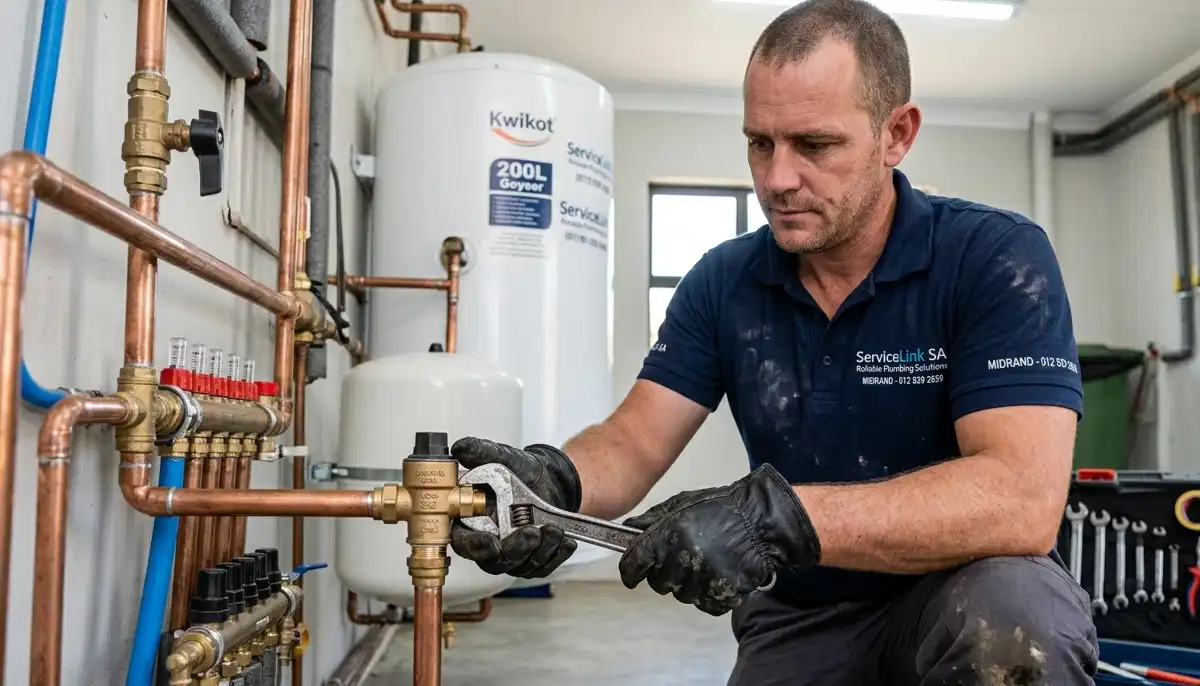
💧 Geyser Pressure Valve Leaking?
Get quotes from verified geyser repair specialists for pressure valve replacement. Same-day service available.
Get Pressure Valve Repair Quotes Near You
Servicing Gauteng, Johannesburg, Sandton, Randburg, Roodepoort, Alberton, and across South Africa
Geyser Pressure Valve Problems: Signs of Failure & When to Replace
💧 From constant dripping to complete failure—everything you need to know about your geyser’s most important safety device
You notice a small puddle of water near the pipe that runs from your geyser to the outside. Or worse—you hear a hissing sound and see steam escaping. Your geyser’s pressure valve is trying to tell you something.
The pressure relief valve geyser (also called the safety valve or PRV) is arguably the most important safety device on your hot water system. It prevents pressure from building to dangerous levels that could cause your geyser to explode. When it fails, the consequences can be catastrophic.
I’ve seen the results of failed pressure valves—geysers that burst, ceilings that collapsed, and homes flooded with hundreds of litres of hot water. A R1,200-R2,500 replacement is cheap insurance against a R50,000+ disaster.
This comprehensive guide will teach you how to identify geyser pressure valve problems, test the valve yourself, understand why is my geyser pressure valve leaking, and know when to replace this critical safety valve. Whether you’re in Gauteng, Johannesburg, or Sandton, this guide will help you protect your home.
For related information, read our geyser not heating guide, geyser thermostat guide, element replacement guide, and geyser leaking guide. Let’s ensure your safety valve is working.
📋 Table of Contents – Geyser Pressure Valve Guide
🔧 What Is a Geyser Pressure Valve?
A geyser pressure valve (also called a pressure relief valve, PRV, or safety valve) is a spring-loaded mechanical device installed on every hot water geyser. It is designed to automatically release water if the pressure or temperature inside the geyser becomes dangerously high.
Where it’s located: On the side or top of your geyser, with a copper pipe (drip pipe) running from it to the outside of your home.
How it works:
- Contains a spring-loaded disc held closed by spring pressure
- When pressure exceeds the valve’s rating (typically 600-800 kPa), the disc lifts, releasing water
- When temperature exceeds 90-95°C, a thermal element also opens the valve
- Water flows through the drip pipe to the outside (not into your ceiling)
Read our geyser installation and repair costs guide for more on geyser components.
⚠️ Why the Safety Valve Is Critical
The pressure relief valve geyser is your home’s last line of defence against a geyser explosion. Without a functioning valve:
- Pressure can build to dangerous levels (well above 1000 kPa)
- The geyser tank can rupture catastrophically
- Hundreds of litres of near-boiling water can flood your home in seconds
- Steam explosion can cause structural damage
⚠️ CRITICAL SAFETY WARNING:
A failed geyser pressure valve that is stuck closed can cause your geyser to explode. This is not theoretical—geyser explosions have destroyed homes and caused serious injuries. Test your valve quarterly. If it’s stuck or leaking, replace it immediately.
If you need emergency assistance with a pressure valve, contact our 24/7 emergency plumbing services.
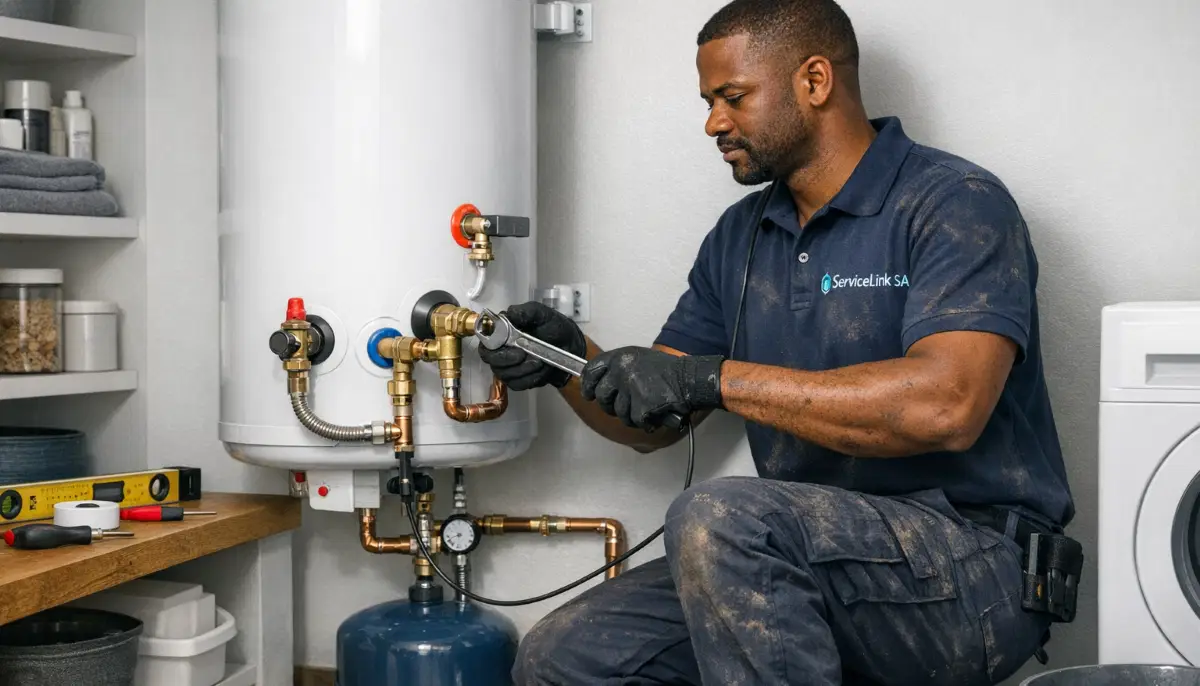
🔍 5 Symptoms of a Failing Pressure Valve
Here are the most common signs of geyser pressure valve problems:
- Constant dripping – Water continuously drips from the drip pipe, even when the geyser isn’t heating
- No water when testing – Lifting the test lever produces no water flow (valve stuck closed)
- Rust or corrosion – Visible rust on the valve body indicates internal deterioration
- Water leaking from valve body – Water seeping from the valve itself (not the drip pipe)
- Geyser has burst – The ultimate failure—complete tank rupture
If you notice any of these signs, read our geyser leaking guide for immediate steps.
💧 Symptom #1: Constant Dripping from Drip Pipe
This is the most common sign of a faulty geyser valve—water dripping from the copper pipe that runs outside.
Normal vs abnormal dripping:
- Normal: A small amount of water during heating cycles (expansion) – stops when heating stops
- Abnormal (valve likely failed): Constant dripping regardless of whether the geyser is heating
Other causes of dripping (not valve failure):
- High water pressure (above 600 kPa) – install pressure reducing valve
- Failed expansion vessel (if your system has one)
- Sediment preventing valve from sealing
Solution: If the valve drips constantly, replace it. Cost R1,200-R2,500.
For homes in Sandton or Randburg with high municipal pressure, you may also need a pressure reducing valve.
🔒 Symptom #2: No Water When Testing (Valve Stuck Closed)
This is the most dangerous pressure relief valve geyser failure—the valve is stuck closed and cannot release pressure.
How to test: Lift the test lever on the valve for 2-3 seconds. You should hear water flow into the drip pipe.
If no water flows: The valve is stuck closed. Your geyser has no pressure relief—it could explode.
⚠️ EMERGENCY:
If your geyser pressure valve is stuck closed, call a plumber immediately. Do not delay. A stuck valve means your geyser has no safety release—pressure can build to dangerous levels at any time.
Solution: Immediate valve replacement. Call our emergency plumbing services right away.
🔴 Symptom #3: Visible Rust or Corrosion
Rust on the valve body indicates internal deterioration and impending failure.
What to look for: Brown discolouration, flaking metal, or mineral deposits on the valve.
Why it matters: A rusted valve can fail at any time—either stuck closed (dangerous) or stuck open (wasting water).
Solution: Replace the valve proactively. Don’t wait for failure.
💧 Geyser Pressure Valve Leaking?
Get quotes from verified geyser repair specialists for pressure valve replacement. Same-day service available.
Get Pressure Valve Repair Quotes
Free quotes • Same-day service • Verified specialists
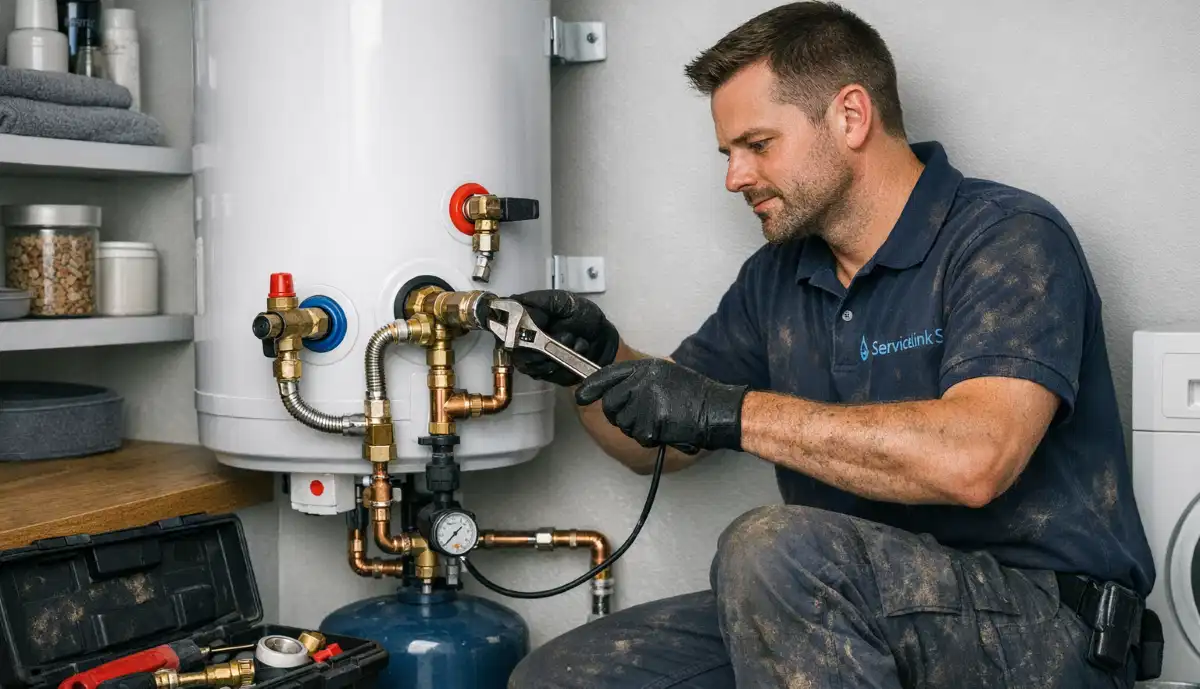
💧 Symptom #4: Water Leaking from Valve Body
Water seeping from the valve itself (not the drip pipe) indicates a cracked or failed valve body.
Solution: Immediate replacement. A leaking valve body can burst open.
💥 Symptom #5: Geyser Has Burst (Catastrophic Failure)
If your geyser has already burst, the pressure valve failed—either stuck closed or the tank failed before the valve could release pressure.
Immediate action: Turn off electricity and water. Call emergency services. Document damage for insurance. Read our plumbing insurance claim guide.
📋 How to Test Your Pressure Valve (Quarterly)
Testing your geyser pressure valve takes 30 seconds and should be done every 3 months:
- Place a bucket under the drip pipe outside (optional but helpful)
- Lift the test lever on the valve gently for 2-3 seconds
- You should hear water flow into the drip pipe
- Release the lever – it should snap back closed
- The dripping should stop within a few seconds
If you hear no water flow: Valve is stuck closed – EMERGENCY – call a plumber immediately.
If water continues dripping after release: Valve is stuck open – replace it.
If the lever is difficult to lift or doesn’t snap back: Valve is failing – replace it.
For professional testing and inspection, use our free inspection service.
🔍 Why Is My Geyser Pressure Valve Leaking?
Why is my geyser pressure valve leaking? Here are the most common causes:
- Failed valve (most common): The valve has worn out and no longer seals properly. Replace valve.
- High water pressure: Municipal pressure above 600 kPa causes the valve to constantly drip. Install a pressure reducing valve. Read our low water pressure guide for related information.
- Failed expansion vessel: If your system has an expansion vessel and it fails, pressure spikes cause valve dripping. Replace expansion vessel.
- Sediment buildup: Debris prevents the valve from sealing fully. Flush the system or replace valve.
- Over-temperature: Thermostat failure causing overheating. Read our geyser thermostat guide.
If you’re in Roodepoort or Alberton where water pressure can be high, a pressure reducing valve may be the solution.
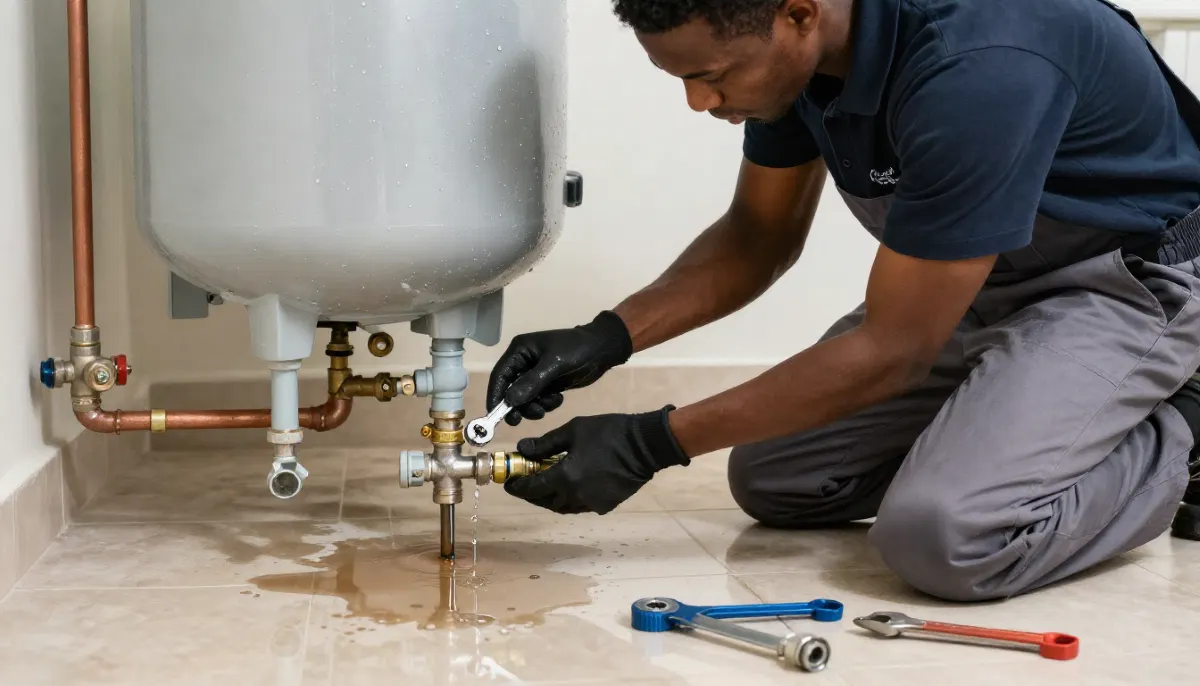
🔧 How to Replace a Faulty Pressure Valve
Warning: Pressure valve replacement requires draining the geyser and working with pressurised water. If you’re not confident, hire a professional from our plumbing services network.
Professional replacement process:
- Turn off power to geyser at circuit breaker
- Turn off water supply to geyser (isolation valve)
- Open a hot tap to relieve pressure
- Drain the geyser partially (water level below valve)
- Unscrew old valve (counter-clockwise)
- Clean threads and apply thread sealant
- Screw in new valve (clockwise) – do not overtighten
- Close drain, turn water on, fill geyser
- Check for leaks, test valve operation
- Restore power
Professional cost: R1,200-R2,500 including parts and labour. Read our geyser costs guide for more.
💰 Pressure Valve Replacement Cost Guide
Here’s what to budget for geyser pressure valve replacement:
| Service | Cost Range (ZAR) | What’s Included |
|---|---|---|
| Pressure Valve Part | R400 – R1,000 | Replacement valve only |
| Professional Labour | R800 – R1,500 | Diagnosis, draining, replacement, testing |
| Total Professional Replacement | R1,200 – R2,500 | Parts + labour + COC |
| Pressure Reducing Valve (PRV) – additional | R1,500 – R3,500 | If high pressure is the root cause |
| Expansion Vessel – additional | R800 – R1,500 | If failed expansion vessel is the cause |
For complete geyser service, consider our geyser installation and repair services.
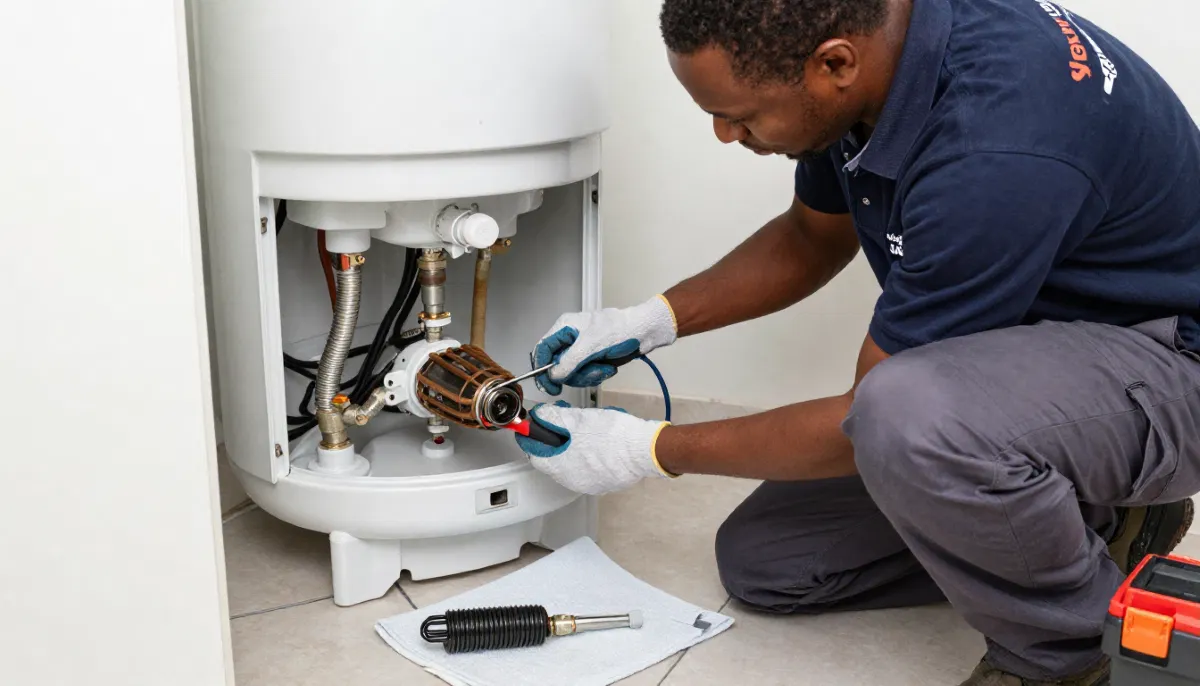
🛡️ Preventing Pressure Valve Failure
Extend the life of your safety valve with these tips:
- Test the valve quarterly – Lift the lever for 2-3 seconds. This 30-second test is the most important maintenance you can do.
- Check water pressure – If pressure exceeds 600 kPa, install a pressure reducing valve.
- Set thermostat to 55-60°C – Prevents overheating that stresses the valve. Read our geyser not heating guide for thermostat settings.
- Replace valve every 5-8 years – Proactive replacement prevents emergency failures.
- Annual professional inspection – Have a plumber check the valve during routine maintenance. Schedule through our free inspection service.
For a complete maintenance schedule, download our Home Plumbing Maintenance Checklist.
❌ 5 Costly Mistakes to Avoid
Mistake #1: Never Testing the Valve
A valve that hasn’t been tested in years may be stuck closed without you knowing. Your geyser has no pressure relief. Test quarterly—it takes 30 seconds.
Mistake #2: Ignoring Constant Dripping
“It’s just a little water” – a constantly dripping valve is failing. Replace it before it fails completely (stuck closed or bursts open).
Mistake #3: Blocking or Removing the Drip Pipe
Never cap, block, or remove the drip pipe. It must drain freely to the outside. Blocking it creates a sealed system that can explode.
Mistake #4: Replacing with an Incorrect Valve
Pressure valves have specific pressure ratings (usually 600-800 kPa). Using the wrong rating can cause premature failure or inadequate protection. Always match specifications.
Mistake #5: Not Addressing the Root Cause
If your valve failed due to high pressure or a faulty thermostat, replacing just the valve won’t solve the problem. The new valve will fail prematurely. Check water pressure and thermostat function. Read our thermostat guide.
📋 Real-World Pressure Valve Case Studies
💧 Case 1: The Constant Drip in Randburg
Location: Randburg | Homeowner: The Mokoena Family
Problem: Water constantly dripping from outside pipe. Water bill increased by 30%.
Diagnosis: Failed geyser pressure valve – stuck slightly open.
Solution: Valve replacement (R1,800). Also tested water pressure – within normal range.
Outcome: Dripping stopped. Water bill returned to normal.
Lesson: A dripping valve wastes water and money—replace it promptly.
💥 Case 2: The Stuck Valve Emergency
Location: Johannesburg | Homeowner: Mrs. van der Merwe
Problem: Homeowner tested valve after reading this guide. No water flowed when lever was lifted.
Diagnosis: Pressure relief valve geyser stuck closed – extremely dangerous.
Solution: Emergency valve replacement (R2,200 including after-hours call-out).
Outcome: New valve installed, tested working. Geyser safe again. Potential explosion averted.
Lesson: Regular testing saved this home from a potential geyser burst.
For emergency situations like this, our 24/7 emergency plumbing services are available.
❓ Frequently Asked Questions About Geyser Pressure Valves
Why is my geyser pressure valve leaking constantly?
Why is my geyser pressure valve leaking constantly? The most common cause is a failed valve that no longer seals properly (replace it). Other causes: high water pressure (above 600 kPa – install a pressure reducing valve), failed expansion vessel, or sediment buildup. If the valve drips only during heating cycles, that’s normal expansion. Constant dripping means replacement is needed.
How often should I test my geyser pressure valve?
Test your geyser pressure valve quarterly (every 3 months). Lift the test lever for 2-3 seconds. You should hear water flow into the drip pipe. If no water flows, the valve is stuck closed – emergency – call a plumber immediately. If water continues dripping after release, the valve is stuck open – replace it. This 30-second test is the most important maintenance you can do.
How much does it cost to replace a geyser pressure valve?
Replacing a pressure relief valve geyser costs R1,200-R2,500 professionally, including parts and labour. The valve itself costs R400-R1,000. Labour is R800-R1,500. This is cheap insurance against a R50,000+ geyser burst and water damage. DIY replacement is possible but requires draining the geyser and proper sealing – if unsure, hire a professional from ServiceLink SA.
Can a faulty pressure valve cause a geyser to burst?
Yes – a faulty geyser valve that is stuck closed is the primary cause of geyser explosions. Without a functioning pressure relief valve, pressure can build to dangerous levels (well above 1000 kPa), causing the tank to rupture catastrophically. This is why testing your valve quarterly is so critical. Never ignore a stuck or untested valve.
How long do geyser pressure valves last?
Geyser pressure valve lifespan is typically 5-8 years, depending on water quality and usage. Hard water (high mineral content) can cause sediment buildup that affects valve operation. High water pressure also stresses the valve. Proactive replacement every 5-8 years is recommended – don’t wait for failure. Regular testing helps identify problems early.
What is the difference between a pressure valve and a pressure reducing valve?
A pressure relief valve geyser (safety valve) releases pressure if it becomes dangerously high – it’s a safety device. A pressure reducing valve (PRV) reduces incoming municipal pressure to a safe level – it’s a pressure regulation device. Both are important. If your water pressure exceeds 600 kPa, you need a PRV to protect your geyser and plumbing. For pressure issues, read our low water pressure guide.
Can I replace a geyser pressure valve myself?
If you have plumbing experience, you can replace a geyser pressure valve yourself. Steps: turn off power and water, drain geyser partially, unscrew old valve, install new valve with thread sealant, refill, test. However, if you’re unsure, hire a professional – a mistake could cause flooding or a dangerous situation. ServiceLink SA connects you with verified plumbers in Gauteng, Sandton, and across South Africa.
What happens if I block the drip pipe from the pressure valve?
Never block, cap, or remove the drip pipe from your safety valve. The drip pipe must drain freely to the outside. If blocked, when the valve opens to release pressure, water cannot escape. This creates a sealed system that can over-pressurise and cause the geyser to explode. The drip pipe is a critical safety component – leave it unblocked and unobstructed.
✅ Final Thoughts: Test Today, Replace When Needed
Your geyser pressure valve is the most important safety device in your home’s hot water system. A functioning valve prevents catastrophic geyser bursts that can destroy your home. A failed valve puts your family and property at risk.
The good news? Testing takes 30 seconds, and replacement is affordable (R1,200-R2,500). There’s no excuse for neglecting this critical component.
Key takeaways for South African homeowners:
- Test your valve quarterly – 30 seconds could save your home
- Constant dripping = replace the valve – R1,200-R2,500
- No water when testing = emergency – valve stuck closed, call immediately
- Replace valve every 5-8 years – proactive replacement prevents emergencies
- High pressure may need PRV – pressure reducing valve protects your system
- Never block the drip pipe – it must drain freely to the outside
- Use PIRB-registered plumbers – ensure proper installation and COC
Your action plan: Test your geyser pressure valve today. Lift the lever for 2-3 seconds. If water flows and stops, you’re good. If not, call a professional immediately. Use ServiceLink SA to find verified geyser repair specialists for pressure valve replacement.
💧 Geyser Pressure Valve Leaking?
Get quotes from verified geyser repair specialists for pressure valve replacement. Same-day service available.
📞 Call us: 073 138 4726 for immediate help finding a geyser specialist near you.
No hot water? •
Thermostat guide •
Element replacement •
Leaking geyser •
Our guarantees
📚 Official resources & standards referenced:
- SANS 10400 – Pressure valve standards and geyser safety requirements.
- South African Bureau of Standards (SABS) – Safety regulations for pressure vessels.
- Plumbing Industry Registration Board (PIRB) – Find registered geyser repair specialists.
Information provided for general guidance based on industry research and SANS/SABS standards. For geyser pressure valve problems, professional inspection and replacement are recommended.
Written by: ServiceLink SA Research Team
Geyser Safety & Pressure Valve Specialists
The ServiceLink SA Research Team comprises geyser safety experts, pressure valve specialists, and plumbing industry professionals with decades of experience diagnosing and replacing geyser pressure valve problems across South Africa. Our team works directly with PIRB-registered plumbers, safety authorities, and equipment manufacturers to bring you accurate, actionable information about pressure relief valve geyser testing, replacement, and prevention. We continuously update our guides to reflect current safety standards, SABS regulations, and real-world best practices for faulty geyser valve diagnosis.
For more information about geyser pressure valves and hot water systems, explore our related resources:
geyser not heating guide,
geyser thermostat guide,
geyser element replacement guide,
geyser leaking guide,
and geyser costs guide.
Our how ServiceLink SA works and
contractor verification process pages explain how we connect you with trusted professionals.
See our service areas page for geyser repair coverage in your region.