
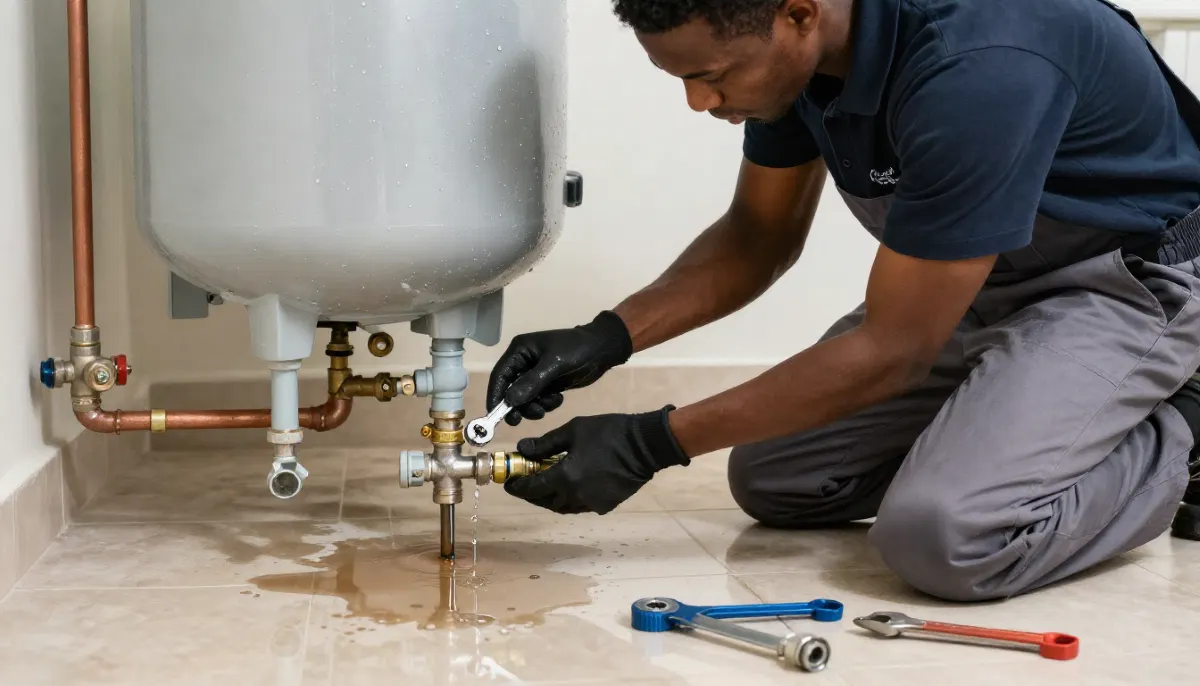
💧 Geyser Leaking? Get Help Now
Get quotes from verified geyser repair specialists. Emergency service available. Free inspections.
Get Geyser Leak Repair Quotes Near You
Servicing Gauteng, KwaZulu-Natal, Durban, Umhlanga, Ballito, Westville, and across South Africa
Geyser Leaking? When to Repair vs Replace (Save Money & Prevent Damage)
💧 From dripping pressure valves to tank failure—complete guide to diagnosing a leaking geyser and choosing repair or replacement
You notice a small water stain on your ceiling. Or worse—water is actively dripping from the ceiling around your geyser. Your heart races. A leaking geyser can mean anything from a R500 pressure valve replacement to a R15,000+ complete geyser replacement with ceiling repair.
I’ve responded to hundreds of leaking geyser calls. The difference between a simple fix and a catastrophic failure often comes down to one thing: knowing where the leak is coming from and acting fast.
A leaking pressure valve is a minor repair. A leaking tank is an emergency—your geyser could burst at any moment, releasing hundreds of litres of hot water into your home. Knowing the difference can save you thousands in water damage restoration.
This comprehensive guide will teach you how to identify the source of a geyser water leak, understand whether you need leaking geyser repair or full replacement, and take immediate action to prevent a geyser burst. Whether you’re in Gauteng, KwaZulu-Natal, or Durban, this guide will help you protect your home.
For related information, read our geyser not heating guide, geyser pressure valve guide, geyser costs guide, and element replacement guide. Let’s stop that leak.
📋 Table of Contents – Geyser Leaking Guide
🚨 Emergency First Steps (Stop the Leak!)
When you discover a geyser leaking, follow these steps immediately:
⚠️ IMMEDIATE ACTION:
- Step 1: Turn off the electricity supply to the geyser at the circuit breaker
- Step 2: Shut off the main water supply to the geyser (isolation valve)
- Step 3: Place buckets under the leak to catch water
- Step 4: If water is leaking through the ceiling, punch a small hole in the lowest point of the bulge to let water drain in a controlled way—this prevents ceiling collapse
- Step 5: Call a plumber immediately
What NOT to do:
- Do NOT touch the geyser if water is near electrical components
- Do NOT try to repair a leaking tank yourself
- Do NOT ignore a small leak—it will get worse
- Do NOT turn the electricity back on until the leak is fixed and the geyser is full of water
💡 Pro Tip:
Know where your geyser’s isolation valve and circuit breaker are BEFORE an emergency. Locate them today, label them, and show everyone in your home. This knowledge can save your ceiling.
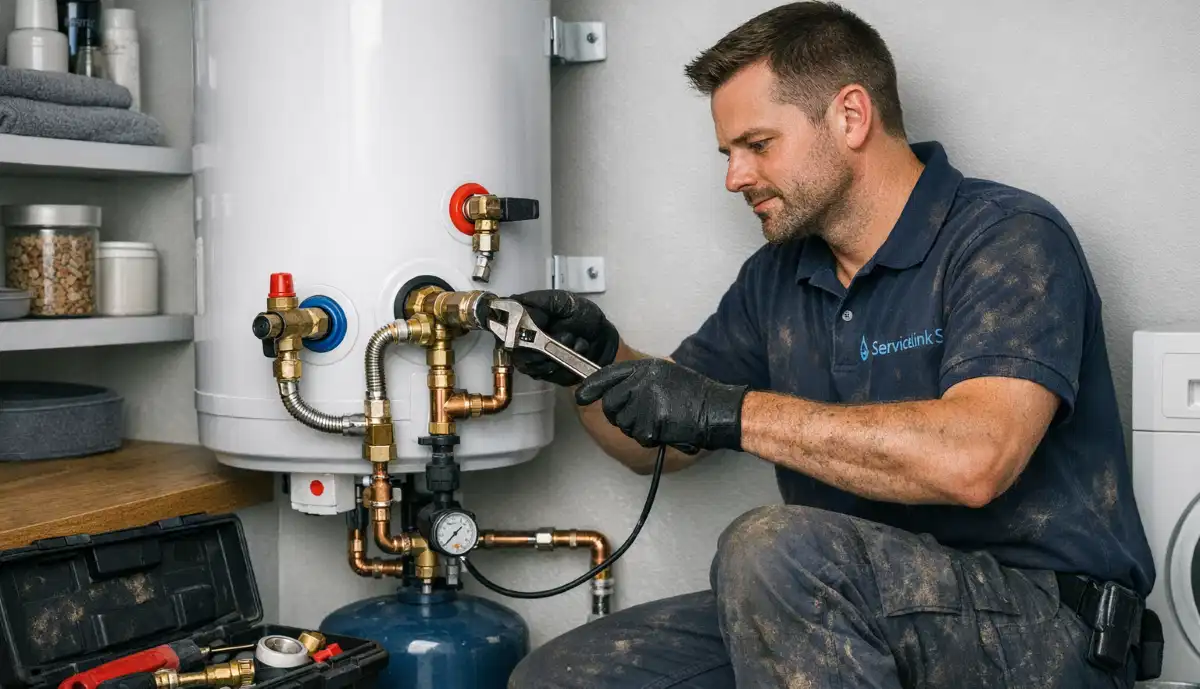
🔍 Types of Geyser Leaks by Location
Identifying where the water is coming from is the first step in deciding leaking geyser repair vs replacement:
| Leak Location | Likely Cause | Severity | Typical Repair | Cost Range |
|---|---|---|---|---|
| Pressure relief valve (drip pipe) | Failed valve, high pressure, sediment | 🟡 Moderate | Replace valve | R1,200-R2,500 |
| Pipe connections (inlet/outlet) | Loose fitting, failed washer, corrosion | 🟡 Moderate | Tighten or replace fitting | R500-R1,500 |
| Geyser tank (body of geyser) | Corrosion, crack, seam failure | 🔴 Emergency | Complete geyser replacement | R8,000-R25,000+ |
| Vacuum breaker | Failed valve, debris | 🟡 Moderate | Replace vacuum breaker | R800-R1,500 |
| Drip tray (if present) | Overflow from other leak | Varies | Fix source of leak | Varies |
🔧 Leak #1: Pressure Relief Valve (Most Common)
The pressure relief valve is the most common source of a geyser water leak. It’s designed to release water if pressure gets too high—but it can also leak when it fails.
Symptoms: Water dripping from the copper pipe (drip pipe) that runs from the geyser to outside. You may see water on the ground outside or hear dripping.
Common causes:
- Failed valve (most common): The valve itself has worn out and no longer seals properly.
- High water pressure: Municipal pressure above 600kPa causes the valve to constantly drip.
- Expansion vessel failed: If your system has an expansion vessel and it fails, pressure spikes cause valve dripping.
- Sediment buildup: Debris prevents the valve from sealing fully.
Diagnosis: If the drip pipe drips constantly (not just when heating), the valve has likely failed. If it only drips when the geyser is heating, you may have a pressure or expansion issue.
Solution: Replace the pressure relief valve (R1,200-R2,500). Also check your water pressure—if above 600kPa, install a pressure reducing valve.
Read our geyser pressure valve problems guide for detailed information.
🔧 Leak #2: Pipe Connections & Fittings
Water can leak from the pipes entering or leaving the geyser—the cold water inlet, hot water outlet, or pressure valve connection.
Symptoms: Water visible at pipe connections on top or side of geyser. Water may run down the geyser body or drip into the drip tray.
Common causes:
- Loose compression fitting
- Failed rubber washer
- Corroded pipe or fitting
- Cross-threaded connection during installation
Solution: Tighten fitting (carefully—don’t overtighten). If that doesn’t work, replace washer or fitting. Cost R500-R1,500.
This is usually a simple repair—but if the pipe itself is corroded, replacement may be needed.
💧 Geyser Leaking? Get Help Now
Get quotes from verified geyser repair specialists. Emergency service available. Free inspections.
Free quotes • Emergency service • Verified specialists
⚠️ Leak #3: Tank Corrosion or Crack (Emergency)
This is the most serious type of geyser water leak—water leaking from the tank itself means the geyser is failing and could burst at any moment.
Symptoms: Water dripping or running from the body of the geyser (not from pipes or valves). You may see rust stains. Water may be brownish (rust).
Common causes:
- Corrosion (most common): The sacrificial anode rod has failed, allowing the tank to rust from the inside out.
- Age: Geysers over 10-12 years old are at high risk of tank failure.
- Cracked seam: Manufacturing defect or pressure damage.
- Frozen pipes (inland areas): Ice expansion can crack the tank.
Signs of impending tank failure:
- Rusty water from hot taps (the tank is rusting internally)
- Visible rust on the outside of the geyser
- Geyser over 12 years old
- Small pinhole leak that may suddenly become a gusher
Solution: Complete geyser replacement immediately. Do NOT attempt to repair a leaking tank—it’s not repairable and will burst.
⚠️ CRITICAL WARNING:
If your geyser tank is leaking, it WILL burst. Not “might”—WILL. A geyser burst releases hundreds of litres of hot water into your home within minutes, destroying ceilings, walls, floors, and belongings. Do NOT wait. Replace it immediately.
💨 Leak #4: Vacuum Breaker
The vacuum breaker prevents back-siphonage and can leak when it fails.
Symptoms: Water dripping from the small valve on top of the geyser (looks like a small brass or plastic fitting with a cap).
Common causes: Failed internal seal, debris preventing closure.
Solution: Replace vacuum breaker (R800-R1,500).
💧 Leak #5: Drip Tray Overflow
If your geyser has a drip tray (required for ceiling installations), water in the drip tray indicates a leak from somewhere else—the pressure valve, pipes, or tank.
Symptoms: Water coming from the drip tray drain pipe, or water stains on ceiling below the geyser.
Solution: Identify and fix the source of the leak (valve, pipe, or tank).
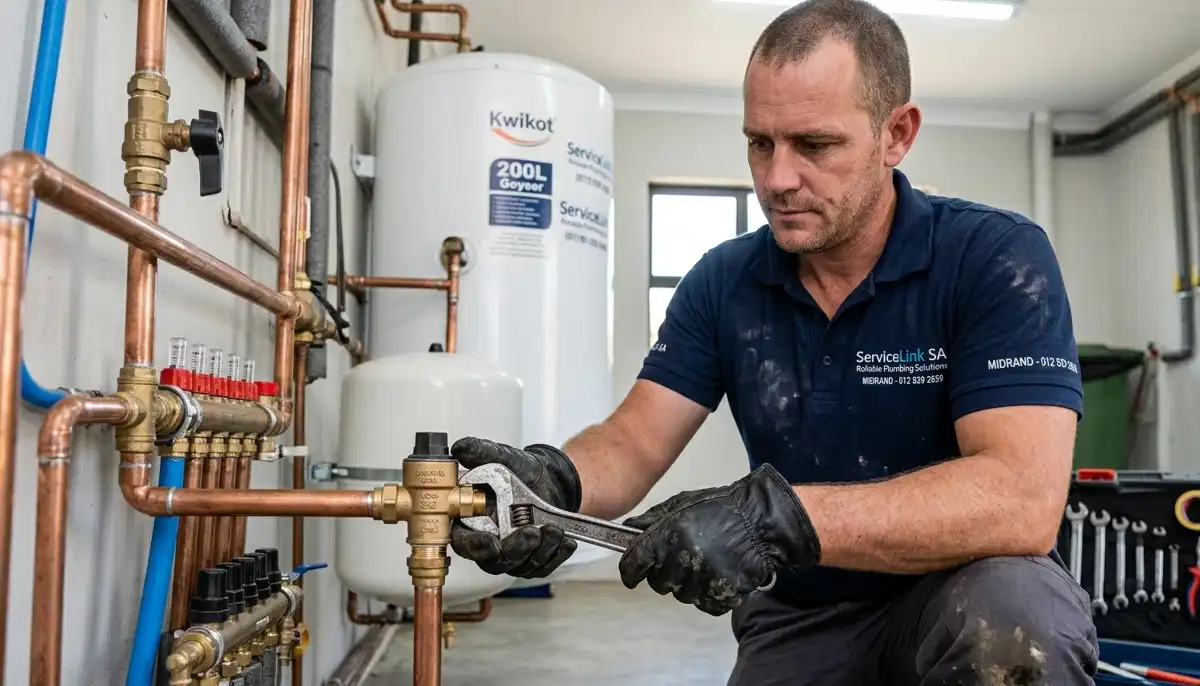
⚖️ Repair vs Replace Decision Guide
Here’s how to decide whether leaking geyser repair or full replacement is the right choice:
✅ REPAIR IF:
- Leak is from pressure relief valve
- Leak is from pipe connections or fittings
- Leak is from vacuum breaker
- Geyser is under 8-10 years old
- No visible rust or corrosion on tank
- No rusty water from hot taps
❌ REPLACE IF:
- Leak is from the tank itself
- Geyser is over 10-12 years old
- Visible rust on tank exterior
- Rusty water from hot taps
- Multiple components failing
- Previous repairs have been频繁
The 50% Rule: If repair cost exceeds 50% of replacement cost, or if the geyser is over 10 years old, replacement is the better long-term investment.
Read our geyser installation and repair costs guide for replacement pricing.
💰 Geyser Leak Repair Cost Guide
Here’s what to budget for leaking geyser repair:
| Repair Type | Parts Cost | Labour | Total Cost | Time |
|---|---|---|---|---|
| Pressure Relief Valve Replacement | R400-R1,000 | R800-R1,500 | R1,200-R2,500 | 1-2 hours |
| Pipe Fitting Tighten/Replace | R50-R500 | R450-R1,000 | R500-R1,500 | 30-60 min |
| Vacuum Breaker Replacement | R200-R500 | R600-R1,000 | R800-R1,500 | 30-60 min |
| Complete Geyser Replacement (150L) | R5,000-R9,000 | R1,500-R3,500 | R6,500-R12,500 | 3-6 hours |
| Emergency Call-Out Fee | N/A | R450-R650 | R450-R650 | N/A |
Note: Ceiling repair after a geyser burst is additional (R3,000-R10,000+ depending on damage).
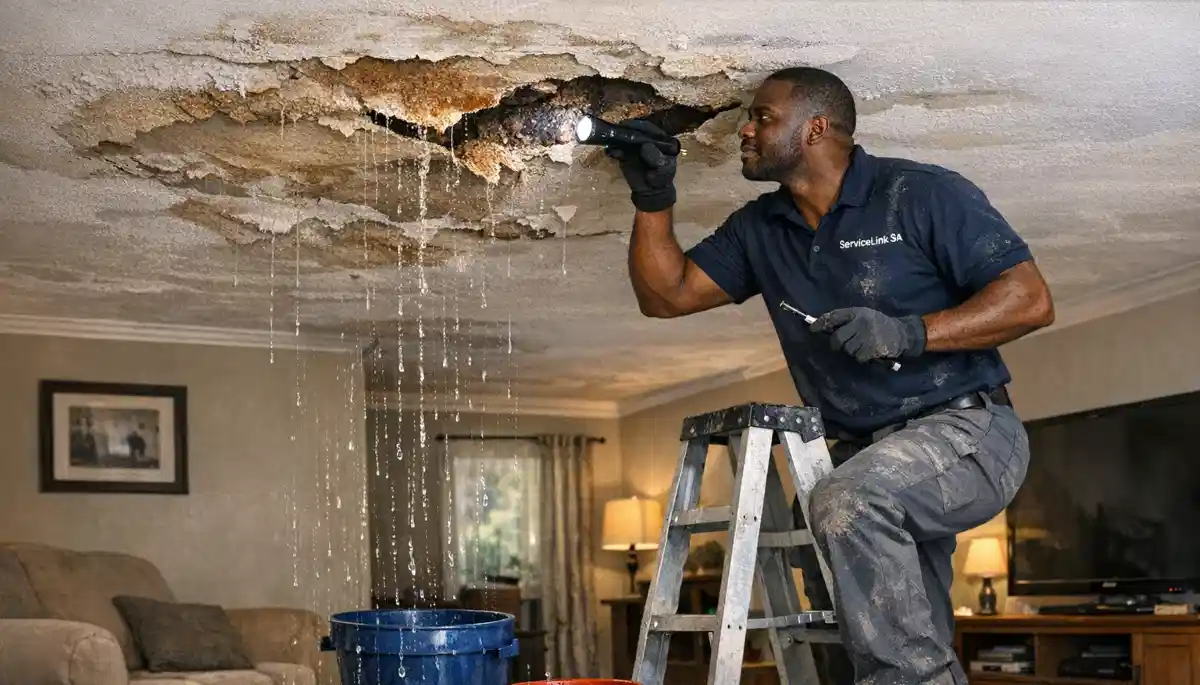
🏠 Ceiling Water Damage: What to Do
If your geyser has leaked through the ceiling, take these steps:
- Safety first: If the ceiling is sagging, stay clear—it could collapse. Do NOT stand directly under a bulging ceiling.
- Punch a small hole: At the lowest point of the bulge, carefully punch a small hole (screwdriver) to let water drain into a bucket. This prevents ceiling collapse.
- Contain water: Place buckets, tarps, or plastic sheeting to catch water.
- Dry the area: After the leak is fixed, use fans and dehumidifiers to dry the ceiling cavity. Mold can start growing within 24-48 hours.
- Assess damage: After drying, assess if the ceiling needs replacement or just repainting. Gypsum ceilings that have been soaked often need replacement.
- Call your insurer: Take photos before any cleanup for insurance claims.
Read our plumbing insurance claim guide for help with claims.
🏠 Insurance Claims for Geyser Leaks
Most home insurance policies cover geyser burst damage—but there are important conditions:
✅ Typically Covered
- Sudden, accidental geyser burst
- Water damage to ceilings, walls, floors
- Damage to contents (furniture, carpets)
- Emergency plumbing to stop the leak
- Geyser replacement (if specified in policy)
❌ Often Excluded
- Gradual leaks ignored for months
- Wear and tear or corrosion
- Lack of maintenance
- Geyser over 10-12 years old (depends on policy)
- Work by unlicensed plumbers (no COC)
Claim filing tips: Document everything with photos/video before cleanup. Keep all receipts. Use a PIRB-registered plumber. File promptly. Read our plumbing insurance claim guide for more.
🛡️ Preventing Future Geyser Leaks
Prevention is far cheaper than leaking geyser repair or replacement:
✅ DO This
- Test pressure valve quarterly (lift lever for 2-3 seconds)
- Check drip tray monthly for moisture
- Replace sacrificial anode every 3-5 years
- Inspect geyser annually for rust or corrosion
- Check water pressure—install PRV if above 600kPa
- Schedule professional inspection every 2-3 years
❌ DON’T Do This
- Ignore small drips or water stains
- Let the pressure valve go untested for years
- Ignore rusty water from hot taps
- Keep a geyser past 12-15 years without inspection
- DIY repairs if you’re not qualified
Read our home plumbing maintenance checklist for a complete schedule.
❌ 5 Costly Mistakes When Dealing With a Leaking Geyser
Mistake #1: Ignoring a Small Leak
“It’s just a small drip” is the most expensive phrase in plumbing. A small leak from a pressure valve is a R1,500 fix. Ignored for months, it can lead to a R15,000 geyser replacement plus R10,000+ ceiling damage.
Mistake #2: Not Knowing Where the Isolation Valve Is
When a geyser bursts, every minute spent searching for the isolation valve adds hundreds of litres of water damage. Locate yours today. Label it. Show everyone in your home.
Mistake #3: Trying to Repair a Leaking Tank
A leaking tank cannot be repaired—it’s like trying to patch a rusted car body. The corrosion will continue. Replacement is the only option. Any “repair” is temporary at best and dangerous at worst.
Mistake #4: Not Testing the Pressure Valve Regularly
A stuck pressure valve can cause a geyser to explode. A leaking pressure valve wastes water and indicates failure. Testing takes 30 seconds—do it quarterly.
Mistake #5: Ignoring Rusty Water from Hot Taps
Rusty hot water means your geyser tank is corroding from the inside. It WILL fail soon—often within months. Start planning for replacement immediately.
📋 Real-World Leaking Geyser Case Studies
💧 Case 1: The Dripping Pressure Valve in Durban
Location: Durban | Homeowner: The Naidoo Family
Problem: Constant dripping from the geyser’s copper drip pipe. Water pooling outside.
Diagnosis: Failed pressure relief valve (8-year-old geyser, never tested).
Solution: Pressure valve replacement (R1,800). Also tested water pressure—installed PRV (R1,500).
Outcome: No more drips. Geyser now protected from high pressure.
Lesson: A R1,800 valve replacement prevented potential geyser failure from high pressure.
💥 Case 2: The Catastrophic Tank Failure
Location: Gauteng | Homeowner: Mr. van Wyk
Problem: Small water stain on ceiling ignored for 2 months. Then ceiling collapsed—geyser had burst.
Diagnosis: 14-year-old geyser, tank had corroded through. Rusty water had been coming from hot taps for months (ignored).
Solution: Emergency geyser replacement (R12,500) + ceiling repair (R8,000) + new paint (R3,000) = R23,500 total.
Outcome: Insurance covered R15,000 (after R5,000 excess). Homeowner paid R13,500 out of pocket.
Lesson: Ignoring rusty water and a small stain cost this homeowner R13,500. Early replacement would have cost R8,500-R10,000 with no ceiling damage.
❓ Frequently Asked Questions About Geyser Leaks
Why is my geyser leaking water from the pressure valve?
Why is my geyser leaking water from the pressure valve? Most commonly, the valve has failed and needs replacement (R1,200-R2,500). Other causes: high water pressure (install PRV), failed expansion vessel, or sediment buildup. If the valve drips constantly (not just when heating), it’s likely failed. A professional plumber can diagnose and replace it.
Can a leaking geyser be repaired or does it need replacement?
It depends on the source. A leaking geyser repair is possible for pressure valves, pipe connections, and vacuum breakers (R500-R2,500). However, if the geyser tank itself is leaking, replacement is the only option (R6,500-R25,000+). Tank leaks cannot be repaired—the corrosion will continue, and the geyser will eventually burst catastrophically.
How much does it cost to fix a leaking geyser?
Costs for leaking geyser repair: Pressure relief valve R1,200-R2,500, pipe connections R500-R1,500, vacuum breaker R800-R1,500. Complete geyser replacement R6,500-R25,000+ depending on size and type. Ceiling repair (if water damage occurred) adds R3,000-R10,000+. Most homeowners pay between R1,200-R2,500 for simple valve or fitting repairs.
What should I do if my geyser is leaking from the tank?
If your geyser tank is leaking, this is an emergency. Immediately: 1) Turn off electricity to the geyser at the circuit breaker, 2) Shut off the main water supply, 3) Place buckets under the leak, 4) Call a plumber immediately. Do NOT attempt to repair a leaking tank—it cannot be fixed and will burst. A geyser burst can cause catastrophic flooding.
How can I tell if my geyser is about to burst?
Warning signs of an imminent geyser burst: rusty water from hot taps (tank corroding), visible rust on geyser exterior, age over 10-12 years, popping or rumbling sounds (sediment buildup), small pinhole leaks that may suddenly enlarge. If you notice any of these, plan for replacement immediately. A burst geyser can release 150-200 litres of hot water within minutes.
Will my insurance cover a leaking geyser?
Most policies cover sudden, accidental geyser burst damage, but may exclude gradual leaks ignored for months. Coverage varies—check your policy. Some insurers require geysers to be replaced at 10-12 years regardless of condition. Always use a PIRB-registered plumber and keep the COC. Document damage with photos before cleanup. Read our insurance claim guide for more.
How often should I test my geyser’s pressure relief valve?
Test your geyser’s pressure relief valve quarterly (every 3 months). Lift the lever gently for 2-3 seconds—you should hear water flow into the drip pipe. Release. If no water flows (valve stuck closed) or water continues dripping after release (valve stuck open), call a plumber. This 30-second test can prevent a geyser burst and is completely free.
How long do geysers typically last before leaking?
A properly maintained electric geyser lasts 8-12 years. With regular maintenance (anode replacement every 3-5 years, pressure valve testing, annual inspections), you can extend life to 12-15 years. Without maintenance, failure often occurs at 6-8 years. Signs of aging include rusty water, popping sounds, and small leaks. Start planning for replacement at 10-12 years—don’t wait for failure.
✅ Final Thoughts: Act Fast, Save Your Home
A geyser leaking is never something to ignore. What starts as a small drip can become a catastrophic flood within hours or days. The key is early detection, correct diagnosis, and fast action.
Key takeaways for South African homeowners:
- Identify the leak source: Pressure valve (repairable), pipes (repairable), or tank (replace immediately)
- Pressure valve leaks cost R1,200-R2,500 to fix – don’t ignore them
- Tank leaks require immediate replacement – R6,500-R25,000+ depending on size
- Rusty water = tank corrosion – replace immediately
- Test pressure valve quarterly – 30 seconds prevents disasters
- Know where your isolation valve is – before an emergency
- Replace geysers at 10-12 years – planned replacement is cheaper than emergency replacement plus water damage
Your action plan: If you notice any water around your geyser, don’t wait. Identify the source. If it’s the tank, call for emergency replacement immediately. If it’s the pressure valve or pipes, schedule repair within days. Use ServiceLink SA to find verified geyser repair specialists who can diagnose and fix your geyser water leak quickly.
💧 Geyser Leaking? Get Help Now
Get quotes from verified geyser repair specialists. Emergency service available. Free inspections.
📞 Call us: 073 138 4726 for immediate help finding a geyser specialist near you.
No hot water? •
Pressure valve guide •
Geyser costs •
Insurance claims •
Our guarantees
📚 Official resources & standards referenced:
- SANS 10400 – Geyser safety standards and installation requirements.
- South African Bureau of Standards (SABS) – Pressure vessel regulations and geyser standards.
- Plumbing Industry Registration Board (PIRB) – Find registered geyser repair specialists.
Information provided for general guidance based on industry research and SANS/SABS standards. For a geyser leaking emergency, call a professional immediately.
Written by: ServiceLink SA Research Team
Geyser & Hot Water System Specialists
The ServiceLink SA Research Team comprises geyser repair specialists, hot water system experts, and plumbing industry professionals with decades of experience diagnosing and fixing geyser leaking issues across South Africa. Our team works directly with PIRB-registered plumbers, geyser manufacturers, and insurance claim specialists to bring you accurate, actionable information about leaking geyser repair vs replacement decisions, costs, and prevention strategies. We continuously update our guides to reflect current safety standards, manufacturer recommendations, and real-world best practices.
For more information about geyser leaks and hot water systems, explore our related resources:
geyser not heating guide,
geyser thermostat problems guide,
geyser element replacement guide,
geyser pressure valve guide,
and geyser costs guide.
Our how ServiceLink SA works and
how we protect homeowners pages explain our verification process.
See our service areas page for geyser repair coverage in your region.