
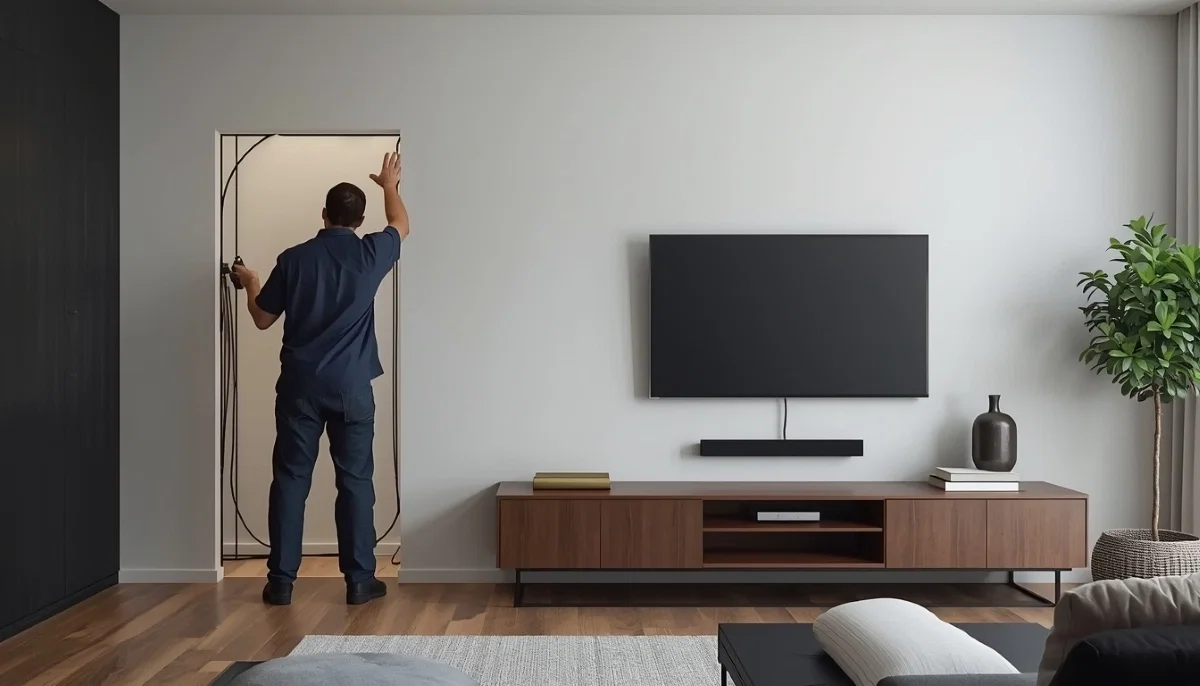
TV Cable Concealment Guide South Africa – Hide Wires Like a Pro
🔌 Surface trunking, in-wall kits, and power bridges: the complete guide to a clutter-free entertainment area.
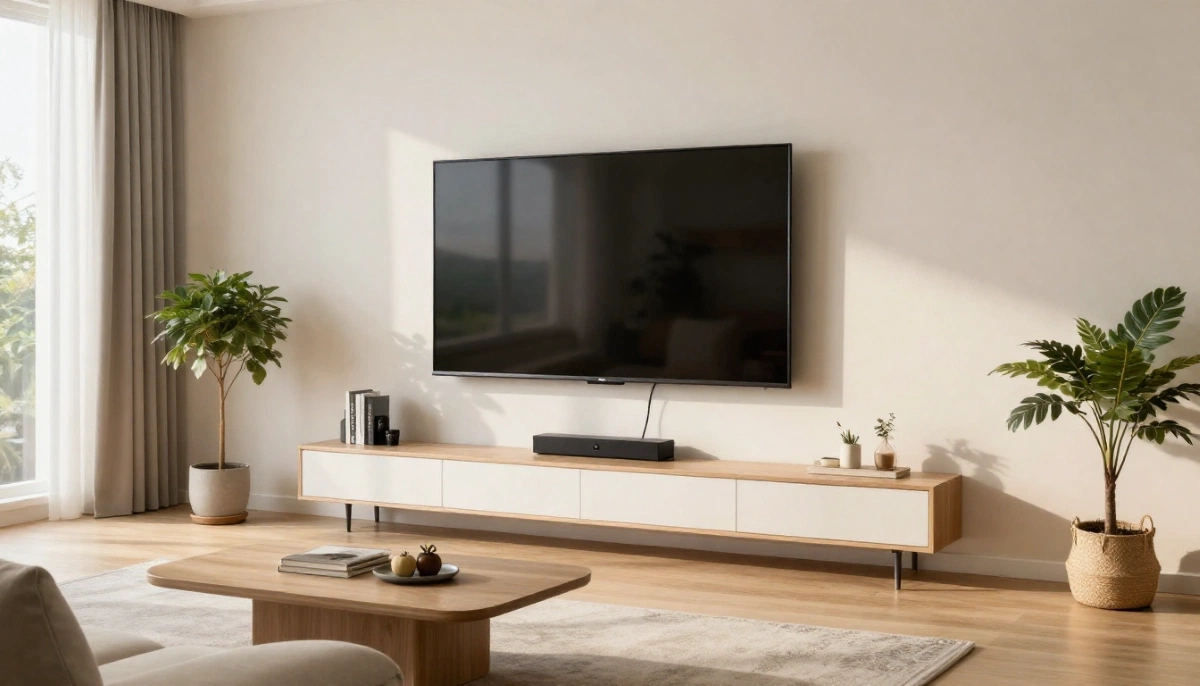
You’ve just had your beautiful new TV professionally mounted on the wall in your Sandton lounge. It looks perfect – except for the tangle of black cables dangling down to the power point. Those wires ruin the sleek aesthetic and can even be a safety hazard for children and pets. The solution is a proper TV cable concealment guide South Africa homeowners can rely on.
This guide covers every method for hiding TV wires, from simple DIY solutions to professional in-wall installations. You’ll learn about cable management system options like raceway conduit (surface trunking) that you can paint to match your wall, and more complex in-wall cable kit solutions that create a completely flush finish. We explain the components you’ll need: brush plates, low voltage brackets, HDMI wall plates, and power bridge kits for safely running power inside the wall. We also cover the costs – TV wire concealment cost can range from a few hundred rands for DIY trunking to a few thousand for a professional recessed installation with electrical compliance. Whether you’re in Cape Town, Durban, or Pretoria, this guide helps you achieve a magazine-worthy finish.
If you’re ready for professional cable concealment, explore our Services Overview or visit our TV Mounting page to find vetted installers near you. Our cable management service is a popular upsell for a reason – it transforms your installation. For more on how we work, see How It Works.
Get a Flawless, Wire-Free TV Installation
Get free, no-obligation quotes from local TV mounting experts who specialise in professional cable concealment.
Find Cable Management Experts Near Me
Servicing Johannesburg, Pretoria, Cape Town, Durban, and nationwide
📋 Table of Contents – Cable Concealment Guide
✨ Why Conceal Your TV Cables?
It’s not just about looks, though that’s a big part of it. Proper cable management has several benefits.
- Aesthetics: A wall-mounted TV with visible cables looks unfinished. Concealing them creates a clean, professional, and minimalist look that enhances your entire room.
- Safety: Dangling cables are a tripping hazard and can be tempting for children and pets to pull on, potentially pulling the TV down. Securely managed cables are safer.
- Dust reduction: Exposed cables collect dust. Hidden cables mean less cleaning.
- Pet protection: Dogs and cats love to chew on cables. Concealing them protects your pets and your electronics.
- Resale value: A professionally finished entertainment area can be a selling point for your home in Fourways or Stellenbosch.
Read more about our approach on our About Us page or see why clients choose us on our Benefits page.
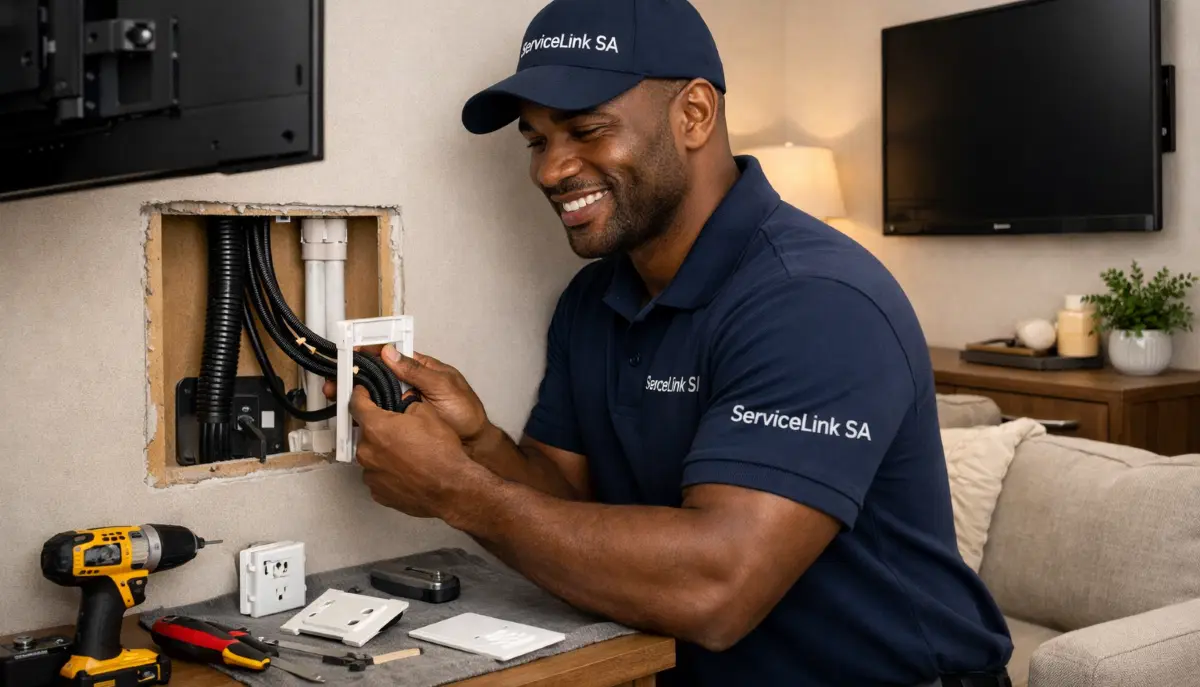
📦 Surface Trunking (Raceway Conduit)
The simplest and most DIY-friendly method. Surface trunking is a plastic channel that sticks to the wall, hiding cables inside.
- What it is: A rectangular plastic channel, usually in two parts: a back plate that attaches to the wall, and a snap-on cover. Cables are laid inside, and the cover clicks on.
- Installation: Cut the trunking to length, peel off the adhesive backing or screw it to the wall (screws are more secure), run your cables, and snap on the cover. It can be painted to match your wall colour for a less obvious look.
- Pros: Cheap (R300-R700), easy DIY, no wall damage (if using adhesive), accessible for adding/removing cables.
- Cons: Still visible – it’s a plastic channel on your wall. Not as sleek as in-wall solutions. Can look bulky.
- Best for: Renters (minimal damage), quick fixes, or situations where in-wall concealment isn’t possible.
See our cost guide for pricing on professional trunking installation.
🧱 In-Wall Cable Concealment Kits
This is the professional, high-end solution. It involves cutting into the wall to hide cables completely inside the cavity.
- What it is: A kit typically includes two recessed boxes: one to be installed behind the TV, and one at power point level (usually just above the skirting). These boxes are connected by a conduit or simply use the empty wall cavity. Cables run from the TV, down inside the wall, and emerge at the lower box to plug into power and devices.
- Installation: Requires cutting holes in the drywall, fitting the low voltage brackets or boxes, and running the cables. For power cables, special power bridge kits are used to maintain safety. This is not a simple DIY job for most people.
- Pros: Completely invisible wires. The ultimate clean look. Adds value to your home.
- Cons: More expensive (R1,500-R3,500+), permanent wall modification, requires compliance with electrical regulations.
- Best for: Homeowners who want a perfect finish, new builds, or major renovations.
⚡ Power Bridge Kits & Electrical Safety
Running power cables inside a wall is not as simple as just dropping them in. There are strict safety rules to prevent fires.
- The problem: Standard power cables are not rated for in-wall use. If they overheat or are damaged inside the wall, it could cause a fire.
- The solution: A power bridge kit (also called an in-wall power kit) uses a special, UL-rated extension cord that is designed to be safely enclosed. It typically has a plug at one end and a socket at the other, and is installed inside the wall cavity. The connection points are inside the recessed boxes.
- Regulations: In South Africa, electrical work must comply with SANS 10142. Any work involving fixed wiring must be done by a registered electrician. Using a power bridge kit that simply plugs in is often considered permissible, but if you’re unsure, consult a professional. The Electrical Contractors Association (ECASA) provides guidelines.
- Never: Just stuff a standard extension cord into the wall. It’s a fire hazard.
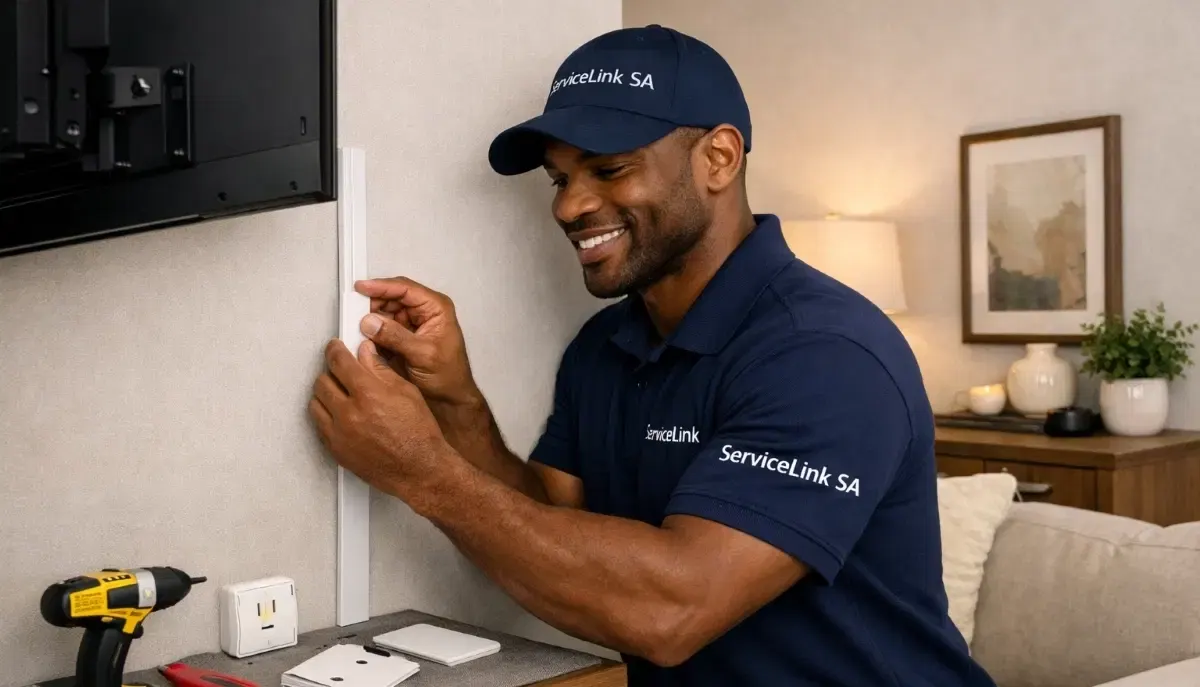
🧩 Key Components: Brush Plates, Wall Plates & Brackets
Whether you’re doing surface or in-wall concealment, these components help create a neat finish.
- Brush plates: These are wall plates with a ring of bristles in the opening. You install them in the recessed boxes behind the TV and at the bottom. Cables pass through the bristles, which hide the hole while allowing cables to move freely. They give a very neat finish.
- Low voltage brackets: Metal or plastic frames that you install in the drywall to create a clean opening for low-voltage cables (HDMI, network, etc.). They provide a mounting point for brush plates or blank covers.
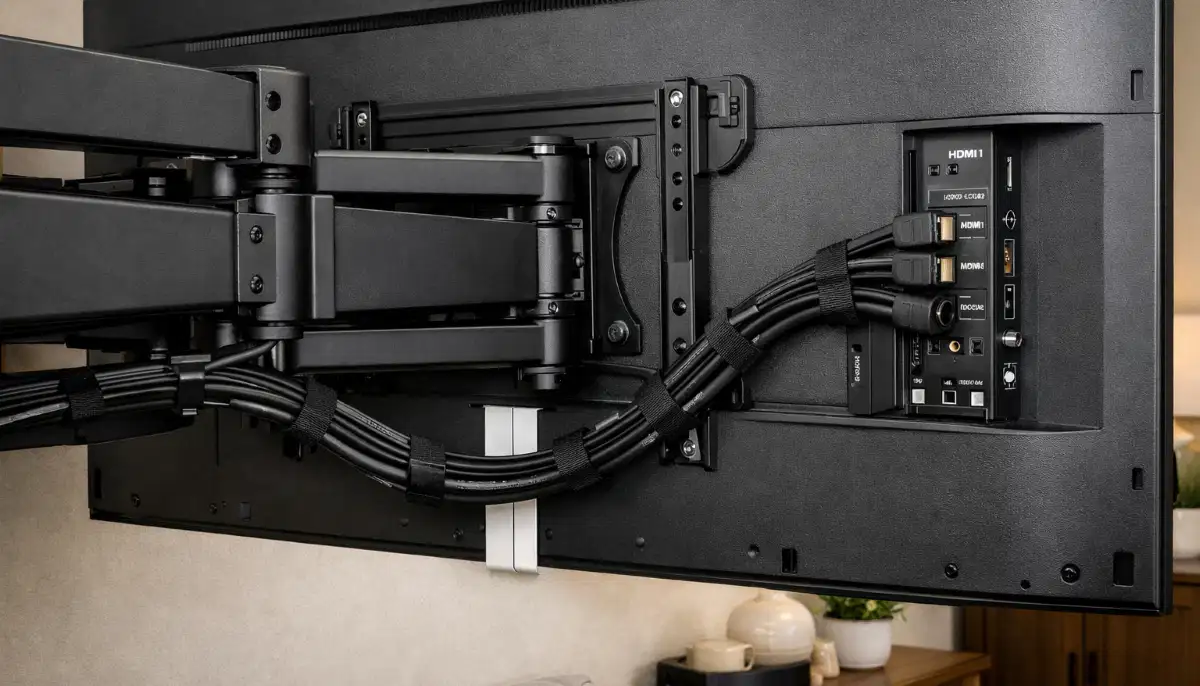
- HDMI wall plates: These have HDMI couplers built in. You run an HDMI cable from your device to the back of one plate, and another short cable from the plate behind the TV to the TV. This allows for a completely cable-free wall with no visible wires at all. Available in single, double, or with other ports.
- Recessed outlet boxes: For power, you need a box that is flush with the wall surface. These house the power socket or the power bridge connection.
Quality components from suppliers like DCDI ensure a professional result.
💰 TV Wire Concealment Cost Breakdown
Here’s what you can expect to pay for different levels of concealment.
- DIY surface trunking: R300 – R700 for materials. You do the labour.
- Professional surface trunking installation: R800 – R1,500 (labour + materials). They’ll measure, cut, paint to match, and install neatly.
- In-wall concealment kit (materials only): R800 – R2,000 for a kit including two brush plates, a power bridge, and conduit.
- Professional in-wall installation (labour): R1,500 – R3,500+. This includes cutting holes, fitting boxes, running cables, and ensuring compliance. The final price depends on wall type (drywall is easier than brick) and complexity.
- Full electrical work (if needed): If you need a new power point installed by a registered electrician, add R800 – R1,500.
For an accurate TV wire concealment cost for your home in Randburg or Bryanston, request a quote.
🛠️ DIY vs Professional Installation
Which route should you take?
- DIY surface trunking: Very achievable for most homeowners. It requires careful measuring, cutting, and painting for best results. The risk is low – if you make a mess, you can remove it and patch the wall.
- DIY in-wall concealment: Only for experienced DIYers. Cutting into walls, especially brick or plaster, is messy and requires skill. You must also be certain about electrical safety. Mistakes can be costly to repair and dangerous.
- Professional installation: Recommended for in-wall work. A pro will:
- Ensure compliance with SANS 10400 building regulations.
- Use the correct fire-rated components.
- Leave you with a flawless finish.
- Have insurance in case of accidents.
See our contractor guide for finding the right pro.
📋 Electrical Compliance & Regulations (ECASA)
This is non-negotiable for in-wall power cabling.
- SANS 10142: The South African standard for electrical installations. It governs how wiring must be done to prevent fires and shocks.
- Who can do what:
- Running low-voltage cables (HDMI, network, USB) inside walls is generally permissible for anyone, as long as you don’t interfere with electrical wiring.
- Any work on 230V power circuits (installing new sockets, extending circuits) MUST be done by a registered electrician who can issue a Certificate of Compliance (COC).
- Using a plug-in power bridge kit is a grey area – it’s essentially an extension cord inside the wall. Many consider it acceptable, but for absolute safety and compliance, have an electrician install a dedicated recessed socket behind the TV.
- ECASA: The Electrical Contractors Association can help you find a qualified electrician.
🧱 Plaster Channels for Renovations
If you’re doing a major renovation or building a new home, you have the best option: embedding cables in the wall before plastering.
- What it is: A channel (chase) is cut into the brick or plaster, cables are laid inside a conduit, and then the channel is plastered over. The wall is completely smooth, with no boxes or plates visible – just the cables emerging from a small hole behind the TV.
- Pros: The ultimate invisible installation. No boxes on the wall, just a perfect finish.
- Cons: Must be done during construction or major renovation. Not possible in a finished room without significant mess and replastering.
- Planning: If you’re building in Stellenbosch or renovating in Cape Town, discuss this with your builder or electrician.
🏠 Concealing Cables in Existing Walls
Most of us are dealing with finished walls. Here’s a summary of your options.
- Surface trunking: Easiest, least invasive.
- In-wall kit with recessed boxes: Requires cutting holes, but leaves a clean finish. Suitable for drywall and even brick (with a chaser tool).
- Using the cavity behind the TV: If you have a full-motion bracket, you can sometimes run cables behind the TV and down, using the bracket arm to hide them partially. This only works if the TV is large enough to block the view of the cables.
- Furniture placement: Sometimes a well-placed console or plant can hide some wires, but this is a compromise.
🏗️ Planning for New Builds or Renovations
This is the time to get it perfect. Here’s what to plan.
- Decide on TV location: Mark the exact spot on the wall.
- Install a recessed power outlet: Have an electrician install a socket behind where the TV will hang, at the right height (around 120-130cm from floor for the TV centre).
- Install a conduit: Run a empty conduit (pipe) from behind the TV down to a low point (where your devices will be). This allows you to easily pull any future cables (HDMI, etc.) through without cutting walls.
- Low voltage box: Install a low voltage bracket and brush plate at the device level for a neat finish.
- Consider all cables: Think about HDMI, Ethernet, optical audio, power for soundbars – run them all.
This forward planning is part of a complete home entertainment setup.
❌ 7 Common Cable Concealment Mistakes
- Mistake #1: Using standard extension cords inside walls. This is a serious fire risk. Always use a proper power bridge kit or have a dedicated socket installed.
- Mistake #2: Not measuring before cutting. Cutting trunking or wall holes too short or in the wrong place leads to ugly gaps.
- Mistake #3: Forgetting to paint trunking. White plastic on a beige wall screams “afterthought”. Paint it to match for a much cleaner look.
- Mistake #4: Hiding cables without planning for future changes. If you add a new device later, you’ll need to re-run cables. Use conduit or accessible trunking.
- Mistake #5: Ignoring electrical regulations. DIY electrical work can invalidate your insurance and is dangerous. Know your limits.
- Mistake #6: Overcrowding the trunking. Too many cables can overheat or make the cover bulge. Use appropriately sized trunking.
- Mistake #7: Not securing cables inside the wall. Loose cables can rattle or get snagged. Use cable ties or clips to keep them tidy.
❓ Frequently Asked Questions
What is the best way to hide TV wires in an existing wall?
The best way to hide TV wires in wall is to use an in-wall cable concealment kit with recessed brush plates. This requires cutting holes but gives a professional, flush finish. For a simpler DIY option, use surface trunking painted to match the wall.
How much does TV wire concealment cost in South Africa?
TV wire concealment cost ranges from R300-R700 for DIY trunking to R1,500-R3,500+ for a professional in-wall installation including labour and materials. A power bridge kit adds R500-R1,000 to material costs.
Can I run power cables inside the wall?
Yes, but you must use a certified power bridge kit designed for in-wall use. Never just put a standard extension cord inside the wall. For maximum safety and compliance, have a registered electrician install a dedicated recessed power outlet behind the TV.
What is a flush mount cable box?
A flush mount cable box (often a brush plate) is a wall plate that sits flush with the wall surface. It has an opening with bristles that allows cables to pass through while hiding the hole. It’s used in in-wall concealment kits for a neat finish.
Do I need an electrician for in-wall cable concealment?
For low-voltage cables (HDMI, network), no. For any work involving 230V power (installing a new socket or extending a circuit), yes, you need a registered electrician who can issue a COC. Using a plug-in power bridge kit may not require an electrician, but check local regulations.
What is a recessed outlet installation?
A recessed outlet installation means the power socket is set back into the wall so that the TV’s plug can sit flush, allowing the TV to hang closer to the wall. This is often part of an in-wall concealment kit.
What is the difference between a brush plate and a wall plate?
A brush plate is a type of wall plate with bristles for cables to pass through. A standard HDMI wall plate has a fixed connector (coupler) that cables plug into. Brush plates offer more flexibility for different cable types.
Can I use surface trunking on a brick wall?
Yes, you can. For brick walls, it’s better to screw the trunking in place using wall plugs rather than relying on adhesive. You can then paint the trunking to match the wall for a less obvious look.
What is a low voltage bracket?
A low voltage bracket is a frame installed in drywall to create a clean opening for low-voltage cables. It provides a mounting point for brush plates or blank covers and ensures the wall opening is neat and sturdy.
How do I plan cable concealment for a new home?
During construction, install a recessed power outlet behind the planned TV position and run an empty conduit from that point down to where your devices will be. This allows you to easily pull any cables through later. This is the ultimate home entertainment setup planning.
✅ Final Thoughts – Your Cable Concealment Action Plan
A clutter-free TV installation is within everyone’s reach. Whether you choose a simple DIY trunking solution or a professional in-wall kit, the key is planning and using the right components. The result – a clean, modern look – is well worth the effort.
Key takeaways:
- Surface trunking is cheap and DIY-friendly. Paint it to match your wall.
- In-wall kits offer a flawless finish but require more work and expense.
- Electrical safety is paramount – never put standard power cords inside walls.
- Use quality components like brush plates and power bridge kits.
- For new builds or major renovations, plan ahead with conduits and recessed sockets.
Your 5-Step Action Plan
- Decide on your method: Surface or in-wall? DIY or pro?
- Measure everything: TV position, distance to power, cable lengths.
- Gather components: Trunking, kit, brush plates, power bridge, etc.
- Consider electrical compliance: If unsure, consult an electrician.
- Install or hire a pro: For best results, especially with in-wall, use a vetted installer from our network.
Ready for a Perfectly Hidden Cable Setup?
Get free, no-obligation quotes from vetted TV mounting specialists who excel at professional cable concealment. Transform your installation today.
📞 Call us: 073 138 4726 for personalised assistance
Free site inspections •
Beat-your-quote guarantee •
Our guarantees
📚 Official resources & standards:
- ECASA – Electrical Contractors Association of South Africa (compliance guidelines).
- SANS 10400 – Building regulations regarding wall chases and electrical installations.
- DCDI – Cable management systems and component supplier.
Information accurate as of publication. Prices are indicative and may vary by supplier and location. This guide is for informational purposes. For specific electrical work, consult a registered professional.
Written by: Innocent T Hanyani
21+ years construction and digital industry experience, ServiceLink SA
Innocent has overseen hundreds of TV installations with integrated cable concealment, from simple residential jobs to complex commercial setups. His understanding of both aesthetics and electrical safety ensures this guide provides practical, compliant advice.
For more detailed information, explore our related guides: TV mounting costs to budget your project, our wall type installation guide for technical details, our home entertainment setup guide for complete systems, and our height guide for optimal positioning. For help finding the right professional, see our contractor selection guide. Our free inspection and beat-your-quote services are also available.