
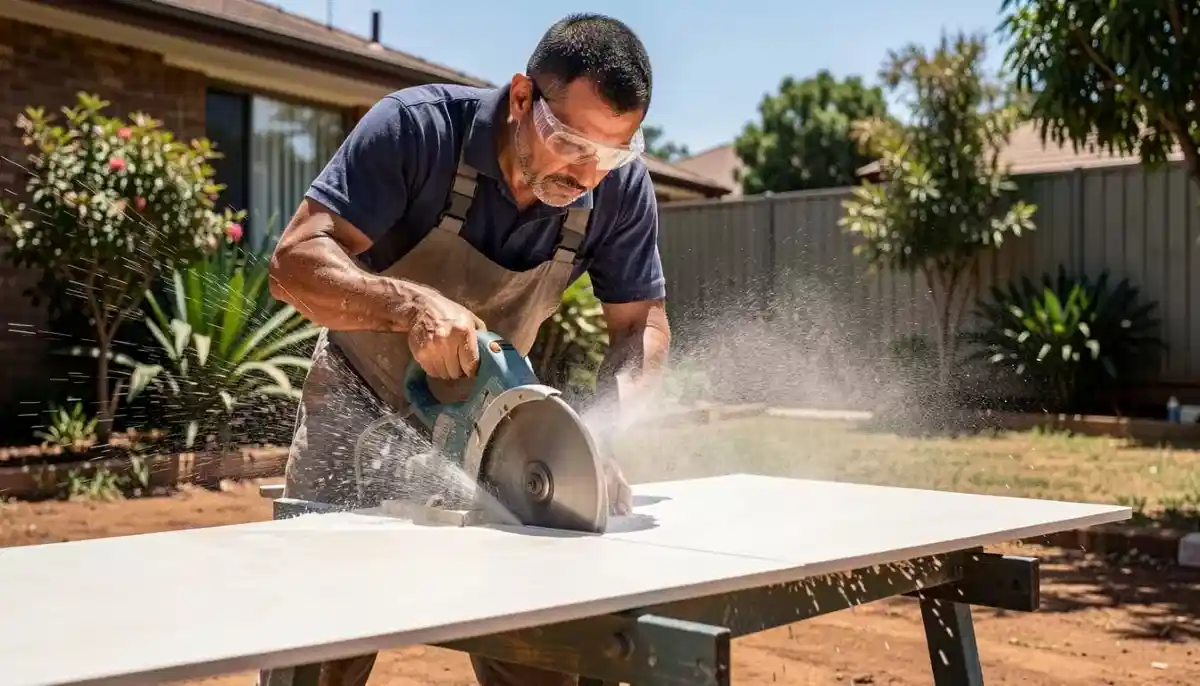
Planning a Tile Installation Project?
Get free quotes from verified tiling specialists who come equipped with professional tile cutting equipment for flawless results.
Servicing Gauteng, Johannesburg, Pretoria, and across South Africa
Wet Tile Saw vs Manual Tile Cutter: Which Is Better SA?
🔪 From simple snap cuts to precision power cutting – the complete guide to tile cutting tools
You’re ready to start your tiling project. You have your tiles, your adhesive, your spacers. But then you realise: you need to cut tiles. And you’re standing in the tool aisle, staring at two very different options – a manual snap cutter and a wet saw. One is R500. The other is R5,000. Which one do you need?
I’ve cut tens of thousands of tiles across Gauteng, from Johannesburg to Pretoria, using both tools. And the answer to wet tile saw vs manual cutter isn’t simple – it depends on your tile type, project size, and budget. A manual cutter is perfect for ceramic subway tiles in a small bathroom. A wet saw is essential for porcelain, large format tiles, and L-shaped cuts.
In this complete tile cutter comparison, I’ll help you answer which is better wet saw or manual tile cutter for YOUR project. You’ll learn how each tool works, their pros and cons, what cuts they can make, and most importantly – which one you actually need. By the end, you’ll know exactly what tile cutting equipment to buy, rent, or hire a professional for.
For more installation guidance, check out our guides on essential tile installation tools, tile adhesives explained, tile spacers and leveling systems, and tile installation cost guide.
📋 Table of Contents – Tile Cutter Comparison Guide
🔧 Manual Tile Cutter (Snap Cutter) – How It Works
A manual tile cutter (also called snap cutter or score-and-snap cutter) is a simple mechanical tool.
How It Works:
A carbide scoring wheel is drawn across the tile surface, creating a score line. A breaking mechanism (foot or lever) applies pressure, snapping the tile along the score line. No electricity, no water, no dust (mostly).
Best For:
- Ceramic wall tiles (most common)
- Straight cuts only (no curves or L-shapes)
- Small to medium tiles (up to 600mm)
- DIY projects and small bathrooms
- Thin tiles (under 10mm)
Limitations:
- ❌ Poor results on porcelain (harder material often breaks unevenly)
- ❌ No L-shaped cuts or curves
- ❌ Struggles with tiles over 600mm
- ❌ Cannot cut natural stone (too hard)
- ❌ Thick tiles (over 12mm) may not snap cleanly
Price Range: R300 – R2,500 (larger capacity = higher price)
For more on manual cutting, read our tile installation tools guide.

💧 Wet Tile Saw – How It Works
A wet tile saw (also called bridge saw or tile saw) is a power tool with a diamond blade cooled by water.
How It Works:
A diamond-edged circular blade spins at high speed. Water flows over the blade to cool it, reduce dust, and improve cut quality. The tile is pushed through the blade (or the blade moves over the tile).
Best For:
- Porcelain tiles (essential – manual cutters struggle)
- Natural stone (marble, granite, slate, travertine)
- Large format tiles (600x600mm and larger)
- Thick tiles (up to 20-30mm depending on saw)
- L-shaped cuts, diagonal cuts, and curves (with practice)
- Professional installations and large projects
- Glass tiles (with fine-tooth diamond blade)
Limitations:
- ✗ Expensive (R2,000 – R15,000+)
- ✗ Messy – water spray requires setup
- ✗ Heavy and not portable (tabletop models exist but limited)
- ✗ Louder than manual cutter
- ✗ Requires electricity and water source
- ✗ Blade replacement cost (R200-R800)
Price Range: R2,000 – R15,000+ (rental available R200-400 per day)
For more on wet saws, read our large format tiles installation guide.
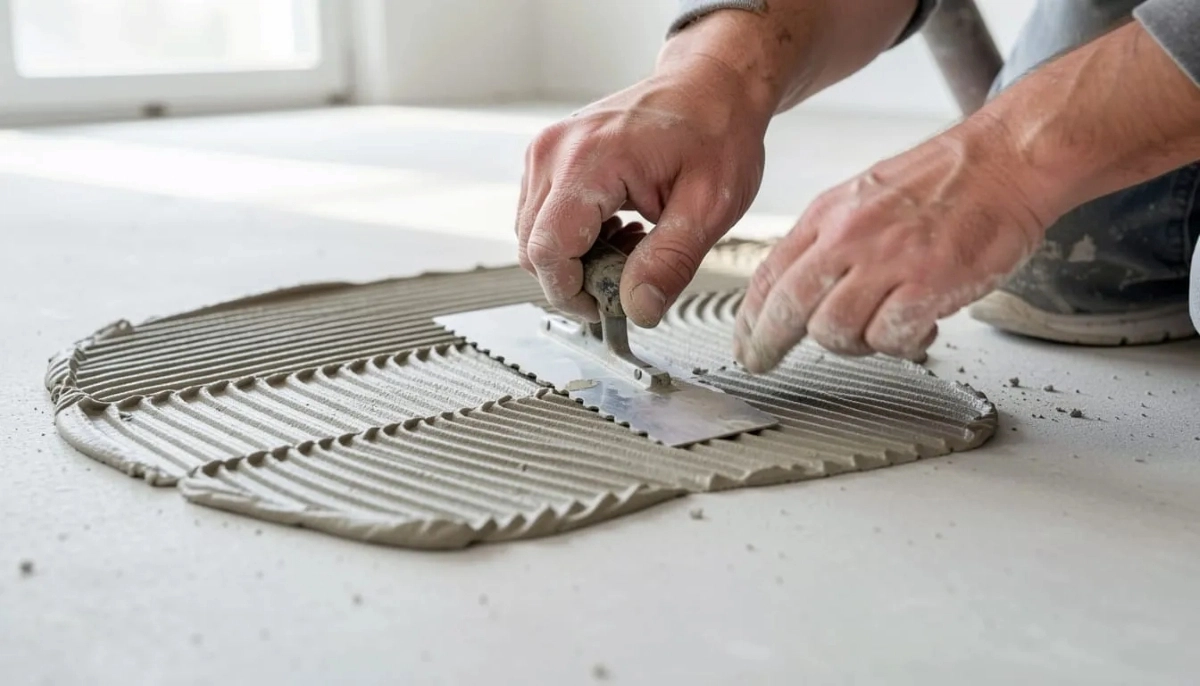
Not Sure Which Cutter You Need?
Get free quotes from verified tiling specialists who have professional tile cutting equipment for any tile type – ceramic, porcelain, or natural stone.
Free inspections available. Beat Your Quote guarantee.
📊 Quick Comparison Table
| Feature | Manual Snap Cutter | Wet Tile Saw |
|---|---|---|
| Price | R300 – R2,500 | R2,000 – R15,000+ |
| Best for ceramic | ✓ Excellent | ✓ Excellent |
| Best for porcelain | ✗ Poor (uneven breaks) | ✓ Excellent |
| Best for natural stone | ✗ No (too hard) | ✓ Yes |
| L-shaped cuts | ✗ No | ✓ Yes (with practice) |
| Diagonal cuts | ✓ Possible (manual alignment) | ✓ Easy with mitre guide |
| Curved cuts | ✗ No | ✓ Possible (with practice) |
| Dust | Minimal (some dust) | None (water suppresses dust) |
| Noise level | Low | Moderate to high |
| Portability | Excellent (lightweight) | Poor (heavy, needs water/electricity) |
| Skill level | Low (beginner-friendly) | Moderate (practice needed) |
| DIY friendly | ✓ Yes | ✓ For larger projects |
🧱 Which Tool for Which Tile Type?
This tile cutter comparison by material:
| Tile Material | Manual Cutter | Wet Saw | Recommendation |
|---|---|---|---|
| Ceramic (wall/floor) | ✓ Excellent | ✓ Excellent | Manual cutter sufficient for straight cuts |
| Porcelain | ✗ Poor – often breaks unevenly | ✓ Excellent | Wet saw required |
| Porcelain (rectified) | ✗ Very poor (harder) | ✓ Excellent | Wet saw essential |
| Glass mosaic | ✗ No (cracks) | ✓ Yes (fine blade) | Wet saw with glass blade |
| Natural stone (slate) | ✗ No | ✓ Yes | Wet saw required |
| Natural stone (marble) | ✗ No | ✓ Yes | Wet saw required |
| Quarry tiles | ✓ Good for smaller | ✓ Excellent | Manual for small, wet saw for large |
| Mosaic sheets | ✓ Cut through mesh | ✓ Yes | Manual cutter often sufficient |
For more on tile types, see the tile type comparison chart.
✂️ Which Tool for Which Cut?
Different cuts require different tile cutting equipment:
Straight Cuts (full tile width):
Both tools work. Manual cutter is faster and cleaner for ceramic. Wet saw is essential for porcelain and natural stone.
L-Shaped Cuts (around outlets, corners):
Wet saw only – manual cutters cannot make L-shaped cuts. Use wet saw to cut along both lines, meeting at the corner.
Diagonal Cuts (45-degree):
Both can work. Manual cutter requires careful alignment (rotate tile 45 degrees). Wet saw with mitre guide is easier and more accurate.
Curved Cuts (around pipes, arches):
Wet saw only (with practice) OR angle grinder. Manual cutter cannot cut curves. For small curves, use tile nippers.
Thin Cuts (less than half a tile width):
Both struggle. Manual cutters often break thin cuts. Wet saw can do thin cuts but requires careful handling. Consider redesigning layout to avoid thin cuts.
Notches (for outlets, switches):
Wet saw or angle grinder. Manual cutter cannot cut notches.

💰 Cost Comparison – Buy vs Rent
Here’s the financial tile cutter comparison:
| Option | Manual Cutter | Wet Saw |
|---|---|---|
| Purchase price | R300 – R2,500 | R2,000 – R15,000+ |
| Rental cost per day | R50 – R100 (rarely rented) | R200 – R400 |
| Rental cost per week | N/A | R600 – R1,200 |
| Cost for single bathroom (DIY) | R300 – R800 (buy) | R200 – R400 (rent) OR R2,000+ (buy) |
| Cost for whole house (DIY) | R500 – R1,500 (buy) | R2,000 – R5,000 (buy better value than renting) |
Recommendation:
- Single small bathroom with ceramic tiles: Buy manual cutter (R300-800).
- Single bathroom with porcelain tiles: Rent wet saw (R200-400 per day).
- Whole house with porcelain/large format: Buy wet saw (R2,000-5,000).
- Professional tiler: Buy both – manual for quick ceramic cuts, wet saw for porcelain.
For more cost guidance, read our tile installation cost per square meter guide.
✅❌ Pros and Cons Summary
Manual Snap Cutter – Pros:
- ✓ Affordable (R300-2,500)
- ✓ No electricity or water needed
- ✓ Portable and lightweight
- ✓ No dust (minimal)
- ✓ Quiet operation
- ✓ Fast for straight cuts on ceramic
- ✓ Beginner-friendly
Manual Snap Cutter – Cons:
- ✗ Poor results on porcelain and natural stone
- ✗ Only straight cuts (no L-shapes or curves)
- ✗ Limited tile size (usually under 600mm)
- ✗ Thick tiles (over 12mm) difficult
- ✗ Thin cuts (under half tile) often break
Wet Saw – Pros:
- ✓ Cuts any tile type – ceramic, porcelain, natural stone, glass
- ✓ Makes L-shaped, diagonal, and curved cuts
- ✓ Handles large format tiles (600x1200mm+)
- ✓ Clean, chip-free cuts
- ✓ No dust (water suppresses it)
- ✓ Cuts thick tiles (up to 20-30mm)
Wet Saw – Cons:
- ✗ Expensive to buy (R2,000-15,000+)
- ✗ Requires electricity and water
- ✗ Messy – water spray needs setup
- ✗ Heavy and not very portable
- ✗ Louder than manual cutter
- ✗ Blade wears out (replacement cost)
- ✗ Steeper learning curve
🤔 Decision Guide – Which Should You Choose?
Answer these questions to determine which is better wet saw or manual tile cutter for YOU:
Question 1: What tile type are you cutting?
Ceramic → Manual cutter sufficient. Porcelain or natural stone → Wet saw required.
Question 2: What cuts do you need to make?
Only straight cuts → Manual cutter possible. L-shaped, diagonal, or curved cuts → Wet saw required.
Question 3: What’s your budget?
Under R1,000 → Manual cutter. Over R1,000 → Consider wet saw or rental.
Question 4: How many tiles are you cutting?
Small bathroom (under 10m²) → Manual cutter (ceramic) or rent wet saw (porcelain). Whole house → Buy wet saw.
Question 5: Are you DIY or professional?
DIY one-time project → Manual cutter for ceramic; rent wet saw for porcelain. Professional → Buy both.
Question 6: Do you have electricity and water at the cutting location?
No → Manual cutter only. Yes → Both possible.
The Bottom Line:
- For ceramic tiles with only straight cuts: Manual snap cutter is all you need.
- For porcelain or natural stone ANY cut: You need a wet saw.
- For L-shaped, diagonal, or curved cuts: You need a wet saw (or angle grinder).
- For one small project: Rent a wet saw if needed; buy a manual cutter.
- For multiple projects or professional work: Buy both tools.
🛡️ Safety Tips for Both Tools
Follow these safety guidelines for all tile cutting equipment:
For Manual Cutters:
- Wear safety glasses – tile shards can fly
- Keep fingers clear of the breaking mechanism
- Replace worn scoring wheels (they become dull)
- Cut on a stable surface – tool can slip
- Don’t force the cut – if it resists, check alignment
For Wet Saws:
- ALWAYS wear safety glasses – water doesn’t stop flying debris
- Use GFCI/RCD-protected outlet (earth leakage protection)
- Keep hands clear of the spinning blade
- Don’t wear loose clothing or jewellery
- Use push sticks for small pieces
- Ensure blade guard is in place
- Unplug when changing blades
- Use appropriate blade for material (porcelain blade for porcelain)
- Never force the tile – let the blade cut
- Keep water reservoir full – dry cutting overheats blade
Comply with SANS 10400 tool safety standards and SABS equipment standards.
🚫 Common Cutting Mistakes to Avoid
⚠️ Warning: These Mistakes Ruin Tiles
Avoid these errors when using tile cutting equipment.
- Using a manual cutter on porcelain: Porcelain is too hard – it will break unevenly or not at all. Use a wet saw.
- Not scoring with enough pressure (manual cutter): Too light = won’t break cleanly. Score firmly but don’t crush.
- Scoring multiple times: One firm score is enough. Multiple scores weaken the tile unevenly.
- Wrong blade on wet saw: Using a general-purpose blade on porcelain causes chipping. Use a continuous-rim diamond blade for porcelain.
- Forcing tile through wet saw: Let the blade cut – forcing causes chipping and blade damage.
- Cutting too fast: Slow, steady passes produce cleaner cuts. Rushing causes rough edges.
- Not supporting tile properly (wet saw): Large tiles need support – they can crack from their own weight. Use roller stands.
- Cutting wet tiles on a manual cutter: Water weakens the score line – cuts are less predictable. Cut dry tiles only on manual cutters.
❓ Frequently Asked Questions About Tile Cutters
Can I cut porcelain tiles with a manual cutter?
Generally, no. Wet tile saw vs manual cutter for porcelain – the wet saw wins every time. Porcelain is extremely hard and dense. Manual snap cutters often produce uneven breaks, chipped edges, or fail entirely. Some high-end manual cutters claim to cut porcelain, but results are inconsistent. For reliable, clean cuts on porcelain, use a wet saw.
Is a wet saw worth it for a small bathroom?
It depends on your tile. For ceramic tiles, no – a manual cutter (R300-800) is sufficient. For porcelain tiles, yes – rent a wet saw for R200-400 per day rather than buying. The cost of renting is worth the professional results. Buying a wet saw for a single small bathroom only makes sense if you plan future tiling projects.
Can I use an angle grinder instead of a wet saw?
Yes – an angle grinder with a diamond blade can cut tiles, but it’s not ideal for most cuts. Angle grinders create significant dust (unless used wet), are harder to control for straight cuts, and more dangerous. Best for small cutouts, curves, and notches. For many straight cuts or L-shaped cuts, a wet saw is much better. Read our tile installation tools guide for more.
How do I cut L-shaped tiles without a wet saw?
You can’t easily. For ceramic tiles, you can drill a hole at the inside corner, then use tile nippers to nibble away to the lines – but this is slow and imprecise. For porcelain, you need a wet saw or angle grinder. If you have many L-shaped cuts, rent a wet saw – the time savings alone justify the rental cost.
What size wet saw do I need for large format tiles?
For tiles up to 600x600mm, a standard 600mm wet saw works. For 600x1200mm tiles, you need a sliding table wet saw or bridge saw with at least 1200mm cutting capacity. Some tilers use a large manual cutter for straight cuts on large format porcelain, but results vary. For large format tiles, a quality wet saw is the best tile cutting tool.
Can I cut glass tiles with a wet saw?
Yes – but use a fine-tooth diamond blade specifically for glass. Standard blades chip glass. Also use a slower feed rate and ensure water flow is adequate (glass is sensitive to heat). Some glass tiles can be cut with manual cutters, but wet saw is more reliable. For glass mosaics, cut through the mesh backing with scissors or utility knife.
Do I need to wear a mask when cutting tiles?
For manual cutters: minimal dust, mask optional but recommended. For wet saws: water suppresses dust, so mask not required (but safety glasses are essential). For angle grinders (dry cutting): ABSOLUTELY wear an N95 mask or respirator – silica dust is extremely dangerous. For more on safety, read our tile installation tools guide.
How do I cut a tile that’s too big for my manual cutter?
Options: 1) Use a wet saw (best). 2) Score with manual cutter as far as possible, then use a straight edge and tile scribe to extend the score line, then snap over a straight edge. 3) Use an angle grinder with diamond blade. 4) Rent a larger manual cutter or wet saw. For large format tiles, a wet saw is strongly recommended.
✅ Final Thoughts: Choose the Right Tool for the Job
The wet tile saw vs manual cutter decision isn’t about which is “better” overall – it’s about which is right for YOUR project. A manual cutter is perfect for ceramic tiles, straight cuts, and small budgets. A wet saw is essential for porcelain, natural stone, complex cuts, and professional results.
For most DIY homeowners tiling a small bathroom with ceramic tiles, a manual snap cutter is sufficient and affordable. For porcelain tiles or large format tiles, rent or buy a wet saw – the results are worth it. And if you’re unsure, hire a professional who already has the right tile cutting equipment.
Key takeaways for tile cutters:
- Manual cutter: ceramic, straight cuts, small budget, DIY-friendly
- Wet saw: porcelain, natural stone, L-shaped cuts, professional results
- For porcelain or large format tiles, a wet saw is essential – not optional
- Rent a wet saw for single projects (R200-400/day)
- Buy a manual cutter for ceramic (R300-800)
- Always wear safety glasses – especially with wet saws
- When in doubt, hire a professional with the right tools
Your next step: Ready to start your tiling project? Get free quotes from verified tiling specialists who come equipped with professional tile cutting equipment for any tile type.
Ready to Start Your Tiling Project?
Get free quotes from verified tiling specialists who come equipped with professional tile cutting equipment – manual cutters and wet saws for any tile type.
📞 Call us: 073 138 4726 to discuss your tiling project.
Are You a Tiling Professional?
Join ServiceLink SA’s network of verified tiling contractors. Get qualified leads and grow your business.
📚 Official resources & standards referenced:
- SANS 10400 – South African National Standard for tool safety standards and equipment specifications.
- SABS – South African Bureau of Standards for equipment standards and safety certifications.
Information provided for general guidance. Always follow manufacturer instructions and safety guidelines for all cutting equipment.
Written by: Innocent T Hanyani
Construction & Home Services Industry Specialist | 21+ Years Experience
Innocent T Hanyani has over two decades of experience working across South Africa’s construction and home improvement sectors. Throughout his career, he has used manual cutters, wet saws, and angle grinders to cut tens of thousands of tiles – from small ceramic mosaics to large format porcelain slabs. His practical experience helps homeowners understand the critical differences between these tools and when each is appropriate. He has seen DIYers struggle with manual cutters on porcelain and professionals achieve perfect results with quality wet saws. His advice emphasises matching the tool to the tile.
For more information about tile installation tools and techniques, explore our related resources: essential tile installation tools, tile adhesives explained, tile spacers and leveling systems, and tile installation cost guide. Learn about our process on what is ServiceLink SA and how our service works. Find tilers in your area: Gauteng, Johannesburg, and Pretoria. For related services, see our building construction and flooring services guides.