
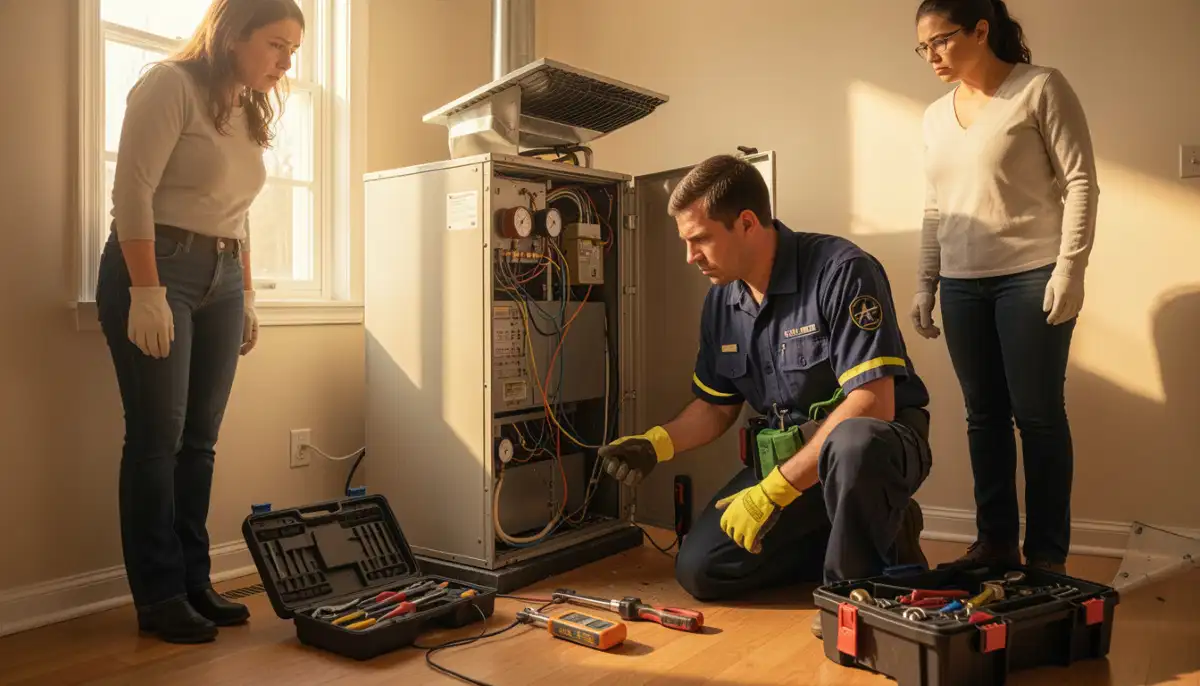
Smell Burning from Your Aircon? Act NOW
Get free quotes from verified local technicians for emergency inspection and repair.
Find Emergency Aircon Technicians Near Me
Servicing Johannesburg, Pretoria, Cape Town, Durban, and across South Africa
Aircon Burning Smell Is a Fire Risk
🔥🚨 A burning smell from your air conditioner is NEVER normal. Here’s what to do RIGHT NOW.
You turn on your aircon. Everything seems normal. Then you smell it. A faint burning odour. Like hot wires or melting plastic. Maybe you ignore it at first. Then it gets stronger.
Your heart races. “Is this normal? Will it go away? Is my house going to catch fire?”
Let me be clear: a burning smell from your air conditioner is NEVER normal. It is ALWAYS a warning sign of a serious problem. And yes, it CAN start a fire.
I’ve seen the aftermath of aircon fires. They’re devastating. The good news? Most burning smells are early warnings—if you act immediately, you can prevent disaster.
In this guide, I’ll give you emergency steps to take RIGHT NOW, explain what causes air conditioner burning smell problems, and tell you when it’s safe to use your unit again.
For more urgent help, use our emergency services and read our emergency repair guide. Let’s go.
📋 Table of Contents
🚨 Emergency Steps: Do This NOW
If you smell burning from your air conditioner, follow these steps IMMEDIATELY:
Step 1: Turn off the aircon. Use the remote and turn off the unit.
Step 2: Turn off the breaker. Go to your electrical distribution board. Find the breaker labeled “Aircon” and flip it to the OFF position. This is critical—the remote only turns off the control, not the power.
Step 3: Turn off the isolator switch. Go outside to the outdoor unit. Flip the isolator switch (safety switch) to the OFF position.
Step 4: Do NOT turn it back on. Do not “test” to see if the smell is gone. Do not run it “just for a few minutes.” Leave it off until a professional has inspected it.
Step 5: Ventilate the area. Open windows to clear any smoke or fumes.
Step 6: Call a professional. Contact a qualified aircon technician immediately. Tell them you smell burning and have turned off the unit. Do not use the unit until it has been inspected and repaired.
Step 7: If you see flames or heavy smoke, evacuate and call emergency services. Get everyone out of the house. Call 10177 or your local fire department from a safe distance.
🚨 FIRE RISK:
A burning smell from your aircon is a fire risk. DO NOT ignore it. DO NOT “wait to see if it goes away.” Turn off the unit at the breaker immediately and call a professional. Electrical fires can start within minutes.
Read our electrical fire safety guide.
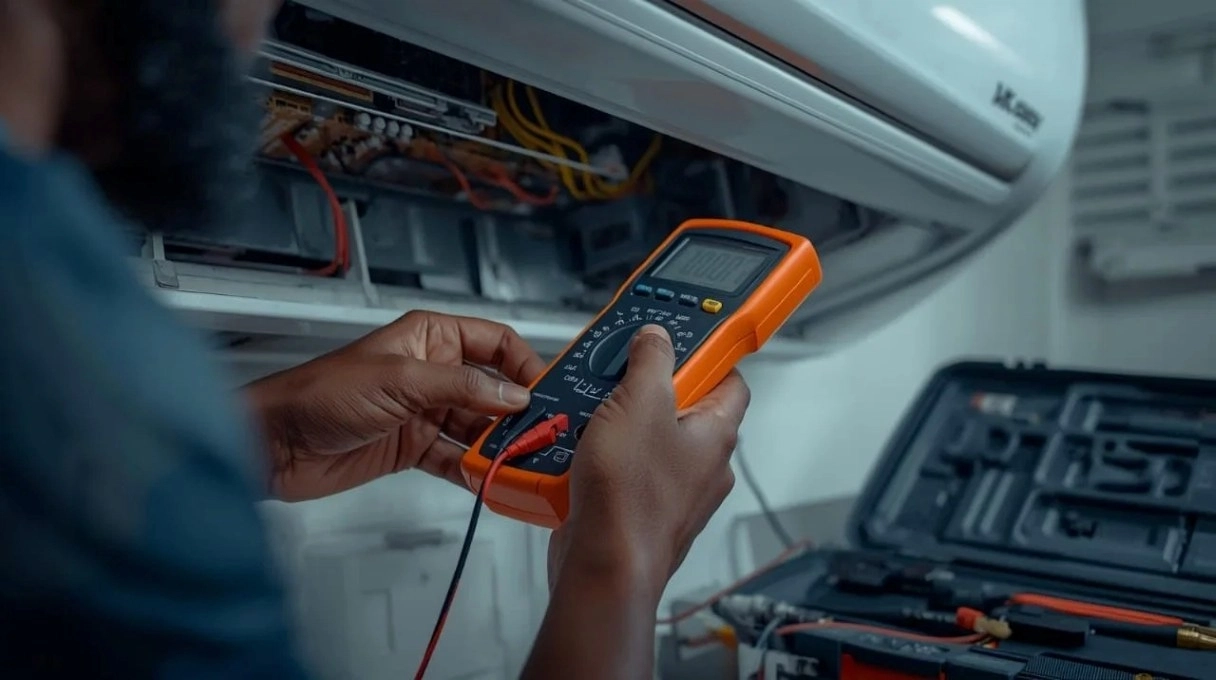
⚠️ Dangerous vs Harmless Burning Smells
Not all burning smells are equally dangerous. Here’s how to tell the difference:
DANGEROUS (Call immediately – fire risk): Smell of burning plastic or rubber. Smell of hot electrical wires (acrid, sharp). Smell accompanied by smoke (any colour). Smell coming from the outdoor unit. Smell that gets stronger over time. Smell that returns after the unit has been off.
PROBABLY HARMLESS (But still investigate): Smell of burning dust (musty, like an old heater). Only happens the first time you use the aircon after months of inactivity. Goes away within 10-15 minutes and never returns. This is normal—dust accumulates on heating elements (heat pump models) and burns off.
The key difference: Dust burning smells musty and goes away quickly. Electrical burning smells acrid/chemical and persists or worsens. If you’re unsure, turn off the unit and call a professional. It’s better to be safe than sorry.
💡 The Dust Burning Test:
If the smell is musty (like an old heater) and goes away within 10-15 minutes of first use after winter, it’s likely just dust burning off. If the smell is sharp, acrid, or smells like plastic/rubber, turn off the unit immediately—this is an electrical problem.
🔍 Common Causes of Burning Smells
Understanding the causes helps you know what to expect when the technician arrives:
Electrical overheating (most dangerous – fire risk): Loose wiring connections, damaged insulation, short circuits. Smell: acrid, sharp, like burning plastic. Location: indoor or outdoor unit. Urgency: EXTREME—turn off immediately.
Motor burnout (fan or compressor): Seized bearings, failed windings, overheating. Smell: burning rubber or oil. Location: outdoor unit (compressor or fan) or indoor unit (fan). Urgency: HIGH—turn off immediately.
Capacitor failure: Electrolyte leaking and burning. Smell: fishy or chemical. Location: outdoor unit. Urgency: HIGH—turn off immediately.
Control board (PCB) failure: Burnt resistor, capacitor, or trace. Smell: acrid, electronic. Location: indoor unit (control board). Urgency: HIGH—turn off immediately.
Dust burning (harmless): Dust on heating element (heat pump models). Smell: musty, like an old heater. Location: indoor unit. Urgency: LOW—normal, goes away in 10-15 minutes.
Read our capacitor failure guide and PCB problems guide.

Smell Burning? Don’t Wait—Call Now
Get free quotes from verified local technicians for emergency inspection.
Get Free Quotes From Local Technicians
Emergency call-outs available 24/7.
⚡ Electrical Overheating (The Fire Risk)
This is the most dangerous cause of air conditioner burning smell. It can start a fire within minutes.
What it smells like: Acrid, sharp, chemical. Like burning plastic, rubber, or insulation. The smell may be faint at first but gets stronger.
What causes it: Loose wire connections (vibration loosens screws over time). Damaged wire insulation (age, rodents). Short circuit (wires touching where they shouldn’t). Overloaded circuit (too many appliances on same breaker).
Where it happens: Inside the indoor unit (control board, terminal block). Inside the outdoor unit (compressor terminals, contactor). Inside the isolator switch. Inside the circuit breaker panel.
What to do: Turn off the breaker immediately. Do not turn it back on. Call a professional. Do not attempt to fix electrical problems yourself—this is a job for a licensed electrician or aircon technician.
What a technician will do: Inspect all electrical connections. Tighten loose terminals. Replace damaged wires. Replace burnt components (contactor, terminal block). Test for proper voltage and current.
Cost: R500-R2,000 depending on damage. Much cheaper than a house fire.
Read our circuit breaker guide.
🔧 Motor Burnout (Fan or Compressor)
When a fan motor or compressor fails, it often produces a burning smell before it dies completely.
What it smells like: Burning rubber or oil. Sometimes a sweet, acrid smell (burning insulation).
What causes it: Seized bearings (fan can’t spin, motor overheats). Failed windings (internal short circuit). Overheating from lack of maintenance (dirty coils). Power surge damage.
Where it happens: Outdoor fan motor. Indoor fan motor (blower). Compressor (sealed unit).
Other signs: Fan won’t spin (or spins slowly). Loud humming or grinding noises. Unit trips breaker. Compressor won’t start.
What to do: Turn off the unit at the breaker. Call a professional. Do not run the unit—a seized motor can draw high current and cause a fire.
Repair options: Fan motor replacement (R1,500-R3,500). Compressor replacement (R5,000-R12,000). For older units, complete replacement may be better.
Read our fan motor problems guide and compressor problems guide.
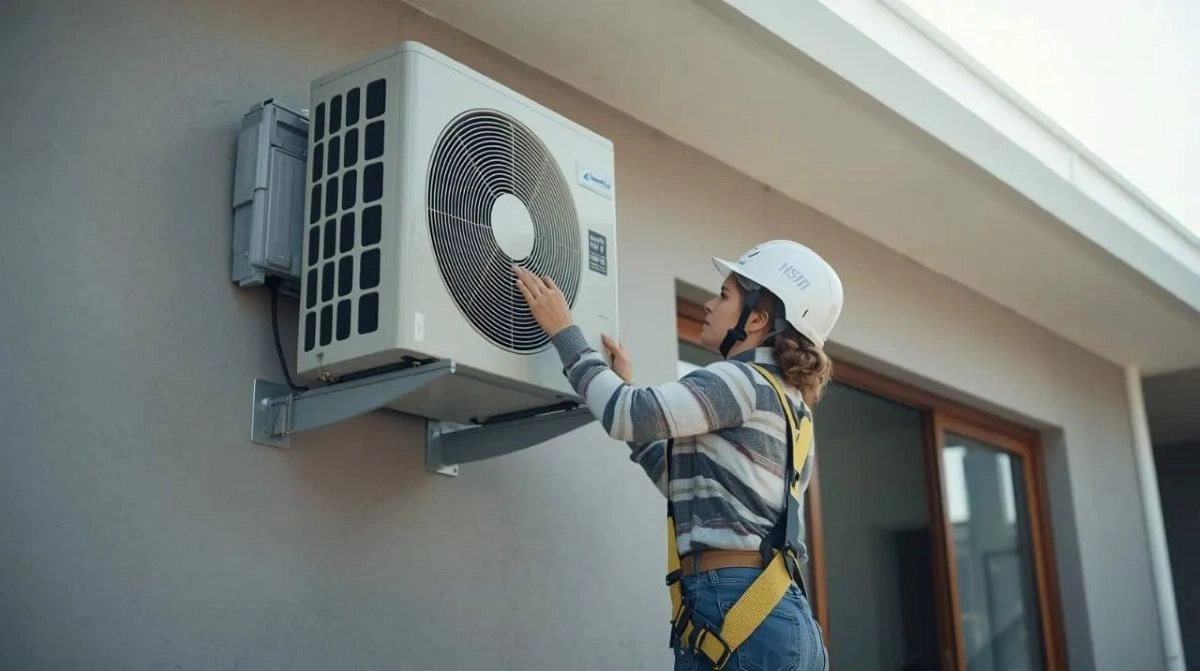
⚡ Capacitor Failure (Burnt Electrolyte)
Capacitors contain electrolyte that can leak and burn when they fail.
What it smells like: Fishy, chemical, or acrid. Distinctive and unpleasant. Different from burning plastic or rubber.
What causes it: Age (capacitors dry out over 5-10 years). Heat (summer temperatures accelerate failure). Power surges. Manufacturing defects.
Where it happens: Outdoor unit (compressor compartment). Sometimes indoor unit (control board).
Other signs: Unit won’t start (or hums but doesn’t start). Bulging or leaking capacitor (visible). Unit works intermittently.
What to do: Turn off the unit at the breaker. Call a professional. Do not touch a bulging or leaking capacitor—it can hold a lethal charge.
Repair: Capacitor replacement (R500-R1,000). This is a cheap fix compared to motor or compressor replacement.
Read our capacitor failure guide.
🧹 Dust Burning (The One Harmless Cause)
This is the only burning smell that is NOT an emergency. But you need to know the difference.
What it smells like: Musty, like an old heater or toaster oven. Not acrid or chemical. Not like burning plastic.
When it happens: The first time you use the aircon after months of inactivity (e.g., first use of summer after winter). Only lasts 10-15 minutes. Goes away completely and never returns.
Why it happens: Dust accumulates on the heating elements (heat pump models) or internal components during idle periods. When you first turn on the unit, the dust burns off. This is normal.
What to do: Run the unit for 15-20 minutes. The smell should disappear. Open windows to ventilate. If the smell persists or is acrid, turn off the unit and call a professional.
Important: If the smell returns on subsequent uses, it’s NOT dust burning. Call a professional.
✅ The Dust Burning Test:
Musty smell + first use after months idle + goes away in 10-15 minutes = normal dust burning. Acrid smell + persists + returns = electrical problem. If unsure, turn it off and call a professional.
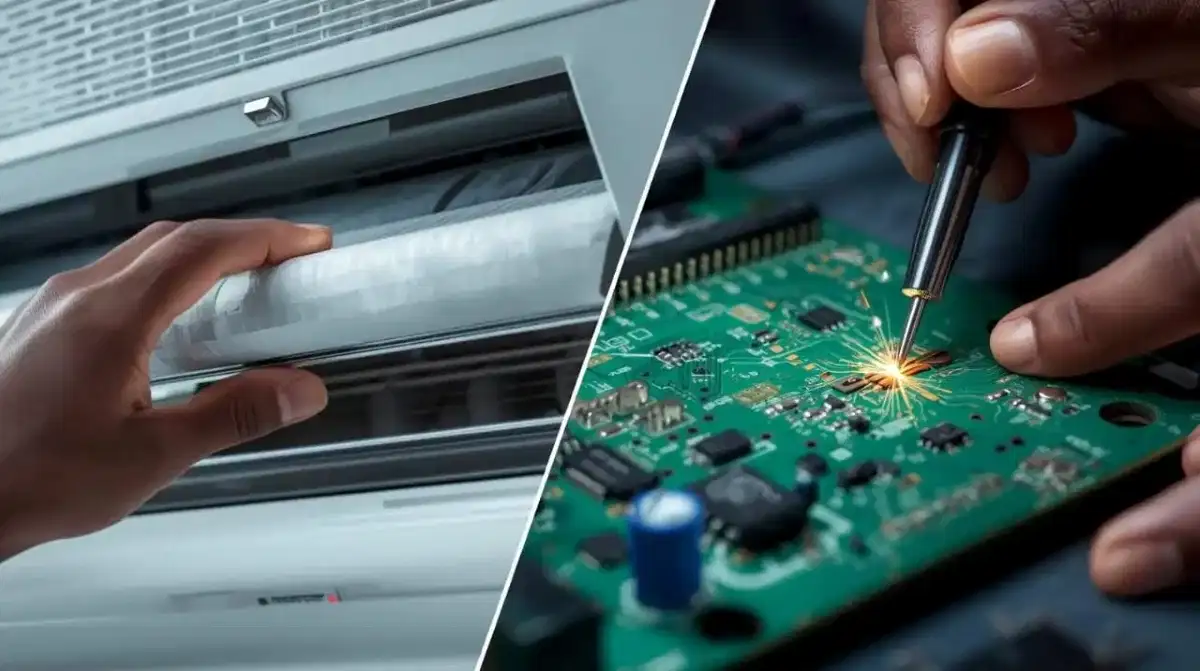
✅ When Is It Safe to Use Again?
Do NOT use your aircon again until:
- A qualified technician has inspected the unit. Do not rely on your own judgement.
- The technician has identified and repaired the problem. “It might be fine” is not acceptable.
- The technician has tested the unit and confirmed it’s safe. Ask for a written report.
- The burning smell has been eliminated. If it returns, turn off immediately and call again.
What NOT to do: Don’t “wait and see” if the smell comes back. Don’t run it “just for a few minutes” to test. Don’t assume it was just dust if you’re not 100% sure. Don’t reset the breaker and try again without professional inspection.
For dust burning only: If you’re certain it was dust (musty smell, first use after winter, went away in 10-15 minutes, never returned), it’s safe. But if you have any doubt, call a professional.
🛡️ How to Prevent Burning Smells
Preventing electrical overheating and motor burnout is much better than dealing with a fire:
Annual professional service (R500-R800). A technician will inspect all electrical connections, tighten loose terminals, test capacitors, and check motors. This catches problems before they cause burning smells.
Install a surge protector (R500-R1,500). Protects against power surges that can damage motors, capacitors, and control boards.
Keep outdoor unit clean. Dirty coils make motors work harder, leading to overheating and burnout. Clean coils annually.
Listen for unusual noises. Screeching, grinding, or humming sounds are early warnings. Address them before they lead to motor failure.
Don’t ignore warning signs. If your unit has been tripping breakers or behaving strangely, get it checked before a burning smell develops.
Know the age of your unit. Motors and capacitors have limited lifespans (8-12 years). Plan for replacement before they fail.
Read our maintenance checklist and service frequency guide.
Read ECASA electrical fire safety guidelines.
❓ Frequently Asked Questions
Why does my air conditioner smell like burning plastic?
A burning plastic smell from your air conditioner is a serious fire risk. It indicates electrical overheating—loose wires, damaged insulation, or a short circuit. Turn off the unit at the breaker IMMEDIATELY and call a professional. Do not use the unit until it has been inspected.
Is it normal for an aircon to smell like burning?
NO. A burning smell is NEVER normal except for one harmless case: dust burning on first use after winter (musty smell, goes away in 10-15 minutes). Any other burning smell (acrid, chemical, plastic, rubber) is an emergency. Turn off the unit and call a professional.
Can a burning smell from aircon cause a fire?
YES. Electrical overheating (loose wires, short circuits) can ignite surrounding materials. Motor burnout can produce sparks and flames. Capacitor failure can cause the capacitor to explode. A burning smell is often the first warning of a fire. Take it seriously.
What should I do if my aircon smells like burning rubber?
A burning rubber smell indicates motor burnout (fan motor or compressor). Turn off the unit at the breaker immediately. Do not run it. Call a professional. Continuing to run a failing motor can cause a fire.
Why does my aircon smell like fish?
A fishy or chemical smell often indicates a failed capacitor. The electrolyte inside the capacitor is leaking and burning. This is an electrical problem that needs professional repair. Turn off the unit and call a technician. Capacitor replacement costs R500-R1,000.
Can a dirty aircon cause a burning smell?
A dirty aircon itself won’t cause a burning smell, but lack of maintenance can lead to problems that do. Dirty coils cause motors to overheat. Dirty filters cause ice buildup and compressor strain. Annual cleaning prevents many burning smell causes.
My aircon smells like burning but still works—is it safe?
NO. A burning smell is a warning sign even if the unit still works. The problem will get worse. Continuing to run the unit risks fire or catastrophic failure. Turn it off and call a professional immediately.
How much does it cost to fix a burning smell in an aircon?
Cost depends on the cause: dust burning (R0), loose electrical connection (R500-R1,500), capacitor failure (R500-R1,000), fan motor replacement (R1,500-R3,500), control board replacement (R1,500-R4,000), compressor replacement (R5,000-R12,000). Diagnosis is essential.
Why does my aircon smell like burning after power outage?
A power surge during the outage or when power returned may have damaged electrical components. The surge can cause loose connections to arc, capacitors to fail, or motors to burn out. Turn off the unit and call a professional for inspection.
Can I use my aircon after a burning smell goes away?
Only if you’re 100% certain it was dust burning (musty smell, first use after winter, went away in 10-15 minutes). For any other burning smell, do NOT use the unit until a professional has inspected it. The smell may have gone away, but the underlying problem remains.
✅ Final Thoughts: Never Ignore a Burning Smell
A air conditioner burning smell is NEVER normal (except dust burning). It is ALWAYS a warning sign of a serious problem. And it CAN start a fire.
Key takeaways for burning smells:
- Turn off the unit at the breaker immediately – the remote is not enough.
- Do NOT use the unit again until a professional inspects it – your safety is worth more than repair costs.
- Dust burning is the only harmless cause – musty smell, first use after winter, goes away in 10-15 minutes.
- Acrid, plastic, rubber, or fishy smells are emergencies – electrical overheating, motor burnout, or capacitor failure.
- Electrical overheating is a fire risk – loose wires can ignite surrounding materials.
- Annual professional service prevents most burning smells – R500-R800 vs potential fire.
- If you see flames or heavy smoke, evacuate and call emergency services – get out first.
Your action plan: First, turn off the unit at the breaker immediately. Second, do NOT turn it back on. Third, call a professional for inspection. Fourth, if you see flames or heavy smoke, evacuate and call emergency services. Fifth, request quotes from local technicians for emergency inspection and repair.
Smell Burning? Don’t Wait—Call Now
Get free quotes from verified local technicians for emergency inspection and repair.
📞 Call us: 073 138 4726 for immediate help finding aircon repair technicians near you.
📚 Official resources & standards referenced:
- ECASA – Electrical fire safety standards and prevention guidelines
- SABS – Fire prevention standards for electrical appliances
- Eskom – Power surge protection and electrical safety
Information provided for general guidance based on South African safety standards. If you see flames or heavy smoke, evacuate immediately and call emergency services (10177). Do not attempt to extinguish an electrical fire yourself.
Written by: Innocent T Hanyani
Construction & Home Services Industry Specialist | 21+ Years Experience
Innocent T Hanyani has over two decades of experience working across South Africa’s construction, maintenance, and home services sectors. Throughout his career, he has worked closely with contractors, service providers, and property owners, gaining practical insight into how projects are quoted, managed, and completed. His work focuses on helping homeowners understand how to find reliable contractors, compare quotes, and avoid common industry pitfalls when hiring service professionals. His insights are based on practical industry experience as well as ongoing research into contractor platforms, service marketplaces, and hiring trends across South Africa.