
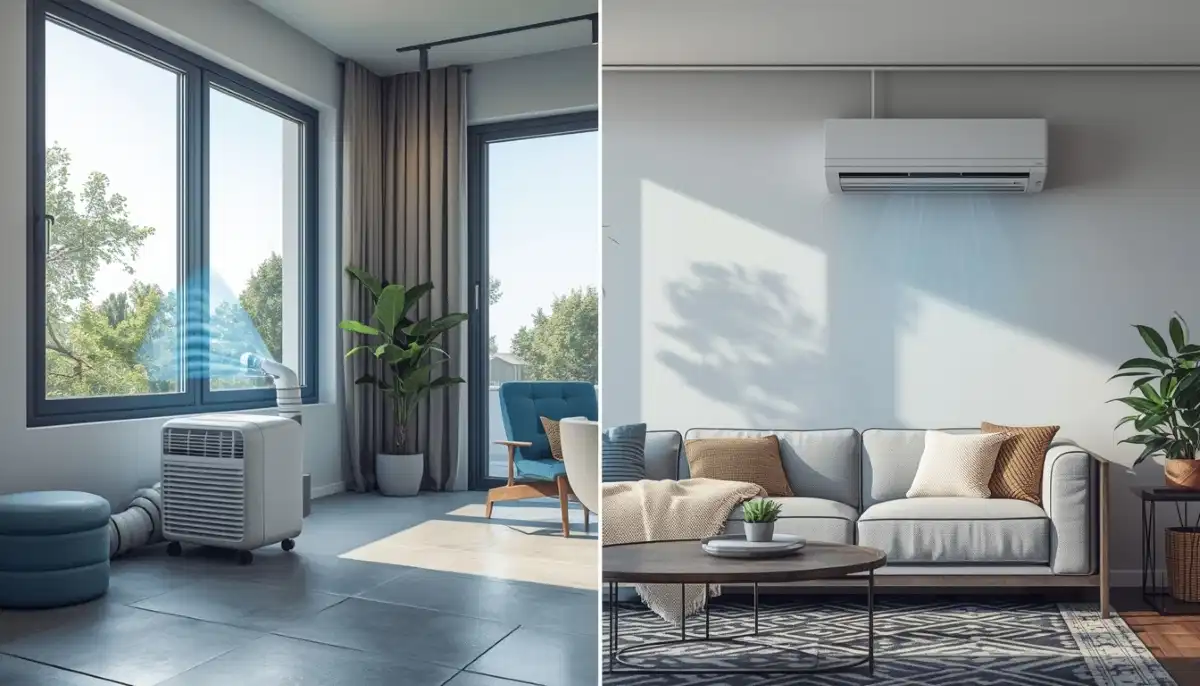
Cooling a Large Home? Don’t Guess—Get Expert Advice
Get free quotes from local aircon specialists who understand large spaces. Compare multi-split and ducted system prices today.
Find Large Home Aircon Specialists Near Me
Servicing Johannesburg, Pretoria, Cape Town, Durban, Sandton, and across South Africa
Best Aircon for Large Homes in South Africa: Don’t Make This Costly Undersizing Mistake
🏠 From open-plan living to multi-bedroom cooling—find the perfect solution for your spacious South African home
Let me tell you about a mistake I see far too often.
A client in Johannesburg called me in December—the middle of a heatwave. He’d just spent R25,000 on what he thought was a powerful air conditioner for his open-plan living area. The unit ran constantly. The room never dropped below 26°C. His electricity bill jumped by R800. And his family was still sweating through dinner.
What went wrong? He bought a single 12,000 BTU split system for a 65m² open-plan area. He needed at least 24,000 BTU. He undersized by 50%.
That’s the thing about cooling large homes: undersizing is actually MORE common than oversizing. People see the price tag of a larger unit and try to save money upfront. But that false economy costs them thousands in higher electricity bills and ends with them buying a second unit anyway.
Choosing the best aircon for large homes isn’t about finding one powerful unit—it’s about designing a system. Multi-split systems, ducted central air conditioning, or multiple single splits? Each has its place. This guide covers everything: sizing for large spaces, system types, installation considerations, running costs, and real-world examples for South African homes.
For more buying guidance, check best aircon brands in South Africa and split vs ducted comparison. Ready to cool your large home properly? Let’s dive in.
📋 Table of Contents – Best Aircon for Large Homes Guide
⚠️ Why Undersizing Is the #1 Costly Mistake for Large Homes
The Undersizing Trap: How False Economy Costs You Thousands
Homeowners see a 12,000 BTU unit for R8,000 and a 24,000 BTU unit for R15,000. They think, “I’ll buy the smaller one now and see if it works.” It won’t. The undersized unit runs 24/7, never reaches temperature, uses 40% more electricity than a correctly sized unit, and wears out in half the time. Then they buy the correct size anyway—paying twice. Don’t make this mistake.
Real consequences of undersized aircons in large homes:
- Never reaches desired temperature: The unit runs constantly but can’t overcome the heat load. On 35°C+ days, your living room stays at 28-30°C.
- Sky-high electricity bills: An undersized unit running 16+ hours daily uses MORE electricity than a correctly sized unit running 8-10 hours. We’ve seen bills 50-80% higher than necessary.
- Premature compressor failure: Constant high-load operation kills compressors. Lifespan drops from 10-15 years to 3-5 years.
- No humidity control: The unit can’t remove moisture effectively, leaving your home cool but clammy—mould risk increases.
- Wasted money on second unit: Most homeowners eventually buy the correct size, paying twice for installation.
The right approach for aircon for big house cooling: Calculate your total BTU needs accurately, then design a system (single large unit, multi-split, or ducted). It’s better to slightly oversize than undersize for large spaces. A correctly sized system runs efficiently, maintains temperature, and saves money long-term.
Use our aircon BTU size calculator for accurate sizing across multiple rooms.
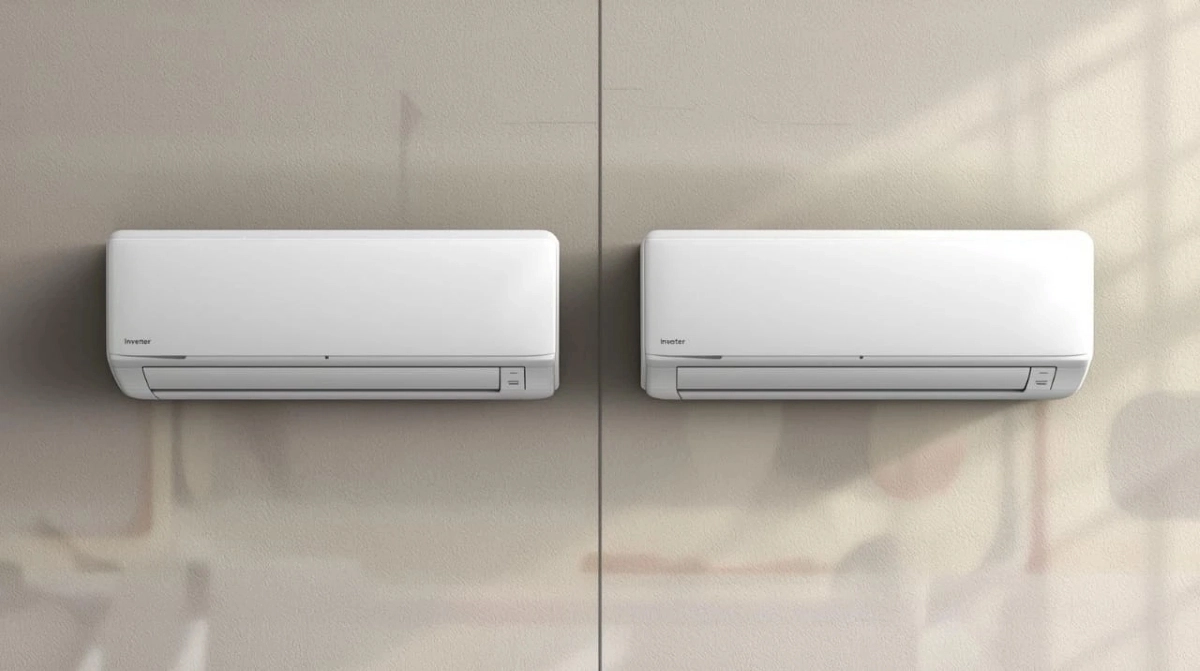
📊 Sizing Guide for Large Homes & Open-Plan Areas
Here’s exactly how many BTUs you need for different large space configurations in South African conditions:
| Space Size (m²) | Room Type Example | Recommended BTU | Typical Power (Watts) |
|---|---|---|---|
| 25 – 35 m² | Large living room, open-plan kitchen/dining | 12,000 – 18,000 BTU | 1,100 – 1,600 W |
| 35 – 50 m² | Open-plan living area, large family room | 18,000 – 24,000 BTU | 1,600 – 2,200 W |
| 50 – 70 m² | Large open-plan (living + dining + kitchen) | 24,000 – 36,000 BTU | 2,200 – 3,300 W |
| 70 – 100 m² | Whole floor open-plan or multiple rooms | 36,000 – 48,000 BTU | 3,300 – 4,400 W |
| 100+ m² | Whole-home cooling (ducted system) | 48,000 – 80,000+ BTU | 4,400 – 7,500 W |
🔧 Factors That Increase BTU Requirements for Large Homes
- North or west-facing windows: Add 15-20% BTU for large windows with afternoon sun exposure
- Poor ceiling insulation: Add 20-25% BTU (common in older South African homes)
- High ceilings (over 2.7m): Add 10-15% BTU per 0.3m above standard
- Multiple occupants: Add 600 BTU per person beyond 2 people (human bodies generate significant heat)
- Kitchen appliances: Add 2,000-4,000 BTU for open-plan kitchens (ovens, stoves, fridges generate heat)
- Electronics (TVs, computers, servers): Add 500-1,500 BTU per significant device
- Second-floor or top-floor location: Add 15-20% BTU (heat rises from lower floors and roof)
- Coastal humidity (Durban, Cape Town): Add 10-15% BTU for dehumidification capacity
Quick formula for what aircon size for large house calculation: Room length (m) × width (m) = m². Multiply m² × 600 = base BTU. Then add adjustments for windows, insulation, ceiling height, and appliances. For a 50m² open-plan living area with west-facing windows and poor insulation: 50 × 600 = 30,000 BTU base + 20% (windows) + 20% (insulation) = 42,000 BTU minimum.
For accurate sizing across multiple rooms, use our interactive BTU calculator and book a free site inspection for professional assessment.
🏗️ System Types for Large Homes: Single Split vs Multi-Split vs Ducted
For cooling large living room areas and whole homes, you have three main options. Each has different costs, benefits, and trade-offs.
📦 Single Split Systems (Multiple Units)
How it works: One outdoor compressor connected to one indoor wall-mounted unit. For a large home, you install multiple independent single-split systems (e.g., one for living room, one for each bedroom).
Best for: Homes where you want room-by-room control and don’t mind multiple outdoor compressors on your exterior walls.
Pros: Redundancy (if one fails, others work), individual room control, lower upfront cost per room, widely available.
Cons: Multiple outdoor units take up exterior space, higher total installation cost (multiple site visits), less aesthetically pleasing.
🔄 Multi-Split Aircon Systems
How it works: One powerful outdoor compressor connected to 2-5 indoor wall-mounted units. Each indoor unit operates independently.
Best for: Large homes where exterior wall space is limited or you want a cleaner exterior look.
Pros: Single outdoor unit (saves space), cleaner exterior appearance, individual room control, more energy-efficient than multiple single splits.
Cons: Higher upfront cost than single splits, if the outdoor unit fails, all rooms lose cooling, more complex installation.
🏠 Ducted & Central Air Conditioning
How it works: A central unit (outdoor compressor + indoor air handler) pushes cooled air through hidden ducts in your ceiling to vents in each room. One thermostat can control zones.
Best for: Large luxury homes, new builds, or major renovations where you want invisible cooling and whole-home comfort.
Pros: Invisible (no wall units), even cooling across all rooms, highest property value addition, zoned temperature control, quietest operation (unit is in ceiling or outside).
Cons: Highest upfront cost (R60,000-R150,000+), requires ceiling space for ducts, must be installed during construction or major renovation, more expensive to repair.
For detailed comparison, read split vs ducted aircon guide.
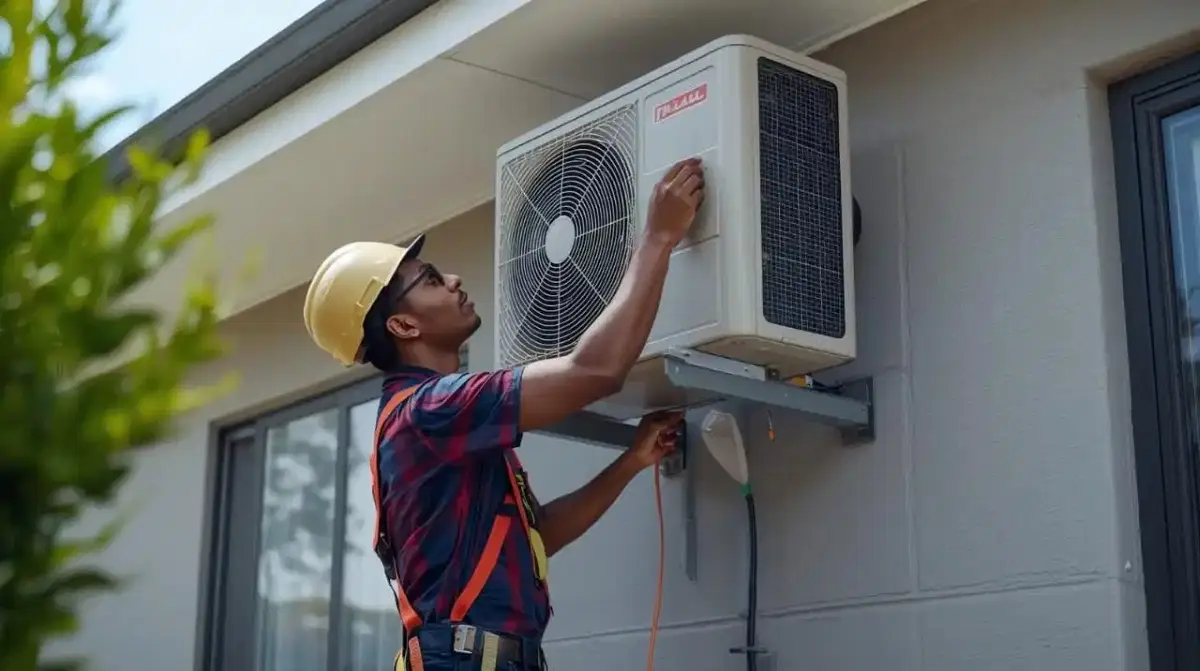
Not Sure Which System Is Right for Your Large Home?
Describe your home to local specialists. Get free quotes and expert advice on multi-split vs ducted systems.
Get Free Quotes From Local Specialists
Free site inspections available. Pay Later option for qualifying homeowners.
🔄 Multi-Split Aircon Systems Explained
A multi split aircon system is often the sweet spot for large South African homes. Here’s what you need to know:
How Multi-Split Works
One powerful outdoor compressor unit connects to 2-5 indoor wall-mounted units via refrigerant pipes. Each indoor unit has its own thermostat and remote control, so bedrooms can be set to 20°C while the living room is 23°C. The outdoor compressor varies its output based on total demand (inverter technology), saving significant electricity when only one or two rooms are active.
Multi-Split Configuration Examples for Large Homes
| Home Size | Typical Configuration | Outdoor Unit Size | Estimated Cost (Installed) |
|---|---|---|---|
| 3-bedroom house (150-200m²) | Living room (18,000 BTU) + 3 bedrooms (9,000 BTU each) | 36,000 BTU (4-port) | R35,000 – R50,000 |
| 4-bedroom house (200-300m²) | Living/dining (24,000 BTU) + 4 bedrooms (9,000 BTU each) | 48,000 BTU (5-port) | R50,000 – R70,000 |
| Large open-plan + 3 beds (250-350m²) | Open-plan (36,000 BTU) + 3 bedrooms (12,000 BTU each) | 60,000 BTU (2 x outdoor units) | R65,000 – R90,000 |
Pros and Cons of Multi-Split for Large Homes
✅ Advantages:
- Single outdoor unit saves exterior wall space (one unit vs 4-5 separate units)
- Cleaner exterior appearance—no multiple compressors scattered around
- Individual room temperature control—each room has its own thermostat
- More energy-efficient than multiple single splits (inverter technology optimizes total load)
- Lower total installation cost than multiple single splits (one site visit, one pipe run)
- Ideal for homes with limited exterior wall space (townhouses, complexes)
❌ Disadvantages:
- Higher upfront cost than buying one single split (but lower than buying 4-5 single splits)
- Single point of failure—if the outdoor compressor fails, ALL rooms lose cooling
- Less flexible for future expansion (ports are limited to 4-5 indoor units)
- More complex installation requires experienced technicians
- Longer refrigerant pipe runs can reduce efficiency slightly
For installation, always hire experienced professionals. Read our installer selection guide and split system installation guide.
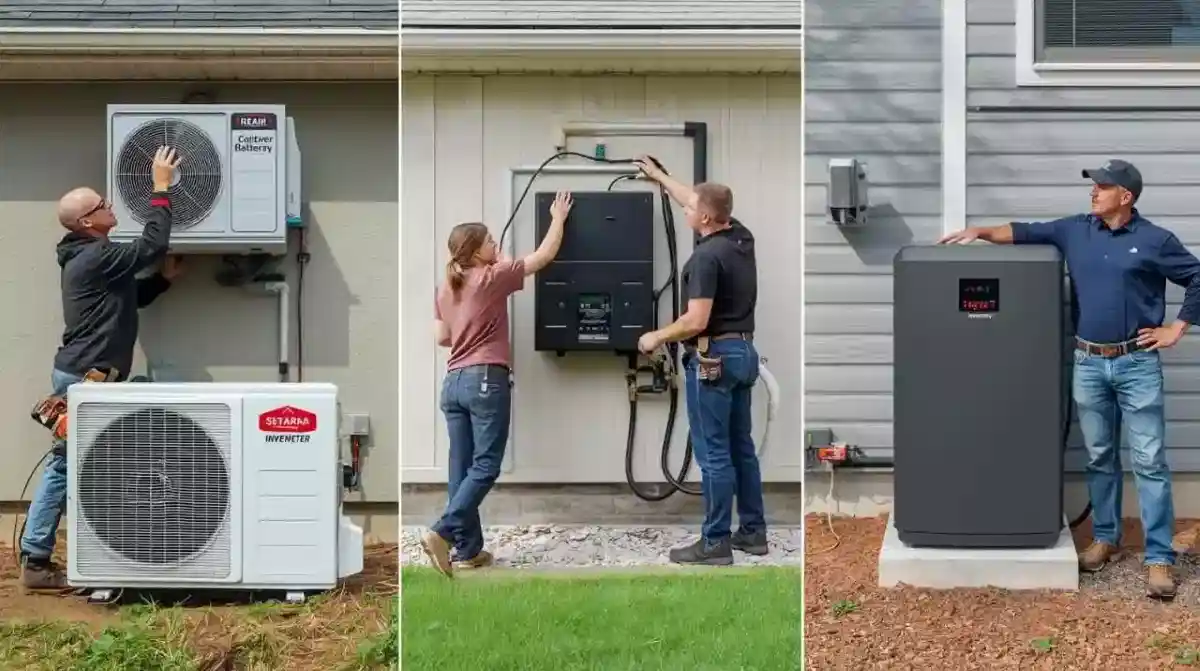
🏠 Ducted & Central Air Conditioning Explained
For luxury large homes, central air conditioning (ducted systems) offers the ultimate in comfort and aesthetics.
How Ducted Systems Work
A central outdoor compressor unit connects to an indoor air handler (usually in your ceiling). The air handler pushes cooled air through insulated ducts to vents (grilles) in each room. Return air grilles pull warm air back into the system to be recooled. Modern ducted systems support zoning—you can cool only the bedrooms at night and only the living areas during the day.
Ducted System Configuration Examples
| Home Size | System Capacity | Zones | Estimated Cost (Installed) |
|---|---|---|---|
| Medium large (200-300m²) | 48,000 – 60,000 BTU | 3-4 zones | R80,000 – R120,000 |
| Large home (300-450m²) | 60,000 – 80,000 BTU | 4-6 zones | R120,000 – R180,000 |
| Estate home (450-600m²+) | 80,000 – 120,000+ BTU | 6-10 zones | R180,000 – R300,000+ |
Pros and Cons of Ducted for Large Homes
✅ Advantages:
- Invisible—no wall units visible in any room (only ceiling vents)
- Even cooling across all rooms with no hot spots or cold drafts
- Zoned control—cool only the rooms you’re using, saving electricity
- Quietest operation—all mechanical components are in ceiling or outside
- Highest property value addition (ducting adds significant home value)
- Best for new builds or major renovations (ducts installed during construction)
- Can integrate with heat pumps for whole-home heating in winter
❌ Disadvantages:
- Highest upfront cost (R80,000-R300,000+)
- Requires ceiling space for ducts (not suitable for flat roofs or low-pitch roofs)
- Must be installed during construction or major renovation (retrofitting is expensive and disruptive)
- More expensive to repair (duct access can be difficult)
- Higher ongoing maintenance (duct cleaning every 2-3 years)
- Less energy-efficient than multi-split if you only cool one room (the system is designed for whole-home cooling)
For existing homes without ceiling space, multi-split is usually the better choice. For new builds, ducted is worth considering. Read our detailed comparison for more.
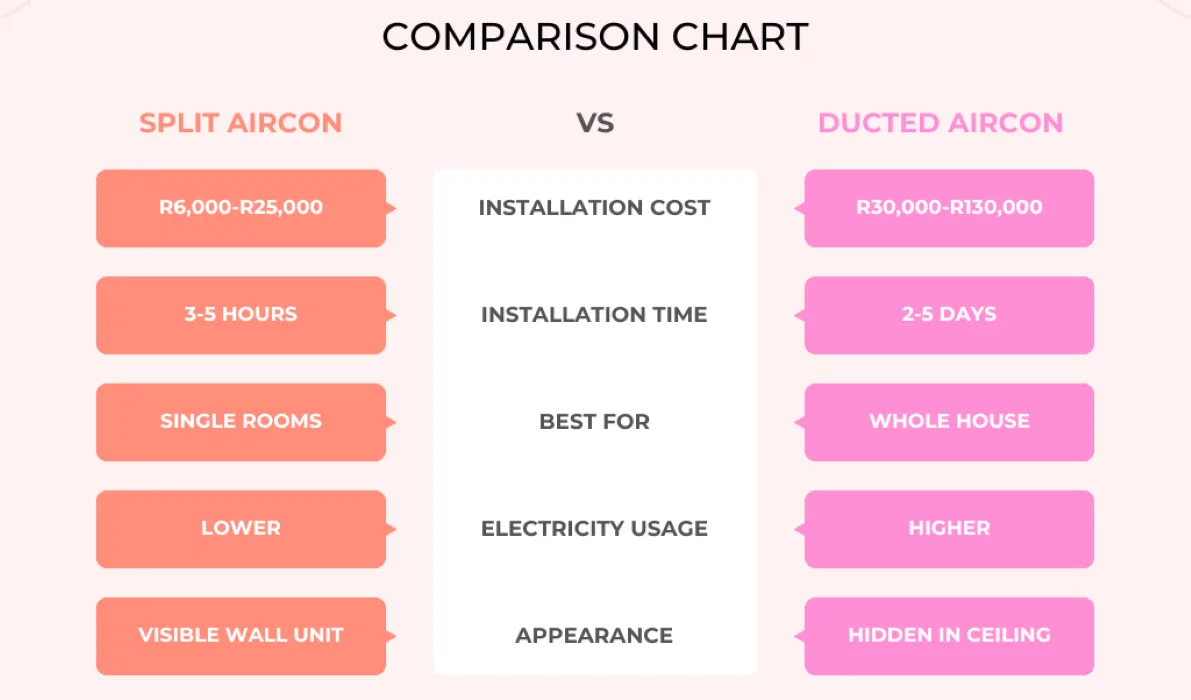
📊 Side-by-Side Comparison: Single Split vs Multi-Split vs Ducted for Large Homes
| Feature | Multiple Single Splits | Multi-Split System | Ducted/Central |
|---|---|---|---|
| Upfront Cost (4-bed home) | R35,000 – R50,000 | R50,000 – R70,000 | R80,000 – R150,000+ |
| Exterior Appearance | ⚠️ Multiple compressors | ✅ Single compressor | ✅ Single compressor |
| Individual Room Control | ✅ Yes (each unit) | ✅ Yes (each indoor unit) | ✅ Yes (by zone) |
| Visibility (wall units) | ⚠️ Visible in every room | ⚠️ Visible in every room | 🏆 Invisible (vents only) |
| Energy Efficiency (partial load) | Good | 🏆 Best (inverter optimizes) | Good (but designed for whole home) |
| Installation Disruption | Low (per room) | Medium (one major install) | High (ceiling access needed) |
| Suitable for Retrofits? | 🏆 Yes (easy) | Yes | ⚠️ Difficult/expensive |
| Redundancy | 🏆 High (units fail independently) | Low (single point of failure) | Low (single point of failure) |
| Property Value Addition | Moderate | Good | 🏆 Highest |
| Best For | Budget-conscious, room-by-room installation | Limited exterior space, cleaner look | New builds, luxury homes, invisible cooling |
🏆 Verdict for Large South African Homes:
Multi-split systems offer the best balance for most large homes—single outdoor unit, individual room control, and lower cost than ducted. Choose multiple single splits for budget flexibility or room-by-room installation. Choose ducted for new builds or luxury homes where aesthetics matter most.
🏆 Top Picks for Large South African Homes
Based on real performance data and customer reviews, here are the best best aircon for large homes recommendations:
🏆 Best Overall Multi-Split for Large Homes
Daikin Multi-Split System (36,000-60,000 BTU) – R45,000 – R85,000 installed
Why it wins: Daikin is the market leader for multi-split systems in South Africa. Their inverter technology is exceptionally efficient, indoor units are compact and quiet (19-22 dB), and reliability is legendary. Supports up to 5 indoor units per outdoor compressor. 5-year warranty on compressor.
🥈 Best Value Multi-Split
Midea Multi-Split (36,000-48,000 BTU) – R35,000 – R60,000 installed
Why it wins: Midea manufactures for many premium brands (same factory as some Daikin models). 20-30% cheaper than Daikin with similar performance. 4-star energy rating, 3-year warranty. Excellent for budget-conscious large home owners.
🥉 Best Premium Ducted System
Carrier Ducted Central Air Conditioning – R100,000 – R200,000+ installed
Why it wins: Carrier invented modern air conditioning. Their ducted systems are industry gold standard for large luxury homes. Variable-speed compressors, zoned control, Wi-Fi enabled, and exceptionally quiet. Ideal for estate homes over 400m².
🏢 Best for Open-Plan Living (Single Large Unit)
Samsung WindFree 24,000 BTU Inverter – R18,000 – R25,000 installed
Why it wins: For large open-plan areas (50-70m²), this single unit provides powerful cooling without cold drafts. WindFree technology uses micro-holes instead of direct airflow. Includes Wi-Fi control and energy monitoring. Read best smart aircon systems for more.
For all these systems, request quotes from local installers to compare prices for your specific home. Free site inspections ensure accurate sizing.
💰 Installation Costs for Large Homes (Realistic Pricing)
Here’s what you’ll actually pay for aircon for big house installation in South Africa:
| Home Size & Configuration | System Type | Equipment Cost | Installation Cost | Total Installed |
|---|---|---|---|---|
| 3-bed, 1 living (150m²)穷 | 4 x single splits (living + 3 beds)穷 | R28,000穷 | R8,000 (4 units)穷 | R36,000穷 |
| 3-bed, 1 living (150m²)穷 | 4-port multi-split穷 | R32,000穷 | R10,000穷 | R42,000穷 |
| 4-bed, open-plan (250m²)穷 | 5-port multi-split (48,000 BTU)穷 | R52,000穷 | R14,000穷 | R66,000穷 |
| 4-bed, open-plan (250m²)穷 | Ducted central (4 zones)穷 | R85,000穷 | R35,000穷 | R120,000穷 |
| 5-bed, estate home (400m²)穷 | Ducted central (6 zones)穷 | R140,000穷 | R50,000穷 | R190,000穷 |
Cost-saving tip: Install in stages. Start with the living area (most used), then add bedrooms over time. Multi-split systems make this easy—install the outdoor unit and pipes now, add indoor units later.
For accurate quotes, request quotes from local installers and read our full installation cost guide. Pay Later option available for qualifying homeowners.
⚡ Load-Shedding & Backup Power for Large Aircons
Large air conditioning systems consume significant power—typically 2,000-7,500 watts. This creates challenges during load-shedding.
⚠️ Important: Most Large Aircons Won’t Run on Standard Backup Systems
A standard 5kVA UPS or small generator (R15,000-R25,000) cannot start a large aircon. The starting surge for a 24,000 BTU unit is 6,000+ watts. Ducted systems (60,000+ BTU) need 15,000+ watt starting power—that’s industrial-scale backup costing R100,000+. Plan accordingly.
Your options for backup power with large aircons:
- Solar + battery (recommended): A 8-12kW solar system with 10-15kWh battery storage can run a multi-split or small ducted system during the day. Costs R150,000-R250,000 but saves electricity long-term. Read aircon load-shedding backup guide.
- Large generator: A 15-20kVA generator (R50,000-R100,000) can run a whole-home ducted system. Fuel costs are high (R200-400 per hour). Read generator installation guide.
- Inverter + batteries (limited): A 8kW inverter with 10kWh batteries can run one 12,000-18,000 BTU unit for 3-5 hours. Not suitable for whole-home cooling.
- Accept load-shedding downtime: Most large home owners accept that aircons won’t run during power outages (typically 2-4 hours). Use ceiling fans as backup.
For large homes, we recommend solar + battery as the long-term solution. The system pays for itself in 5-7 years while providing load-shedding protection. Get quotes for solar integration from our electrical partners.
❌ 5 Common Mistakes When Buying Aircons for Large Homes
⚠️ Avoid These Costly Errors in Large Homes:
Mistake #1: Undersizing (the most common and costly). “I’ll buy a 12,000 BTU unit for my 50m² open-plan living room.” This NEVER works. The unit runs constantly, never reaches temperature, and wastes electricity. You’ll end up buying a second unit anyway. Always size properly using our BTU calculator.
Mistake #2: Ignoring open-plan heat load. Open-plan areas combine heat from kitchen appliances, multiple people, and afternoon sun. Standard BTU calculations often underestimate by 30-40%. Always add 20-30% for open-plan spaces.
Mistake #3: Buying all units at once (cash flow mistake). You don’t need to install everything immediately. Install the living area first (most used), then add bedrooms over 12-24 months. Multi-split systems make this easy—install the outdoor unit and pipes now, add indoor units later as budget allows.
Mistake #4: Forgetting about outdoor unit placement. Large homes need large outdoor compressors. Multi-split units (36,000-60,000 BTU) are big—up to 1.2m tall and 80kg. Ensure you have suitable exterior wall space, proper ventilation clearance, and structural support. Read CIDB structural requirements for heavy units.
Mistake #5: Not planning for load-shedding. Large aircons are power-hungry. If you want cooling during outages, you need serious backup power (solar + battery or large generator). Factor this into your budget. Read our load-shedding guide for details.
🏙️ Realistic Examples by Home Type & South African City
| Home Type & Location | Recommended System | Total Installed Cost | Monthly Running Cost |
|---|---|---|---|
| 3-bed house, Pretoria (180m²)穷 | 4-port multi-split (36,000 BTU)穷 | R45,000穷 | R350-500 (summer)穷 |
| 4-bed house, Johannesburg (250m², open-plan)穷 | 5-port multi-split (48,000 BTU)穷 | R66,000穷 | R500-700穷 |
| 5-bed estate home, Cape Town (400m²)穷 | Ducted central (6 zones)穷 | R190,000穷 | R800-1,200穷 |
| Large open-plan living only, Durban (60m²)穷 | Single 24,000 BTU split穷 | R22,000穷 | R350-450穷 |
| 4-bed house, Sandton (220m², limited exterior space)穷 | 5-port multi-split穷 | R60,000穷 | R450-650穷 |
| 3-bed house, Bloemfontein (160m², seasonal use)穷 | Single splits (living + 2 beds)穷 | R32,000穷 | R250-400穷 |
For accurate quotes for your specific home, request quotes from local installers serving your area. Free site inspections ensure accurate sizing and recommendations.
❓ Frequently Asked Questions About Aircons for Large Homes
What is the best aircon for a large open-plan living area in South Africa?
The best aircon for large homes with open-plan living is either a powerful single split (24,000-36,000 BTU) for spaces under 70m², or a multi-split system with multiple indoor units for larger spaces. For a 50m² open-plan area, the Samsung WindFree 24,000 BTU inverter is excellent. For 70m²+, consider two 18,000 BTU units or a multi-split with two indoor units in the same space.
How many BTUs do I need for a 100m² open-plan home?
For a 100m² open-plan area, you need 48,000-60,000 BTU total. This typically requires multiple units: either two 24,000 BTU units, three 18,000 BTU units, or a ducted central system. Don’t try to cool 100m² with one wall-mounted unit—it won’t work. Use our BTU calculator for accurate sizing.
Should I get a multi-split or separate single splits for my 4-bedroom house?
Choose multi-split if you have limited exterior wall space (e.g., townhouse, complex) or want a cleaner exterior look. Choose separate single splits if you want redundancy (if one fails, others work), plan to install room-by-room over time, or have plenty of exterior wall space. Multi-split is usually cheaper for 4+ rooms; single splits are cheaper for 1-3 rooms. Read our detailed comparison.
Is ducted air conditioning worth it for a large home?
Ducted central air conditioning is worth it for large luxury homes (300m²+), new builds, or major renovations where aesthetics matter. It’s invisible, quiet, and adds significant property value. However, it costs 2-3x more than multi-split (R80,000-R200,000+) and requires ceiling space. For most existing homes, multi-split offers better value.
What size generator do I need to run a large home aircon during load-shedding?
For a single 24,000 BTU unit, you need a 8-10kVA generator minimum (R20,000-R35,000). For a multi-split system (48,000 BTU), you need 15-20kVA (R50,000-R100,000). For ducted systems, 20-30kVA+ (R100,000+). Starting surge is the challenge—generators must handle 3-5x running watts for 1-2 seconds. Read our load-shedding guide for detailed backup options.
How much does it cost to install air conditioning in a 4-bedroom house?
For a standard 4-bedroom house (200-250m²) in South Africa: multi-split system (5 indoor units) costs R50,000-R70,000 installed; separate single splits cost R35,000-R50,000 installed; ducted central costs R100,000-R150,000 installed. Prices vary by brand, location, and installation complexity. Get free quotes from local installers for accurate pricing.
What is the most energy-efficient aircon for a large home?
Inverter multi-split systems are most energy-efficient for large homes, especially when you cool only occupied rooms (zoning). Daikin and LG’s inverter technology adjusts compressor speed based on demand, saving 30-50% electricity compared to non-inverter units. Look for 4-5 star energy ratings. Read our inverter guide for details.
Can I install a multi-split system myself?
No. Multi-split installation requires certified refrigerant handling (illegal without license), complex pipe routing, electrical work, and vacuum testing. Improper installation causes refrigerant leaks, poor performance, and voided warranties. Always hire registered, SABS-compliant, insured installers. Use our installer selection guide to find qualified professionals.
How long do large aircon systems last?
With proper maintenance, large aircon systems last: single and multi-split systems: 10-15 years; ducted central systems: 15-20 years. Key factors: regular filter cleaning (monthly), annual professional servicing, and protecting outdoor units from weather and debris. Read our maintenance checklist and service frequency guide.
What are the best aircon brands for large homes in South Africa?
Top brands for large room air conditioner systems in South Africa: Daikin (best overall for multi-split), Carrier (best for ducted/central), Samsung (best smart features), Midea (best value), and LG (quietest operation). Read our complete brand guide for detailed comparisons and warranty information.
✅ Final Thoughts: Cool Your Large Home the Smart Way
Choosing the best aircon for large homes is fundamentally different from buying a unit for a small room. You’re not buying one air conditioner—you’re designing a cooling system.
Key takeaways for large home air conditioner buyers:
- Size correctly or pay twice: Undersizing is the #1 mistake. Use our BTU formula (m² × 600) and add 20-30% for open-plan areas, kitchens, and afternoon sun. Oversizing slightly is better than undersizing for large spaces.
- Multi-split is the sweet spot: For most large South African homes, multi-split systems offer the best balance—single outdoor unit, individual room control, and lower cost than ducted.
- Ducted for luxury or new builds: Choose ducted central air conditioning for invisible cooling, even temperatures, and maximum property value. Only practical for new builds or major renovations.
- Install in stages: You don’t need to install everything at once. Start with the living area, add bedrooms over time. Multi-split makes this easy.
- Plan for load-shedding: Large aircons need serious backup power (solar + battery or large generator). Factor this into your budget from the start.
- Professional installation is non-negotiable: Multi-split and ducted systems require certified, experienced installers. Use our guide to find qualified professionals.
- Maintenance protects your investment: Monthly filter cleaning and annual servicing keep large systems running efficiently for 10-15+ years.
Your action plan: First, calculate your total BTU needs using our calculator. Second, decide on system type (single splits, multi-split, or ducted) based on your home, budget, and renovation plans. Third, request quotes from local installers to compare prices. Fourth, book a free site inspection for professional recommendations. Fifth, plan your backup power strategy. Read our brand guide for specific model recommendations.
Ready to Cool Your Large Home Properly?
Get free quotes from verified local aircon specialists who understand large spaces. Compare multi-split and ducted system prices today.
📞 Call us: 073 138 4726 for immediate help finding large home aircon installers near you.
Free site inspections •
Beat Your Quote guarantee •
Pay Later option •
Our guarantees
📚 Official resources & standards referenced:
- Department of Energy – Large space cooling efficiency guidelines
- CIDB – Structural requirements for heavy outdoor compressor units
- SABS – Installation and safety standards for multi-split and ducted systems
- Eskom – Energy efficiency and load-shedding guidelines
Information provided for general guidance based on South African market conditions, typical electricity tariffs (R2.50-R3.50/kWh), and industry standards. Always verify current pricing, system availability, and regulations directly with relevant authorities and suppliers.
Written by: ServiceLink SA Research Team
Large Home Air Conditioning & HVAC System Specialists
The ServiceLink SA Research Team comprises industry professionals with decades of combined experience in large-scale HVAC (heating, ventilation, and air conditioning) systems across South Africa. Our team has designed, specified, and overseen installations for hundreds of large homes—from 200m² family houses to 600m²+ luxury estates. We’ve worked with all major brands (Daikin, Carrier, Samsung, LG, Midea) and all system types (single splits, multi-splits, ducted central, and VRF/VRV systems). Our recommendations are based on actual performance data, energy consumption measurements across full seasons, and thousands of customer feedback reports from large-home owners. We’re committed to helping South Africans with large properties make informed cooling decisions that balance comfort, cost, energy efficiency, and aesthetics.
For more information about air conditioning for large homes in South Africa, explore our related resources: air conditioning services, aircon installation, split system installation, duct cleaning, aircon maintenance, and smart AC setup. For location-specific information, check our Gauteng, Western Cape, KwaZulu-Natal, Mpumalanga, Northern Cape, Johannesburg, Pretoria, Cape Town, Durban, and Sandton hubs. Our contractor selection guide and benefits of choosing us help you hire the right professional for your large installation. Our guarantees and Pay Later option protect your investment.