
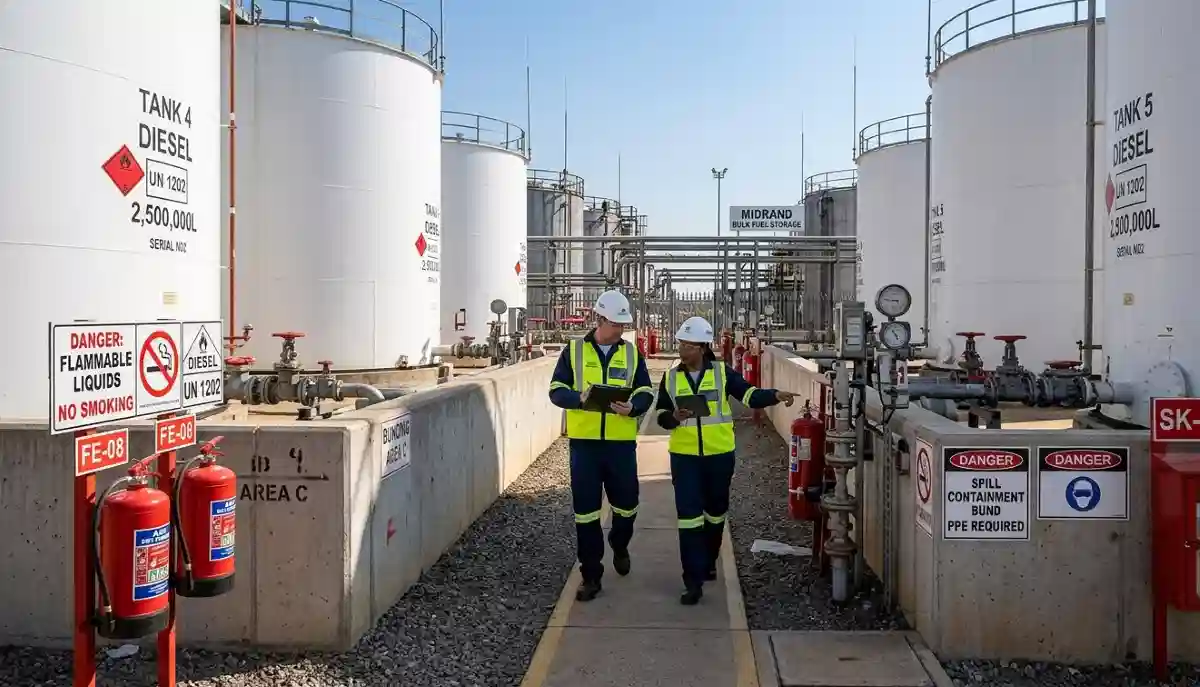
Bulk Diesel Storage Regulations South Africa: Complete Compliance Guide
📋 From SANS 10089-3 to DMRE licensing—everything you need to know to store fuel legally and safely.
Whether you’re planning a storage facility for your logistics company in Johannesburg, a mine in Secunda, or a farm in Mossel Bay, understanding bulk diesel storage regulations South Africa is not optional—it’s the law. And the consequences of non-compliance can be severe: fines, shutdowns, environmental damage, and even criminal liability.
This comprehensive guide navigates the complex regulatory landscape governing fuel storage. We’ll explain SANS 10089-3 compliance for underground tanks and above ground storage tank standards, clarify fuel storage licence requirements under the Petroleum Products Act, and detail diesel tank bunding regulations for secondary containment. You’ll learn about maximum diesel storage without permit thresholds, when you need a hazardous substance licence for fuel, and how to navigate fuel storage environmental regulations under NEMA. For the practical side of installation, see our fuel tank installation guide.
Ready to ensure your storage is compliant? Explore our Services Overview or visit our main Bulk Fuel Supply page. For more on our approach, see How It Works.
Ensure Your Fuel Storage is Compliant
Get free quotes from certified installers who understand SANS standards, DMRE licensing, and environmental regulations.
Servicing Johannesburg, Pretoria, Durban, Cape Town, Sasolburg, and nationwide
📋 Table of Contents – Storage Regulations Guide
⚖️ Why Bulk Diesel Storage Regulations Are Non-Negotiable
Fuel is a hazardous substance. Its storage poses risks of fire, explosion, and environmental contamination. Regulations exist to manage these risks, and compliance is a legal requirement—not a suggestion.
- Legal Consequences: Operating without the required licences or in violation of standards can result in fines, imprisonment, and shutdown orders. The DMRE actively enforces the Petroleum Products Act.
- Environmental Liability: A fuel spill can contaminate soil and groundwater for decades. Under NEMA, you are liable for cleanup costs, which can run into millions, plus potential fines and remediation orders.
- Safety Risks: Non-compliant tanks are a fire and explosion hazard, endangering your employees, neighbours, and the public.
- Insurance Voidance: If your storage is non-compliant, your insurance may be void. A major claim could be rejected, leaving you financially devastated.
- Reputation Damage: Environmental incidents and legal troubles damage your reputation with customers, partners, and the community.
Compliance is not just about following rules—it’s about protecting your business, your people, and the environment. Read more about our commitment to safety on our About Us page and see why clients trust us on Benefits of Choosing Us.
📐 SANS Standards: The Technical Foundation of Compliance
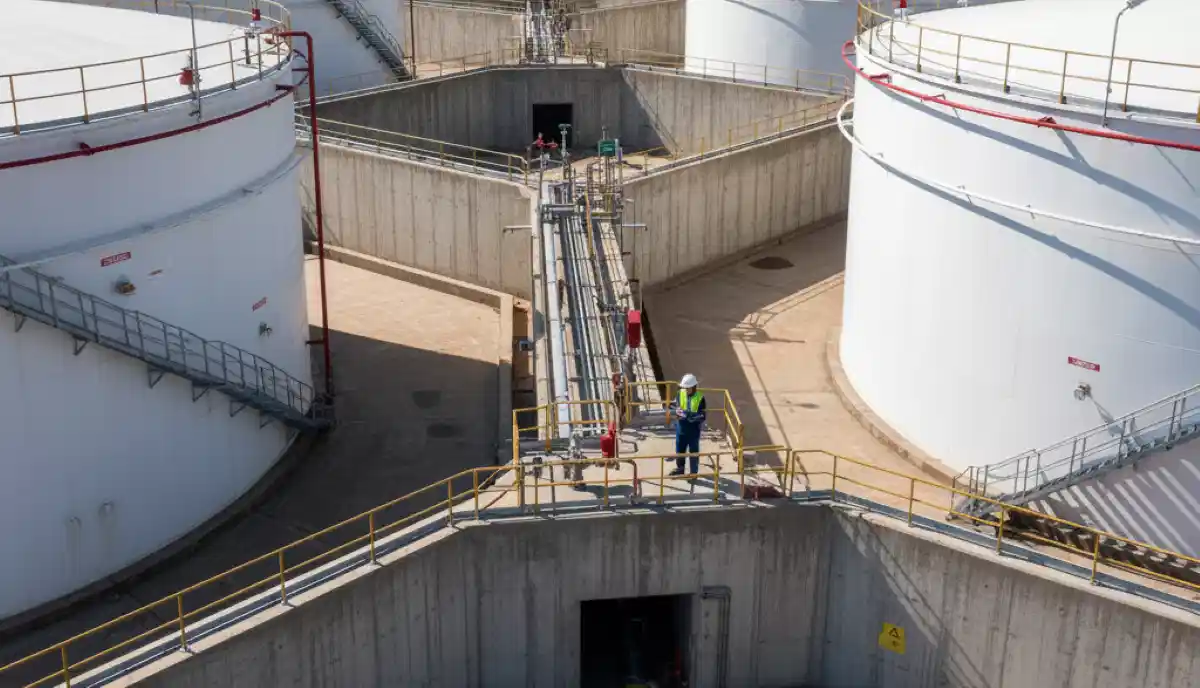
The South African National Standards (SANS) provide the detailed technical requirements for fuel storage. Understanding the difference between the standards is crucial.
| Standard | Title | Key Requirements | Application |
|---|---|---|---|
| SANS 10089-1 | The installation of above-ground storage tanks for petroleum products |
• Tank foundations and supports • Corrosion protection • Spill containment (bunding) • Separation distances from buildings/boundaries • Venting and overfill protection |
Above-ground storage tanks (ASTs) |
| SANS 10089-2 | The maintenance and inspection of above-ground storage tanks |
• Inspection frequencies • Maintenance procedures • Testing requirements |
Ongoing maintenance of ASTs |
| SANS 10089-3 | The installation of underground storage tanks for petroleum products |
• SANS 10089-3 compliance requirements • Excavation and backfill specifications • Cathodic protection for steel tanks • Leak detection systems • Groundwater monitoring provisions |
Underground storage tanks (USTs) |
When comparing SANS 10089-1 vs SANS 10089-3, the key difference is the installation environment—above ground vs underground. Both mandate secondary containment (bunding for above ground, leak detection for underground) and have specific safety requirements.
📜 DMRE Licensing: The Petroleum Products Act
The Department of Mineral Resources and Energy (DMRE) administers the Petroleum Products Act, which regulates the storage of fuel. Depending on the volume you store, you may need a licence.
Key points:
- Registration vs Licensing: Smaller volumes may only require registration, while larger volumes need a full storage licence. The thresholds are specified in the Act.
- Application Process: You must submit detailed plans, proof of compliance with SANS standards, environmental approvals, and local authority permissions.
- Inspections: DMRE inspectors may visit your site to verify compliance before issuing a licence.
- Renewal: Licences are typically valid for a period and must be renewed.
- Penalties: Operating without the required licence is a criminal offence.
One of the most common questions is do I need a licence for diesel storage? The answer depends on volume and location. Generally, storage above 30,000 litres is likely to require a licence, but there are exceptions. Always consult with a specialist or the DMRE directly.
🛡️ Diesel Tank Bunding Regulations: Secondary Containment
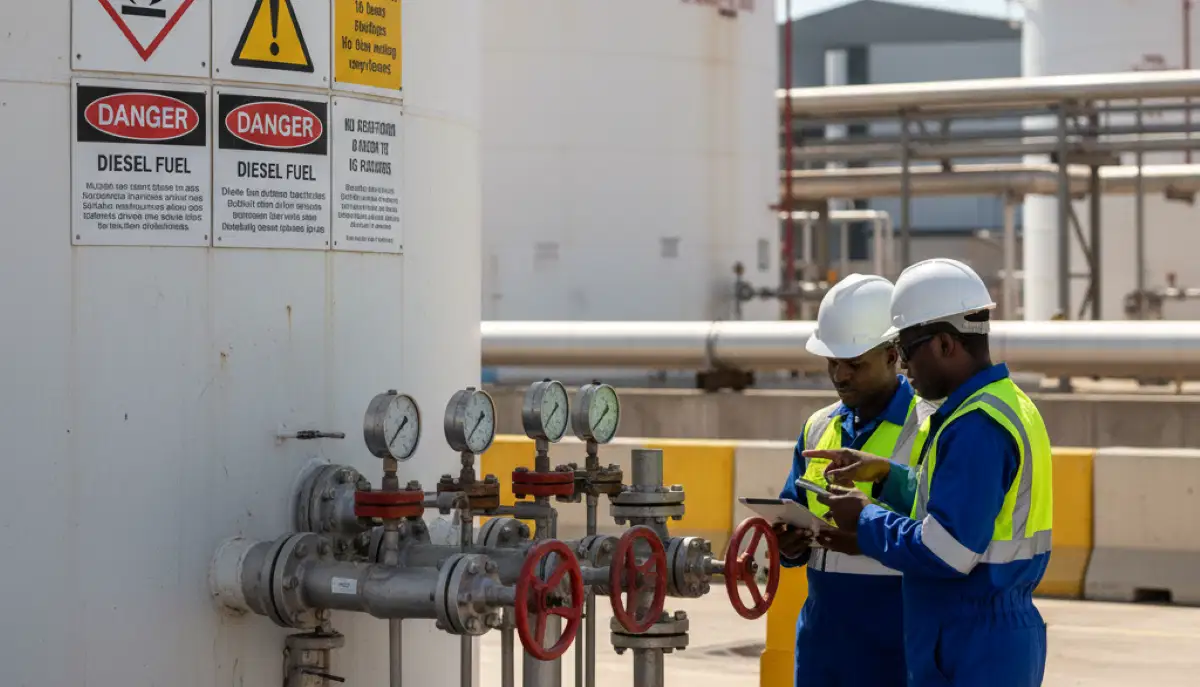
One of the most critical physical requirements for above-ground storage is bunding—a secondary containment system to catch spills if the primary tank fails.
Key diesel tank bunding regulations under SANS 10089-1:
- Capacity: The bund must hold at least 110% of the volume of the largest tank within it. For multiple tanks, it must hold 110% of the largest OR 25% of the total volume, whichever is greater.
- Impermeability: The bund floor and walls must be impermeable to fuel—typically reinforced concrete or lined with an impermeable membrane.
- Structural Integrity: The bund must withstand the hydrostatic pressure of a full tank failure.
- No Drains: No drainage outlets through the bund wall. Any accumulated rainwater must be removed manually after checking for contamination.
- Compatibility: Materials must be compatible with the stored fuel to prevent degradation.
- Access: The bund must be accessible for inspection and maintenance.
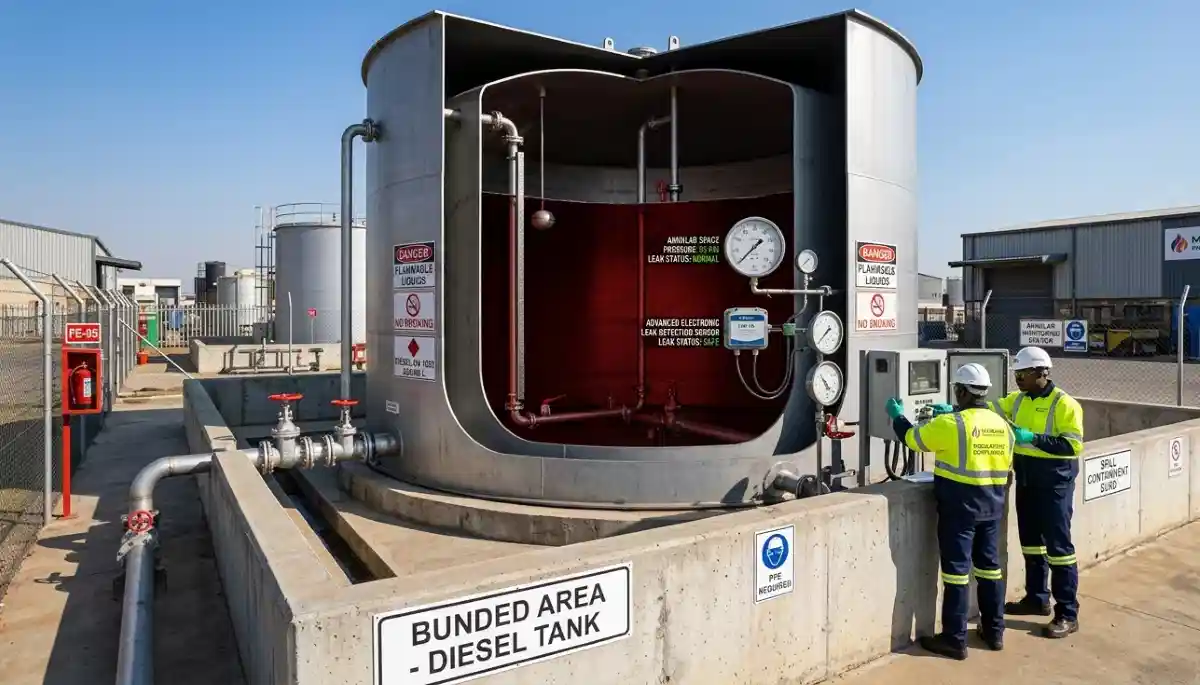
Alternatively, double skinned tank regulations allow the use of tanks with built-in secondary containment (an inner and outer wall with interstitial monitoring). These may reduce or eliminate the need for external bunding, but site-specific requirements still apply.
🌍 NEMA: Environmental Impact & Pollution Prevention
The National Environmental Management Act (NEMA) and its associated regulations add another layer of compliance, particularly for larger storage facilities or those in sensitive areas.
- Environmental Impact Assessment (EIA): Depending on the storage volume and location, you may need to conduct an EIA before construction. This assesses potential impacts on water resources, sensitive ecosystems, and communities.
- Water Use Licence: If your storage is near a watercourse or wetland, you may need a water use licence from the relevant authority.
- Pollution Prevention Plans: You may be required to have a detailed plan for preventing and responding to spills. This includes groundwater protection measures.
- Hazardous Waste Management: Any contaminated soil, sludge, or cleaning materials must be disposed of as hazardous waste at licensed facilities.
- Atmospheric Emissions: Some facilities may need to manage vapour emissions.
Fuel storage environmental regulations are complex and location-specific. Early engagement with environmental consultants is wise for larger projects.
Unsure About Your Compliance?
Get a professional compliance assessment. Our experts can guide you through SANS standards, DMRE licensing, and environmental requirements.
Take advantage of our free site inspection to identify potential compliance issues.
🏛️ Local Authority & Fire Department Approvals
National standards and licences aren’t the whole story. Your local municipality and fire department also have jurisdiction.
- Town Planning: Your storage facility must comply with local zoning laws. You may need planning permission, especially in urban areas.
- Building Plans: Any structures, including bund walls and pump houses, require approved building plans.
- Fire Department Permit: The local fire department must approve the site for fire safety. They will check:
- Separation distances from buildings and boundaries.
- Access for firefighting vehicles.
- Availability of fire-fighting equipment (extinguishers, foam systems).
- Dangerous goods storage signage and emergency plans.
- Electrical Approvals: All electrical installations (pumps, lighting, telemetry) must comply with SANS 10142 and be certified.
Engage with your local authority early in the planning process. Requirements vary between municipalities—what’s acceptable in Cape Town may differ in Durban.
🚫 7 Common Compliance Mistakes to Avoid
These errors are surprisingly common and can be extremely costly to rectify.
- Mistake #1: Assuming “Small” Means “Exempt”. Even small tanks must comply with SANS standards. The question maximum diesel storage without permit is often misunderstood. While you may not need a DMRE licence below a threshold, you still need to meet technical standards.
- Mistake #2: Ignoring Local Bylaws. National compliance doesn’t guarantee local compliance. Municipalities have their own requirements, especially for fire safety and zoning.
- Mistake #3: Inadequate Bunding. Building a bund that’s too small, porous, or structurally weak is a common and dangerous mistake. It won’t contain a spill, defeating the purpose.
- Mistake #4: Forgetting About Decommissioning. When you eventually remove a tank, there are regulations for decommissioning, cleaning, and disposal. Plan for this from the start.
- Mistake #5: Not Keeping Records. You need to keep compliance certificates, inspection reports, and maintenance records. In a dispute or inspection, lack of records is as bad as non-compliance.
- Mistake #6: Using Unqualified Installers. Compliance starts with installation. If your installer doesn’t know SANS standards, your tank won’t be compliant. Always verify credentials. Our contractor selection guide helps.
- Mistake #7: Ignoring Ongoing Maintenance. Compliance isn’t a one-time event. Tanks and safety equipment need regular inspection and maintenance as per SANS 10089-2. Our tank cleaning services help maintain compliance.
📊 Permit Thresholds: How Much Diesel Can You Store Without a Licence?
This is one of the most frequently asked questions. The answer isn’t simple, as thresholds vary by regulation and jurisdiction. Here’s a general guide.
| Regulation | Typical Threshold | Notes |
|---|---|---|
| DMRE (Petroleum Products Act) | 30,000 litres (storage) / 5,000 litres (retail) | Below these volumes, you may only need registration, not a full licence. But this is indicative—check current regulations. |
| NEMA (Environmental) | Varies by activity | Listed activities in the EIA regulations have thresholds. Storage of hazardous substances above certain quantities may trigger an EIA. |
| Local Fire Department | Often 1,000 – 5,000 litres | Many municipalities require registration or permits for storage above relatively low volumes. Check locally. |
| SANS Standards | No threshold | SANS standards apply to all storage, regardless of volume. Even a 200L drum should be stored safely, though the full tank standard may not apply. |
*Thresholds can change. Always verify current requirements with the relevant authority or a compliance specialist.
The safest approach: if you’re storing any significant quantity of diesel (over 1,000 litres), engage a specialist to assess your obligations. The cost of advice is tiny compared to the cost of non-compliance.
❓ Frequently Asked Questions About Fuel Storage Regulations
Do I need a licence to store diesel on my property?
Do I need a licence for diesel storage depends on volume. Under the Petroleum Products Act, storage above certain thresholds (typically 30,000 litres) requires a DMRE licence. Smaller volumes may only need registration. However, local bylaws and SANS standards always apply, regardless of volume.
What is the maximum diesel storage without a permit?
Maximum diesel storage without permit is not a simple number. For DMRE licensing, it’s often around 30,000 litres, but local fire departments may have much lower thresholds (1,000-5,000 litres). You must check with all relevant authorities—national, provincial, and local.
What are SANS 10089-1 and SANS 10089-3?
SANS 10089-1 vs SANS 10089-3 are the national standards for fuel storage. 10089-1 covers above-ground tanks, specifying requirements for foundations, bunding, and safety features. 10089-3 covers underground tanks, focusing on excavation, cathodic protection, and leak detection. Both are essential for compliance.
What are the bunding requirements for diesel tanks?
Diesel tank bunding regulations require that the bund (secondary containment) hold at least 110% of the largest tank’s volume. It must be impermeable, structurally sound, and have no drains. This ensures any spill is contained and doesn’t reach the environment.
Do I need environmental approval for a fuel tank?
Fuel storage environmental regulations under NEMA may require an Environmental Impact Assessment (EIA) for larger facilities or those in sensitive areas. Even for smaller tanks, you have a duty to prevent pollution and may need to comply with water use or waste management regulations.
What is a hazardous substance licence for fuel?
A hazardous substance licence for fuel may be required under local bylaws or environmental regulations, separate from the DMRE licence. It relates to the storage of dangerous goods and is often issued by the local fire department or municipality. Check your local requirements.
What signage is required for fuel storage?
Fuel storage facilities require proper hazchem signage indicating the hazard class, emergency contact details, and no smoking/no naked flame warnings. The specific requirements are in SANS 10089 and local fire department regulations. Signage must be durable and clearly visible.
Do I need a fire department permit for my diesel tank?
Yes, in most municipalities, you need local authority approval from the fire department before installing a fuel tank. They will inspect the site for fire safety, access, separation distances, and equipment. This is a separate process from DMRE licensing.
What are the regulations for underground diesel tanks?
SANS 10089-3 compliance is the key standard for underground tanks. It covers excavation, tank bedding, cathodic protection for steel tanks, leak detection systems, and groundwater monitoring. Underground tanks also require DMRE licensing and local authority approvals.
✅ Your Fuel Storage Compliance Action Plan
Navigating bulk diesel storage regulations South Africa can seem daunting, but a systematic approach ensures you meet all requirements safely and legally.
Key takeaways:
- Compliance is multi-layered: SANS standards, DMRE licensing, NEMA environmental rules, and local authority approvals.
- Thresholds vary—never assume you’re exempt without checking.
- Bunding and secondary containment are non-negotiable for above-ground tanks.
- Underground tanks have specific requirements for corrosion protection and leak detection.
- Engage authorities early in the planning process.
- Use qualified, certified installers and maintain ongoing compliance through regular inspections and maintenance.
- Verify your installer’s credentials and insurance. Our contractor’s liability insurance page explains why vetting matters.
Your 5-Step Compliance Action Plan
- Define Your Project: What volume will you store? Above ground or underground? What’s your location?
- Identify Applicable Regulations: Research DMRE thresholds, contact your local municipality and fire department, and consider environmental requirements.
- Engage Specialists: Use our quote request system to connect with compliance experts and certified installers who understand the regulations.
- Obtain Approvals: Apply for all necessary licences and permits before starting construction. This may take time—plan ahead.
- Maintain Compliance: Once installed, keep records, schedule regular tank cleaning and maintenance, and renew licences as required.
Ensure Your Storage is Compliant
Get free quotes from certified installers and compliance specialists. Avoid fines, protect the environment, and store fuel legally.
📞 Call us: 073 138 4726 for expert advice on fuel storage compliance.
Free site inspections •
Beat-your-quote guarantee •
Our guarantees
📚 Official resources & standards referenced:
- SABS – SANS 10089-1 (above ground storage) and SANS 10089-3 (underground storage).
- DMRE (Department of Mineral Resources and Energy) – Petroleum Products Act licence requirements and fuel regulations.
- NEMA – Environmental impact assessment and pollution prevention requirements for storage facilities.
Information is for general guidance. Laws and regulations can change. For specific legal advice, consult a qualified professional.
Written by: ServiceLink SA Research Team
Industry analysts with 15+ years in fuel storage, regulatory compliance, and environmental management.
Our team has guided numerous businesses through the complexities of fuel storage compliance, from small farms to major industrial facilities. We understand the regulatory landscape and the practical steps needed to achieve and maintain compliance.
For more detailed information, explore our related guides: fuel tank installation for practical setup, fuel tank cleaning maintenance for ongoing care, and how to choose a bulk fuel supplier for sourcing. Our fuel management systems page covers monitoring technology. See our service areas page for coverage in your region, including Gauteng, Durban, and Cape Town. If you have a dispute, see our dispute resolution procedure.