Fuel Management Systems South Africa: Total Control Over Your Fuel
📊 From tank telemetry to fleet fuel management software—stop theft, track consumption, and optimise your operations.
Whether you’re managing a logistics fleet in Johannesburg, a mine in Rustenburg, or a construction company in Durban, fuel is one of your biggest costs. But without accurate data, you’re flying blind. How much fuel are you actually using? Is any being stolen? Are you ordering at the right times? Fuel management systems South Africa provide the answers.
This comprehensive guide explores how modern technology transforms fuel management. We’ll cover diesel fuel monitoring system options, tank telemetry system capabilities, and fleet fuel management software that integrates with your operations. You’ll learn about real time diesel consumption monitoring, fuel theft prevention technology, and how automated fuel ordering systems can save you time and money. For the operational side, see our fleet fueling solutions guide.
Ready to take control of your fuel? Explore our Services Overview or visit our main Bulk Fuel Supply page. For more on our approach, see How It Works.
Take Control of Your Fuel Today
Get free quotes from fuel management system specialists. Tank telemetry, fleet software, and theft prevention solutions.
Servicing Johannesburg, Pretoria, Midrand, Durban, Cape Town, and nationwide
📋 Table of Contents – Fuel Management Guide
📉 Why Every Fuel User Needs a Management System
Fuel is a major operational cost, but for many businesses, it’s also a major source of hidden losses. Without a fuel management system, you’re vulnerable to:
- Theft: “Wet hosing” (siphoning fuel from vehicles) and unauthorised use of company fuel are rampant. A fuel theft prevention technology can stop this.
- Inefficiency: Without fuel consumption tracking, you can’t identify vehicles or equipment that are using more fuel than they should, indicating maintenance issues or driver behaviour problems.
- Inventory Losses: Manual dip readings are inaccurate and infrequent. You might not know fuel is missing until it’s too late.
- Stockouts: Running out of fuel during operations is costly. Automated fuel ordering systems prevent this.
- Poor Data: Without accurate records, you can’t claim SARS fuel levy refunds, allocate costs correctly, or make informed purchasing decisions.
A modern fuel management systems South Africa solution addresses all these pain points, giving you real-time visibility, automated controls, and actionable data. Read more about our commitment to efficiency on our About Us page and see why clients trust us on Benefits of Choosing Us.
🧩 The Building Blocks of a Fuel Management System
A complete fuel management solution integrates several technologies to provide end-to-end control.
| Component | What It Does | Key Benefit |
|---|---|---|
| Tank Telemetry | Sensors in tanks measure fuel level, temperature, and water presence. Data transmitted via cellular/IoT to cloud. | Real-time inventory visibility, leak detection, automated reordering. |
| RFID Fuel Dispensing | Drivers/vehicles are identified via RFID tags before fuel is released. Only authorised users can pump. | Prevents unauthorised fuel use, provides per-vehicle consumption data. |
| Fuel Management Software | Cloud platform aggregating data from tanks, dispensers, and vehicles. Generates reports, alerts, and analytics. | Centralised control, variance reporting, integration with accounting systems. |
| Vehicle Telematics Integration | Links fuel usage to GPS data, engine hours, and distance travelled. | Enables fuel consumption tracking per kilometre, identifies inefficient driving. |
| Fuel Card Integration | Reconciles fuel card transactions with on-site usage data. | Complete picture of all fuel spend, even when drivers use external stations. |
Together, these components create a powerful diesel fuel monitoring system that protects your assets and optimises your operations.
📡 Tank Telemetry Systems: Know Your Fuel Level 24/7
Gone are the days of climbing a tank with a dipstick. Modern tank telemetry systems provide continuous, accurate fuel level data directly to your smartphone or computer.
How It Works:
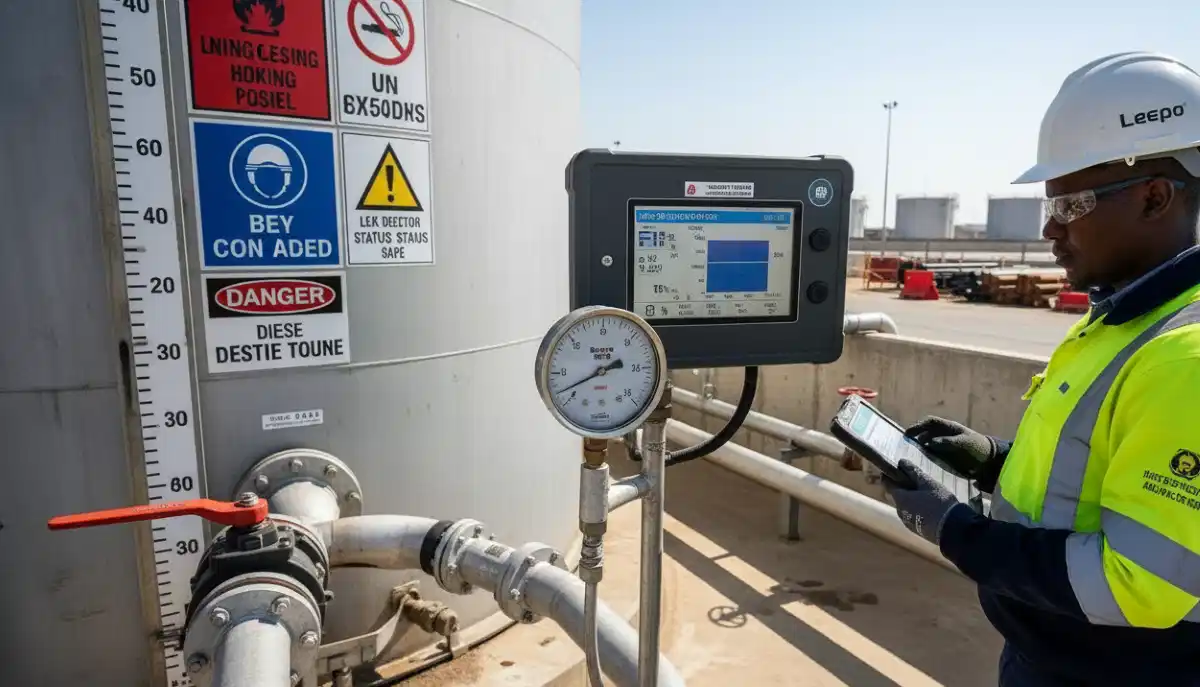
- Sensors: Ultrasonic, radar, or capacitive sensors are installed in your tank. They measure fuel level with high accuracy (often within 1-2mm).
- Data Transmission: A small transmitter sends readings via cellular network (SIM card) or LoRaWAN to a cloud server.
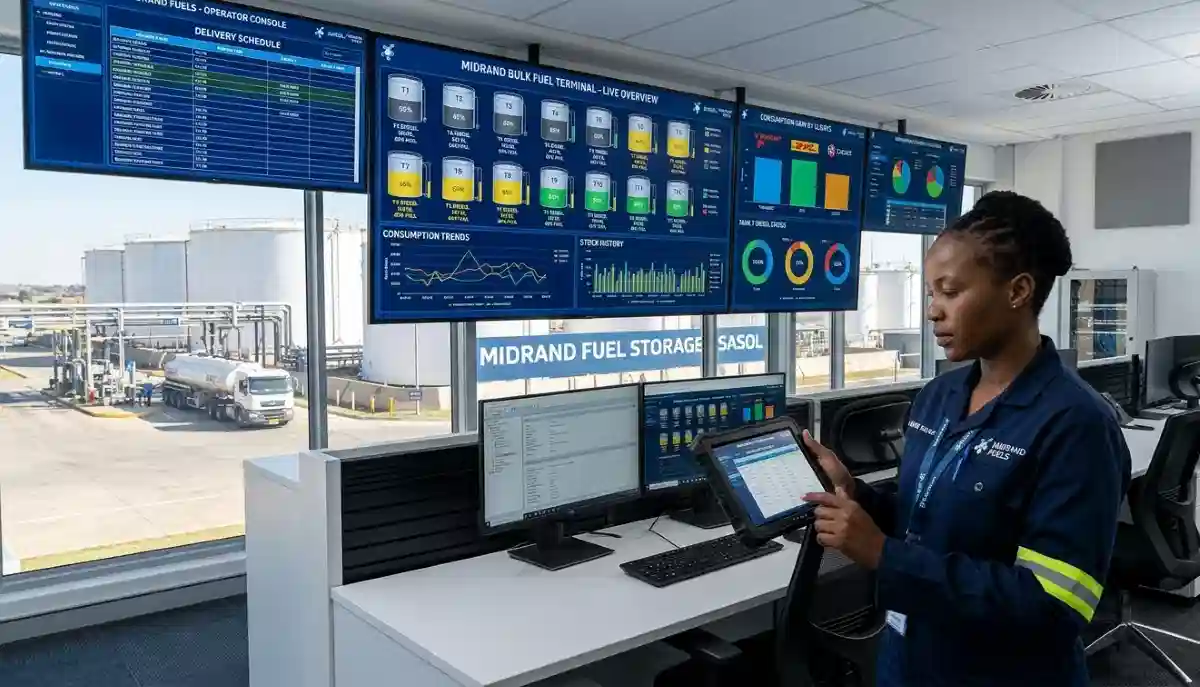
- Cloud Platform: You log into a dashboard to see current fuel volume, historical consumption graphs, temperature, and sometimes water detection.
- Alerts: Set thresholds—get an SMS or email when fuel drops below 20%, or if level drops unusually fast (potential theft).
Benefits of remote fuel level monitoring:
- Never run out unexpectedly.
- Detect theft immediately (unexplained drops).
- Optimise delivery scheduling—don’t order too early or too late.
- Track consumption trends over time.
- Enable automated fuel ordering systems—the system can automatically email your supplier when a refill is needed.
For businesses with multiple sites, like depots in Midrand and Umhlanga, centralised tank monitoring is a game-changer.
🚛 Fleet Fuel Management Software: Connecting the Dots
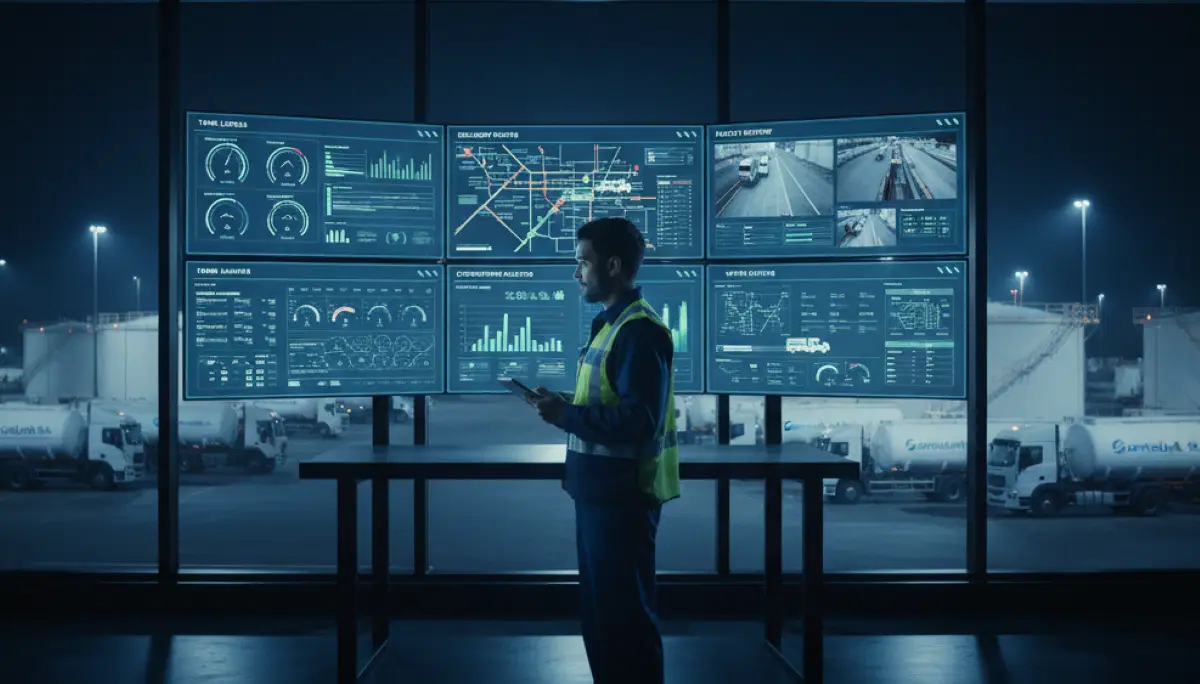
For logistics companies, fuel management doesn’t stop at the tank. You need to know which vehicle used how much fuel, and whether that consumption is efficient. Fleet fuel management software provides that insight.
Key Features:
- Per-Vehicle Tracking: Using RFID at the pump, every litre is assigned to a specific vehicle. You can see consumption by vehicle, driver, or route.
- Integration with Telematics: Link fuel data to GPS. See fuel consumption per kilometre, idling time, and engine hours. Identify vehicles needing maintenance or drivers needing training.
- Fuel Card Integration: If your drivers use fuel cards on the road, the software reconciles those transactions with on-site usage for a complete picture.
- Variance Reporting: The system flags discrepancies—if fuel used doesn’t match distance travelled, something’s wrong. This is a powerful fuel theft prevention technology.
- Maintenance Alerts: Some systems integrate with maintenance schedules—sudden increase in fuel consumption can trigger a maintenance alert.
For companies using fleet fueling solutions, this software is the brain that makes it all work.
🛡️ Fuel Theft Prevention Technology: Stop the Leak
Fuel theft is a massive problem in South Africa. It takes many forms: siphoning from vehicles, unauthorised pumping from the company tank, false mileage claims, and collusion with drivers. Modern fuel theft prevention technology addresses all these.
- RFID Authorisation: No RFID tag, no fuel. The pump won’t dispense until an authorised tag is presented. This prevents unauthorised use of the pump.
- Vehicle Recognition: Some systems go further—the fuel dispenser recognises the specific vehicle and only allows fuel for that vehicle. A car can’t fuel a truck, and vice versa.
- Real-Time Alerts: Tank telemetry can detect unusual drops—like a sudden 500-litre drop at 2am. You get an immediate alert, allowing rapid response.
- Mileage Reconciliation: The system compares fuel drawn to distance travelled. If a driver claims 100 litres but only travelled 200km in a truck that does 2km/litre, you know something’s wrong. This is variance reporting in action.
- CCTV Integration: Many systems integrate with on-site cameras, recording who is fuelling which vehicle at what time.
The return on investment for these technologies is often measured in months, not years. A single theft incident can cost more than the system itself.
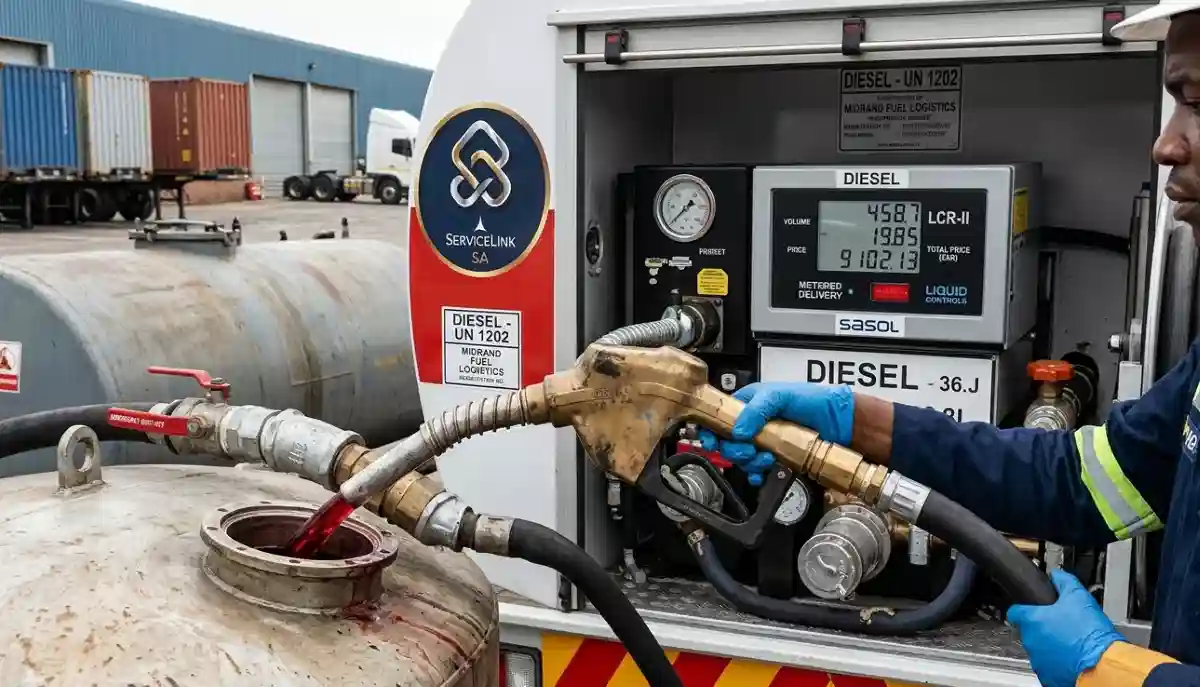
Stop Fuel Leakage—Get Control
Free quotes from fuel management system specialists. Tank telemetry, RFID dispensing, and fleet software.
Take advantage of our free site inspection to assess your current setup.
🚫 7 Common Fuel Management Mistakes
Even businesses that invest in fuel management can undermine their efforts with these common errors.
- Mistake #1: Installing a System but Not Using the Data. A fuel management system is only valuable if you act on its insights. Set aside time weekly to review reports and investigate variances.
- Mistake #2: Ignoring Probe Calibration. Telemetry sensors need periodic probe calibration. An uncalibrated sensor gives false readings, undermining trust in the system.
- Mistake #3: Not Setting Alerts. If you don’t set thresholds for low fuel or unusual drops, you’re not using the system’s full potential. Configure alerts for what matters.
- Mistake #4: Failing to Integrate Systems. Your tank telemetry, dispensing system, and accounting software should talk to each other. Manual data transfer introduces errors and delays.
- Mistake #5: Not Training Staff. If drivers don’t understand the RFID system, they’ll find ways around it. If managers don’t know how to generate reports, the system is wasted.
- Mistake #6: Choosing the Wrong System. A fuel management system for mines has different requirements than one for a small courier fleet. Define your needs before buying.
- Mistake #7: Ignoring Total Fluid Management. As recommended by Sasol, fuel management should consider the whole system—storage, dispensing, and end-use. A piecemeal approach misses opportunities.
💰 ROI Calculator: The Financial Case for Fuel Management
Let’s look at a realistic example for a medium-sized logistics company in Johannesburg with 30 trucks and a 20,000L on-site tank.
| Loss Area | Without System (Annual Estimate) | With System (Annual Estimate) | Annual Saving |
|---|---|---|---|
| Fuel Theft (unauthorised use) | 3% of consumption = R45,000 | 0.5% = R7,500 | R37,500 |
| Inventory Loss (measurement errors) | 2% of consumption = R30,000 | 0.2% = R3,000 | R27,000 |
| Inefficient Driving (excess consumption) | 5% of consumption = R75,000 | 2% (after coaching) = R30,000 | R45,000 |
| Emergency Deliveries (stockouts) | R15,000 (premiums, fees) | R2,000 | R13,000 |
| Administrative Time | R25,000 (staff time reconciling) | R5,000 | R20,000 |
| TOTAL | R190,000 | R47,500 | R142,500 |
With a typical fuel management system costing R30,000-R60,000 installed, the payback period is under 6 months. And these savings continue year after year.
⛏️ Industry-Specific Fuel Management Solutions
Different industries have unique fuel management challenges. Here’s how tailored fuel management systems South Africa address them.
| Industry | Key Challenge | Solution Feature | Local Example |
|---|---|---|---|
| Mining | High volumes, remote sites, theft risk, need for equipment-specific tracking | Fuel management system for mines with ruggedised hardware, offline-capable systems, integration with heavy machinery telematics | Rustenburg mines |
| Logistics & Transport | Per-vehicle tracking, driver behaviour, route efficiency | Integration with telematics, RFID at pump, fuel card reconciliation, real time diesel consumption monitoring | Midrand logistics |
| Construction | Multiple sites, mobile plant, temporary tanks, high theft risk | Portable telemetry units, mobile dispensing with RFID, site-level reporting | Sandton construction |
| Farming | Remote locations, multiple tanks, seasonal usage, rebated fuel tracking | Solar-powered telemetry, low-bandwidth data transmission, usage tracking per machine for SARS rebate claims | Bellville farms |
| Fuel Depots & Resellers | High-volume inventory management, leak detection, customer billing | Advanced fuel stock reconciliation software, integration with point-of-sale, automated reorder from suppliers | Duran depots |
❓ Frequently Asked Questions About Fuel Management Systems
What is a fuel management system and how does it work?
A fuel management systems South Africa combines hardware (tank sensors, RFID dispensers) and software to track, control, and optimise fuel usage. It provides real-time data on inventory, consumption per vehicle, and alerts for anomalies, giving you complete visibility and control.
How does tank telemetry work?
Tank telemetry systems use sensors (ultrasonic, radar, or capacitive) to measure fuel level continuously. Data is transmitted via cellular network to the cloud, where you can view it on a dashboard. You can set alerts for low levels, rapid drops, or water detection.
Can a fuel management system prevent theft?
Yes. Fuel theft prevention technology includes RFID authorisation at the pump (no unauthorised dispensing), real-time alerts for unusual tank drops, and variance reporting that flags discrepancies between fuel drawn and distance travelled. These features dramatically reduce theft.
What is RFID fuelling?
RFID fuelling uses radio-frequency identification tags on vehicles or keys. When a driver presents the tag at the pump, the system verifies authorisation and records which vehicle receives the fuel. This prevents unauthorised use and provides per-vehicle consumption data.
How much does a fuel management system cost?
Costs vary based on tank numbers, dispensers, and software features. A basic tank telemetry system might cost R5,000-R10,000 per tank installed. A complete system with RFID dispensing and fleet software for a small fleet could be R30,000-R60,000. ROI is typically 6-12 months.
What is fuel stock reconciliation software?
Fuel stock reconciliation software compares fuel received (deliveries) with fuel dispensed (usage) and current inventory. Variances indicate potential theft, measurement errors, or leaks. It’s essential for accurate inventory management and loss prevention.
Can I integrate fuel management with my existing accounting software?
Most modern fuel management systems offer API integration with popular accounting platforms like Xero, Sage, or QuickBooks. This automates fuel cost allocation to vehicles or departments, saving administrative time and reducing errors.
What is automated fuel ordering?
Automated fuel ordering systems use tank telemetry data to trigger refill orders when fuel drops below a preset level. The system can email your supplier automatically, ensuring you never run out and optimising delivery schedules.
Do I need a fuel management system for a small fleet?
Even small fleets benefit. Theft and inefficiency scale with business size—a 5-truck operation losing 5% of fuel is still losing significant money. Many systems are scalable, starting with basic tank monitoring and adding features as you grow.
✅ Your Fuel Management Action Plan
Fuel is too expensive and too critical to manage with guesswork. A modern fuel management systems South Africa pays for itself through theft prevention, efficiency gains, and better decision-making.
Key takeaways:
- Fuel theft and inefficiency are costing you money—whether you know it or not.
- Tank telemetry gives you real-time inventory visibility and alerts.
- RFID dispensing ensures only authorised use and provides per-vehicle data.
- Integration with telematics and accounting creates a complete picture.
- The ROI is compelling—often under 12 months.
- Choose a system that fits your industry. A fuel management system for mines has different needs than one for a courier fleet.
- Verify your supplier’s credentials and system compatibility. Our contractor’s liability insurance page explains why vetting matters.
Your 5-Step Fuel Management Action Plan
- Audit Your Current Situation: How much fuel do you use? Where are the potential loss points? Do you have any data now?
- Define Your Needs: Do you need tank monitoring only? Per-vehicle tracking? Integration with accounting? Make a wish list.
- Get Expert Advice: Book a free inspection to have a professional assess your site and recommend solutions.
- Get Multiple Quotes: Use our quote request system to connect with vetted fuel management specialists. Compare their proposed solutions, technology, and pricing.
- Implement and Train: Once installed, train your team on using the system. Review reports weekly and act on the insights.
Take Control of Your Fuel Today
Get free quotes from fuel management system specialists. Stop theft, track consumption, and optimise your operations.
📞 Call us: 073 138 4726 for expert advice on fuel management.
Free site inspections •
Beat-your-quote guarantee •
Our guarantees
📚 Official resources & standards referenced:
- Sasol – Total Fluid Management technology and best practices.
- IFSA (Institute for Fuel Storage and Administration) – Fuel storage and management standards.
- EE Publishers – Energy efficiency and fuel optimisation resources.
Information is for general guidance. For specific advice, consult a qualified professional.
Written by: Innocent T Hanyani
21+ years construction, logistics, and digital industry experience, ServiceLink SA
Innocent has implemented fuel management systems across multiple industries, from small fleets to large mining operations. He understands the technology, the implementation challenges, and the measurable ROI these systems deliver.
For more detailed information, explore our related guides: fleet fueling solutions for operational efficiency, bulk fuel supply cost for pricing context, and how to choose a bulk fuel supplier for sourcing. Our tank installation and tank cleaning pages are also relevant. See our service areas page for coverage in your region, including Gauteng, Durban, and Cape Town. If you’re passionate about technology, visit our careers page.