
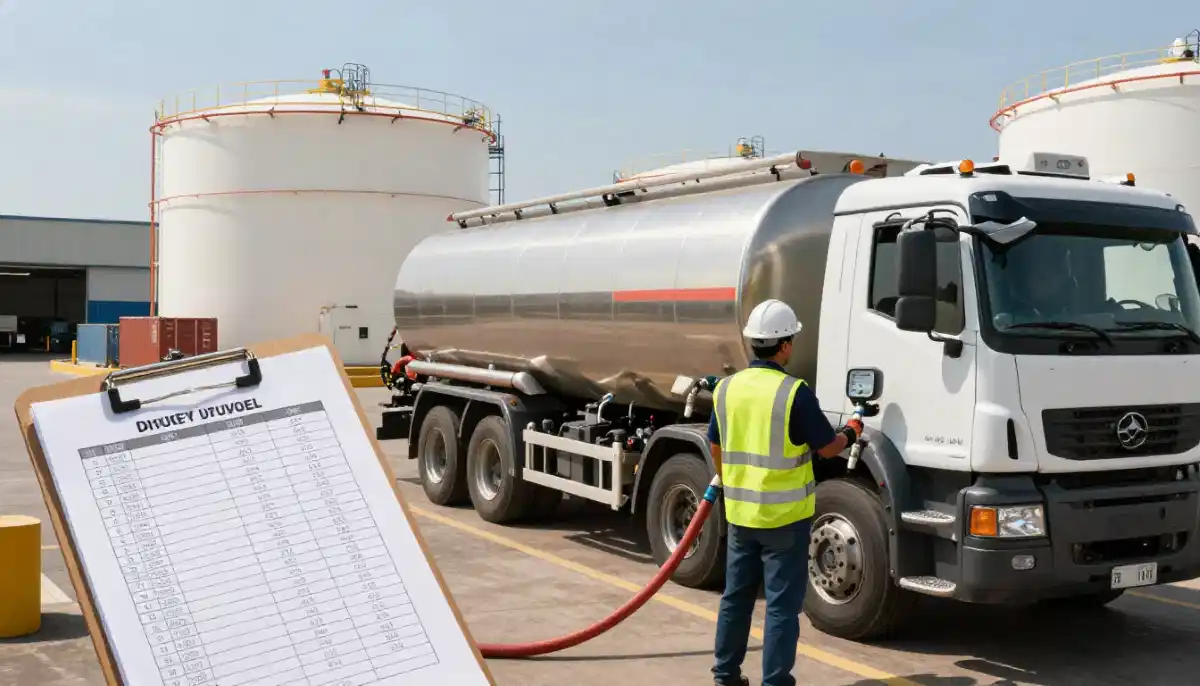
How to Understand Bulk Fuel Supply Cost in South Africa – A Guide for Business Owners
⛽ Breaking down the wholesale diesel price, commercial fuel pricing, and the levies that impact your bottom line.
Whether you’re managing a logistics fleet in Johannesburg, running a mine in Emalahleni, or overseeing a construction project in Cape Town, fuel is one of your most significant variable operating costs. Knowing how to navigate the complexities of bulk fuel supply cost South Africa is no longer just an accounting task—it’s a strategic business imperative. This guide is designed to provide total transparency on what you’re paying for and why.
We will dissect every component of the price you see on your invoice. From the basic fuel price (BFP) set by the DMRE to the various levies like the RAF levy and carbon fuel levy collected by SARS. We’ll explore how global oil prices and the Rand/Dollar exchange rate create over-recovery or under-recovery situations. You’ll get realistic examples of wholesale diesel price per litre for different customer types and volumes, and we’ll provide a detailed forecast to help you budget accurately. For a deeper dive into the delivery logistics themselves, see our dedicated diesel delivery services page.
If you’re ready to secure transparent pricing for your operations, explore our Services Overview or visit our main Bulk Fuel Supply page. For more on our service commitment, see How It Works.
Get Transparent Bulk Fuel Quotes
Compare commercial fuel contract rates from registered, verified suppliers in your area. Plan your budget with confidence.
Compare Fuel Suppliers Near You
Servicing Johannesburg, Pretoria, Durban, Cape Town, and all major industrial hubs
📋 Table of Contents – Bulk Fuel Cost Guide
📊 Why Understanding Bulk Fuel Supply Cost is Critical for Your Business
For industries like logistics, mining, manufacturing, and agriculture, fuel isn’t just an expense—it’s a primary driver of profitability. A seemingly small fluctuation in the diesel price per litre business customer pays can translate into hundreds of thousands of Rands over a year. Without a clear understanding of how these costs are structured, you’re essentially budgeting in the dark.
- Profit Margins: For a transport company operating nationally, fuel can account for 30-40% of total operating costs. Understanding commercial fuel pricing SA allows for more accurate tendering and quoting.
- Operational Efficiency: Knowing the cost difference between standard 500ppm and premium 50ppm diesel helps in making informed decisions for your fleet’s maintenance and performance, as discussed in our fleet fueling solutions guide.
- Budget Certainty: Fuel price volatility is a given. However, understanding the components—like the slate levy and transport differential—helps you predict price movements and negotiate fixed-term contracts.
- Investment Decisions: When considering on-site storage, the cost of bulk fuel delivery for mines or factories must be weighed against the capital outlay for fuel tank installation. This guide provides the pricing context for that decision.
Read more about our commitment to transparent pricing on our About Us page and see why clients value our approach on Benefits of Choosing Us.
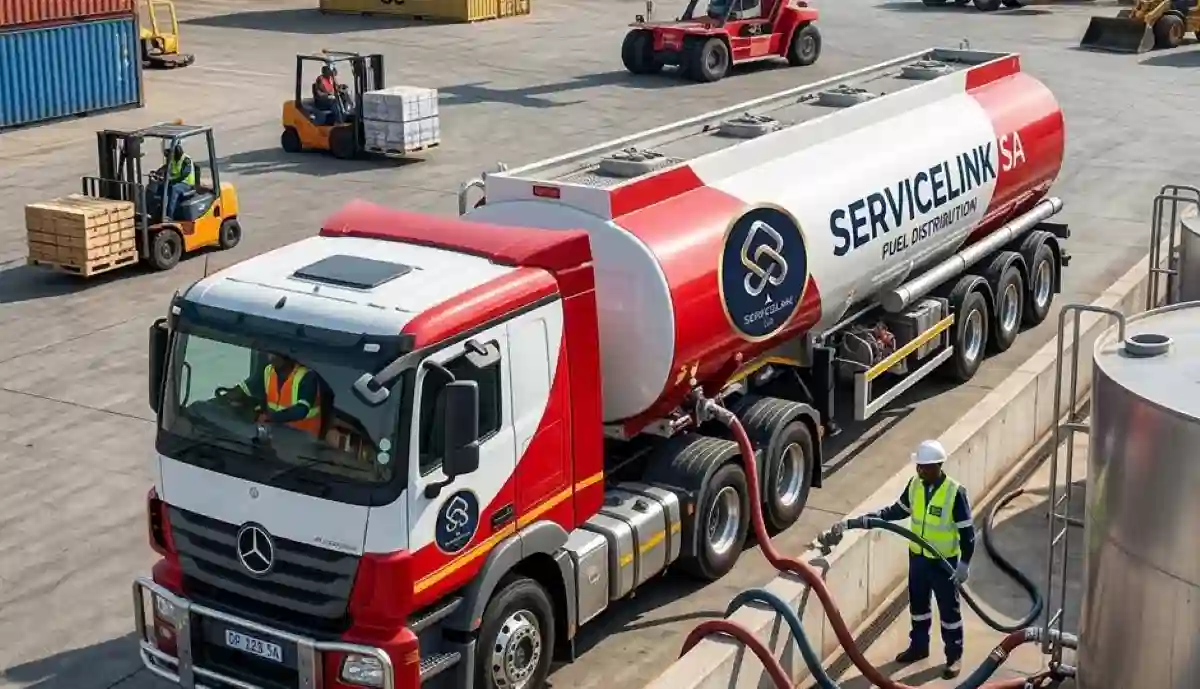
🧩 The Building Blocks: What Makes Up Your Bulk Fuel Price?
The price you pay for bulk diesel or petrol is far more than just the cost of the product. It’s a carefully calculated sum of several components, many of which are regulated by the Department of Mineral Resources and Energy (DMRE). Understanding these gives you power in supplier negotiations.
| Component | Description | Who Sets/Collects It |
|---|---|---|
| Basic Fuel Price (BFP) | The cost of refined product from international markets, including freight, insurance, and quality differentials. It’s calculated daily based on global oil prices and the Rand/Dollar exchange rate. | DMRE |
| Wholesale Margin | The fee retained by the oil company or wholesaler to cover their operational costs and profit. | Industry / DMRE Regulated |
| Transport Differential | The cost of moving fuel from the coastal refineries or depots to inland zones like bulk diesel price Johannesburg customers pay. This is why prices are higher in Gauteng than in Durban. | DMRE / Industry |
| Service Delivery (Slate) Levy | A levy to manage the difference between the BFP and the actual retail price when the BFP fluctuates dramatically, preventing massive price spikes. | DMRE |
| Road Accident Fund (RAF) Levy | A fixed levy per litre to fund the RAF, which compensates road accident victims. | SARS Customs & Excise |
| Carbon Fuel Levy | An environmental levy introduced to discourage fossil fuel use and fund green initiatives. | SARS Customs & Excise |
| Petroleum Products Levy | A levy to fund the regulation of the petroleum industry by the DMRE. | DMRE |
| Customs & Excise Duty | Import duties on refined product. | SARS Customs & Excise |
*Note: The specific levies and their amounts are adjusted annually in the national budget.
📈 Current Wholesale Diesel Price Per Litre & Commercial Trends
While the daily pump price makes headlines, the wholesale diesel price per litre for bulk buyers is a different, more negotiable figure. It’s typically based on the wholesale margin plus the BFP and all levies, but with discounts applied for volume and contract terms. Understanding the concepts of over-recovery and under-recovery is key here. These terms describe the situation when the BFP is higher or lower than the regulated selling price, leading to adjustments in the following month’s slate levy.
For a logistics company operating a fleet of 50 trucks, the difference between paying the retail price and a negotiated commercial fuel contract rates South Africa can be several Rands per litre. This is where having a dedicated fuel management system becomes vital for tracking consumption against these negotiated rates.
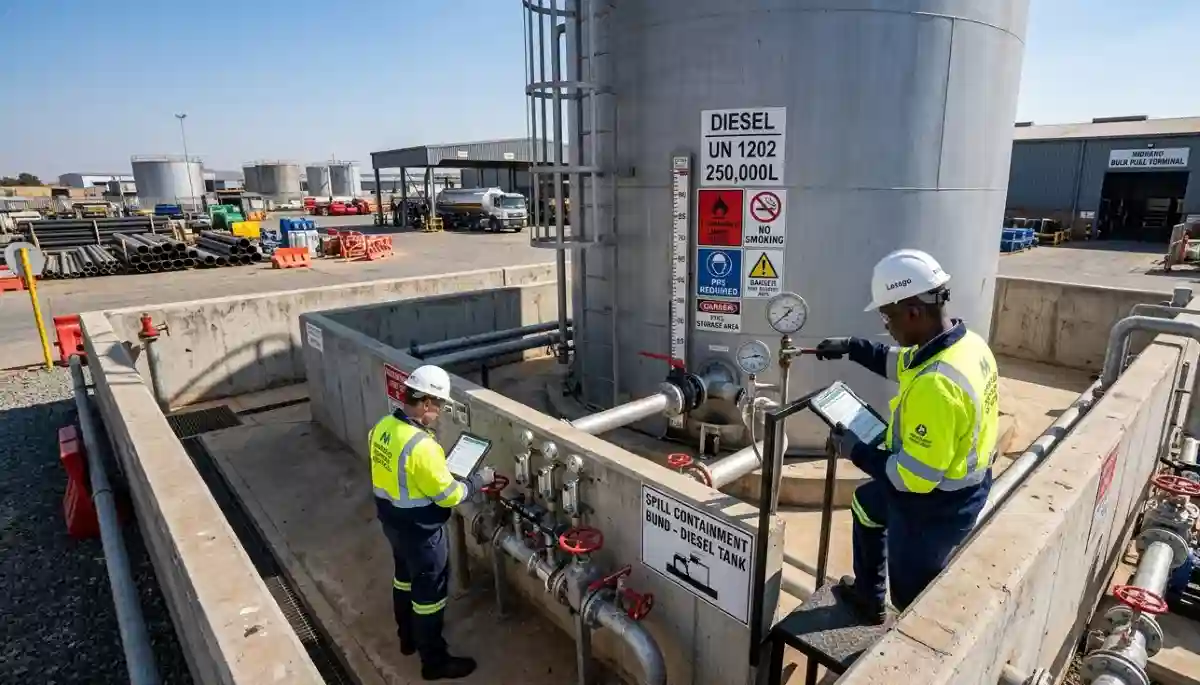
📍 Bulk Fuel Supply Cost by Major South African Hubs
The final price you pay is heavily influenced by your location due to the transport differential. Here’s a realistic breakdown of what businesses in key industrial areas might expect to pay for bulk diesel, excluding VAT and subject to volume discounts. This is for illustrative purposes to show regional variance.
| Region/City | Estimated Bulk Diesel Price (c/L) ** | Key Factor Impacting Price | Local Service Page |
|---|---|---|---|
| Durban | Base + R0.10 | Major port access, lowest transport cost | Durban Bulk Supply |
| Cape Town | Base + R0.15 | Port access, serving Southern Suburbs and industrial areas | Cape Town Bulk Supply |
| Richards Bay | Base + R0.12 | Major port and coal export hub | Richards Bay Bulk Supply |
| Gauteng (Jhb/Pta) | Base + R0.40 – R0.50 | Highest transport differential from coast | Joburg / Pretoria |
| Emalahleni (Witbank) | Base + R0.45 | Inland mining hub, high demand for 500ppm | Emalahleni Bulk Supply |
| Secunda | Base + R0.42 | Petrochemical hub, proximity to Sasol | Secunda Bulk Supply |
| Germiston | Base + R0.43 | Key industrial and logistics center in Ekurhuleni | Germiston Bulk Supply |
** “Base” refers to the wholesale price at the coast. These are estimated premiums for illustrative purposes. Get accurate, current pricing for your specific location via our quote request.
🏭 Real-World Cost Examples: Mines, Logistics & Construction
To make this tangible, let’s look at how bulk fuel costs apply to different industries and the specific products they use.
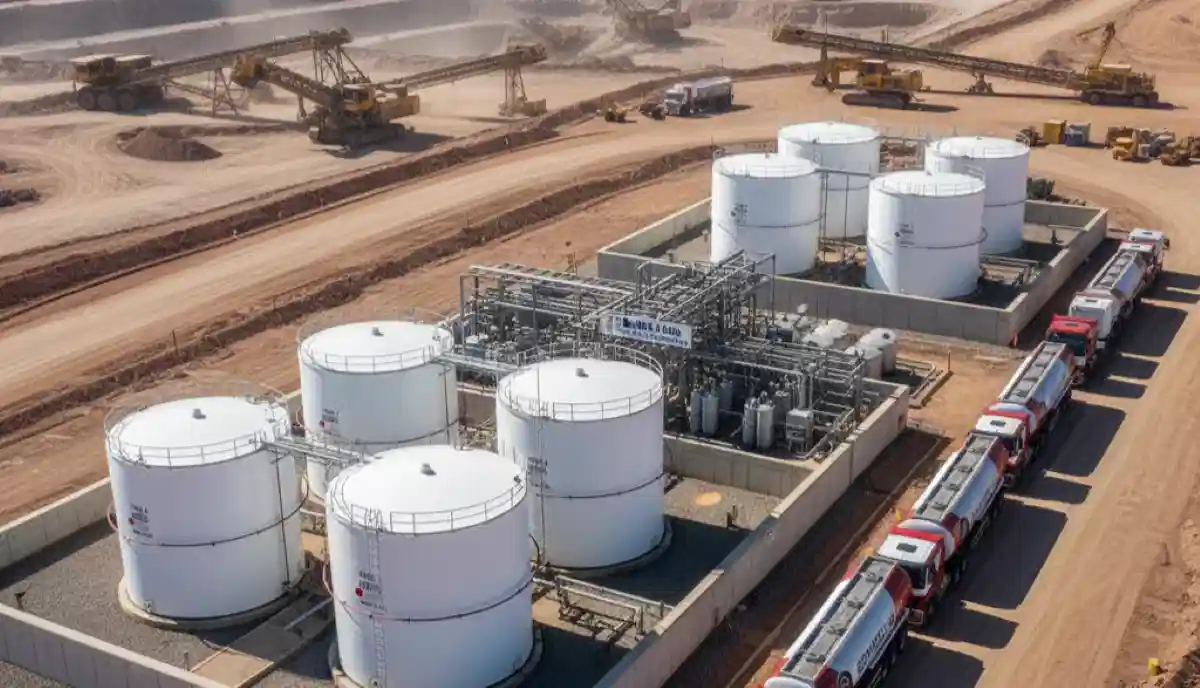
- Mining Operation in Emalahleni: A mine consuming 100,000 litres per month of high-volume 500ppm diesel wholesale price. Their focus is on minimizing the transport differential and securing a low wholesale margin. They would benefit from a carefully chosen supplier with a strong supply chain. The cost of bulk fuel delivery for mines often includes complex logistics and on-site storage management.
- Logistics Company in Johannesburg: A fleet of 100 trucks running on 50ppm for engine longevity. They need fuel pricing for logistics companies that is stable. They might combine a managed fuel card program with a fleet fueling solution that includes overnight refueling at their depot, saving driver time and ensuring security.
- Construction Project in Cape Town: A contractor needs commercial fuel pricing SA for a 6-month project. They require flexible delivery schedules and reliable emergency fuel delivery to prevent costly downtime. Their focus is on service reliability as much as price.
- Large Farm near Bethlehem: An agricultural operation needs fuel for tractors and irrigation pumps. They benefit from understanding dyed diesel (rebated fuel) regulations for off-road use, which is a cheaper alternative to road diesel, provided they comply with SARS requirements.
Get Accurate Pricing for Your Industry
Don’t rely on averages. Get a custom quote tailored to your location, volume, and fuel type (50ppm, 500ppm, or petrol).
Or take advantage of our free site inspection to assess your storage needs.
🚫 5 Common Mistakes When Budgeting for Bulk Fuel
Even experienced procurement managers can fall into these traps. Avoid them to protect your bottom line.
- Mistake #1: Only Looking at the Basic Fuel Price. Focusing only on the BFP ignores the significant impact of fixed levies (RAF, Carbon Tax) which are applied per litre regardless of the oil price. These can make up a large portion of your final bill.
- Mistake #2: Ignoring the Transport Differential. As seen in our city comparison, a business in Pretoria will always pay more per litre than one in Durban. Failing to account for this when comparing quotes from different suppliers can lead to choosing a supplier who isn’t transparent about their logistics costs. Check our service areas to see our coverage.
- Mistake #3: Not Factoring in Payment Terms. A great per-litre price is useless if the payment terms (e.g., 7 days) cripple your cash flow. Negotiate terms that work for your business. We offer a pay-later option for qualifying businesses to help manage this.
- Mistake #4: Forgetting About 50ppm vs 500ppm Premiums. The cleaner 50ppm diesel is more expensive. If your fleet doesn’t require it, you’re overpaying. Conversely, using 500ppm in a modern engine designed for 50ppm will lead to costly maintenance, as highlighted in our generator fuel supply guide.
- Mistake #5: Overlooking Security and Theft. The cheapest fuel is the one that’s stolen. Without a fuel management system to track every litre, your “low cost” supply could be hemorrhaging money through unauthorized use.
🤝 How to Negotiate Better Commercial Fuel Contract Rates
Armed with knowledge, you can negotiate from a position of strength. Here’s how to approach your next fuel contract.
- Leverage Volume and Commitment: Be prepared to commit to a minimum monthly volume in exchange for a lower wholesale margin. A 12-month contract gives the supplier revenue certainty, which they can pass on to you.
- Understand Your Consumption Profile: Do you need overnight deliveries? Weekend top-ups for generators? These service levels have costs. A flexible diesel delivery schedule might be more valuable than a slightly lower base price.
- Discuss the “All-In” Price: Don’t just negotiate the per-litre price. Negotiate the delivery fee (if any), minimum drop quantities, and payment terms. Ask for a breakdown so you can compare apples with apples.
- Use Our Beat-Your-Quote Guarantee: If you have a competitive quote from another supplier, let us know. We’re committed to ensuring you get the best possible value for your business.
- Consider On-Site Storage: If you have significant and predictable consumption, installing your own fuel tanks allows you to buy in larger volumes (e.g., a full tanker load) at a significantly better rate, storing it for when you need it. This decouples you from daily price spikes.

🔮 Fuel Price Forecast & Key Market Factors to Watch
Predicting the future is impossible, but understanding the key drivers helps you anticipate market movements. According to data from StatsSA, fuel price volatility is a major contributor to the Producer Price Index (PPI), affecting the entire economy.
- Global Oil Prices (Crude): The single biggest factor. Geopolitical instability, production cuts by OPEC+, and global demand (especially from China and the US) directly impact the BFP.
- Rand/Dollar Exchange Rate: Oil is traded in US Dollars. A weaker Rand makes importing fuel more expensive, immediately impacting the BFP and leading to under-recovery for local retailers if prices can’t adjust fast enough.
- Local Refinery Capacity: South Africa imports a significant portion of its refined product. When local refineries (like Sapref and Natref) experience downtime, it increases reliance on imports, which can affect supply and pricing.
- Government Fiscal Policy: The annual budget speech usually announces changes to the general fuel levy, RAF levy, and carbon fuel levy. These are predictable increases that you can factor into your annual budget.
Staying informed allows you to have strategic conversations with your supplier. For instance, if the Rand is weakening, it might be wise to fill your on-site storage tanks before the next monthly price adjustment.
❓ Frequently Asked Questions About Bulk Fuel Costs
What is the current wholesale diesel price per litre for businesses in South Africa?
The wholesale diesel price per litre varies daily based on the Basic Fuel Price and is influenced by your location. Businesses in Johannesburg will pay a different rate than those in Durban due to the transport differential. The best way to get an accurate, current price for your specific volume and location is to request a custom quote from registered suppliers.
What is the difference between 50ppm and 500ppm diesel, and how does it affect cost?
The ‘ppm’ stands for parts per million of sulphur. 50ppm (low-sulphur) diesel is more refined and environmentally friendly, and is required for most modern vehicle engines with advanced emission controls. 500ppm diesel is typically used in older engines, mining, and construction equipment. The 500ppm diesel wholesale price is generally lower than 50ppm due to the lower refinement cost.
How can I get the best commercial fuel pricing for my logistics company?
To secure optimal fuel pricing for logistics companies, focus on volume commitment, negotiate transparent contract rates that separate product cost from delivery fees, and invest in a fuel management system to prevent theft and track consumption. Combining this with an efficient fleet fueling solution like overnight refueling can significantly lower your total operating cost.
What are the main levies included in the bulk diesel price?
The main levies are the Road Accident Fund (RAF) Levy, the Carbon Fuel Levy, the Petroleum Products Levy, and the Slate Levy. These are fixed amounts per litre set by the government and collected by SARS Customs & Excise. They are adjusted periodically in the national budget and can account for a significant portion of the final price.
Is it cheaper to install my own fuel tank for bulk storage?
Yes, for businesses with consistent, high-volume consumption, a fuel tank installation can lead to significant savings. It allows you to buy in larger quantities (like a full tanker load) at a better margin and protects you from short-term price spikes. However, you must factor in the capital cost of the tank, installation (SANS 10089-3 compliance), and maintenance, which we cover in our tank cleaning guide.
What is the “transport differential” and why does it make fuel more expensive in Gauteng?
The transport differential is the regulated cost of moving fuel from the coastal refineries and depots to inland storage facilities. Because Gauteng is the furthest major economic hub from the coast, the cumulative transport costs are highest. This is why bulk diesel price Johannesburg and Pretoria customers pay a premium compared to those in coastal cities like Durban or Cape Town.
What are over-recovery and under-recovery in fuel pricing?
These terms refer to the difference between the Basic Fuel Price (BFP) and the regulated retail price. Over-recovery happens when the BFP is below the retail price, indicating a potential price decrease next month. Under-recovery occurs when the BFP is above the retail price, signaling a likely price increase. The slate levy helps smooth out these fluctuations.
How do I verify if a bulk fuel supplier is registered and legitimate?
It is crucial to verify a supplier’s credentials. You can check if they are licensed with the DMRE under the Petroleum Products Act. Also, look for industry accreditations and ask for their CIDB grading if applicable. For a full checklist on what to look for, read our detailed guide on how to choose a bulk fuel supplier.
✅ Your Action Plan for Managing Bulk Fuel Costs
Understanding bulk fuel supply cost South Africa is a continuous process, not a one-time task. By breaking down the price components and staying informed on market factors, you turn fuel from a volatile expense into a manageable line item.
Key takeaways:
- The price is a sum of the BFP, wholesale margin, transport, and multiple government levies.
- Location matters significantly—inland users pay a premium.
- Negotiation is possible based on volume, commitment, and service levels.
- Technology, like fuel management systems and on-site storage, provides long-term control.
- Always verify your supplier’s credentials. Don’t just take their word for it; check their licence and insurance, as detailed on our contractor’s liability insurance page.
Your 5-Step Action Plan
- Audit Your Current Consumption: Understand exactly how much fuel you use, when you use it, and which grade (50ppm or 500ppm) you actually need.
- Research Potential Suppliers: Use our quote request system to get multiple offers from vetted, registered suppliers.
- Compare Quotes on an “All-In” Basis: Don’t just compare the per-litre price. Factor in delivery fees, payment terms, and minimum order quantities.
- Secure Your Supply Chain: Once you’ve chosen a supplier, sign a clear contract. For critical operations, ensure they have an emergency fuel delivery plan.
- Monitor and Review: Use a fuel management system to track consumption against your contract and review the contract annually or semi-annually to ensure it remains competitive.
Ready to Take Control of Your Fuel Budget?
Get free, no-obligation quotes from vetted, licensed bulk fuel suppliers in your area. Compare, negotiate, and secure the best rate for your business.
📞 Call us: 073 138 4726 for immediate assistance with your fuel needs.
Free site inspections •
Beat-your-quote guarantee •
Our guarantees
📚 Official resources & standards referenced:
- DMRE (Department of Mineral Resources and Energy) – Basic Fuel Price, fuel pricing structure, and licensing.
- SARS Customs & Excise – Fuel levy, RAF levy, carbon tax, and customs duties.
- StatsSA – Producer Price Index (PPI) and fuel price indices.
Information is for general guidance. Fuel prices are volatile. For specific advice, consult a qualified professional.
Written by: ServiceLink SA Research Team
Industry analysts with 15+ years in energy, logistics, and supply chain management.
Our team continuously monitors the fuel industry, regulatory changes from the DMRE and SARS, and market trends to provide business owners with the insights they need to make informed procurement decisions.
For more detailed information, explore our related guides: diesel delivery services to understand logistics, generator fuel supply for backup power needs, and how to choose a bulk fuel supplier for a full vetting checklist. Our tank installation and fuel management systems pages are also relevant for long-term cost control. We offer free inspections and a beat-your-quote service. See our service areas page for coverage in your region, including Gauteng, Durban, and Cape Town.