
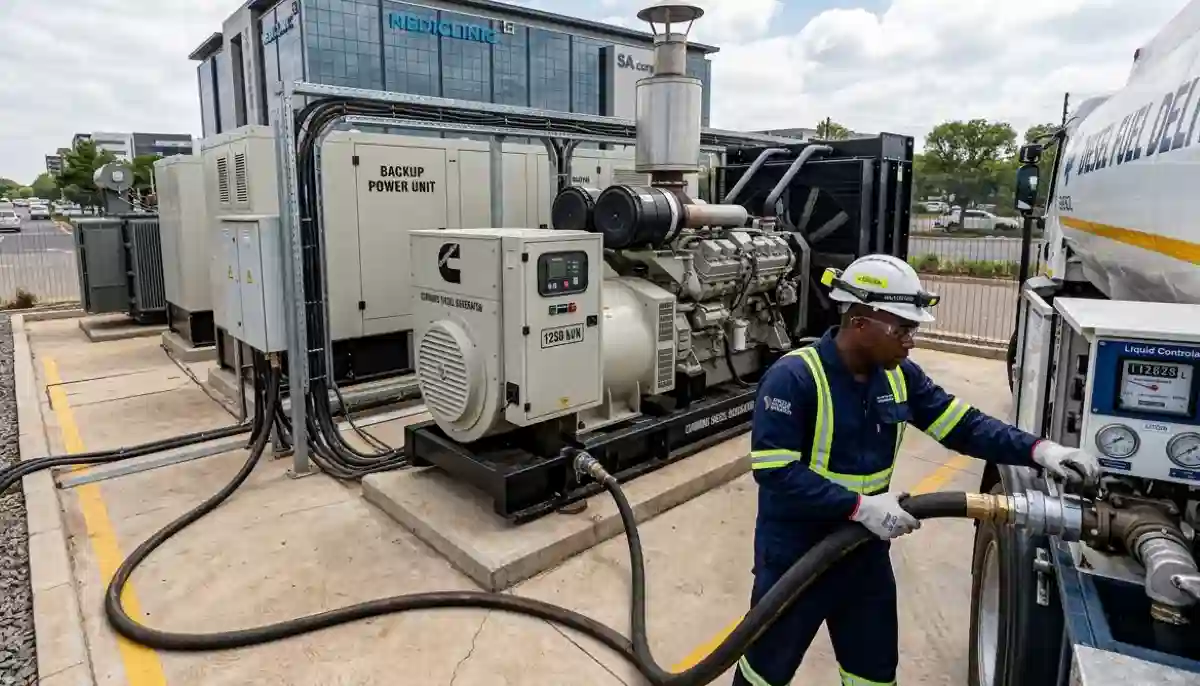
Generator Fuel Supply & Refilling South Africa: Power Through Loadshedding
⚡ From office parks in Sandton to data centres in Cape Town—reliable diesel generator refuelling when you need it most.
Loadshedding is no longer a temporary inconvenience—it’s a permanent feature of South African business life. For companies operating in Johannesburg, Pretoria, Durban, and beyond, a standby generator is essential. But a generator without fuel is just an expensive ornament. Reliable generator fuel supply refilling South Africa services are what keep your business operational when the grid fails.
This comprehensive guide covers everything you need to know about keeping your backup power systems fueled and ready. We’ll explain the difference between day tanks and bulk storage, explore automatic generator refuelling systems, and help you calculate consumption with a generator fuel consumption calculator. We’ll also dive into critical maintenance topics like fuel polishing for generators to prevent microbial growth and ensure your fuel remains usable when you need it. For urgent situations, see our emergency fuel delivery page.
Ready to secure your backup power supply? Explore our Services Overview or visit our main Bulk Fuel Supply page. For more on our approach, see How It Works.
Never Run Out of Generator Fuel
Get free quotes from specialized generator fuel suppliers. Scheduled refilling, emergency delivery, and auto-refuel systems available.
Servicing Johannesburg, Pretoria, Sandton, Durban, Cape Town, and all major centres
📋 Table of Contents – Generator Fuel Guide
⚠️ Why Generator Fuel Supply is Critical in South Africa
With ongoing loadshedding and an unpredictable national grid, businesses across South Africa have invested heavily in standby generators. However, many discover too late that a generator is only as reliable as its fuel supply.
- Business Continuity: For office parks in Sandton, a generator failure during loadshedding means staff cannot work, meetings are disrupted, and productivity plummets. Reliable diesel generator refuelling service ensures you stay operational.
- Revenue Protection: Retail centres, restaurants, and hotels lose revenue immediately when the lights go out. A well-fueled generator keeps tills ringing and guests comfortable.
- Critical Infrastructure: Hospitals, data centres, and security control rooms cannot tolerate any power interruption. For these facilities, standby generator fuel delivery is a life-safety necessity.
- Equipment Longevity: Running a generator dry, or on degraded fuel, causes significant engine damage. Proper fuel management protects your capital investment.
Read more about our commitment to reliability on our About Us page and see why clients trust us on Benefits of Choosing Us.
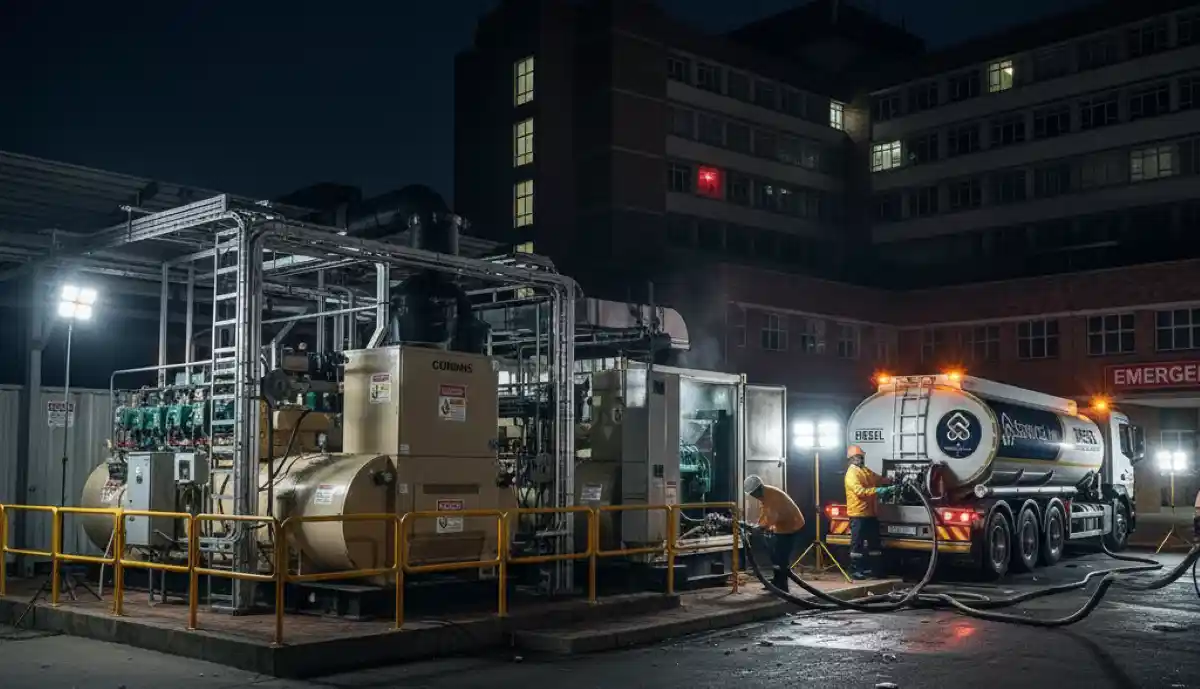
🧮 Generator Fuel Consumption Calculator: How Much Do You Need?
Knowing your generator’s fuel consumption is the foundation of effective fuel planning. While consumption varies by load, size, and efficiency, here’s a general guide using a generator fuel consumption calculator approach.
| Generator Size (kVA) | Typical Load (75%) | Estimated Consumption (L/hour) | 8-Hour Loadshedding Consumption |
|---|---|---|---|
| 20 kVA | 15 kW | 4-6 L/hour | 32-48 litres |
| 50 kVA | 37.5 kW | 9-12 L/hour | 72-96 litres |
| 100 kVA | 75 kW | 18-22 L/hour | 144-176 litres |
| 250 kVA | 187.5 kW | 45-55 L/hour | 360-440 litres |
| 500 kVA | 375 kW | 90-110 L/hour | 720-880 litres |
| 1000 kVA (1 MVA) | 750 kW | 180-220 L/hour | 1,440-1,760 litres |
*Actual consumption varies by generator efficiency, fuel quality, and actual load percentage. Always consult your generator’s technical specifications.
Using this calculator, a data centre in Midrand with multiple 500kVA generators can plan for thousands of litres per day during extended outages. This is where generator fuel delivery for office parks and commercial buildings becomes a logistical operation requiring professional management.
🛢️ Day Tanks vs Bulk Storage Tanks: What’s the Difference?
Understanding the distinction between day tanks and bulk storage is essential for designing a reliable generator fuel system.
- Day Tanks: These are smaller tanks (typically 500-2,000 litres) located close to the generator. They supply fuel directly to the engine. Their size allows for a compact footprint and they often include level controls and alarms. A generator day tank installation is common in buildings where space is limited.
- Bulk Storage Tanks: These are larger tanks (5,000 litres and up) that store the main fuel supply. They can be located further from the generator, often outside or in a dedicated fuel storage area. From the bulk tank, fuel is pumped to the day tank as needed, either manually or automatically.
- Integrated Systems: The ideal setup is a bulk tank feeding a day tank. This allows you to buy fuel in bulk at better prices (see our bulk fuel supply cost guide) while ensuring the generator always has a ready supply in the day tank. The day tank also acts as a buffer, allowing for safe maintenance on the main transfer pump without shutting down the generator.
For diesel refuelling for backup generators in office parks and industrial sites, this dual-tank configuration is the gold standard.
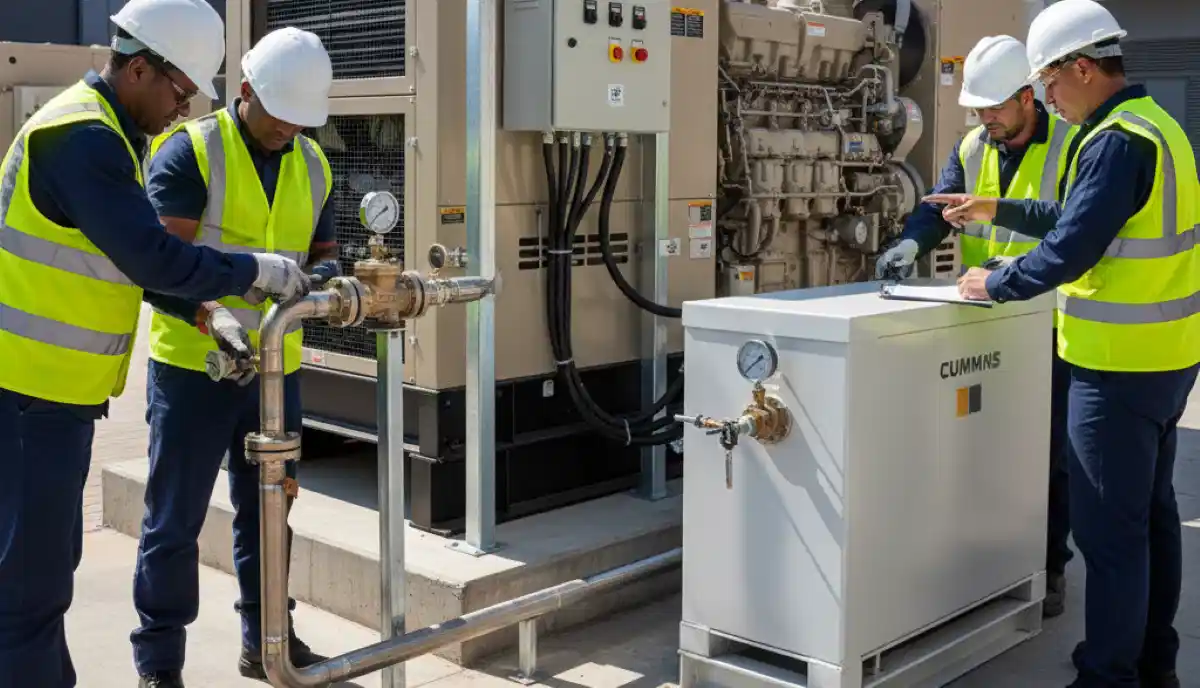
🤖 Automatic Generator Refuelling: Set and Forget
For facilities with critical power needs, manual refuelling is a risk. Someone must remember to check levels, order fuel, and be present for deliveries. Automatic generator refuelling systems eliminate these variables.
An auto-refuel system typically includes:
- Remote Tank Telemetry: Level sensors in your tank continuously monitor fuel volume. Data is transmitted via cellular or satellite networks to a cloud platform.
- Automated Alerts: When fuel drops below a predefined threshold (e.g., 30%), an alert is sent to both you and your fuel supplier.
- Scheduled or Triggered Delivery: The system can automatically generate a delivery order, or the supplier can proactively schedule a top-up based on real-time data.
- Integration with ATS: Some advanced systems integrate with your Automatic Transfer Switch (ATS), monitoring generator runtime and calculating consumption to predict future needs. This is ATS integration at its most powerful.
This technology, championed by companies like Gulfstream Energy, is transforming how businesses manage backup power. It’s a key component of modern fuel management systems.
🧪 Fuel Polishing for Generators: Keeping Your Fuel Fresh
Here’s a critical fact that many generator owners discover too late: diesel fuel degrades over time. It can be stored for 6-12 months under ideal conditions, but factors like temperature changes, water condensation, and contamination can accelerate degradation.
- Microbial Growth (Diesel Bug): Bacteria and fungi thrive at the fuel-water interface. They create a slimy biofilm that clogs filters, corrodes tanks, and turns fuel into a gel-like substance. This is the dreaded microbial growth that can cripple a generator.
- Fuel Oxidation: Diesel reacts with oxygen over time, forming gums and sediments that degrade combustion quality.
- Water Contamination: Condensation inside tanks is inevitable, especially with partially full tanks that “breathe” as temperatures change. Water settles at the bottom, providing a breeding ground for microbes.
The solution is fuel polishing for generators. This process involves:
- Filtering the fuel to remove particulates and microbial colonies.
- Separating and removing water.
- Adding fuel stabiliser and biocides to prevent future growth.
Regular fuel tank cleaning maintenance and fuel polishing should be part of every generator maintenance schedule. It’s far cheaper than replacing a clogged injection pump or cleaning a contaminated tank.
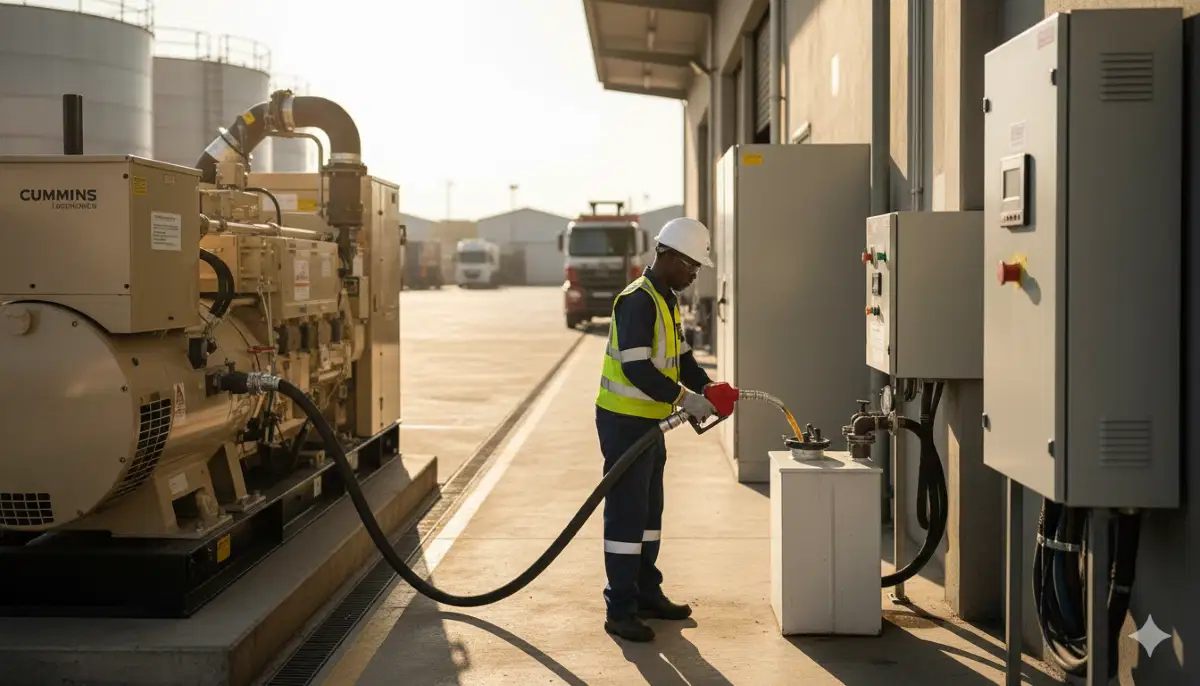
Never Be Caught in the Dark
Get a customized generator fuel management plan. Scheduled refilling, fuel polishing, and auto-refuel systems available.
Take advantage of our free site inspection to assess your generator and tank setup.
🚫 7 Common Generator Fuel Mistakes and How to Avoid Them
These mistakes are surprisingly common and entirely preventable.
- Mistake #1: Letting Tanks Run Dry During Loadshedding. This is the most obvious and most common error. Without fuel stock monitoring, you won’t know you’re low until the generator sputters and dies. Implement telemetry today.
- Mistake #2: Ignoring Fuel Age. “I filled the tank two years ago, it should be fine.” Wrong. Old fuel degrades. If your generator hasn’t run under load recently, the fuel may be unusable. Schedule regular fuel polishing.
- Mistake #3: Not Testing Under Load. A generator that starts and runs for 5 minutes isn’t proof of readiness. It needs to run under at least 30-50% load to burn off condensation and ensure the fuel system is working properly.
- Mistake #4: Using the Wrong Fuel Grade. Most modern generators require 50ppm diesel. Using 500ppm can cause injector coking and increased maintenance. Always check your manual.
- Mistake #5: Forgetting About Water. Water in the tank is inevitable. Without regular draining or polishing, it will lead to microbial growth and filter blockages.
- Mistake #6: Relying on Manual Checks. “I’ll check the tank tomorrow.” Tomorrow becomes next week, and next week becomes too late. Install remote tank telemetry for real-time visibility.
- Mistake #7: Not Having a Backup Supplier. If your regular supplier has a fleet failure during widespread loadshedding, who will you call? Having a secondary vetted supplier is prudent. See our supplier selection guide.
🏢 Industry-Specific Generator Fuel Solutions
Different facilities have different backup power requirements. Here’s how we tailor generator fuel supply refilling South Africa services for various sectors.
| Facility Type | Typical Generator Size | Special Requirements | Local Service Example |
|---|---|---|---|
| Office Parks | 100-500 kVA | Quiet operation, scheduled daytime refuelling, multiple tenants. Generator fuel delivery for office parks must be coordinated with building management. | Sandton offices |
| Data Centres | 500 kVA – 2 MVA+ | Redundant systems, auto-refuel critical, 24/7 monitoring, strict SLAs. Often require generator auto-refuel system integration. | Midrand data hub |
| Hospitals | 250-1000 kVA | Life-safety critical, must have guaranteed supply. Often have large bulk tanks and require priority delivery during crises. | Durban hospitals |
| Shopping Centres | 200-800 kVA | High foot traffic, need to maintain operations. Refuelling often done at night to avoid disruption. | Fourways malls |
| Residential Estates | 50-250 kVA | Security and essential services. Need discreet, secure delivery and after-hours access protocols. | Westville estates |
| Telecom Towers | 20-50 kVA | Remote locations, small tanks, need precise monitoring to prevent outages. Often use remote tank telemetry extensively. | Polokwane towers |
📡 Fuel Stock Monitoring: Know What You Have, 24/7
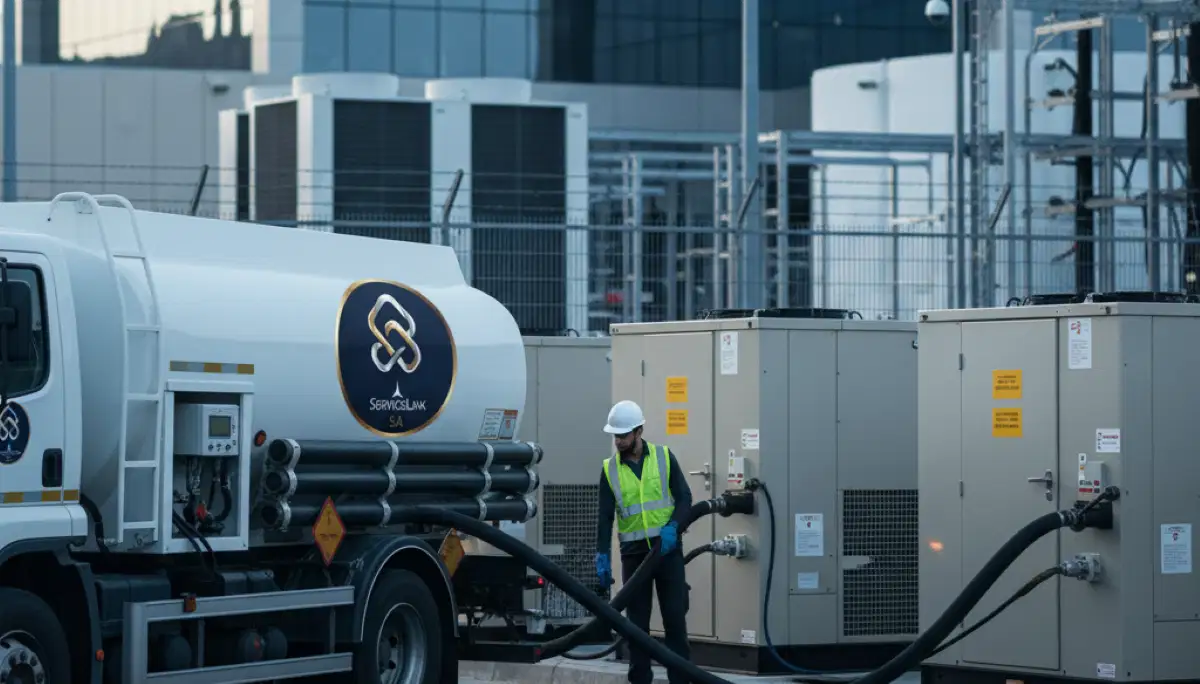
The days of manual dip sticks and guesswork are over. Modern fuel stock monitoring using remote tank telemetry provides real-time visibility into your fuel reserves, from anywhere in the world.
- How It Works: Ultrasonic or capacitive sensors are installed in your tank. They measure fuel level continuously and transmit data via cellular network to a secure cloud platform.
- What You See: A dashboard showing current fuel volume, historical consumption, temperature, and even water detection. Alerts can be set for low level, rapid drop (potential theft), or water presence.
- Benefits:
- Never run out unexpectedly.
- Detect theft immediately.
- Optimize delivery scheduling (don’t order too early or too late).
- Provide proof of consumption for SARS rebates or client reporting.
This technology is a core component of our fuel management systems and is especially critical for facilities relying on standby generator fuel delivery.
❓ Frequently Asked Questions About Generator Fuel Supply
How often should I refill my generator fuel tank?
Refilling frequency depends on your generator size, load, and loadshedding stage. Use our generator fuel consumption calculator above to estimate. However, with remote tank telemetry, you’ll know exactly when you need a top-up based on real-time data, not guesswork.
What is fuel polishing and why do I need it?
Fuel polishing for generators is the process of cleaning stored diesel by removing water, sludge, and microbial contamination. It’s essential because diesel degrades over time, and contaminated fuel can clog filters, damage injectors, and cause generator failure when you need it most—during a power outage.
What is the difference between a day tank and a bulk storage tank?
A day tank is a small tank located next to the generator that supplies fuel directly to the engine. A bulk storage tank holds the main fuel reserve. In an ideal setup, bulk fuel is transferred to the day tank as needed, allowing for efficient fuel tank installation and management.
How long can diesel be stored in a generator tank?
Under ideal conditions, diesel can be stored for 6-12 months. However, temperature fluctuations, water condensation, and microbial growth can degrade it much faster. Regular fuel tank cleaning maintenance and fuel polishing are recommended for fuel stored longer than 3-6 months.
Do you offer automatic generator refuelling systems?
Yes, we provide automatic generator refuelling solutions. These combine remote tank telemetry with scheduled delivery protocols. When your tank reaches a preset level, an alert is triggered, and we automatically schedule a refill—taking the guesswork and risk out of generator fuel management.
What is the “diesel bug” and how do I prevent it?
The diesel bug is microbial growth (bacteria and fungi) that lives in diesel fuel, typically at the water interface. It creates sludge that clogs filters and corrodes tanks. Prevention includes regular water removal, using biocides, and scheduling fuel polishing for generators to clean the fuel.
Can you deliver generator fuel to office parks in Sandton?
Absolutely. We specialize in generator fuel delivery for office parks in Sandton, Fourways, and across Johannesburg. We coordinate with building management to ensure minimal disruption, and can schedule after-hours deliveries to avoid tenant inconvenience.
What is ATS integration for generator fuel systems?
ATS integration connects your fuel monitoring system to your generator’s Automatic Transfer Switch. By tracking generator runtime, the system can calculate fuel consumption and predict future needs more accurately. This is advanced functionality available with our fuel management systems.
What fuel grade should I use in my generator?
Most modern generators require 50ppm low-sulphur diesel. Older generators may tolerate 500ppm, but always check your manufacturer’s specifications. Using the wrong grade can lead to injector problems, increased emissions, and voided warranties.
✅ Your Generator Fuel Management Action Plan
In a country where loadshedding is a daily reality, your generator is not a luxury—it’s a critical business asset. And like any asset, it requires active management. A professional generator fuel supply refilling South Africa partner ensures that when the grid fails, your business doesn’t.
Key takeaways:
- Know your consumption using a generator fuel consumption calculator.
- Understand your tank configuration—day tank vs bulk storage.
- Consider automatic generator refuelling for critical applications.
- Don’t ignore fuel quality. Schedule regular fuel polishing for generators.
- Install remote tank telemetry for real-time visibility and peace of mind.
- Verify your supplier’s credentials and insurance. Our contractor’s liability insurance page explains why this matters.
Your 5-Step Generator Fuel Action Plan
- Audit Your System: What size is your generator? What’s your tank capacity? When was the last time the fuel was tested or polished?
- Calculate Your Needs: Use our consumption guide to estimate how much fuel you need for worst-case loadshedding scenarios.
- Assess Your Monitoring: Are you relying on manual dip sticks? Consider upgrading to fuel stock monitoring with telemetry. Book a free inspection to discuss options.
- Secure Your Supply: Use our quote request system to connect with vetted generator fuel specialists. Compare their capabilities, especially for auto-refuel and emergency response.
- Schedule Maintenance: Put fuel polishing and tank cleaning on your annual maintenance calendar. Don’t wait for a problem to discover degraded fuel.
Power Through Any Loadshedding
Get free quotes from specialized generator fuel suppliers. Scheduled refilling, auto-refuel systems, and fuel polishing available nationwide.
📞 Call us: 073 138 4726 for immediate generator fuel consultation.
Free site inspections •
Beat-your-quote guarantee •
Our guarantees
📚 Official resources & standards referenced:
- Eskom – Loadshedding schedules and power system status.
- Department of Energy – Critical power infrastructure and fuel regulations.
- Gulfstream Energy – Generator refuelling technology and best practices.
Information is for general guidance. For specific advice, consult a qualified professional.
Written by: Innocent T Hanyani
21+ years construction, power generation, and digital industry experience, ServiceLink SA
Innocent has overseen backup power solutions for hospitals, data centres, and industrial facilities. He understands the critical importance of reliable generator fuel supply and the consequences of failure.
For more detailed information, explore our related guides: emergency fuel delivery for urgent needs, diesel delivery services for scheduled supply, and fuel tank installation for storage solutions. Our tank cleaning and fuel management systems pages are also relevant. See our service areas page for coverage in your region, including Gauteng, Durban, and Cape Town. If you’re passionate about keeping the lights on, visit our careers page.