

Not Sure Which Tile Is Right for You?
Get free quotes from verified tiling specialists who can help you compare cement vs ceramic tiles based on your budget, style, and room usage.
Get Free Tile Selection Advice
Servicing Gauteng, Johannesburg, Pretoria, and across South Africa
Cement Tiles vs Ceramic Tiles: Which Is Better for Your Home SA?
🎨 From vibrant encaustic patterns to classic ceramic – the complete guide to two very different tile worlds
You’ve seen them in design magazines. Those stunning, colourful patterned floors with intricate geometric designs – they’re almost certainly cement tiles (often called encaustic tiles). And you’ve seen ceramic tiles everywhere – in bathrooms, kitchens, and entryways across South Africa. But which one is right for your home?
I’ve helped hundreds of homeowners across Gauteng, Johannesburg, and Pretoria answer this exact question. The truth? Cement vs ceramic tiles is not a simple “one is better” comparison. They’re completely different materials with different strengths, weaknesses, and ideal applications.
Cement tiles (often called encaustic tiles) offer unmatched pattern possibilities and a beautiful matte, textured finish. But they’re porous, require sealing, and can be challenging to install. Ceramic tiles are affordable, durable, and low-maintenance – but lack the depth and authentic patina of cement.
In this complete cement tile comparison guide, I’ll answer which is better cement or ceramic tiles for your specific situation. You’ll learn about durability, maintenance, cost, installation, pattern options, and best uses for each. By the end, you’ll know exactly which material suits your home.
For more tile comparisons, check out our guides on porcelain vs ceramic tiles, natural stone vs porcelain, eco-friendly tiles guide, and tile vs vinyl flooring cost.
📋 Table of Contents – Cement vs Ceramic Tiles Guide
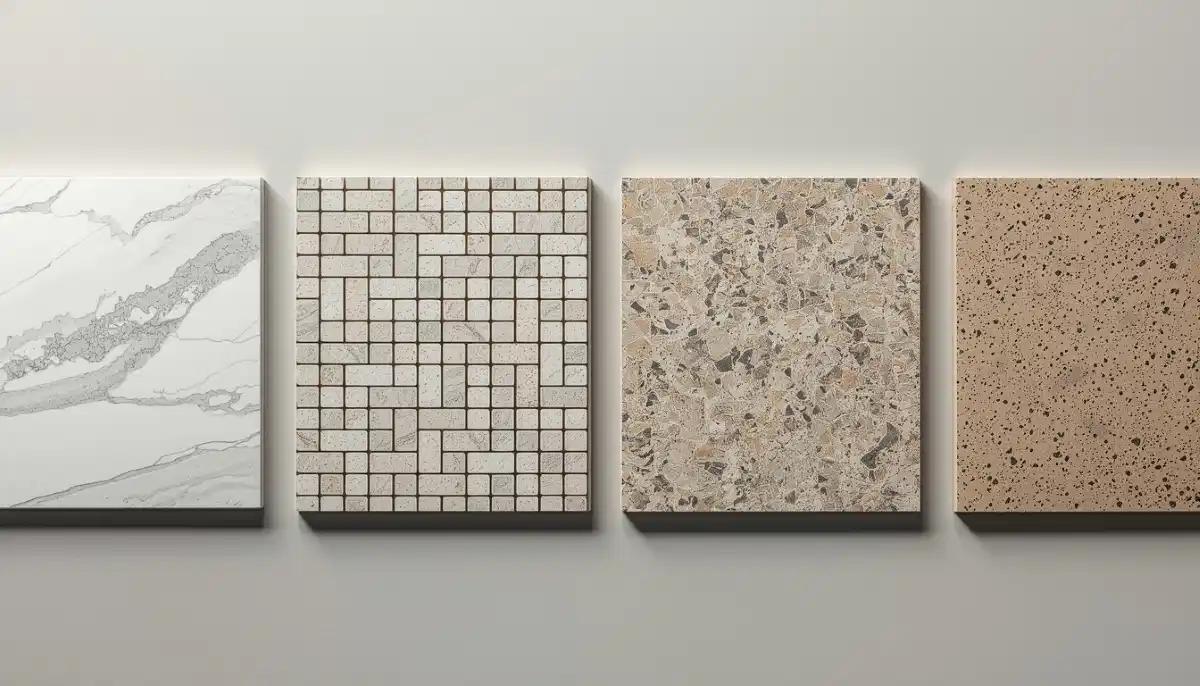
🎨 What Are Cement Tiles (Encaustic Tiles)?
Cement tiles (often called encaustic tiles or concrete tiles) are made from a mixture of Portland cement, marble dust, and mineral pigments. The pattern is created by layering different coloured cements into a mould – not printed on the surface.
Key Properties of Cement Tiles:
- Composition: Portland cement, marble dust, mineral pigments
- Thickness: 15-20mm (much thicker than ceramic)
- Porosity: High – very porous, requires sealing
- Pattern: Colour goes through the tile (not just surface)
- Finish: Matte, slightly textured, natural look
- Unique feature: Patterns can be custom-designed; each tile is handmade
- Aging: Develops a beautiful patina over time
Why Cement Tiles Are Special:
Cement tiles offer unmatched design possibilities. The colours are mineral pigments mixed into the cement – they won’t fade or wear away. The patterns can be geometric, floral, Moroccan, or completely custom. Each tile is slightly unique, giving floors an authentic, artisanal feel that mass-produced tiles cannot replicate.
For a complete material comparison, see the tile type comparison chart.
🏺 What Are Ceramic Tiles?
Ceramic tiles are made from natural clay that is shaped, dried, and fired in a kiln at high temperatures. A glaze is then applied to create the colour and pattern, then fired again.
Key Properties of Ceramic Tiles:
- Composition: Natural clay, minerals, and water
- Thickness: 6-10mm (thinner than cement tiles)
- Porosity: Low to moderate (glazed ceramic is non-porous)
- Pattern: Printed or glazed on the surface (not through the tile)
- Finish: Glossy, matte, textured – wide variety
- Unique feature: Extremely affordable, widely available
- Durability: Good for most residential applications
Types of Ceramic Tiles:
- Glazed ceramic: Glass-like coating – stain-resistant, easy to clean. Most common.
- Unglazed ceramic: Natural clay colour – more porous, rustic look. Less common.
- Porcelain: A denser, harder type of ceramic – see porcelain vs ceramic guide.
For more on ceramic options, read our ceramic wall tiles guide.
📊 Quick Comparison: Cement vs Ceramic Tiles
| Feature | Cement (Encaustic) Tiles | Ceramic Tiles |
|---|---|---|
| Durability | Good – but can crack if substrate moves | Good to excellent – very durable |
| Water absorption | High – must be sealed | Low (glazed) – water-resistant |
| Maintenance | High – requires sealing, special cleaners | Low – easy cleaning, no sealing needed |
| Pattern options | Endless – custom designs possible | Good – many patterns available |
| Pattern longevity | Through the tile – won’t wear off | On surface – can wear over decades |
| Cost (material/m²) | R500 – R1,500 | R120 – R400 |
| Installation cost/m² | R250 – R450 (specialist required) | R150 – R250 |
| Thickness | 15-20mm – heavy, requires strong subfloor | 6-10mm – lighter |
| Best for | Feature areas, low-traffic, walls | Any room, high-traffic, wet areas |
Still Deciding Between Cement and Ceramic?
Get free quotes from verified tiling specialists who can help you compare cement vs ceramic tiles based on your specific project needs.
Free inspections available. Beat Your Quote guarantee.
💪 Durability Comparison – Which Lasts Longer?
When comparing cement vs ceramic tiles, durability is a key factor:
Cement Tile Durability:
Cement tiles are durable but have limitations. They’re hard and resist scratches reasonably well. However, they are brittle – a heavy dropped object can crack them. The bigger issue is subfloor movement; cement tiles will crack if the substrate moves. Proper installation with a stable subfloor is essential. With good care and sealing, cement tiles can last 50+ years – many historic buildings still have original cement tile floors.
Ceramic Tile Durability:
Glazed ceramic tiles are very durable. The hard glaze resists scratches, stains, and moisture. They’re less brittle than cement and more forgiving of minor subfloor movement. However, the glaze can wear over decades in high-traffic areas. Porcelain (a type of ceramic) is even more durable – see porcelain vs ceramic for details.
Durability Verdict: For high-traffic areas, busy families, or rental properties, ceramic is more durable and forgiving. For low-traffic areas where you want authentic patterned floors, cement tiles perform beautifully.
🧹 Maintenance – Sealing and Cleaning
This is where cement vs ceramic tiles differ dramatically:
Cement Tile Maintenance (High):
- Must be sealed: Before use and every 1-2 years thereafter
- pH-neutral cleaner only: Never vinegar, bleach, or acidic cleaners
- No wax or acrylic finishes: They yellow and trap dirt
- Wipe spills immediately: Unsealed or poorly sealed cement stains easily
- Special care for patterns: Light colours show dirt more
- Periodic deep cleaning: Professional cleaning recommended every few years
Ceramic Tile Maintenance (Low):
- No sealing needed: The glaze is waterproof and stain-resistant
- Easy cleaning: Mild soap and water or tile cleaner
- Grout still needs sealing: Every 1-2 years (regardless of tile type)
- Vinegar-safe: Diluted vinegar can be used (unlike cement or natural stone)
- Steam cleaner safe: Can use on ceramic (not on cement)
Maintenance Verdict: Ceramic is significantly lower maintenance. Cement requires ongoing commitment – if you don’t seal regularly, your beautiful patterned floor will stain permanently.
🎨 Appearance – Pattern and Colour Options
This is where cement tiles shine – and where you must decide what matters most:
Cement Tile Appearance:
Cement tiles offer unmatched design possibilities. The patterns are created by layering coloured cements – the colour goes through the entire tile thickness. This means patterns won’t wear away, even after decades. The colours are mineral pigments – rich, deep, and authentic. The matte, slightly textured surface has a natural, artisanal feel that’s impossible to replicate. Each tile has slight variations – some love this authenticity, others prefer uniformity.
Ceramic Tile Appearance:
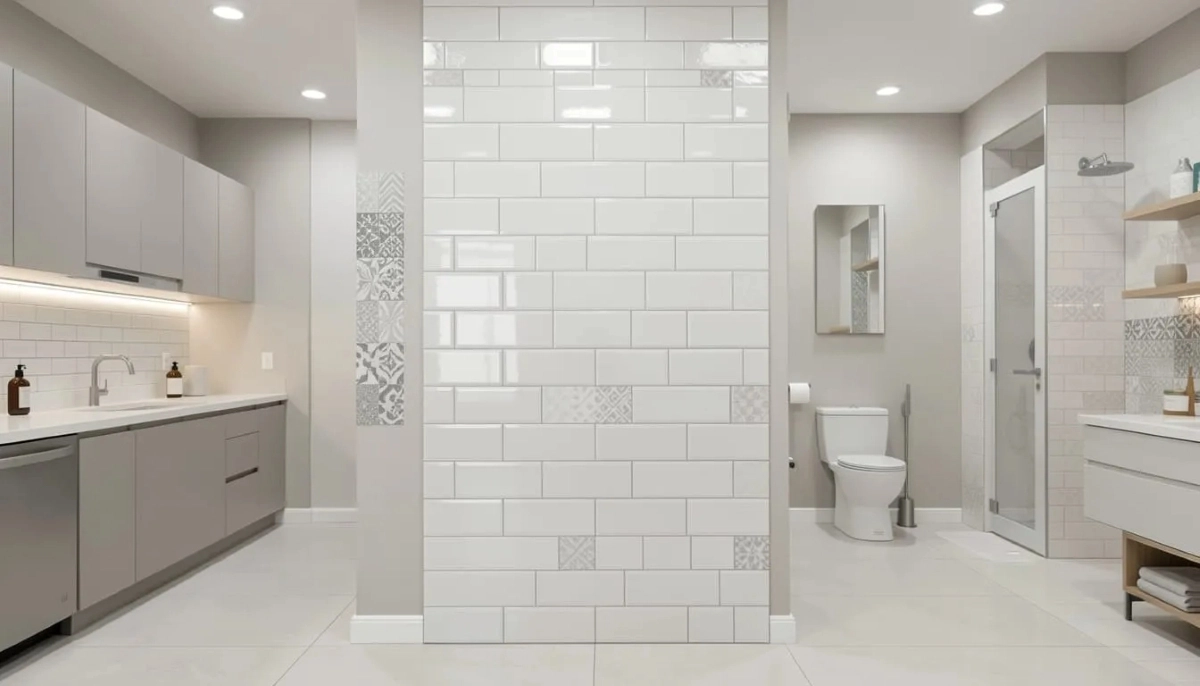
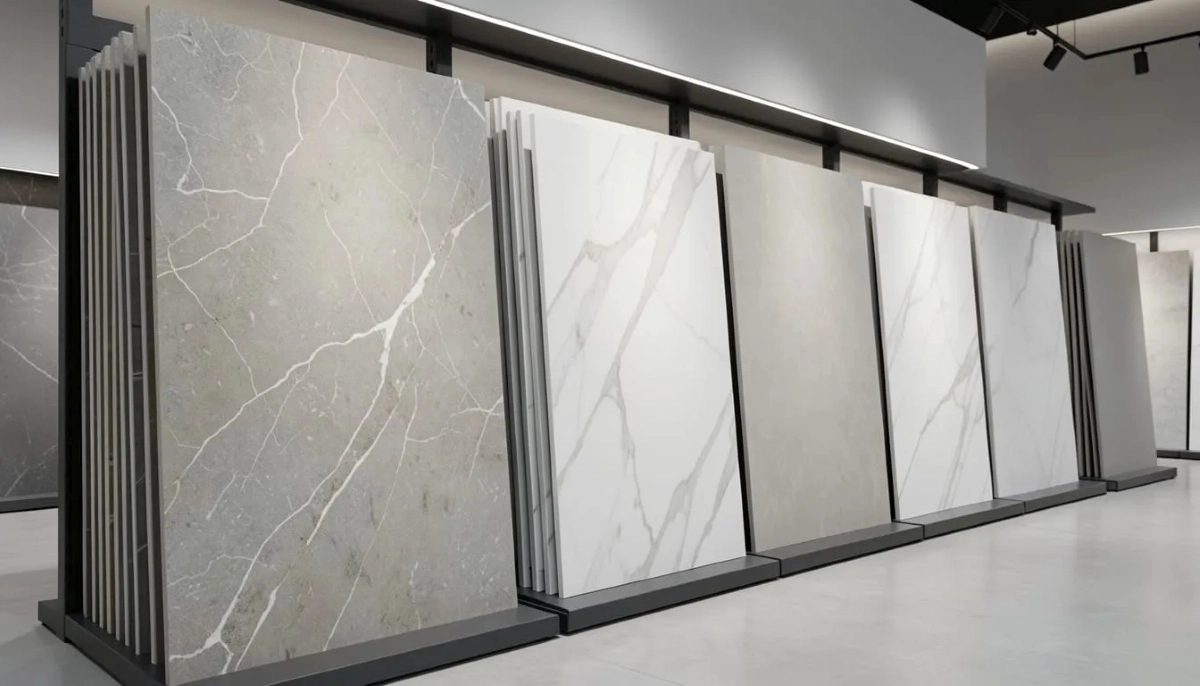
Ceramic tiles can mimic almost anything – stone, wood, concrete, fabric, or geometric patterns. Digital printing technology creates very realistic designs. However, the pattern is on the surface only (under a clear glaze). Over decades, the pattern could theoretically wear away in extreme traffic – though this takes 30+ years. Ceramic tiles are consistent – each tile looks identical (unless you buy multiple dye lots). Some prefer this uniformity; others find it less interesting than cement’s variation.
Appearance Verdict: For authentic, deep, artisanal patterns, cement wins. For realistic stone/wood looks or uniform consistency, ceramic wins. For cement-look patterns with lower maintenance, see Section 11.
🔧 Installation Differences
Cement and ceramic tiles require different installation approaches:
Cement Tile Installation (Specialist Required):
- Heavy – 15-20mm thick, requires strong subfloor
- Porous – must be pre-sealed before grouting (grout can stain unsealed cement)
- Must be cut with wet saw (cannot be snapped manually)
- Requires specific cement-based adhesives (standard thin-set may not bond properly)
- Pattern layout is critical – complex designs need careful planning
- Not all tilers have cement tile experience – hire a specialist
Ceramic Tile Installation (Standard):
- Lighter – 6-10mm thick, standard subfloor is fine
- Can be cut with manual snap cutter (or wet saw for thicker tiles)
- Standard thin-set adhesive works well
- Pattern layout is simpler (though patterns still need planning)
- Most tilers have extensive ceramic experience
Installation Verdict: Ceramic is easier and faster to install, with more tilers experienced in the material. Cement requires specialist installers – factor this into your budget and timeline.
💰 Cost Comparison – Material and Installation
Budget is a major factor in the cement vs ceramic tiles decision:
| Cost Factor | Cement Tiles | Ceramic Tiles |
|---|---|---|
| Material cost/m² | R500 – R1,500 | R120 – R400 |
| Installation/m² | R250 – R450 (specialist) | R150 – R250 |
| Subfloor preparation | May need reinforcement (extra R1,000-3,000) | Standard preparation |
| Sealing (initial)/m² | R50 – R100 (professional) | Not required |
| Annual maintenance | R50 – R100/m² for resealing | R0 (grout only) |
| Total installed (50m²) | R40,000 – R100,000+ | R15,000 – R35,000 |
Cost Verdict: Ceramic is significantly more affordable – typically 50-70% less than cement for material and installation. Cement is a premium, artisanal product for homeowners who value authentic patterned floors.

✅❌ Pros and Cons Summary
Cement Tiles – Pros:
- ✓ Unmatched pattern possibilities – custom designs available
- ✓ Colour goes through the tile – won’t wear away
- ✓ Beautiful matte, textured, artisanal appearance
- ✓ Each tile is slightly unique – authentic character
- ✓ Develops beautiful patina over time
- ✓ Eco-friendly – natural materials, no glazes or chemicals
Cement Tiles – Cons:
- ✗ Expensive – material and installation
- ✗ High maintenance – must seal regularly
- ✗ Porous – stains easily without proper sealing
- ✗ Heavy – requires strong subfloor
- ✗ Brittle – can crack if substrate moves
- ✗ Specialist installer required – not all tilers qualify
Ceramic Tiles – Pros:
- ✓ Affordable – budget-friendly material and installation
- ✓ Low maintenance – no sealing (except grout)
- ✓ Durable – resists scratches, stains, moisture
- ✓ Wide variety – endless colours, sizes, finishes
- ✓ Easy to clean – mild soap and water
- ✓ Most tilers have extensive ceramic experience
Ceramic Tiles – Cons:
- ✗ Pattern on surface only – could wear over decades
- ✗ Uniform appearance – lacks artisanal variation
- ✗ Can be slippery when glossy and wet
- ✗ Lacks the depth of authentic cement patterns
- ✗ Some designs look artificial up close
🏠 Best Uses for Each Material
Cement Tiles – Best For:
- Entryways and foyers (makes a stunning first impression)
- Powder rooms and guest bathrooms (small area, big impact)
- Feature walls and fireplace surrounds
- Low-traffic areas where you can appreciate the beauty
- Homes without young children or pets (spills are more critical)
- Authentic period restoration projects
- Outdoor patios (with proper sealing – but ceramic is easier)
Ceramic Tiles – Best For:
- Kitchen floors and walls (easy to clean, durable)
- Bathroom floors and walls (water-resistant, affordable)
- High-traffic areas (hallways, living rooms, family rooms)
- Homes with children and pets (forgiving, easy maintenance)
- Rental properties (durable, low maintenance, affordable)
- Large areas where budget matters
- DIY installations (ceramic is more forgiving)
🏺 Cement-Look Ceramic Tiles – The Best of Both Worlds?
Many manufacturers now produce ceramic tiles that mimic the look of cement encaustic tiles. Here’s how they compare:
| Factor | Real Cement Tiles | Cement-Look Ceramic |
|---|---|---|
| Authenticity | 100% real – deep, textured pattern | Printed pattern – good from distance |
| Durability | Good – but brittle | Excellent – very durable |
| Maintenance | High – sealing required | Low – no sealing needed |
| Cost (50m² installed) | R40,000 – R100,000 | R20,000 – R45,000 |
| Water resistance | Poor without sealing | Excellent – glazed surface |
Which to choose? If you love the look but don’t want the maintenance or cost, cement-look ceramic is a smart compromise. For authentic character and depth, real cement is irreplaceable.
❓ Frequently Asked Questions About Cement vs Ceramic Tiles
Which is better for bathrooms – cement or ceramic tiles?
Ceramic is better for bathrooms. It’s water-resistant (glazed surface), easy to clean, and requires no sealing (except grout). Cement tiles are porous – even with sealing, water can eventually penetrate. In showers, cement tiles require meticulous sealing and maintenance. For bathroom floors and walls, choose ceramic for practicality. For a dry powder room, cement can work beautifully.
Do cement tiles need to be sealed?
Absolutely. Cement tiles are highly porous – unsealed, they will absorb spills and stain permanently. Seal immediately after installation and reseal every 1-2 years. Use a high-quality penetrating sealer specifically for cement tiles. Without regular sealing, your beautiful patterned floor will look terrible within months. This is the biggest difference in cement vs ceramic tiles maintenance.
Are cement tiles more expensive than ceramic?
Yes – significantly. Cement tiles cost R500-1,500/m² plus R250-450/m² for specialist installation – total R40,000-100,000+ for 50m². Ceramic tiles cost R120-400/m² plus R150-250/m² installation – total R15,000-35,000 for 50m². Cement is 2-3 times more expensive than ceramic. For budget-conscious projects, ceramic is the clear winner.
What are encaustic tiles?
Encaustic tiles are another name for cement tiles. The term “encaustic” originally referred to a specific manufacturing process where different coloured clays are used to create patterns. Today, it’s commonly used interchangeably with cement tiles – though true encaustic tiles are made from cement, not clay. Both terms refer to patterned tiles where the colour goes through the material.
Can cement tiles be used outdoors?
Yes – cement tiles can be used outdoors on patios, walkways, and pool decks. However, they require heavy-duty sealing and more frequent resealing (every 6-12 months). They must be frost-resistant (check specifications). For outdoor use in South Africa’s climate, many homeowners choose porcelain or natural stone instead – lower maintenance and more durable. If you love the look, cement-look porcelain is a practical alternative.
How do you clean cement tiles?
Use pH-neutral stone cleaner – never vinegar, bleach, or acidic products. Sweep or vacuum daily to prevent grit from scratching. Damp mop weekly with cleaner diluted in water. Wipe spills immediately. Reseal every 1-2 years. Avoid steam cleaners – heat can damage sealer. For deep stains, use a poultice (baking soda and water paste). Read our tile cleaning methods guide for more.
Can you install cement tiles yourself?
Not recommended. Cement tiles require specialist knowledge: proper subfloor preparation (they’re heavy), pre-sealing before grouting, specific adhesives, and careful pattern layout. Mistakes are expensive – cement tiles cost R500-1,500/m². Hire a verified tiling specialist through ServiceLink SA who has experience with concrete tiles and encaustic patterns. For DIY, ceramic is much more forgiving.
Are cement tiles eco-friendly?
Yes – cement tiles are considered eco-friendly. They’re made from natural materials (cement, marble dust, mineral pigments) with no glazes or chemicals. They’re durable and long-lasting (50+ years). They don’t require high-temperature firing like ceramic (which uses significant energy). Some manufacturers use recycled content. For more sustainable options, read our eco-friendly tiles guide.
✅ Final Thoughts: Choose Based on Your Priorities
The cement vs ceramic tiles decision comes down to your priorities:
Choose cement tiles if: You value authentic, artisanal patterned floors; you have the budget for premium materials; you’re willing to commit to regular sealing and careful maintenance; and the area is low-traffic (entryway, powder room, feature wall). Cement tiles are an investment in beauty and character.
Choose ceramic tiles if: You want affordable, durable, low-maintenance flooring; you have high-traffic areas, children, or pets; you prefer uniform, consistent tiles; or you’re working with a tighter budget. Ceramic is practical, versatile, and perfectly good for most homes.
Key takeaways for cement vs ceramic tiles:
- Cement: beautiful patterns, high maintenance, expensive, specialist installation
- Ceramic: affordable, low maintenance, durable, easy installation
- Cement patterns go through the tile; ceramic patterns are on the surface
- Cement requires regular sealing; ceramic does not (grout only)
- Cement costs 2-3x more than ceramic
- Cement-look ceramic offers a practical compromise
Your next step: Ready to choose your tiles? Get free quotes from verified tiling specialists who can help you compare cement vs ceramic tiles for your specific project.
Ready to Choose Your Perfect Tile?
Get free quotes from verified tiling specialists who can help you compare cement vs ceramic tiles and install your choice flawlessly.
📞 Call us: 073 138 4726 for personalised tile selection advice.
Are You a Tiling Contractor?
Join ServiceLink SA’s network of verified tiling contractors. Get qualified leads, showcase your expertise with cement or ceramic tiles, and grow your business.
📚 Official resources & standards referenced:
- SABS – South African Bureau of Standards for cement tile standards, including durability and quality specifications.
- SANS 10400 – South African National Standard for ceramic standards and installation requirements.
Information provided for general guidance. Cement tile installation requires specialist knowledge – always consult qualified professionals.
Written by: Innocent T Hanyani
Construction & Home Services Industry Specialist | 21+ Years Experience
Innocent T Hanyani has over two decades of experience working across South Africa’s construction and home improvement sectors. Throughout his career, he has installed both cement encaustic tiles and ceramic tiles across hundreds of projects. His practical experience helps homeowners understand the real-world differences – the beauty and maintenance of cement, the affordability and durability of ceramic. He has seen cement tile floors ruined by improper sealing and ceramic floors that perfectly mimic high-end patterns. His honest advice helps homeowners choose based on their lifestyle, not just aesthetics.
For more information about tile comparisons, explore our related resources: porcelain vs ceramic tiles, natural stone vs porcelain, eco-friendly tiles guide, and tile vs vinyl flooring cost. Learn about our process on what is ServiceLink SA and how we verify contractors. Find tilers in your area: Gauteng, Johannesburg, and Pretoria. For related services, see our flooring services and building construction guides.