
Living in a Townhouse or Complex?
Get a free quote for DSTV installation from a verified, accredited installer who understands complex rules.
We’ll help you navigate body corporate requirements.
Servicing KwaZulu-Natal, Durban, Umhlanga, Ballito, Westville, Pinetown, and across South Africa
DSTV Installation for Townhouses and Complexes: Body Corporate Rules & Solutions
🏘️ Living in a complex doesn’t mean you can’t have DSTV. Here’s how to navigate body corporate rules and get connected.
You’ve just moved into a beautiful townhouse in a security complex. You want DSTV.
But your neighbour says the body corporate has rules about satellite dishes.
Another neighbour has a dish on their roof. You’re confused – what’s actually allowed?
Dstv installation for townhouses is different from standalone houses.
You have body corporate rules, possible communal systems, and neighbours who might object to your dish.
But with the right approach, you can absolutely enjoy DSTV in your complex.
In this guide, I’ll explain everything about dstv in complex properties:
the rules you need to know, your installation options, how to get approval,
and what to do if your complex has a communal system.
If you’re asking about townhouse satellite dish rules, you’ve come to the right place.
For apartment-specific guidance, read our
apartment installation guide.
For communal systems, see communal installation guide.
And for general requirements, read installation requirements.
📋 Table of Contents – Townhouse & Complex DSTV Guide
🏘️ Townhouse Complex vs House: Key Differences for DSTV
Dstv installation for townhouses differs from standalone houses in several important ways.
Understanding these differences helps you avoid problems.
| Aspect | Standalone House | Townhouse/Complex |
|---|---|---|
| Body corporate approval | ❌ Not required | ✅ Usually required |
| Communal system option | ❌ Not applicable | ✅ May be available or mandatory |
| Roof ownership | ✅ You own it | ⚠️ Common property (body corporate owns) |
| Neighbour proximity | Far (less complaints) | Close (more potential for complaints) |
| Installation freedom | High | Limited by rules |
| Line of sight | Usually good | Can be blocked by neighbouring units |
💡 Key Insight:
The biggest difference is that you don’t have full control over your property in a complex.
The roof is usually common property, and body corporate rules apply to all external installations.
Always check before you drill – it could save you thousands in fines and forced removal.
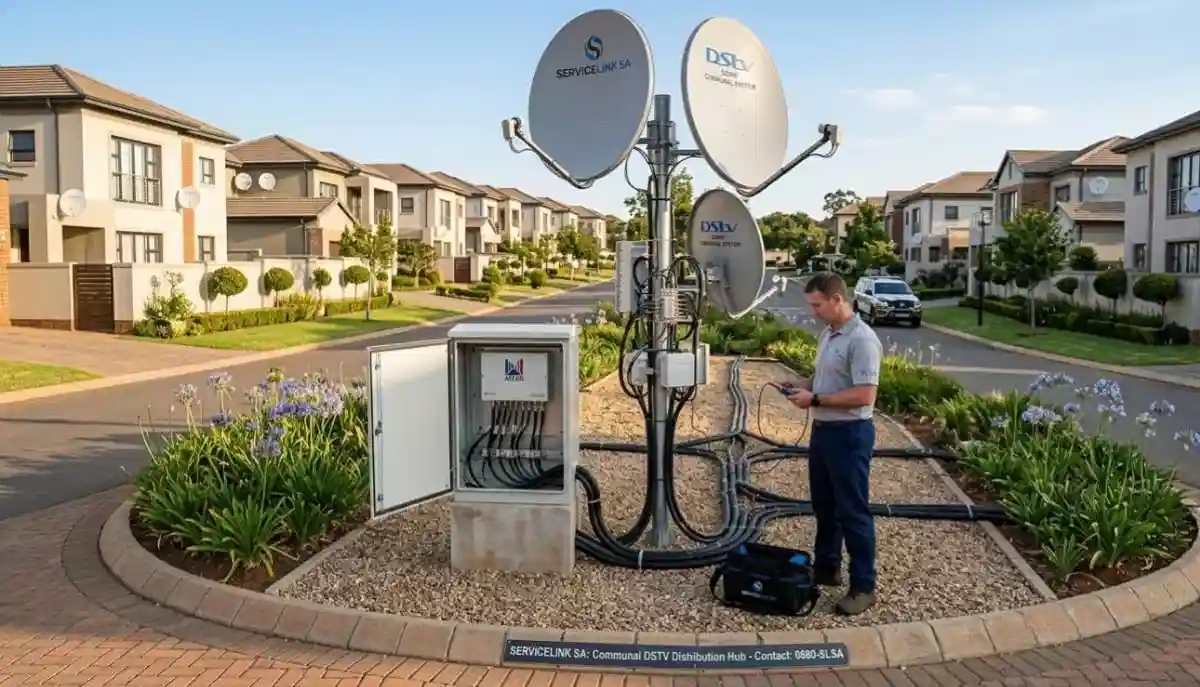
📜 Body Corporate Rules for DSTV in Complexes
Body corporate dstv installation rules vary by complex.
Here’s what you need to know about typical regulations.
Typical body corporate rules regarding DSTV:
- Written approval required: Most complexes require written permission before any external installation
- Communal system mandatory: Many complexes have a communal DSTV system that all residents MUST use
- Roof is common property: You cannot install anything on the roof without body corporate permission
- Placement restrictions: Dishes may only be installed in specific locations (e.g., back of unit, not street-facing)
- Size restrictions: Some complexes limit dish size to 60cm for aesthetic consistency
- Professional installation required: Many require proof of installation by an accredited technician
- Removal upon sale: You may be required to remove the dish when you sell your unit
How to find your complex’s rules:
- Review the body corporate conduct rules (you should have received these when you bought/rented)
- Ask the complex manager or trustees
- Check your levy statements for any DSTV-related charges (indicates communal system)
- Ask neighbours about their DSTV setup
⚠️ Critical Warning:
Installing a dish without body corporate approval in a complex can result in:
fines (R500-R5,000), forced removal at your own expense (R800-R1,500),
and potential legal action from the body corporate.
Always get approval FIRST – it’s easier than fixing problems later.
🏢 Communal DSTV Systems: The Preferred Complex Solution
If your complex has a communal dish system, this is the best option.
One central dish serves all units – no individual dishes cluttering the roof.
How communal systems work in complexes:
- One professional-grade dish on the complex roof (often 1.8m or larger)
- Signal distributed via multiswitch to wall outlets in each unit
- You connect your decoder to the wall outlet in your townhouse
- You still need your own DSTV subscription and decoder
- Monthly fees are the same as individual DSTV
Advantages of communal systems for complexes:
- No individual dish: Cleaner roof, better aesthetics, no body corporate approval needed for you
- Lower cost: No individual dish installation (saves R800-R1,500)
- Better signal: Professional-grade dish and maintenance
- No line of sight issues: The communal dish is placed in optimal location
- Works during load shedding: If complex has backup power for the system
- Higher property value: Communal systems are a selling point for complexes
How to connect to a communal system:
- Find the DSTV wall outlet in your townhouse (usually in living room)
- Connect your decoder to the outlet using coaxial cable
- Call DSTV to activate your subscription (tell them you’re on a communal system)
- That’s it – no dish installation needed
For complete information, read our
communal installation guide
and how communal systems work.
Not Sure What Your Complex Allows?
Let us help. Get a free consultation from a verified, accredited DSTV installer who understands complex rules.
We’ll check your complex’s options and provide the best solution.
Free quotes. No obligation. We understand complex rules.
📡 Individual Dish Installation in Complexes: Rules & Process
If your complex doesn’t have a communal system, you may be allowed to install your own dish.
Here’s the process for dstv in complex individual installations.
When individual dishes are allowed:
- Complex has no communal system
- Body corporate permits individual dishes (some do, some don’t)
- You have a suitable location with clear line of sight
- You agree to follow placement and size restrictions
Typical restrictions for individual dishes in complexes:
- Location: Often restricted to the back of your unit (not street-facing)
- Size: Usually limited to 60cm (80cm may be prohibited)
- Mounting: May require specific mounting methods (no drilling into common walls)
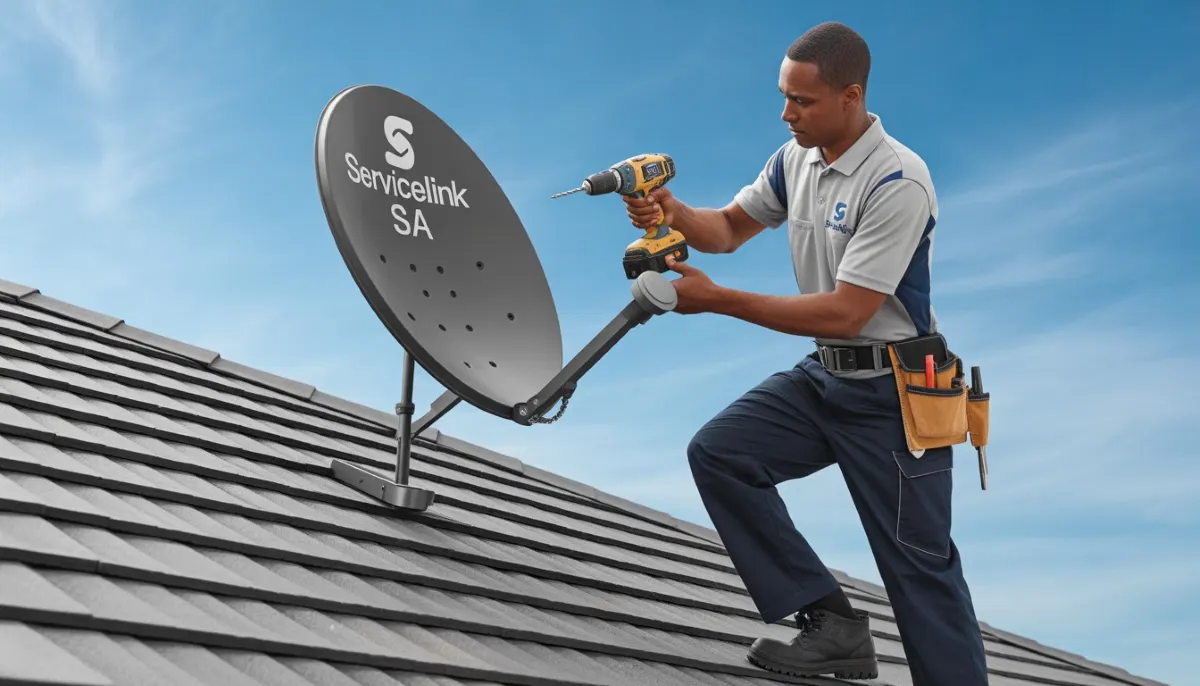
- Professional installation: Usually required (no DIY allowed)
- Removal: Must be removed if you sell your unit
Mounting options for townhouse dishes:
- Roof mount (if allowed): Requires body corporate permission as roof is common property
- Wall mount (on your exclusive use area): May be allowed with permission
- Ground pole mount: In your garden if you have exclusive use area
- Balcony/patio mount: If your townhouse has a balcony or patio
📝 How to Get Body Corporate Approval for DSTV
Follow this process to get approval for townhouse satellite dish rules compliance.
Step-by-step approval process:
- Check your complex’s rules: Review conduct rules or ask the complex manager
- Determine if a communal system exists: If yes, use it – no approval needed for individual dish
- Prepare a written request: Include dish size (60cm), mounting location, and installation method
- Submit to body corporate: Send your request to the trustees or managing agent
- Provide professional installation confirmation: Show that an accredited installer will do the work
- Wait for written approval: Don’t proceed until you have written permission
- Schedule installation: Once approved, book your installer
- Keep approval on file: Save for future reference (and for when you sell)
Sample request letter template:
To: Body Corporate / Trustees
Subject: Request to install DSTV satellite dish – Unit [number]
Dear Trustees,
I request permission to install a 60cm DSTV satellite dish on the [roof/rear wall] of my unit.
The dish will be mounted [describe method] and will not be visible from the street.
Installation will be performed by a MultiChoice-accredited professional installer.
The dish will be removed and any damage repaired if I sell my unit.
Thank you for your consideration.
Sincerely, [Your name]
📍 Dish Placement Options in Townhouse Complexes
Choosing the right location is critical for dstv installation for townhouses.
Best placement options (in order of preference):
- Communal system (best): No dish needed at all
- Roof mount (if approved): Best signal, but requires body corporate permission
- Rear wall mount: Good signal, less visible, may be in your exclusive use area
- Ground pole in garden: No roof work, easy access, but may be visible
- Patio/balcony mount: Last resort – often poor line of sight
Placement restrictions to expect:
- No dishes on street-facing walls or roofs
- No dishes on common property without approval
- No dishes that overhang neighbour’s property
- No dishes that create a safety hazard
- No dishes that reflect light into neighbours’ windows
For mounting guidance, read our
roof vs wall installation guide.
⚠️ When Communal Systems Are Mandatory
Many complexes have made communal DSTV systems mandatory. Here’s what that means for you.
Signs your complex has a mandatory communal system:
- Your levy statement includes a DSTV charge
- Conduct rules prohibit individual dishes
- There’s a DSTV wall outlet already installed in your unit
- Neighbours tell you “everyone uses the communal system”
- The complex manager says individual dishes aren’t allowed
If communal is mandatory:
- You cannot install your own dish – even with approval
- You must connect to the communal system
- Connection is usually simple (plug decoder into wall outlet)
- You still pay for your own DSTV subscription
- The complex may charge a connection fee (R0-R500)
✅ Good News:
Mandatory communal systems are actually great for residents. You save R800-R1,500 on installation,
avoid body corporate approval hassles, and get better signal quality.
It’s a win-win – just plug in and watch.
⚖️ Complex DSTV Options Compared
| Option | Pros | Cons | Best For | Cost |
|---|---|---|---|---|
| Communal system | No dish, no approval, reliable, lower cost | Not available in all complexes | Complexes with existing system | R0-R500 connection fee |
| Individual dish (approved) | Full DSTV experience, recording | Approval needed, dish on your unit | Complexes without communal system | R800-R1,500 installation |
| DSTV Stream | No dish, no approval, no installation | Requires good internet, vulnerable to load shedding | Units with fibre, no dish possible | Subscription only |
💰 Cost Breakdown for Complex DSTV Installation
| Service | Typical Cost | Notes |
|---|---|---|
| Communal system connection | R0 – R500 | Some complexes charge a connection fee |
| Individual dish installation (townhouse) | R800 – R1,500 | Includes dish, LNB, cable, mounting, alignment |
| Body corporate application fee | R0 – R500 | Some complexes charge for approval |
| DSTV Stream (no installation) | R0 installation | Just subscription cost |
| Dish removal when selling | R300 – R600 | If required by body corporate |
🏠 Neighbour Considerations & Dispute Resolution
In complexes, your dish can affect neighbours. Here’s how to avoid disputes.
Potential neighbour concerns:
- Light reflection: Dish surface can reflect sunlight into neighbour’s windows
- Visual impact: Dish visible from neighbour’s property
- Signal interference: Your dish should not block neighbour’s signal
- Installation noise: Drilling and work can disturb neighbours
- Roof access: Installer accessing roof may need to cross neighbour’s exclusive area
How to avoid disputes:
- Discuss your plans with adjacent neighbours before installing
- Choose a location that minimises visual impact on neighbours
- Use a non-reflective dish cover if reflection is a concern
- Schedule installation at reasonable hours (not early morning or late evening)
- Get written approval from body corporate (protects you if neighbours complain)
If a dispute arises:
- Try to resolve directly with neighbour first
- Involve the complex manager or trustee as mediator
- Refer to body corporate conduct rules for guidance
- If you have written approval, you have strong grounds to keep your dish
- Read our dispute resolution guide
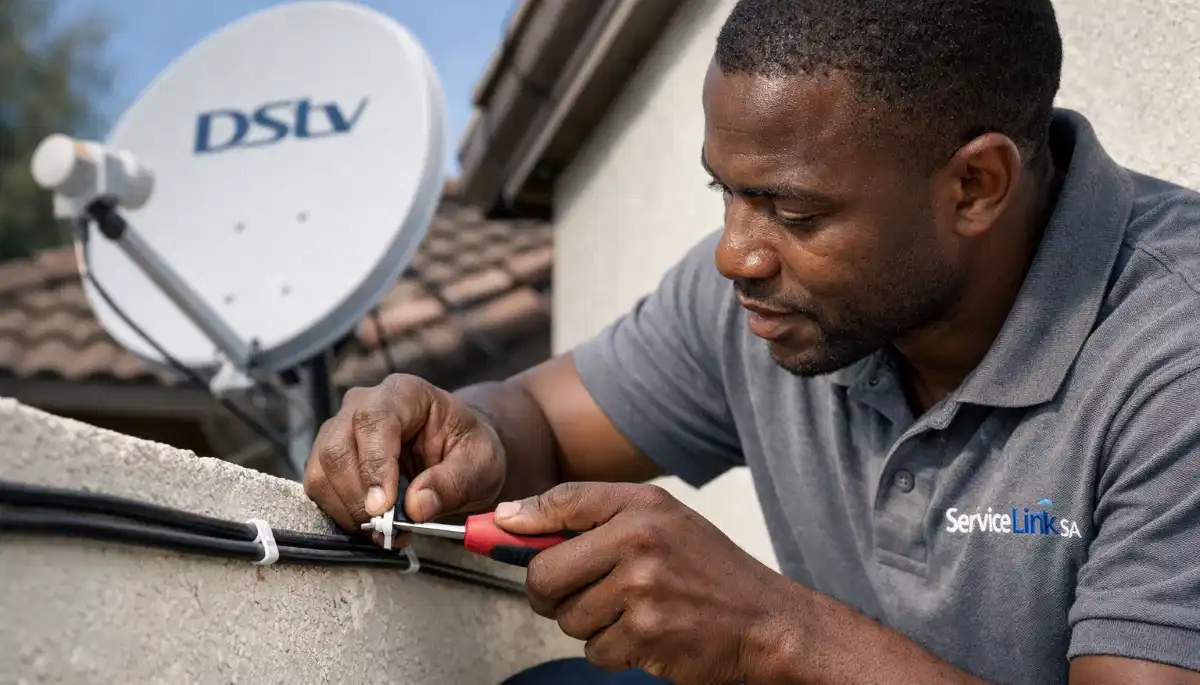
🔧 Professional Complex DSTV Installation Process
When you hire a professional for dstv installation for townhouses, here’s what happens.
Step 1: Pre-installation assessment
- Technician checks if complex has communal system
- If no communal system, assesses line of sight from your unit
- Confirms body corporate rules (if you haven’t already)
- Provides written quote
Step 2: Approval (if needed)
- You obtain body corporate written approval
- Provide copy to installer
Step 3: Installation
- Mounts dish in approved location (roof, wall, or ground)
- Routes cable from dish into your unit (minimising visibility)
- Weatherproofs all connections
- Aligns dish for optimal signal
Step 4: Testing and completion
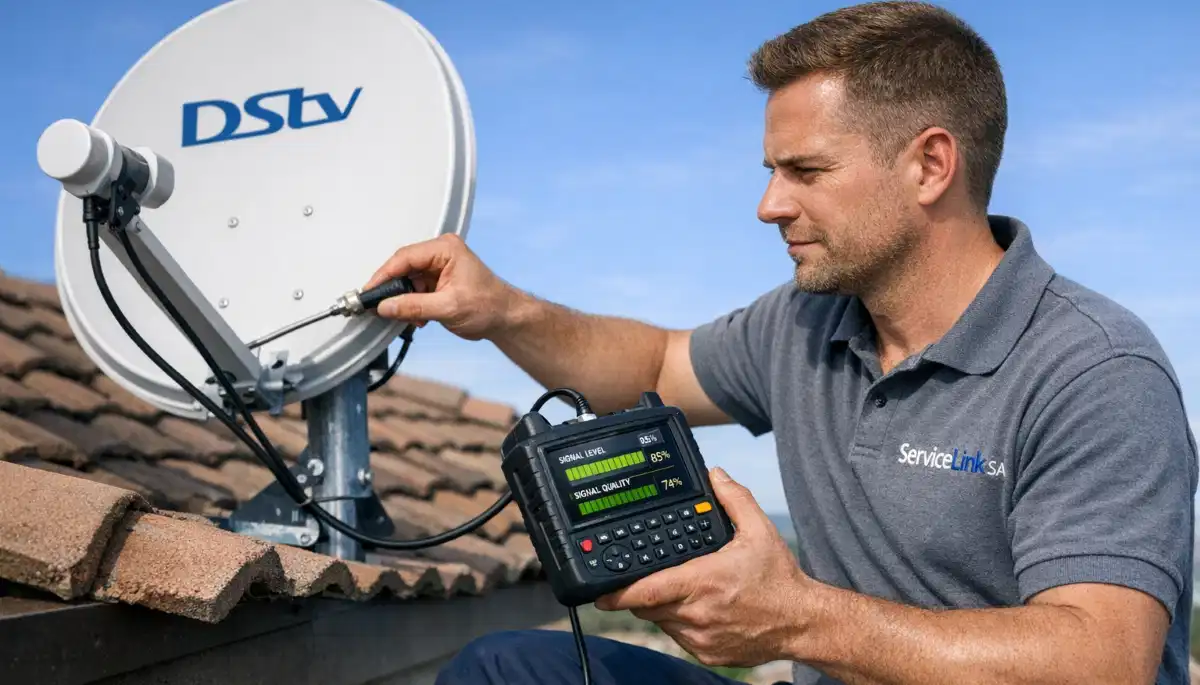
- Tests signal strength and quality (target 75%+)
- Connects and configures decoder
- Demonstrates system operation
- Provides warranty documentation
For professional installation, request a quote from verified installers.
Read our how to choose a contractor guide.
⚠️ Common Complex DSTV Installation Problems & Solutions
⚠️ Watch Out For These Issues
- Body corporate refuses approval: Complex prohibits individual dishes. Solution: DSTV Stream only option.
- Communal system not working: Signal issues affect all units. Solution: Report to body corporate for maintenance.
- Line of sight blocked: Neighbour’s unit or trees block signal. Solution: Try different location or DSTV Stream.
- Roof access denied: Body corporate won’t allow roof installation. Solution: Wall or ground mount instead.
- Neighbour complains about dish: Visual impact or light reflection. Solution: Reposition or use dish cover.
- Dish removal when selling: Body corporate requires removal. Solution: Budget for removal (R300-R600).
🌍 Regional Considerations for Complex DSTV
Dstv installation for townhouses varies by region due to building types and regulations.
KwaZulu-Natal (Durban, Umhlanga, Ballito, Westville, Pinetown):
- Many new complexes have communal DSTV systems
- Coastal conditions require weatherproof installations
- High humidity affects equipment lifespan – use quality components
- KZN installation services
Durban and surrounding areas:
- Complex rules vary – some allow individual dishes, some don’t
- Line of sight can be challenging in hilly areas
- Durban installation services
For location-specific services, see our pages for
Umhlanga,
Ballito,
Westville, and
Pinetown.
❓ Frequently Asked Questions About Complex DSTV
Can I install DSTV in my townhouse complex?
Dstv in complex properties is possible. If your complex has a communal system,
you simply connect your decoder to the wall outlet. If not, you may install an individual dish
with body corporate approval. If neither is possible, DSTV Stream works without a dish.
Always check with your body corporate first.
What are the body corporate rules for DSTV dishes in complexes?
Body corporate dstv installation rules vary by complex. Typical rules:
written approval required, dishes limited to 60cm, placement restrictions (not street-facing),
professional installation required, dish must be removed when selling.
Some complexes prohibit individual dishes entirely (communal system only).
Always check your complex’s conduct rules.
How do I know if my complex has a communal DSTV system?
Check for a DSTV wall outlet in your living room. Ask your complex manager or trustees.
Check your levy statement for a DSTV line item. Ask neighbours how they watch DSTV.
If your complex has a communal system, you don’t need your own dish – just connect your decoder.
Can my body corporate refuse my DSTV dish application?
Yes, body corporates can refuse dish applications based on conduct rules.
Common reasons for refusal: complex has a communal system (you must use it),
proposed location is visible from the street, dish size exceeds limits,
or installation method is not approved.
If refused, DSTV Stream is your alternative.
How much does DSTV installation cost in a townhouse complex?
Dstv installation for townhouses costs: communal system connection R0-R500,
individual dish installation R800-R1,500, DSTV Stream R0 installation.
Body corporate application fees may apply (R0-R500).
Get a free quote for your specific complex.
Can I install my own DSTV dish in my complex without approval?
No. Installing a dish without body corporate approval in a complex can result in fines,
forced removal at your own expense, and legal action. Always get written approval first.
Some complexes prohibit individual dishes entirely – installing one would be a conduct rule violation.
What is a communal DSTV system and how does it work?
A communal dish system uses one central satellite dish on the complex roof
to feed signal to all units via a multiswitch distribution network.
Each unit has a wall outlet – you connect your decoder just like you would to your own dish.
You still need your own DSTV subscription. No individual dish needed.
Do I need to remove my DSTV dish when I sell my townhouse?
Most body corporates require dish removal when you sell your unit.
Check your complex’s conduct rules. If removal is required, you must remove the dish,
patch any holes, and restore the roof/wall to original condition.
Some complexes allow the dish to remain for the next owner if they agree.
Budget R300-R600 for professional removal.
What if my complex has a communal system but I want my own dish?
If your complex has a mandatory communal system, you cannot install your own dish.
The conduct rules will prohibit individual dishes. You must use the communal system.
This is actually beneficial – you save installation costs and avoid approval hassles.
If the communal system has problems, report to body corporate for maintenance.
Can neighbours object to my DSTV dish in a complex?
Yes, neighbours can object to townhouse satellite dish rules violations.
Common objections: light reflection into windows, visual impact, installation noise,
or blocking their line of sight. To avoid disputes, get written body corporate approval,
choose a discreet location, and discuss your plans with adjacent neighbours before installing.
✅ Final Thoughts: Enjoy DSTV in Your Complex
Living in a townhouse complex doesn’t mean you can’t enjoy DSTV.
The key is knowing your options and following the rules.
Communal systems are best – no dish, no approval, lower cost.
If your complex doesn’t have one, individual dishes are possible with body corporate approval.
And if all else fails, DSTV Stream works without any physical installation.
Before you do anything, check with your body corporate. Understand the rules.
Get written approval if needed. And hire a professional installer who understands complex installations.
Ready to get DSTV in your townhouse? Request a free quote from ServiceLink SA.
We’ll connect you with verified, accredited installers who specialise in complex installations.
Ready to Get DSTV in Your Complex?
Get free quotes from verified, accredited DSTV installers who understand complex rules and communal systems.
We’ll help you find the best solution for your townhouse.
📞 Call us: 073 138 4726 for immediate complex DSTV advice.
Free site inspection •
How to choose an installer •
12-month warranty •
Beat Your Quote guarantee
📚 Official resources & standards referenced:
- Official DSTV complex installation guidelines – Official communal system information.
- SABS – South African Bureau of Standards communal system standards.
Information provided for general guidance. DSTV is a registered trademark of MultiChoice.
Body corporate rules vary by complex. Always check your specific complex’s conduct rules.
Written by: Innocent T Hanyani
Satellite & Home Entertainment Installation Specialist | 21+ Years Experience
Innocent T Hanyani has over two decades of experience in satellite television installations across South Africa,
including thousands of townhouse and complex installations. He understands the unique challenges of body corporate rules,
communal systems, and neighbour considerations in multi-unit developments. His expertise helps complex residents
navigate regulations and find the best DSTV solution for their situation.
For more help with complex DSTV, explore our related resources:
apartment installation,
how communal systems work,
communal installation,
installation requirements,
roof vs wall mounting.
See our service areas page for coverage in your region.