Not Sure Where to Mount Your DSTV Dish?
Get a free quote from a verified, accredited DSTV installer who will recommend the best location for your home.
Same-day service available across South Africa.
Servicing Gauteng, Mpumalanga, Emalahleni, Secunda, Middelburg, Standerton, and across South Africa
Roof vs Wall DSTV Dish Installation: Which Mounting Method Gives Better Signal?
🏠 One of the biggest decisions in DSTV installation is where to put your dish. Here’s everything you need to know.
You’ve decided to get DSTV. The installer arrives and asks: “Where do you want the dish – roof or wall?”
You freeze. You have no idea which is better. You point vaguely and hope for the best.
The truth is, the roof vs wall dstv dish decision affects your signal quality,
installation cost, safety, and long-term maintenance. Choose wrong, and you could end up with poor signal,
roof leaks, or an unsafe installation.
In this guide, I’ll compare both dstv dish mounting options in detail.
You’ll learn the pros and cons of each, signal quality differences, safety considerations,
and which is best place to mount dstv dish for YOUR specific home.
If you’re asking “should i mount dstv dish on roof or wall”, read on.
For complete installation guidance, read our
satellite dish installation guide.
For dish size recommendations, see best dish size guide.
And for a complete DIY walkthrough, read how to install DSTV.
📋 Table of Contents – Roof vs Wall DSTV Dish Guide
📊 Quick Comparison: Roof Mount vs Wall Mount
Before we dive into the details, here’s a quick overview of how dstv dish mounting options compare.
| Factor | Roof Mount | Wall Mount | Winner |
|---|---|---|---|
| Signal quality (clear line of sight) | ⭐⭐⭐⭐⭐ (Excellent) | ⭐⭐⭐⭐ (Good) | 🏆 Roof |
| Safety (DIY installation) | ⭐ (High risk) | ⭐⭐⭐ (Moderate risk) | 🏆 Wall |
| Installation cost | ⭐⭐ (Higher) | ⭐⭐⭐ (Lower) | 🏆 Wall |
| Roof penetration / leak risk | ⭐ (Higher risk) | ⭐⭐⭐⭐ (Minimal) | 🏆 Wall |
| Accessibility for maintenance | ⭐ (Difficult) | ⭐⭐⭐⭐ (Easy) | 🏆 Wall |
| Aesthetics (visual impact) | ⭐⭐⭐ (Less visible) | ⭐⭐ (More visible) | 🏆 Roof |
| Obstruction potential | ⭐⭐⭐⭐ (Fewer obstructions) | ⭐⭐⭐ (More obstructions) | 🏆 Roof |
💡 Key Takeaway:
Roof mounting typically offers better signal quality, but wall mounting is safer, cheaper,
and easier to maintain. The best choice depends on your specific property, line of sight,
and whether you can safely access the roof.
🏠 Roof Mount: Pros and Cons
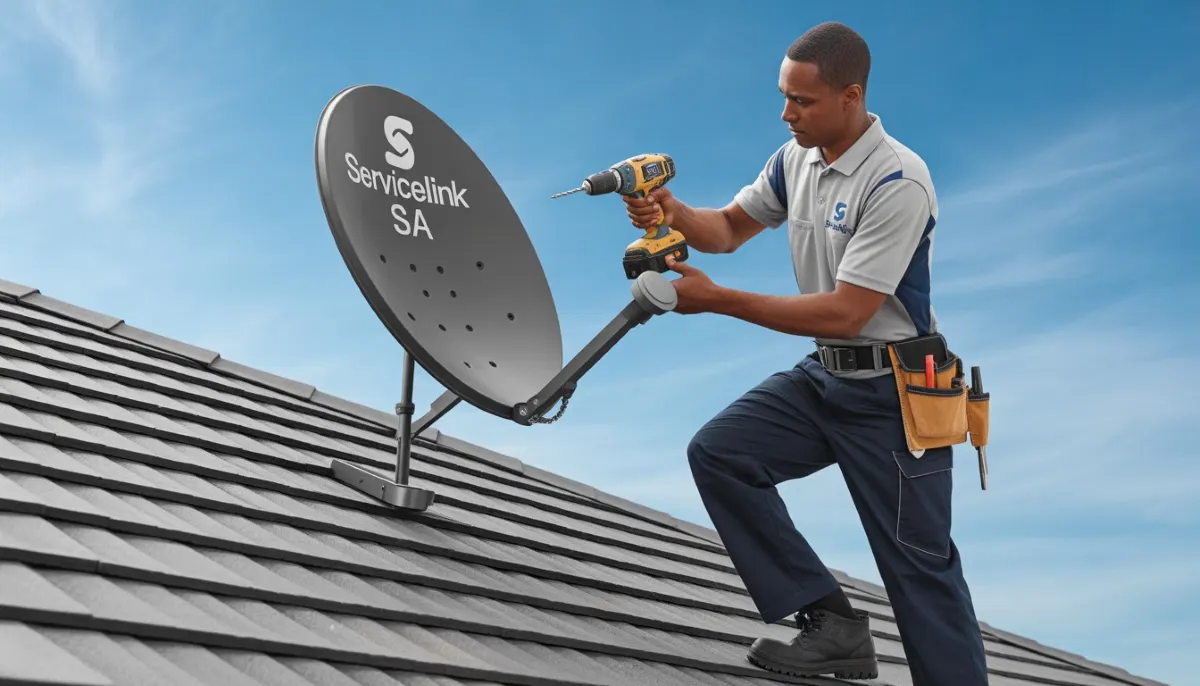
Roof mounting is the traditional choice for dish placement. Here’s a detailed look at the advantages and disadvantages.
Pros of roof mounting:
- Best signal quality: Highest elevation, fewer obstructions, clearer line of sight to the satellite
- Less visible: Dish is less noticeable from street level (better aesthetics)
- Fewer obstructions: Trees, buildings, and other obstacles are less likely to block signal
- Higher elevation: Can clear nearby structures that would block a wall-mounted dish
- Standard practice: Most professional installers prefer roof mounting when possible
Cons of roof mounting:
- Safety risk: Working on a roof is dangerous – falls are the #1 cause of DIY injury
- Roof penetration: Drilling into roof can cause leaks if not properly sealed
- Higher installation cost: More labour, safety equipment, and expertise required
- Difficult maintenance: Accessing the dish for cleaning or repairs requires climbing on the roof
- Structural concerns: Roof must be strong enough to support the dish and withstand wind
- Not suitable for all roofs: Tile roofs are fragile; asbestos roofs are dangerous
- Body corporate restrictions: Many complexes prohibit roof mounting
🧱 Wall Mount: Pros and Cons
Wall mounting is an excellent alternative to roof mounting. Here’s what you need to know about this dstv dish mounting options.
Pros of wall mounting:
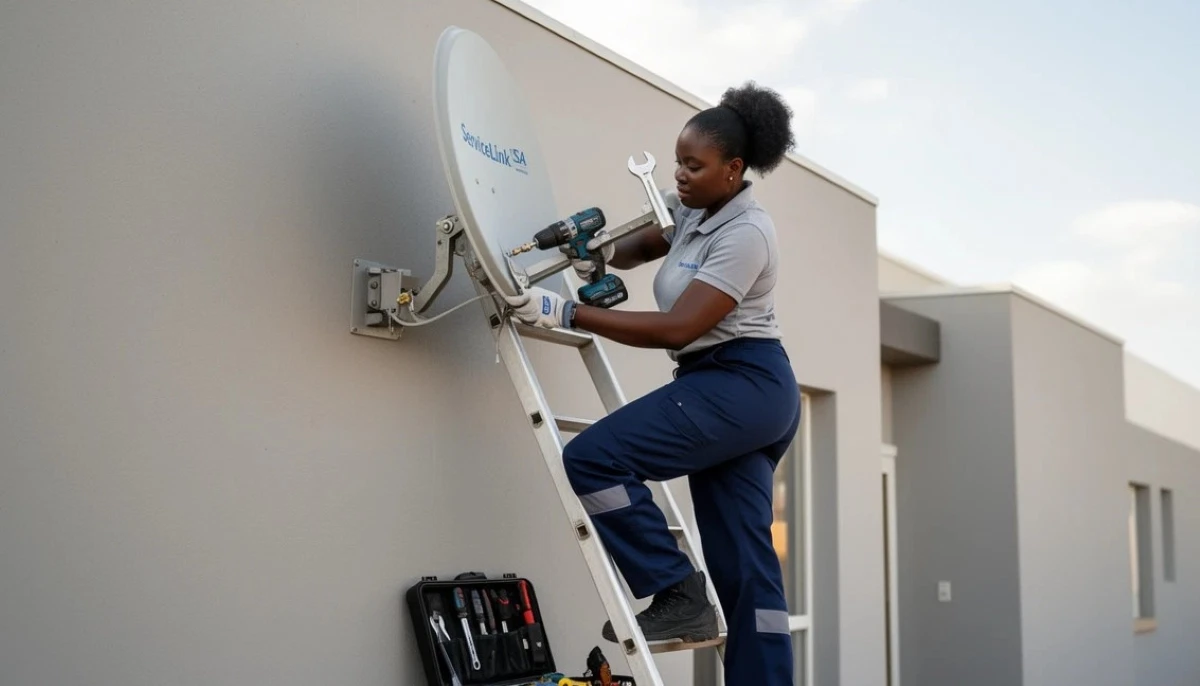
- Safer installation: Ladder work only, no walking on roof – much lower fall risk
- No roof penetration: No risk of roof leaks from installation
- Lower cost: Less labour, simpler equipment, faster installation
- Easier maintenance: Access dish from ladder or ground for cleaning and repairs
- Suitable for most homes: Works on brick, concrete, or wooden walls
- Faster installation: Typically 1-2 hours vs 2-3 hours for roof mount
- Easier DIY: If you must DIY, wall mounting is much safer than roof mounting
Cons of wall mounting:
- Lower elevation: May be blocked by trees, buildings, or your own roof
- More visible: Dish is more noticeable from street level
- Longer cable runs: May need more cable to reach the decoder location
- Wall strength required: Wall must be strong enough to support the dish (brick/concrete recommended)
- Neighbour proximity: In complexes, wall-mounted dishes may be closer to neighbours
- May require body corporate approval: Especially in complexes
📡 Signal Quality: Roof vs Wall – Which Is Better?
This is the most common question about best place to mount dstv dish. Let’s compare signal quality directly.
Roof mount signal advantages:
- Higher elevation: Clears nearby obstructions that would block a wall-mounted dish
- Fewer obstructions: Trees, buildings, and neighbouring properties are less likely to block signal
- Better line of sight: Can see the satellite over roof peaks and other structures
- Typical signal strength: 85-95% achievable in most areas
Wall mount signal considerations:
- Lower elevation: May be blocked by trees, your own roof, or neighbouring buildings
- More potential obstructions: Even a small tree in your garden can block signal
- Still excellent if line of sight is clear: 80-90% achievable with clear view
- Can be better than roof in some cases: If your roof faces the wrong direction but a wall faces northeast
✅ The Truth About Signal Quality:
A wall-mounted dish with a clear line of sight will perform just as well as a roof-mounted dish.
The key is not the mounting location itself – it’s whether the dish has an unobstructed view of the northeastern sky.
If your wall has a clear view, wall mounting is perfectly fine. If it’s blocked, roof mounting may be necessary.
Not Sure Which Mounting Method Is Right for Your Home?
Get a free site assessment from a verified, accredited DSTV installer. They’ll recommend the best location for optimal signal and safety.
Free quotes. Verified installers. No obligation.
🛡️ Safety Comparison: Roof vs Wall Mount
Safety should be your #1 concern when choosing dstv dish mounting options – especially if you’re considering DIY.
Roof mount safety risks:
- Fall risk: Walking on a roof is dangerous, even for professionals. Wet or steep roofs are extremely hazardous.
- Ladder risks: Carrying a dish up a ladder while balancing is risky
- Roof material hazards: Tile roofs can crack; asbestos roofs are dangerous to walk on
- Electrical hazards: Contact with power lines near the roof edge can be fatal
- Weather risks: Wind, rain, or heat can make roof work dangerous
Wall mount safety (much lower risk):
- Ladder only: No walking on roof – just ladder work at the wall
- Stable footing: Work from ladder or ground – much safer than roof walking
- Easier to secure: Can tie off ladder more easily
- Better for DIY: If you must DIY, wall mounting is significantly safer
⚠️ Safety Warning:
Falls from roofs are the #1 cause of serious DIY injury. If you’re not a professional with safety equipment,
DO NOT attempt roof mounting yourself. Wall mounting is safer, but still requires ladder safety.
When in doubt, hire a professional – your life is worth more than the installation cost.
💰 Cost Comparison: Roof vs Wall Mount
| Cost Factor | Roof Mount | Wall Mount |
|---|---|---|
| Labour (standard installation) | R600 – R900 | R500 – R800 |
| Safety equipment | Higher (harness, stabilisers) | Lower (ladder only) |
| Roof penetration sealing | R100 – R200 (silicone, flashing) | R0 (no penetration) |
| Cable length | Often shorter | May be longer (adds R50-R150) |
| Typical total installation | R900 – R1,500 | R800 – R1,300 |
💰 Money-Saving Tip:
Wall mounting is typically R100-R200 cheaper than roof mounting due to lower labour and equipment costs.
If your wall has a clear line of sight, choose wall mounting to save money without sacrificing signal quality.
We’ll beat any verified quote.
📋 Roof Mount Requirements: Is Your Roof Suitable?
Not every roof is suitable for roof vs wall dstv dish roof mounting. Here’s what you need.
Suitable roof types:
- Concrete/tile roof: Suitable if tiles are in good condition and you have proper anchors
- Corrugated iron/steel: Suitable – easy to mount, but ensure proper weatherproofing
- Flat concrete roof: Excellent – easy to work on, no fall risk if parapet is present
- Wooden shingles: Suitable with proper mounting
Roof types to avoid:
- Asbestos: DANGEROUS – do not walk on or drill into asbestos roofs
- Fragile tile roofs: Older tiles can crack underfoot
- Steep pitch roofs: Very dangerous to work on
- Thatch roofs: Not suitable for dish mounting
Other roof mount requirements:
- Safe access to the roof (ladder placement, no power lines nearby)
- Clear line of sight to northeast from the roof location
- Structural integrity to support the dish (50-100kg wind load)
- No body corporate restrictions (if in a complex)
📋 Wall Mount Requirements: Is Your Wall Suitable?
Here’s what you need for successful dish placement on a wall.
Suitable wall types:
- Brick or concrete block: Excellent – use masonry anchors
- Solid concrete: Excellent – very strong
- Timber frame with cladding: Suitable if you can find studs
- Cavity brick: Suitable with appropriate wall anchors
Wall types to avoid:
- Drywall/plasterboard alone: Not strong enough – must attach to studs
- Cement sheet (fibro): Fragile – not suitable for direct mounting
- Asbestos: DANGEROUS – do not drill
Other wall mount requirements:
- Clear line of sight to northeast from the wall location
- No obstructions (trees, roof overhang, neighbouring buildings)
- Safe ladder access to the wall
- No body corporate restrictions (if in a complex)
🏠 When Roof Mount Is the Better Choice
Choose best place to mount dstv dish on the roof in these situations.
- Your walls face the wrong direction: If no wall faces northeast, roof mounting is your only option
- Walls are blocked by trees or buildings: Roof elevation may clear obstructions
- Your roof is flat and easily accessible: Flat concrete roofs are easy to work on
- You have a single-story house: Roof work is less dangerous on single-story
- You want the dish less visible: Roof-mounted dishes are less noticeable from street level
- Professional installation only: Professionals have safety equipment to work safely on roofs
🧱 When Wall Mount Is the Better Choice
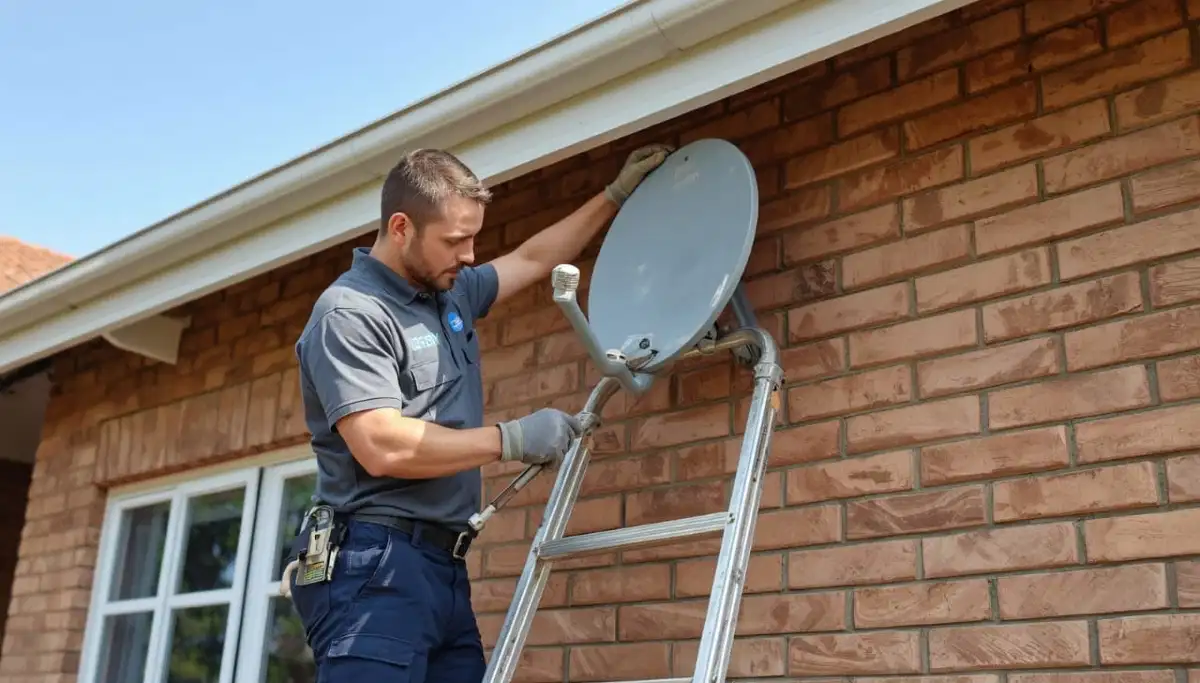
Choose roof vs wall dstv dish wall mounting in these situations.
- Your roof is dangerous: Steep pitch, fragile tiles, asbestos, or difficult access
- You want to save money: Wall mounting is typically R100-R200 cheaper
- You’re considering DIY: Wall mounting is much safer for DIY installation
- Your wall has a clear line of sight: If the wall faces northeast with no obstructions, wall mounting works perfectly
- Your complex prohibits roof mounting: Many complexes allow wall mounting but not roof mounting
- You want easier maintenance: Wall-mounted dishes are much easier to access for cleaning and repairs
- You have a multi-story house: Roof work on multi-story is extremely dangerous
🔧 Installation Process Comparison
Roof mount installation process:
- Secure ladder and access roof safely (may require safety harness)
- Locate roof trusses or suitable mounting points
- Drill and seal penetrations (critical for leak prevention)
- Mount bracket securely to roof structure
- Attach dish and run cable
- Weatherproof all penetrations with silicone and flashing
- Align dish (may require multiple trips up/down ladder)
- Test signal and secure all connections
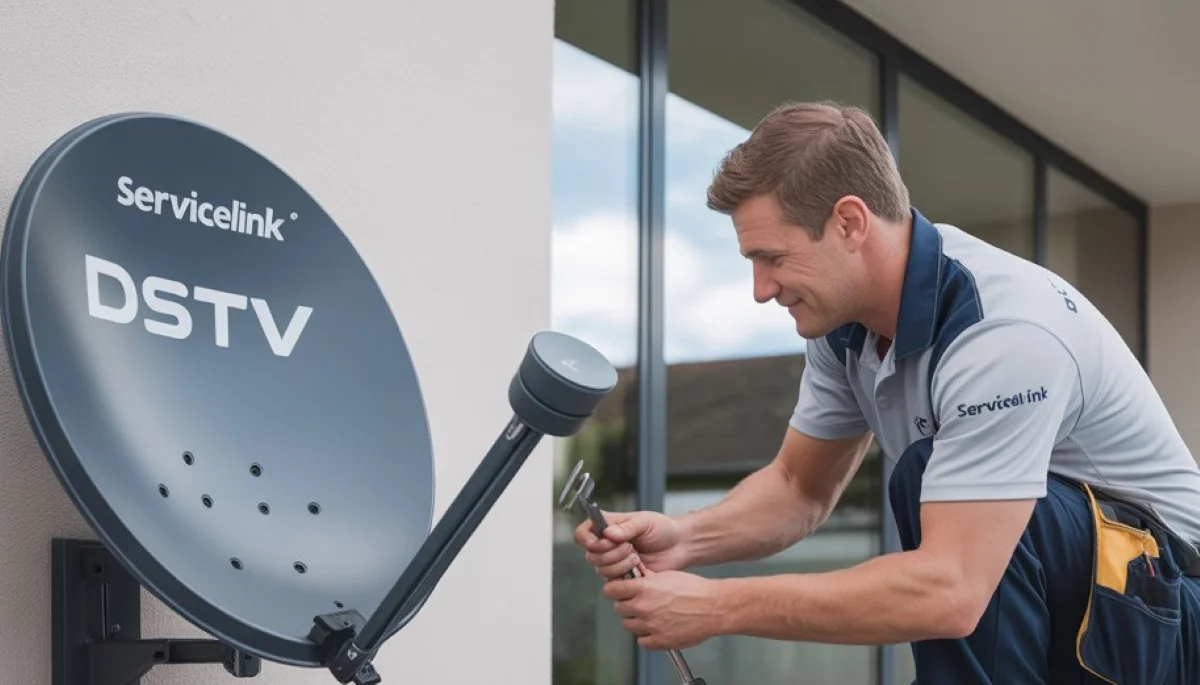
Wall mount installation process:
- Position ladder against wall at safe angle
- Mark and drill holes for bracket (no roof penetration)
- Insert wall anchors and mount bracket
- Attach dish to bracket
- Run cable along wall to entry point
- Seal cable entry point with silicone
- Align dish (ladder work only, no roof walking)
- Test signal and secure all connections
🔧 Maintenance Considerations for Each Mount Type
Your choice of dstv dish mounting options affects long-term maintenance difficulty.
Roof mount maintenance challenges:
- Accessing the dish requires climbing on the roof again
- Cleaning the dish or LNB is difficult and risky
- Checking alignment requires roof access
- Most homeowners avoid maintenance due to difficulty, leading to gradual signal degradation
Wall mount maintenance advantages:
- Access dish from ladder or even ground level
- Easy to clean LNB and dish surface
- Quick to check alignment after storms
- Homeowners are more likely to perform regular maintenance
✅ Pro Tip:
If you choose roof mounting, schedule an annual professional maintenance visit.
Most homeowners neglect roof-mounted dishes because access is difficult,
leading to gradual signal loss over time. Professional maintenance costs R350-R600
and is worth every rand.
🌍 Regional Considerations for Mounting Method
Your location in South Africa affects which mounting method is better for roof vs wall dstv dish.
Gauteng (Johannesburg, Pretoria, Midrand):
- Urban areas with many trees and buildings – roof mounting often provides better line of sight
- Summer thunderstorms require robust weatherproofing for roof penetrations
- Gauteng installation services
Mpumalanga (Emalahleni, Secunda, Middelburg, Standerton):
- Highveld thunderstorms and mining area interference
- Roof mounting may provide better signal in areas with tall vegetation
- Wall mounting often sufficient in newer suburbs with clear lines of sight
- Mpumalanga installation services
For location-specific services, see our pages for
Emalahleni,
Secunda,
Middelburg, and
Standerton.
❓ Frequently Asked Questions About Roof vs Wall Mounting
Which gives better signal – roof or wall mounting?
For roof vs wall dstv dish, roof mounting typically offers better signal potential because it’s higher and faces fewer obstructions.
However, a wall-mounted dish with a perfectly clear line of sight will perform just as well.
The key factor is not the mounting method itself – it’s whether the dish has an unobstructed view of the northeastern sky.
Is wall mounting safe for DIY installation?
Wall mounting is safer than roof mounting for dstv dish mounting options, but still requires ladder safety.
You need a stable ladder, proper footing, and comfort working at height.
If you’re not confident, hire a professional. Wall mounting costs R800-R1,300 – cheaper than a fall.
Read our DIY vs pro guide.
Can I mount a DSTV dish on a wall instead of a roof?
Yes, absolutely. Should i mount dstv dish on roof or wall – wall mounting is a perfectly valid option.
Many professional installers prefer wall mounting when the wall has a clear line of sight.
It’s safer, cheaper, and easier to maintain. Only choose roof mounting if your walls are blocked or face the wrong direction.
What size dish do I need for roof vs wall mounting?
Dish size depends on your location, not mounting method. 60cm is standard for most of South Africa.
Coastal areas (Cape Town, Durban) need 80cm. Wall or roof mounting doesn’t change size requirements.
Read our dish size guide for regional recommendations.
Does a roof-mounted dish get better signal than wall-mounted?
Not necessarily. A wall-mounted dish with a clear line of sight performs identically to a roof-mounted dish.
The advantage of roof mounting is elevation – it can clear obstructions that would block a wall-mounted dish.
If your wall has no obstructions, wall mounting is fine. If trees or buildings block your wall, roof mounting may be necessary.
Is roof mounting more expensive than wall mounting?
Yes, best place to mount dstv dish on the roof typically costs R100-R200 more than wall mounting.
Roof mounting requires more labour, safety equipment, and roof penetration sealing.
Wall mounting is generally R800-R1,300, while roof mounting is R900-R1,500.
Can I mount a DSTV dish on a flat concrete roof?
Yes, flat concrete roofs are excellent for dish placement. They’re easy to work on (no fall risk with parapet),
provide great elevation, and are structurally strong. Use a non-penetrating weighted mount
(concrete blocks) to avoid drilling into the roof membrane. Professional installation recommended.
What if my wall doesn’t face northeast?
If your wall doesn’t face northeast, you cannot wall-mount a dish – the signal won’t reach.
Your options: roof mount (if the roof has a clear northeast view), a pole mount in your garden
(if you have space facing northeast), or DSTV Stream (no dish needed).
Have a professional assess your property before buying equipment.
How do I protect a wall-mounted dish from wind?
Use heavy-duty wall anchors appropriate for your wall type (masonry anchors for brick,
chemical anchors for hollow blocks). Ensure the bracket is rated for the dish size.
In high-wind areas like coastal regions, use larger brackets and additional securing points.
Professional installation ensures wind resistance.
Can I move my dish from roof to wall later?
Yes, you can relocate a dish from roof to wall. This requires removing the roof mount,
sealing roof penetrations, and installing a new wall mount. Cost is similar to a new installation
(R800-R1,300). If you’re considering this, request a relocation quote.
✅ Final Thoughts: Choose the Right Mount for Your Home
The roof vs wall dstv dish decision doesn’t have a single right answer.
The best choice depends on your property’s layout, line of sight, safety considerations, and budget.
Wall mounting is safer, cheaper, and easier to maintain – choose it if your wall has a clear line of sight to the northeast.
Roof mounting offers better elevation and can clear obstructions – choose it if your walls are blocked or face the wrong direction.
Still not sure? Request a free site assessment from ServiceLink SA.
A verified, accredited installer will assess your property and recommend the best location.
Professional installation ensures optimal signal, safety, and warranty protection.
Not Sure Where to Mount Your DSTV Dish?
Get a free site assessment and quote from a verified, accredited DSTV installer near you.
They’ll recommend the best location for optimal signal and safety.
📞 Call us: 073 138 4726 for immediate installation advice.
How to choose an installer •
Beat Your Quote guarantee •
12-month warranty
📚 Official resources & standards referenced:
- Official DSTV installation guidelines – Official installation information.
- SABS – South African Bureau of Standards mounting safety standards.
Information provided for general guidance. DSTV is a registered trademark of MultiChoice.
Always prioritise safety – hire a professional for roof installations.
Written by: Innocent T Hanyani
Satellite & Home Entertainment Installation Specialist | 21+ Years Experience
Innocent T Hanyani has over two decades of experience in satellite dish installations across South Africa.
He has installed thousands of dishes on roofs and walls, understanding the signal, safety, and cost trade-offs of each method.
His expertise helps homeowners choose the right mounting location for optimal performance and safety.
For more help with DSTV dish mounting, explore our related resources:
satellite dish installation,
dish alignment guide,
best dish size guide,
how to install DSTV,
installation requirements.
See our service areas page for coverage in your region.