
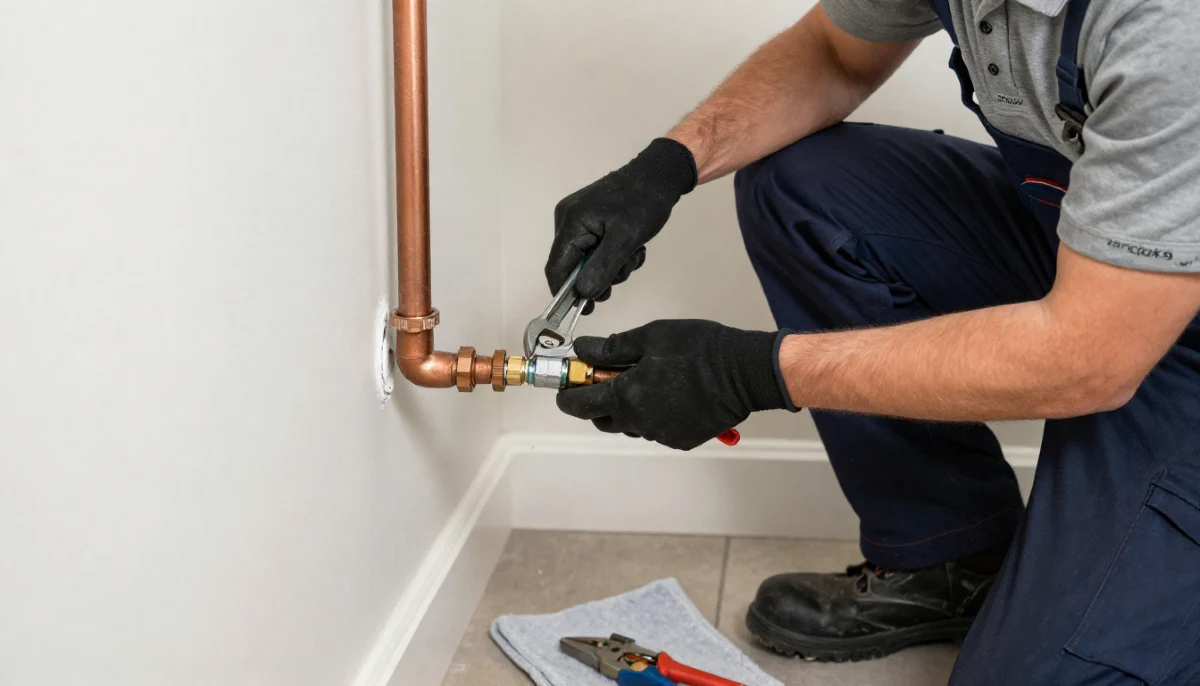
🔧 Hire a Licensed Plumber Today
Get quotes from verified, PIRB-registered licensed plumbers. Protect your home and your wallet.
Find Licensed Plumbers Near You
Servicing Gauteng, Western Cape, KwaZulu-Natal, and across South Africa
Licensed vs Unlicensed Plumbers in South Africa: What’s The Difference
🔧 From COC requirements to insurance claims—complete guide to understanding plumber licensing and why it’s non-negotiable
Your geyser bursts at 2am. You need help fast. A friend recommends a “plumber” who works for cash, no questions asked. He’s cheap. He’s available now. What’s the harm?
The harm could be catastrophic. An unlicensed plumber cannot issue a Certificate of Compliance (COC). Without a COC, your insurance may deny your water damage claim. You cannot legally sell your property without disclosing non-compliant work. And if something goes wrong, you have no recourse—they disappear.
I’ve seen this scenario play out hundreds of times. Homeowners trying to save a few hundred Rands end up losing thousands—sometimes tens of thousands—because they hired an unlicensed plumber. The difference between a licensed plumber South Africa homeowners can trust and an unlicensed operator isn’t just about paperwork—it’s about your home’s safety, your insurance coverage, and your legal protection.
This comprehensive guide will explain why plumber license matters, the risks of hiring unlicensed plumbers, how to verify licensing, and why why hire a licensed plumber is one of the most important decisions you’ll make as a homeowner.
For related information, read our how to choose a plumber guide, questions to ask a plumber guide, and plumbing insurance claim guide. Let’s protect your home.
📋 Table of Contents – Licensed vs Unlicensed Plumbers Guide
🔧 What Is a Licensed Plumber in South Africa?
A licensed plumber South Africa is a professional registered with the Plumbing Industry Registration Board (PIRB), the statutory body that regulates plumbers in South Africa.
What licensing means:
- Has completed accredited training (typically 3-4 years apprenticeship)
- Has passed trade tests (Red Seal qualification or equivalent)
- Meets continuing professional development requirements
- Carries professional indemnity and public liability insurance
- Can legally issue Certificates of Compliance (COC)
- Is accountable to a regulatory body (complaints, discipline)
What licensing is NOT: A simple business registration or “I’ve been doing this for 20 years.” Experience alone does not equal licensing. Only PIRB registration counts.
Read our contractor verification process to see how we verify licenses.
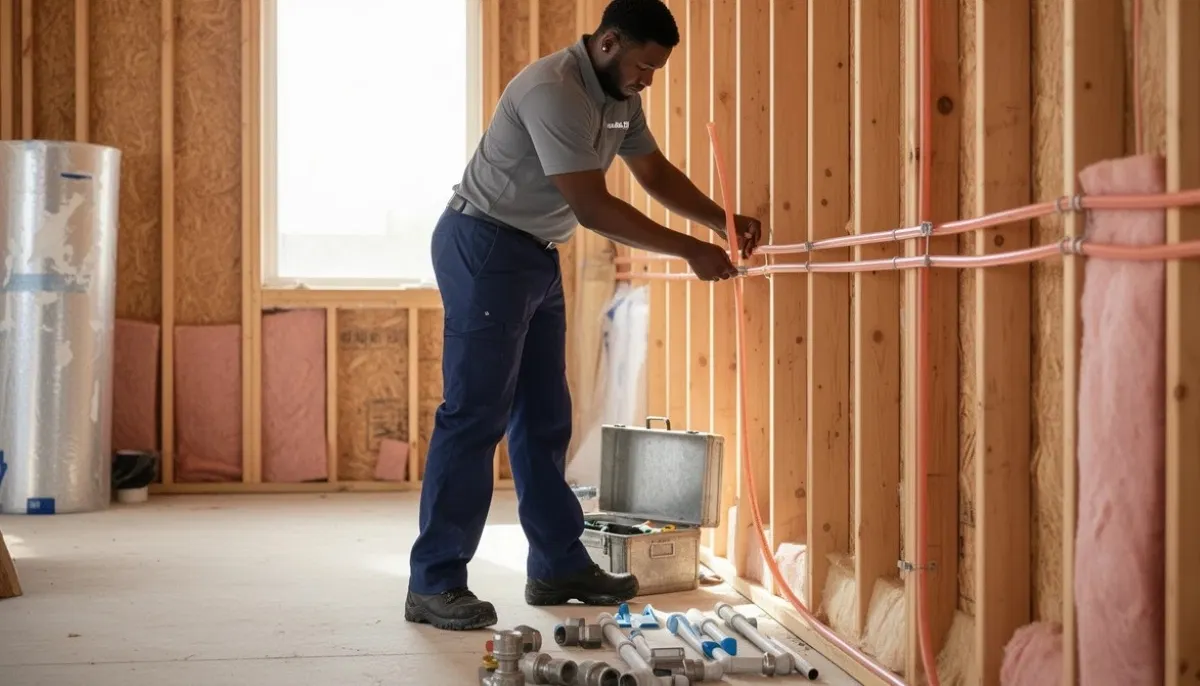
📜 PIRB Registration: The Gold Standard
The Plumbing Industry Registration Board (PIRB) is the official body that registers plumbers in South Africa. Plumber license verification starts with PIRB.
What PIRB registration means:
- The plumber has met minimum competency standards
- The plumber is qualified to issue COCs
- The plumber is accountable to a regulatory body
- The plumber must carry professional indemnity insurance
- You can file complaints with PIRB if work is substandard
How to verify PIRB registration:
- Ask the plumber for their PIRB registration number
- Visit the official PIRB website (www.pirb.co.za)
- Enter the registration number
- Confirm the name matches
- Check that registration is current (not expired)
Red flag: “I’m registered but I don’t have my number with me” or “I’ll bring the certificate later.” A legitimate plumber knows their registration number and can provide it immediately.
Read our licensed plumbers guide for more information.
⚠️ 7 Risks of Hiring an Unlicensed Plumber
The unlicensed plumber risks far outweigh any perceived savings:
Risk #1: No Certificate of Compliance (COC)
Only licensed plumbers can issue COCs. Without a COC, your insurance may deny water damage claims, and you cannot legally sell your property. This single risk can cost you tens of thousands of Rands.
Risk #2: Insurance Claim Denial
Insurance companies require COCs for water damage claims related to plumbing work. Without a COC, your claim will be denied—leaving you to pay for damage out of pocket.
Risk #3: Substandard Workmanship
Unlicensed plumbers haven’t passed competency tests. They may not know SANS standards, proper installation techniques, or safety requirements. Poor work fails prematurely and can be dangerous.
Risk #4: No Insurance Coverage
If an unlicensed plumber damages your property, you have no recourse. Licensed plumbers carry public liability and professional indemnity insurance.
Risk #5: No Warranty or Recourse
When work fails, unlicensed plumbers disappear. You can’t sue someone who isn’t traceable. Licensed plumbers are accountable to PIRB.
Risk #6: Safety Hazards
Improperly installed geysers can explode. Incorrect gas connections can cause carbon monoxide poisoning. Faulty electrical work can cause fires. Your family’s safety is at stake.
Risk #7: Property Sale Complications
When selling your property, conveyancers require COCs for plumbing work. Without them, sales can be delayed or cancelled, or you may be forced to accept a lower price.
Read our plumbing insurance claim guide for more on insurance implications.
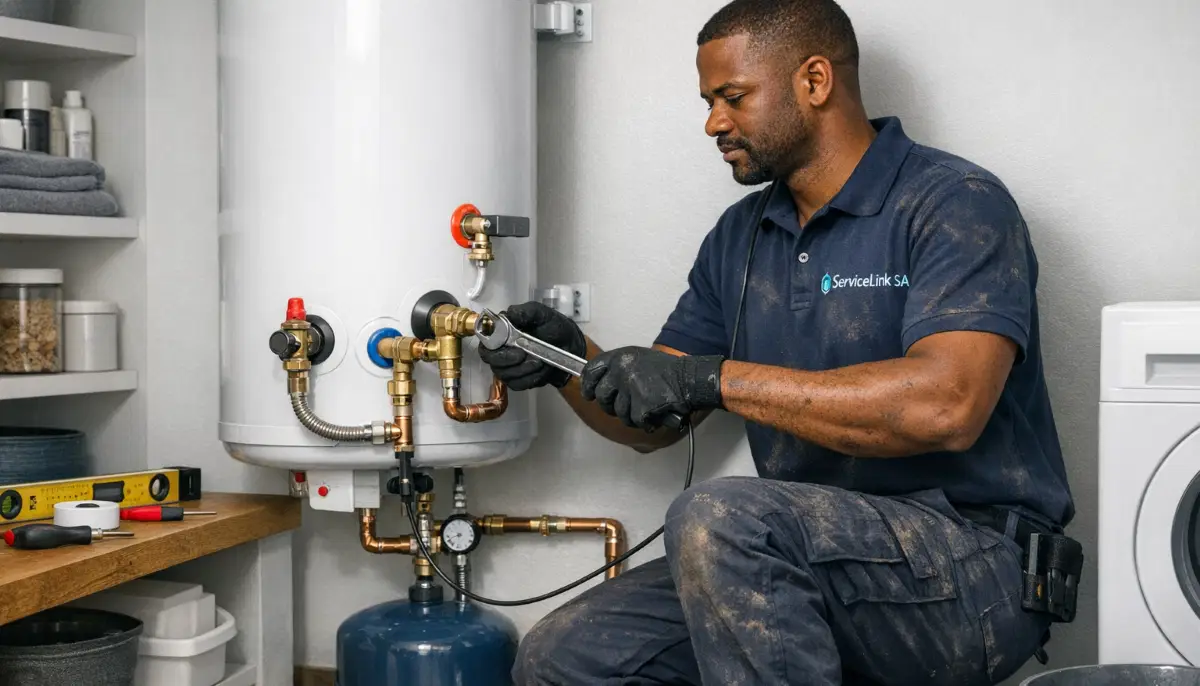
🔧 Hire a Licensed Plumber Today
Get quotes from verified, PIRB-registered licensed plumbers. Protect your home and your wallet.
Find Licensed Plumbers Near You
Free quotes • Verified specialists • Beat Your Quote guarantee
📜 The COC: Why Only Licensed Plumbers Can Issue It
The Certificate of Compliance (COC) is a legal document certifying that plumbing work complies with SANS standards. Only PIRB-registered plumbers can issue COCs.
What work requires a COC?
- Geyser installation or replacement
- New pipe installation (new bathrooms, kitchens)
- Whole-house re-piping
- Main water line installation
- Any plumbing work that alters the original installation
What the COC certifies:
- The work complies with SANS 10252 and SANS 10400
- Materials used are SABS-approved
- Installation meets safety standards
- The plumber takes responsibility for the work
Consequences of no COC:
- Insurance claim denial for water damage
- Inability to legally sell your property
- Potential fines from municipality
- Liability for damage caused by non-compliant work
Read our plumbing COC guide for complete information.
🏠 Insurance Implications of Unlicensed Work
This is one of the most expensive unlicensed plumber risks homeowners face:
What insurance typically requires:
- Work must be performed by a PIRB-registered plumber
- A valid COC must be provided for covered work
- Documentation of compliance must be kept
What happens without a COC:
- Insurance company will deny your water damage claim
- You pay for all repairs out of pocket (R10,000-R100,000+)
- Your policy may be cancelled or premiums increased
- Future claims may be scrutinised more heavily
Real example: A geyser installed by an unlicensed plumber bursts 6 months later. Water damage: R45,000. Insurance investigates, discovers no COC. Claim denied. Homeowner pays R45,000 plus cost of new geyser and reinstallation by licensed plumber (another R12,000). Total cost: R57,000. The “savings” from hiring an unlicensed plumber? Maybe R1,000. The cost? R57,000.
Read our plumbing insurance claim guide for more.

🏡 Property Transfer & Legal Implications
When selling your property, unlicensed plumbing work can derail the entire transaction:
What conveyancers require:
- COCs for all plumbing work (geysers, new installations, re-piping)
- Evidence that work was done by a registered plumber
- Municipal clearance certificates (may require plumbing compliance)
What happens without COCs:
- Property transfer can be delayed indefinitely
- Buyers may demand price reduction (R10,000-R50,000+)
- Sale may fall through entirely
- You may need to hire a licensed plumber to redo work and issue COC (paying twice)
Legal liability: If you sell a property with undisclosed unlicensed plumbing work, you could be held liable for future failures or damage. The buyer could sue you for non-disclosure.
Read our plumbing COC guide for property transfer requirements.
💰 Cost Comparison: Licensed vs Unlicensed
The true cost of hiring an unlicensed plumber is far higher than the initial “savings”:
| Factor | Licensed Plumber | Unlicensed Plumber | Hidden Cost of Unlicensed | |
|---|---|---|---|---|
| Hourly Rate | R450-R750 | R300-R500 | “Savings” R150-R250/hour | R150-R250 per hour |
| Call-Out Fee | R450-R650 | R300-R500 | “Savings” R150 | R150 |
| COC Included | ✅ Yes | ❌ No | Can’t sell property, insurance claim denied | R50,000+ |
| Insurance Cover | ✅ Yes | ❌ No | Liable for damage | R10,000-R100,000+ |
| Warranty | 6-12 months | None or verbal | Pay twice for repairs | R1,000-R10,000+ |
| Accountability | PIRB, legal recourse | None (disappears) | No recourse when problems arise | Priceless |
| Total Potential Risk | R0 (protected) | R? (saving R200-R500) | Potential loss | R50,000-R150,000+ |
The math is clear: “Saving” R200-R500 on labour can cost you R50,000-R150,000+ in denied insurance claims, rework, legal issues, and property sale complications. Always hire a licensed plumber.
Read our plumbing prices guide for fair pricing benchmarks.
🔍 How to Verify a Plumber’s License
Protect yourself with these verification steps before why hire a licensed plumber becomes a regret:
- Ask for PIRB registration number – Every licensed plumber has one. If they hesitate or can’t provide it, red flag.
- Verify online – Visit www.pirb.co.za, enter the registration number, confirm the name matches.
- Check expiry date – Registration must be current (not expired).
- Ask for insurance certificate – Licensed plumbers carry public liability and professional indemnity insurance. Verify with the insurer.
- Check references – Ask for recent client contacts. Call them.
- Read reviews – Check ServiceLink SA, Google, and HelloPeter.
- Ask about COC – Licensed plumbers will confirm they issue COCs for covered work.
Red flags during verification:
- “I’m registered but don’t have my number”
- “I’ll bring the certificate later” (never does)
- “My friend is registered, I work under him” (not valid—the registered person must do the work)
- Number doesn’t verify on PIRB website
- Name doesn’t match registration
Read our contractor verification process to see how we pre-screen plumbers.
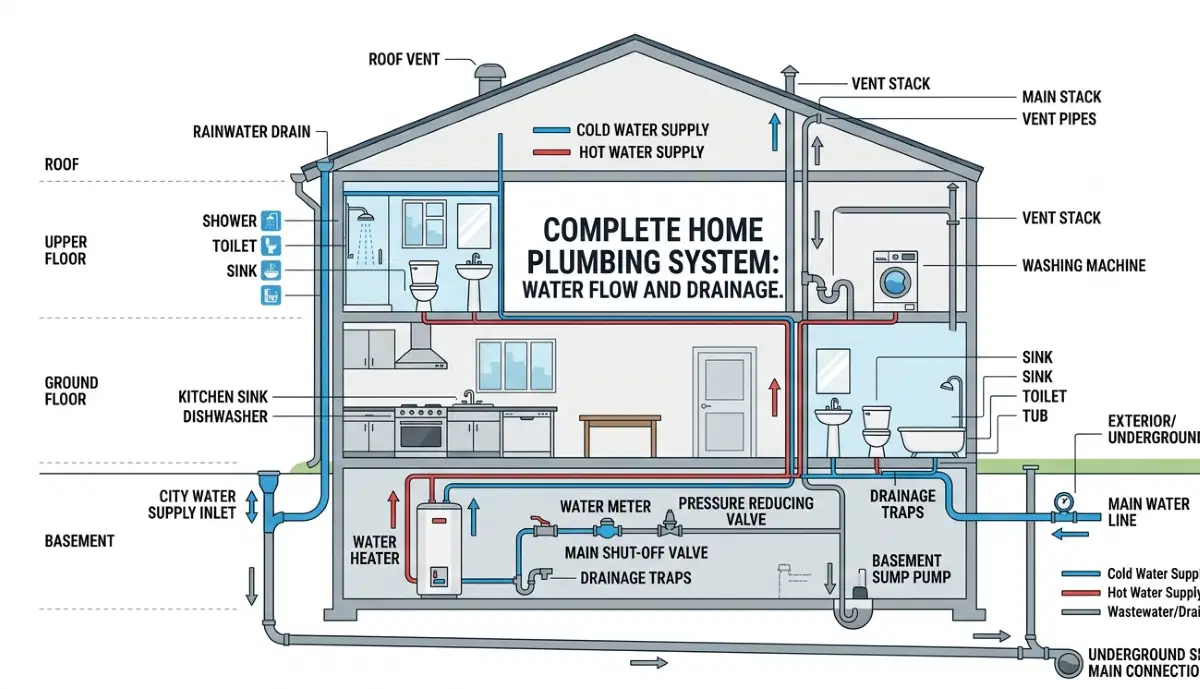
📚 Qualifications & Training Requirements
Licensed plumbers South Africa have completed rigorous training:
Typical training pathway:
- 3-4 year apprenticeship (on-the-job training under qualified plumber)
- Trade theory classes at TVET college
- Trade test for Red Seal qualification
- Additional courses for specialised skills (gas, backflow, etc.)
- Continuing professional development (CPD) to maintain registration
What unlicensed “plumbers” lack:
- Formal apprenticeship
- Trade qualifications
- Knowledge of SANS standards
- Understanding of building regulations
- Safety training
- Continuing education
The result: Unlicensed workers learn by trial and error—on your home. Licensed plumbers have proven their competency before touching your property.
Read our what makes a reliable contractor guide for more.
🛡️ Insurance: Licensed vs Unlicensed
The insurance gap between licensed and unlicensed plumbers is enormous:
Licensed plumber insurance:
- Public liability insurance (minimum R1 million)
- Professional indemnity insurance
- Workers’ compensation for employees
- Motor vehicle insurance for work vehicles
Unlicensed plumber insurance:
- None—or expired, or fraudulent
- If they damage your property, you pay
- If they’re injured on your property, you may be liable
The risk: An unlicensed plumber damages your ceiling during geyser installation: R15,000 repair. They have no insurance. They disappear. You pay R15,000 out of pocket. A licensed plumber’s insurance would cover this.
Read our contractors liability insurance guide for more.
✅ Warranty & Recourse Protection
When work fails, who protects you?
Licensed plumber:
- Written warranty (6-12 months on labour)
- Accountable to PIRB (file complaints)
- Traceable business address and registration
- Legal recourse available
Unlicensed plumber:
- Verbal “guarantee” (worthless)
- No regulatory body to complain to
- No fixed address—disappears
- No legal recourse (can’t sue someone you can’t find)
The reality: When an unlicensed plumber’s work fails (and it often does), they are gone. Your only option is to hire a licensed plumber to redo the work—paying twice.
🗣️ 5 Common Excuses from Unlicensed Plumbers
Excuse #1: “I’ve been doing this for 20 years, I don’t need a license”
Truth: Experience without licensing means no COC, no insurance, no accountability. The law requires licensing regardless of experience.
Excuse #2: “COC is optional, you don’t really need it”
Truth: COC is legally required for many jobs. Without it, your insurance is void and you can’t sell your property. This is a lie to cover their inability to issue COCs.
Excuse #3: “My friend is registered, I work under his license”
Truth: The registered person must perform or directly supervise the work. A friend’s license doesn’t cover someone else’s work. This is fraud.
Excuse #4: “Registration is expensive, I pass the savings to you”
Truth: Registration costs about R1,500-R2,000/year. The “savings” are minimal compared to the risks. You’re not saving—you’re gambling.
Excuse #5: “I’ll give you a receipt, that’s as good as a COC”
Truth: A receipt is NOT a COC. Insurance companies require a COC from a registered plumber. A receipt is worthless for claims or property transfer.
Read our avoiding contractor scams guide for more protection.
📊 Licensed vs Unlicensed: Side-by-Side
Quick reference for why hire a licensed plumber:
| Factor | Licensed Plumber | Unlicensed Plumber |
|---|---|---|
| PIRB Registered | ✅ Yes | ❌ No |
| Can Issue COC | ✅ Yes | ❌ No |
| Has Insurance | ✅ Yes | ❌ No |
| Formal Training | ✅ Yes (3-4 years) | ❌ No |
| Knows SANS Standards | ✅ Yes | ❌ Unlikely |
| Accountable to PIRB | ✅ Yes | ❌ No |
| Warranty on Work | ✅ Written (6-12 months) | ❌ Verbal or none |
| Insurance Claim Safe | ✅ Yes | ❌ No (claims denied) |
| Property Transfer Safe | ✅ Yes | ❌ No (delays/cancellation) |
| Hourly Rate | R450-R750 | R300-R500 (but higher risk) |
📋 Real-World Case Studies
✅ Case 1: Licensed Plumber Saved This Homeowner
Location: Cape Town | Homeowner: The Williams Family
Situation: Geyser replacement. Hired licensed, PIRB-registered plumber (R12,000 including COC).
Outcome: Geyser burst 8 months later due to manufacturing defect. Licensed plumber returned under warranty, replaced at no cost. Insurance claim processed smoothly with COC. Total homeowner cost: R0 for repair.
Lesson: Licensed plumber provided warranty, insurance protection, and peace of mind.
❌ Case 2: Unlicensed Plumber Cost R45,000
Location: Johannesburg | Homeowner: Mr. van der Merwe
Situation: Geyser replacement. Hired unlicensed plumber (R8,500 cash, no COC).
Outcome: Geyser burst 4 months later. Insurance denied claim (no COC). Unlicensed plumber disappeared. Paid R15,000 for new geyser + licensed installation + R30,000 water damage repair. Total cost: R45,000.
Lesson: “Saving” R3,500 cost R45,000. Always hire licensed.
❓ Frequently Asked Questions About Licensed Plumbers
What is a licensed plumber in South Africa?
A licensed plumber South Africa is registered with the Plumbing Industry Registration Board (PIRB). Licensing requires completing accredited training (3-4 years apprenticeship), passing trade tests, carrying insurance, and meeting continuing education requirements. Only licensed plumbers can legally issue Certificates of Compliance (COC).
Why hire a licensed plumber instead of an unlicensed one?
Why hire a licensed plumber? Licensed plumbers: issue COCs (required for insurance and property transfer), carry insurance (protect you from liability), provide written warranties, know SANS standards, are accountable to PIRB, and have proven competency. Unlicensed plumbers offer none of these protections—and the “savings” are far outweighed by the risks.
How do I verify if a plumber is licensed?
Ask for their PIRB registration number. Verify it on the official PIRB website (www.pirb.co.za). Confirm the name matches and registration is current. Also ask for insurance certificate and verify with the insurer. ServiceLink SA pre-verifies all plumbers in our network—saving you this work.
What are the risks of hiring an unlicensed plumber?
Unlicensed plumber risks include: no COC (insurance claims denied, property sale blocked), no insurance (you pay for damage), substandard work (fails prematurely), no warranty (pay twice for repairs), no accountability (can’t complain or sue), and safety hazards (explosions, fires, poisoning). The “savings” are minimal compared to potential losses of R50,000-R150,000+.
Can an unlicensed plumber issue a COC?
No—only PIRB-registered (licensed) plumbers can legally issue Certificates of Compliance. Any “COC” from an unlicensed plumber is fraudulent and worthless. Insurance companies and conveyancers will reject it. Don’t accept a COC from anyone who can’t provide a verifiable PIRB registration number.
Will my insurance cover work by an unlicensed plumber?
No—most insurance policies explicitly require work to be done by a licensed, PIRB-registered plumber with a valid COC. If an unlicensed plumber does work and something goes wrong, your claim will be denied. You’ll pay for all damage out of pocket. Read our plumbing insurance claim guide for more.
How much does a licensed plumber cost compared to unlicensed?
Licensed plumbers charge R450-R750/hour; unlicensed may charge R300-R500/hour. The “saving” of R150-R250/hour is minimal compared to the risks. A licensed plumber’s COC, insurance, warranty, and accountability are worth far more than the small hourly difference. One denied insurance claim can cost R50,000+.
How do I find a licensed plumber near me?
To find a licensed plumber South Africa homeowners can trust: Use ServiceLink SA to connect with verified, PIRB-registered plumbers. Ask neighbours for recommendations, but always verify licensing independently. Check online reviews. Never hire based on price alone—verify credentials first.
✅ Final Thoughts: License Matters. Always.
Hiring a licensed plumber isn’t just about following the law—it’s about protecting your home, your family, and your finances. The small premium you pay for a licensed professional is insurance against catastrophic losses.
Key takeaways for South African homeowners:
- Licensed plumbers are PIRB-registered – verify before hiring
- Only licensed plumbers can issue COCs – required for insurance and property transfer
- Unlicensed plumbers have no insurance – you pay for any damage
- “Savings” from unlicensed plumbers are illusions – one denied claim costs R50,000+
- Licensed plumbers provide written warranties – unlicensed plumbers disappear
- Always verify PIRB registration online – never trust verbal claims
- Use ServiceLink SA – we pre-verify licensed plumbers for you
Your action plan: For any plumbing work requiring a COC (geyser, new pipes, re-piping), only hire licensed, PIRB-registered plumbers. Verify their registration online before they start. Get the COC before final payment. Protect your home, your insurance, and your property value.
🔧 Hire a Licensed Plumber Today
Get quotes from verified, PIRB-registered licensed plumbers. Protect your home and your wallet.
📞 Call us: 073 138 4726 for immediate help finding a licensed plumber near you.
How to choose a plumber •
Questions to ask a plumber •
Insurance claim guide •
COC guide •
Beat Your Quote guarantee
📚 Official resources & standards referenced:
- Plumbing Industry Registration Board (PIRB) – License verification and plumber registration.
- South African Qualifications Authority (SAQA) – Qualification standards and trade test information.
- SANS 10400 – Plumbing standards and compliance requirements.
Information provided for general guidance based on industry research and PIRB/SAQA standards. For specific licensed plumbers South Africa verification, always check the official PIRB registry and consult multiple sources.
Written by: ServiceLink SA Research Team
Plumbing Licensing & Consumer Protection Specialists
The ServiceLink SA Research Team comprises plumbing licensing experts, consumer protection advocates, and industry professionals with decades of experience helping homeowners understand licensed vs unlicensed plumbers in South Africa. Our team works directly with PIRB-registered plumbers, insurance providers, and regulatory authorities to bring you accurate, actionable information about plumber license requirements, verification methods, and the true cost of unlicensed plumber risks. We continuously update this guide to reflect current PIRB standards, insurance requirements, and real-world consequences of hiring unlicensed workers.
For more information about licensed plumbers and hiring practices, explore our related resources:
how to choose a plumber guide,
questions to ask a plumber guide,
plumbing service contracts guide,
free plumbing quote guide,
and licensed plumbers guide.
Our contractor verification process,
is ServiceLink SA legit, and
what makes a reliable contractor pages explain our verification process.
See our service areas page for licensed plumber coverage in your region.