
Signs You Need Tree Removal – A Homeowner’s Safety Guide
🌳 Leaning trunks, cracked limbs, and rotting roots: how to spot a dangerous tree before it damages your home.
You love the massive oak in your Pretoria garden. It’s provided shade for decades. But after last night’s storm, you notice it’s leaning a little more. Or perhaps you’ve spotted some strange fungus on trunk in your Durban backyard. Is it a cause for concern? Knowing the signs you need tree removal is crucial for the safety of your family and your home. Ignoring them can lead to catastrophic damage, injury, or even death.
This guide is your visual checklist for identifying a hazardous tree. We’ll walk you through the most common dangerous tree signs, from obvious ones like a leaning tree after storm to subtle indicators like crown dieback and heaving soil around the base. You’ll learn what a cracked trunk really means, how to spot cavity decay (hidden rot), and when roots damaging foundation become a structural threat to your house. We also cover the importance of a professional arborist assessment – because some problems are not visible to the untrained eye. Whether you’re in Johannesburg, Cape Town, or Mbombela, this guide helps you make a potentially life-saving decision.
If you’re concerned about a tree on your property, don’t wait. Explore our Services Overview or visit our Tree Services page to find vetted arborists near you for a free inspection. For more on how we work, see How It Works.
Worried About a Tree? Get a Free Assessment
Get free, no-obligation quotes from local, insured arborists who can inspect your tree and advise on the next steps.
Servicing Johannesburg, Pretoria, Cape Town, Durban, and nationwide
📋 Table of Contents – Tree Removal Signs Guide
⚠️ Why Early Detection of Tree Hazards Matters
A tree that fails can cause catastrophic damage. The cost of removal is nothing compared to the cost of repairing a collapsed roof or, worse, the value of a human life.
- Safety first: A falling tree or large limb can kill. This is the primary reason to be vigilant.
- Property protection: Trees can damage houses, cars, fences, and power lines. Early removal prevents this.
- Cost savings: Emergency removals after a storm are more expensive. Planned removals give you time to get competitive quotes.
- Liability: If a tree from your property falls on a neighbour’s house or a passerby, you could be held liable for negligence if you ignored obvious signs of danger.
Read more about our approach on our About Us page or see why clients choose us on our Benefits page.
🔍 The Visual Inspection Checklist
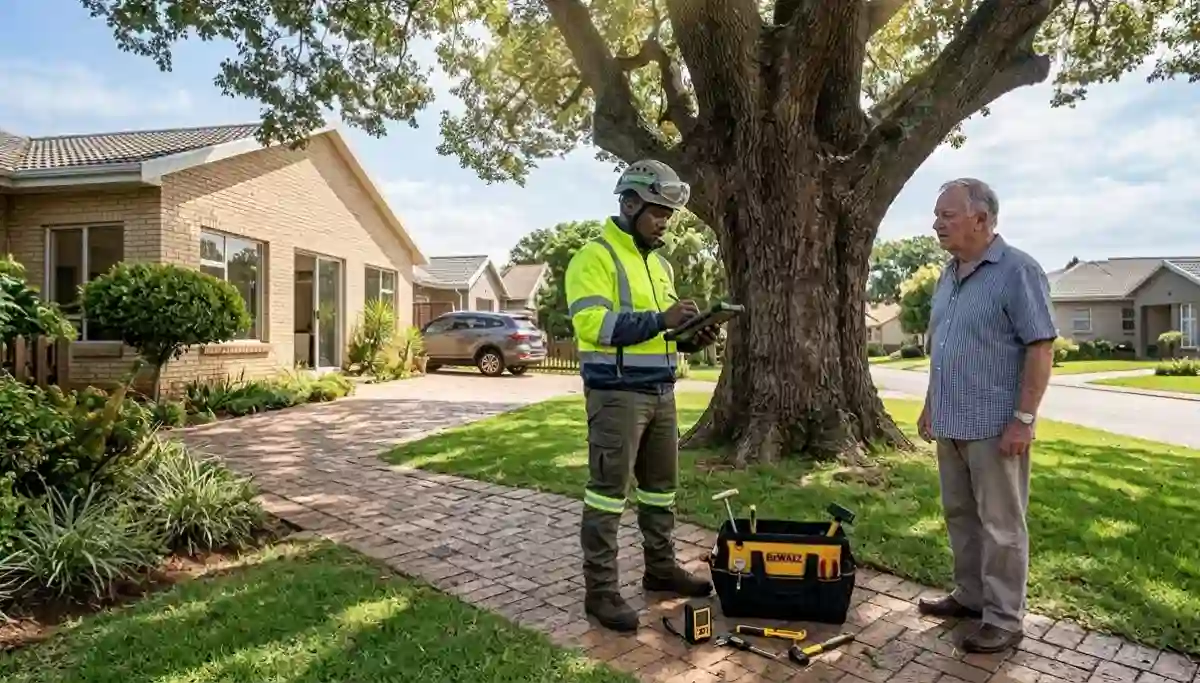
You can perform a basic visual inspection of your trees yourself. Walk around them and look for these key signs. If you see any, it’s time to call a professional for an arborist assessment.
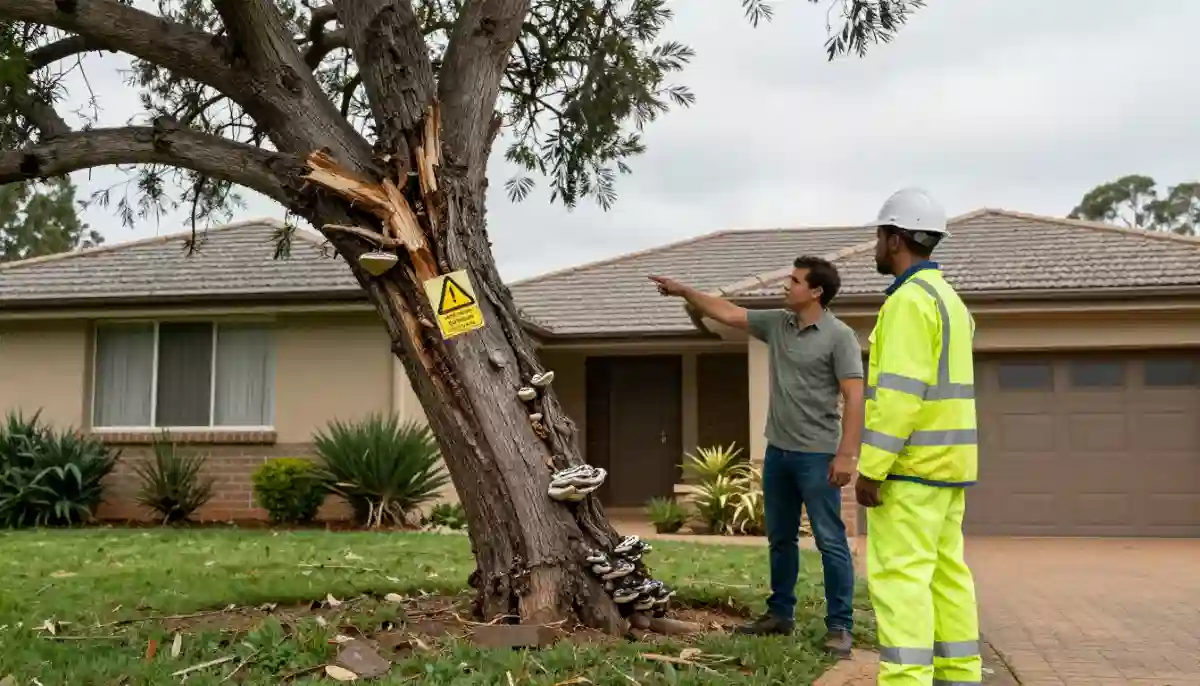
- The trunk: Is it leaning? Are there cracks, splits, or large cavities? Any fungus on trunk (mushrooms or brackets)?
- The branches: Are there large dead branches in the crown? Is there crown dieback (thinning foliage at the top)?
- The base/roots: Is the soil heaving soil or cracking near the base? Can you see damaged roots? Is there evidence of roots damaging foundation of your house or paving?
- The leaves: Are they discoloured, smaller than usual, or falling at the wrong time of year?
- The site: Has there been recent construction or excavation near the tree? This can damage roots and destabilise it.
📐 Leaning Tree After Storm – How Much is Too Much?
Not all leans are emergencies. Some trees grow with a slight lean naturally. However, a new lean or a worsening lean is a major red flag.
- Natural lean: If a tree has always leaned, and the soil around the base is undisturbed (no cracking or heaving), it may be stable. Arborists call this a “natural lean.”
- Dangerous lean: A leaning tree after storm, or a lean that has visibly increased, is dangerous. Look for:
- Fresh cracks in the soil on the side opposite the lean (indicating roots are pulling up).
- Heaving soil on the side of the lean.
- A sudden change in the tree’s angle.
- Action: If you notice a new or worsening lean, especially after a storm, call an arborist immediately. The tree is at high risk of falling.
🪵 Trunk Damage: Cracks, Cavities & Fungus
The trunk is the tree’s main support. Any significant damage here is a serious concern.
- Cracked trunk: Deep vertical or horizontal cracks in the bark that penetrate into the wood are a structural failure waiting to happen. A cracked trunk splits the tree’s main support.
- Cavities and holes: Large holes or cavities indicate cavity decay. The internal wood is rotting, weakening the tree. If you can see sawdust-like material (frass) or insect activity, decay is advanced.
- Fungus on trunk: Mushrooms or fungal brackets growing on the trunk are a definitive sign of internal rot. The fungus is the “fruiting body” of a decay organism that is breaking down the wood inside. This is a major red flag.
- Bark missing: Large areas of missing bark (especially if they extend around the circumference) can kill the tree and weaken its structure.
🌿 Crown Dieback & Dead Branches
The crown (the leafy part) tells you about the tree’s health.
- Crown dieback: This refers to the progressive death of twigs, branches, and shoots starting at the tips. If the top of the tree is thinning or has dead branches while the lower part is lush, it’s a sign of stress, disease, or root problems.
- Dead branches: Large, dead branches in the crown are a serious hazard. They can fall at any time, especially in wind. Deadwood is brittle and unpredictable. Dead tree removal may be necessary if a significant portion of the crown is dead.
- Epicormic growth: These are shoots growing from the trunk or main branches. They are often a stress response, indicating the tree is struggling.
🌱 Root Problems: Heaving Soil & Foundation Damage
Roots anchor the tree. If the root system is failing, the tree is at risk.
- Heaving soil: If the soil at the base of the tree is lifting or cracking, it can indicate root movement. This is often a sign the tree is becoming unstable.
- Roots damaging foundation: Some tree species have aggressive roots that can crack foundations, lift paving, or block drains. While this isn’t always a sign the tree is dangerous to itself, it can be a sign it’s dangerous to your property. If roots are damaging your house’s foundation, removal may be the only option.
- Exposed, damaged, or severed roots: Construction, trenching, or landscaping that cuts major roots can destabilise a tree. If you see large, cut roots near the trunk, the tree’s anchor is compromised.
- Fungus at the base: Mushrooms growing from the base or on exposed roots indicate root rot.
🍄 Fungus on Trunk & Signs of Internal Decay
This is one of the most definitive signs that a tree is rotting from the inside.
- What to look for: Mushrooms, brackets, or conks growing on the trunk, branches, or at the base. These are the reproductive structures of wood-decaying fungi.
- What it means: The fungus is breaking down the lignin and cellulose in the wood, making it soft and weak. The tree may look healthy from the outside but be completely hollow inside.
- Action: A tree with fungal fruiting bodies is highly likely to fail. It needs immediate arborist assessment. Removal is often the only safe option. The Institute of South African Arboriculture provides resources on tree health.
🌪️ After the Storm: Immediate Danger Signs
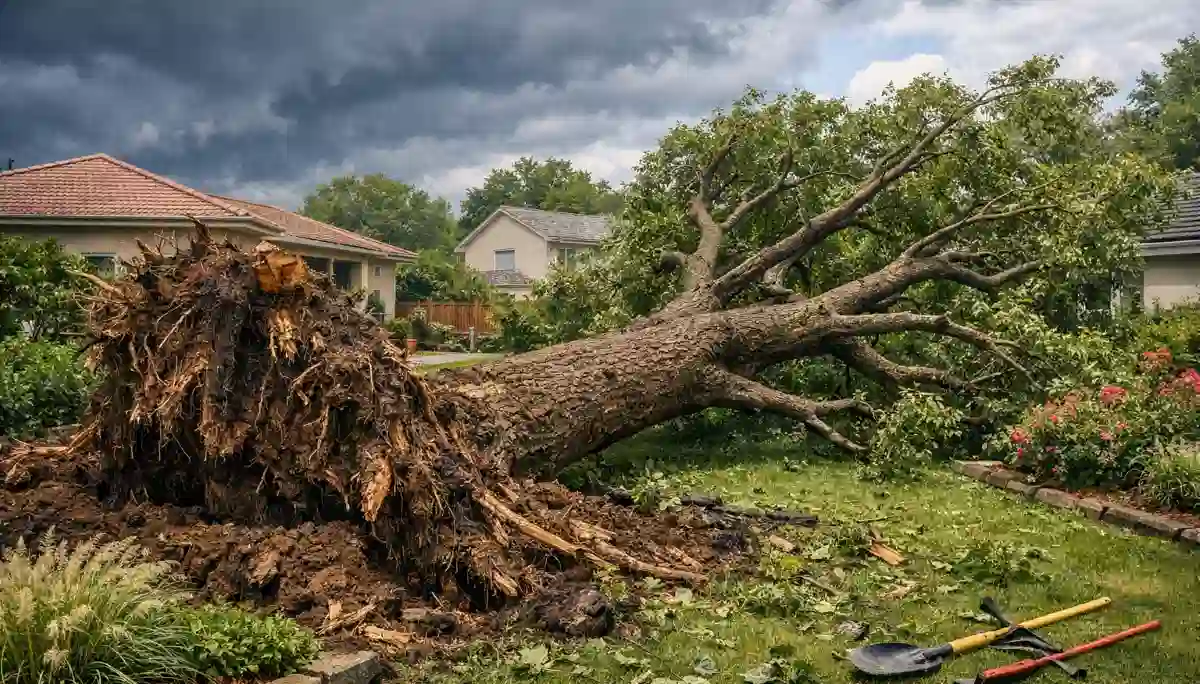
Severe weather can turn a healthy tree into a time bomb. After a storm in areas like Midrand or Centurion, inspect your trees for these dangerous tree signs.
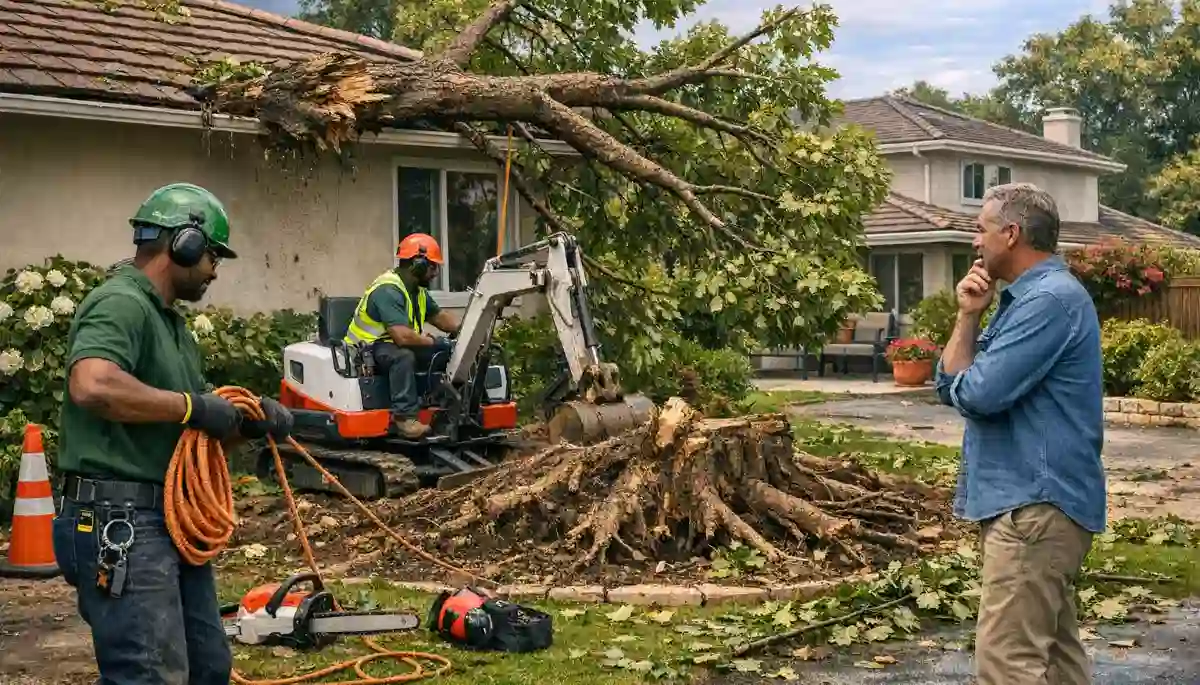
- Hanging branches: “Hangers” or “widow-makers” are broken branches stuck in the canopy. They can fall without warning.
- Split trunks or leaders: A storm can split a tree into two or more sections. A split trunk is a major structural failure.
- New lean: As discussed, a new lean after a storm is a red flag.
- Uprooted tree after storm: If a tree is partially uprooted (root ball lifted), it is extremely dangerous and needs emergency removal.
- Damage to other trees: A falling branch may have damaged nearby trees, creating new hazards.
📜 A Note on Protected Trees & Permits
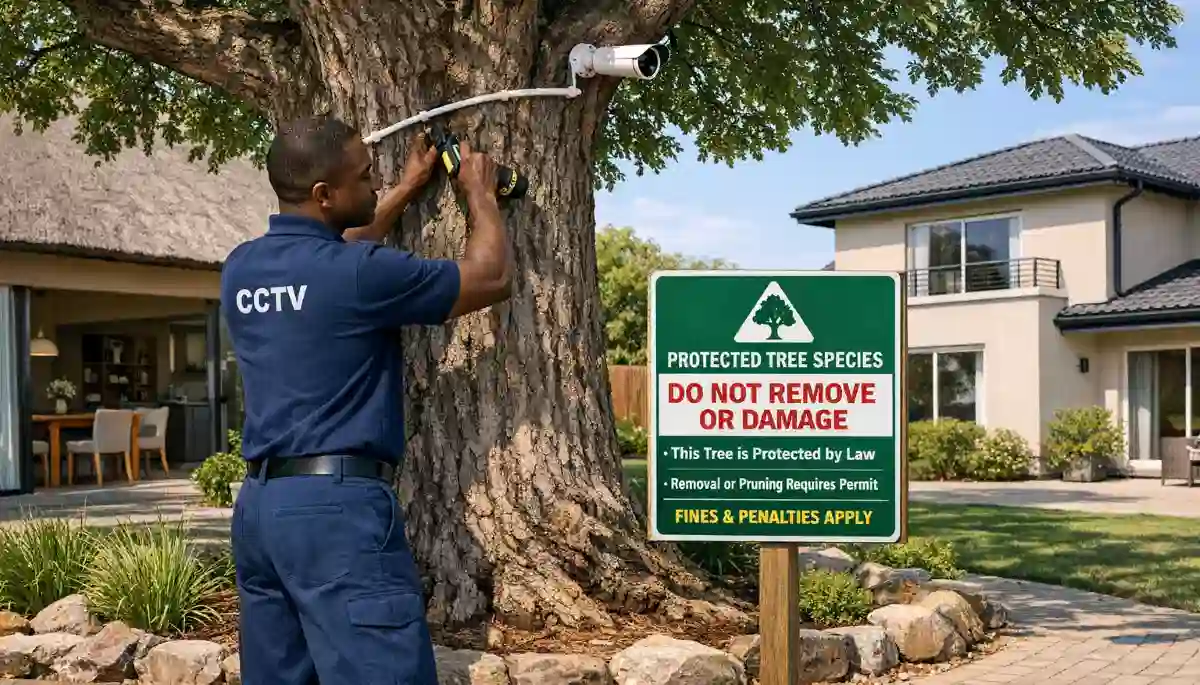
Before you remove any tree, especially a large or indigenous one, you must check if it is protected. Removing a protected tree without a permit is illegal and carries heavy fines.
- National list: The Department of Forestry, Fisheries and the Environment (DFFE) maintains a list of protected tree species under the National Forests Act.
- Municipal bylaws: Many municipalities, including Johannesburg and Cape Town, have their own bylaws protecting certain trees or requiring permits for removal above a certain size.
- What to do: If you suspect your tree might be protected, consult our tree removal permits guide or contact your local municipality. A reputable arborist can also advise you.
📞 When to Call a Professional Arborist
If you see ANY of the signs mentioned in this guide, it’s time to call in an expert. Don’t rely on your own judgment for a tree that could cause serious damage.
- For a free assessment: Many reputable companies offer free inspections and quotes. Use this service.
- What an arborist will do: A certified arborist from the Institute of South African Arboriculture will assess the tree’s health, stability, and risk. They may use tools like a mallet to sound the trunk for hollow areas, or even recommend a resistograph test for a more detailed analysis of internal decay.
- They will advise: Based on the assessment, they will recommend either maintenance (pruning, bracing) or removal.
📊 Tree Hazard – Danger Level Comparison Table
| Sign / Symptom | Danger Level | What It Indicates | Recommended Action |
|---|---|---|---|
| New or worsening lean (especially after storm) | HIGH | Root failure / instability | Immediate emergency assessment |
| Fungus (mushrooms/brackets) on trunk | HIGH | Advanced internal decay | Professional assessment; likely removal |
| Deep crack or split in trunk | HIGH | Structural failure | Immediate professional assessment |
| Large dead branches in crown | MEDIUM | Dieback, hazard of falling limbs | Professional pruning or removal assessment |
| Heaving soil / lifted root plate | MEDIUM-HIGH | Root instability | Urgent professional assessment |
| Cavity / hollow trunk | MEDIUM | Internal decay (extent unknown) | Professional assessment to measure wall thickness |
| Crown dieback (thinning top) | LOW-MEDIUM | Stress, disease, root issues | Professional health assessment |
| Minor surface roots in lawn | LOW | Natural for some species | Monitor; may be a nuisance but not a hazard |
| Roots damaging foundation/paving | MEDIUM | Property damage risk | Consult arborist and engineer; removal may be needed |
❌ 8 Common Mistakes Homeowners Make
- Mistake #1: Ignoring the signs. “It’s been there for years, it’ll be fine.” is a dangerous assumption. Trees weaken over time.
- Mistake #2: Only looking up. Many hazards, like root rot, are at the base. Do a full 360-degree inspection, including the ground.
- Mistake #3: Confusing a natural lean with a dangerous lean. If in doubt, get a professional opinion.
- Mistake #4: Thinking fungus is harmless. Fungus on a tree is almost always a sign of decay. It is not harmless.
- Mistake #5: Removing a protected tree without a permit. This can result in fines of up to R100,000 or more. Always check first.
- Mistake #6: Delaying action after a storm. A tree weakened by a storm can fail in the next one, or even without warning.
- Mistake #7: Hiring a “handyman” with a chainsaw instead of a qualified arborist. Uninsured workers can leave you liable for damages or injuries. See our hiring guide.
- Mistake #8: Not getting a second opinion. If one arborist recommends removal and you’re unsure, get another assessment. However, if multiple arborists agree, act on it.
❓ Frequently Asked Questions
What are the signs of a dangerous tree?
Dangerous tree signs include a new or increasing lean, large dead branches, cracks or cavities in the trunk, fungus on trunk or roots, heaving soil around the base, and crown dieback. If you see any of these, call an arborist.
Is a tree leaning after a storm always dangerous?
A leaning tree after storm that is new or has worsened is a major red flag. It indicates potential root failure. It should be assessed by a professional immediately, as it could fall without further warning.
What does fungus on a tree trunk mean?
Fungus on trunk (mushrooms or brackets) is a definitive sign of internal rot. The fungus is breaking down the wood, weakening the tree’s structure. This often means the tree needs to be removed.
Can tree roots really damage a house foundation?
Yes, certain species with aggressive root systems can cause roots damaging foundation. They can also lift paving and block drains. If this is happening, removal may be the only practical solution, but always get an arborist’s advice first.
What is crown dieback?
Crown dieback is when branches at the top of the tree start to die, thinning the canopy. It’s a sign of stress, disease, or root problems. It can make the tree unsafe as dead branches may fall.
Do I need a permit to remove a dead tree?
Even for dead tree removal, you may need a permit if the species is protected or if municipal bylaws require it. A dead protected tree is still protected. Always check with your local municipality first.
How often should I have my trees inspected?
A professional arborist assessment every 2-3 years is a good idea for mature trees on your property. You should also inspect them yourself after major storms.
What is a cavity in a tree and is it dangerous?
A cavity decay is a hole or hollow area in the trunk or branches. It indicates internal rot. Whether it’s dangerous depends on the size of the cavity and the thickness of the remaining sound wood. An arborist can assess this.
My tree has heaving soil at the base. What does this mean?
Heaving soil around the base of a tree can indicate root movement and potential instability. It’s often a sign the tree is beginning to uproot. This requires urgent professional assessment.
Should I remove a tree that is close to my house?
Proximity alone isn’t a reason to remove a tree. However, if a tree near your house shows any of the dangerous tree signs listed here, it poses a higher risk and should be assessed. For an assessment in your area, find local tree services.
✅ Final Thoughts – Your Tree Safety Action Plan
Your trees are valuable assets, but they can also become serious liabilities. By knowing the signs you need tree removal, you can protect your home and family. When in doubt, always err on the side of caution and consult a professional. The cost of an assessment is nothing compared to the cost of a disaster.
Key takeaways:
- Regularly inspect your trees for the signs we’ve discussed.
- Pay special attention after storms.
- Never ignore fungus on trunk or a new lean.
- Check if your tree is protected before planning any work.
- Always hire a qualified, insured arborist for assessments and work.
Your 5-Step Action Plan
- Walk your property: Do a visual inspection of all your trees, especially large ones near the house.
- Note any warning signs: Use our checklist to identify potential issues.
- Check permit requirements: If you suspect removal might be needed, quickly check with your municipality.
- Book a free inspection: Use our service to get a qualified arborist to assess any trees of concern.
- Act on professional advice: If removal is recommended, get quotes and schedule the work promptly.
Concerned About a Tree on Your Property?
Get free, no-obligation inspections and quotes from vetted, insured arborists in your area. Don’t wait for a storm to make the decision for you.
📞 Call us: 073 138 4726 for personalised assistance
Free site inspections •
Beat-your-quote guarantee •
Our guarantees
📚 Official resources & standards:
- Institute of South African Arboriculture – Find a certified arborist and tree health resources.
- National Legal Unit (for permits) – Information on protected species and permit requirements.
Information accurate as of publication. This guide is for informational purposes. For specific advice, consult a qualified arborist.
Written by: ServiceLink SA Research Team
Industry research and analysis team, ServiceLink SA
The ServiceLink SA Research Team has consulted with certified arborists and analysed hundreds of tree failure cases across South Africa. This guide synthesises that knowledge to help homeowners make informed, life-saving decisions about their trees.
For more detailed information, explore our related guides: tree felling costs to budget for removal, our trimming vs pruning guide for maintenance options, our hiring guide for vetting contractors, and our permits guide for legal compliance. For urgent situations, see our emergency removal page. Our contractor guide and free inspection services are also available.