
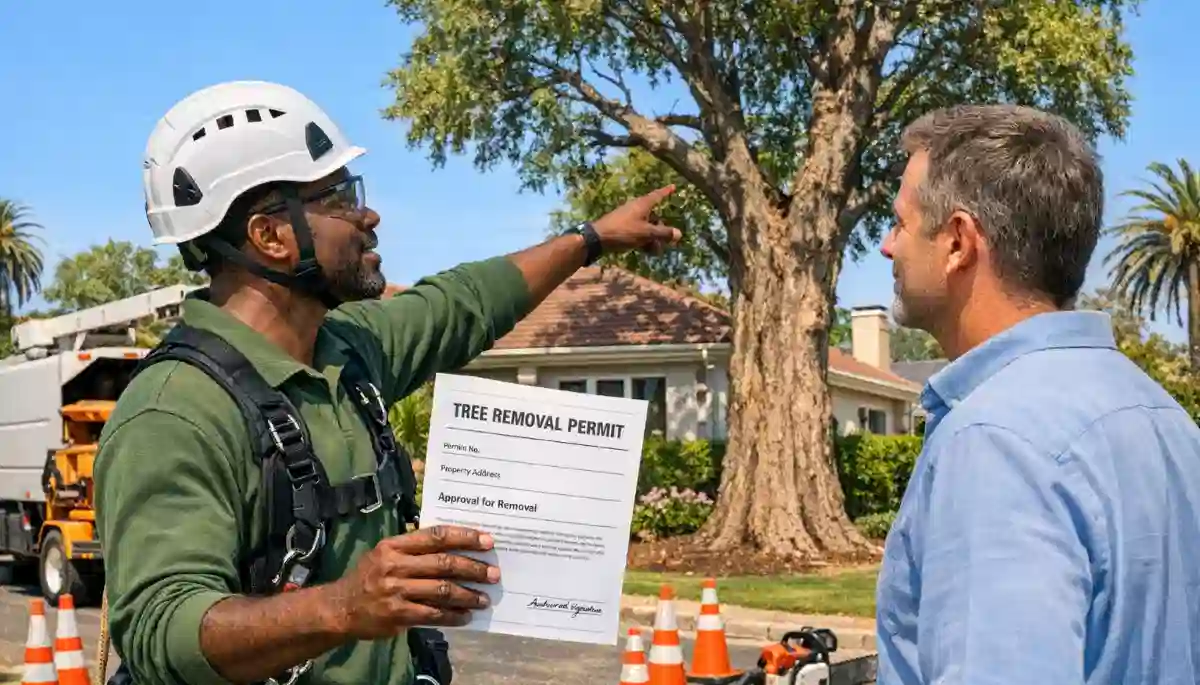
Tree Removal Permits South Africa – A Complete Legal Guide
📜 Do I need a permit to remove a tree? Protected species, municipal bylaws, and how to apply.
You have a large tree in your Johannesburg garden that needs to come down. It’s causing foundation issues, or perhaps it’s dead and dangerous. But before you call the tree fellers, you need to answer a critical question: Do I need a permit to remove a tree? In South Africa, the answer is not always simple. It depends on the species, its size, and where you live. Removing a protected tree without the correct authorization can result in massive fines and even legal action.
This guide cuts through the red tape. We explain the complex world of tree removal permits South Africa in plain language. You’ll learn about the national laws protecting certain species under NEMA (National Environmental Management Act), including the list of protected trees SA that require a permit from the Department of Forestry, Fisheries and the Environment (DFFE). We also dive into the critical role of local municipalities – because the rules in City of Johannesburg tree removal permit processes are different from those in Cape Town or Durban. We’ll help you understand terms like Section 15 of the National Forests Act, what constitutes a heritage tree, and the potential contravention fine for illegal removal. We also cover specific cases, like removing indigenous species on your property. Whether you’re in Pretoria, Cape Town, Durban, or Polokwane, this guide helps you stay legal.
If you’re ready to proceed with a legal removal, explore our Services Overview or visit our Tree Services page to find vetted arborists near you who understand permit requirements. For more on how we work, see How It Works.
Unsure About Permit Requirements?
Get free, no-obligation advice from local tree service experts who know the regulations in your area.
Servicing Johannesburg, Pretoria, Cape Town, Durban, and nationwide
📋 Table of Contents – Tree Removal Permits Guide
🌳 Why Tree Removal Permits Are Required
Trees provide immense environmental, social, and economic benefits. They clean our air, provide shade, reduce erosion, and support biodiversity. In South Africa, where we have unique and often threatened indigenous forests and woodlands, certain trees are legally protected to ensure their survival for future generations.
- Environmental protection: Protecting indigenous and endangered tree species from indiscriminate removal.
- Urban canopy: Municipalities protect trees in urban areas to maintain green cover, reduce heat island effects, and manage stormwater.
- Heritage value: Some trees are protected because of their age, size, or historical significance (heritage trees).
- Legal compliance: The laws exist to enforce these protections. Ignorance is not an excuse, and penalties can be severe.
Read more about our approach on our About Us page or see why clients choose us on our Benefits page.
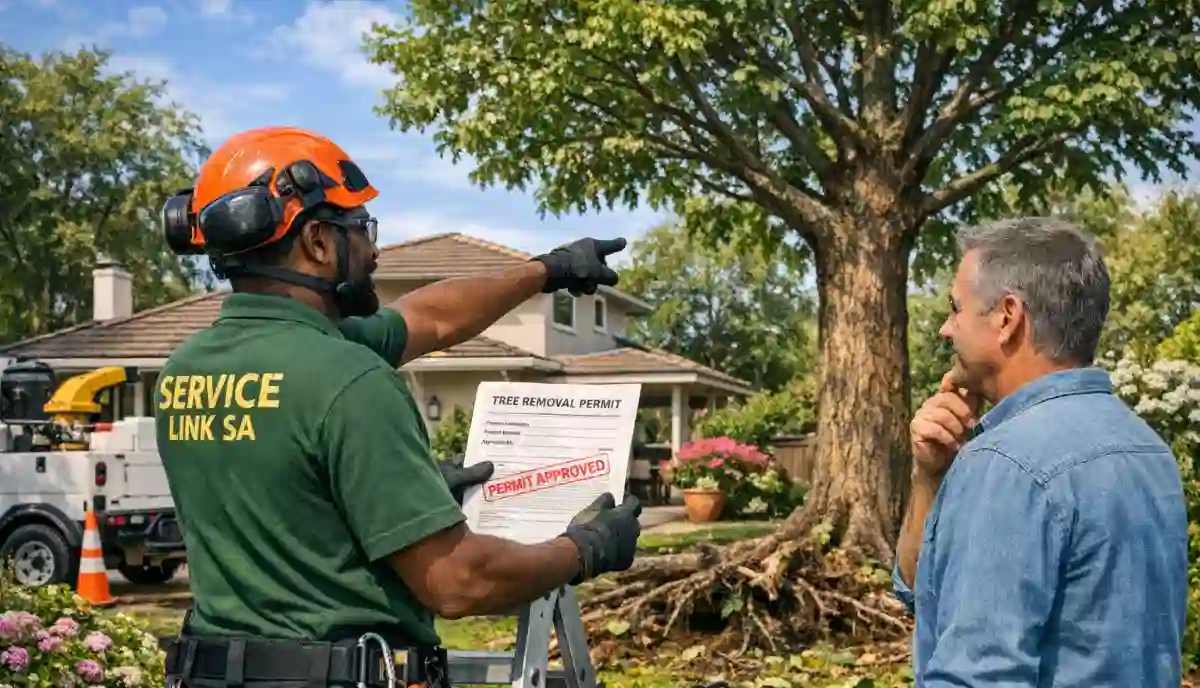
🏛️ National Law: Protected Trees & NEMA
At a national level, the primary legislation is the National Forests Act (Act 84 of 1998), administered by the Department of Forestry, Fisheries and the Environment (DFFE).
- Section 15 of the National Forests Act provides for the protection of specific tree species. A list of protected tree species is published in the Government Gazette. These species may not be cut, disturbed, damaged, or destroyed without a license from the Minister.
- What this means: If you have a tree on your property that is on the national protected list, you MUST apply for a license from the DFFE before you can legally remove it. This is a separate process from municipal permits.
- Examples of nationally protected trees: The list includes many indigenous species, such as the Yellowwood (Podocarpus species), Stinkwood (Ocotea bullata), and some cedar and ironwood species. The list is updated periodically, so always check the current version.
- NEMA (National Environmental Management Act): This act also plays a role, particularly in protecting trees within sensitive environments or as part of broader environmental impact assessments.
🏘️ Municipal Bylaws: The Local Rules
Even if your tree is not on the national protected list, your local municipality almost certainly has its own rules. These vary significantly.
- Why municipalities have bylaws: To manage the urban forest, control development, and protect trees that contribute to the local environment and character.
- Common triggers for a permit:
- Tree size: Permits may be required for trees above a certain height or trunk diameter (e.g., circumference greater than 1m).
- Species: Some municipalities protect specific indigenous species within their boundaries, even if they aren’t on the national list.
- Location: Trees in certain zones (e.g., conservation areas, heritage sites) may be protected.
- Always check: Before doing any work, you must check with your local municipality. The penalties for contravening municipal bylaws can be steep.
🏙️ City of Johannesburg Tree Removal Permit
Johannesburg has specific bylaws regarding tree removal. Here’s what you need to know.
- When is a permit required? Generally, a permit is required to remove any tree with a trunk circumference greater than 1 metre (measured 1 metre above ground level) on private property. There may also be protections for certain species.
- Where to apply: The City of Johannesburg’s Department of Development Planning or City Parks. The process usually involves submitting an application form, paying a fee, and possibly having a site inspection.
- Timeframe: Permit applications can take several weeks to process. Plan ahead.
- Contact: Check the official City of Johannesburg website for the most current application forms and fees.
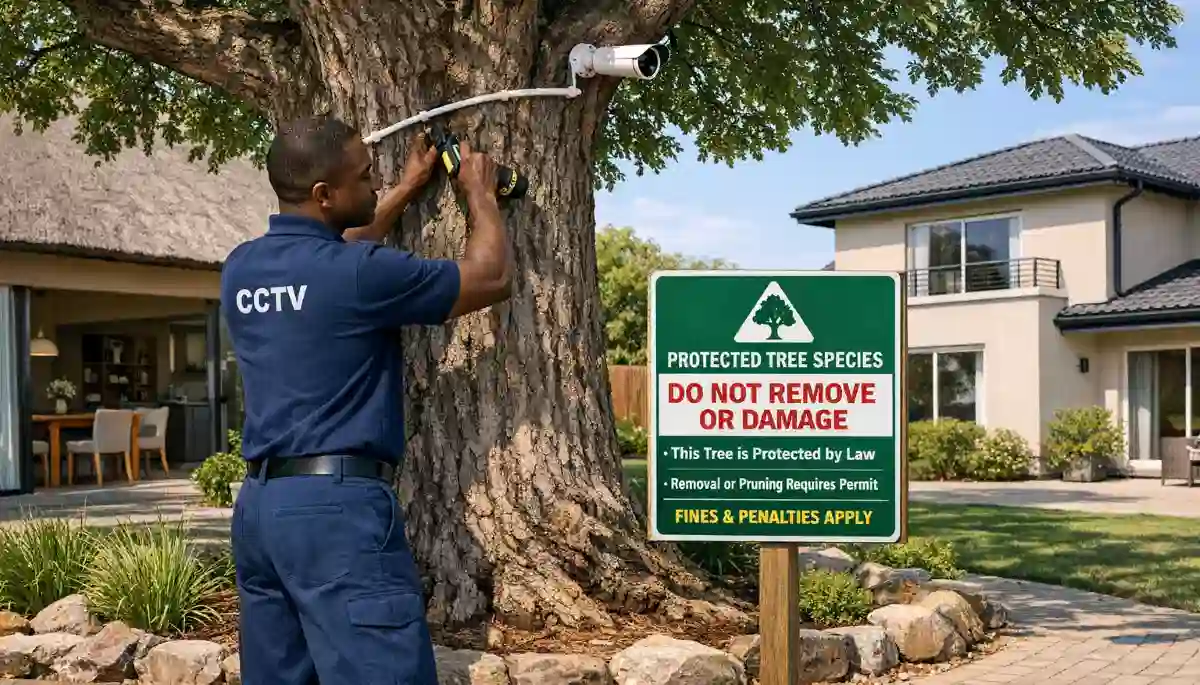
🏛️ City of Tshwane (Pretoria) Regulations
The City of Tshwane also has its own tree protection bylaws.
- Protected trees: Tshwane protects certain indigenous species and may require permits for the removal of trees above a specified size. The exact details can be found in the City of Tshwane’s Environmental Management Bylaws.
- Application process: Permits are typically applied for through the City’s Environmental Management Department. A site inspection by a municipal official is common.
- Note: If you are in Centurion or other areas within the Tshwane metro, these rules apply.
- Contact: Always check the official City of Tshwane website for the latest information.
🌊 Cape Town Protected Tree List & Permits
Cape Town is known for its unique and valuable natural environment, and its tree protection bylaws reflect this.
- What is protected? The City of Cape Town has a list of protected indigenous tree species. It also protects trees within certain environmental areas (e.g., conservation-worthy sites, mountain catchment areas). Furthermore, any tree with a trunk circumference of more than 1 metre may require a permit.
- Heritage trees: Cape Town also identifies and protects “heritage trees” – trees of significance due to their age, size, or historical association. These are specially protected.
- How to apply: Applications are made to the City’s Environmental Management Department. The process can be detailed and may require a motivation and an arborist’s report.
- Check the list: Consult the official City of Cape Town website for the current protected tree list and application forms. This is especially important if you are in Stellenbosch (which falls under Cape Winelands District Municipality, with its own rules) or the Cape Metro.
🌴 eThekwini (Durban) Tree Bylaws
Durban’s subtropical climate means lush vegetation, and the municipality has rules to manage it.
- Protected trees: eThekwini Municipality protects certain indigenous trees. Permits are generally required for the removal of any tree with a diameter at breast height (DBH) exceeding a certain size (often 450mm).
- Invasive species: Note that some trees in Durban are invasive alien species (e.g., certain palms, bugweed). You may NOT need a permit to remove invasives, and in fact, you may be legally obliged to control them. See our palm tree removal guide for more.
- Application: Apply through the eThekwini Municipality’s Environmental Planning and Climate Protection Department.
📍 Other Municipalities (Mbombela, Polokwane, etc.)
Rules vary across the country. If you are outside the major metros, you must still check local bylaws.
- Mbombela (Nelspruit): As a city in a biodiversity-rich area, Mbombela likely has protections for indigenous trees. Check with the Mbombela Local Municipality.
- Polokwane: Similarly, check with the Polokwane Municipality’s environmental department.
- Pietermaritzburg: The Msunduzi Municipality has its own tree protection bylaws. Check their website or contact them directly.
- General rule: When in doubt, contact your local municipality’s environmental or parks department. Ask them: “Do I need a permit to remove a tree on my property?” and specify the tree type and size if you know it.
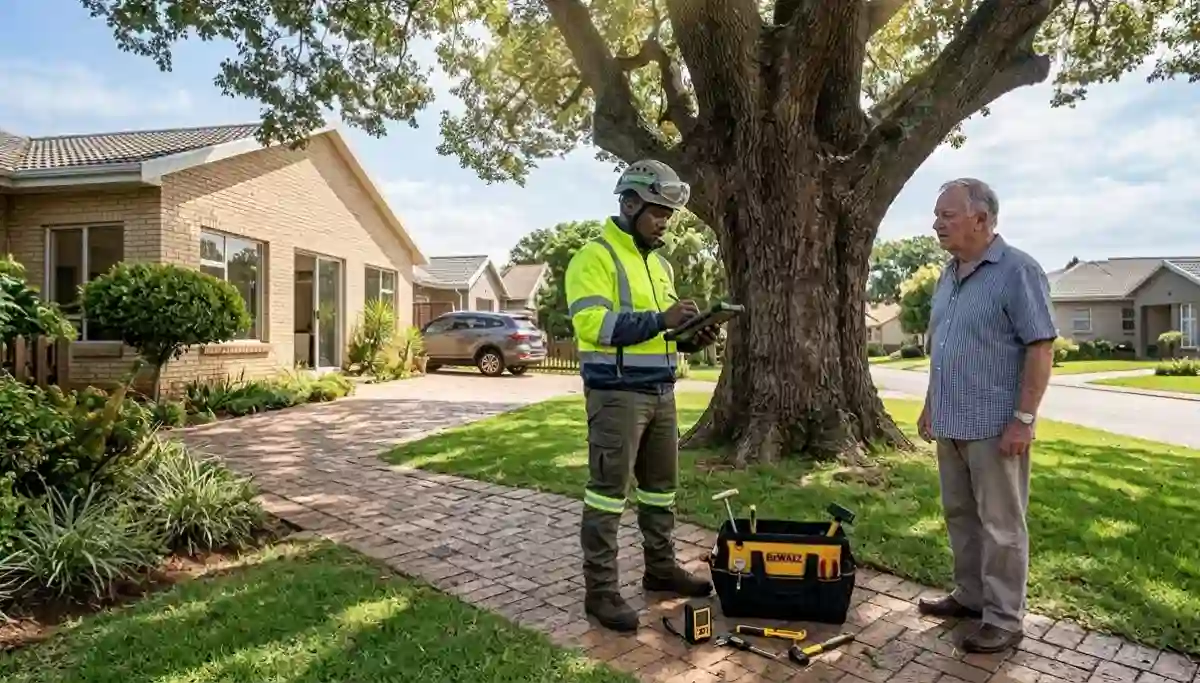
🏛️ Heritage Trees & Additional Protection
Some trees are protected not just by environmental laws, but also by heritage legislation.
- What is a heritage tree? A tree may be declared a heritage tree due to its age (e.g., over 100 years old), size, historical significance (e.g., a tree under which a famous event took place), or rarity. These trees are often protected by the South African Heritage Resources Agency (SAHRA) or provincial heritage authorities.
- Protection: Heritage trees are usually subject to the highest level of protection. Removing one is extremely difficult and requires motivation and approval from heritage authorities, in addition to any municipal or national permits.
- Check: If you have a very old or historically significant tree, assume it may have heritage status. Your local museum or heritage authority can advise.
📋 How to Apply for a Tree Removal Permit
The exact process varies, but here are the general steps.
- Identify the tree: Know the species. If you’re unsure, hire an arborist to identify it. This is crucial for determining if it’s protected.
- Check regulations: Contact your local municipality and check the DFFE protected species list. Determine if a permit is needed and from which authority (national or local).
- Get a professional assessment: Many applications require a report from a qualified arborist stating the tree’s condition and the reason for removal (e.g., dead, diseased, dangerous, causing structural damage).
- Complete the application form: Obtain the correct form from the relevant authority. Fill it out accurately and completely.
- Submit and pay the fee: Submit your application along with any required documents (arborist report, site photos, motivation letter) and pay the application fee.
- Wait for processing: This can take weeks. Do not remove the tree until you have received the permit in writing.
- If refused: You may have the right to appeal. An arborist can advise on this process.
💰 Fines & Penalties for Illegal Removal
The consequences of removing a protected tree without a permit can be severe. They are designed to be a strong deterrent.
- Contravention fine: You can face a significant fine. Under the National Forests Act, the fine can be up to R100,000 or even imprisonment for serious offences. Municipal fines can also be substantial, often ranging from R5,000 to R50,000 or more, depending on the value of the tree and the bylaw.
- Replacement order: You may be ordered to replace the removed tree with one or more new trees of a similar species and size, at your own expense. This can cost many thousands of rands.
- Legal action: In extreme cases, you could face a criminal record.
- Reputational damage: For businesses, illegal tree removal can lead to negative publicity and loss of community trust.
It is always cheaper and easier to apply for a permit than to face the penalties.
✅ Exceptions: When a Permit Isn’t Needed
There are some limited circumstances where you may not need a permit. However, these are exceptions and should not be assumed.
- Dead or dangerous trees: In some municipalities, you may be exempt from permit requirements for trees that are dead or pose an immediate danger. However, you will likely need proof (e.g., an arborist’s report) to confirm this, and you may still need to notify the municipality. Do not cut down a dangerous tree without first documenting the danger.
- Invasive alien species: You generally do not need a permit to remove listed invasive alien plants. In fact, you are legally obliged to control them. Check the NEMBA invasive species lists.
- Small trees: Bylaws often only protect trees above a certain size. A small sapling is unlikely to be protected.
- Nursery stock: Trees grown for commercial purposes (e.g., in a nursery or plantation) are generally not protected.
Important: Even if you think an exception applies, it’s wise to get confirmation from your local municipality in writing.
❌ 7 Common Permit Mistakes
- Mistake #1: Assuming you don’t need a permit. This is the most common and costly mistake. Always check before you cut.
- Mistake #2: Only checking national laws, ignoring municipal bylaws. Your local municipality’s rules are just as important. A tree might not be nationally protected but could be protected by your city.
- Mistake #3: Removing a tree while the permit application is pending. You must wait for written approval. Starting work without it is illegal.
- Mistake #4: Not providing enough information. Incomplete applications are often rejected. Include a professional arborist report and clear photos.
- Mistake #5: Forgetting about heritage status. If your tree is very old or historically significant, it may have additional heritage protection.
- Mistake #6: Hiring an unqualified person to apply. A reputable tree service company can often advise on permits. An unqualified “cowboy” may ignore the law and leave you exposed.
- Mistake #7: Ignoring the permit conditions. A permit may come with conditions (e.g., planting replacement trees). Failing to meet these can still result in penalties.
❓ Frequently Asked Questions
Do I need a permit to remove a tree on my property in South Africa?
You may need a tree removal permit South Africa if the tree is a protected species (nationally or locally) or if it exceeds a certain size as defined by your municipality. Always check with your local authority first.
How do I get a City of Johannesburg tree removal permit?
To get a City of Johannesburg tree removal permit, you need to apply to the City’s Department of Development Planning or City Parks. You’ll typically need an arborist’s report and must pay a fee. Check their website for the latest forms.
What are the protected trees in South Africa?
Protected trees SA are listed by the Department of Forestry, Fisheries and the Environment (DFFE). They include many indigenous species like Yellowwoods and Stinkwoods. Municipalities also have their own protected lists. See the DFFE website for the national list.
What is the Cape Town protected tree list?
The Cape Town protected tree list includes certain indigenous species and also protects trees based on size (trunk circumference over 1m). Heritage trees are also protected. Check the City of Cape Town’s website for details.
What happens if I remove a protected tree without a permit?
You can face a contravention fine ranging from thousands to over R100,000, a court order to replace the tree, and even criminal charges. It’s a serious offence.
What is NEMA and how does it relate to trees?
NEMA (National Environmental Management Act) is a framework law for environmental protection. It works alongside the National Forests Act to protect trees in sensitive environments and regulate activities that may harm them.
Do I need a permit to remove an invasive alien tree?
Generally, no. You are legally obliged to control or remove listed invasive alien species. However, it’s still wise to be sure of the identification. Check the NEMBA invasive species lists.
What is Section 15 of the National Forests Act?
Section 15 is the part of the National Forests Act that provides for the declaration and protection of specific tree species. It makes it an offence to cut, disturb, damage, or destroy any protected tree without a license.
What is a heritage tree?
A heritage tree is a tree declared to be of cultural, historical, or scientific significance. It receives additional protection under heritage legislation, often making removal extremely difficult.
How long does a tree removal permit take to get?
The processing time varies by municipality, but it can take anywhere from 2 to 8 weeks. Apply well in advance of any planned work.
✅ Final Thoughts – Your Permit Action Plan
Navigating tree removal permits South Africa can seem daunting, but it’s a necessary step for responsible tree ownership. The key is to be proactive, do your research, and never assume you can cut without checking. The cost and hassle of a permit are minimal compared to the potential fines and legal consequences of illegal removal.
Key takeaways:
- Always check both national (DFFE) and local (municipal) regulations.
- If in doubt about the species, hire an arborist to identify the tree.
- Apply for permits well in advance of your planned work.
- Keep a copy of your permit on site once granted.
- Be aware of exceptions (dead trees, invasives) but verify them first.
Your 5-Step Action Plan
- Identify the tree species. If you can’t, get professional help.
- Check national and local protected lists. Use the DFFE website and your municipality’s website.
- If unsure, contact your municipality. Ask them directly: “Do I need a permit for this tree?”
- If a permit is needed, apply. Gather the required documents (arborist report, photos) and submit your application.
- Wait for approval. Do not start work until you have the permit in hand.
Need Help with the Permit Process?
Get free, no-obligation quotes from vetted tree service companies who understand local regulations and can assist with assessments and applications.
📞 Call us: 073 138 4726 for personalised assistance
Legal compliance •
Beat-your-quote guarantee •
Our guarantees
📚 Official resources & standards:
- Department of Forestry, Fisheries and the Environment (DFFE) – National protected tree list and permit applications.
- City of Johannesburg – Municipal bylaws and tree permit information.
- City of Cape Town – Protected tree list and permit application details.
Information accurate as of publication. Laws and bylaws can change. Always verify with the relevant authority.
Written by: ServiceLink SA Research Team
Industry research and analysis team, ServiceLink SA
The ServiceLink SA Research Team has extensive experience navigating the complex web of South African environmental and municipal legislation. This guide synthesises information from national and local authorities to provide homeowners with clear, actionable advice.
For more detailed information, explore our related guides: signs you need tree removal to assess if your tree is hazardous, our palm tree removal guide for specific rules on palms, our company selection guide for finding a reputable contractor, and our cost guide for budgeting. Our contractor guide and legal compliance page also provide valuable background.