
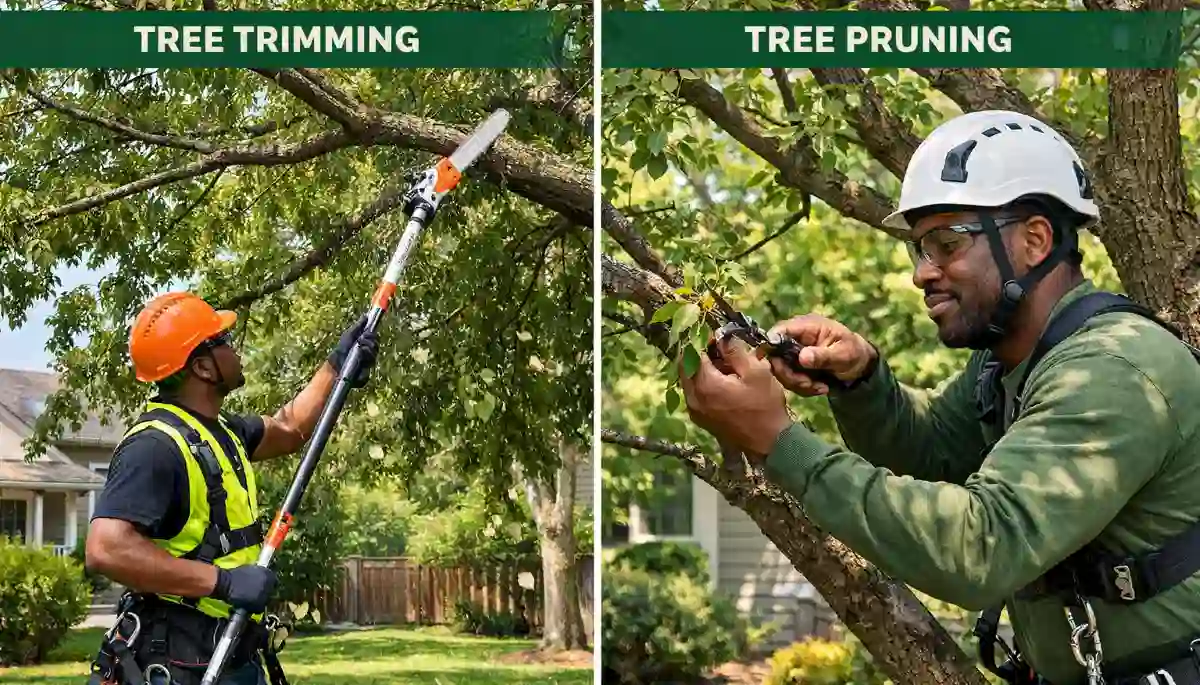
Tree Trimming vs Pruning – What’s the Difference?
🌿 Deadwooding, crown lifting, and pollarding: a complete guide to tree maintenance techniques in South Africa.
You have a beautiful old oak in your Pretoria garden that’s looking a bit shaggy. Your neighbour says it needs trimming. Your other neighbour insists it needs pruning. Are they the same thing? For most people, the words are used interchangeably, but in the world of arboriculture, tree trimming vs pruning refers to two different practices with different goals. Using the wrong technique at the wrong time can actually harm your tree.
This guide clarifies the difference between trimming and pruning once and for all. You’ll learn that trimming is primarily for aesthetics and safety (managing size and shape), while pruning is a health-focused practice that involves removing specific branches to improve the tree’s structure and vitality. We cover the most common pruning techniques used by professionals, including deadwooding (removing dead branches), crown lifting (removing lower branches to clear space), crown thinning (selective removal to increase light penetration), and the more severe pollarding. We also discuss the critical question of when to prune trees South Africa – timing is everything to avoid stress and disease. For those with edible gardens, we include a fruit tree pruning guide to maximise your harvest. Whether you’re in Johannesburg, Cape Town, or Durban, this guide helps you understand what your tree needs.
If you’re ready for professional tree care, explore our Services Overview or visit our Tree Services page to find vetted arborists near you. For more on how we work, see How It Works.
Need Expert Tree Care? Get Free Quotes
Compare prices from local, insured arborists for trimming, pruning, and maintenance in your area.
Find Tree Care Experts Near Me
Servicing Johannesburg, Pretoria, Cape Town, Durban, and nationwide
📋 Table of Contents – Trimming vs Pruning Guide
🌳 The Key Difference: Health vs Aesthetics
At its simplest, the difference between trimming and pruning is the goal of the work.
- Trimming is primarily for aesthetics and safety. It’s about shaping the tree, controlling its size, and removing branches that pose a risk (like those touching the house or obstructing views). It’s often done on hedges and shrubs as well as trees.
- Pruning is primarily for the tree’s health. It’s a more scientific process that involves selectively removing specific branches to improve the tree’s structure, encourage fruit or flower production, remove diseased or dead wood, and allow more light and air into the canopy.
Think of it this way: trimming is a haircut for looks; pruning is surgery for health. Both are important, but they are done for different reasons and at different times.
Read more about our approach on our About Us page or see why clients choose us on our Benefits page.
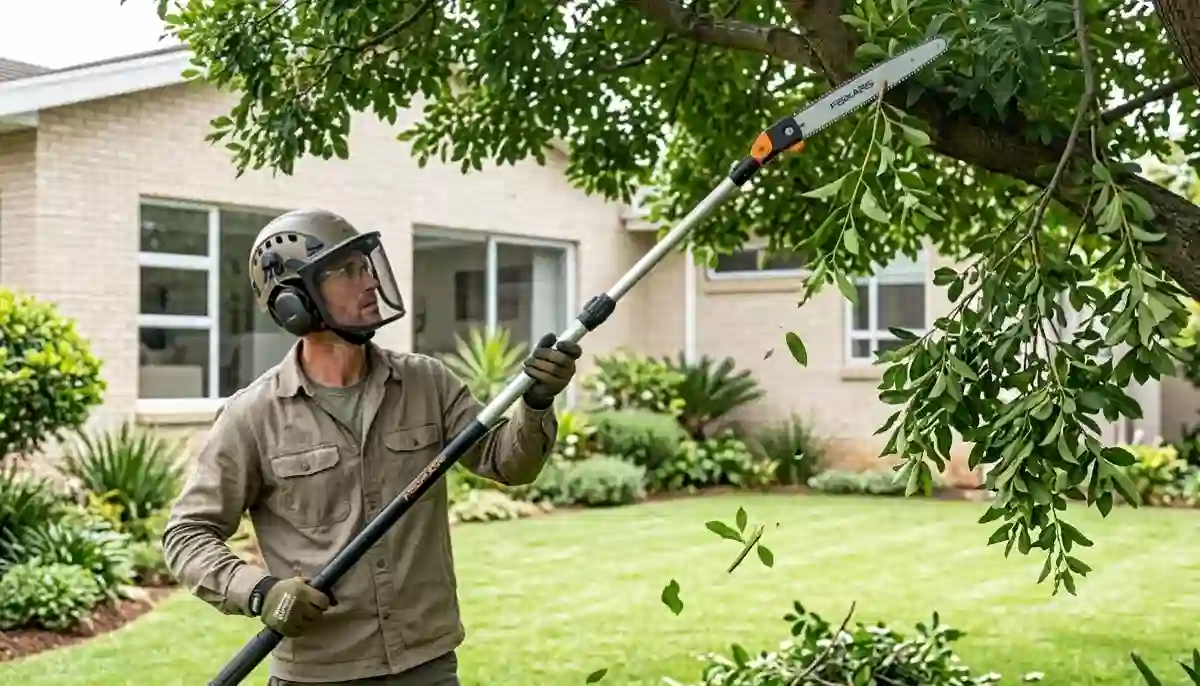
✂️ What is Tree Trimming?
Tree trimming is the process of cutting back overgrown branches to maintain a desired shape, size, and appearance. It’s also known as “hedging” when applied to shrubs.
- Goals of trimming:
- Aesthetics: Creating a symmetrical, pleasing shape. This is common for formal gardens and ornamental trees.
- Safety: Removing branches that are too close to your house, roof, power lines, or that obstruct driveways and pathways.
- Clearance: Raising the lower canopy to allow for pedestrian or vehicle access underneath (this is actually a pruning technique called crown lifting, but often called trimming).
- When to trim: For most trees, light trimming can be done at any time of year, but it’s best to avoid major trimming during periods of active growth or extreme weather. Heavier trimming is often done in late winter or early spring.
- Benefits of trimming: Improves the look of your landscape, prevents branches from damaging property, and can be less stressful for the tree than major pruning.
🪴 What is Tree Pruning?
Tree pruning is the selective removal of specific branches to improve the tree’s health, structure, and longevity. It’s a more skilled and thoughtful process than trimming.
- Goals of pruning:
- Health: Removing dead, diseased, or insect-infested branches to prevent the spread of problems.
- Structure: Removing crossing or rubbing branches, and correcting poor growth habits to create a strong, stable framework.
- Productivity: Encouraging fruit or flower production by directing the tree’s energy.
- Safety: Removing weak or hazardous branches that could fall.
- Light and air: Thinning the canopy to allow more sunlight and air circulation, which benefits the tree and the plants below.
- When to prune: The best time for most pruning is during the tree’s dormant season (late autumn to late winter in South Africa). This minimizes stress and reduces the risk of pest infestation. However, dead or hazardous branches can be removed at any time.
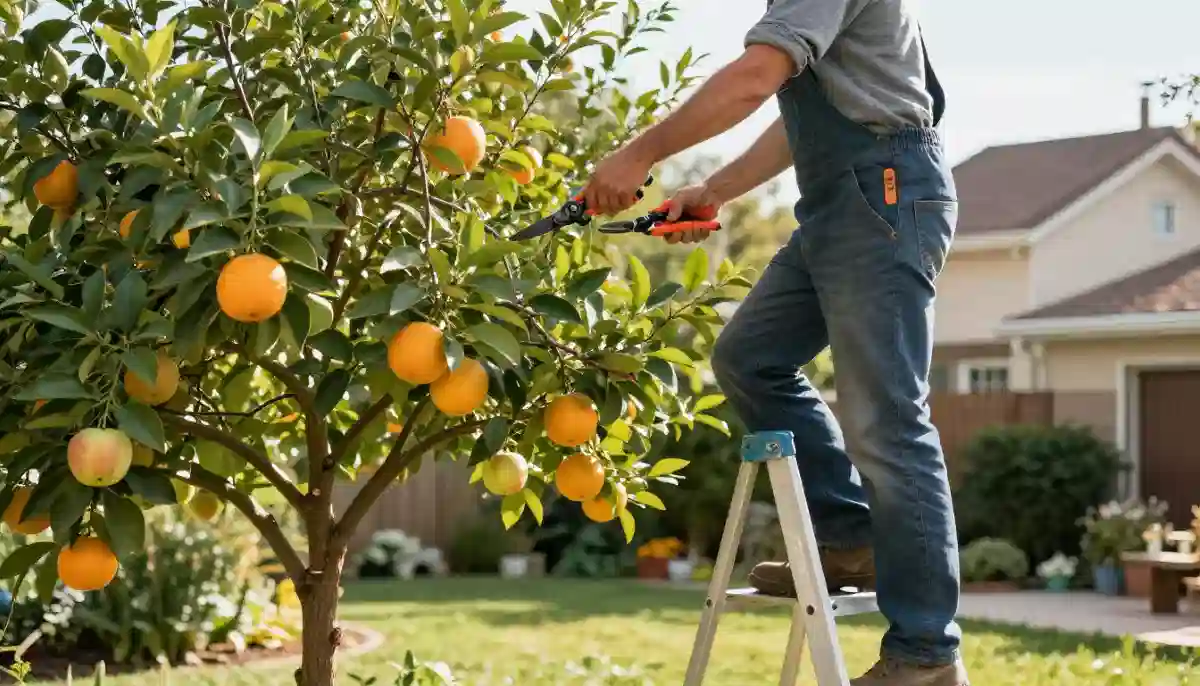
🔧 Common Pruning Techniques
Professional arborists use several specific techniques to achieve different results. Here are the most common ones you’ll hear about.
Deadwooding
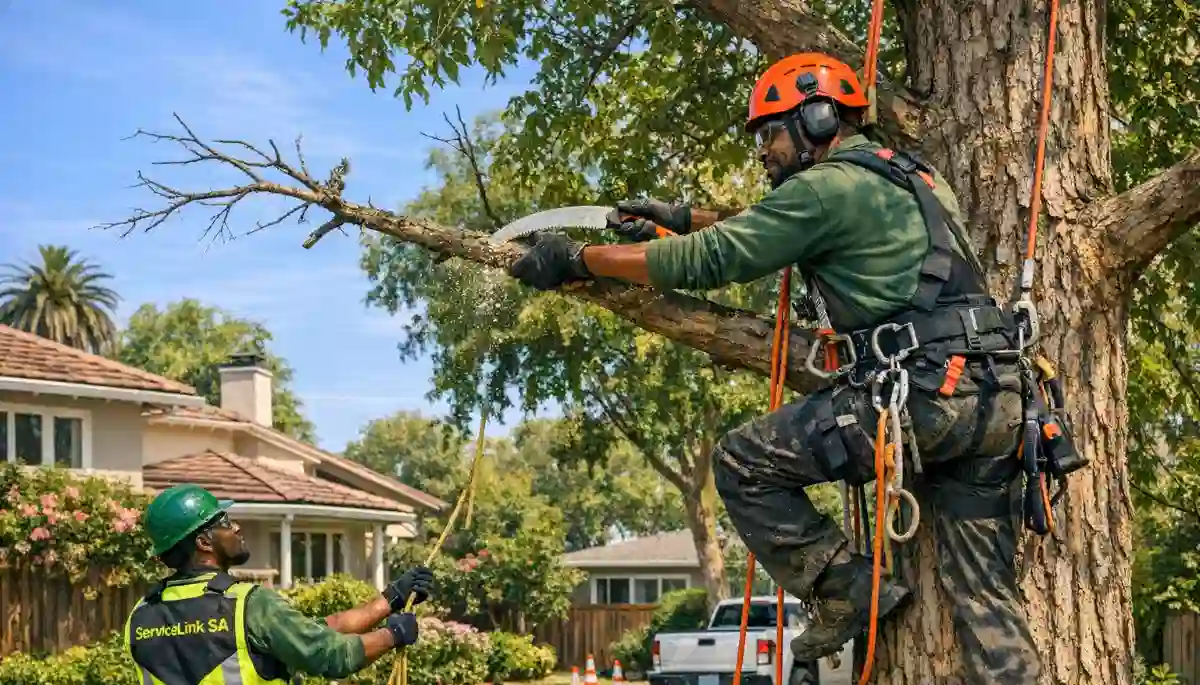
Deadwooding is the removal of dead, dying, or diseased branches from the tree crown. It’s a fundamental safety and health practice.
- Why it’s done: Dead branches are brittle and can fall unexpectedly, posing a safety hazard. They also can attract pests and diseases. Removing them cleans up the tree and allows it to focus energy on healthy growth.
- When it’s done: Can be done year-round, as dead wood is easier to identify when the tree is in leaf.
Crown Lifting
Crown lifting involves removing the lower branches of a tree to provide clearance above ground level.
- Why it’s done: To allow more light under the tree, to clear space for pedestrians, vehicles, or buildings, or to improve a view.
- How it’s done: Branches are removed back to the trunk or a larger lateral branch. It’s important not to remove too many lower branches at once, as this can stress the tree.
- Consideration: Crown lifting should not remove more than 15-20% of the live crown at one time.
Crown Thinning
Crown thinning is the selective removal of branches throughout the crown to reduce its density without changing its overall size or shape.
- Why it’s done: To allow more light to pass through the canopy, reduce wind resistance (which can make the tree safer in storms), and lessen the weight of heavy branches. It can also improve the tree’s appearance.
- How it’s done: Branches are removed evenly throughout the crown, typically removing 10-20% of the live foliage. It’s a skilled job that requires an understanding of tree biology to avoid damaging the tree.
- Crown thinning cost: This is a skilled, time-consuming job. The cost depends on the tree’s size and accessibility, but for a large tree, you can expect to pay R3,000 – R8,000 or more.
Pollarding
Pollarding is a very specific and severe pruning technique where the upper branches of a tree are removed back to the trunk or main limbs, promoting a dense head of foliage and branches. It is started when the tree is young and then repeated on a regular cycle (often annually or biennially).
- Why it’s done: To maintain a tree at a specific height, to create a formal look, or to manage trees in confined spaces. It’s commonly seen on plane trees in European cities.
- Important: Pollarding is NOT the same as “topping” (haphazardly cutting large branches). Topping is harmful and disfiguring. Pollarding is a disciplined, long-term management system started on young trees. It is rarely appropriate for mature trees in a home garden.
📅 When to Prune Trees in South Africa
Timing is critical. Pruning at the wrong time can stress the tree, make it vulnerable to disease, or reduce flowering/fruiting.
- Dormant season (late autumn – late winter): This is the best time for major pruning of most deciduous trees (trees that lose their leaves). The tree is not actively growing, so it experiences less stress. It’s also easier to see the branch structure without leaves. This is the time for structural pruning, crown thinning, and major corrective work.
- After flowering (spring – early summer): For trees that flower in spring (like many ornamentals), prune them immediately after they finish flowering. Pruning them in winter would remove the flower buds.
- Summer: Light pruning can be done in summer to remove dead wood or to correct minor issues. Avoid heavy pruning during very hot or dry periods.
- Autumn: Avoid heavy pruning in autumn, as the tree is preparing for dormancy and the cuts may not heal well before winter.
- Fruit trees: See the specific guide below.
For indigenous trees, the South African National Biodiversity Institute (SANBI) provides species-specific advice.
🍎 Fruit Tree Pruning Guide
Pruning fruit trees is a specialised skill aimed at maximising fruit production and tree health. The goals are different from ornamental trees.
- Why prune fruit trees?
- To encourage the growth of fruiting wood.
- To allow sunlight and air into the canopy, which improves fruit quality and reduces disease.
- To maintain a manageable tree size for harvesting.
- To remove dead or diseased wood.
- When to prune:
- Deciduous fruit trees (apples, pears, peaches, plums): Prune in late winter while the tree is dormant. This stimulates vigorous spring growth. Avoid pruning in very cold weather.
- Citrus trees (oranges, lemons): Citrus does not require heavy annual pruning. Prune lightly in late winter or early spring to remove dead wood and shape the tree. Heavy pruning can reduce fruit production.
- Subtropical fruits (avocados, mangoes): Prune after harvest, typically in late winter or early spring, but before the main growth flush.
- Techniques: Opening the centre of the tree (vase shape) is common for many fruit trees to allow light in. Always make clean cuts just above an outward-facing bud. For more detailed guides, suppliers like Living Seeds offer excellent resources.
❌ 7 Common Pruning & Trimming Mistakes
- Mistake #1: Topping. Cutting large branches back to stubs (topping) is harmful and disfiguring. It leads to weak regrowth and decay. Never top a tree. See our removal signs if a tree is too big – removal may be better than topping.
- Mistake #2: Pruning at the wrong time. Pruning a spring-flowering tree in winter removes the flower buds. Know your tree’s blooming cycle.
- Mistake #3: Over-pruning. Removing more than 20-25% of a tree’s live canopy in one year can stress it severely and lead to decline.
- Mistake #4: Making improper cuts. Cutting too close to the trunk (flush cuts) or leaving a long stub both cause problems. Cuts should be made just outside the branch collar (the swollen area where the branch joins the trunk) to promote proper healing.
- Mistake #5: Ignoring safety. Pruning large branches, especially high up, is dangerous. Always hire a professional for work that requires a ladder or chainsaw above shoulder height.
- Mistake #6: Not using sharp, clean tools. Dirty or dull tools can spread disease and make ragged cuts that heal poorly.
- Mistake #7: Using wound dressing. In most cases, trees heal best naturally. Wound dressings (paint) can actually trap moisture and decay. Only use it in specific circumstances, like for oak wilt prevention, and only on professional advice.
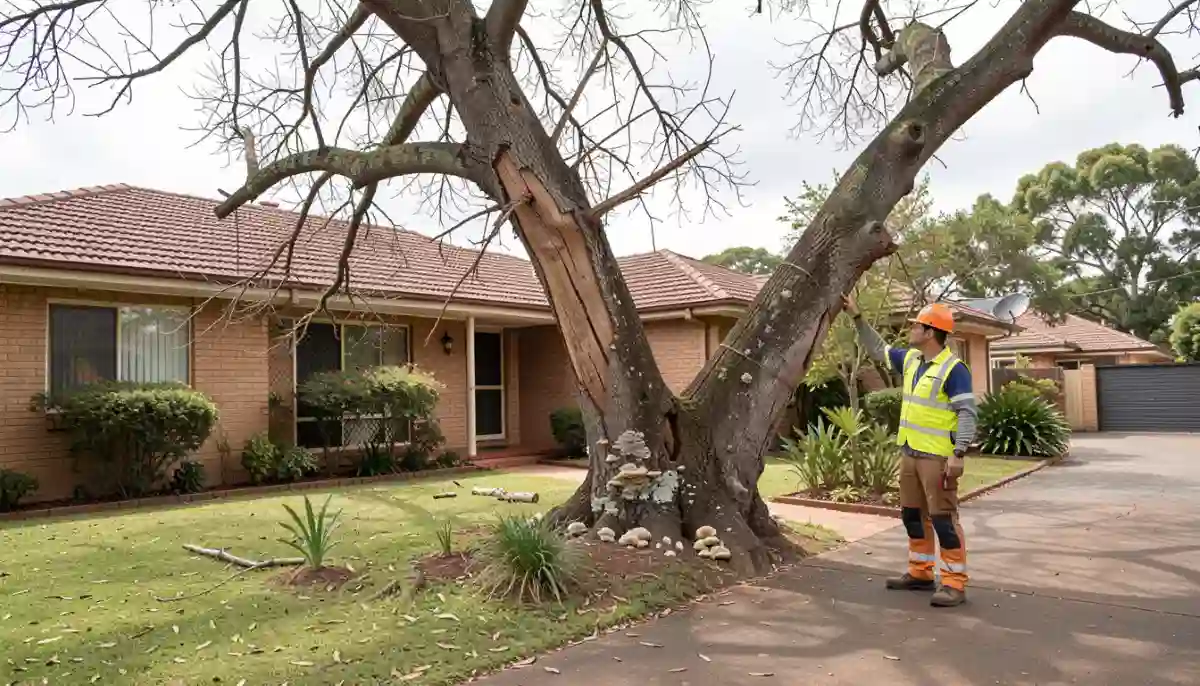
💰 Costs of Professional Pruning
Pruning costs vary widely based on the tree’s size, the technique used, and your location. These are rough estimates.
- Small tree (under 5m): Deadwooding or light pruning: R800 – R1,500.
- Medium tree (5m – 10m): Crown thinning or lifting: R1,500 – R3,500.
- Large tree (10m+): Complex pruning by climber: R3,000 – R8,000+.
- Fruit tree pruning: R500 – R1,500 per tree, depending on size.
Always get a detailed quote based on a site inspection. For an accurate crown thinning cost in your area, use our quote request service.
❓ Frequently Asked Questions
What is the difference between tree trimming and pruning?
The difference between trimming and pruning is the goal. Trimming is for aesthetics and safety (shaping, clearing). Pruning is for tree health (removing dead/diseased wood, improving structure). Both are important aspects of tree maintenance.
When is the best time to prune trees in South Africa?
When to prune trees South Africa depends on the tree. For most deciduous trees, late winter (dormant season) is best. Spring-flowering trees should be pruned after flowering. Fruit trees have specific timing. See our guide above for details.
What is crown thinning and how much does it cost?
Crown thinning is the selective removal of branches to reduce canopy density. It improves light penetration and wind resistance. Crown thinning cost for a large tree can range from R3,000 to R8,000+ depending on size and accessibility.
What is deadwooding?
Deadwooding is the removal of dead, dying, or diseased branches. It’s a crucial safety practice that prevents falling branches and improves tree health. It can be done year-round.
What is crown lifting?
Crown lifting is the removal of lower branches to provide clearance above ground level for pedestrians, vehicles, or buildings. It should not remove more than 15-20% of the live crown at once.
What is pollarding and is it right for my tree?
Pollarding is a severe pruning technique started on young trees and repeated regularly to maintain a specific size and shape. It’s not appropriate for most mature garden trees. Topping (similar but harmful) should never be done.
Can I prune my fruit tree myself?
You can do light pruning on small fruit trees if you know the correct techniques. However, for larger trees or if you’re unsure, hire a professional. A good fruit tree pruning guide is essential. Mistakes can reduce your harvest for years.
What are the benefits of tree trimming?
Tree trimming benefits include improved appearance, removal of hazardous branches near your house, and better clearance for walkways and driveways. It keeps your landscape tidy and safe.
What is sap bleeding and is it bad?
Sap bleeding is the flow of sap from pruning cuts, common in some trees like maples and birches if pruned in late winter/early spring. It’s usually not harmful and will stop on its own. Avoid pruning these trees in early spring to minimize it.
Do I need a professional for tree pruning?
For small trees and shrubs, you can do light trimming yourself with proper tools. For any work that requires a ladder, a chainsaw above shoulder height, or for large trees, you should hire a qualified, insured arborist. It’s safer and better for the tree.
✅ Final Thoughts – Your Tree Care Action Plan
Understanding the tree trimming vs pruning distinction is the first step to being a responsible tree owner. By knowing what your tree needs and when, you can ensure its health, safety, and beauty for years to come.
Key takeaways:
- Trimming is for shape and safety; pruning is for health and structure.
- Specific techniques like deadwooding, crown lifting, and crown thinning have specific purposes.
- Timing is critical – prune most trees in late winter, but flowering trees after bloom.
- Fruit trees need specialised pruning for maximum harvest.
- Avoid common mistakes like topping or over-pruning.
Your 5-Step Action Plan
- Identify your tree and its needs: Is it for health, safety, or aesthetics? See our signs guide if you suspect it’s beyond help.
- Determine the right time: Use our seasonal guide to plan your work.
- Decide DIY or professional: Be honest about the size and complexity.
- Get quotes for professional work: Use our service to find vetted arborists.
- Schedule the work: Enjoy a healthier, safer, more beautiful tree.
Need a Professional Eye on Your Trees?
Get free, no-obligation quotes from vetted, insured arborists who can advise on the best trimming or pruning for your trees.
📞 Call us: 073 138 4726 for personalised assistance
Free site inspections •
Beat-your-quote guarantee •
Our guarantees
📚 Official resources & standards:
- South African National Biodiversity Institute (SANBI) – Indigenous tree care and species information.
- Living Seeds – Fruit tree pruning guides and resources.
Information accurate as of publication. Prices are indicative and may vary by region and site conditions. This guide is for informational purposes.
Written by: Innocent T Hanyani
21+ years construction and digital industry experience, ServiceLink SA
Innocent has worked alongside arborists on countless tree care projects, from pruning mature oaks to maintaining fruit orchards. His understanding of both the science and the practical application of tree care ensures this guide is accurate and helpful for South African homeowners.
For more detailed information, explore our related guides: tree maintenance and health for ongoing care, our company selection guide for finding the right arborist, our removal signs guide to know when a tree is beyond help, and our cost guide for budgeting. Our contractor guide and free inspection services are also available.