
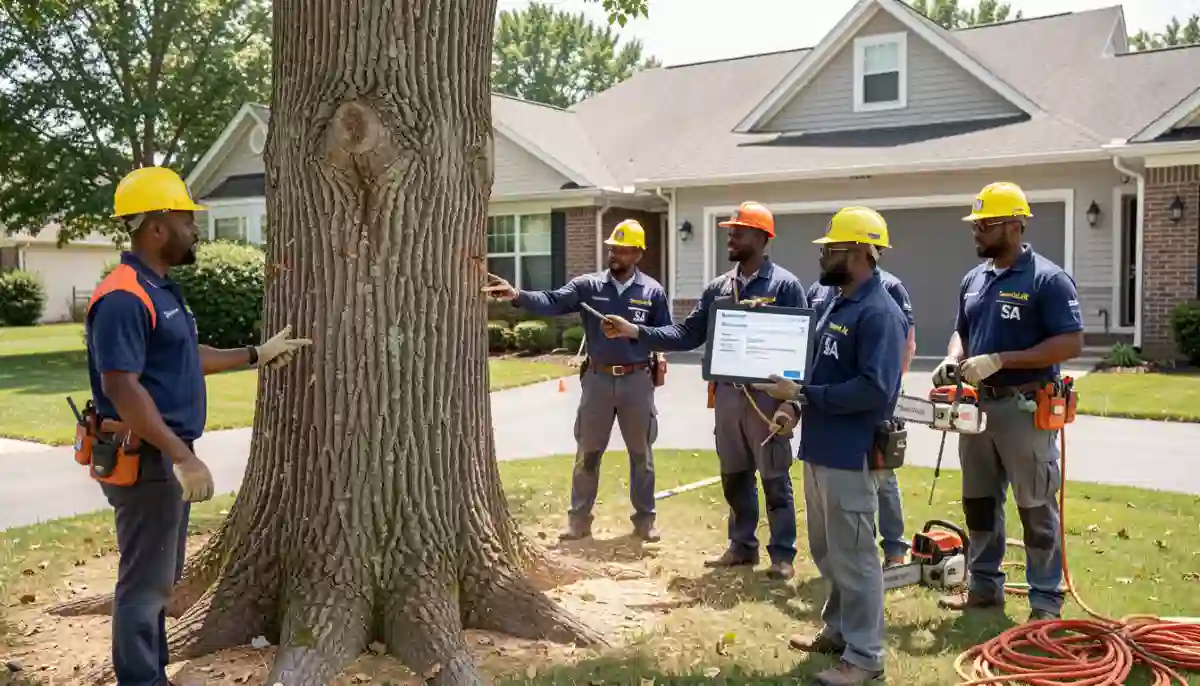
Hiring a Tree Felling Service – A South African Homeowner’s Vetting Guide
🌳 Questions to ask, credentials to check, and red flags to avoid when choosing an arborist.
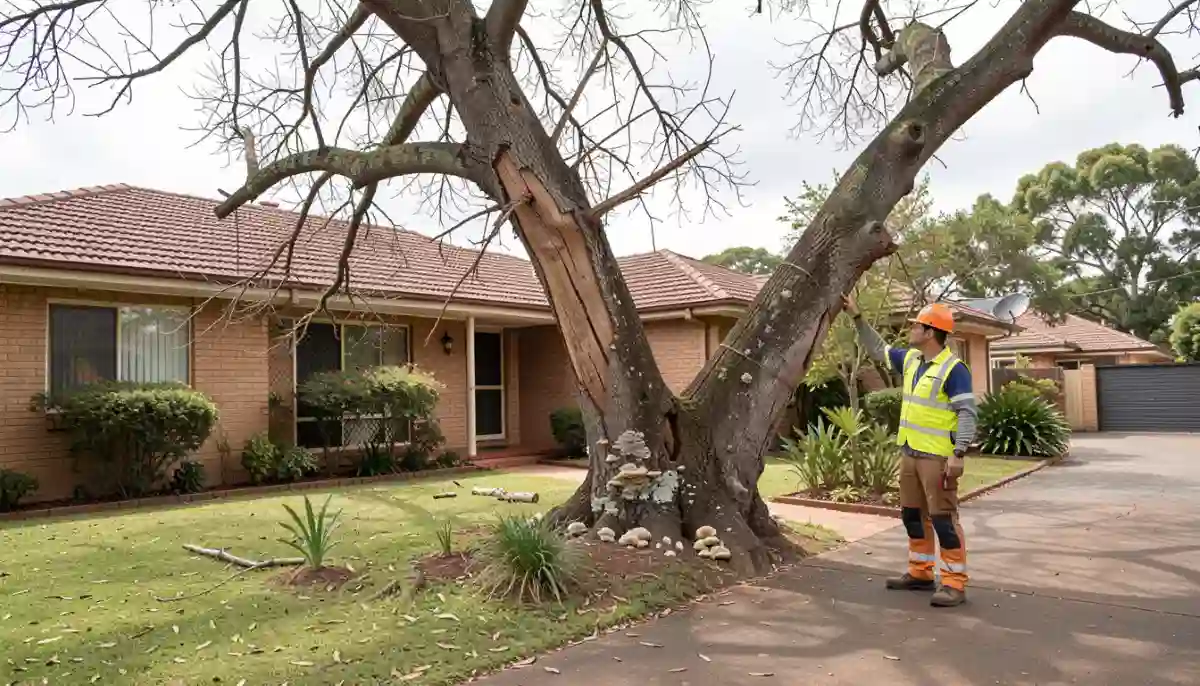
You have a large, dangerous tree in your Sandton garden that needs to come down. You’ve called a few companies, but the quotes vary wildly, and the guys who knocked on your door offering a “cash price” seem a bit dodgy. How do you separate the professionals from the cowboys? Knowing how to go about hiring tree felling service providers is the most important step in ensuring the job is done safely, legally, and without leaving you liable for damages or injuries.
This guide gives you a professional’s checklist for vetting tree care companies. You’ll learn the essential questions to ask before hiring tree feller, from verifying their qualifications and insurance to understanding their quoted process. We explain what makes a certified arborist South Africa different from a “man with a chainsaw,” and why that distinction matters for safety and tree health. We’ll help you spot common tree service red flags that indicate you should run the other way. We also cover the practicalities: why a proper site inspection is non-negotiable, what a detailed written quote should include, the importance of checking references and proof of insurance (including COID compliance), and what legitimate chainsaw certification looks like. Whether you’re in Pretoria, Durban, or Cape Town, this guide helps you hire with confidence.
If you’re ready to connect with vetted, qualified arborists, explore our Services Overview or visit our Tree Services page to find trusted professionals near you. For more on how we work, see How It Works.
Get Matched with Vetted Tree Felling Experts
Skip the guesswork. We’ll connect you with registered, insured arborists in your area for free quotes.
Servicing Johannesburg, Pretoria, Cape Town, Durban, and nationwide
📋 Table of Contents – Hiring a Tree Feller
⚠️ Why Hiring a Professional Tree Feller Matters
Tree felling is one of the most dangerous jobs in the world. It’s not just about cutting wood; it’s about physics, leverage, and controlled falling.
- Safety: A falling tree or branch can kill. Professionals are trained in directional felling and use safety gear to protect themselves and your property.
- Property protection: An unskilled feller can easily drop a tree on your house, your neighbour’s house, or your car. Professionals use rigging and sectional felling to avoid damage.
- Liability: If an uninsured worker is injured on your property, you could be held liable for medical bills and lost wages. A professional has their own insurance.
- Tree health: If you’re pruning, not felling, a bad cut can damage the tree’s health permanently. A certified arborist South Africa understands tree biology.
- Legalities: Professionals know about permit requirements for protected trees. They won’t put you at risk of fines.
Read more about our approach on our About Us page or see why clients choose us on our Benefits page.
📜 What is a Certified Arborist?
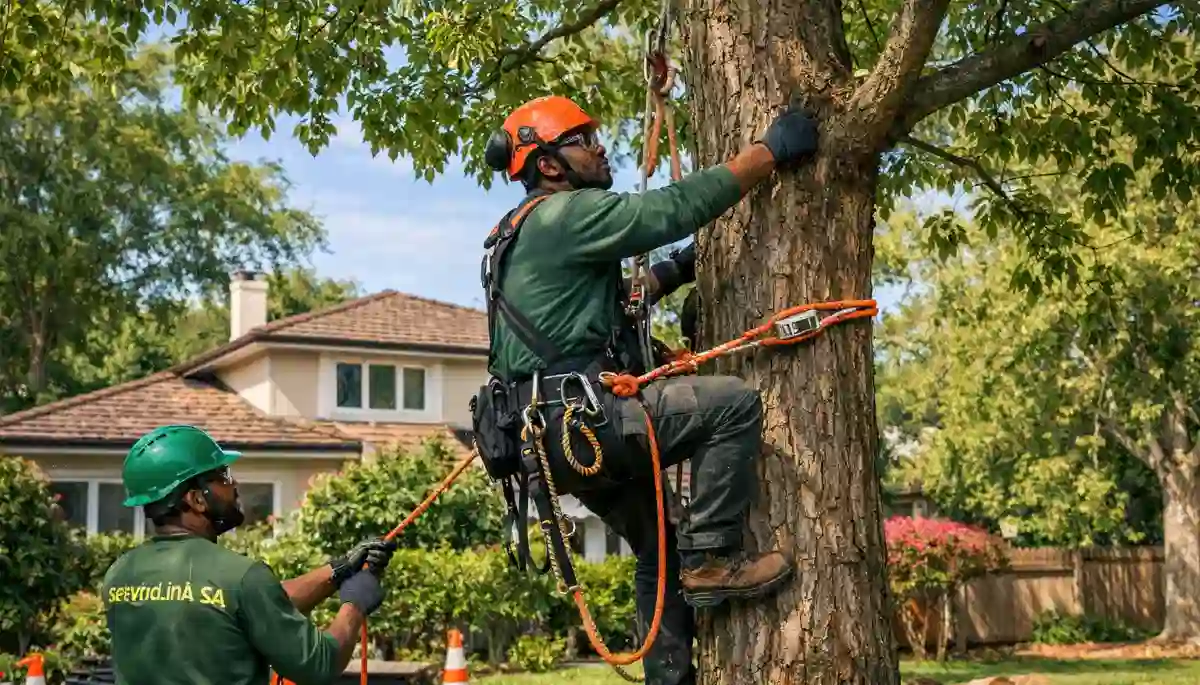
Not everyone with a chainsaw is an arborist. A certified arborist has formal training and knowledge.
- Definition: An arborist is a specialist in the cultivation, management, and study of individual trees, shrubs, vines, and other perennial woody plants.
- Certification in SA: In South Africa, the primary body for arborist certification is the Institute of South African Arboriculture (ISAA). They offer different levels of certification, recognising competency in tree climbing, pruning, and safety.
- Why it matters: A certified arborist understands tree biology, knows how to make proper cuts that don’t harm the tree (for pruning), and is trained in safe felling techniques. They are also more likely to be up-to-date with industry best practices and safety standards.
- Not always necessary for simple felling? For a complex removal near a house, you want a certified professional. For a small tree in an open field, it’s less critical, but you still need someone with experience and insurance.
❓ 10 Essential Questions to Ask Before Hiring
Put these on your list and don’t be shy. A reputable company will be happy to answer.
- Are you a certified arborist? Ask for their ISAA certification or equivalent.
- Can you provide proof of public liability insurance? This should be a certificate. Minimum cover should be R1 million, but R5 million is better.
- Are your workers covered by COID (Compensation for Occupational Injuries and Diseases)? This is crucial. If a worker is injured and the company doesn’t have COID compliance, you could be liable. See COID info.
- Will you provide a detailed written quote? Verbal quotes are worthless. Get it in writing.
- Do you do a site inspection before quoting? A professional will want to see the tree in person. Quotes over the phone are guesses.
- Can you provide references from recent, similar jobs? Call them. Ask about punctuality, cleanliness, and if they stayed on budget.
- What is your process for this job? They should explain how they’ll fell the tree (sectional, rigging, etc.) and what safety measures they’ll take.
- What’s included in the price? Felling only? Debris removal? Stump grinding? Wood left or removed? Get clarity.
- What happens if something gets damaged? A professional’s insurance covers this. Ensure they are liable.
- Do you handle permit applications if needed? For protected trees, they should advise on permits and may handle the admin for a fee.
🛡️ Proof of Insurance & COID Compliance
This is the most important non-negotiable. Do not let anyone work on your property without verifying these.
- Public Liability Insurance: This covers damage to your property (e.g., a falling tree damages your roof or a branch breaks a window). Ask for a current certificate of insurance. The minimum cover should be R1 million, but R5 million is becoming standard for reputable companies.
- COID (Compensation for Occupational Injuries and Diseases): This is a South African government fund that provides compensation to workers injured on the job. If a worker is injured on your property and the company does not have a valid COID letter, YOU could be held personally liable for their medical expenses and lost wages. This is a massive financial risk. Always ask for their COID letter. See our page on contractor’s liability insurance for more.
🔍 The Importance of a Site Inspection
A professional tree feller will insist on seeing the tree in person before giving you a firm price. Here’s why:
- Accurate assessment: They need to see the tree’s health, lean, size, and proximity to obstacles. A photo doesn’t tell the whole story.
- Identify hazards: They can spot things you might miss, like hidden decay, cracks, or power line conflicts.
- Plan the work: They can determine the best felling method, what equipment is needed, and how to access the site.
- Build trust: A face-to-face meeting allows you to ask questions and gauge their professionalism.
If a company quotes you over the phone without seeing the tree, be very cautious. They may be a “cowboy” operator who will add extra charges later. Our free inspection service connects you with pros who do site visits.
📝 What a Detailed Written Quote Includes
A proper quote protects both you and the contractor. It should be clear and leave no room for misunderstanding.
- Company details: Name, contact info, and physical address.
- Scope of work: A clear description of what will be done (e.g., “Fell one gum tree, approximately 15m tall, using sectional felling techniques. Remove all branches and trunk from site. Stump grinding not included.”).
- Price breakdown: Total cost, and ideally a breakdown of major components (labour, equipment, debris removal).
- Exclusions: Clearly state what is NOT included (e.g., stump grinding, permit fees).
- Payment terms: Deposit required (if any – should be small, 10-20% maximum) and final payment schedule.
- Warranty: Some companies offer a warranty on their workmanship.
- Validity period: Quotes are often valid for 30 days.
Use our beat-your-quote service to ensure you’re getting competitive pricing.
📸 Checking References & Portfolio
A reputable company will be proud of their work and happy to provide references.
- Ask for recent references: Request contact details for clients who had similar work done in the last 6-12 months.
- What to ask references:
- Was the crew punctual and professional?
- Did they clean up thoroughly afterwards?
- Were there any unexpected costs?
- Would you hire them again?
- Look at their portfolio: Many companies have before-and-after photos on their website or social media. This gives you an idea of the quality of their work.
- Online reviews: Check Google, HelloPeter, and our own reviews page. Look for patterns, not just one-off complaints.
📋 Chainsaw Certification & Safety Training
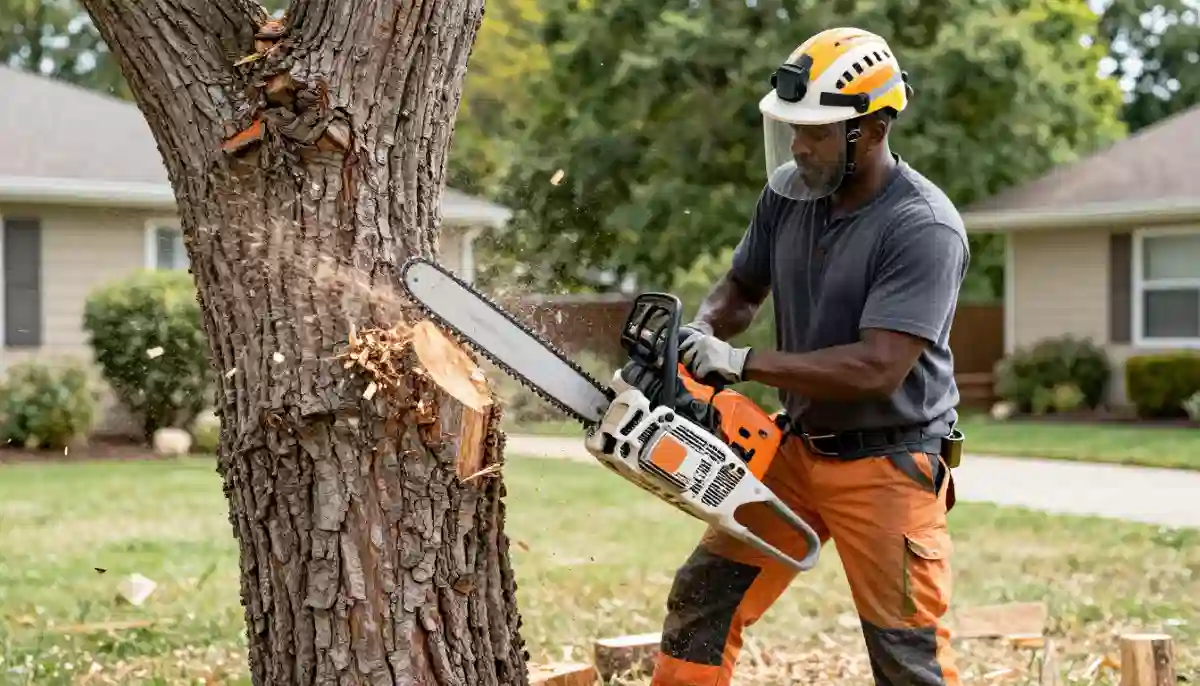
Operating a chainsaw is a skill that requires training. In South Africa, reputable training providers offer chainsaw certification courses.
- What it covers: Safe starting and handling, maintenance, felling techniques, and safety protocols.
- Why it matters: A trained operator is less likely to have an accident or make a mistake that damages property.
- Ask about it: You can ask the company if their staff have formal chainsaw training certificates. While not all experienced guys have a piece of paper, a professional company will invest in training.
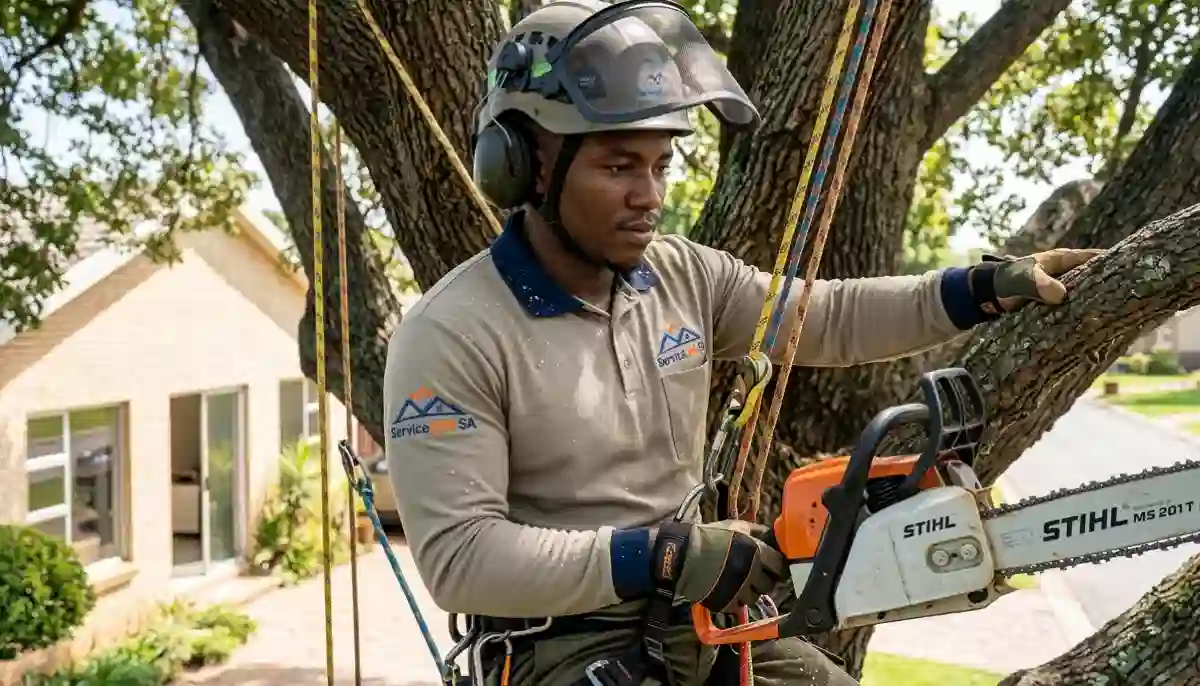
- PPE: A trained operator will also wear full Personal Protective Equipment (PPE): helmet, visor, ear defenders, chainsaw-proof trousers, and boots. If the crew on site lacks PPE, it’s a major tree service red flag.
🚩 Tree Service Red Flags – When to Walk Away
Trust your gut. If you encounter any of these, find another company.
- Red flag #1: No proof of insurance or COID. This is the biggest one. If they can’t produce it, they don’t have it.
- Red flag #2: “Cash only” and a very low price. They are likely uninsured and unskilled, and you’ll have no recourse if something goes wrong.
- Red flag #3: High-pressure sales tactics. “I can do it today for half price if you pay now.” Genuine professionals don’t pressure you.
- Red flag #4: No site inspection. A quote over the phone is a guess, often leading to extra charges later.
- Red flag #5: Vague or verbal quotes. “Don’t worry, I’ll sort it out.” Get it in writing.
- Red flag #6: Refusal to provide references. They should have happy customers to vouch for them.
- Red flag #7: Unmarked vehicles or no signage. Not a deal-breaker alone, but combined with others, it’s suspicious.
- Red flag #8: Lack of PPE on crew. If they’re not wearing safety gear, they don’t take safety seriously.
- Red flag #9: Asks you to get the permit. A reputable company will advise on permits and may help with the process. A cowboy won’t care.
- Red flag #10: Poor communication. If they’re hard to reach before the job, it will be worse after.
❌ 7 Common Mistakes Homeowners Make
- Mistake #1: Choosing based on price alone. The cheapest quote is often from an uninsured operator. The potential liability cost far outweighs the savings.
- Mistake #2: Not checking insurance. Failing to verify a certificate can leave you liable for damages or injuries.
- Mistake #3: Forgetting about COID. If a worker is injured, you could be sued. Always ask for the COID letter.
- Mistake #4: Accepting a verbal quote. Verbal agreements are impossible to enforce. Get everything in writing.
- Mistake #5: Not asking about debris removal. You could be left with a massive pile of branches and wood. Clarify what’s included.
- Mistake #6: Hiring before checking for permits. Removing a protected tree without a permit can lead to massive fines. Check first.
- Mistake #7: Not getting multiple quotes. At least three quotes give you a good idea of the market rate and help you spot outliers. Use our quote request to get multiple easily.
❓ Frequently Asked Questions
What questions should I ask before hiring a tree feller?
Questions to ask before hiring tree feller include: Are you certified? Can I see proof of insurance and COID? Will you do a site inspection? Can you provide a written quote and references? See our full list of 10 questions above.
What is a certified arborist in South Africa?
A certified arborist South Africa is a tree care professional certified by the Institute of South African Arboriculture (ISAA). They have proven knowledge and skills in tree biology, safety, and proper techniques.
What insurance should a tree felling company have?
They must have public liability insurance (at least R1 million cover) and be registered with the Compensation Fund (COID compliance). Ask for certificates for both.
What are tree service red flags?
Tree service red flags include: no proof of insurance, cash-only deals, no site inspection, verbal quotes, pressure to decide immediately, no PPE, and inability to provide references.
Why is a site inspection important for tree removal?
A site inspection allows the arborist to accurately assess the tree’s size, health, and hazards, and to plan the safest felling method. It also allows you to meet them and ask questions.
What should be in a written quote for tree felling?
A written quote should include company details, a clear scope of work, total price, exclusions (like stump grinding), payment terms, and a validity period.
How do I check a tree service’s references?
Ask for contact details of clients with similar jobs. Call them and ask about punctuality, cleanliness, communication, and if there were any unexpected costs.
What is chainsaw certification?
Chainsaw certification is formal training in safe chainsaw operation, maintenance, and felling techniques. It’s a sign that an operator takes safety seriously.
Should I pay a deposit for tree felling?
A small deposit (10-20%) for materials or to secure the date is reasonable. Be very wary of anyone demanding 50% or more upfront – this is a major red flag.
How can I find a reliable tree felling service near me?
Use our free quote service to connect with vetted, insured tree services in your area. You can also check the ISAA website for certified arborists.
✅ Final Thoughts – Your Hiring Action Plan
Hiring tree felling service providers is about more than just getting the lowest price. It’s about protecting your property, your family, and yourself from financial liability. By taking the time to vet potential contractors thoroughly, you ensure a safe, professional job.
Key takeaways:
- Always verify public liability insurance and COID compliance. This is non-negotiable.
- Get at least three detailed, written quotes based on a site inspection.
- Ask the 10 essential questions and watch for red flags.
- Check references and look for proof of qualifications.
- Remember: the cheapest quote is often the most expensive in the long run.
Your 5-Step Action Plan
- Identify your needs: Felling, pruning, or just a quote? See our removal signs guide.
- Research potential companies: Use our service or the ISAA website to find candidates.
- Get multiple quotes: Invite at least three companies for a site inspection and written quote.
- Verify credentials: Check insurance, COID, and references before making a decision.
- Get a signed contract: Ensure all details are in writing before work starts.
Ready to Hire a Qualified Tree Feller?
Get free, no-obligation quotes from vetted, insured arborists in your area. Skip the risk and hire with confidence.
📞 Call us: 073 138 4726 for personalised assistance
Free site inspections •
Beat-your-quote guarantee •
Our guarantees
📚 Official resources & standards:
- Institute of South African Arboriculture (ISAA) – Find certified arborists and industry standards.
- Compensation Fund (COID) – Information on COID compliance for contractors.
Information accurate as of publication. This guide is for informational purposes. For specific advice, consult a professional.
Written by: Innocent T Hanyani
21+ years construction and digital industry experience, ServiceLink SA
Innocent has spent decades vetting contractors across multiple industries, including tree services. He has seen firsthand the difference between professional, insured arborists and dangerous cowboys. This guide distills that experience into practical advice for homeowners.
For more detailed information, explore our related guides: how to choose a tree felling company for a broader perspective, our cost guide to understand pricing, our removal signs guide to know if a tree needs to go, and our permits guide for legal compliance. Our contractor guide and guarantees pages also provide valuable background. Free inspections and beat-your-quote services are available.