
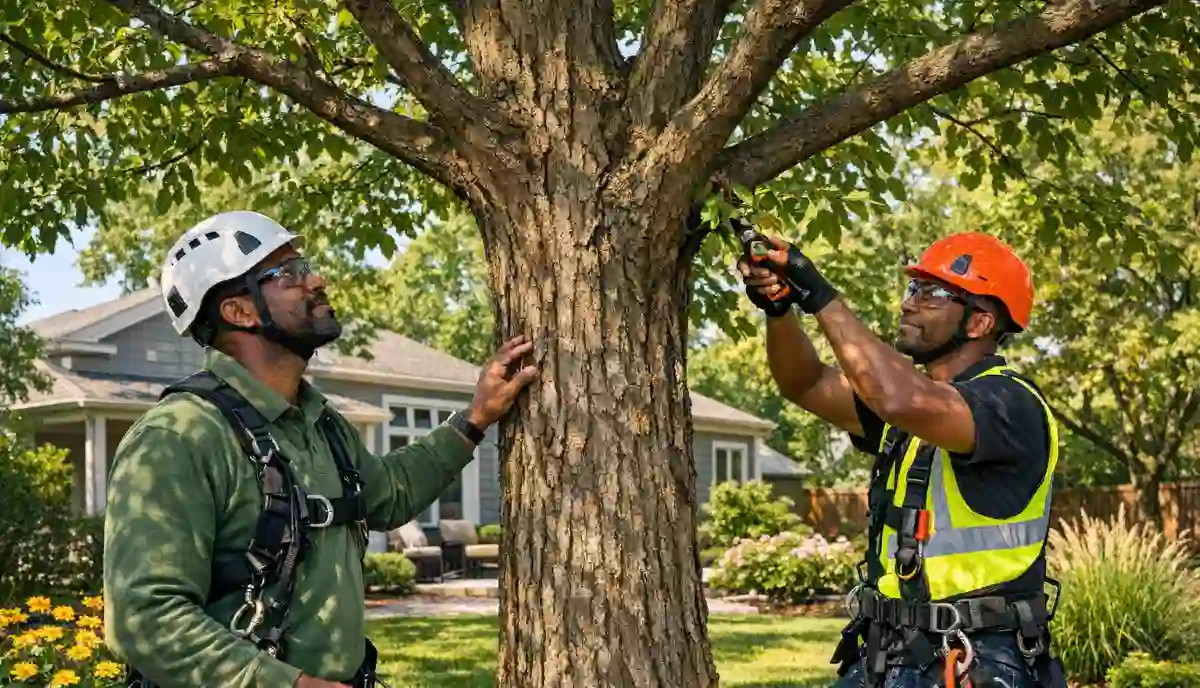
Tree Maintenance South Africa – A Complete Guide to Tree Health
🌳 Mulching, watering, pruning, and pest control: how to keep your trees thriving in every season.
You have a beautiful old oak in your Pretoria garden that’s been there for decades. Or perhaps you’ve just planted a new indigenous sapling in your Cape Town yard. Either way, you want it to thrive. But trees, like any living thing, need regular care. Neglecting tree maintenance South Africa can lead to poor growth, disease, and ultimately, the safety hazards we cover in our removal signs guide. The good news is that a little proactive care goes a long way.
This guide covers the essential elements of keeping your trees healthy and vigorous. You’ll learn how to perform a simple tree health check to spot early signs of trouble. We dive into the fundamentals of how to care for trees, including proper watering techniques (especially important in our climate), the right way to apply tree fertilizer and organic compost, and the critical role of mulch. We explain the mulching technique for trees that protects roots and retains moisture without harming the trunk. For those in drier regions, we cover water wise trees SA and how to maintain them. We also address common problems and treatments, such as borer treatment for insect infestations, fungal spray for diseases, and more advanced techniques like root collar excavation to address buried trunks and cable bracing to support weak limbs. Whether you’re in Durban, Stellenbosch, or Umhlanga, this guide helps you be a better steward of your trees.
If you’re ready for professional advice or care, explore our Services Overview or visit our Tree Services page to find vetted arborists near you. For more on how we work, see How It Works.
Need Expert Tree Care Advice?
Get free, no-obligation quotes from local, insured arborists who can help with maintenance, health checks, and treatments.
Find Tree Care Experts Near Me
Servicing Johannesburg, Pretoria, Cape Town, Durban, and nationwide
📋 Table of Contents – Tree Maintenance Guide
🔍 The Annual Tree Health Check
Just like you visit a doctor, your trees need a regular check-up. An annual inspection by a qualified arborist can catch problems early. Here’s what you can look for yourself.
- Leaves and canopy: Look for discolouration, smaller-than-usual leaves, or premature leaf drop. A thinning canopy can indicate stress.
- Trunk and bark: Check for cracks, cavities, peeling bark, or fungal growth (mushrooms/brackets). These can be signs of internal decay.
- Branches: Look for deadwood, broken limbs, or branches that rub against each other.
- Roots and base: Examine the soil at the base. Is it heaving or cracking? Are there large, damaged roots visible? Check for signs of fungal conks at the base.
- Overall structure: Does the tree have a strong central leader? Are there multiple trunks that might split? Is there a new lean?
If you spot any of these warning signs, or if you’re simply unsure, call in a professional for a free inspection. Read more on our Benefits page.
💧 Watering: Deep vs. Shallow
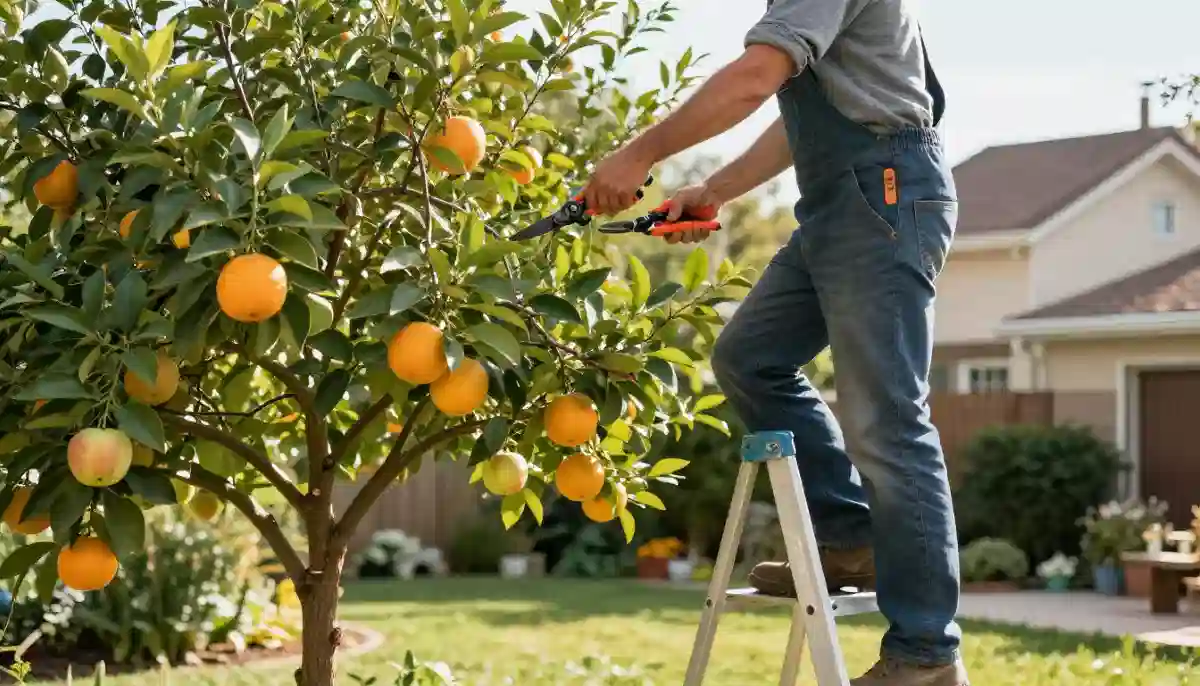
Proper watering is the most important aspect of tree care, especially in our often dry climate. The goal is to encourage deep root growth.
- The problem with shallow watering: Frequent, light sprinklings encourage roots to stay near the surface, where they are vulnerable to drought and heat. This makes the tree less stable.
- The solution: Deep, infrequent watering. Water slowly and deeply, allowing moisture to penetrate at least 30-60cm into the soil. This encourages roots to grow down, anchoring the tree and accessing deeper moisture.
- How to do it: Use a soaker hose or a hose on a slow trickle placed at the tree’s drip line (the edge of the canopy). Water for an extended period – an hour or more – until the soil is saturated. Then, don’t water again until the top few inches of soil are dry.
- Established trees: Mature trees may not need supplemental watering except during severe droughts. Newly planted trees need regular deep watering for the first 1-2 years.
🍂 Mulching Technique for Trees
Mulch is a tree’s best friend. It conserves moisture, regulates soil temperature, suppresses weeds, and adds organic matter as it decomposes. But technique matters.
- The right way: Apply a layer of organic mulch (wood chips, bark, composted leaves) 5-10cm deep. The mulch should extend out to the tree’s drip line if possible.
- THE CRITICAL RULE – Avoid “volcano mulching”: NEVER pile mulch up against the trunk. This keeps the bark moist, leading to rot and disease. It also encourages roots to grow into the mulch, which can strangle the tree. The mulch should be pulled back from the trunk, exposing the root flare (the area where the trunk meets the roots).
- Benefits: Proper mulching reduces water needs, protects roots from extreme temperatures, and improves soil structure as it breaks down.
🌱 Fertilizing & Organic Compost
Most established trees in good soil don’t need regular fertilizer. However, if growth is poor or soil is lacking, fertilization can help.
- Soil test first: Before adding fertilizer, it’s wise to test your soil to see what nutrients are actually needed. Over-fertilizing can harm trees.
- Organic is best: Use organic compost or well-rotted manure. Apply a layer of compost under the mulch (but not against the trunk) to slowly release nutrients. This also improves soil life and structure.
- When to fertilize: The best time is in early spring, just as growth begins. Avoid fertilizing in late summer or autumn, as this can stimulate new growth that won’t harden off before winter.
- Tree fertilizer: If you use a granular fertilizer, choose one formulated for trees and follow the instructions carefully. Apply it evenly under the canopy and water it in well.
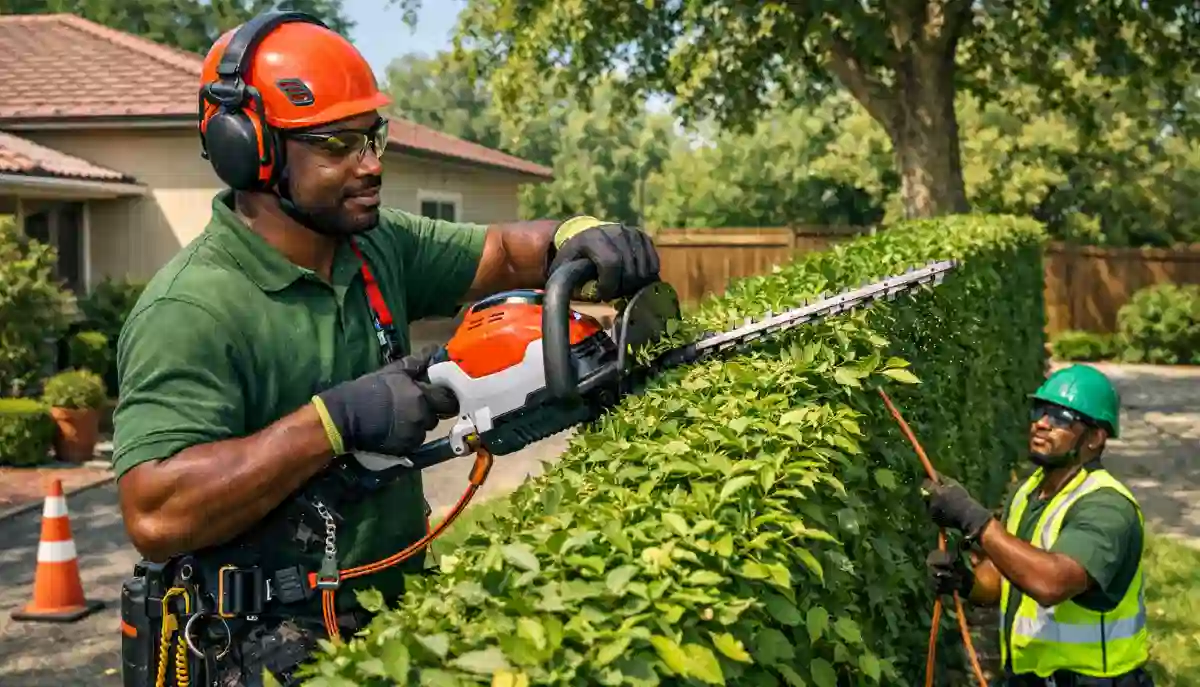
✂️ Pruning for Health (Not Just Looks)
We covered the difference between trimming and pruning in detail elsewhere, but for health, specific pruning practices are key.
- Remove the 3 D’s: Dead, Diseased, and Damaged wood. This should be done year-round as soon as you spot it. It prevents decay and pests from spreading.
- Crown cleaning: This is the professional term for removing dead, dying, and broken branches from the crown. It’s a fundamental health practice.
- Structural pruning for young trees: This is critical. Pruning young trees to establish a strong central leader and well-spaced main branches prevents structural problems later in life. It’s best done by a professional.
- Avoid “lion-tailing”: This is the harmful practice of removing all inner branches, leaving foliage only at the ends. It weakens the tree and makes it prone to breakage.
🐛 Pest & Disease Management
Early detection is key to managing pests and diseases. A healthy tree is less susceptible.
- Common signs: Holes in leaves, chewed foliage, sawdust-like material (frass) on the trunk, unusual leaf spots, or sticky residue (honeydew).
- Integrated Pest Management (IPM): This is a holistic approach that prioritises prevention and uses chemicals only as a last resort. It involves monitoring, identifying the pest correctly, and using the least toxic control method.
- Natural predators: Encourage birds, ladybirds, and other beneficial insects that prey on pests.
- When to treat: If the problem is severe, you may need to treat. This is where professional advice is invaluable.
🪲 Borer Treatment
Borers are insect larvae that tunnel into the wood of trees, causing significant damage. They are a common problem in South Africa.
- Signs of infestation: Small, perfectly round holes in the bark, often with sawdust-like material (frass) around them. You may also see sap bleeding from the holes or dying branches.
- Prevention: Healthy, vigorous trees are less attractive to borers. Proper watering, mulching, and avoiding wounding the tree are key.
- Borer treatment options:
- For light infestations: Sometimes a systemic insecticide applied to the soil or trunk can be effective, but this is best done by a professional.
- For severe infestations: The tree may be too compromised to save. An arborist can assess whether borer treatment is worthwhile or if removal is the safer option.
- Professional help: Treating borers is tricky. Incorrect treatment can be ineffective. Always consult an arborist.
🍄 Fungal Spray & Disease Control
Fungal diseases can affect leaves (leaf spot, powdery mildew) or the wood itself (heart rot).
- Identification: Accurate identification of the fungus is critical. Different fungi require different treatments (or no treatment at all).
- Cultural controls: Many fungal problems are exacerbated by poor air circulation. Pruning to open the canopy can help. Avoid overhead watering, which keeps leaves wet.
- Fungal spray: If treatment is necessary, a fungal spray (fungicide) may be used. These can be chemical or organic (like copper-based sprays or sulphur). Timing is crucial – many sprays are preventative and must be applied before the disease appears.
- Wood decay fungi: If you see mushrooms or brackets on the trunk (conks), the tree has internal rot. No spray can fix this. The tree’s structural integrity is compromised, and it may need to be removed. Call an arborist immediately.
⛏️ Root Collar Excavation
This is a specialized technique to address a common but hidden problem: buried root flares.
- The problem: Often, trees are planted too deeply, or soil and mulch are piled up against the trunk over time. This buries the root collar (where the trunk meets the roots). This can lead to girdling roots (roots that circle and strangle the trunk), decay, and overall poor health.
- The solution: Root collar excavation. An arborist uses an air spade (a tool that uses compressed air to blow away soil without damaging roots) to carefully remove excess soil from around the base of the tree, exposing the root flare.
- Benefits: This allows the tree to breathe, prevents girdling roots, and can dramatically improve tree health. It’s a common and highly effective treatment for trees in decline.
🪢 Cable Bracing
For trees with structural weaknesses, like a weak fork or a heavy limb, cable bracing can provide support and prevent failure.
- What it is: A system of high-strength steel cables or ropes installed in the tree’s canopy to provide supplemental support to weak branches or leaders. It reduces the risk of them breaking under wind or heavy loads.
- When it’s used: For historically significant trees, trees with high value, or when pruning alone cannot reduce the risk. It’s a proactive safety measure.
- Professional installation: Cable bracing must be installed by a qualified arborist who understands tree dynamics. Incorrect installation can damage the tree or fail to provide support.
🌱 Soil Aeration for Roots
Tree roots need oxygen. Compacted soil – common in urban areas – can suffocate roots and lead to decline.
- Signs of compaction: Hard, crusty soil, poor water penetration, and overall tree stress.
- Soil aeration for roots: This involves creating small holes in the soil to allow air, water, and nutrients to penetrate. For trees, this is often done with an air spade (the same tool used for root collar excavation) or by mechanical aerators.
- Benefits: Aeration relieves compaction, improves root growth, and enhances the tree’s access to water and nutrients.
- Mulching helps: A good layer of organic mulch also helps improve soil structure over time as it decomposes, encouraging beneficial soil life that naturally aerates the soil.
💧 Water Wise Trees for SA Gardens
In a water-scarce country, choosing and maintaining water-wise trees is both responsible and practical. Resources like Life is a Garden and SANBI offer excellent guidance.
- Choose indigenous: Many indigenous trees are naturally adapted to our climate and require little to no supplemental water once established. Examples include the Wild Olive (Olea europaea subsp. africana), Karee (Searsia lancea), and Fever Tree (Vachellia xanthophloea).
- Mulch heavily: As discussed, mulch is the key to water conservation. It dramatically reduces evaporation.
- Water deeply but infrequently: This encourages deep roots that are more drought-tolerant.
- Group plants by water needs: Plant water-wise trees together so you can irrigate them efficiently without wasting water on other areas.
- Maintenance: Even water-wise trees need care when young. Once established, they are low-maintenance and resilient.
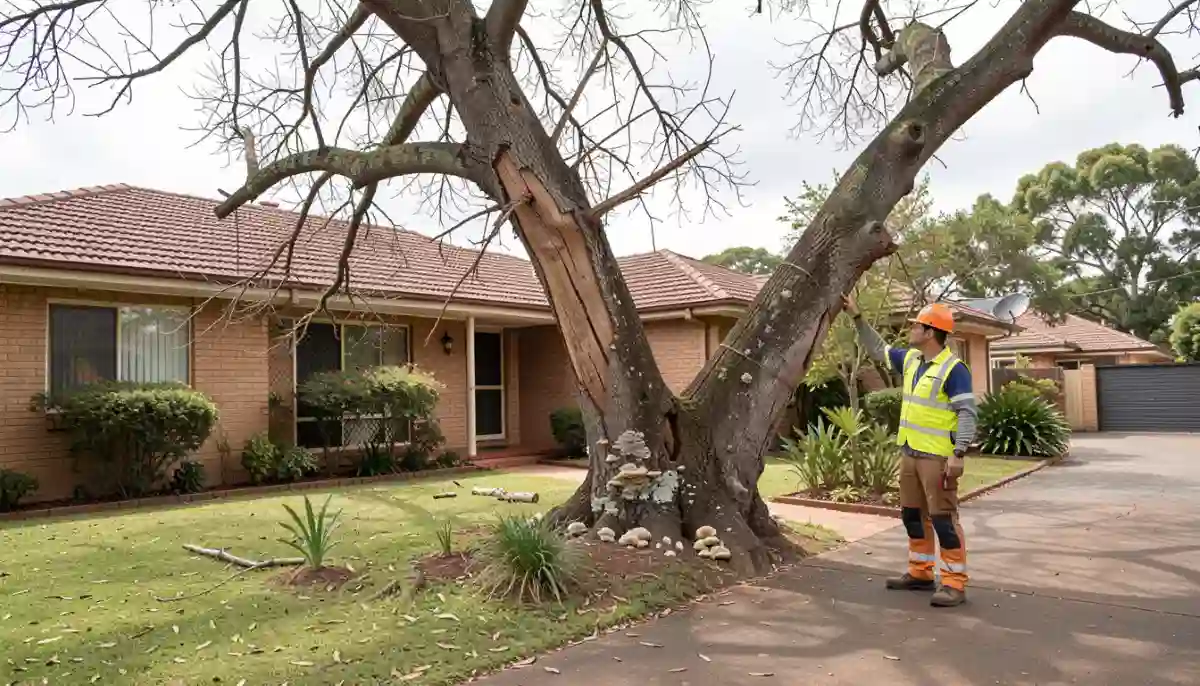
❌ 8 Common Tree Care Mistakes
- Mistake #1: Over-mulching (volcano mulch). Piling mulch against the trunk causes rot and disease. Always keep mulch pulled back, exposing the root flare.
- Mistake #2: Under-watering or over-watering. Both stress the tree. Learn the deep watering technique and adjust for your soil and climate.
- Mistake #3: Planting too deep. This is a leading cause of tree death. The root flare should be at or just above ground level.
- Mistake #4: Topping the tree. This harmful practice creates weak regrowth and decay. Never top a tree. Prune properly or remove it if it’s too big.
- Mistake #5: Using wound paint. Trees heal naturally. Wound dressings can trap moisture and decay. Don’t use them.
- Mistake #6: Ignoring pests and diseases. Early intervention is key. Regular health checks help you spot problems early.
- Mistake #7: Pruning at the wrong time. Pruning at the wrong time can stress the tree or remove flower buds. Know your tree’s best pruning window.
- Mistake #8: Not hiring a professional when needed. For large trees, complex pruning, or pest issues, a qualified arborist is worth the investment. See our hiring guide for tips.
❓ Frequently Asked Questions
What is involved in a tree health check?
A tree health check involves inspecting the leaves, trunk, branches, and roots for signs of disease, pests, or structural issues. It’s recommended annually by a professional arborist.
What is the correct mulching technique for trees?
The correct mulching technique for trees is to apply a 5-10cm layer of organic mulch in a ring around the tree, extending to the drip line. CRITICAL: Keep the mulch away from the trunk – do not create a “mulch volcano”.
How do I care for trees in a drought?
How to care for trees during drought: water deeply and infrequently, apply a thick layer of mulch, and consider using grey water (if safe for the tree species). Choose water wise trees SA for new plantings.
What is borer treatment and when is it needed?
Borer treatment involves controlling wood-boring insects that tunnel into trees. It’s needed when you see small round holes and sawdust on the trunk. Treatment is best done by a professional and may involve systemic insecticides.
What is root collar excavation?
Root collar excavation is a technique using an air spade to remove excess soil from the base of a tree, exposing the root flare. It’s done when trees are planted too deep or have been buried by mulch, to prevent girdling roots and decay.
Do I need to fertilize my trees?
Not always. Many established trees don’t need tree fertilizer if they are in good soil. If growth is poor, a soil test can determine what’s needed. Organic compost applied as mulch is usually the best approach.
What is cable bracing?
Cable bracing is a system of cables installed in a tree’s canopy to support weak limbs or forks, reducing the risk of them breaking. It’s a specialist job for a qualified arborist.
How do I improve soil aeration for tree roots?
Soil aeration for roots can be improved by relieving compaction. For trees, this is often done with an air spade by a professional. Adding organic mulch also helps over time.
What are water wise trees for South Africa?
Water wise trees SA are species adapted to our dry climate, often indigenous. Examples include the Wild Olive, Karee, and Sweet Thorn. They require little water once established.
When should I use a fungal spray on my tree?
Use a fungal spray only after correctly identifying a fungal disease and if cultural controls (like improving air circulation) aren’t enough. Timing is critical. Consult an arborist for advice.
✅ Final Thoughts – Your Tree Maintenance Action Plan
Proactive tree maintenance South Africa is the best way to ensure your trees remain healthy, beautiful, and safe for years to come. A little regular care – proper watering, mulching, and annual inspections – prevents most major problems.
Key takeaways:
- Perform a basic tree health check yourself, but have a professional arborist do a thorough inspection annually.
- Water deeply and infrequently, not shallowly and often.
- Mulch correctly – a wide ring, but never against the trunk.
- Prune for health, removing dead, diseased, and damaged wood.
- Address pests and diseases early. For serious issues like borers or decay, call a professional.
- Consider water wise trees for new plantings.
Your 5-Step Action Plan
- Inspect your trees: Walk your property and look for any obvious signs of trouble using our checklist.
- Improve your mulching: Ensure all your trees have a proper mulch ring, with no mulch against the trunk.
- Review your watering: Are you watering deeply? Adjust your practices.
- Schedule a professional health check: Book an arborist for a comprehensive assessment, especially for large or valuable trees.
- Address any issues: Follow the arborist’s advice on pruning, treatment, or further care.
Ready to Give Your Trees the Care They Deserve?
Get free, no-obligation quotes from vetted, insured arborists who can help with health checks, pruning, and treatments.
📞 Call us: 073 138 4726 for personalised assistance
Free site inspections •
Beat-your-quote guarantee •
Our guarantees
📚 Official resources & standards:
- Department of Forestry, Fisheries and the Environment (DFFE) – National protected tree list and permit applications.
- City of Johannesburg – Municipal bylaws and tree permit information.
- City of Cape Town – Protected tree list and permit application details.
Information accurate as of publication. Laws and bylaws can change. Always verify with the relevant authority.
Written by: ServiceLink SA Research Team
Industry research and analysis team, ServiceLink SA
The ServiceLink SA Research Team has extensive experience navigating the complex web of South African environmental and municipal legislation. This guide synthesises information from national and local authorities to provide homeowners with clear, actionable advice.
For more detailed information, explore our related guides: signs you need tree removal to assess if your tree is hazardous, our palm tree removal guide for specific rules on palms, our company selection guide for finding a reputable contractor, and our cost guide for budgeting. Our contractor guide and legal compliance page also provide valuable background.