
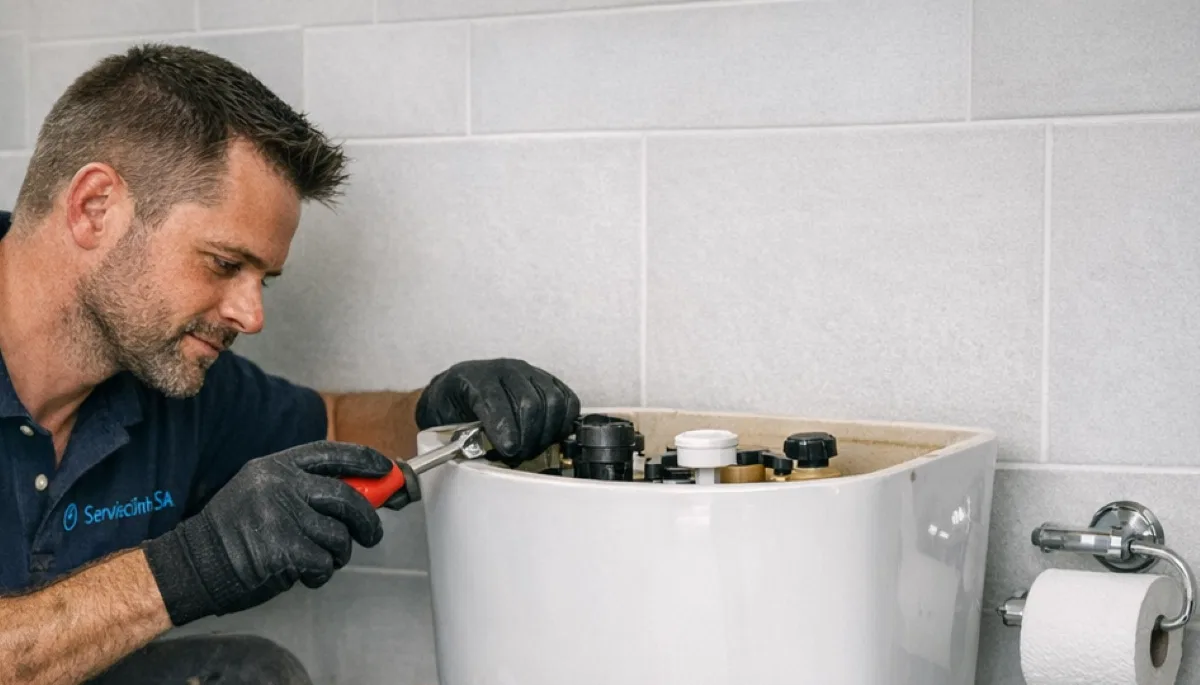
🚽 Toilet Problems? Get Help Fast
If DIY doesn’t work, get quotes from verified plumbers. Same-day service available. Free inspections.
Get Toilet Repair Quotes Near You
Servicing Gauteng, KwaZulu-Natal, Durban, Umhlanga, Ballito, Westville, and across South Africa
Toilet Repair Guide: Fix 5 Common Toilet Problems Yourself (Save on Plumber)
🚽 From running toilets to weak flushes—step-by-step DIY repairs that save you money and frustration
Your toilet runs constantly. The sound of water hissing keeps you awake at night. Or maybe it doesn’t flush properly, leaving you plunging after every use. Your water bill is creeping up, and you know something’s wrong.
Before you call a plumber and spend R500-R1,500 on a service call, know this: most common toilet issues can be fixed in 15-30 minutes with basic tools and parts costing R50-R300. A running toilet is usually just a worn flapper or faulty fill valve. A weak flush often just needs a vent clearing or chain adjustment.
I’ve fixed thousands of toilets over the years. The vast majority of problems are simple—and DIY-friendly. This toilet repair guide will walk you through diagnosing and fixing the five most common problems. You’ll learn how to repair a toilet step by step, know which parts to buy, and most importantly, know when to stop DIY and call a professional.
For related information, read our toilet installation cost guide, running toilet fix guide, blocked toilet guide, and bathroom renovation guide. Let’s fix that toilet.
📋 Table of Contents – Toilet Repair Guide
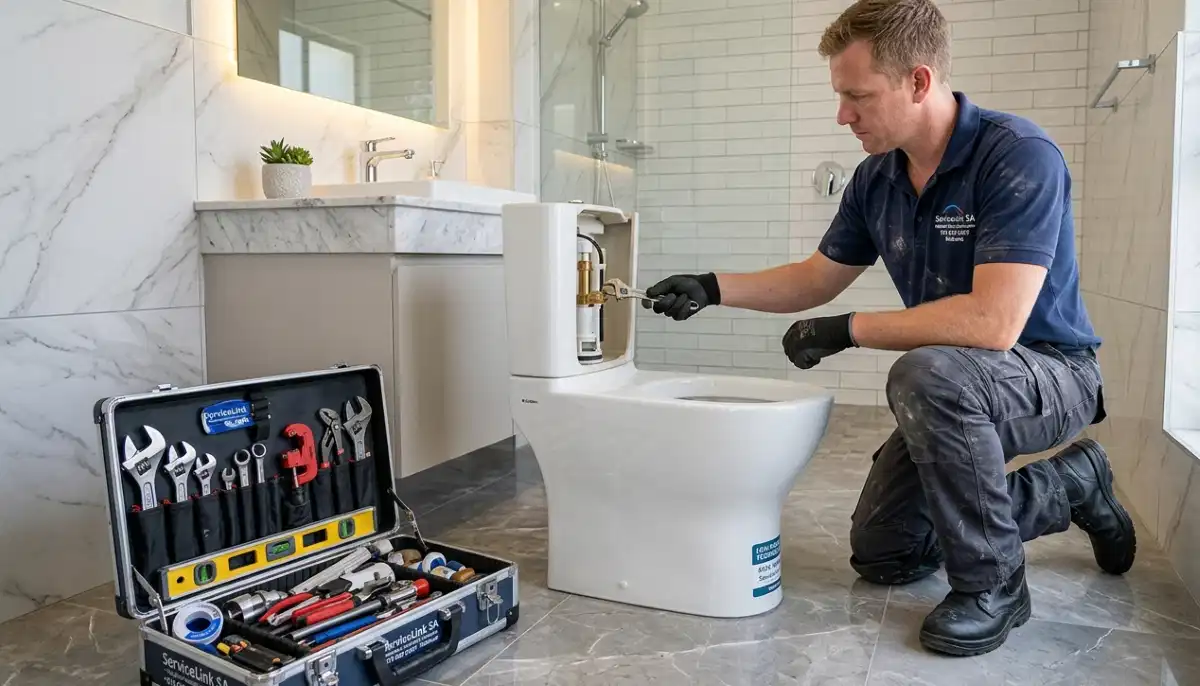
🛠️ Tools & Parts You’ll Need for Toilet Repair
Before starting any toilet troubleshooting, gather these basic items:
🔧 Tools
- Adjustable wrench (for supply line nut)
- Screwdriver (flathead and Phillips)
- Pliers
- Bucket and towels (for water spills)
- Flashlight (to see inside tank)
🧩 Common Replacement Parts
- Flapper (R50-R150)
- Fill valve (R150-R400)
- Flush valve seal (R100-R250)
- Wax ring (R50-R150)
- Supply line (R50-R150)
Most parts are available at Builders Warehouse, Chamberlains, or any hardware store. Take photos of your old parts to match replacements.
Read our plumbing tools guide for more on essential equipment.
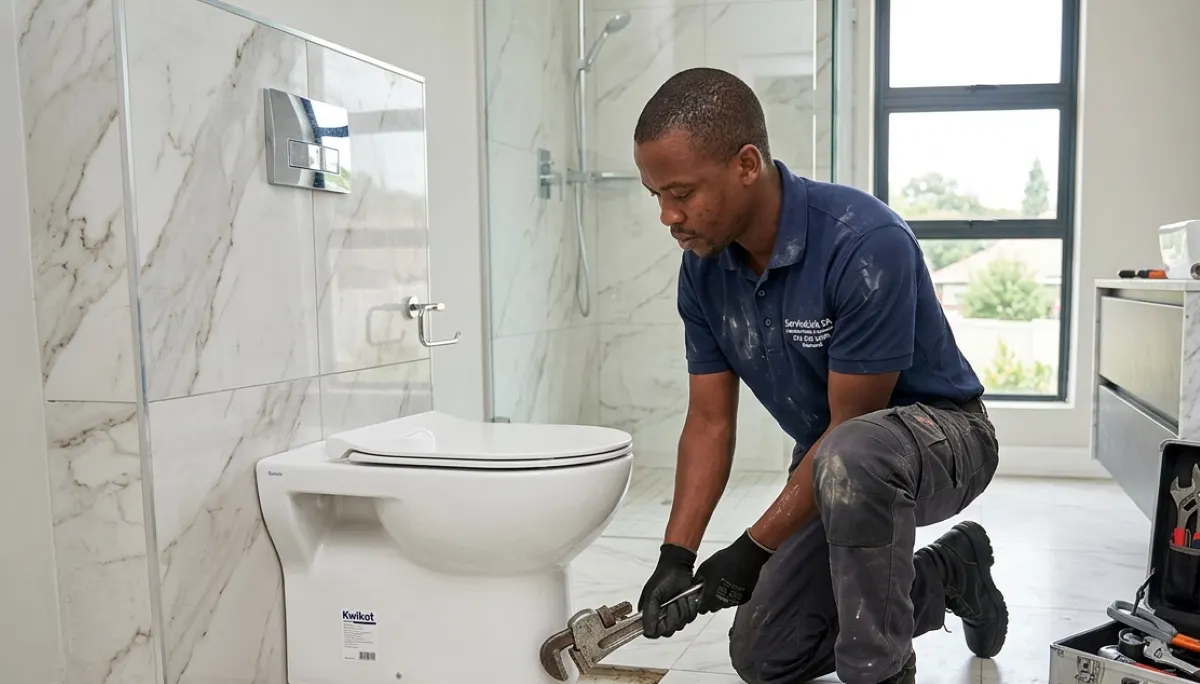
💧 Problem #1: Running Toilet (Constant Hissing)
A running toilet is the most common common toilet issue—and one of the easiest to fix.
Symptoms: Constant hissing sound, water trickling into the bowl, tank refills every few minutes.
Water waste: A running toilet can waste 200-1,000 litres per day (R200-R1,000/month).
Most likely cause (90% of cases): Worn or misaligned flapper (the rubber seal at the bottom of the tank).
Step-by-step fix:
- Remove the tank lid and set it aside carefully
- Flush and watch the flapper—does it close fully?
- If the flapper is warped, cracked, or doesn’t seal, replace it
- Turn off water supply (valve behind toilet)
- Flush to empty the tank
- Remove old flapper (unhook from ears, slide off chain)
- Install new flapper (universal fit for most toilets)
- Adjust chain length—1/2 inch slack when flapper is closed
- Turn water on, let tank fill, test for leaks
Alternative cause: Fill valve not shutting off. Adjust the float or replace the fill valve (R150-R400).
Read our detailed running toilet fix guide for more information.
💨 Problem #2: Weak or Incomplete Flush
If your toilet doesn’t clear the bowl properly, you’re plunging after every use. Here’s how to fix toilet problems with weak flushes.
Symptoms: Bowl doesn’t empty fully, multiple flushes needed, waste remains after flushing.
Step-by-step diagnosis & fix:
- Check rim jets: Under the bowl rim are small holes that spray water. Mineral buildup can block them. Clean with a wire hanger or mirror and small screwdriver.
- Check the siphon jet: The large hole at the bottom of the bowl opposite the trapway. Clean with a small screwdriver or pour CLR/white vinegar and let sit for hours.
- Check water level in tank: Water level should be 1-2 cm below the overflow tube. Adjust fill valve if needed.
- Check flapper: Does it stay open long enough? Adjust chain or replace flapper if it closes too quickly.
- Check for partial blockage: Use a toilet auger to clear any obstruction in the trapway.
If still weak: The toilet may have a design flaw or internal damage. Consider replacement.
Read our blocked toilet guide for more on clearing obstructions.
🚽 Toilet Problems? Get Help Fast
If DIY doesn’t work, get quotes from verified plumbers. Same-day service available. Free inspections.
Free quotes • Same-day service • Verified specialists
🔒 Problem #3: Toilet Won’t Flush (Nothing Happens)
You push the handle, but nothing happens—no water movement, no flush. This toilet troubleshooting step is simple.
Symptoms: Handle moves but no flush, or handle is stiff.
Step-by-step fix:
- Remove tank lid and watch what happens when you push the handle
- If handle moves but flapper doesn’t lift: The chain is disconnected or broken. Reconnect or replace chain.
- If handle is stiff or doesn’t move: The handle mechanism is seized. Replace handle (R50-R150).
- If flapper lifts but no flush: There’s no water in the tank—check water supply valve (behind toilet). Turn counter-clockwise to open.
- If water supply is on but tank empty: Fill valve may be faulty. Replace fill valve (R150-R400).
Most “won’t flush” problems are simple chain or handle issues—fixable in 10 minutes.
💧 Problem #4: Leaking at the Base (Water on Floor)
Water pooling around the base of your toilet is serious—it can damage your floor and subfloor.
Symptoms: Water on floor around toilet, musty odours, floor damage.
Possible causes:
- Worn wax ring (most common)
- Loose toilet bolts
- Cracked toilet base (requires replacement)
- Condensation (not a leak—insulate tank)
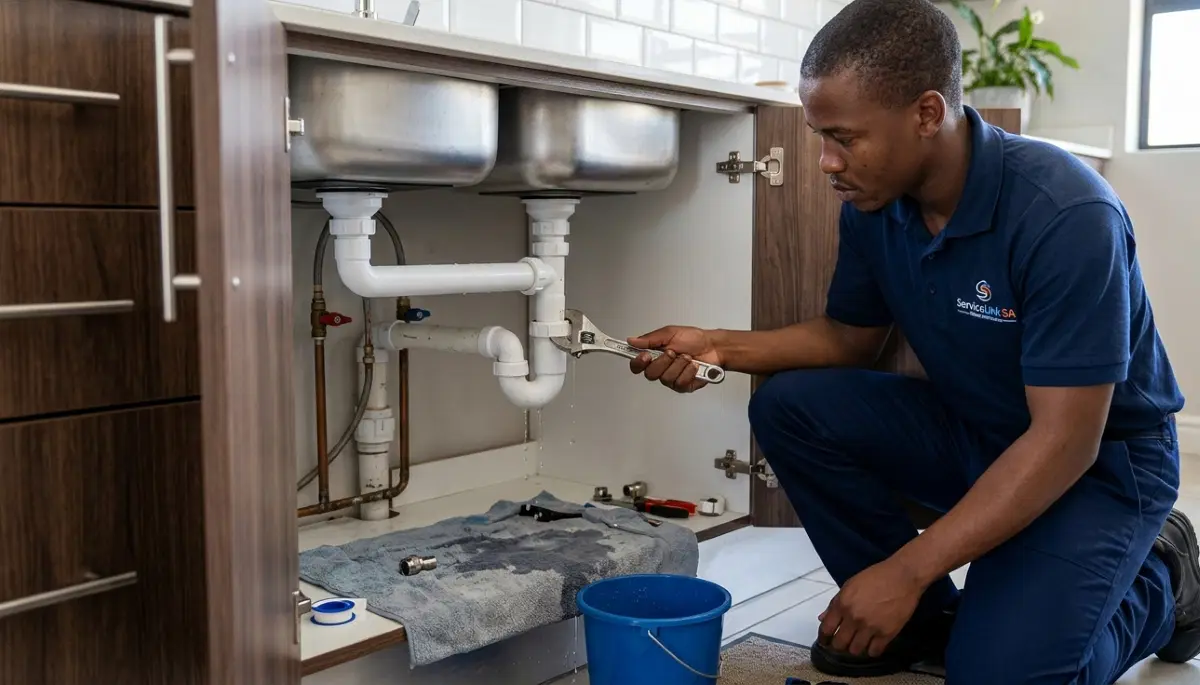
How to fix a leaking wax ring (DIY-friendly but heavier):
- Turn off water supply and disconnect supply line
- Flush and empty tank and bowl (use a plunger to push water down)
- Remove nuts from toilet bolts (at base)
- Rock toilet gently to break wax seal—lift straight up (toilets are heavy, get help)
- Remove old wax ring and flange bolts if damaged
- Install new wax ring (or rubber seal) on flange
- Lower toilet straight onto new wax ring—press down firmly
- Tighten nuts evenly (don’t overtighten—cracks porcelain)
- Reconnect supply line, turn water on, test for leaks
- Caulk around base (leave back uncaulked to detect future leaks)
Note: If the toilet base is cracked, replacement is the only option. Read our toilet installation cost guide for pricing.
Read our leak detection guide for other leak sources.
👻 Problem #5: Ghost Flushing (Random Self-Flushing)
Your toilet flushes by itself—no one touched it. This is called ghost flushing.
Symptoms: Toilet randomly refills or flushes, water runs intermittently.
Cause: A slow leak from the tank to the bowl. Water level drops, causing the fill valve to activate.
Step-by-step fix:
- Remove tank lid and listen—do you hear water trickling?
- Add a few drops of food colouring to the tank (don’t flush)
- Wait 15-30 minutes—if colour appears in the bowl, you have a leak
- The flapper is usually the culprit—replace it (R50-R150)
- If flapper replacement doesn’t work, the flush valve seal may be worn (requires disassembly)
This is usually a simple flapper replacement—one of the easiest fix toilet problems tasks.
📞 When to Stop DIY & Call a Professional
While this toilet repair guide covers most common issues, some problems need a professional:
- Cracked toilet tank or bowl – Replacement needed, heavy and requires plumbing knowledge
- Persistent leaks after replacing wax ring – May indicate flange damage or floor issue
- Blockage that won’t clear with auger – May be in main line (not just toilet)
- Toilet not attached to floor – Rocking toilet with broken flange
- Multiple toilets having issues simultaneously – Main line blockage
- If you’re uncomfortable or unsure – Better safe than sorry
Professional cost: R750-R1,500 for standard repairs. Read our how to choose a plumber guide.
For emergency service, use our 24/7 emergency plumbing services.
🛡️ Preventing Future Toilet Problems
Prevent common toilet issues with these habits:
- Only flush toilet paper and waste – No wipes (even “flushable”), feminine products, cotton swabs, or dental floss
- Clean rim jets annually – Mineral buildup reduces flush power
- Check for silent leaks monthly – Food colouring test in tank
- Don’t use “in-tank” cleaning tablets – They degrade rubber parts (flapper, seals)
- Fix running toilets immediately – Wasted water adds up fast
- Know where your isolation valve is – Behind toilet, turn off before repairs
Read our home plumbing maintenance checklist for a complete schedule.
❌ 5 Costly DIY Mistakes to Avoid
Mistake #1: Overtightening Bolts
Tightening toilet bolts or supply line nuts too much can crack the porcelain. Hand-tight plus 1/4 turn is enough. Stop immediately if you hear cracking sounds.
Mistake #2: Using the Wrong Flapper
Not all flappers are universal. Take your old flapper to the hardware store to match. Wrong flapper = ongoing running toilet.
Mistake #3: Not Turning Off Water First
Always turn off the isolation valve behind the toilet before any repair. Forgetting leads to flooding.
Mistake #4: Using In-Tank Cleaning Tablets
Those blue or white tablets destroy rubber flappers and seals. Use bowl cleaners that drop into the bowl, not the tank.
Mistake #5: Ignoring Small Leaks
A small leak at the base can rot your subfloor (R5,000-R15,000 repair). Fix leaks immediately.
📋 Real-World Toilet Repair Case Studies
💧 Case 1: The Running Toilet in Durban
Location: Durban | Homeowner: The Govender Family
Problem: Toilet ran constantly. Water bill increased by 40%.
Solution: Followed this toilet repair guide—replaced worn flapper (R80).
Outcome: Running stopped. Water bill returned to normal. Total cost R80, time 15 minutes.
Lesson: A simple flapper replacement saved R500-R1,000 in plumber call-out fees.
🔧 Case 2: The Weak Flush in Umhlanga
Location: Umhlanga | Homeowner: The Smith Family
Problem: Toilet needed multiple flushes. Plunger used after every use.
Solution: Cleaned rim jets (blocked with mineral deposits) and adjusted water level.
Outcome: Single flush now clears bowl completely. Zero cost, 30 minutes.
Lesson: Mineral buildup is a common common toilet issue—cleaning rim jets restores flush power.
❓ Frequently Asked Questions About Toilet Repair
How to repair a toilet that keeps running?
How to repair a toilet that keeps running: The flapper is the most common cause (90% of cases). Replace the flapper (R50-R150). If that doesn’t work, check the fill valve—adjust float or replace fill valve (R150-R400). A running toilet wastes 200-1,000 litres daily—fix it promptly.
What causes a toilet to flush weakly?
Weak flush is usually caused by: blocked rim jets (mineral buildup), low water level in tank, flapper closing too quickly, or partial blockage in trapway. Clean rim jets with a wire hanger, adjust water level, or use a toilet auger. If none work, the toilet may need replacement.
How do I fix a toilet that won’t flush?
If your toilet won’t flush: Check the handle-to-flapper chain (most common). Open tank, flush manually by lifting flapper. If chain is disconnected, reconnect it. If handle is seized, replace handle (R50-R150). If tank is empty, check water supply valve is open.
Why is there water around the base of my toilet?
Water at the base usually means a failed wax ring (leak between toilet and floor). Also possible: loose toilet bolts, cracked toilet base (requires replacement), or condensation (not a leak). Fix immediately—water damages subfloor (R5,000-R15,000 repair). Read our water leak repair guide.
How much does professional toilet repair cost?
Professional toilet repair guide services cost R750-R1,500 depending on the problem and location. Call-out fee R450-R650 plus labour. In Ballito or Westville, rates may be similar to Durban. Most simple repairs (flapper, fill valve) are cheaper to DIY.
How do I stop my toilet from ghost flushing?
Ghost flushing (random self-flushing) is caused by a slow leak from tank to bowl. Add food colouring to tank—if colour appears in bowl, you have a leak. Replace the flapper (R50-R150) first. If that doesn’t work, replace the flush valve seal (more complex).
Can I use bleach tablets in my toilet tank?
No—bleach tablets and “in-tank” cleaning tablets destroy rubber parts (flapper, seals, gaskets). They cause leaks and running toilets. Use bowl cleaners that drop into the bowl, not the tank. For cleaning, use white vinegar occasionally.
How do I find a reliable plumber for toilet repair?
To find a reliable plumber for fix toilet problems: 1) Verify PIRB registration, 2) Ask for toilet repair experience, 3) Get detailed quotes, 4) Check reviews. ServiceLink SA connects you with verified plumbers in Gauteng and KwaZulu-Natal.
✅ Final Thoughts: Most Toilet Repairs Are DIY-Friendly
This toilet repair guide has shown you that most common toilet issues—running toilets, weak flushes, ghost flushing—can be fixed in 15-30 minutes with basic tools and inexpensive parts (R50-R400).
Knowing how to repair a toilet yourself saves you R500-R1,500 in plumber call-out fees and prevents water waste. But knowing your limits is equally important—if you’re unsure or the problem persists, call a professional.
Key takeaways for South African homeowners:
- Running toilet = replace flapper (R50-R150) – 90% of cases
- Weak flush = clean rim jets, adjust water level – often free
- Toilet won’t flush = check chain or water supply – simple fix
- Leaking base = replace wax ring – heavier job but DIY-able
- Ghost flushing = flapper leak – food colouring test confirms
- Never use in-tank cleaning tablets – they destroy rubber parts
- Call a pro for cracks, persistent leaks, or if unsure
Your action plan: Start with the simplest fix (check the flapper). Buy replacement parts from any hardware store. Take photos before disassembling. If DIY fails after 2 attempts, call a professional through ServiceLink SA.
🚽 Toilet Problems? Get Help Fast
If DIY doesn’t work, get quotes from verified plumbers. Same-day service available. Free inspections.
📞 Call us: 073 138 4726 for immediate help finding a plumber near you.
Toilet installation cost •
Running toilet fix •
Blocked toilet guide •
Bathroom renovation •
Beat Your Quote guarantee
📚 Official resources & standards referenced:
- SANS 10400 – Toilet repair standards and plumbing compliance.
- Plumbing Industry Registration Board (PIRB) – Find registered plumbers when DIY isn’t enough.
Information provided for general guidance based on industry research and SANS/PIRB standards. For complex common toilet issues, professional assistance is recommended.
Written by: ServiceLink SA Research Team
Toilet & Bathroom Plumbing Specialists
The ServiceLink SA Research Team comprises toilet repair specialists, bathroom plumbing experts, and DIY professionals with decades of experience diagnosing and fixing common toilet issues across South Africa. Our team works directly with PIRB-registered plumbers, fixture manufacturers, and water authorities to bring you accurate, actionable information about how to repair a toilet, parts replacement, and when to call a professional. We continuously update this toilet repair guide to reflect current best practices and common problems in South African homes.
For more information about toilet repair and bathroom plumbing, explore our related resources:
toilet installation cost guide,
running toilet fix guide,
blocked toilet guide,
toilet repair guide,
and bathroom renovation guide.
Our how ServiceLink SA works and
avoiding contractor scams pages explain our verification process.
See our service areas page for toilet repair coverage in your region.