
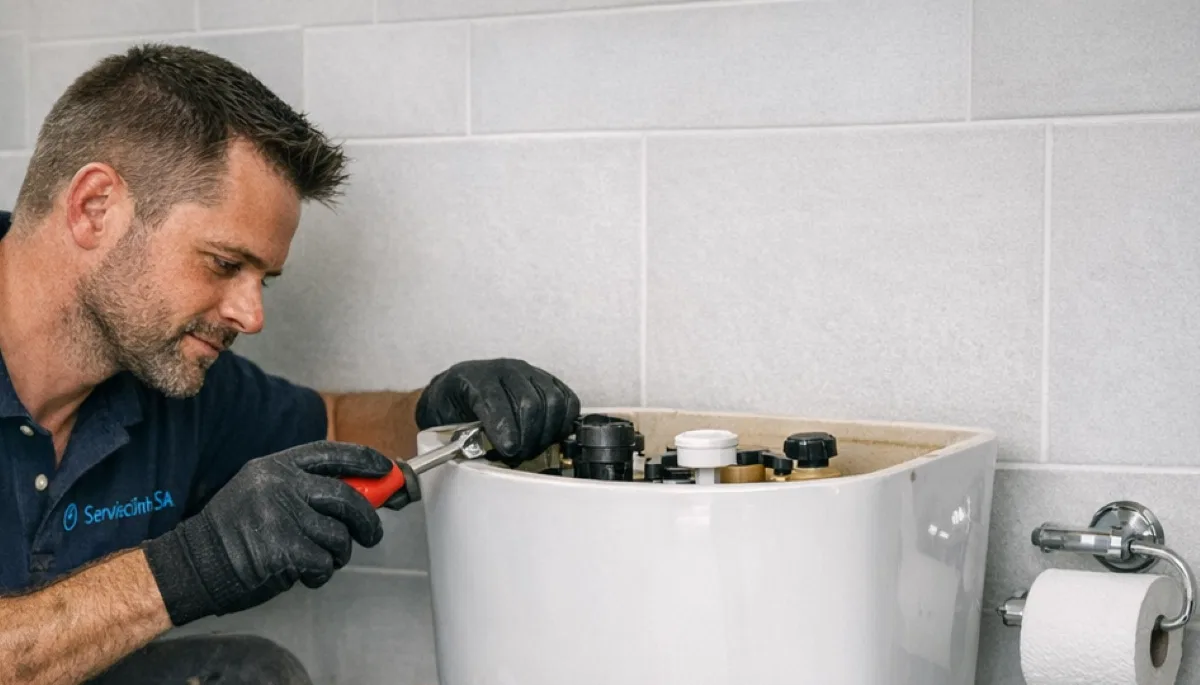
🚽 Toilet Running? Fix It Fast
Get quotes from verified plumbers if DIY doesn’t work. Same-day service available.
Get Toilet Repair Quotes Near You
Servicing Gauteng, Johannesburg, Sandton, Midrand, Fourways, Bryanston, and across South Africa
How to Fix a Running Toilet: 5 Minute Fix (Stop Wasting Water)
🚽 From constant hissing to silent leaks—complete guide to diagnosing and fixing a running toilet
Hssssssss. That constant hissing sound from your bathroom is more than annoying—it’s money literally going down the drain. A running toilet can waste 200 to 1,000 litres of water every single day. That’s R200-R1,000 per month on your water bill for a problem that usually takes 5-15 minutes to fix.
I’ve fixed thousands of running toilets over the years. The good news? In 90% of cases, the solution is simple and cheap—replace the flapper (the rubber seal at the bottom of the tank). A new flapper costs R50-R150 and takes 5 minutes to install.
This guide will teach you exactly how to fix a running toilet, from identifying the cause to step-by-step repairs. You’ll learn why does my toilet keep running, how to test for silent leaks, and when to call a professional. Whether you’re in Gauteng, Johannesburg, or Sandton, this guide will save you water and money.
For related information, read our toilet installation cost guide, toilet repair guide, and blocked toilet guide. Let’s stop that hiss.
📋 Table of Contents – How to Fix a Running Toilet
💰 Why a Running Toilet Costs You Money
A running water toilet isn’t just annoying—it’s expensive:
| Leak Severity | Litres Wasted/Day | Monthly Cost (R30/kl) | Annual Cost |
|---|---|---|---|
| Small trickle | 200-400 | R180-R360 | R2,160-R4,320 |
| Medium hiss | 400-700 | R360-R630 | R4,320-R7,560 |
| Constant running | 700-1,000+ | R630-R900+ | R7,560-R10,800+ |
A R50-R150 flapper replacement pays for itself in days. Don’t ignore the hiss—fix it today.
Read our water saving plumbing tips guide for more ways to reduce your water bill.
🔍 How to Identify the Problem
Before you fix running toilet issues, you need to know what’s causing it:
- Remove the tank lid and set it aside carefully
- Listen—where is the sound coming from?
- Watch what happens after you flush
Common causes of a toilet keeps running:
- Worn flapper (90% of cases): The rubber seal at the bottom doesn’t seal—water leaks into bowl
- Fill valve not shutting off: Water keeps flowing into tank, overflowing down the overflow tube
- Float too high: Water level exceeds overflow tube
- Chain too short or too long: Prevents flapper from sealing
- Cracked overflow tube: Water leaks even when flapper is sealed
Read our toilet repair guide for more troubleshooting.
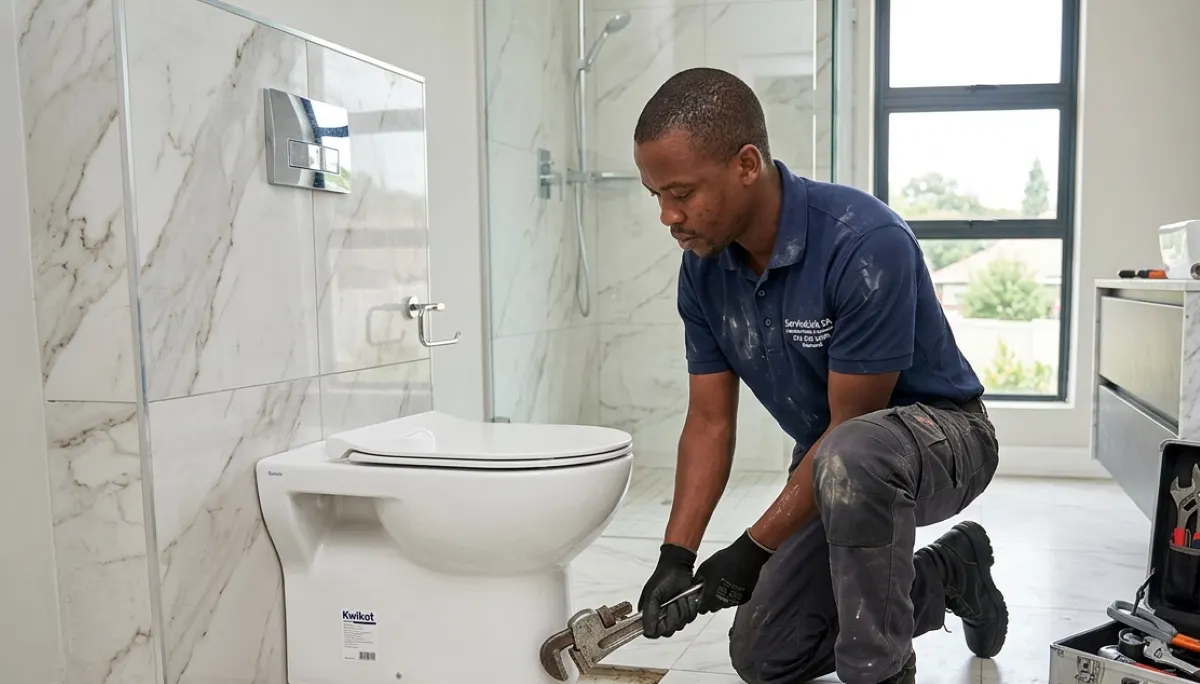
🔧 Fix #1: Replace the Flapper (90% of Cases)
This is the most common fix running toilet solution—and the easiest.
Signs it’s the flapper: Water trickles into the bowl constantly, or you hear hissing even when the tank is full.
Step-by-step:
- Turn off water supply (valve behind toilet—turn clockwise)
- Flush to empty the tank
- Remove old flapper—unhook from ears on overflow tube, slide chain off the flush lever
- Take old flapper to hardware store to match (universal flappers fit most toilets)
- Install new flapper—hook onto ears, attach chain
- Adjust chain length—about 1/2 inch slack when flapper is closed
- Turn water back on, let tank fill
- Test—flush and listen. The running should stop
Time: 5-10 minutes. Cost: R50-R150.
💡 Pro Tip:
If you’re not sure which flapper to buy, get a universal flapper—they fit most toilets. Or take a photo of your old flapper to show at the hardware store.
💧 Fix #2: Adjust or Replace the Fill Valve
If water keeps flowing into the tank after it’s full, the fill valve isn’t shutting off.
Signs: Water level rises above the overflow tube, water flows into overflow tube constantly.
Step-by-step:
- Watch the fill valve—does water stop when the float rises?
- Try adjusting the float (see Fix #3 below)
- If adjustment doesn’t work, replace the fill valve (R150-R400)
- Turn off water, flush to empty tank
- Unscrew the supply line from the fill valve
- Remove old fill valve (unscrew lock nut inside tank)
- Install new fill valve following package instructions
- Adjust water level to 1-2 cm below overflow tube
Time: 15-30 minutes. Cost: R150-R400.
📏 Fix #3: Adjust the Float Height
If the water level is too high, water will constantly flow into the overflow tube.
For a float on a metal rod (older toilets): Bend the rod down slightly to lower water level.
For a float on a fill valve (newer toilets): Pinch the spring clip and slide the float down.
Correct water level: 1-2 cm below the top of the overflow tube. Marked inside the tank.
🔗 Fix #4: Adjust the Chain
A chain that’s too short holds the flapper open. A chain that’s too long gets caught under the flapper.
Correct chain length: About 1/2 inch (1-2 cm) of slack when the flapper is closed. The chain should not be tight, but also not so loose it tangles.
To adjust: Move the chain hook to a different link.
🚽 Toilet Running? Fix It Fast
Get quotes from verified plumbers if DIY doesn’t work. Same-day service available.
Free quotes • Same-day service • Verified specialists
🔇 Silent Leaks: The Food Colouring Test
Some leaks don’t make noise—they’re silent but still waste water. Here’s why does my toilet keep running silently:
The test:
- Remove tank lid
- Add a few drops of food colouring (any dark colour) to the tank water
- Wait 15-30 minutes (don’t flush)
- Check the toilet bowl—if colour appears, you have a silent leak
Cause: Usually a worn flapper that’s not sealing completely.
Fix: Replace the flapper (R50-R150).
⚠️ Warning:
A silent leak wastes just as much water as a noisy running toilet. Even if you can’t hear it, do the food colouring test monthly. A small leak wastes 200-400 litres daily—R180-R360 per month.
🛠️ Tools & Parts You’ll Need
To fix running toilet issues, you’ll need:
🔧 Tools
- Adjustable wrench (for supply line)
- Screwdriver (flathead)
- Pliers
- Bucket and towels
🧩 Parts (R50-R400 total)
- Flapper (R50-R150)
- Fill valve (R150-R400)
- Supply line (R50-R150 if needed)
Read our plumbing tools guide for more equipment information.
📞 When to Call a Professional
While most running water toilet problems are DIY-friendly, sometimes you need a pro:
- After replacing flapper and fill valve, it still runs – May be a cracked overflow tube or internal damage
- Water leaking from the tank itself – Cracked tank requires replacement
- Toilet rocks or is unstable – Loose bolts or damaged flange
- If you’re uncomfortable with any step – Better safe than sorry
Professional cost: R750-R1,500 depending on the problem. In Sandton or Fourways, rates may be higher.
For professional help, use our emergency plumbing services or how to choose a plumber guide.
🛡️ Preventing Future Running Toilets
Prevent toilet keeps running issues with these habits:
- Never use in-tank cleaning tablets – Bleach and chemicals destroy rubber flappers and seals
- Test for silent leaks monthly – Food colouring test takes 5 minutes
- Replace flapper every 3-5 years – Proactive replacement prevents emergencies
- Don’t flush foreign objects – Wipes, cotton swabs, dental floss damage seals
- Know where your isolation valve is – Behind toilet, for emergencies
Read our home plumbing maintenance checklist for a complete schedule.
❌ 5 Costly Mistakes to Avoid
Mistake #1: Ignoring the Hiss
“It’s just a little sound” costs you R200-R1,000 per month. Fix it immediately—a R50 flapper pays for itself in days.
Mistake #2: Using In-Tank Cleaning Tablets
Those blue tablets destroy rubber flappers and seals. Use bowl cleaners that drop into the bowl, not the tank.
Mistake #3: Buying the Wrong Flapper
Not all flappers fit all toilets. Take your old flapper to the hardware store or buy a universal flapper.
Mistake #4: Overtightening the Supply Line
Overtightening can crack the fill valve or supply line nut. Hand-tight plus 1/4 turn is enough.
Mistake #5: Not Testing for Silent Leaks
A silent leak wastes just as much water as a noisy one. Do the food colouring test monthly.
📋 Real-World Running Toilet Case Studies
💧 Case 1: The Hissing Toilet in Johannesburg
Location: Johannesburg | Homeowner: The Nkosi Family
Problem: Toilet hissed constantly. Water bill increased by R400/month.
Solution: Replaced worn flapper (R80). Took 5 minutes.
Outcome: Hissing stopped. Water bill returned to normal. Saved R400/month.
Lesson: A R80 fix saved R4,800/year.
🔧 Case 2: The Ghost Flush in Midrand
Location: Midrand | Homeowner: The van Wyk Family
Problem: Toilet randomly refilled every 10-15 minutes. No visible leak.
Solution: Food colouring test showed a silent leak. Replaced flapper (R60).
Outcome: Ghost flushing stopped. Water bill reduced by R200/month.
Lesson: Silent leaks are easy to miss—test monthly with food colouring.
❓ Frequently Asked Questions About Running Toilets
Why does my toilet keep running after I flush?
Why does my toilet keep running after flushing? Most commonly, the flapper (rubber seal) isn’t sealing properly. Water leaks from the tank to the bowl, causing the fill valve to run constantly. Replace the flapper (R50-R150) to fix it. Other causes: fill valve not shutting off, float too high, or chain issues.
How to fix a running toilet without calling a plumber?
How to fix a running toilet yourself: 1) Replace the flapper (R50-R150, 5 minutes)—this fixes 90% of cases. 2) Adjust the float if water level is too high. 3) Adjust the chain if it’s too short or too long. 4) Replace the fill valve if it won’t shut off (R150-R400, 15-30 minutes). Most running toilets are DIY-fixable.
How much water does a running toilet waste?
A running water toilet wastes 200-1,000+ litres per day depending on severity. A small trickle wastes 200-400 litres daily (R180-R360/month). A constant running toilet wastes 700-1,000+ litres daily (R630-R900+/month). A R50 flapper replacement pays for itself in days.
Can a running toilet increase my water bill?
Yes—dramatically. A running toilet can add R200-R1,000 to your monthly water bill. Over a year, that’s R2,400-R12,000 wasted. Fixing a running toilet is one of the fastest ways to reduce your water bill. The water efficient plumbing fixtures guide has more money-saving tips.
What is a ghost flushing toilet?
Ghost flushing is when your toilet randomly refills or “flushes” by itself. It’s caused by a slow leak from the tank to the bowl. Water level drops, triggering the fill valve. The food colouring test will confirm. Replace the flapper to fix it.
How do I test for a silent toilet leak?
Add a few drops of food colouring to the tank (don’t flush). Wait 15-30 minutes. If colour appears in the bowl, you have a silent leak. Replace the flapper (R50-R150). Test monthly—silent leaks waste as much water as noisy ones.
How long does a toilet flapper last?
A toilet flapper typically lasts 3-5 years. In-tank cleaning tablets (bleach) can destroy them in months. Replace your flapper proactively every 3-5 years to prevent running toilets. Cost is minimal (R50-R150).
How much does a plumber charge to fix a running toilet?
A plumber typically charges R750-R1,500 to fix a running toilet, including call-out fee (R450-R650) plus labour. In Sandton or Bryanston, rates may be higher. Since a flapper costs R50-R150 and takes 5 minutes to install, DIY is much cheaper for this common problem.
✅ Final Thoughts: Stop the Hiss, Save the Water
A running toilet is one of the easiest and cheapest plumbing problems to fix. In 90% of cases, a R50-R150 flapper replacement takes 5 minutes and solves the problem permanently.
Key takeaways for South African homeowners:
- Running toilet = replace flapper first – 90% of cases, R50-R150, 5 minutes
- Wasted water: 200-1,000+ litres/day – R200-R1,000/month
- Silent leaks: Test monthly with food colouring
- Never use in-tank cleaning tablets – they destroy flappers
- Adjust float and chain if flapper doesn’t fix it
- Replace fill valve if water keeps flowing – R150-R400
- Call a pro if DIY fails after 2 attempts
Your action plan: Remove your toilet tank lid. Listen for hissing. Do the food colouring test. If you have a leak, buy a new flapper from any hardware store. Install it in 5 minutes. Test again. Your water bill will thank you.
🚽 Toilet Running? Fix It Fast
Get quotes from verified plumbers if DIY doesn’t work. Same-day service available.
📞 Call us: 073 138 4726 for immediate help finding a plumber near you.
Toilet installation cost •
Toilet repair guide •
Blocked toilet guide •
Low-flow toilets •
Beat Your Quote guarantee
📚 Official resources & standards referenced:
- Department of Water and Sanitation – Water conservation guidelines for toilets.
- SANS 10400 – Toilet standards and plumbing compliance.
- Plumbing Industry Registration Board (PIRB) – Find registered plumbers.
Information provided for general guidance based on industry research and DWS/SANS standards. For persistent running water toilet issues, professional assistance is recommended.
Written by: ServiceLink SA Research Team
Toilet Repair & Water Conservation Specialists
The ServiceLink SA Research Team comprises toilet repair specialists, water conservation experts, and DIY plumbing professionals with decades of experience helping homeowners fix running toilet issues across South Africa. Our team works directly with PIRB-registered plumbers, fixture manufacturers, and water authorities to bring you accurate, actionable information about toilet keeps running causes, solutions, and prevention. We continuously update this guide to reflect current best practices and water conservation standards.
For more information about toilet repair and water conservation, explore our related resources:
toilet installation cost guide,
toilet repair guide,
blocked toilet guide,
running toilet fix guide,
and low-flow fixtures guide.
Our what is ServiceLink SA and
contractor verification process pages explain how we connect you with trusted professionals.
See our service areas page for toilet repair coverage in your region.