
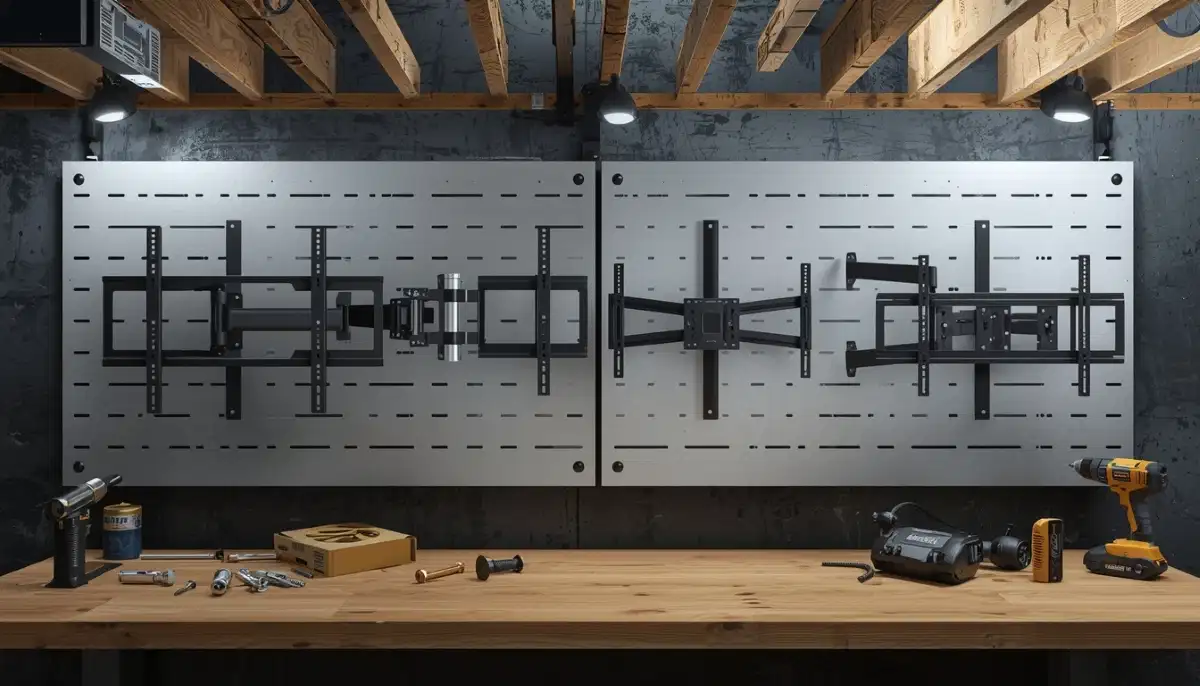
TV Bracket Types Explained South Africa – Fixed, Tilting & Full-Motion
🔄 VESA patterns, weight ratings, and movement ranges: the complete guide to choosing the perfect TV mount for your home.
You’ve chosen the perfect 65-inch OLED for your home in Sandton. Now you need to get it on the wall. But standing in the hardware store or scrolling online, you’re faced with a bewildering array of brackets: fixed, tilting, full-motion, slim, heavy-duty, ceiling mounts. What do all these terms mean? And which one is right for your lounge in Cape Town or your bedroom in Durban? Understanding TV bracket types explained South Africa is essential for a safe, functional, and aesthetically pleasing installation.
This guide cuts through the confusion. We explain the three main categories – fixed vs tilt vs full motion TV mount – in detail. You’ll learn the pros and cons of each, their ideal use cases, and how they affect your viewing experience. We also cover specialised types like ceiling TV mount bracket types and heavy duty TV bracket 80kg options for large commercial screens. Crucially, we explain VESA patterns – the universal mounting standard that ensures your bracket fits your TV. We’ll help you understand terms like low profile, dual arm, cantilever, and swivel range, and how to choose a bracket compatible with a recessed box for cable concealment. Whether you’re in Pretoria, Centurion, or Umhlanga, this guide ensures you buy the right bracket the first time.
If you’re ready for professional advice and installation, explore our Services Overview or visit our TV Mounting page to find vetted installers near you. For more on how we work, see How It Works.
Not Sure Which Bracket You Need?
Get free, no-obligation quotes from local TV mounting experts who can advise you on the best bracket for your TV and room.
Find TV Mounting Experts Near Me
Servicing Johannesburg, Pretoria, Cape Town, Durban, and nationwide
📋 Table of Contents – TV Bracket Types Guide
📏 First Things First: Understanding VESA Patterns
Before you even look at bracket types, you need to know your TV’s VESA pattern. This is the universal standard for TV mounting holes on the back of the TV.
- What is VESA? VESA (Video Electronics Standards Association) defines the pattern of the four mounting holes on the back of your TV. It’s expressed as horizontal x vertical distance in millimetres, e.g., 200×200, 400×400, 600×400.
- How to find it: Check your TV’s manual or look on the back of the TV. You’ll see four screw holes arranged in a square or rectangle. Measure the distance between them if you can’t find the spec online.
- Why it matters: Your bracket must be compatible with your TV’s VESA pattern. Most brackets support a range of patterns (e.g., 200×200 up to 600×400). If your TV has a very large or non-standard pattern, you may need a specific bracket or adapter plate.
- Weight matters too: The VESA standard also has weight limits. A bracket rated for a certain VESA pattern will have a maximum weight capacity. Always check both.
Knowing your VESA pattern is the first step. Read more on our TV mounting page.
📐 Fixed (Low Profile) TV Brackets
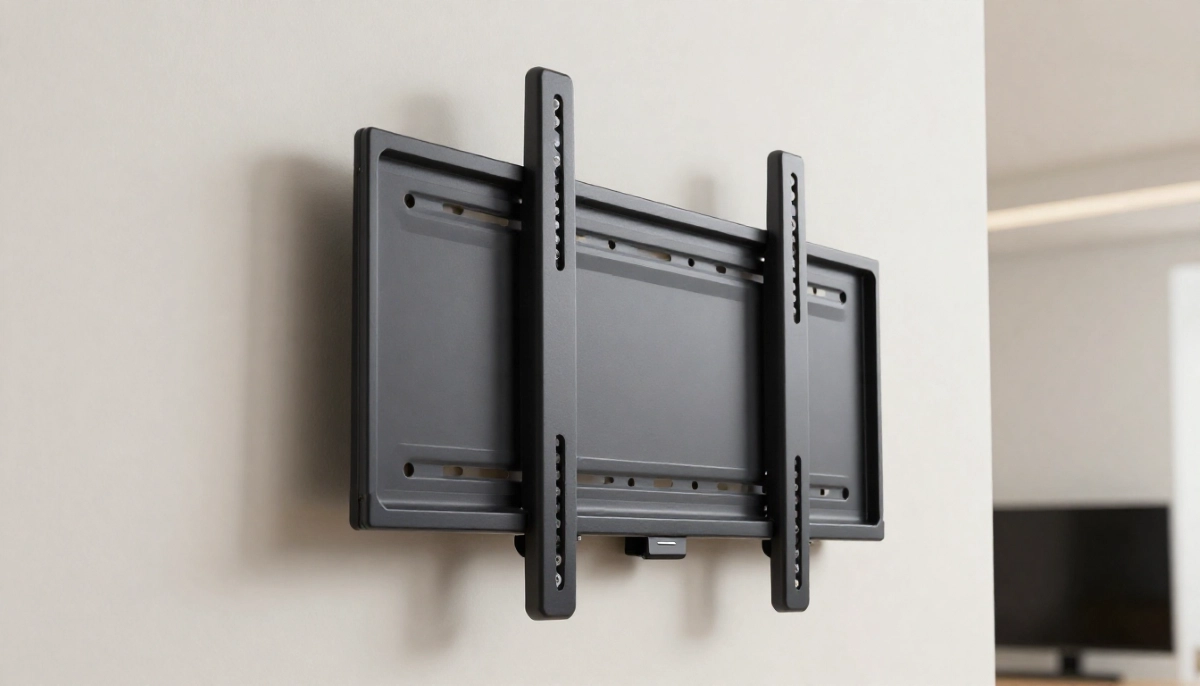
The simplest and most common type. The TV mounts flat against the wall and does not move.
- How they work: A fixed bracket consists of a wall plate and two rails that attach to the back of the TV. The TV then hangs on the wall plate, sitting just a few millimetres from the wall.
- Pros:
- Low profile: The TV sits flush against the wall, creating a clean, minimalist look. This is the “slim mount” option.
- Most secure: With no moving parts, fixed brackets are inherently very strong and stable.
- Lowest cost: Generally the most affordable bracket type.
- Best for: Rooms where you always sit directly opposite the TV and don’t need to adjust the angle.
- Cons:
- No angle adjustment: You cannot tilt or swivel the TV. If it’s mounted too high, you’ll have neck strain.
- Difficult access to cables: With the TV flush to the wall, plugging in cables after mounting can be a challenge. Plan your cable management beforehand.
- Ideal for: Living rooms, bedrooms, and offices where the TV is at the correct height and directly facing the seating.
See our cost guide for pricing on fixed bracket installations.
📐 Tilting TV Brackets
These brackets allow you to tilt the TV vertically, usually downwards.
- How they work: Similar to a fixed bracket, but the TV attaches to arms that allow it to pivot forward and back. The tilt angle is usually adjustable, and you can lock it in place.
- Pros:
- Reduces glare: If you have lights or windows causing reflections, tilting can help.
- Corrects for high mounting: If you have to mount the TV higher than ideal (e.g., above a fireplace), tilting it down improves the viewing angle. This is a key feature for best TV mounting height compromise.
- Easier cable access: Tilting the TV forward gives you access to the back for plugging in cables.
- Cons:
- No horizontal swivel: You cannot move the TV left or right.
- Slightly less low-profile: When not tilted, it may sit a little further from the wall than a pure fixed bracket.
- Ideal for: Bedrooms (where you’re often reclining), rooms with high TV placement, or areas with problematic glare.
Our safety tips page covers proper installation for tilting brackets.
🔄 Full-Motion / Articulating TV Brackets
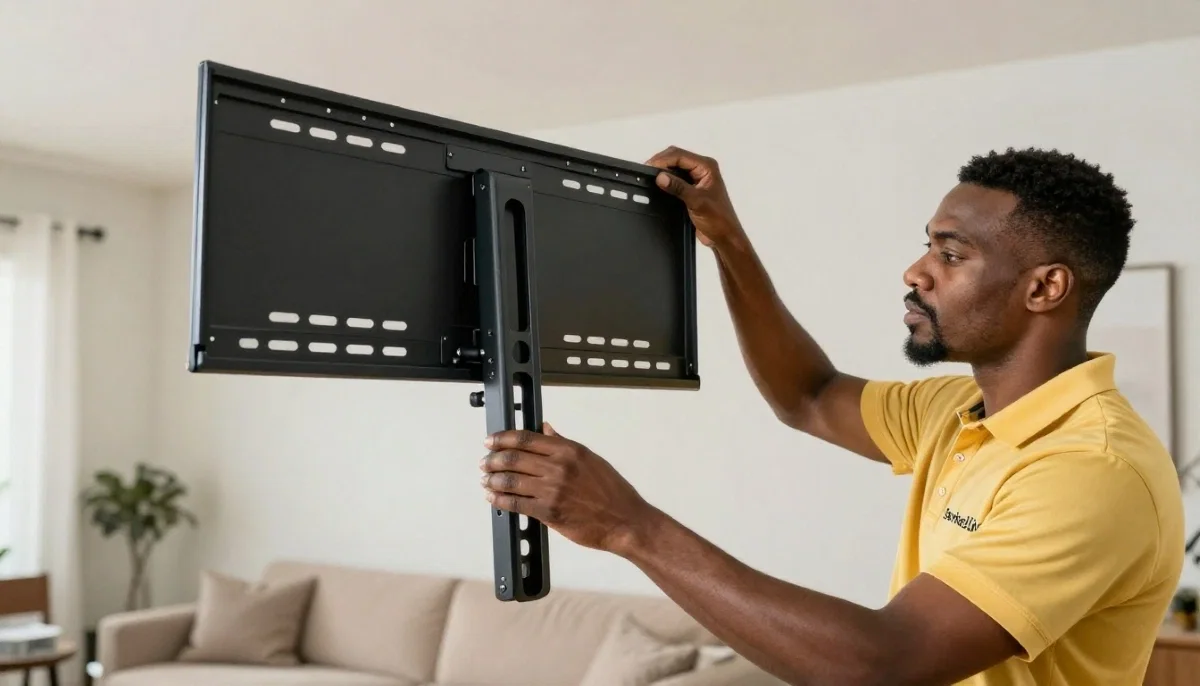
The most versatile type. These brackets have multiple arms that allow the TV to extend, swivel, tilt, and retract.
- How they work: A heavy-duty wall plate connects to one or more articulating arms (often dual arm design for stability). The TV attaches to the end of the arms, which can move in multiple directions.
- Pros:
- Maximum flexibility: You can pull the TV away from the wall, swivel it left or right (great for corner mounting or open-plan rooms), and tilt it up or down. The swivel range can be up to 180 degrees.
- Corner mounting: Ideal for mounting a TV in a corner, as you can position the screen to face the room.
- Easy cable access: Pull the TV out to easily reach the back.
- Multi-room viewing: Swivel the TV to face a kitchen area from a lounge, for example.
- Cons:
- Sticks out from wall: Even when fully retracted, the TV sits further from the wall than a fixed bracket.
- More complex installation: Heavier and requires a very secure fixing, especially into solid walls.
- Higher cost: The most expensive bracket type.
- Can put more leverage on fixings: When extended, the TV’s weight exerts more force on the wall mounts. Professional installation is highly recommended.
- Ideal for: Corner installations, open-plan spaces, rooms with multiple seating areas, or where you want the ultimate viewing flexibility.
For complex installations in Bellville or Centurion, our commercial installation team can help.
⬆️ Ceiling TV Mounts
Sometimes the wall isn’t the right place. Ceiling mounts suspend the TV from above.
- How they work: A metal plate attaches to a ceiling joist (or concrete ceiling with appropriate fixings). A long tube or arm extends down, and the TV mounts to a bracket at the end, which can often tilt and swivel.
- When to use:
- Rooms with no suitable wall space (e.g., a gym, a waiting room).
- Where you need the TV to be visible from multiple areas.
- Commercial spaces like bars, restaurants, or hospitals.
- For a unique aesthetic in a modern home.
- Considerations:
- Must be fixed securely into a ceiling joist or concrete. This is critical.
- Often require longer cable runs, which need to be managed neatly.
- The TV hangs down into the room, which can be an obstruction in low-traffic areas.
- Professional installation is a must. See our ceiling mounting service.
✨ Specialty Brackets: Corner, Dual, Pull-Down
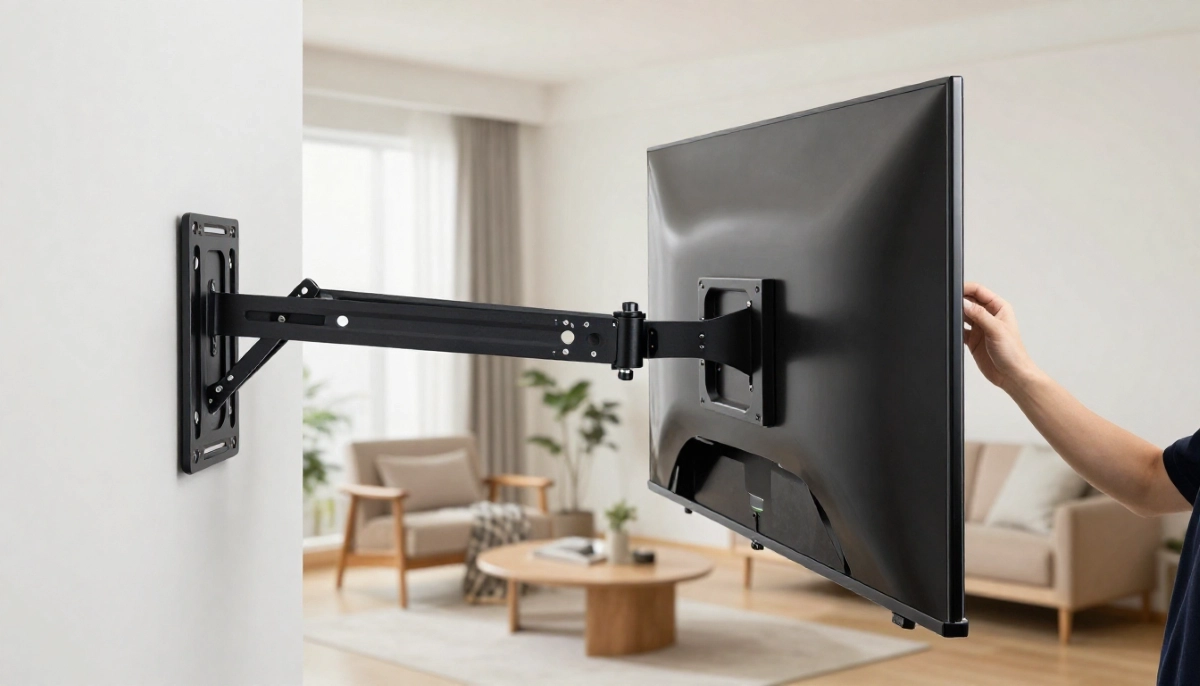
Beyond the main three, there are brackets for specific situations.
- Corner brackets: Specifically designed to mount a TV in a corner. They are essentially a full-motion bracket with arms configured to place the TV across the corner.
- Dual / Multi-TV brackets: For mounting two TVs side-by-side, often used in sports bars, gyms, or commercial displays. They ensure a perfectly aligned installation.
- Pull-down / Mantel mounts: A clever solution for mounting above a fireplace. The bracket allows you to pull the TV down to a comfortable viewing height when in use, and push it back up flush with the wall when not. This is the ultimate solution for the mount TV over fireplace dilemma.
- Ultra-slim / Low profile: Fixed brackets that are even thinner than standard, designed to make the TV look like a picture on the wall. They often require specific recessed sockets for cables.
🏋️ Heavy Duty TV Brackets (80kg+)
For very large TVs (75 inches and above) or commercial displays, standard brackets won’t do.
- What qualifies as heavy duty? Brackets rated for 50kg, 80kg, or even 100kg+. They are built with thicker steel, stronger arms, and more robust fixings.
- When you need one:
- TVs 75 inches and larger can easily weigh 35kg-50kg or more.
- Commercial displays (e.g., in boardrooms) are often heavy-duty units.
- If you’re using a very long full-motion arm, the leverage requires a higher weight rating.
- Installation considerations: Must be fixed into solid masonry or concrete with appropriate heavy-duty anchors. Two-person installation is usually required. Professional help is essential.
- Safety: Never skimp on a bracket for a heavy TV. A failure could be catastrophic. Look for brackets tested to SABS standards.
🤔 Slim Mount vs Full Motion – Which to Choose?
This is a common dilemma. Here’s a decision framework.
- Choose a slim (fixed) mount if:
- Your seating is directly opposite the TV.
- You’ve determined the perfect best TV mounting height and don’t need adjustment.
- You want the cleanest, most minimalist look.
- Budget is a primary concern.
- Choose a full-motion mount if:
- You have multiple seating areas (e.g., a large L-shaped sofa).
- You want to mount the TV in a corner.
- You need to adjust the screen to reduce glare at different times of day.
- You have an open-plan living area and want to be able to swivel the TV towards the kitchen or dining area.
- You’re willing to trade a slightly bulkier look for maximum flexibility.
Consider your viewing habits and room layout. Our wall mount vs stand guide can also help.
🔌 Recessed Box Compatibility
If you’re planning in-wall cable concealment, you need to ensure your bracket works with a recessed box.
- The issue: A fixed or tilting bracket mounts flush to the wall. If you have a recessed power or low-voltage box behind the TV, the bracket might cover it or prevent the TV from sitting flush.
- Solutions:
- Use a bracket with a cut-out: Some fixed brackets have a large opening in the centre specifically to accommodate recessed boxes.
- Extend the bracket: Some fixed brackets have stand-off spacers that allow you to mount the TV a few centimetres from the wall, creating space behind for cables and boxes. This sacrifices the ultra-slim look.
- Full-motion brackets naturally provide space: Because they stand off from the wall, they almost always provide ample room for recessed boxes and cables.
- Plan ahead: If you want a flush look with a recessed box, you need a bracket specifically designed for it. Discuss this with your installer.
🔄 Swivel Range & Cantilever Design
When looking at full-motion brackets, you’ll see terms like swivel range and cantilever.
- Swivel range: How far the TV can turn left or right. This is usually expressed in degrees (e.g., +/- 45°, +/- 90°). A larger swivel range is useful for corner mounts or very wide rooms. Some brackets can swivel up to 180 degrees.
- Cantilever: This refers to the arm mechanism that allows the TV to extend. A cantilever design provides smooth movement and good stability. Dual-arm designs are more stable for larger TVs.
- Extension distance: How far the TV pulls out from the wall. If you need to clear a piece of furniture, or want the TV to be the focal point, check the maximum extension.
- Consider your room: Measure the space to determine how much swivel and extension you actually need. Bigger isn’t always better – longer arms can be less stable when fully extended.
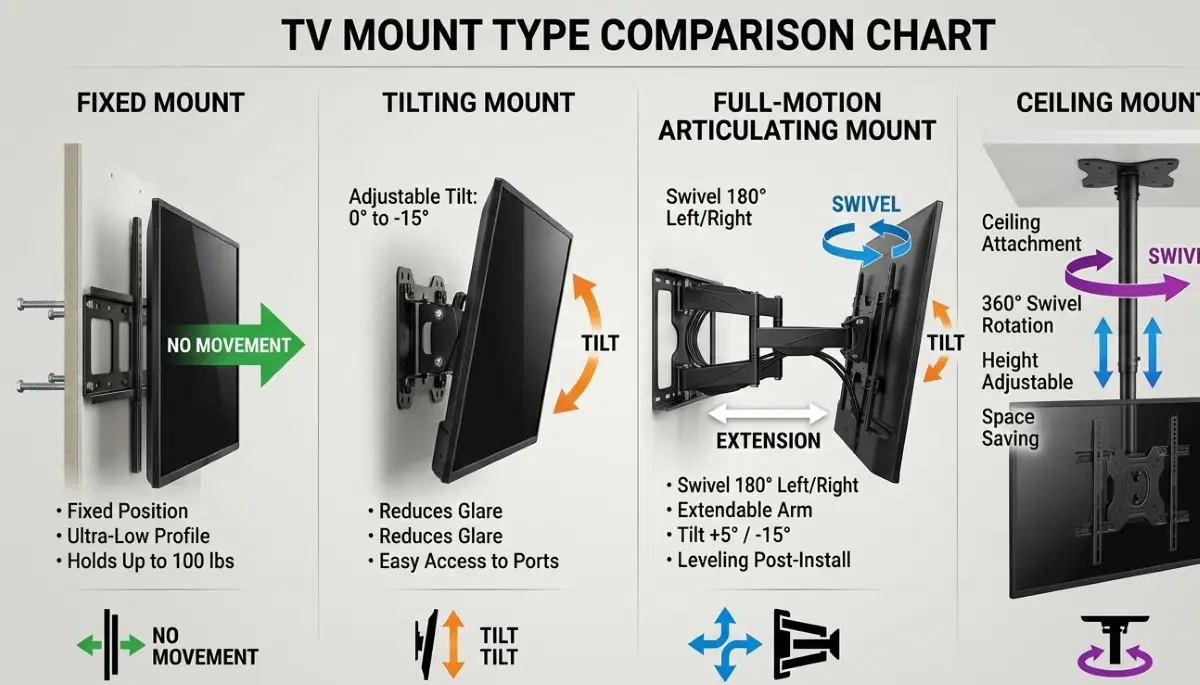
📊 Bracket Type Comparison Table
| Feature | Fixed (Low Profile) | Tilting | Full-Motion |
|---|---|---|---|
| Profile (distance from wall) | Ultra-low (few mm) | Low (few cm) | Medium to high (5-10cm+ retracted) |
| Tilt Adjustment | ❌ No | ✅ Yes (usually 0-15° down) | ✅ Yes (often up/down) |
| Swivel (Left/Right) | ❌ No | ❌ No | ✅ Yes (up to 180° total) |
| Extension from wall | ❌ No | ❌ No | ✅ Yes (can pull out) |
| Best for glare reduction | ❌ | ✅ Good | ✅✅ Excellent |
| Corner mounting | ❌ No | ❌ No | ✅ Yes |
| Multiple viewing areas | ❌ No | ❌ No | ✅ Yes |
| Ease of cable access | ⚠️ Difficult | ✅ Easier (tilt forward) | ✅✅ Easy (pull out) |
| Typical cost (bracket only) | R250 – R500 | R400 – R800 | R800 – R2,500+ |
| Ideal room type | Lounge, bedroom (opposite seating) | Bedroom, high mount, rooms with glare | Corner, open-plan, commercial |
🤔 Selection Guide: Which Bracket is Best for You?
Answer these questions to narrow down your choice.
- Where is your primary seating? Directly opposite the TV? Fixed or tilting. At an angle or multiple spots? Full-motion.
- Is the TV going in a corner? You need a full-motion bracket (or a dedicated corner bracket).
- Is the TV mounted above eye level (e.g., above a fireplace)? You need a tilting bracket at minimum, or a pull-down mount for the best experience.
- Do you suffer from glare on the screen? Tilting or full-motion can help.
- What is your TV’s size and weight? Check the weight rating of any bracket you consider. For TVs over 65 inches, consider a heavy-duty model.
- What is your VESA pattern? Ensure the bracket supports it.
- Do you want the TV to look like a picture on the wall? Choose a fixed, ultra-slim bracket and plan for in-wall cable concealment.
Still unsure? Our contractor guide can help you find an expert to advise you in person.
❌ 7 Common Bracket Selection Mistakes
- Mistake #1: Ignoring the VESA pattern. Buying a bracket that doesn’t fit your TV is a waste of time and money. Always check first.
- Mistake #2: Exceeding the weight limit. A bracket rated for 30kg cannot safely hold a 35kg TV. The result will be a disaster. Always leave a safety margin.
- Mistake #3: Choosing a fixed bracket for a high mount. If your TV is above a fireplace, a fixed bracket will cause neck strain. You need at least a tilting, or better, a pull-down mount.
- Mistake #4: Buying a full-motion bracket when you don’t need it. You pay more and get a bulkier look. If your seating is fixed, a fixed bracket is the better choice.
- Mistake #5: Not considering cable management. A fixed bracket with a recessed box behind can be a tight fit. Check compatibility.
- Mistake #6: Assuming all brackets are the same quality. Cheap brackets may use thin metal or poor-quality fixings. Invest in a reputable brand that meets SABS standards.
- Mistake #7: Forgetting about stud location. A full-motion bracket needs a wide wall plate that may span multiple studs. If your studs are far apart, you might need a different bracket or a plywood backing plate.
❓ Frequently Asked Questions
What are the different types of TV brackets?
TV bracket types explained South Africa – the main types are fixed (low profile), tilting, and full-motion (articulating). There are also ceiling mounts, corner brackets, and heavy-duty models for large TVs.
Which is better: fixed vs tilt vs full motion TV mount?
Fixed vs tilt vs full motion TV mount – fixed is best for a clean look and direct viewing. Tilting is ideal for high mounts or glare reduction. Full-motion offers maximum flexibility for corner mounts, multiple seating areas, or open-plan rooms. The “best” depends on your room.
What is a VESA pattern and how do I find mine?
VESA patterns are the spacing of the mounting holes on the back of your TV (e.g., 200×200). Check your TV manual, look on the back of the TV, or search online with your model number. Your bracket must be compatible.
What is a heavy duty TV bracket for 80kg TVs?
A heavy duty TV bracket 80kg is designed for very large or commercial displays. They use thicker steel and robust fixings. They must be installed into solid masonry or concrete with appropriate heavy-duty anchors.
Can I use a full-motion bracket for a corner TV mount?
Yes, a full-motion bracket with a good swivel range is perfect for corner mounting. You can mount the wall plate on one wall and swivel the TV to face the room. Dedicated corner brackets are also available.
What is the difference between slim mount vs full motion bracket?
The slim mount vs full motion bracket difference is flexibility. Slim mounts hold the TV flush to the wall and offer no movement. Full-motion brackets can extend, swivel, and tilt, offering much greater viewing flexibility at the cost of a slightly bulkier profile.
What are ceiling TV mount bracket types?
Ceiling TV mount bracket types include fixed columns (TV hangs at a set height), adjustable columns, and models with tilt and swivel. They are used where wall mounting isn’t possible or desirable, such as in gyms, bars, or waiting rooms.
What does swivel range mean for a TV bracket?
Swivel range is the degree to which a full-motion bracket can turn left and right. It’s expressed in degrees (e.g., +/- 45°). A larger swivel range is better for corner mounts or very wide rooms.
Do I need a special bracket for a recessed box?
For recessed box compatibility, some fixed brackets have cut-outs to accommodate boxes. Full-motion brackets naturally provide space. If you want a flush look with a box, choose a fixed bracket specifically designed for it.
What is the best TV bracket type for a bedroom?
For a bedroom, a tilting bracket is often best. It allows you to angle the screen down for comfortable viewing when you’re reclined. A full-motion bracket can also work if you need to swivel the TV towards a dressing area.
✅ Final Thoughts – Your Bracket Selection Action Plan
Choosing the right bracket is about matching the hardware to your viewing habits and room layout. A fixed bracket is sleek and secure, a tilting bracket solves glare and high-mount problems, and a full-motion bracket offers ultimate flexibility. By understanding VESA patterns, weight limits, and your own needs, you can make an informed choice.
Key takeaways:
- Always check your TV’s VESA pattern and weight first.
- Fixed brackets = cleanest look, no movement.
- Tilting brackets = best for high mounts and glare.
- Full-motion brackets = ultimate flexibility for corners and multiple viewing angles.
- Don’t forget cable management – ensure your bracket works with your concealment plan.
- For large or heavy TVs, invest in a heavy-duty bracket and professional installation.
Your 5-Step Action Plan
- Find your TV’s VESA pattern and weight. This is step one.
- Assess your room and viewing habits. Where do you sit? Do you need to swivel?
- Choose your bracket type: Fixed, tilting, or full-motion.
- Check specifications: Ensure the bracket supports your VESA and weight, and fits your wall type.
- Buy quality and install safely: Choose a reputable brand and, for full-motion or heavy TVs, hire a professional.
Ready to Choose and Install the Perfect Bracket?
Get free, no-obligation quotes from vetted TV mounting specialists who can advise you on the best bracket for your specific TV and room.
📞 Call us: 073 138 4726 for personalised assistance
Free site inspections •
Beat-your-quote guarantee •
Our guarantees
📚 Official resources & standards:
- SABS – SANS 1234 standards for bracket load testing and safety.
- Vogel’s – International bracket manufacturer standards and product information.
Information accurate as of publication. This guide is for informational purposes. For specific advice, consult a professional.
Written by: ServiceLink SA Research Team
Industry research and analysis team, ServiceLink SA
The ServiceLink SA Research Team has evaluated hundreds of TV brackets across all price points and types. We combine technical specifications with real-world installation feedback to provide unbiased, practical advice for South African consumers.
For more detailed information, explore our related guides: TV mounting costs to budget your project, our wall mount vs stand guide for a broader perspective, our height guide for optimal positioning, and our safety tips for secure installation. For help finding the right professional, see our contractor selection guide and our guarantees page. Our bracket upgrade and repair service can also help.