
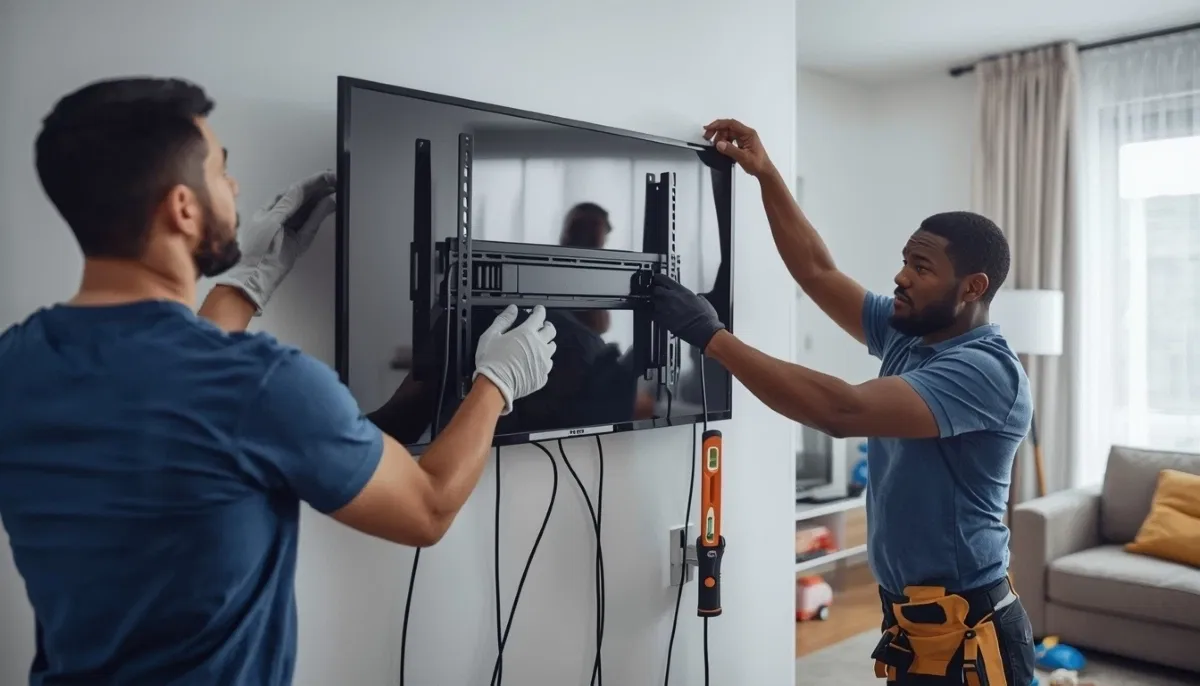
TV Mounting Safety Tips – Protect Your Family & Your TV
🛡️ Weight limits, childproofing, and professional standards: everything you need for a secure TV installation in South Africa.
You’ve just bought a new 65-inch TV for your home in Sandton. It’s exciting. But have you thought about what happens if it falls? A TV tipping over can cause serious injury or even death, especially to young children. In South Africa, the Childsafe organisation reports that tip-over accidents are a real danger in homes. Knowing the essential TV mounting safety tips isn’t just about protecting your expensive equipment – it’s about protecting your family.
This guide covers every aspect of safe TV mounting. You’ll learn how to determine the correct weight capacity for TV bracket and why exceeding it is a disaster waiting to happen. We explain the importance of tether straps and tip-over restraints for both wall-mounted and stand-mounted TVs. We cover load testing principles, how to perform a bracket inspection, and what to look for in a professional installation. For those in areas with seismic activity or just seeking ultimate peace of mind, we even touch on earthquake proof TV mount considerations. Whether you’re in Cape Town, Durban, or Pretoria, these tips ensure your TV stays where it belongs.
If you’re ready for a professional, safety-certified installation, explore our Services Overview or visit our TV Mounting page to find vetted installers near you. For more on how we work, see How It Works.
Ensure Your TV is Mounted Safely
Get free, no-obligation quotes from vetted, insured TV mounting specialists who prioritise safety above all.
Find Safe TV Installers Near Me
Servicing Johannesburg, Pretoria, Cape Town, Durban, and nationwide
📋 Table of Contents – TV Mounting Safety Guide
⚠️ Why TV Mounting Safety Matters
Every year, accidents happen when TVs fall from stands or walls. The consequences can be devastating.
- Injury risk: A falling TV can cause severe injuries, especially to toddlers who might climb on furniture. The Childsafe South Africa organisation highlights that tip-overs are a significant cause of childhood injury.
- Property damage: A dropped TV is usually a broken TV. Replacing a 65-inch screen costs tens of thousands of rands.
- Legal liability: If you’re a landlord or business owner, an improperly mounted TV that injures someone could lead to a lawsuit. Professional installers carry liability insurance for this reason.
- Peace of mind: A properly, safely mounted TV lets you relax and enjoy your entertainment without worry.
Read more about our approach on our About Us page or see why clients choose us on our Benefits page.
⚖️ Weight Capacity for TV Brackets – Never Exceed It
This is the most fundamental safety rule. Every bracket has a maximum weight rating. Exceeding it is asking for trouble.
- Check the specs: The bracket’s box and instructions will state the maximum weight it can hold (e.g., 30kg, 50kg). This is the limit for the bracket itself, not including the fixings.
- Know your TV’s weight: Find your TV’s exact weight in the manual or online. A 55″ TV might weigh 15-20kg, while a 75″ can be 30-40kg or more. Add a few kg for the bracket itself.
- Safety factor: A good rule is to never exceed 80% of the bracket’s rated capacity. So for a 30kg TV, use a bracket rated for at least 38kg.
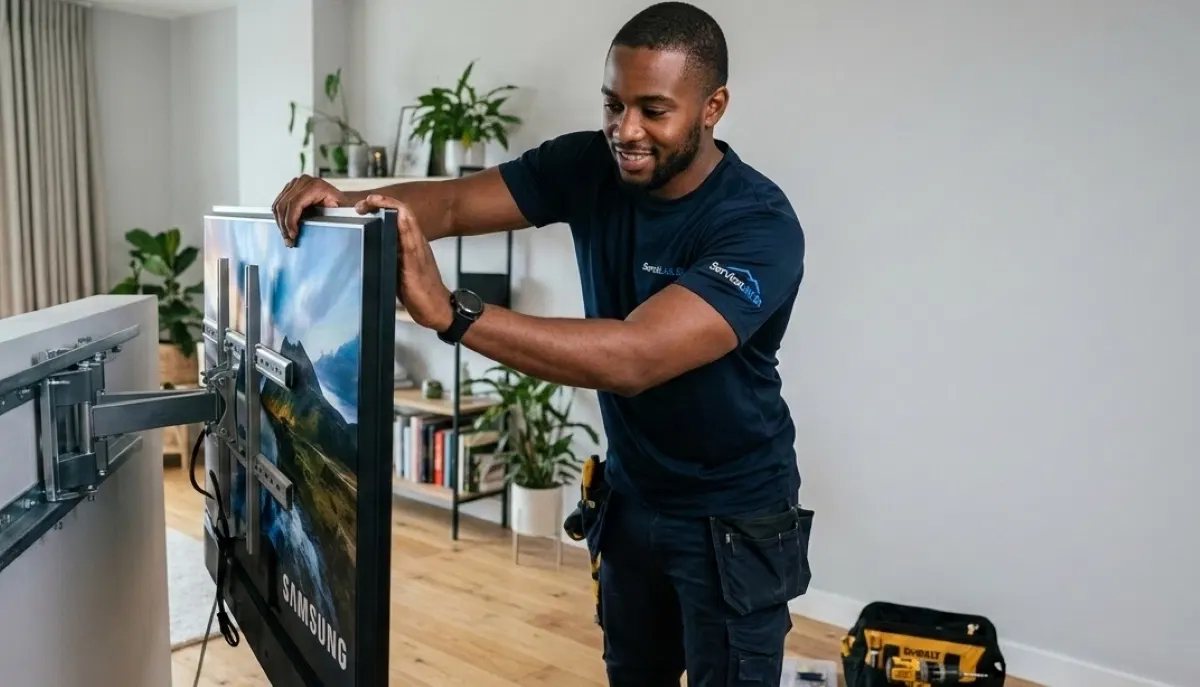
- Full-motion brackets: These put more leverage on the bracket and fixings. For articulating arms, it’s even more critical to stay well under the weight limit and use heavy-duty brackets.
See our bracket types guide for more on choosing the right bracket for your TV’s weight.
🧱 Wall Type & Correct Fixings
The bracket is only as strong as the fixings that hold it to the wall. Using the wrong fixings for your wall type is a recipe for disaster. For a deep dive, see our wall type guide.
- Brick/Concrete: Use expanding wall plugs (rawl plugs) and masonry screws, or concrete screws (Tapcons). The plug must be the right size for the screw and the hole drilled to the correct depth.
- Drywall (Plasterboard): You MUST use hollow wall anchors like toggle bolts or metal self-drilling anchors. Even then, they have weight limits. For TVs over 15kg, you must mount into the wooden studs behind the drywall.
- Never use: Cheap plastic expansion anchors (the kind that come with flat-pack furniture) for TV mounting. They are not strong enough.
- Professional fixings: Reputable installers use fixings from trusted brands that meet SABS standards.
📏 Using a Stud Finder Correctly for Safety
For drywall installations, finding studs is critical. Here’s how to do it safely.
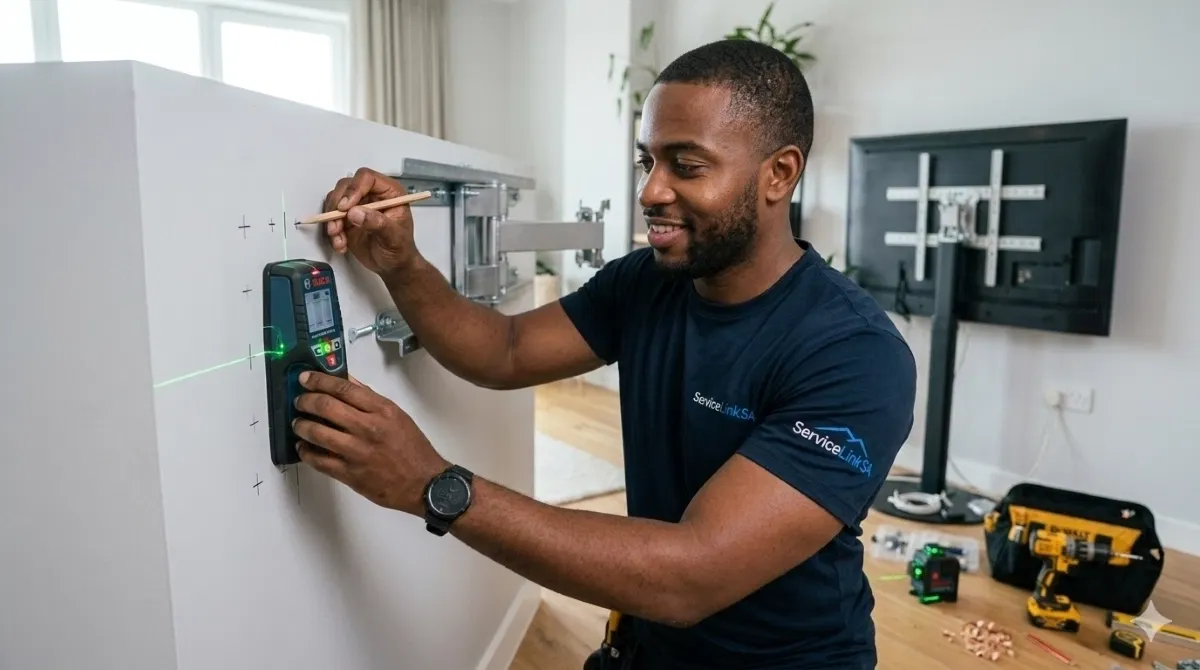
- Choose a quality stud finder: Electronic stud finders with deep scanning and wire detection are best. They can also alert you to live electrical cables, preventing a dangerous accident.
- Calibrate: Place the finder flat on the wall where there’s no stud, hold down the button, and wait for calibration. Then move it slowly horizontally.
- Mark the edges: When it indicates a stud, mark the left and right edges. The centre is where you want to drill.
- Verify: Before drilling, you can tap the wall – a solid sound indicates a stud. Or drill a tiny pilot hole (1-2mm) to confirm you’ve hit wood.
- Watch for wires: If your stud finder has wire detection, heed its warnings. Drilling into a live wire is extremely dangerous.
🔗 Tether Straps & Tip-Over Restraints
Even with a wall mount, secondary safety is a great idea. For TVs on stands, it’s essential.
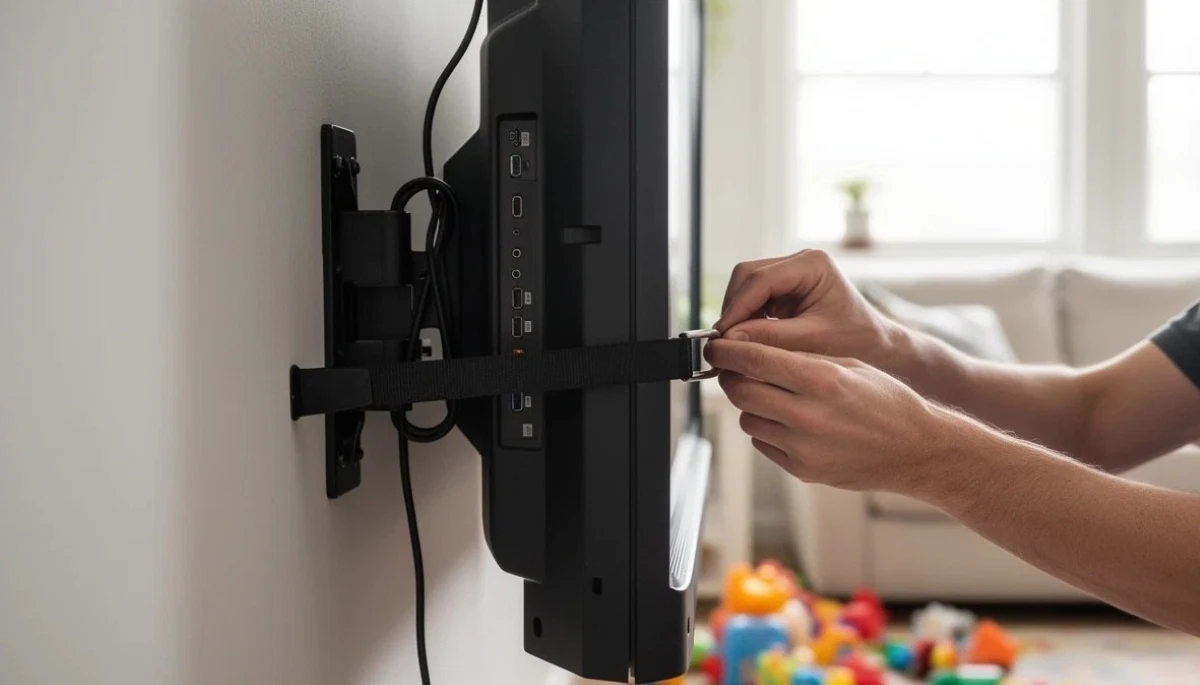
- What they are: Strong straps or cables that attach the TV to the wall or the stand to the wall. They act as a fall arrest system – if the primary mount fails, the strap catches the TV before it falls.
- For wall-mounted TVs: Some installers add a safety tether as an extra precaution. It’s a cheap addition for peace of mind.
- For TV stands: This is non-negotiable if you have children. Use straps to secure the stand to the wall, and also to secure the TV to the stand (or directly to the wall). Many stands come with these straps.
- Installation: Tether straps must be securely fixed to a stud or solid masonry, just like the TV mount itself. Follow the instructions carefully.
👶 Childproofing Your TV Installation
If you have young children or grandchildren visiting, these steps are vital. The National Safety Council provides guidelines for childproofing.
- Wall mount is safest: A properly mounted TV on the wall is out of reach and cannot be pulled over. This is the best childproof TV installation method.
- If you use a stand:
- Choose a low, wide, sturdy stand.
- Anchor the stand to the wall with anti-tip straps.
- Anchor the TV to the stand or wall with a tether strap.
- Keep remote controls and tempting items off the top of the stand, so children aren’t tempted to climb.
- Cable management: Secure cables so they aren’t dangling, which can tempt a child to pull. Use cable covers or in-wall concealment.
- Educate: Teach children not to climb on furniture or touch the TV.
Our TV mounting service includes childproofing consultations.
🔍 Bracket Inspection & Maintenance
A TV mount isn’t a “fit and forget” item. Periodic checks ensure long-term safety.
- Check screws: Every few months, check that all bracket screws are tight. Vibration can sometimes loosen them.
- Inspect for damage: Look for any signs of rust, bending, or cracking in the bracket arms.
- Test the fixings: Gently try to wiggle the bracket. It should be rock-solid with no movement. If you feel any give, investigate immediately.
- After events: If you’ve had a party, moved furniture, or experienced a minor earthquake (rare in SA but possible), inspect the mount.
- Professional inspection: If you’re unsure, hire a professional for a free inspection.
📊 Load Testing Principles
Professional installers often perform a simple load test to ensure the mount is secure.
- What it is: After mounting the bracket (but before hanging the TV), apply firm downward and outward pressure to the bracket. Use your body weight (carefully) to simulate the TV’s weight and the extra force of someone bumping into it.
- What to feel for: The bracket should not move, flex, or pull away from the wall. If it does, the fixings are insufficient.
- Why it matters: This test can reveal a poorly anchored bracket before the TV is hung, preventing a disaster.
- Limitations: This is not a scientific load test, but a practical safety check. It’s standard practice for responsible installers.
🌍 Earthquake-Proof TV Mount Considerations
While South Africa is not a high-risk seismic zone, minor tremors do occur. For ultimate peace of mind, especially in areas like Midrand or Umhlanga, you can consider extra measures.
- Choose a heavy-duty bracket: Brackets with a higher weight capacity than needed are inherently stronger.
- Use multiple fixings: Ensure the bracket uses all available mounting holes. More screws mean more security.
- Add safety tethers: As mentioned, these act as a backup in any scenario, including tremors.
- Secure nearby furniture: In a tremor, a TV on a stand could be knocked over even if the stand is strapped. Wall mounting is always safer.
- Professional assessment: For a true “seismic” installation, consult an engineer. This is overkill for most homes, but available for peace of mind.
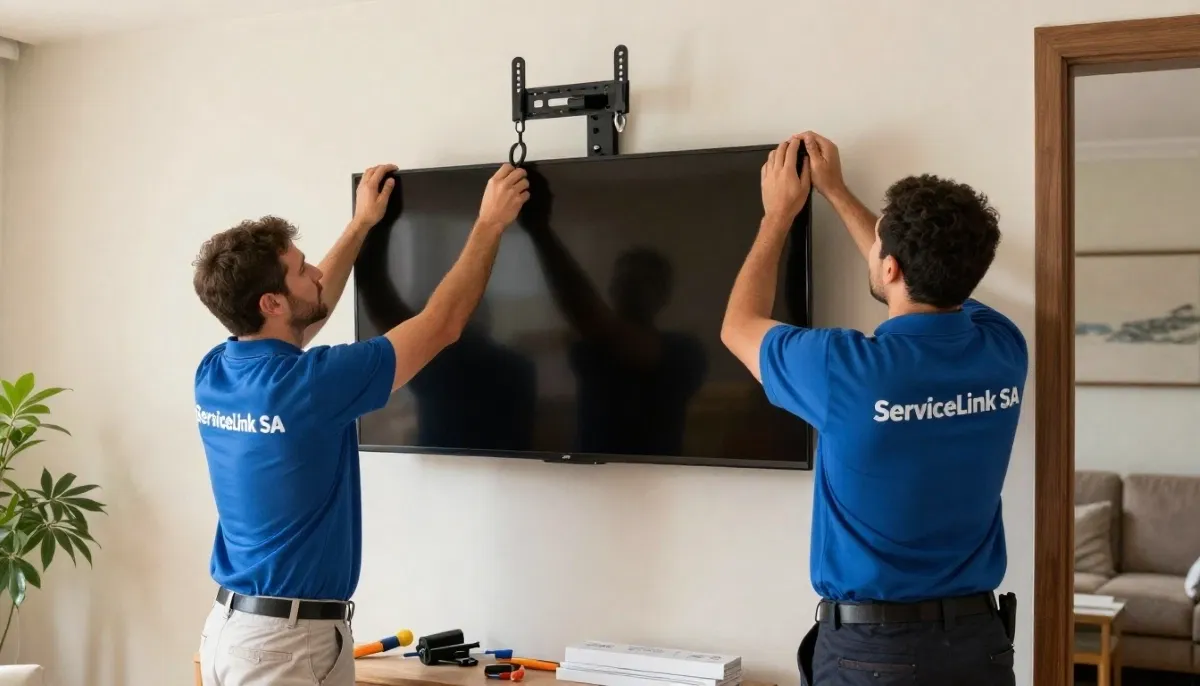
👷 Why Professional Installation is Safer
DIY is possible, but professional installers bring expertise that minimises risk.
- Experience: They’ve mounted hundreds of TVs on all wall types. They know the right fixings instantly.
- Tools: They have professional-grade stud finders, hammer drills, and levels.
- Insurance: Reputable installers have liability insurance. If they damage your wall or your TV, you’re covered.
- Warranty: Many offer a workmanship guarantee, giving you recourse if something fails.
- Safety checks: They will perform load tests and ensure the installation meets safety standards.
Use our contractor guide to find a vetted professional.
📄 Insurance & Liability Waivers
Understanding the legal side of safety.
- Contractor’s insurance: Always ask for proof of liability insurance before hiring. This covers accidental damage to your property or injury to the installer.
- Liability waivers: Some DIYers ask friends to help. Be aware that if someone is injured helping you, you could be liable. Professional installers carry their own insurance.
- Home contents insurance: Check your policy. Some insurers may require professional installation for cover against TV damage or liability from a falling TV. A DIY install might void cover.
- Our guarantee: We only work with insured contractors. See our guarantees page.
❌ 8 Common TV Mounting Safety Mistakes
- Mistake #1: Ignoring the weight limit. Using a bracket rated for 30kg for a 35kg TV is a disaster waiting to happen. Always check and leave a safety margin.
- Mistake #2: Using cheap plastic anchors in drywall. They will fail. Use proper toggle bolts or, better, find studs.
- Mistake #3: Not using a stud finder on drywall. Guessing where studs are leads to missed studs and unsafe anchors.
- Mistake #4: Forgetting to secure the TV to the bracket. Sounds obvious, but sometimes the locking screws aren’t tightened, and the TV can be lifted off.
- Mistake #5: Ignoring cable management. Loose cables can be grabbed by children or pets, pulling the TV down.
- Mistake #6: Not checking for wires or pipes. Drilling into a live cable or water pipe is dangerous and expensive.
- Mistake #7: Over-tightening screws. This can strip the thread in the anchor or damage the wall, weakening the hold.
- Mistake #8: DIY-ing a complex mount without experience. If you’re unsure about any step, hire a professional. It’s cheaper than a new TV or a hospital bill.
❓ Frequently Asked Questions
What is the weight capacity for a TV bracket?
The weight capacity for TV bracket is the maximum weight it can safely hold. This is specified by the manufacturer. Never exceed it, and ideally use a bracket rated for 20-30% more than your TV’s weight for a safety margin.
How do I prevent my TV from falling?
To prevent TV falling, ensure it’s mounted on a solid wall with correct fixings, never exceed the bracket’s weight limit, use a stud finder on drywall, and consider adding a safety tether strap for extra security. For TVs on stands, use anti-tip straps.
What is a tether strap for a TV?
A tether strap is a secondary safety device – a strong strap or cable that secures the TV to the wall. If the primary mount fails, the tether catches the TV, preventing it from falling. It’s a simple and effective fall arrest system.
How do I childproof a TV installation?
Childproof TV installation involves wall-mounting the TV securely, using anti-tip straps for any furniture, securing cables out of reach, and never placing items on top of the TV stand that might tempt a child to climb.
Do I need a professional to mount my TV safely?
While DIY is possible, a professional ensures safety through experience, correct tools, and knowledge of fixings. They also carry liability insurance. For peace of mind, especially with heavy or expensive TVs, professional installation is recommended.
What is load testing for a TV mount?
Load testing means applying force to the mounted bracket before hanging the TV to ensure it’s secure. A professional will pull and push on the bracket to check for any movement, confirming the fixings are sound.
How often should I inspect my TV bracket?
Perform a bracket inspection every few months. Check that all screws are tight, look for any signs of rust or damage, and gently test that the bracket is still rock-solid. Also inspect after any events like parties or furniture moving.
Can a TV mount be earthquake proof?
While no mount is 100% earthquake-proof, you can improve safety by using a heavy-duty bracket with a high weight rating, securing it with all possible fixings, and adding safety tethers. This provides better resistance to tremors.
What is a liability waiver for TV mounting?
A liability waiver is a document some installers might ask you to sign, waiving their responsibility for damage. We recommend using contractors with their own liability insurance who don’t require such waivers.
Are there SABS standards for TV brackets?
Yes, SABS provides standards for bracket testing and safety. Look for brackets that comply with these standards for assurance of quality and safety.
✅ Final Thoughts – Your TV Safety Action Plan
TV mounting safety is not complicated, but it requires attention to detail. A few minutes of careful planning and the right hardware can prevent a lifetime of regret. Whether you’re mounting a TV in your Fourways lounge or a commercial screen in Table View, these principles apply.
Key takeaways:
- Always respect the weight capacity for TV bracket – it’s the #1 rule.
- Use the correct fixings for your wall type. When in doubt on drywall, find studs.
- Add tether straps for extra security, especially if you have children.
- Perform periodic bracket inspections to catch any loosening early.
- Hire a professional, insured installer for complex jobs or peace of mind.
Your 5-Step Safety Action Plan
- Weigh your TV and check the bracket’s weight rating. Ensure a safety margin.
- Identify your wall type and buy the correct fixings (or confirm your installer will).
- Use a stud finder if mounting on drywall. Never guess.
- Perform a load test on the bracket before hanging the TV.
- Add safety tethers for childproofing and extra peace of mind.
Don’t Compromise on Safety
Get free, no-obligation quotes from vetted, insured TV mounting specialists who follow all safety protocols.
📞 Call us: 073 138 4726 for personalised assistance
Free site inspections •
Beat-your-quote guarantee •
Our guarantees
📚 Official resources & standards:
- National Safety Council South Africa – Home safety guidelines and tip-over prevention.
- Childsafe South Africa – Childproofing standards and accident prevention.
- SABS – Bracket testing standards (SANS) for TV mounts.
Information accurate as of publication. This guide is for informational purposes. For specific advice, consult a professional.
Written by: ServiceLink SA Research Team
Industry research and analysis team, ServiceLink SA
The ServiceLink SA Research Team has analysed safety data from thousands of TV installations and collaborates with child safety organisations to ensure our guidelines reflect best practices for South African homes.
For more detailed information, explore our related guides: wall type installation for technical details, our height guide for ergonomics, our bracket types guide for choosing the right hardware, and our fireplace guide for that specific challenge. For help finding the right professional, see our contractor selection guide and our guarantees page. Our free inspection and beat-your-quote services are also available.