
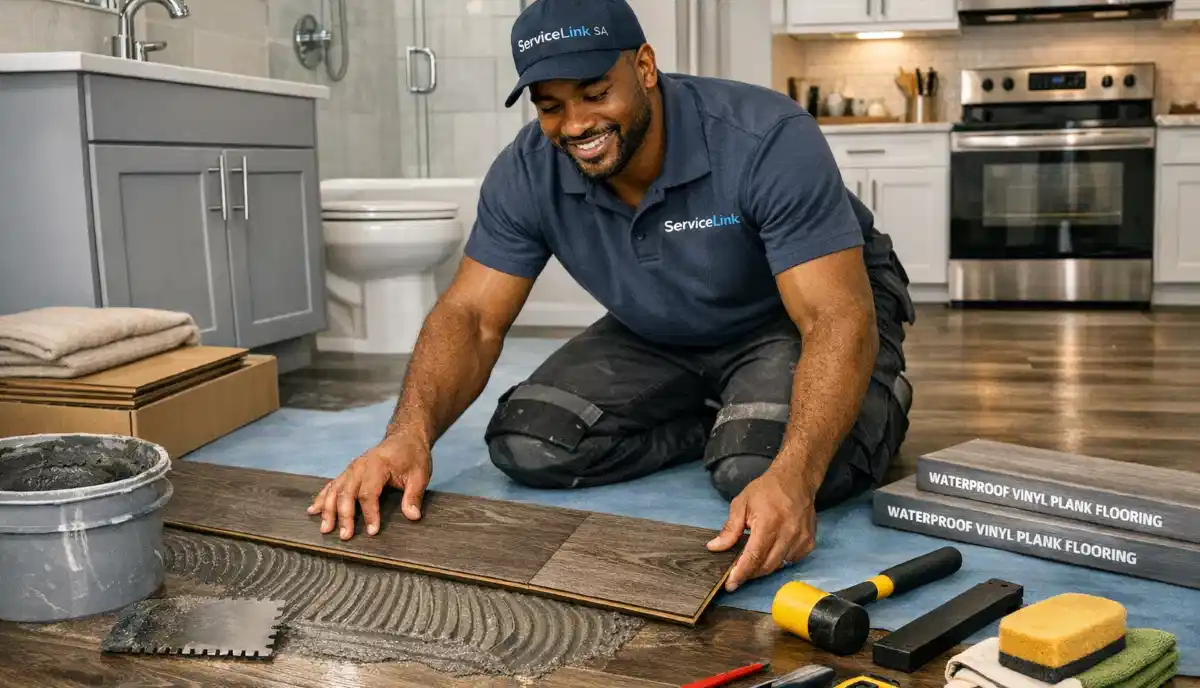
Vinyl Flooring for Bathrooms & Kitchens: Waterproof Options in South Africa
💧 SPC, WPC, or sheet vinyl? The complete guide to 100% waterproof floors for wet areas in SA homes.
You’re renovating a bathroom in Sandton and want the warm look of wood, but tiles feel cold and hard. Your Durban kitchen needs a floor that can handle humidity and spills from the braai. For years, the answer was always ceramic tile. But now, waterproof vinyl flooring has changed everything. The question is: which type is right for your wet area? SPC vinyl vs WPC vinyl? Click-lock or glue-down? And how does it compare to tile?
This guide is your complete resource for vinyl flooring bathrooms kitchens waterproof options South Africa. We dive deep into the technology behind modern vinyl – rigid cores, waterproof joints, and integrated underlay. You’ll learn the difference between Stone Plastic Composite (SPC) and Wood Plastic Composite (WPC), and which is best for your specific application, whether it’s a family bathroom in Fourways or a coastal holiday home in George. We also cover installation methods, costs, and answer the critical question: does vinyl flooring need waterproofing underlay? (Spoiler: often, it doesn’t!)
If you’re ready to get started, explore our Services Overview or visit our Flooring Services page to find vetted vinyl installers near you. For more on how we work, see How It Works.
Find a Waterproof Vinyl Specialist Near You
Get free, no-obligation quotes from vetted installers who specialise in bathroom and kitchen vinyl flooring.
Compare Vinyl Installation Prices
Servicing Johannesburg, Pretoria, Cape Town, Durban, and nationwide
📋 Table of Contents – Waterproof Vinyl Guide
🏠 Why Vinyl is the Smart Choice for Bathrooms & Kitchens
For decades, ceramic tile was the only option for wet areas. Vinyl has changed that, and for good reason.
- 100% Waterproof: Unlike laminate which swells, or wood which rots, quality vinyl is completely impervious to water. It’s made of plastic/stone composites that don’t absorb moisture.
- Warmer & Softer: Vinyl is warmer underfoot than tile and has some give, making it more comfortable for standing in the kitchen or walking barefoot in the bathroom.
- Less Slippery: Many vinyl products have textured surfaces with good slip resistance, safer than wet tiles.
- Wood & Stone Looks: Modern printing technology means vinyl convincingly mimics timber, slate, or marble – styles impossible with traditional waterproof materials.
- Easy Installation: Click-lock vinyl is DIY-friendly. Glue-down options provide a permanent bond.
Read more about our approach on our About Us page or see why clients choose us on our Benefits page.
📦 Types of Waterproof Vinyl: LVT, SPC, WPC & Sheet
Not all vinyl is created equal. Understanding the types is key to choosing the right one.
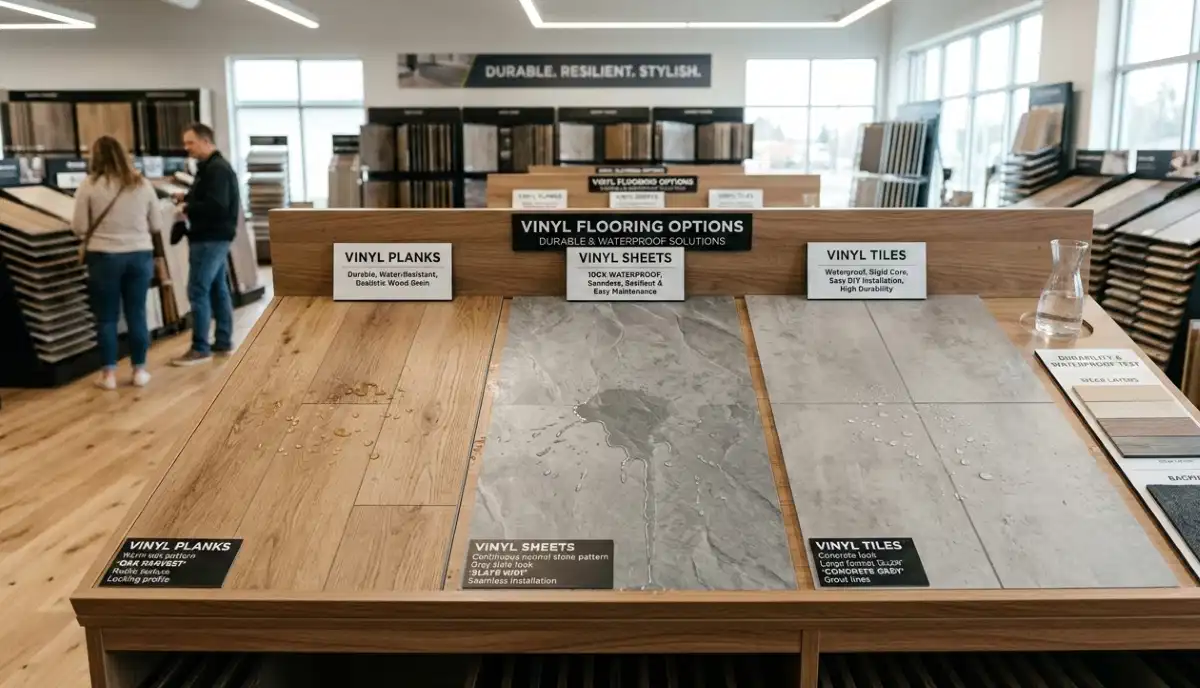
- LVT / LVP (Luxury Vinyl Tile/Plank): The broad category of vinyl that mimics stone or wood. It comes in tiles or planks and can be click-lock or glue-down. The core varies – it could be standard flexible vinyl, or rigid SPC/WPC.
- SPC (Stone Plastic Composite): A rigid core vinyl with a core made from limestone and stabilisers. It’s extremely dimensionally stable, hard, and thin. Excellent for areas with temperature swings. Often has an integrated underlay attached.
- WPC (Wood Plastic Composite): A rigid core vinyl with a core made from wood fibre and plastic composite. It’s thicker than SPC, softer underfoot, and quieter. Provides a more luxurious feel but is slightly less resistant to heavy indentation than SPC.
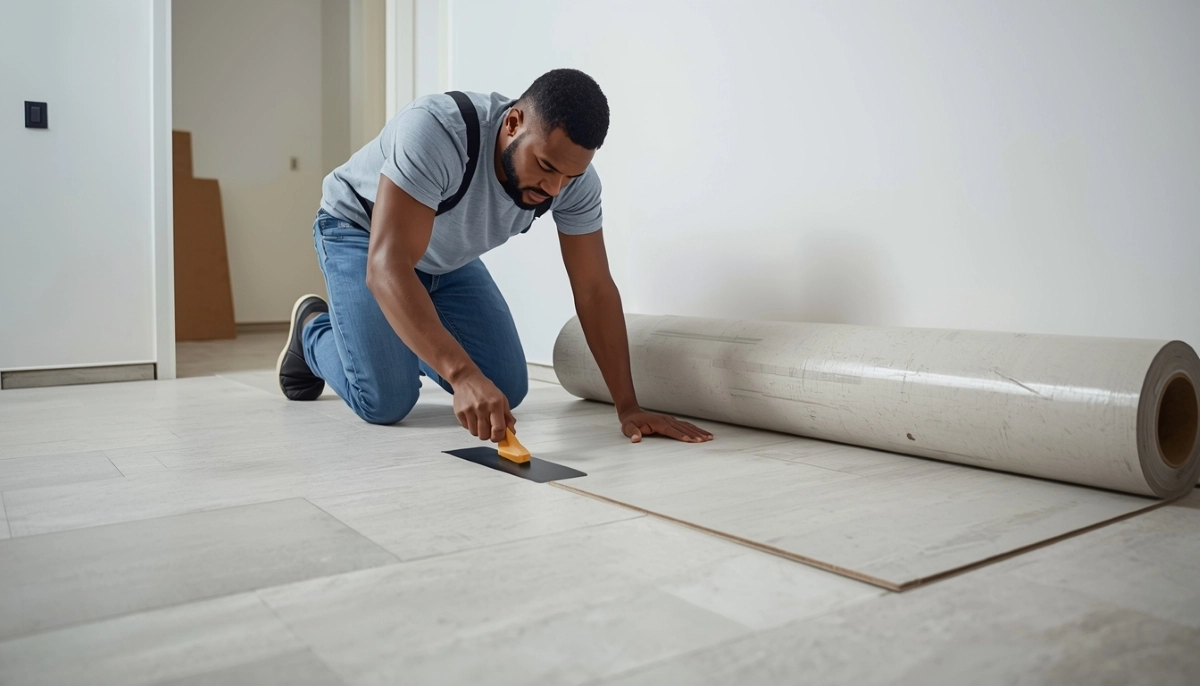
- Sheet Vinyl: Comes in large rolls (2m or 4m wide). It has few or no seams, making it the most waterproof option for bathrooms. Fewer design options than LVT, but unbeatable for seamless waterproofing. Requires professional installation.
See our vinyl installation page for more details on each type.
⚖️ SPC Vinyl vs WPC Vinyl – Which is Better for Your Home?
This is the most common debate in modern vinyl flooring. Here’s the breakdown.
SPC (Stone Plastic Composite)
- Pros: Extremely stable – doesn’t expand/contract with temperature changes. Very hard and dent-resistant (good for heavy furniture). Often thinner, making transitions easier. Generally more affordable than WPC.
- Cons: Harder underfoot – feels more like laminate. Can be noisier without a good underlay.
- Best for: Kitchens, sunrooms, areas with underfloor heating, commercial spaces, and homes in climates with big temperature swings (like Johannesburg).
WPC (Wood Plastic Composite)
- Pros: Softer and quieter underfoot – more comfortable for standing. The thicker core can hide minor subfloor imperfections better. Feels more luxurious.
- Cons: Can be indented by very heavy furniture. Slightly less dimensionally stable than SPC in extreme temperatures. Usually more expensive.
- Best for: Bathrooms, bedrooms, living areas where comfort is a priority, and upstairs installations where sound reduction matters.
Verdict: For kitchens, choose SPC. For bathrooms where you walk barefoot, WPC’s softness is a plus. Both are 100% waterproof.
🔨 Installation Methods: Click, Glue-Down, Loose Lay
How you install vinyl affects its waterproofing and performance.
- Click-Lock (Floating): Planks click together and float over the underlay. Many have integrated underlay. The waterproofing relies on the joint seals. Look for Hydroseal or Uniclic® technology for guaranteed waterproof joints. Easy DIY. Good for most rooms.
- Glue-Down: Planks or tiles are adhered directly to the subfloor with a special vinyl adhesive. Creates a very stable, permanent bond. Excellent for high-traffic areas and large spaces. Requires a perfectly smooth subfloor. Professional installation recommended.
- Loose Lay: Heavy planks with a friction backing – they stay in place by weight and friction, no glue or click. Very easy to install and replace individual planks. Requires a perfectly flat subfloor. The joints are not locked, so waterproofing relies on the planks being tight.
For bathrooms, glue-down or sheet vinyl offer the most foolproof waterproofing. For kitchens, click-lock with waterproof joints is popular and DIY-friendly.
💧 Waterproof Joints: Hydroseal & Uniclic® Technology
A floor can be made of waterproof material, but if water seeps through the joints, you have a problem. That’s where joint technology matters.
- Hydroseal: A technology used by brands like Moduleo. The locking system has a built-in waterproof seal that prevents water from penetrating the joints. Some products can pass a 24-hour water test with standing water.
- Uniclic®: A renowned locking system from Unilin used in many laminate and vinyl planks. While primarily for strong mechanical locking, some versions are enhanced for water resistance. The tightness of the joint is critical.
- Importance: For click-lock vinyl in a kitchen or bathroom, you MUST choose a product specifically rated with waterproof joints. Standard click joints may allow water to seep through over time.
Always check the manufacturer’s warranty for water damage claims.
❓ Does Vinyl Flooring Need Waterproofing Underlay?
This is a common point of confusion. The answer depends on the product.
- Click-lock vinyl with integrated underlay: No separate underlay is needed. The attached foam provides cushioning and sound absorption. You do NOT need a separate waterproofing membrane under these products, as the vinyl itself is waterproof. However, you may need a vapour barrier on concrete subfloors in some cases – check manufacturer instructions.
- Click-lock vinyl without integrated underlay: You will need a separate underlay. Choose one that is suitable for vinyl and does not compromise the locking system (must be firm enough).
- Glue-down vinyl: No underlay. It is glued directly to the subfloor. The subfloor must be smooth and primed.
- Sheet vinyl: No underlay. It is glued down for a seamless finish.
Key point: The vinyl itself is the waterproof layer. You don’t add a “waterproofing underlay” like you would for tile. You might add a vapour barrier for moisture from below, but that’s different.
💰 Waterproof Vinyl vs Ceramic Tile Cost
Cost is a major factor. Here’s how they compare for a typical bathroom or kitchen (total installed cost).
- Vinyl (LVT Click – SPC/WPC): R350 – R1,180 per m² installed. Mid-range: R500 – R700/m².
- Vinyl (Glue-down): R320 – R600 per m² installed (plus subfloor prep).
- Vinyl (Sheet): R300 – R550 per m² installed (seamless).
- Ceramic Tile (mid-range): R500 – R1,200 per m² installed (including adhesive, grout).
- Porcelain Tile (mid-range): R700 – R1,800 per m² installed.
Verdict: Vinyl is generally more affordable than tile, especially when you factor in the lower labour costs (vinyl installs faster). The gap widens if you choose large-format or rectified tiles, which are expensive to install. See our cost guide for more details.
🛁 Vinyl in Bathrooms: Showers & Wet Areas
Can you put vinyl floor in shower area? Yes, but with caveats.
- Sheet vinyl: The best choice for shower areas. It can be installed with minimal seams, and seams can be chemically welded to create a fully waterproof surface. It can also be coved up the wall slightly to create a waterproof “tray”.
- Click-lock vinyl: Suitable for the main bathroom floor, but not inside a walk-in shower where water will pool for long periods. While the planks are waterproof, water can sit in the joints. For a shower, the floor should slope to a drain – difficult with click-lock. Use sheet vinyl or tile in the shower itself.
- Glue-down vinyl: Can be used in bathrooms, including showers, if installed by a pro with sealed seams. It creates a very watertight surface.
- Regulations: SANS 10400 governs wet area installation. Proper waterproofing of the substrate is still required, especially in showers.
For bathrooms in Cape Town or Ballito, vinyl is an excellent choice.
🍳 Vinyl in Kitchens: Spills & Heavy Traffic
Kitchens are the perfect application for vinyl.
- Spill resistance: Vinyl handles water, oil, and food spills effortlessly. Wipe up and it’s fine.
- Comfort: Softer than tile, reducing fatigue from standing.
- Durability: Choose a product with a thick wear layer (20mil+) for high traffic. SPC core is very dent-resistant for heavy appliances.
- Installation: Click-lock with waterproof joints is popular. You can install it right up to cabinets, or slide it underneath for a seamless look (requires removing toe-kicks).
For kitchen waterproof flooring in a busy Randburg family home, vinyl is a top contender.
🌊 Best Waterproof Vinyl for Coastal Homes
Living near the ocean in Umhlanga or George presents unique challenges: salt air, high humidity, and temperature swings.
- SPC vinyl is the winner. Its stone composite core is completely inert and unaffected by humidity. It won’t expand, contract, or degrade like wood-based products.
- WPC is also good, but the wood fibre in the core makes it slightly more susceptible to moisture than SPC (though still far better than laminate).
- Look for: Products with Class 33 commercial ratings for extra durability. Ensure the wear layer is thick enough (20mil+) to resist any salt or sand abrasion.
- UV stability: In sunny coastal homes, check that the vinyl has UV protection to prevent fading.
The best waterproof vinyl for coastal homes is undoubtedly rigid SPC core with waterproof joints.
💰 Complete Vinyl Flooring Cost Breakdown
Here’s what goes into the final price.
- Materials (LVT planks/tiles): R200 – R800 per m². SPC/WPC rigid core is at the higher end.
- Sheet vinyl materials: R150 – R400 per m².
- Underlay (if not integrated): R30 – R60 per m².
- Labour (click-lock): R120 – R200 per m².
- Labour (glue-down): R150 – R300 per m² (requires more skill and prep).
- Labour (sheet vinyl): R200 – R350 per m² (specialist installation).
- Subfloor preparation: R100 – R250 per m² if levelling is needed.
- Transition strips: R150 – R400 each.
- Waste factor: Order 10-15% extra for planks/tiles; sheet vinyl waste depends on room shape.
📊 Vinyl Flooring Product Comparison Table
| Product Type | Waterproof Rating | Comfort | Dent Resistance | Best Application | Cost (Installed/m²) |
|---|---|---|---|---|---|
| SPC Click (Rigid Core) | ✅ 100% | Medium | ✅ Excellent | Kitchens, commercial | R400 – R1,000 |
| WPC Click (Rigid Core) | ✅ 100% | ✅ High (soft) | Good | Bathrooms, bedrooms | R500 – R1,200 |
| Glue-Down LVT | ✅ 100%* | Medium | Very Good | High traffic, commercial | R350 – R800 |
| Sheet Vinyl | ✅✅ 100% (seamless) | Medium | Good | Bathrooms, wet rooms | R300 – R650 |
| Loose Lay LVT | ✅ 100%** | Medium | Good | DIY, rental properties | R350 – R750 |
*Depends on adhesive and seam sealing. **Depends on tightness of fit.
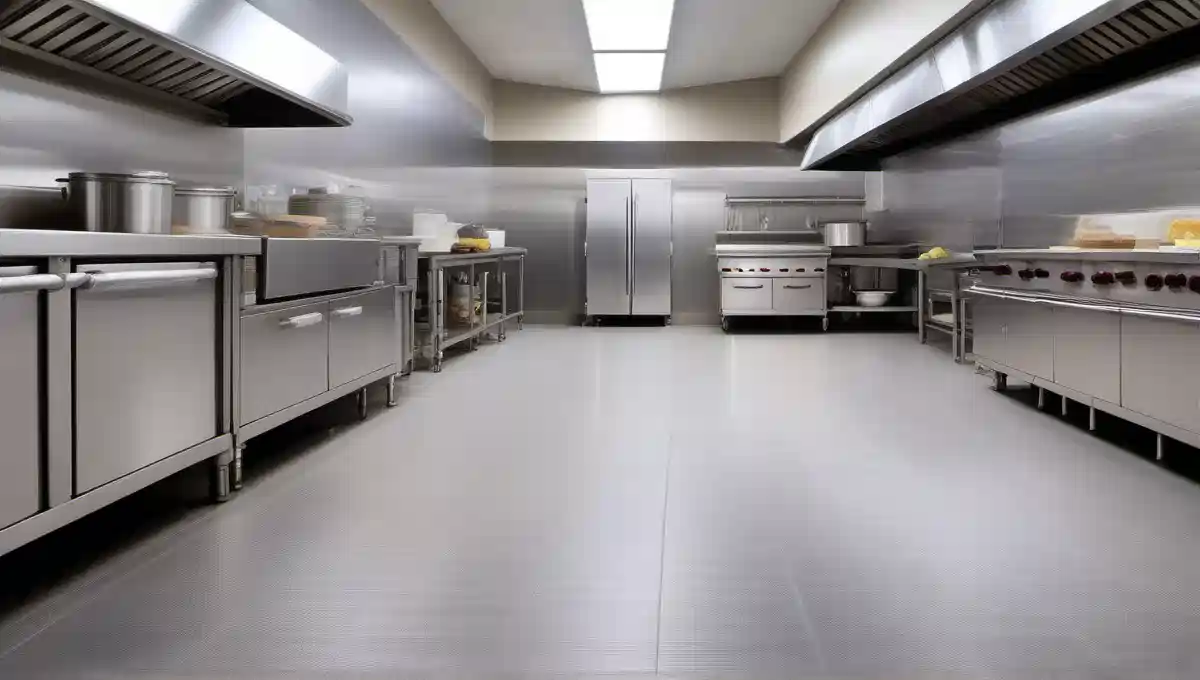
🏢 Commercial Kitchen & Restaurant Options
For restaurants, hotels, and commercial kitchens in Cape Town or Sandton, vinyl is the workhorse.
- Heavy-duty sheet vinyl: Homogeneous vinyl (same material throughout) is extremely durable and can be heat-welded at seams for absolute waterproofing. Class 33 or 34 rating. Slip-resistant textures are available.
- Glue-down LVT: High-end LVT with thick wear layers (0.7mm+) can handle heavy traffic and equipment. Individual tiles can be replaced if damaged.
- Requirements: Must meet hygiene standards (no harbourage for bacteria), be slip-resistant (R10 or R11 rating), and withstand hot spills and chemicals.
See our high-end flooring solutions for premium options.
❌ 8 Common Mistakes When Choosing Waterproof Vinyl
- Mistake #1: Assuming all vinyl is the same. SPC, WPC, and flexible vinyl have different properties. Choose based on your needs (comfort vs dent resistance).
- Mistake #2: Ignoring the wear layer. For kitchens and bathrooms, a 20mil (0.5mm) wear layer is minimum. Thicker is better for longevity.
- Mistake #3: Not checking joint waterproofing. For click-lock, ensure the product has a waterproof joint warranty (like Hydroseal).
- Mistake #4: Poor subfloor prep. Vinyl needs a smooth, level subfloor. Glue-down is especially unforgiving – every imperfection will show.
- Mistake #5: Forgetting about expansion. While vinyl is stable, large areas still need expansion gaps, especially with click-lock.
- Mistake #6: Using the wrong underlay. Some underlays are too soft and can cause click-lock joints to fail. Follow manufacturer guidelines.
- Mistake #7: DIY installation of sheet vinyl in a shower. This is a job for a pro. Seams must be welded, and the floor must slope correctly.
- Mistake #8: Choosing based on price only. Cheap vinyl will have a thin wear layer and may fade or dent quickly. Invest in quality for wet areas.
Our floor repair service can fix some issues, but prevention is best.
❓ Frequently Asked Questions
Is vinyl flooring 100% waterproof for bathrooms?
Yes, quality waterproof vinyl flooring like SPC, WPC, or sheet vinyl is 100% waterproof. It will not swell, rot, or delaminate from water exposure. However, for showers, sheet vinyl with welded seams is the most foolproof choice.
What is the difference between SPC and WPC vinyl?
SPC vinyl vs WPC vinyl – SPC has a stone-plastic composite core, making it harder, thinner, and more dent-resistant. WPC has a wood-plastic composite core, making it thicker, softer, and quieter. Both are 100% waterproof.
Can you put vinyl flooring in a shower?
You can put vinyl floor in shower area if you use sheet vinyl installed by a professional with welded seams and proper sloping. Click-lock vinyl is not recommended inside a shower where water pools, but is fine for the rest of the bathroom floor.
What is the best waterproof vinyl for coastal homes?
The best waterproof vinyl for coastal homes in Durban or George is SPC (Stone Plastic Composite) rigid core. It is unaffected by humidity and salt air, and won’t expand or contract.
Does vinyl flooring need waterproofing underlay?
Generally, does vinyl flooring need waterproofing underlay? No. The vinyl itself is the waterproof layer. Some products have integrated underlay. You might use a vapour barrier on concrete, but that’s different from a waterproofing membrane.
What is the cost of waterproof vinyl vs ceramic tile?
Waterproof vinyl vs ceramic tile cost – vinyl is generally more affordable. Installed vinyl ranges from R350-R1,180/m², while tile ranges from R500-R1,800/m². Vinyl labour is cheaper and installation faster.
Can I install click-lock vinyl in a kitchen?
Absolutely. Waterproof click flooring like click-lock vinyl is perfect for kitchens. Choose a product with waterproof joints (Hydroseal or similar) and a thick wear layer (20mil+) for durability against traffic and spills.
What is a 24-hour water test for vinyl?
A 24-hour water test is a manufacturer’s test where standing water is left on the floor for 24 hours to prove that the joints and core do not allow water penetration. Products that pass this test offer true peace of mind for wet areas.
Are there 100% waterproof laminate alternatives?
Yes, 100% waterproof laminate alternatives are essentially rigid core vinyl (SPC/WPC). Some brands market them as “waterproof laminate,” but they are technically vinyl. They offer the look of laminate with true waterproofing.
✅ Final Thoughts – Your Waterproof Vinyl Action Plan
Vinyl flooring has revolutionised what’s possible in wet areas. You no longer have to choose between beauty and practicality. With vinyl flooring bathrooms kitchens waterproof options South Africa, you can have the look of wood or stone in spaces that were once the exclusive domain of tile.
Key takeaways:
- For bathrooms: Sheet vinyl offers seamless waterproofing. WPC provides comfort underfoot. Ensure proper installation around showers.
- For kitchens: SPC core is best for dent resistance. Choose a product with waterproof joints and a thick wear layer.
- For coastal homes: SPC is the most stable choice.
- Always check the wear layer thickness and joint waterproofing warranty.
- Proper subfloor preparation is essential, regardless of the vinyl type.
Your 5-Step Action Plan
- Assess the room: Is it a bathroom (consider sheet vinyl) or kitchen (consider SPC)?
- Choose your vinyl type: SPC, WPC, glue-down, or sheet based on your priorities.
- Check specifications: Wear layer (min 20mil for homes), waterproof joints, warranty.
- Get samples: See the colour and texture in your room’s light.
- Book a free inspection or get quotes: For professional installation, especially for sheet vinyl or complex layouts.
Ready to Waterproof Your Space with Vinyl?
Get free, no-obligation quotes from vetted vinyl flooring specialists who understand wet area requirements.
📞 Call us: 073 138 4726 for personalised assistance
Free site inspections •
Beat-your-quote guarantee •
Our guarantees
📚 Official resources & standards:
- Moduleo – 100% waterproof LayRed technology and product specifications.
- SABS – SANS 10400 for wet area building regulations.
- Unilin – Hydroseal waterproof joint and Uniclic® locking system standards.
Information accurate as of publication. Prices are indicative and may vary by supplier and location. This guide is for informational purposes.
Written by: ServiceLink SA Research Team
Industry research and analysis team, ServiceLink SA
The ServiceLink SA Research Team has extensive experience with waterproof flooring technologies, from sheet vinyl installations in coastal apartments to SPC core floors in busy family kitchens. This guide reflects unbiased, practical advice for South African conditions.
For more detailed information, explore our related guides: vinyl vs laminate comparison to see how vinyl stacks up, our best flooring types guide for a broader overview, and our laminate guide for alternatives. For eco-conscious options, see our eco-friendly flooring page. Our contractor selection guide helps you find the right professional, and our waterproofing services page covers substrate preparation.