
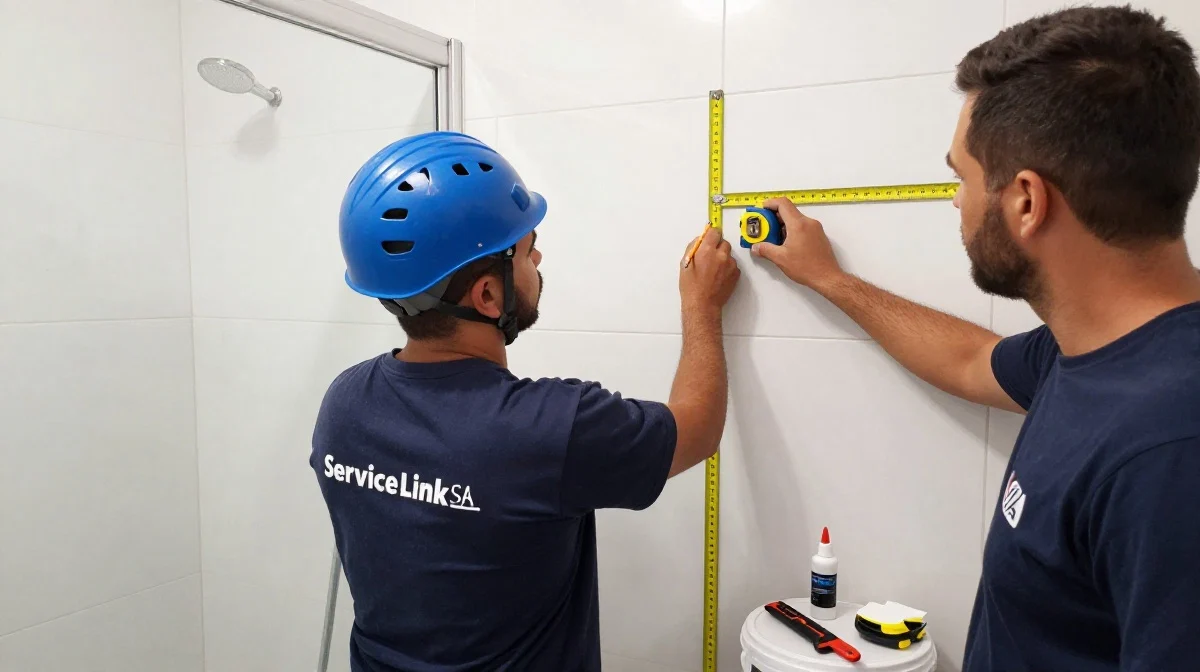
Planning a Bathroom Tiling Project?
Get free quotes from verified tiling specialists who understand bathroom tiling height requirements and SANS 10252 compliance.
Get Free Bathroom Tiling Quotes
Servicing Gauteng, Johannesburg, Pretoria, and across South Africa
Wall Tile Height Bathroom: SANS 10252 Standards Explained SA
📏 The complete guide to legal requirements and best practices for bathroom wall tiling heights
You’re renovating your bathroom. You know you need to tile the walls, but how high should they go? Floor to ceiling? Halfway up? Just around the shower? And what does the law say? I’ve been asked these questions hundreds of times by homeowners across Gauteng, Johannesburg, and Pretoria.
The answer isn’t just about aesthetics – it’s about compliance with SANS 10252 (the South African National Standard for sanitary installations). These regulations exist to prevent water damage, mould, and structural deterioration. Ignoring them can lead to failed building inspections, insurance claim denials, and costly repairs.
In this complete guide to wall tile height bathroom sa standards, I’ll answer what is the standard wall tile height in bathrooms according to SABS and SANS regulations. You’ll learn about minimum heights for wet areas (showers, baths, basins), waterproofing requirements, ceiling height considerations, and best practices for different bathroom layouts. By the end, you’ll know exactly how high to tile – and why.
For more bathroom guidance, check out our guides on bathroom tiling costs, wall vs floor tiling differences, grouting and waterproofing guide, and building regulations guide.
📋 Table of Contents – Bathroom Wall Tile Height Guide
📜 SANS 10252 Overview – What the Law Says About Bathroom Tiling Height
SANS 10252 (South African National Standard for the drainage, sanitation, and water supply of buildings) governs bathroom tiling requirements:
Key Requirements Summary:
- All wet areas (showers, baths, basins) must have waterproofed surfaces
- Tiles must extend to minimum heights above sanitary fixtures
- Waterproofing membrane must extend to specified heights
- Wet areas must have proper falls (slope) to drains
- Shower enclosures must be fully tiled or have impervious surfaces to ceiling height
Why These Standards Exist:
Water penetration behind tiles causes structural damage, mould growth, and health hazards. SANS 10252 minimum heights ensure that water splashes stay within tiled, waterproofed areas.
Legal Enforcement: Local authorities enforce these standards during building inspections. Non-compliance can result in failed inspections, fines, or demolition orders. Insurance claims may also be denied if damage resulted from non-compliant installations.
According to SANS 10400 and SANS 10252 standards and SABS building regulations, compliance is mandatory for new builds and major renovations.
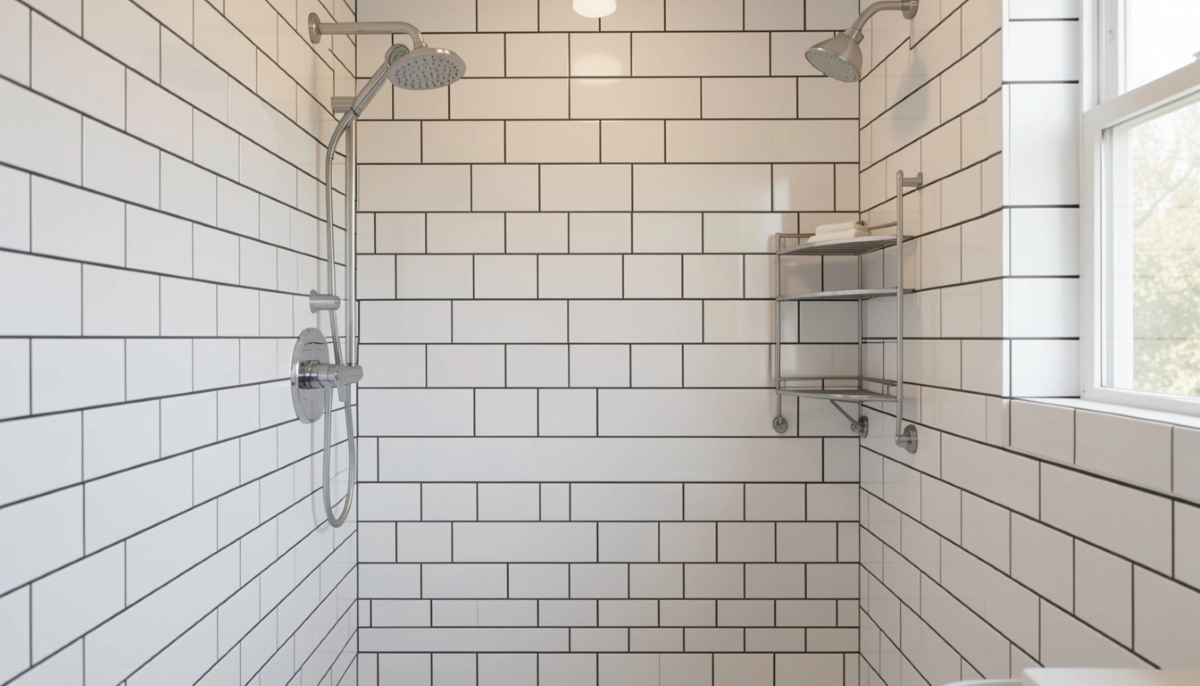
🚿 Shower Tile Height – Complete Requirements for Shower Tile Height
Shower tile height has the strictest requirements under SANS 10252:
Minimum Requirements:
- Enclosed shower (with door/curtain): Tiles must extend to at least 1800mm (1.8m) above shower floor OR to ceiling height (whichever is lower)
- Walk-in/wet-room shower: Must be fully tiled to ceiling height
- Shower head height: Tiles must extend at least 300mm above the shower head outlet
- Waterproofing membrane: Must extend to same height as tiles
Recommended Height (Best Practice):
Tile to the ceiling in all showers. This provides complete waterproofing, prevents condensation damage on painted surfaces, and looks more premium. The additional cost is minimal compared to the total bathroom renovation.
Shower Niche Considerations:
Shower niches must be fully tiled inside and out. Waterproofing membrane must cover all niche surfaces. Read our waterproofing guide for niche details.
Why Full-Height Tiling Is Recommended:
- Prevents steam and condensation from damaging painted walls
- Easier to clean – no paint-tile transition line
- Better resale value – buyers prefer fully tiled showers
- Eliminates risk of water penetration above tile line
For shower floor tiling, read our bathroom tiling cost guide.
🛁 Bath and Basin Tile Height
Requirements for tiling around baths and basins under wall tile height bathroom sa standards:
Bathtub Surround:
- Minimum height: Tiles must extend at least 300mm above the rim of the bath
- Recommended height: Tile to at least 1200-1500mm above floor, or to ceiling
- Behind bath (wall-mounted): Tile entire wall area behind the bath (splash zone)
- Waterproofing membrane: Must extend 150mm above the top of the tiles (or to 300mm above bath rim)
Basin / Vanity Area:
- Minimum height: Tiles must extend at least 300mm above the basin rim
- Recommended height: Tile from vanity top to 600-900mm above, or to ceiling for full-wall look
- Mirror area: Consider tiling behind mirror for protection against splashes
Toilet Area:
- No specific height requirement for toilets (not considered a “wet area” like showers/baths)
- Recommended: Tile at least 300-600mm behind toilet for easy cleaning
- Full wall tiling creates more cohesive look
Pro Tip: For family bathrooms with children, tile higher than minimum requirements – kids splash more water. Full-height tiling is recommended for all wet areas.
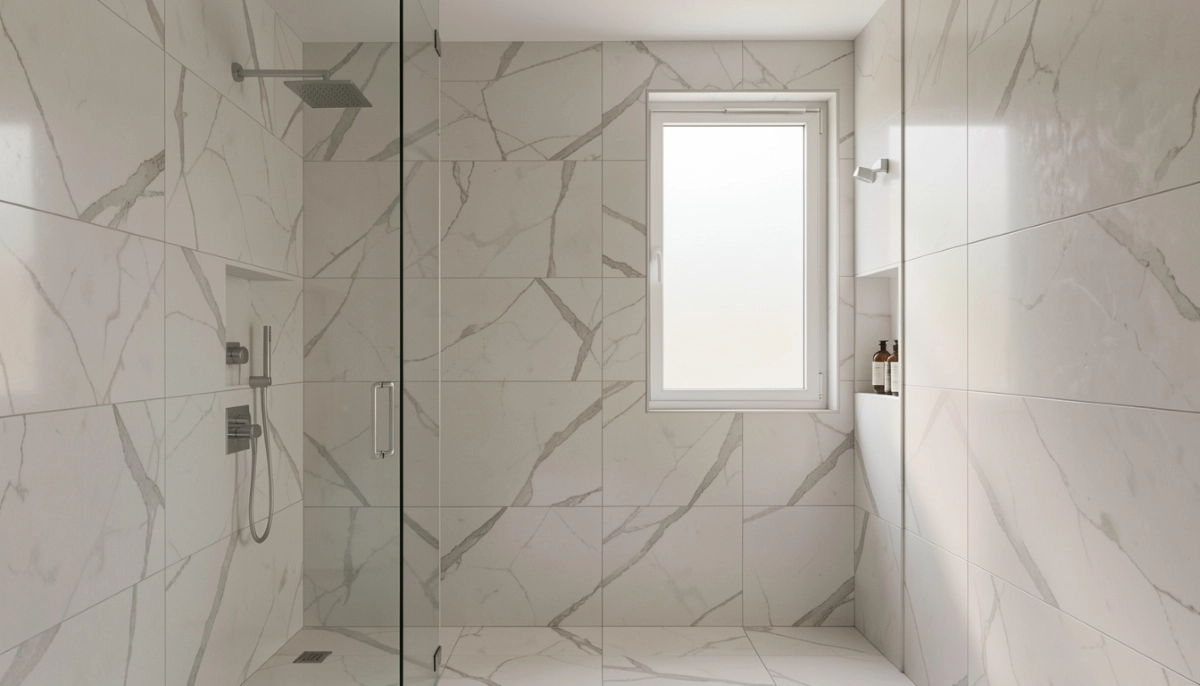
Planning a Bathroom Tiling Project?
Get free quotes from verified tiling specialists who understand SANS 10252 compliance and proper wall tile height bathroom sa standards.
Get Free Bathroom Tiling Quotes
Free inspections available. Workmanship guarantees.
🚽 Dry Areas and Splash Zones – Where Tiling Is Optional
Not all bathroom walls require tiling. Here’s where bathroom tiling height is flexible:
Dry Areas (No Tiling Required):
- Walls more than 1.5m away from any water source
- Ceilings (unless in shower)
- Behind toilet (but recommended for cleaning)
- Upper walls far from bath/shower (if minimum heights met)
Splash Zones (Tiling Recommended):
- Area within 600mm of basin
- Area within 600mm of bath (sides)
- Behind toilet (300-600mm high)
- Around bidet
Best Practice: For cohesive design, many homeowners tile all walls to the same height (e.g., 1200-1500mm around the entire bathroom). This creates a consistent wainscoting look. The area above can be painted or wallpapered.
For matching floor and wall tiles, read our bathroom floor and wall tile matching guide.
💧 Waterproofing Requirements Under Tiles
Tiles alone are NOT waterproof – the membrane underneath is. Here’s what SANS 10252 requires:
Waterproofing Heights:
- Shower walls: Waterproofing membrane must extend to same height as tiles (minimum 1800mm or to ceiling)
- Bath walls: Waterproofing must extend 150mm above the top of tiles OR to 300mm above bath rim
- Basin walls: Waterproofing recommended behind tiled areas
- Floor to wall junction: Waterproofing must extend 150mm up walls from floor
Waterproofing Materials:
- Liquid-applied membranes (most common) – read waterproofing guide
- Sheet membranes (for larger areas)
- Must be compatible with tile adhesive
Critical Areas:
- Inside and outside corners
- Around pipe penetrations
- Floor-wall junctions (coving)
- Shower niches and shelves
- Around drains and waste outlets
Testing: Before tiling, flood test the waterproofing (fill shower base with water, mark level, wait 24-48 hours). If water level drops, there’s a leak. Read our water damage guide for consequences of failure.
For professional waterproofing, read our waterproofing services guide.
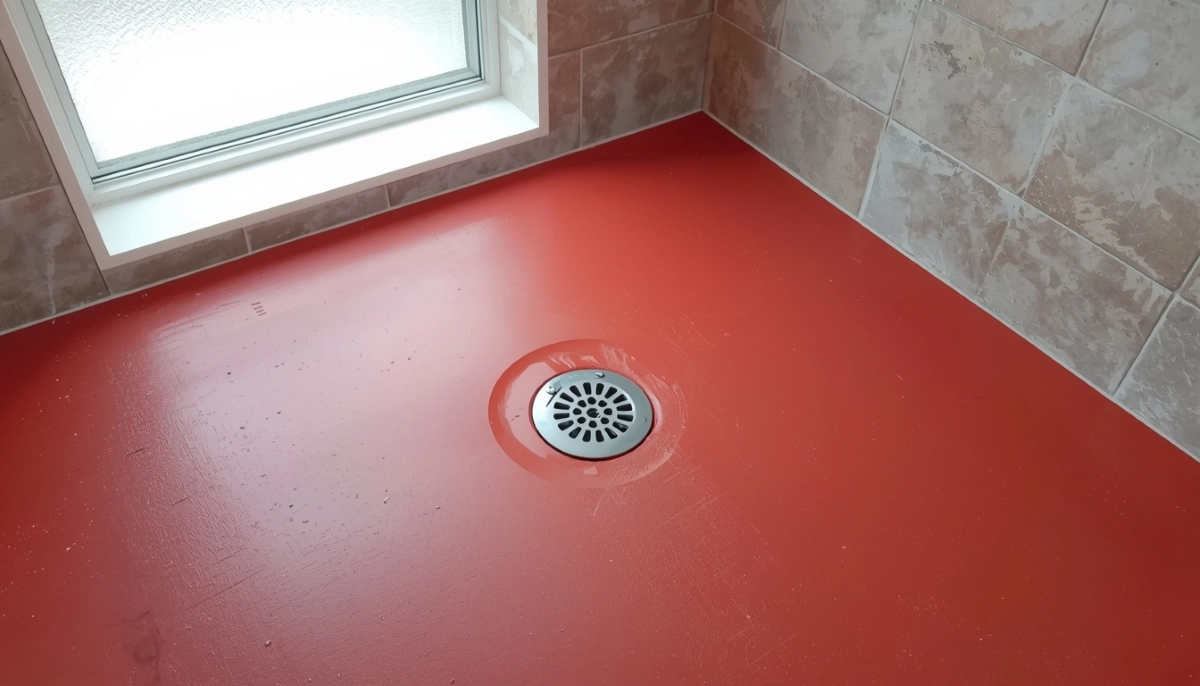
📏 Ceiling Height Considerations
Ceiling height affects wall tile height bathroom sa standards:
Standard Ceilings (2400mm / 2.4m):
- Full-height tiling is common and recommended for showers
- Partial tiling (1200-1500mm) works for dry areas
- Ceiling tiles: Not required except in steam rooms
Low Ceilings (under 2200mm / 2.2m):
- Full-height tiling makes space feel larger (fewer visual breaks)
- Shower must be tiled to at least 1800mm (or to ceiling if lower)
- Light colours on ceiling make space feel taller
High Ceilings (over 2600mm / 2.6m):
- Full-height tiling is expensive but dramatic
- Partial tiling (wainscoting) with painted upper walls is popular
- Shower must still meet 1800mm minimum – can stop at that height or go higher
Ceiling Tiling: Not required by SANS 10252 for standard bathrooms. Required for steam rooms or wet rooms. If tiling ceilings, use lightweight tiles and proper adhesive – read adhesives guide.
🎨 Design Options – Partial vs Full-Height Tiling
Beyond compliance, here are popular bathroom tiling height design choices:
| Style | Height | Pros | Cons | Best For |
|---|---|---|---|---|
| Minimum Compliance | Shower: 1800mm Bath: 300mm above rim Basin: 300mm above rim | Lowest cost, meets legal minimum | Less protection, dated look | Budget renovations, rentals |
| Wainscoting (half wall) | 1200-1500mm throughout | Classic, traditional look, cost-effective | Transition line needs careful finishing | Traditional bathrooms, period homes |
| Full wet area | Ceiling height in shower, 1200mm elsewhere | Practical, good protection, balanced cost | Multiple heights to manage | Most family bathrooms |
| Full bathroom | Floor to ceiling everywhere | Luxurious, seamless, easy to clean, best protection | Most expensive, heavy | Luxury homes, master bathrooms |
| Feature wall | Full height on one wall, partial elsewhere | Dramatic focal point, cost-effective | Can feel unbalanced | Contemporary bathrooms |
For matching floor and wall tiles, read our bathroom floor and wall tile match guide.
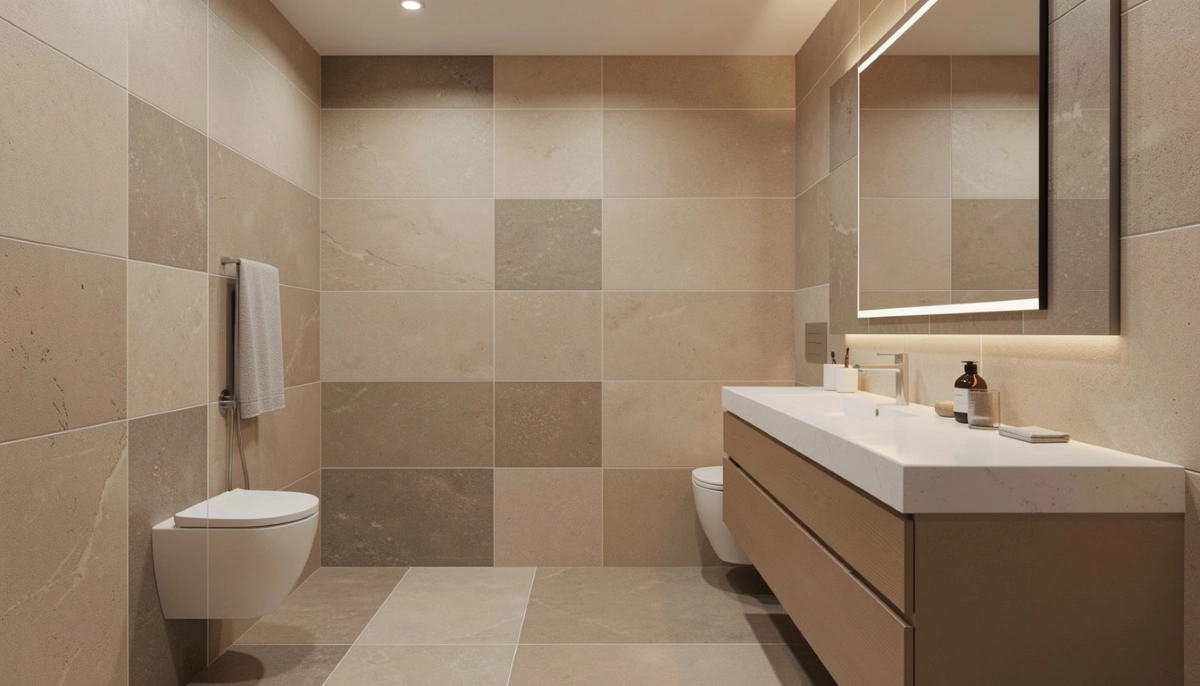
🚫 Common Mistakes to Avoid with Bathroom Tiling Height
⚠️ Warning: These Mistakes Cause Water Damage and Failed Inspections
Avoid these errors when planning your bathroom tiling height.
- Stopping tiles too low behind shower: Tiles ending at 1500mm when shower head is at 2000mm – water splashes above tile line, damaging paint and substrate. Always tile to minimum 1800mm or ceiling.
- No waterproofing behind tiles: “The tiles will be enough” – WRONG. Tiles and grout are NOT waterproof. Without membrane, water penetrates to substrate. Read our waterproofing guide.
- Waterproofing not extending high enough: Membrane stopping below tile line – water travels behind tiles and finds unsealed area. Membrane must extend to top of tiles.
- Not waterproofing around fittings: Shower arm, taps, and pipe penetrations are common leak points. Properly seal all penetrations.
- Mismatched tile heights between walls: One wall tiled to 1800mm, adjacent wall only 1200mm – looks unprofessional, creates water path at corner.
- Forgetting shower niche waterproofing: Niches are common failure points. Must be fully waterproofed and tiled.
- Using wrong transition at tile-paint junction: No trim or schluter strip – raw tile edge looks unfinished, collects dirt. Use edging strips.
- Assuming building inspector won’t check: Local authorities inspect wet areas for SANS 10252 compliance. Failed inspection delays project, may require demolition.
🔍 Building Inspections and Compliance
What building inspectors look for regarding wall tile height bathroom sa standards:
Inspection Checklist:
- ✓ Waterproofing certificate (from approved installer)
- ✓ Shower tile height – minimum 1800mm or to ceiling
- ✓ Bath splash zone – minimum 300mm above rim
- ✓ Waterproofing membrane height – matches tile height
- ✓ Proper sealing around penetrations
- ✓ Floor-wall coving or sealant
- ✓ Shower floor slope (1:80 minimum)
Documentation Required:
- Waterproofing warranty and certificate
- Flood test results (if requested)
- Product specifications for tiles and waterproofing
If You Fail Inspection: You’ll receive a notice of non-compliance. Correct the issues, then request re-inspection. Failure to comply can result in fines or demolition orders.
Read our building regulations guide for more on inspections.
❓ Frequently Asked Questions About Bathroom Wall Tile Height
What is the standard wall tile height in bathrooms according to SANS 10252?
What is the standard wall tile height in bathrooms – SANS 10252 requires: shower walls: minimum 1800mm (1.8m) or to ceiling; bath walls: minimum 300mm above bath rim; basin walls: minimum 300mm above basin rim. These are legal minimums. Full-height tiling (to ceiling) is recommended for showers and recommended for entire bathrooms.
Do I need to tile my bathroom to the ceiling?
Not legally required except for showers (must be tiled to 1800mm or ceiling). However, tiling to the ceiling is recommended for: showers (best practice), wet rooms, bathrooms with poor ventilation (prevents condensation damage), and for a premium, seamless look. The additional cost is usually worth the benefits.
How high should tiles go behind a bath?
SANS 10252 requires tiles to extend at least 300mm above the bath rim. However, best practice is to tile higher – at least 600mm, or to 1200-1500mm (wainscoting height), or to the ceiling. Children splash more water – consider full-height tiling in family bathrooms. Read our cost guide for budgeting.
Does a walk-in shower need to be fully tiled?
Yes – walk-in showers (no door or curtain) must be fully tiled to the ceiling. Water spray can reach anywhere in the enclosure. The waterproofing membrane must also extend to the ceiling. This is a stricter requirement than enclosed showers (which can stop at 1800mm).
What happens if I don’t meet the minimum tile height?
Consequences include: failed building inspection (delays project, may require demolition), water damage behind tiles (mould, rot, structural issues), invalidated insurance claims, and reduced resale value. The cost of fixing non-compliance is much higher than doing it right the first time. Read our water damage guide.
Can I use different tile heights on different walls?
Yes, but corners must be carefully detailed. Example: Shower wall tiled to ceiling, adjacent wall tiled to 1200mm. The corner transition must be properly sealed. For best results, use the same height on all walls that meet at corners, or use decorative trim to transition.
Does the toilet area have minimum tile height requirements?
No – toilets are not considered “wet areas” like showers and baths. However, tiling behind the toilet (300-600mm high) makes cleaning easier. Some homeowners tile full walls behind toilets for a cohesive look. Read our wall vs floor tiling guide for more.
How do I transition between tiled and painted walls?
Use: metal trim strips (Schluter) – most common, clean finish; PVC or aluminium edging – affordable; bullnose tiles – traditional look; or paint directly above tile (tape off, use primer). Ensure the transition line is perfectly level. Read our transition strip guide for more.
✅ Final Thoughts: Comply First, Design Second
Understanding wall tile height bathroom sa standards is essential for any bathroom renovation. SANS 10252 isn’t just bureaucracy – it’s proven protection against water damage, mould, and structural deterioration.
Minimum requirements: showers to 1800mm, baths and basins to 300mm above fixtures. But best practice goes beyond minimums – full-height tiling in showers is strongly recommended, and floor-to-ceiling tiling throughout creates a luxurious, easy-to-clean bathroom.
Remember: tiles are not waterproof. The membrane underneath is what protects your home. Never skip waterproofing, and ensure it extends to the same height as your tiles.
Key takeaways for bathroom tiling height:
- Showers: minimum 1800mm or ceiling – tile to ceiling for best results
- Baths: minimum 300mm above rim – tile higher for family bathrooms
- Basins: minimum 300mm above rim
- Waterproofing membrane must extend to top of tiles
- SANS 10252 is legally enforceable – non-compliance risks failed inspections
- Full-height tiling (floor to ceiling) is the gold standard for luxury bathrooms
- Hire verified tilers who understand SABS and SANS requirements
- Use ServiceLink SA to find qualified bathroom tiling specialists
Your next step: Ready to tile your bathroom? Get free quotes from verified tiling specialists who understand SANS 10252 compliance and proper wall tile height bathroom sa standards.
Ready to Start Your Bathroom Tiling Project?
Get free quotes from verified tiling specialists who understand bathroom tiling height requirements and SANS 10252 compliance.
📞 Call us: 073 138 4726 to discuss your bathroom tiling project.
Are You a Tiling Professional?
Join ServiceLink SA’s network of verified tiling contractors. Get qualified leads for bathroom and residential tiling projects.
📚 Official resources & standards referenced:
- SANS 10400 / SANS 10252 – South African National Standard for sanitary installations, drainage, and bathroom waterproofing requirements.
- SABS – South African Bureau of Standards for building regulations and material standards.
Information provided for general guidance. Always consult local building authorities and qualified professionals for specific requirements.
Written by: ServiceLink SA Research Team
Building Regulations & Bathroom Compliance Specialists
The ServiceLink SA Research Team has extensive experience with South African building regulations, including SANS 10252 bathroom requirements. Our team works with building inspectors, waterproofing specialists, and tiling contractors to understand the practical application of these standards. This guide helps homeowners navigate legal requirements while achieving beautiful, functional bathrooms. We believe compliance and great design go hand in hand.
For more information about bathroom tiling standards, explore our related resources: bathroom tiling costs, wall vs floor tiling differences, grouting and waterproofing guide, and building regulations guide. Learn about our process on what is ServiceLink SA and how our service works. Find tilers in your area: Gauteng, Johannesburg, and Pretoria. For related services, see our plumbing services and waterproofing guides.