

Getting Your Aircon Ready for Winter?
Get free quotes from verified local maintenance specialists for pre-winter servicing and professional winter preparation.
Find Aircon Maintenance Specialists Near Me
Servicing Johannesburg, Pretoria, Cape Town, Bloemfontein, and across South Africa
Winter Aircon Maintenance: 5 Steps to Protect Your AC During Off-Season
❄️🔧 The complete winter maintenance checklist—prevent mould, pest damage, and compressor seizure while your aircon is idle
Winter is here. The temperature has dropped. Your air conditioner hasn’t run in weeks. It’s sitting there, silent, waiting for summer.
Most homeowners forget about their aircons during winter. They don’t clean them. They don’t cover them. They don’t run them. Then December arrives, they turn on the unit for the first heatwave, and… nothing. Or worse—a musty smell fills the room, water leaks everywhere, or the compressor won’t start.
I’ve seen this pattern repeat every spring. Homeowners neglect their aircons during winter, then panic when summer hits and their units don’t work.
The good news? Winter aircon maintenance takes less than 30 minutes and costs almost nothing. A little preparation now prevents mould growth, pest infestations, seized compressors, and expensive repairs later.
In this guide, I’ll walk you through 5 essential steps for ac winter preparation, how to prepare aircon for winter whether you use it for heating or not, and what professional maintenance to schedule before summer.
For more seasonal guidance, check seasonal aircon maintenance and our maintenance checklist. Ready to protect your aircon for winter? Let’s go.
📋 Table of Contents – Winter Aircon Maintenance Guide
⚠️ Why Winter Maintenance Matters (The Cost of Neglect)
Leaving your aircon untouched for 4-6 months can cause serious problems. Here’s what happens during winter neglect:
| Problem | Cause | Consequence | Prevention Cost |
|---|---|---|---|
| Mould growth | Moisture trapped inside unit | Musty smell, health risks (allergies, asthma) | R0 (run fan to dry) |
| Pest infestation | Rodents/insects nest in idle unit | Chewed wires, blocked components, fire risk | R150-R300 (cover) |
| Seized compressor | Oil settles, seals dry out | Compressor fails (R5,000-R12,000 repair) | R0 (run monthly) |
| Refrigerant leaks | Seals dry out from inactivity | Poor cooling, compressor damage | R0 (run monthly) |
| Power surge damage | Lightning/storms during winter | Control board failure (R1,500-R4,000) | R0 (turn off breaker) |
📌 The Golden Rule of Winter Aircon Care:
An idle aircon is NOT a “set and forget” appliance. It needs monthly attention during winter. Five minutes per month prevents thousands in repairs. Don’t ignore your aircon just because you’re not using it.
Read our maintenance checklist and service frequency guide.
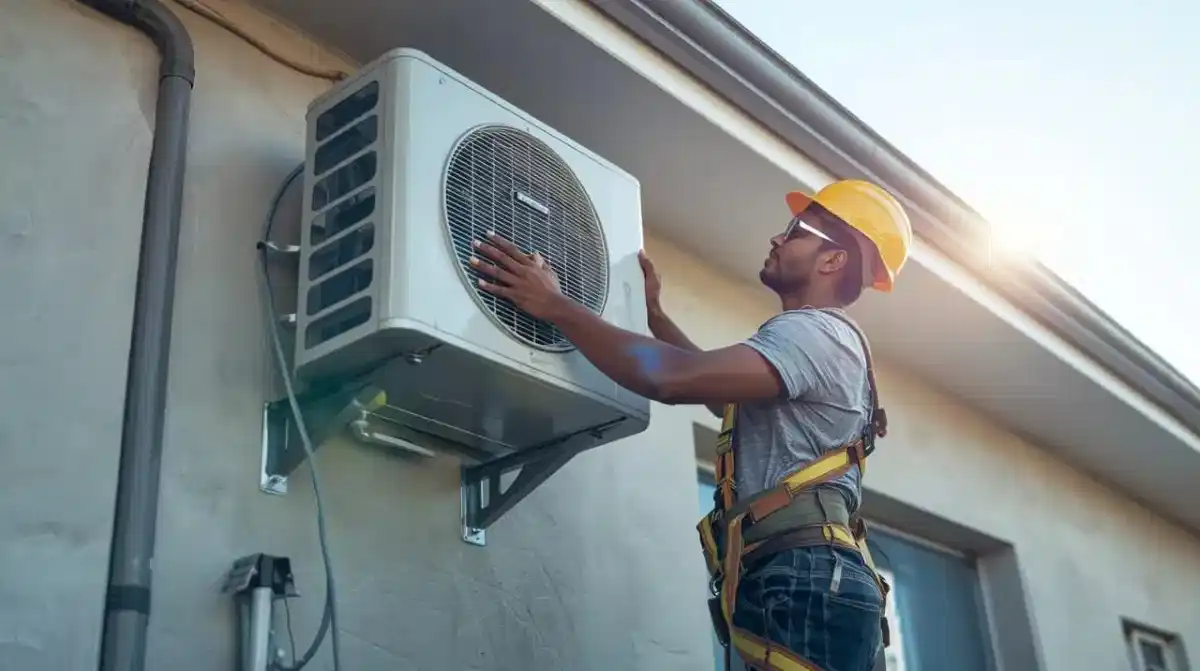
🧼 Step 1: Deep Clean Before Winter Storage
Before your aircon sits idle for months, give it a thorough cleaning. This removes moisture and debris that cause mould and corrosion.
DIY cleaning checklist (20 minutes):
- Turn off power at the isolator switch AND circuit breaker.
- Remove and clean filters with warm soapy water. Dry completely. Read our filter cleaning guide.
- Clean the outdoor unit – remove leaves, twigs, and debris. Gently hose the coils (not pressure washer).
- Flush the drain line with vinegar/water mixture (1 cup vinegar + 2 cups water).
- Run the fan only for 30-60 minutes to dry out all internal moisture. This is critical—moisture left inside grows mould over winter.
- Wipe down the indoor unit exterior and visible interior areas with a dry cloth.
✅ Pro Tip:
The “run fan only” step is the most important. Moisture left inside the unit over winter is the #1 cause of mould and musty smells when you restart in summer. Run the fan for at least 30 minutes after cleaning to dry everything completely.
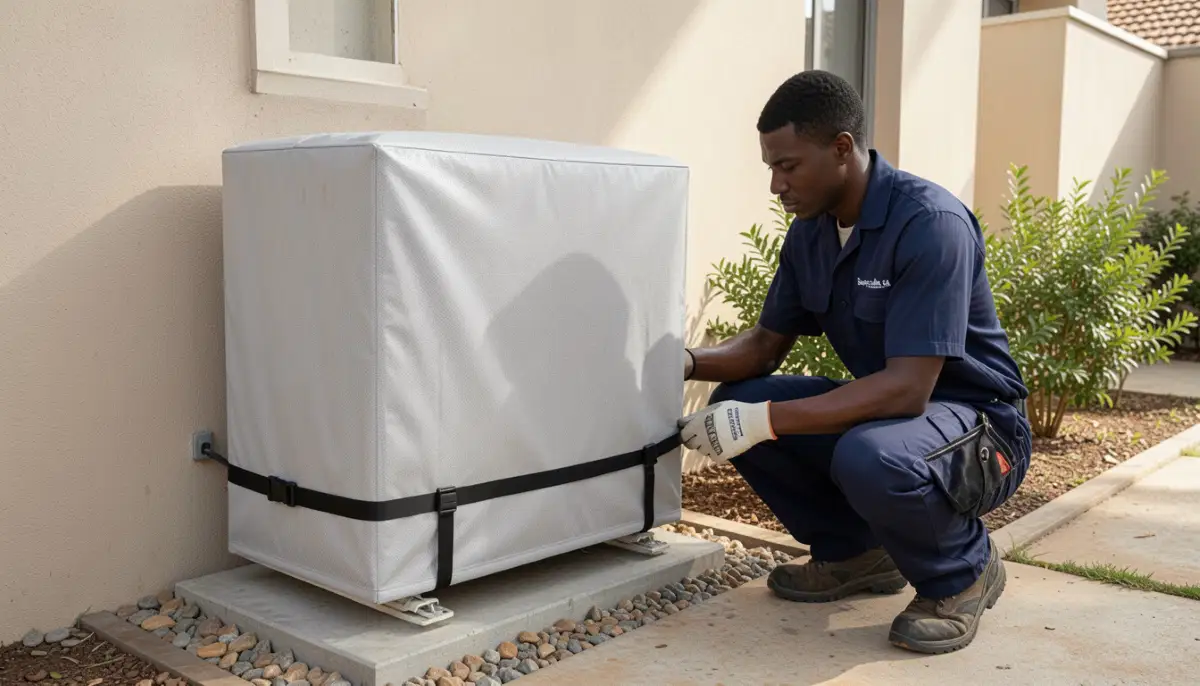
🛡️ Step 2: Cover the Outdoor Unit Properly
A good cover protects your outdoor unit from rain, snow (on highveld), leaves, and pests during winter.
What to use:
- Breathable fabric cover designed for air conditioners (R150-R300 at hardware stores).
- Material: Polyester or canvas that allows airflow but blocks moisture.
- Secure fit: Should cover the top and sides but allow bottom airflow.
What NOT to use:
- ❌ Plastic tarps or garbage bags (traps moisture, causes rust)
- ❌ Non-breathable materials (same problem)
- ❌ Anything that wraps the entire unit tightly (needs some airflow)
How to cover correctly:
- Ensure the unit is completely dry before covering (run fan after cleaning).
- Place the cover over the top of the unit.
- Secure with straps or bungee cords (don’t use tape—leaves residue).
- Leave the bottom open for airflow (prevents moisture buildup).
- Check monthly that the cover hasn’t blown off or collected water.
⚠️ Important:
If you use your aircon for heating during winter (heat pump model), DO NOT cover the outdoor unit. The cover traps heat and can damage the unit. Only cover units that are completely idle during winter.
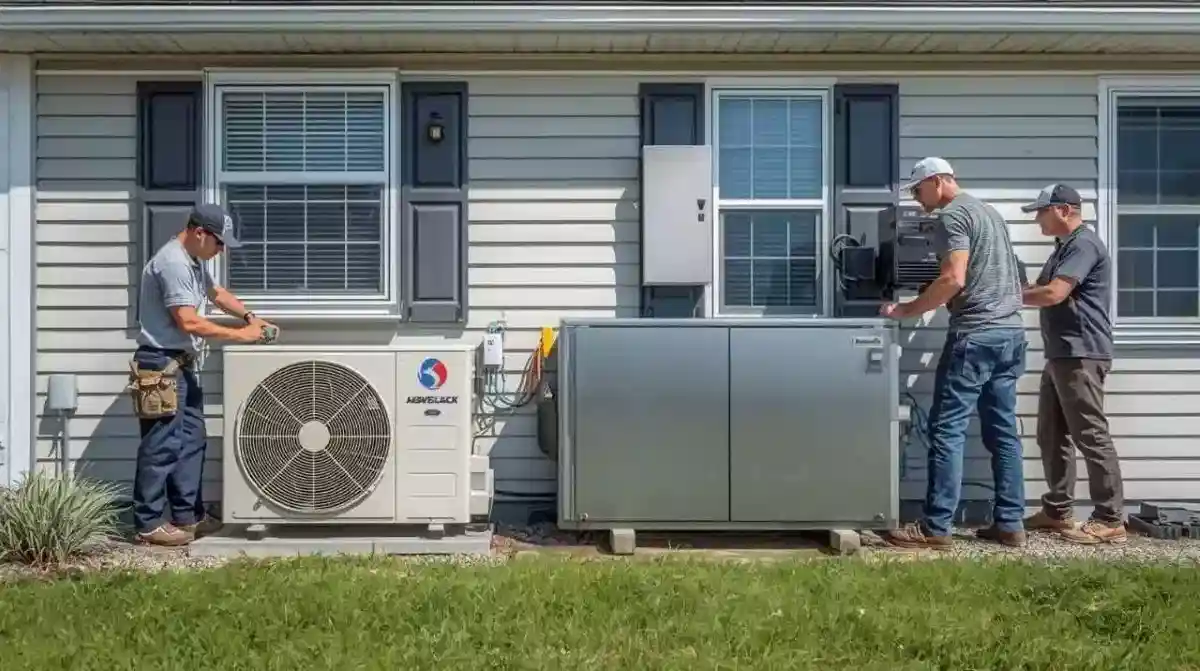
Need Professional Winter Preparation?
Get free quotes from verified local specialists for pre-winter servicing, cleaning, and maintenance contracts.
Get Free Quotes From Local Specialists
Pre-winter service from R500-R800.
🔄 Step 3: Run the Unit Monthly (Critical!)
This is the most important—and most overlooked—winter aircon maintenance task. Running your idle aircon monthly prevents compressor seizure and refrigerant leaks.
Why this matters:
- The compressor contains oil that settles over time. Running the unit circulates this oil, lubricating seals and internal components.
- Seals dry out when inactive, leading to refrigerant leaks. Monthly operation keeps seals flexible.
- Standing water in the drain pan can freeze and crack components. Running the unit moves water through.
How to run your idle aircon during winter:
- Once a month, turn on the aircon.
- Set to FAN ONLY mode (no heating, no cooling).
- Run for 10-15 minutes.
- Turn off.
- Mark your calendar for the next month.
⚠️ The Cost of NOT Running Your Aircon Monthly:
Compressor replacement: R5,000-R12,000. Refrigerant leak repair: R1,500-R4,000. Monthly 10-minute run: R0. The choice is clear. Set a monthly reminder on your phone.
For heat pump users (using aircon for heating): You’re already running your unit regularly. Continue normal operation but still do monthly filter cleaning.
⚡ Step 4: Power Management (Breaker & Isolator)
Protect your aircon from power surges during winter storms and load-shedding.
For idle units (no winter use):
- Turn off the circuit breaker for the aircon at your electrical distribution board.
- Turn off the isolator switch near the outdoor unit.
- This disconnects power completely, protecting against lightning strikes and power surges.
- When you run the unit monthly (Step 3), turn the breaker and isolator back on, run for 10-15 minutes, then turn them off again.
For heat pump users (using aircon for heating):
- Keep power connected (you’re using it).
- Consider installing a surge protector for your aircon (R500-R1,500).
- Read our load-shedding guide.
Read our circuit breaker guide.
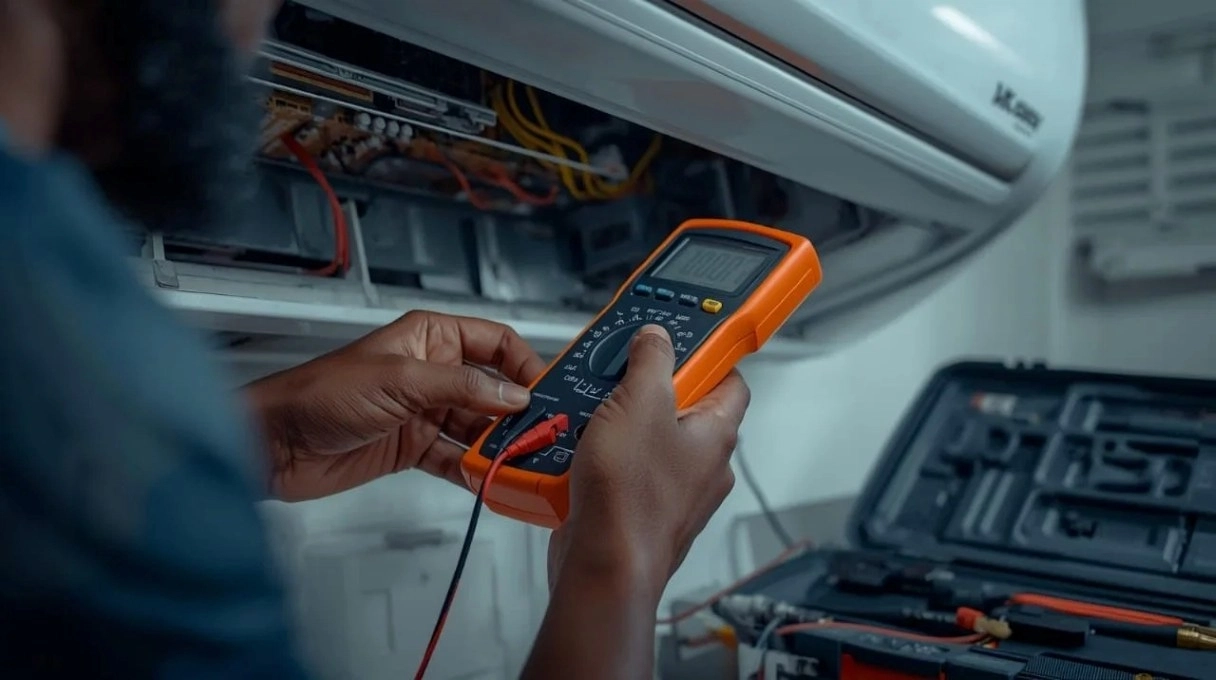
📅 Step 5: Schedule Pre-Summer Service (September-October)
Winter is the perfect time to book your pre-summer professional service. Don’t wait until December.
Why schedule in winter/early spring:
- Technicians are less busy (no summer rush)
- Prices are lower (no emergency premiums)
- You beat the December heatwave panic
- Any problems found can be fixed before summer
What professional service includes:
- Refrigerant pressure check (detect leaks)
- Electrical component inspection (capacitors, contactors)
- Deep coil cleaning
- Drain line inspection and cleaning
- Fan motor and compressor check
- Overall performance test
When to book: September or October is ideal. Book your appointment now—don’t wait.
Read our professional service guide and service cost guide.
🔥 Special Section: If You Use Your Aircon for Heating
Many modern air conditioners are heat pumps—they provide heating in winter, not just cooling in summer. If you use your aircon for heating, winter maintenance is different.
For heat pump users (winter heating):
- DO NOT cover the outdoor unit – covers trap heat and can damage the unit.
- Clean filters monthly – dust accumulates year-round, even in heating mode.
- Check outdoor unit for ice – during freezing conditions (highveld), ice may form on the outdoor unit. This is normal defrost cycling. Excessive ice indicates a problem.
- Ensure clearance around outdoor unit – snow or ice buildup can block airflow.
- Schedule professional service annually – heating mode stresses different components (reversing valve, outdoor coil defrost).
Signs your heat pump needs service during winter:
- Blows cold air instead of warm
- Outdoor unit ices up excessively (not defrosting properly)
- Unit cycles on and off too frequently
- Unusual noises from outdoor unit
Read our inverter guide for heat pump efficiency tips.
📅 South Africa Winter Timing Guide
Winter in South Africa varies by region. Here’s when to do each task:
| Region | Winter Months | When to Prepare | Special Considerations |
|---|---|---|---|
| Gauteng (Johannesburg, Pretoria) | June-August (cold, dry, frost possible) | Prepare by late May | Frost risk—cover outdoor unit if idle. Freezing can crack drain pipes. |
| Western Cape (Cape Town) | June-August (cool, wet, rainy) | Prepare by late May | Rain and moisture—ensure drain line is clear. Cover outdoor unit if idle. |
| KwaZulu-Natal (Durban) | June-August (mild, humid) | Prepare by late May | Humidity promotes mould—run fan monthly even if idle. Cover may not be necessary. |
| Free State / Northern Cape | June-August (very cold, frost, snow possible) | Prepare by mid-May | Severe frost—cover outdoor unit. Drain water completely to prevent freezing. |
| Eastern Cape | June-August (cool, variable) | Prepare by late May | Follow general winter guidelines. |
Read our seasonal maintenance guide.
❌ 5 Common Winter Maintenance Mistakes
⚠️ Avoid These Costly Errors:
Mistake #1: Using plastic to cover the outdoor unit. Plastic traps moisture, causing rust and corrosion. Use a breathable fabric cover designed for air conditioners (R150-R300). Or leave it uncovered but clear of debris.
Mistake #2: Forgetting to run the unit monthly. Seals dry out, oil settles, and compressors seize. Run your idle aircon for 10-15 minutes once a month in Fan mode. Set a calendar reminder.
Mistake #3: Not cleaning before storage. Moisture and debris left inside grow mould over winter. Clean filters, flush drain line, and run fan to dry completely before winter.
Mistake #4: Leaving power connected. Lightning strikes and power surges during winter storms can damage the control board. Turn off the breaker and isolator switch for idle units.
Mistake #5: Waiting until summer to schedule service. December is peak season—technicians are booked for weeks. Book your pre-summer service in September or October.
Read our maintenance checklist to avoid these mistakes.
💰 Cost of Neglect: What Skipping Winter Prep Costs You
Skipping winter aircon maintenance isn’t saving money—it’s deferring expenses with interest.
| Neglected Task | Consequence | Cost to Fix | Prevention Cost |
|---|---|---|---|
| Not cleaning before winter | Mould growth, musty smell | R500-R1,500 (professional cleaning) | R0 (DIY cleaning) |
| Not covering outdoor unit | Pest infestation, debris buildup, rust | R500-R2,000 (cleaning + pest removal) | R150-R300 (cover) |
| Not running monthly | Seized compressor, refrigerant leaks | R5,000-R12,000 (compressor) + R1,500-R4,000 (leak repair) | R0 (10 minutes/month) |
| Leaving power connected | Surge damage to control board | R1,500-R4,000 (PCB replacement) | R0 (turn off breaker) |
| Skipping pre-summer service | Breakdown during summer heatwave, emergency rates | R800-R2,000 (emergency repair) + days of discomfort | R500-R800 (scheduled service) |
The pattern is clear: a little winter preparation prevents major expenses. Read our repair vs replacement guide.
❓ Frequently Asked Questions About Winter Aircon Maintenance
Should I cover my outdoor aircon unit in winter?
Yes, if you don’t use it for heating. Use a breathable fabric cover (not plastic). Plastic traps moisture, causing rust and corrosion. Covering protects from debris, pests, and winter rain. However, if you use your aircon for winter heating (heat pump model), DO NOT cover it—the cover traps heat and can damage the unit. Read our winter guide.
How often should I run my aircon during winter?
For system shutdown (idle units not used for heating), run your aircon once a month for 10-15 minutes in FAN ONLY mode (no heating or cooling). This circulates oil, lubricates seals, and prevents the compressor from seizing. Set a monthly calendar reminder. This simple task prevents R5,000-R12,000 compressor failure.
Can I leave my aircon outside in winter without a cover?
Yes, air conditioners are designed for outdoor installation and can survive winter without a cover. However, covering is recommended to prevent leaves, twigs, and pests from entering the unit. If you choose not to cover, at least clear debris monthly. Never use plastic covers—they trap moisture and cause rust.
Do I need to service my aircon in winter?
You don’t need a full service in winter, but winter is the BEST time to BOOK your pre-summer service. Schedule for September or October. Technicians are less busy (no summer rush), prices are lower, and any problems found can be fixed before summer. Don’t wait until December when everyone else is panicking.
Should I turn off the breaker to my aircon in winter?
Yes, for idle units not used for heating. Turn off the circuit breaker at your electrical distribution board AND the isolator switch near the outdoor unit. This protects against power surges from lightning and winter storms. When you run the unit monthly (Step 3), turn the breaker back on, run for 10-15 minutes, then turn off again.
Why does my aircon smell musty when I turn it on after winter?
A musty smell after winter indicates mould growth inside the unit. Moisture was left in the unit before winter, or condensation accumulated during idle months. The solution: deep clean filters, flush drain line with vinegar, and run fan only for 2-3 hours to dry everything. For severe mould, professional cleaning may be needed (R500-R1,000).
Can freezing temperatures damage my aircon?
In most of South Africa, freezing temperatures alone won’t damage your aircon. However, on the highveld (Johannesburg, Pretoria, Free State) where temperatures drop below freezing, water left in drain lines or pipes can freeze and crack components. Before winter, run the fan to dry internal moisture and ensure drain lines are clear.
Should I use my aircon for heating in winter?
Yes, if you have a heat pump model (most modern inverter split systems). Heat pumps are very efficient—they produce 3-4 units of heat for every 1 unit of electricity (COP 3-4). This is cheaper than space heaters or oil heaters. However, if your unit is old or not designed for heating, don’t use it—check your manual first.
How do I prepare my aircon for winter if I live in Durban (humid)?
In humid areas like Durban, mould growth is the biggest concern. Even if you’re not using your aircon for cooling in winter, run it in FAN ONLY mode for 15 minutes weekly to circulate air and prevent mould. Clean filters monthly. A cover may not be necessary (humidity under a cover can worsen mould).
When should I start using my aircon again after winter?
Start using your aircon for cooling when daytime temperatures consistently exceed 26-28°C (typically October-November in most of South Africa). However, do a test run in September: turn it on in Cool mode for 30 minutes to ensure it works. If there are problems, you have time to fix them before the December heatwave.
✅ Final Thoughts: A Little Winter Care Prevents Summer Headaches
Winter aircon maintenance takes less than 30 minutes total over the entire season. A few simple steps prevent mould, pest damage, seized compressors, and refrigerant leaks—saving you thousands in repairs.
Key takeaways for winter aircon care:
- Clean before storage: Filters, coils, drain line. Run fan to dry completely. Prevents mould.
- Cover outdoor unit (if idle): Use breathable fabric cover (not plastic). Protects from debris and pests.
- Run monthly (critical!): 10-15 minutes in Fan mode. Prevents compressor seizure and refrigerant leaks.
- Turn off power (if idle): Breaker and isolator switch. Protects from power surges.
- Book pre-summer service now: September-October booking avoids December rush and ensures your unit is ready.
- For heat pump users (heating): Don’t cover the unit. Clean filters monthly. Check outdoor unit for ice.
- Regional differences matter: Frost areas need extra protection (cover). Humid areas need mould prevention (run fan weekly).
Your action plan: First, if winter is approaching, deep clean your unit and cover the outdoor unit. Second, set a monthly calendar reminder to run the unit for 10-15 minutes in Fan mode. Third, turn off the breaker for idle units. Fourth, book your pre-summer professional service for September or October. Fifth, request quotes from local maintenance specialists if you need professional winter preparation.
Need Help Preparing Your Aircon for Winter?
Get free quotes from verified local specialists for pre-winter servicing, cleaning, and maintenance contracts.
📞 Call us: 073 138 4726 for immediate help finding aircon maintenance specialists near you.
Free site inspections •
Maintenance contracts •
Our guarantees
📚 Official resources & standards referenced:
- Department of Energy – Off-season storage tips and energy efficiency guidelines
- SABS – Winter protection standards for outdoor HVAC equipment
- Eskom – Load-shedding and surge protection for household appliances
Information provided for general guidance based on South African seasonal patterns and common air conditioning systems. Always consult your unit’s manual for model-specific winter care instructions.
Written by: Innocent T Hanyani
Construction & Home Services Industry Specialist | 21+ Years Experience
Innocent T Hanyani has over two decades of experience working across South Africa’s construction, maintenance, and home services sectors. Throughout his career, he has worked closely with contractors, service providers, and property owners, gaining practical insight into how projects are quoted, managed, and completed. His work focuses on helping homeowners understand how to find reliable contractors, compare quotes, and avoid common industry pitfalls when hiring service professionals. His insights are based on practical industry experience as well as ongoing research into contractor platforms, service marketplaces, and hiring trends across South Africa.