
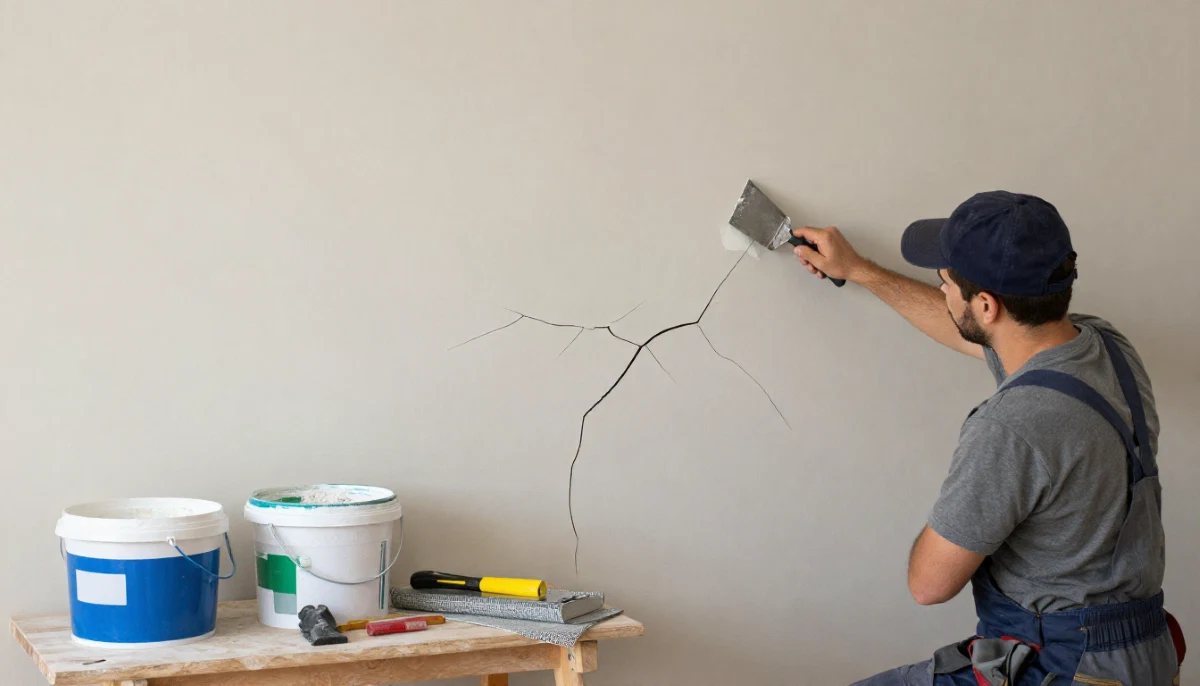
Causes, Fixes & Plaster Crack Repairs – A South African Homeowner’s Guide
🧱 Hairline cracks, map crazing, and structural movement: how to diagnose and repair plaster problems for good.
You’ve noticed a thin crack snaking across your living room wall in Johannesburg, or perhaps a more worrying gap has appeared in the plaster of your Cape Town home. Is it just a cosmetic issue, or a sign of something more serious? Understanding the causes fixes plaster crack repairs South Africa requires knowledge of the different types of cracks and their underlying causes.
This guide is your complete resource for diagnosing and repairing plaster cracks. We provide a detailed plaster crack diagnostic chart to help you identify the crack type – from harmless hairline cracks in plaster and map crazing to more concerning vertical/horizontal cracks and stair-step cracks that may indicate structural movement. We explain the difference between structural vs non-structural cracks and when you need to call in an engineer. We then provide step-by-step instructions for repair, including the right plaster crack repair products to use – from Fillercoat for small cracks to Samson repair mortar for major cracks. We also cover specific issues like expansion joint failure in plaster and the cost to repair damaged walls. Whether you’re dealing with a small blemish or a major failure in Durban, Pretoria, or George, this guide helps you fix it right.
If you’re ready for professional help with crack repair, explore our Services Overview or visit our Plastering Services page to find vetted contractors near you. For more on how we work, see How It Works.
Need Help with Cracked Plaster?
Get free, no-obligation quotes from local plastering specialists who can diagnose and repair your walls permanently.
Find Plaster Repair Experts Near Me
Servicing Johannesburg, Pretoria, Cape Town, Durban, and nationwide
📋 Table of Contents – Plaster Crack Repair Guide
🔍 Why Plaster Cracks: Common Causes
Plaster cracks can arise from a variety of sources, ranging from minor shrinkage to major structural issues.
- Shrinkage: As plaster dries and cures, it loses water and shrinks. If it dries too quickly (due to sun, wind, or high suction), this shrinkage can cause fine, random cracks.
- Settlement: New buildings or extensions can experience slight settlement as the ground compacts under the foundation. This movement can cause cracks in walls.
- Thermal Movement: Temperature changes cause materials to expand and contract. In the Highveld, with its large temperature swings, this can be a significant factor.
- Substrate Movement: Cracking in the underlying brickwork or concrete will inevitably transfer to the plaster.
- Poor Workmanship: Incorrect mix ratios, lack of curing, no movement joints, or over-trowelling can all lead to cracking.
- Impact or Vibration: Heavy impacts or nearby construction vibration can crack plaster.
Read more about our approach on our About Us page or see why clients choose us on our Benefits page.
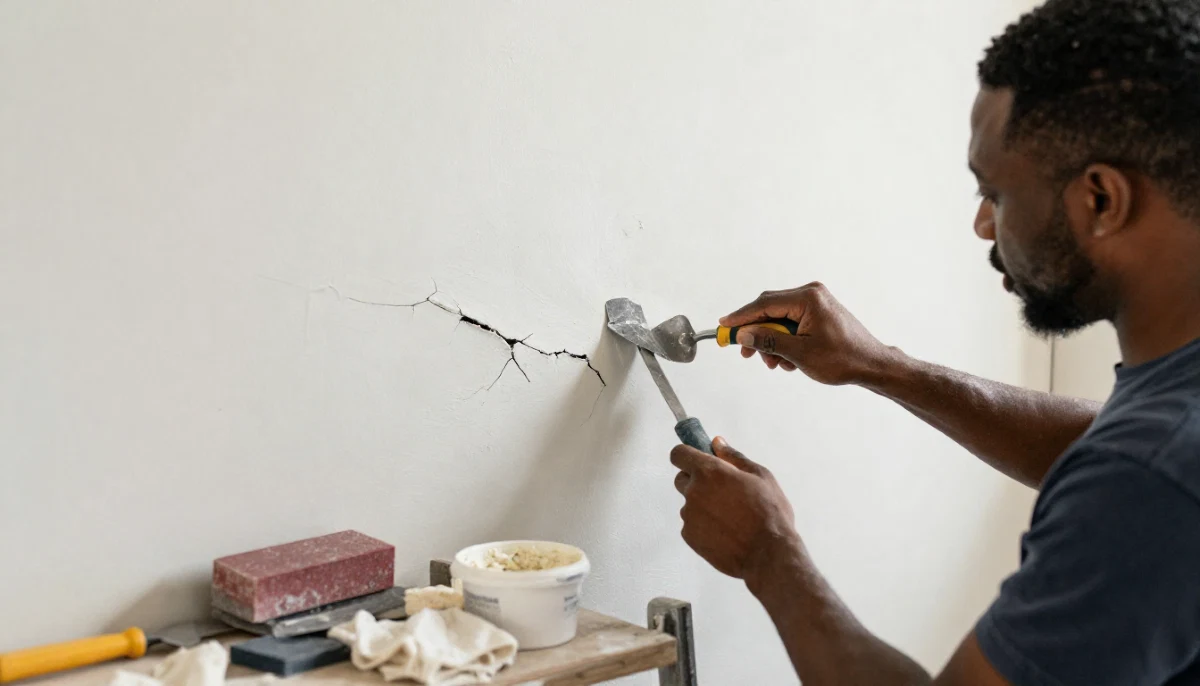
📊 Plaster Crack Diagnostic Chart
Use this chart to identify your crack type and its likely cause. This is the first step in any repair.
| Crack Type | Appearance | Cause | Severity | Repair Method |
|---|---|---|---|---|
| Hairline Cracks | <1mm wide, random pattern | Rapid drying, shrinkage | Cosmetic | Fillercoat, sand, paint |
| Map Crazing | Fine hexagonal pattern | Over-trowelling, rich mix | Cosmetic | Seal with primer, reskim |
| Vertical/Horizontal | Straight line, consistent width | Substrate movement, settlement | Monitor | Samson repair mortar, flexible filler |
| Stair-Step | Follows masonry joints | Structural movement | SERIOUS | Engineer assessment |
| Around Openings | Diagonal from corners | Stress concentration | Moderate | Crack stitching, repair mortar |
| Bulging/Hollow | Visible deformation | Substrate failure | SERIOUS | Cut out, replaster |
〰️ Hairline Cracks & Map Crazing
These are the most common and usually the least serious types of cracks.
- Hairline Cracks: Very fine cracks, often appearing randomly as the plaster dries. They are usually caused by rapid drying or slight shrinkage. They are cosmetic and can be easily repaired.
- Map Crazing: A network of fine cracks forming a pattern like crazed pottery. It’s often caused by over-trowelling the surface, bringing excess cement fines to the top, which then shrink and crack. It can also be from a mix that was too rich in cement.
- Repair: For both, the repair is similar. Use a fine filler like Fillercoat to fill the cracks, sand smooth, prime, and repaint the entire wall for a uniform finish.
📏 Vertical & Horizontal Cracks
Cracks that run in a straight line, especially if they are of a consistent width, need more attention.
- Cause: These are often a sign of movement in the substrate – the wall behind the plaster. This could be due to settlement, thermal expansion, or even minor structural movement.
- Assessment: Monitor the crack over time (e.g., mark the ends and date them). If it grows wider, the movement is ongoing. If it’s stable, it may be an old settlement crack.
- Repair: For stable cracks, widen them slightly, prime, and fill with a strong repair mortar like Samson’s Major Crack Repair mortar. For cracks that are still moving, you may need a flexible filler or professional advice.
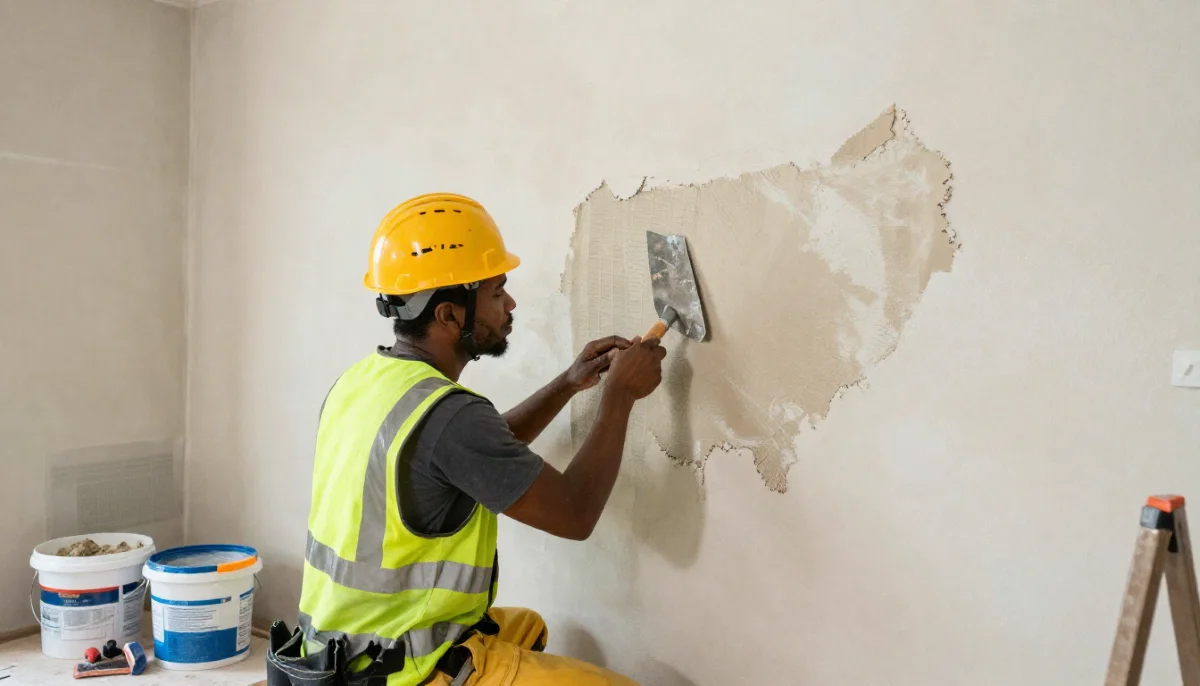
🪜 Stair-Step Cracks & Structural Concerns
These are the most worrying type of crack. They follow the mortar joints in brickwork, creating a pattern like a staircase.
- Cause: This is a classic sign of structural movement – the foundation or wall is moving, causing the brickwork itself to crack along the weak points (the mortar joints). The plaster is simply reflecting this movement.
- Seriousness: HIGH – THIS REQUIRES PROFESSIONAL ASSESSMENT.
- Action: Do not just fill the crack. You must first determine if the movement is ongoing. Call a structural engineer or a reputable builder to assess the foundation and brickwork. The NHBRC provides guidelines on latent defects and structural issues.
⚖️ Structural vs Non-Structural Cracks
Knowing the difference can save you worry and money. Here’s a simple guide.
- Non-Structural Cracks:
- Usually thin (<2mm).
- Often random or in a fine pattern (crazing).
- Isolated to the plaster; the wall behind is sound.
- Not growing over time.
- Examples: hairline cracks, map crazing.
- Structural Cracks:
- Often wider (>2-3mm) and may vary in width.
- Usually straight (vertical/horizontal) or stair-step following joints.
- May be accompanied by other signs: doors/windows sticking, floors sloping, cracks in external brickwork.
- May be growing over time.
- Examples: stair-step cracks, wide vertical cracks.
🛠️ Step-by-Step Crack Repair
For non-structural cracks, follow this professional process.
- ASSESS & PREPARE
- Determine the cause. Is movement ongoing? If unsure, monitor.
- Widen the crack to a minimum of 3-5mm using an angle grinder with a masonry blade or a crack chaser. This creates a key for the filler.
- Undercut the edges slightly so the filler has a wider base inside the crack – this prevents it from popping out.
- Remove all dust, debris, and loose material with a vacuum and wire brush.
- Dampen the inside of the crack with clean water (not saturated).
- PRIME
- Apply a bonding agent or adhesion primer to the inside of the crack. This ensures the filler sticks.
- Allow it to become tacky (not dry) before filling.
- FILL
- Small cracks (<5mm): Use a fine filler like Fillercoat. Apply in thin layers, allowing each to dry.
- Large cracks (>5mm): Use a repair mortar like Samson repair mortar. Build up in layers of 5-10mm, allowing each layer to set before applying the next.
- Deep cracks: Pack the mortar in firmly, ensuring no voids.
- FINISH
- Strike off the filler slightly proud of the wall surface.
- Once set but not fully hard, use a sharp knife or trowel to shave it flush with the wall.
- Once fully dry, sand smooth with fine-grit sandpaper.
- Seal the repaired area with primer.
- Repaint the entire wall for a uniform appearance, as touched-up spots may be visible.
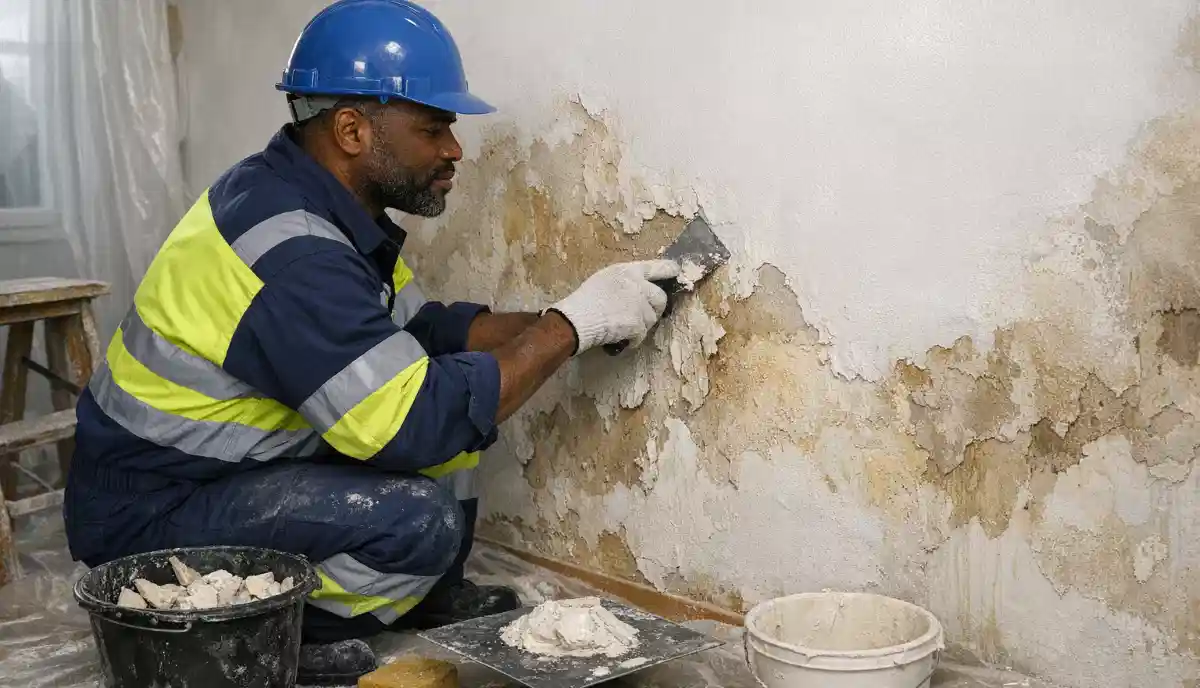
🧴 Plaster Crack Repair Products
Using the right product for the job ensures a lasting repair.
- Fillercoat (Paintwise): An excellent fine-surface filler for hairline cracks and minor imperfections. Easy to sand.
- Samson Repair Mortars: Samson offers a range of repair products:
- General Patching Mortar: For small cracks and blemishes. Easy to apply and sandable.
- Major Crack Repair: A non-shrink, high-strength mortar for cracks >5mm. Ideal for structural repairs.
- Corrosion Blocking: For cracks with rust staining, this product passivates the reinforcement.
- Weber Mason Wall Putty: Can be used for surface repair and achieving a smooth finish over filled cracks.
- Cemcrete: Offers decorative crack repair systems for a seamless finish.
📐 Expansion Joint Failure
If your wall has a long, straight crack exactly where an expansion joint should have been, it’s likely an expansion joint failure.
- Cause: On large walls (over 5-6m), expansion joints are necessary to allow for thermal movement. If they were omitted, or if the joint was poorly detailed (e.g., plaster run across it), the wall will crack at that stress point.
- Repair: The proper repair is to create a controlled joint. This involves cutting a straight line, cleaning it out, and filling it with a flexible sealant designed for movement joints, rather than rigid mortar.
💰 Cost to Repair Cracked Plaster
The cost varies greatly depending on the extent of the damage.
- Minor crack filling (hairline): R300 – R800 per wall (minimum call-out fee).
- Major crack repair (>5mm, per linear metre): R150 – R350 per metre.
- Patch repair (cutting out and replastering a small area): R500 – R1,500 per patch.
- Full wall reskim: R140 – R180 per m² (often the best option for walls with multiple cracks).
For a precise cost to repair cracked plaster per m2 in your area, get a quote from a local specialist. See our main plastering cost guide.
🚨 When to Call an Engineer
Do not attempt to repair cracks yourself if you see any of these signs. Call a structural engineer immediately.
- Cracks wider than 5mm and still growing.
- Stair-step cracks in brickwork (through the joints).
- Doors or windows that are sticking or jamming.
- Visible deflection or bulging in walls.
- Cracks that go through both the plaster AND the underlying brick/concrete.
- Multiple cracks appearing suddenly after events like excavations near foundations.
The SABS (SANS 10400) and NHBRC have standards for structural movement. The NHBRC latent defect period is 5 years for structural defects; plaster cracking may be covered if caused by structural movement.
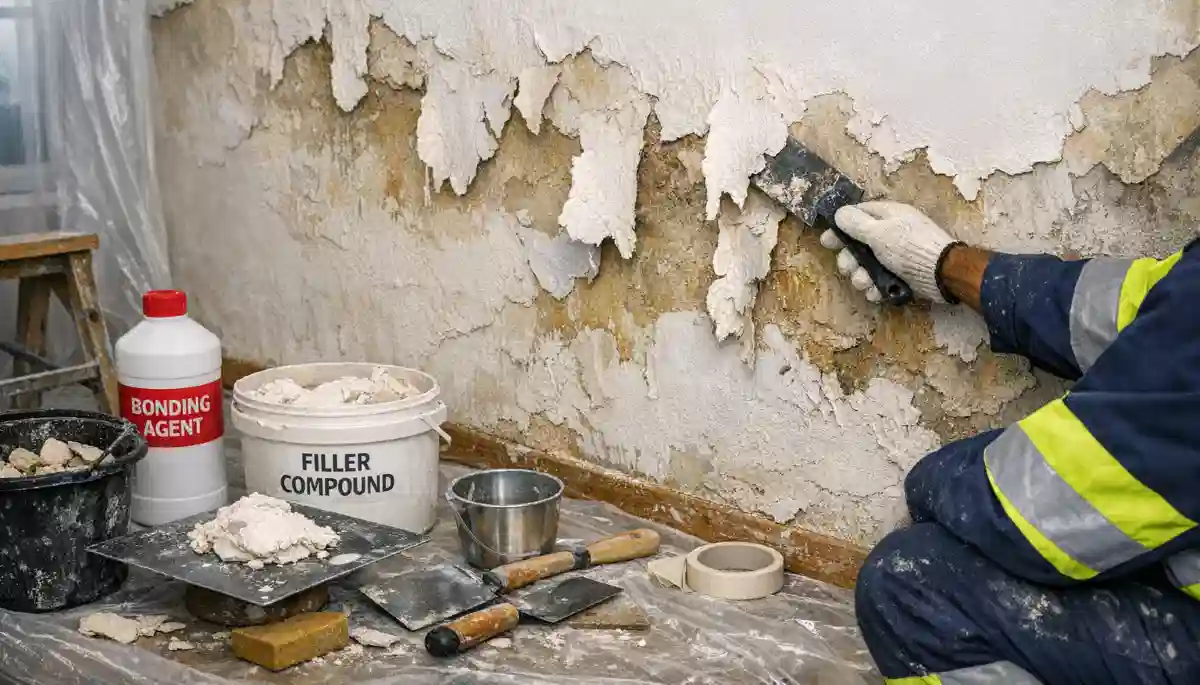
❌ 8 Common Crack Repair Mistakes
- Mistake #1: Just painting over the crack. This never works. The crack will soon reappear. Always fill and prepare properly.
- Mistake #2: Not widening the crack first. Filling a hairline crack without widening it means the filler has no key and will pop out.
- Mistake #3: Using the wrong filler. Using a flexible caulk for a wide crack, or a rigid mortar where flexibility is needed, leads to failure.
- Mistake #4: Not priming. Filler needs a primed surface to bond. Skipping this step leads to delamination.
- Mistake #5: Ignoring the cause. If the underlying movement isn’t addressed, the crack will return. Diagnose first.
- Mistake #6: Overfilling and not sanding. Leaving a lump of filler proud of the wall creates an obvious patch.
- Mistake #7: Not repainting the whole wall. A touched-up spot will look different. Repaint the entire wall for a uniform finish.
- Mistake #8: DIY on serious structural cracks. If you suspect a structural issue, call an engineer. It’s cheaper and safer than a failed repair.
❓ Frequently Asked Questions
How do I fix hairline cracks in plaster walls?
To fix hairline cracks in plaster, widen them slightly with a crack chaser, remove dust, prime, and fill with a fine filler like Fillercoat. Sand smooth once dry, then prime and repaint the entire wall.
What causes plaster cracks after painting?
Plaster cracks after painting causes are the same as cracks in plaster – shrinkage, movement, or poor workmanship. Painting doesn’t cause cracks, but it reveals them.
What is the difference between structural vs non-structural cracks?
Structural vs non-structural cracks – structural cracks are usually wider, straight or stair-step, and may indicate foundation movement. Non-structural cracks are fine, random, and only in the plaster.
How do I repair a large crack in my wall?
For how to repair cracked plaster walls with large cracks (>5mm), widen the crack, undercut edges, prime, and fill with a strong repair mortar like Samson repair mortar for major cracks, applied in layers.
What is expansion joint failure in plaster?
Expansion joint failure in plaster happens when a wall lacks proper movement joints, causing it to crack in a long, straight line. The fix is to cut a proper joint and fill it with flexible sealant.
What is the best product for plaster crack repair?
Plaster crack repair products include Fillercoat for small cracks, Samson repair mortars for larger ones, and Weber Mason Wall Putty for surface finishing. Choose based on crack size.
When should I call an engineer for wall cracks?
Call an engineer if you see stair-step cracks in brickwork, cracks wider than 5mm that are growing, doors jamming, or visible wall deflection. These are signs of structural movement.
How much does it cost to repair cracked plaster?
Cost to repair cracked plaster per m2 varies: minor crack filling R300-R800 per wall, major crack repair R150-R350 per metre, patch repairs R500-R1,500. Full reskimming costs R140-R180/m².
What is map crazing in plaster?
Map crazing is a network of fine cracks forming a pattern on the plaster surface. It’s usually caused by over-trowelling or a mix that was too rich in cement. It’s cosmetic and can be sealed and reskimmed.
Can I repair plaster cracks myself?
Yes, you can repair small, non-structural cracks yourself using the step-by-step guide above. For large, growing, or structural cracks, always hire a professional.
✅ Final Thoughts – Your Crack Repair Action Plan
Dealing with causes fixes plaster crack repairs South Africa starts with correct diagnosis. Use our diagnostic chart to identify the crack type, determine if it’s a cosmetic issue or a structural concern, and then apply the appropriate repair method.
Key takeaways:
- Always diagnose before you repair. Not all cracks are the same.
- Hairline and map cracks are usually cosmetic and easily fixed.
- Straight, wide, or stair-step cracks need monitoring and may indicate structural issues.
- Use the right repair product for the crack size – Fillercoat for small, Samson repair mortar for large.
- Never ignore signs of structural movement. Call an engineer if in doubt.
Your 5-Step Action Plan
- Identify the crack type using our diagnostic chart.
- Monitor if necessary: For straight cracks, mark the ends and check for growth over a few weeks.
- If non-structural: Follow our step-by-step repair guide.
- If structural or uncertain: Call a structural engineer for an assessment.
- Get professional help for complex repairs: Use our quote request to find vetted plastering contractors.
Need Professional Crack Repair?
Get free, no-obligation quotes from vetted plastering specialists who can diagnose and permanently fix your wall cracks.
📞 Call us: 073 138 4726 for personalised assistance
Free site inspections •
Beat-your-quote guarantee •
Our guarantees
📚 Official resources & standards:
- Samson – Repair mortars for major crack repairs and corrosion blocking.
- Weber South Africa – Mason Wall Putty for surface repair.
- Paintwise – Fillercoat for hairline crack filling.
- SABS – SANS 10400 standards for structural movement.
- NHBRC – Latent defect liability and home building manual.
- Cemcrete – Decorative crack repair systems.
Information accurate as of publication. Prices are indicative and may vary by supplier and location. This guide is for informational purposes.
Written by: Innocent T Hanyani
21+ years construction and digital industry experience, ServiceLink SA
Innocent has diagnosed and overseen repairs for thousands of plaster cracks, from minor cosmetic issues to major structural failures. His experience with both traditional repair methods and modern products like Samson mortars ensures this guide provides practical, lasting solutions.
For more detailed information, explore our related guides: wall preparation guide to prevent future cracks, our common mistakes guide to learn what causes cracks, and our contractor selection guide for finding the right professional. For help finding the right professional, see our contractor guide and ensure they have proper liability insurance. Our dispute resolution page is there if needed. For skimming over repaired areas, see our skimming guide. Free inspections and beat-your-quote services are also available.