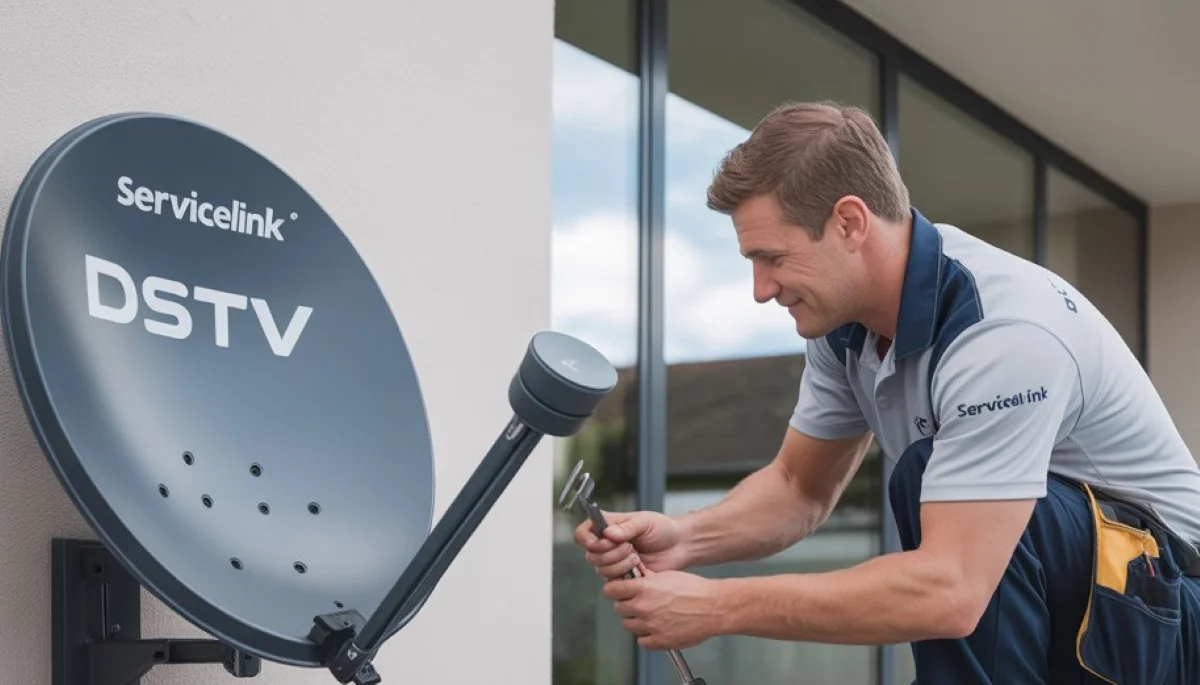
Don’t Risk a DIY Disaster
Get a free, no-obligation quote from a verified, accredited DSTV installer near you.
Professional installation starts from R800 – cheaper than fixing DIY mistakes.
Get Professional Installation Quotes
Servicing Gauteng, North West, Free State, Sandton, Centurion, and across South Africa
DIY vs Hiring a Professional DSTV Installer: Which One Saves You Money Long-Term?
🔧 That R800 you think you’ll save with DIY could cost you R5,000+ in damaged equipment, roof repairs, and endless frustration.
I’ve seen it happen more times than I can count. A homeowner decides to save a few hundred rand by installing their own DSTV dish.
They watch a YouTube tutorial, buy some tools, and spend a Saturday on the roof.
A week later, the signal starts pixelating. Then it cuts out completely during a thunderstorm.
Then they notice water stains on the ceiling because they didn’t seal a roof penetration properly.
Then they call me – and the repair bill is three times what professional installation would have cost.
The question “should i install dstv myself or hire a pro” isn’t just about upfront costs.
It’s about your time, your safety, your equipment warranty, and your long-term viewing experience.
In this guide, I’ll give you the honest truth about diy dstv installation versus hiring a
professional dstv installer. I’ll show you the real costs, the safety risks, the technical challenges,
and help you decide which path is right for YOUR situation.
For a complete step-by-step if you do decide to DIY, read our
how to install DSTV guide.
And for finding a qualified professional, see our
how to choose the right DSTV installer guide.
📋 Table of Contents – DIY vs Professional DSTV Installation Guide
📊 Quick Decision Matrix: DIY or Professional?
Not sure which path is right for you? This quick assessment will help you decide whether
hire dstv installer vs diy is the right choice for YOUR situation.
| Situation | DIY Recommended? | Professional Recommended? | Why? |
|---|---|---|---|
| Single-story home, ground-level dish placement | ⚠️ Possibly | ✅ Better | Safety risk low, but alignment precision still challenging |
| Double-story or complex roof | ❌ No | ✅ Essential | Fall risk and complex mounting requirements |
| Multi-room / Extra View setup | ❌ No | ✅ Essential | Complex wiring and signal splitting requires expertise |
| Explora Ultra or 4K setup | ❌ No | ✅ Essential | Smart LNB and internet integration too complex |
| Existing dish replacement (same position) | ✅ Yes | ⚠️ Optional | No alignment needed, just swap equipment |
| Apartment with balcony mount | ⚠️ Possibly | ✅ Recommended | Body corporate rules, complex alignment |
⚠️ Critical Warning:
If your dish needs to go on a second-story roof or any location where you feel unsafe,
DO NOT attempt DIY. Professional installation costs R800-R1,500. A fall from height can cost your health or your life.
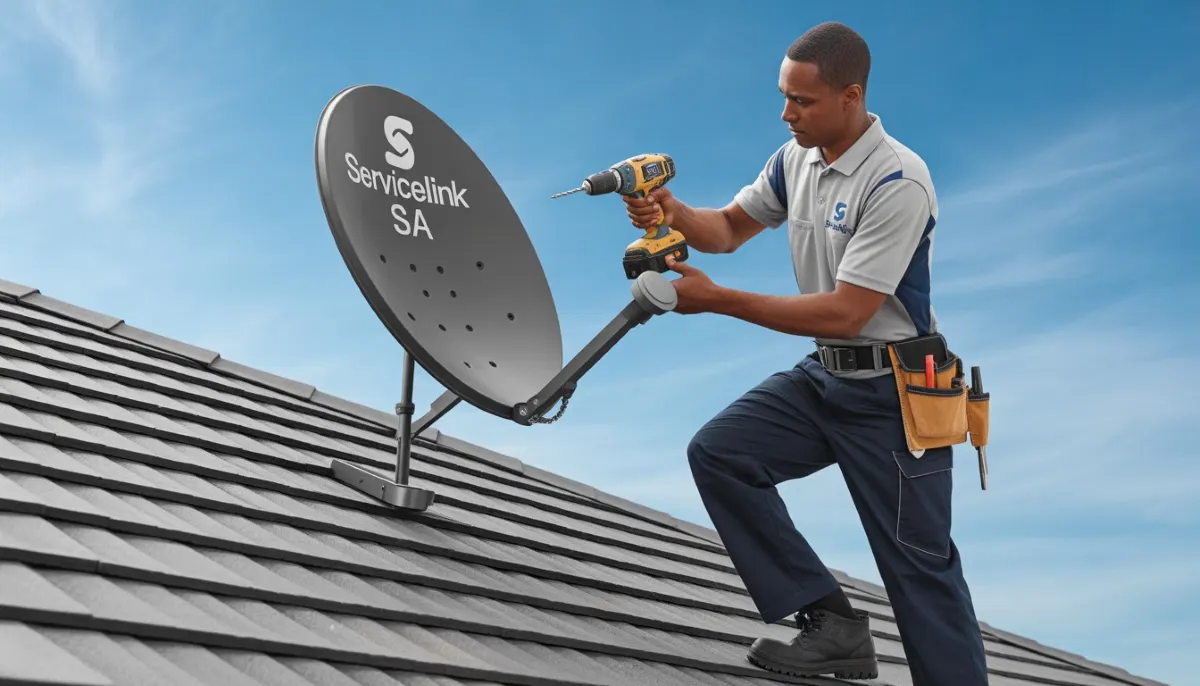
🔧 DIY DSTV Installation: The Brutal Reality Check
Many homeowners dramatically underestimate the complexity of diy dstv installation.
What looks like a simple “point and mount” operation actually involves precision engineering,
technical knowledge, and significant safety considerations.
The Alluring Pros (That Often Turn Into Cons):
-
Initial cost savings (the illusion): Yes, you save on labour costs initially.
A basic professional installation costs R800-R1,500, while DIY seems “free.”
But consider the hidden expenses:- Specialized tools you’ll never use again: R800-R1,500
- Potential equipment damage from incorrect installation: R1,500-R4,000
- Roof or property damage: R2,000-R10,000+
- Medical costs from falls: Potentially life-changing
-
Learning experience (the frustration): While you will learn about satellite technology,
the learning curve is steep and unforgiving. A 2mm misalignment can mean 80% signal loss. -
Flexible timing: You can work when it suits you – but that also means spending your weekend
on a roof instead of relaxing with your family.
The Real Cons (What DIY Guides Don’t Tell You):
- No warranty: If something goes wrong, you’re paying for repairs out of pocket
- Voided equipment warranty: DSTV may not honour warranties on self-installed equipment
- Signal problems: Most DIY installations have poor signal quality that worsens over time
- Roof damage: Improper mounting leads to leaks, structural damage, and expensive repairs
- Safety risks: Falls, electrical hazards, and tool injuries are real and common
- Time investment: 6-12 hours of your weekend vs 2-3 hours while you relax
For a complete list of everything involved in a proper installation, read
what’s included in a standard DSTV installation.
🏆 Professional DSTV Installation: The Smart Long-Term Investment
Hiring a professional dstv installer isn’t an expense – it’s an investment in reliability,
safety, and peace of mind. Here’s what you’re really paying for.
The Pros (Why Professionals Are Worth It):
-
Certified expertise you can’t Google:
- Regional signal variations (Johannesburg vs Durban vs Cape Town)
- Equipment optimization for your specific setup
- Future-proofing for upgrades (Extra View, Explora Ultra)
- Problem prevention before issues affect your viewing
-
Comprehensive protection and warranty:
- Equipment warranty preservation
- 12-month workmanship guarantee
- Full contractors liability insurance
- Ongoing support for post-installation questions
-
Professional tools and equipment:
- Satellite signal meters (R3,000-R8,000 value)
- Professional-grade compression tools
- Safety harnesses and ladders
- Quality cables and weatherproofing materials
- Time savings: 2-3 hours vs your entire weekend
- Peace of mind: Guaranteed signal quality, no safety risks, warranty protection
The Cons (Honest admission):
- Higher upfront cost: R800-R1,500 vs “free” DIY (but remember hidden DIY costs)
- Scheduling: You need to coordinate with the installer’s availability
- Finding a reputable installer: Not all “professionals” are actually qualified
For help finding a reputable professional, read our
how to choose the right DSTV installer guide
and questions to ask before hiring a DSTV installer.
For protection against scams, see how to avoid contractor scams.
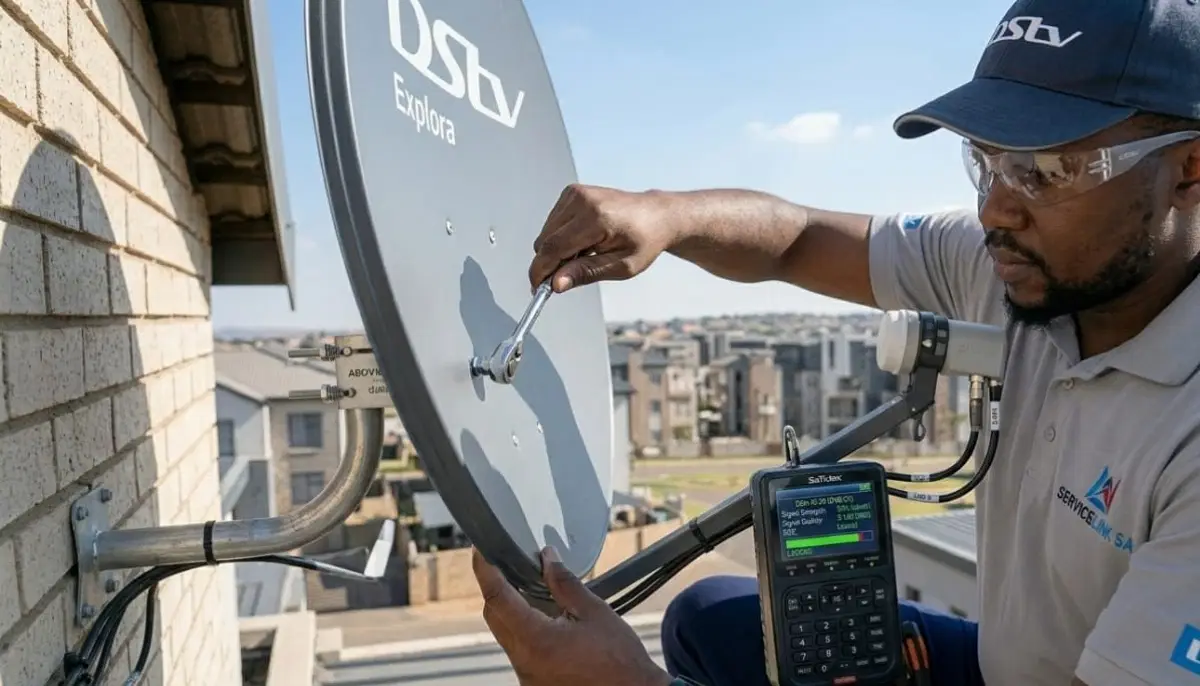
💰 5-Year Cost Comparison: DIY vs Professional Installation
Let’s examine the real financial impact of diy dstv installation versus professional
over a 5-year period. This is where the truth about long-term savings becomes clear.
| Cost Factor | DIY Installation | Professional Installation | 5-Year Impact |
|---|---|---|---|
| Initial Installation | R0 (labour) + R800-R1,500 (tools) | R800-R1,500 | DIY appears cheaper initially |
| Signal Issues & Repairs | R1,500-R3,000 | R0 (under warranty) | Professional saves R1,500+ |
| Equipment Replacement | R1,000-R2,500 | R0-R500 | Professional saves R500-R2,000 |
| Roof/Property Damage | R0-R10,000+ (if unlucky) | R0 (insured) | Professional protects against catastrophic costs |
| Time Investment (value at R200/hour) | R1,200-R2,400 (6-12 hours) | R400-R600 (2-3 hours of your time) | Professional saves R800-R1,800 |
| Frustration & Stress | High (priceless) | None (priceless) | Professional provides peace of mind |
| 5-Year Total (typical) | R3,500 – R7,500+ | R800 – R1,500 | Professional saves R2,000 – R6,000+ |
💡 Key Insight:
The “savings” from diy dstv installation are often illusory.
When you factor in your time, potential repairs, and equipment damage,
professional installation typically costs 60-80% less over 5 years.
For detailed pricing information, read our
DSTV installation cost guide
and installation requirements guide.
Ready to Get a Professional Quote?
Stop risking DIY disasters. Get free, no-obligation quotes from verified, accredited DSTV installers near you.
Compare prices, read reviews, and choose the best professional for your needs.
Free quotes. No obligation. We’ll beat any verified quote.
⚠️ Safety Analysis: Your Life Isn’t Worth R800
We cannot overstate the safety risks of DIY satellite installation.
Here’s what most homeowners don’t consider when weighing hire dstv installer vs diy.
The Real Dangers of Roof Work:
- Fall risks: Even single-story falls can cause serious injury or death. Broken bones, spinal injuries, traumatic brain injuries.
- Structural damage: Walking on roofs without knowledge can crack tiles, damage flashing, or collapse ceiling structures.
- Electrical hazards: Contact with power lines during dish placement or cable routing can be fatal.
- Tool injuries: Power drills, cutting tools, and heavy equipment cause thousands of injuries annually.
- Ladder safety: Most DIYers don’t know proper ladder placement, leading to tip-overs and falls.
⚠️ Real Statistics:
In our years of operation, we’ve been called to multiple emergency situations where DIY installers fell from roofs.
The medical costs alone exceeded R50,000 in each case – not to mention the pain, recovery time, and lost work.
Professional installation is cheaper than a hospital visit.
Equipment Handling Risks:
Satellite dishes are larger and more awkward than they appear:
- 60cm dish: 4-6kg, difficult to handle on a ladder
- 80cm dish: 7-10kg, requires two-person installation
- Mounting hardware: Heavy bolts and brackets that can fall on you or others below
- LNB and cables: Small parts that are easily dropped from height
Professional installers have proper safety equipment: harnesses, stabilizer ladders, hard hats,
and liability insurance. They’re trained to work at height safely.
Read about our contractors liability insurance.
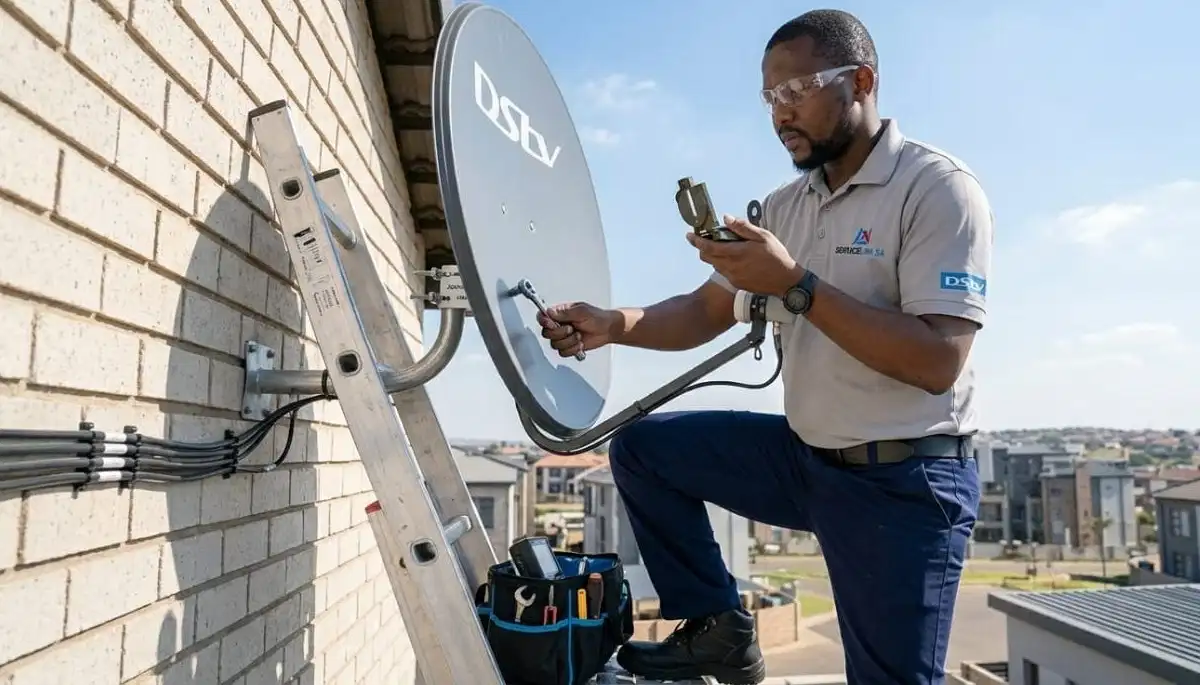
🔬 Technical Complexity: What DIY Guides Don’t Show You
Successful DSTV installation requires mastering multiple technical disciplines simultaneously.
Here’s what YouTube tutorials often leave out.
Precision Satellite Alignment:
Finding the Intelsat 20 satellite isn’t like pointing an antenna. It requires:
- Azimuth: Approximately 45.2° magnetic (varies by location in South Africa)
- Elevation: Approximately 34.8° from horizontal (location-specific)
- LNB Skew: Approximately -7.3° clockwise (critical for signal quality)
- Tolerance: Even 2mm of error can reduce signal by 80%
Complex Cable Management:
Proper cable installation involves more than just running wires:
- Weatherproofing all external connections with self-amalgamating tape
- Proper grounding for lightning protection (most DIYers skip this – dangerously)
- Signal loss minimization through correct cable routing and avoiding sharp bends
- Wall penetration without structural damage or aesthetic issues
- Creating drip loops to prevent water tracking into your home
- Keeping cables away from electrical wiring to prevent interference
LNB Configuration:
For Extra View or Explora installations,
LNB configuration becomes even more complex. Smart LNBs require user band configuration,
and incorrect settings mean no signal on secondary decoders.
Professional installers use satellite meters that cost R3,000-R8,000 – equipment that makes alignment precise
but isn’t cost-effective for one-time use. They also understand regional signal variations across
Gauteng, North West, Free State, and other provinces.
For a complete understanding of the technical requirements, read
DSTV installation requirements
and our complete DIY installation guide.
📋 Real Customer Case Studies: Lessons From the Field
These are real examples from our service records. Names have been changed, but the numbers are accurate.
They illustrate why should i install dstv myself or hire a pro is such an important question.
Case Study 1: The Johannesburg DIY Disaster
The situation: A homeowner in Randburg attempted DIY installation to save R900.
He purchased a basic dish and decoder, spending R1,200 on equipment.
The outcome:
- Fell from ladder, requiring R4,200 in medical treatment
- Damaged decoder during installation: R1,800 replacement
- Poor alignment caused constant signal issues (pixelation, freezing)
- Water ingress from unsealed roof penetration: R3,500 ceiling repair
- Eventually called a professional for reinstallation: R900
- Total cost: R11,600 vs R900 for professional installation initially
Case Study 2: The Pretoria Professional Success
The situation: A family in Centurion opted for professional installation including
Extra View setup for two additional rooms.
The outcome:
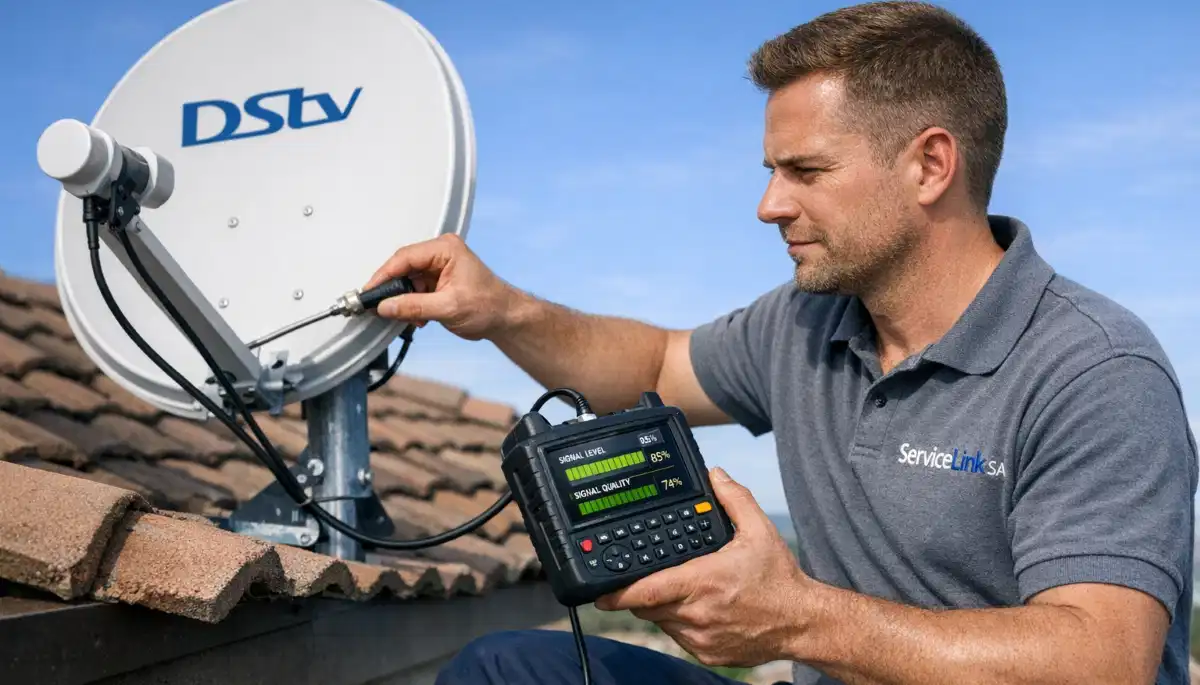
- Perfect signal strength (85%+) from day one
- No issues through 3 years of service
- Free alignment check included in free inspection after storms
- Seamless upgrade to Explora Ultra when needed (discounted labour as existing customer)
- Total cost: R2,200 for installation that’s still performing perfectly after 3 years
The lesson: Professional installation isn’t just about the initial installation.
It’s about warranty protection, ongoing support, and avoiding catastrophic DIY failures.
✅ When DIY DSTV Installation Actually Makes Sense
Despite our professional bias, there ARE specific scenarios where diy dstv installation
might be appropriate. Let’s be honest about when DIY is reasonable.
Appropriate DIY Scenarios:
- Replacing existing equipment with identical models: If you’re swapping a faulty decoder or LNB
with the exact same model, and the dish is already aligned, DIY is fine. - Ground-level installations with clear line of sight: If you can mount the dish on a ground pole
or a low wall (no ladder required), DIY is much safer and more feasible. - Technical professionals with relevant experience: If you’re an electrician, satellite technician,
or have installed systems before, you’re not a typical DIYer. - Very budget-constrained situations: If you genuinely cannot afford professional installation
and are willing to accept the risks, DIY is an option – but proceed with extreme caution.
NEVER DIY in these situations:
- Dish needs to go on a second-story or higher roof
- You have a tiled or fragile roof that cracks easily
- You need Extra View (multi-room) installation
- You’re installing an Explora Ultra or 4K system
- You have any physical limitations or fear of heights
- You live in a complex with a communal system
📋 DIY Pre-Qualification Checklist: Are You Really Ready?
If you’re still considering diy dstv installation, honestly answer these questions.
If you answer “no” to any of them, professional installation is your best choice.
- Do you have experience with satellite or RF systems?
- Are you comfortable working on roofs with proper safety gear?
- Do you own or can you borrow a satellite signal meter (R300-R800)?
- Are you prepared to potentially damage R3,000-R5,000 of equipment?
- Do you have 6-12 hours to dedicate to this project (including troubleshooting)?
- Do you understand how to waterproof roof penetrations correctly?
- Do you know how to properly ground a satellite dish for lightning protection?
- Are you willing to accept that you may still need to call a professional after your DIY attempt?
If you answered “no” to any of the above, request a professional quote.
It’s cheaper than fixing DIY mistakes.
❓ Questions to Ask Before Hiring a Professional DSTV Installer
Not all “professionals” are actually qualified. Use these questions to separate the experts from the cowboys.
Read our full questions to ask a DSTV installer guide for more.
- “Are you MultiChoice-accredited?” – Ask for proof. Accredited installers have completed official training.
- “Do you have public liability insurance?” – Ask for proof. This protects you if they damage your property.
- “Can you provide recent references?” – And actually call them. Ask about quality and punctuality.
- “Will you provide a detailed written quote before starting?” – Verbal estimates are red flags.
- “What warranty do you offer on your work?” – Professional installers offer 6-12 month warranties.
- “Do you include signal testing in the installation?” – They should test and show you the readings.
- “What happens if I experience signal problems after installation?” – They should come back and fix it free under warranty.
For complete guidance on finding a reliable professional, read
how to choose the right DSTV installer
and how to avoid contractor scams.
📦 What’s Included in a Professional DSTV Installation?
When you hire a professional dstv installer through ServiceLink SA,
here’s exactly what you’re getting for your money.
- Site assessment: Technician visits to determine optimal dish placement and identify any obstructions
- Dish mounting: Professional installation of mounting bracket and dish on your roof or wall
- LNB installation: Correct LNB type for your setup (Single, Quad, or Smart LNB)
- Cable routing: Professional-grade RG6 cable, properly secured and weatherproofed
- Precision alignment: Using professional satellite signal meter (not guesswork)
- Decoder connection: Connect and configure your decoder, including software updates
- Signal testing: Verify signal strength and quality (target 85%+)
- Cleanup: Remove all debris, packaging, and drilling dust
- Demonstration: Show you how to use all features (Catch Up, BoxOffice, streaming apps)
- Warranty: 12-month workmanship guarantee on all installation work
For a complete breakdown, read what’s included in a standard DSTV installation.
And for our price guarantee, see Beat Your Quote.
❓ Frequently Asked Questions About DIY vs Professional DSTV Installation
Is DIY DSTV installation worth the risk?
For most homeowners, no. Diy dstv installation carries significant risks: falls from height,
roof damage, voided warranties, and ongoing signal problems. When you factor in the cost of tools,
potential repairs, and your time, professional installation (R800-R1,500) is usually cheaper over 5 years.
Read our 5-year cost comparison above for detailed numbers.
How much does a professional DSTV installer cost?
A professional dstv installer typically costs R800-R1,500 for standard single-view installation.
Extra View (multi-room) costs R1,200-R2,500, and dish realignment costs R450-R900.
These prices include the dish, LNB, cabling, mounting hardware, professional alignment, and a warranty.
Read our complete pricing guide.
What are the risks of DIY DSTV installation?
The main risks of hire dstv installer vs diy include: falls from height (serious injury or death),
roof damage and leaks (R2,000-R10,000+ repairs), voided equipment warranty, poor signal quality requiring professional realignment,
and water damage from unsealed penetrations. Professional installation eliminates all these risks.
Can I install DSTV myself and then call a professional if it doesn’t work?
Yes, but this often costs more than professional installation from the start. Most professionals charge extra
(30-50% more) to fix DIY attempts because they must first diagnose and undo incorrect work.
You’ll typically pay R1,200-R2,000 to fix a DIY installation – more than the original professional cost.
Does DIY DSTV installation void the warranty?
Yes, typically. DSTV’s warranty on decoders and equipment assumes professional installation by an accredited installer.
If you install it yourself and something fails, DSTV may refuse to honour the warranty.
Professional installation preserves your equipment warranty.
What tools do I need for DIY DSTV installation?
For diy dstv installation, you’ll need: adjustable wrench, Phillips screwdriver, spirit level,
power drill with masonry bits, coaxial cable stripper, compression tool for F-connectors, satellite signal meter (R300-R800),
compass or inclinometer app, silicone sealant, UV-resistant cable clips, and a safety harness for roof work.
Tool costs typically total R800-R1,500.
How long does professional DSTV installation take?
Professional installation typically takes 2-3 hours for standard single-view installation.
Extra View (multi-room) takes 3-5 hours depending on how many rooms and cable routing complexity.
DIY installation typically takes 6-12 hours (or multiple weekends) for a first-time installer.
What is the success rate of DIY DSTV installation?
Based on our service records, approximately 70% of DIY DSTV installations have significant signal quality issues
within 6 months. Common problems include poor alignment (50%), water ingress from unsealed penetrations (30%),
and loose connections (20%). Most DIY installations eventually require professional correction.
Does professional DSTV installation include the dish and LNB?
Yes, most professional installation quotes include the satellite dish, LNB, cabling, mounting hardware,
and all necessary connectors. You typically only need to supply the decoder (purchased separately from DSTV or retailers).
Always confirm what’s included in your quote – read our guide.
How do I find a reliable professional DSTV installer near me?
To find a reliable professional dstv installer near you, use ServiceLink SA’s free quote service.
We connect you with verified, accredited installers in your area. Always verify accreditation, insurance,
and references before hiring. Read our guide to choosing an installer
and questions to ask before hiring.
✅ Final Thoughts: Which Path Should You Choose?
After 21 years in this industry, here’s my honest advice on should i install dstv myself or hire a pro:
Hire a professional if:
- Your dish needs to go on any roof higher than a single story
- You have no experience with satellite systems or RF technology
- You don’t own a satellite signal meter
- You want a warranty and peace of mind
- You value your weekend time (2-3 hours vs 6-12 hours)
- You’re installing Extra View or an Explora Ultra system
Consider DIY only if:
- Your dish can be mounted at ground level (no ladder required)
- You have relevant technical experience
- You own or can borrow the necessary tools (including a signal meter)
- You’re replacing existing equipment in the exact same position
- You accept the risks of no warranty and potential signal problems
For most homeowners, the answer is clear: hire a professional.
The upfront cost is modest compared to the risks, time investment, and potential repair costs of DIY.
And with ServiceLink SA’s Beat Your Quote guarantee,
you’re assured of competitive pricing.
Ready to Hire a Professional DSTV Installer?
Stop risking DIY disasters. Get free, no-obligation quotes from verified, accredited DSTV installers near you.
Compare prices, read reviews, and choose the best professional for your needs.
📞 Call us: 073 138 4726 for immediate installation assistance.
Free site inspections •
Beat Your Quote guarantee •
Our guarantees •
Insurance protection
📚 Official resources & standards referenced:
- Official DSTV DIY installation guide – Official self-installation information.
- SABS – South African Bureau of Standards installation safety standards.
Information provided for general guidance. DSTV is a registered trademark of MultiChoice.
Safety statistics based on industry data and ServiceLink SA service records.
Written by: Innocent T Hanyani
Satellite & Home Entertainment Installation Specialist | 21+ Years Experience
Innocent T Hanyani has over two decades of experience in satellite television installations across South Africa.
He has personally supervised thousands of DSTV installations and has seen the full spectrum of DIY successes
and catastrophic failures. His insights help homeowners make informed decisions about installation safety,
cost-effectiveness, and long-term reliability.
For more help deciding between DIY and professional installation, explore our related resources:
how to install DSTV guide,
how to choose the right DSTV installer,
questions to ask a DSTV installer,
installation requirements,
installation costs,
what’s included in installation.
See our service areas page for coverage in your region.