🚨 PLUMBING EMERGENCY? GET HELP NOW
24/7 emergency plumbers available. Call now or request a quote for immediate response. Every minute counts.
📞 Emergency hotline: 073 138 4726 • 24/7 service across Gauteng and South Africa
Emergency Plumbing Services: 7 Things to Do Before the Plumber Arrives (Save Your Home)
💧 From burst pipes to overflowing toilets—your complete guide to surviving a plumbing emergency until professional help arrives
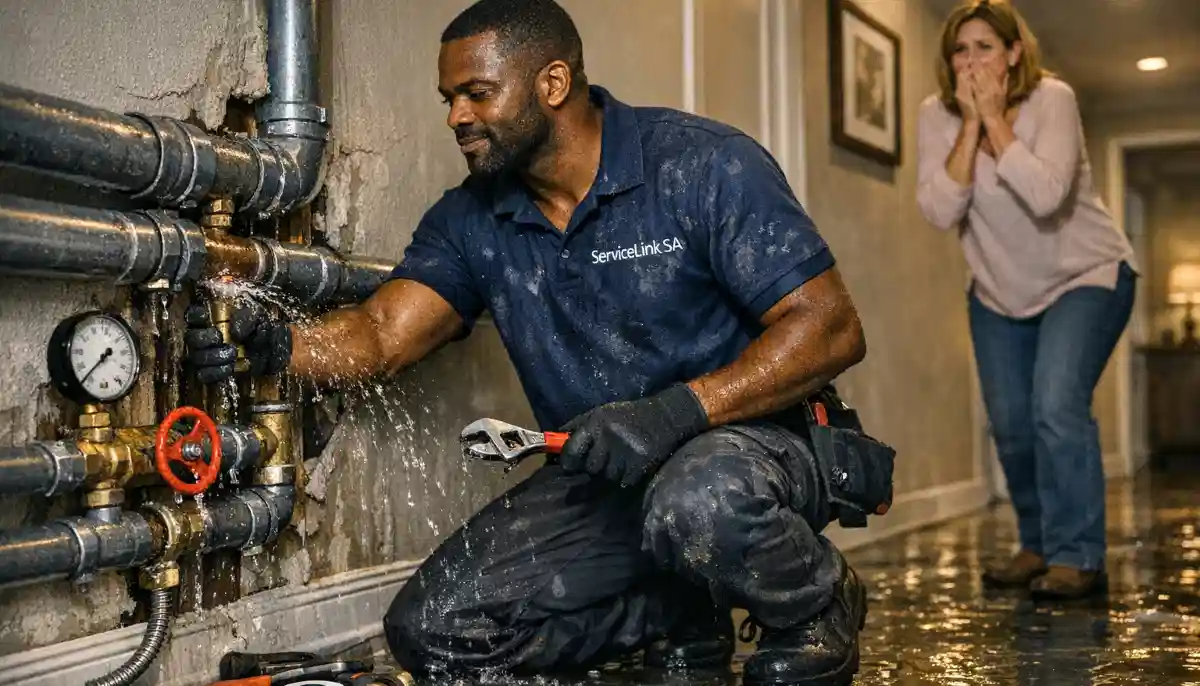
It’s 2am. You’re jolted awake by a sound you’ve never heard before—rushing water, but not from a tap. You stumble to the bathroom and find water spraying from a burst pipe behind the toilet. Within seconds, water is spreading across the floor, seeping under the door, and threatening your carpets, furniture, and family photos.
In that moment, panic is natural. But panic leads to mistakes. And mistakes in a water emergency can turn a R5,000 repair into a R50,000 insurance claim.
I’ve responded to hundreds of these calls over my career. I’ve seen homeowners who knew exactly what to do—they saved thousands by acting correctly in the first five minutes. And I’ve seen others who made costly errors because they didn’t have a plan.
This guide is your emergency plan. You’ll learn exactly what to do before plumber arrives emergency situations demand, how to minimize damage, what NOT to do, and how to ensure you get the right emergency plumbing services when you need them most.
For related emergencies, read our burst pipe emergency guide, same-day plumbing repairs guide, and water leak repair services. Let’s make sure you’re prepared.
📋 Table of Contents – Emergency Plumbing Guide
🚨 Immediate Action: Your 5-Minute Emergency Plan
When a water emergency strikes, follow these steps in order. Every second matters.
🔴
STEP 1: SHUT OFF THE MAIN WATER SUPPLY
Locate your main stop valve (usually near the water meter) and turn it clockwise to close. This single action stops 90% of water damage. Every homeowner MUST know where this valve is before an emergency.
⚡
STEP 2: CUT POWER TO AFFECTED AREAS
Water and electricity are deadly. If water is near electrical outlets, appliances, or your distribution board, switch off the electricity at the main breaker. Never stand in water to reach electrical panels.
📸
STEP 3: DOCUMENT THE DAMAGE
Take timestamped photos and videos of the leak, water levels, and damaged property. This is CRITICAL for insurance claims. Do this before moving anything.
🛡️
STEP 4: PROTECT VALUABLES & CONTAIN WATER
Move furniture, electronics, and valuable items to dry areas. Use towels, buckets, or containers to collect water and prevent spread to carpets and walls.
📞
STEP 5: CALL EMERGENCY PLUMBING SERVICES
Immediately contact a reliable emergency plumber. Explain the situation clearly so they can bring appropriate equipment. Use ServiceLink SA’s 24/7 emergency services.
⚠️ CRITICAL WARNING:
Do NOT attempt to use any water fixtures after shutting off the main supply. Flushing toilets or opening taps can drain your geyser and cause additional damage. Leave everything off until the urgent plumbing repair professional arrives.
📋 Step-by-Step: What to Do Before the Plumber Arrives
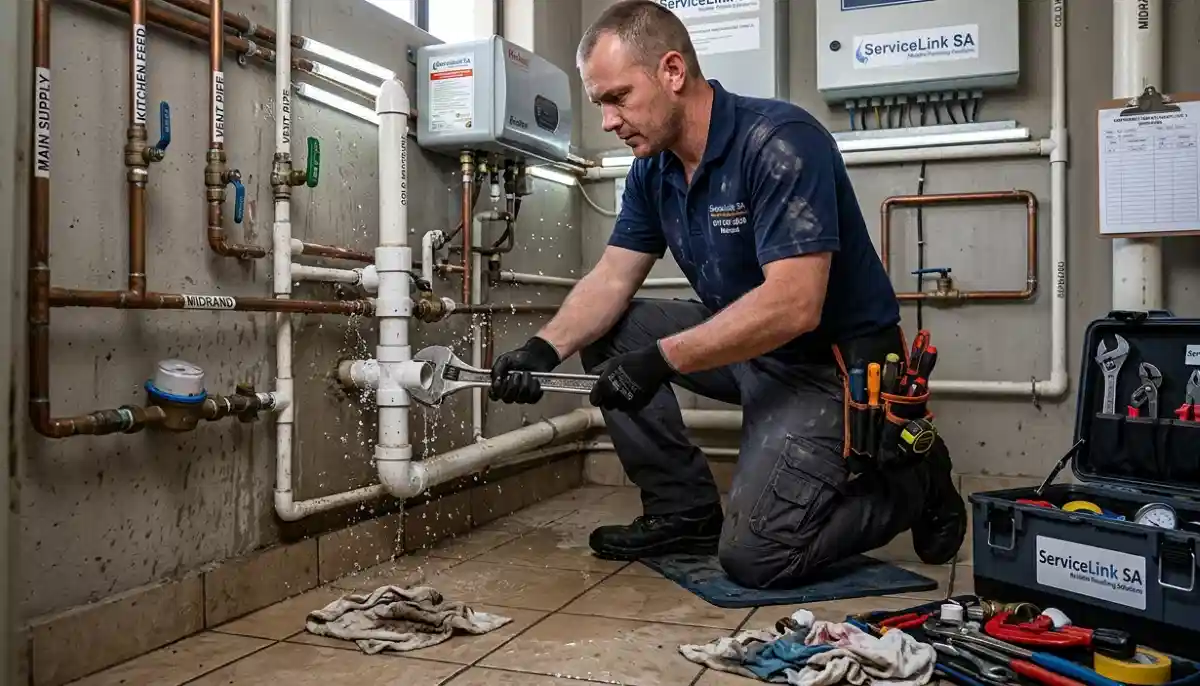
Here’s your detailed checklist for what to do before plumber arrives emergency situations:
✅ 1. Find Your Main Water Shut-Off Valve (Do this NOW, not during an emergency)
If you don’t know where it is, stop reading and find it. It’s usually near the water meter, in the garage, or where the main supply enters your home. Label it clearly. Show every family member.
✅ 2. Turn Off the Water Supply
Turn the valve clockwise until it stops. If it’s stuck, use penetrating oil or call a plumber for help—but in an emergency, use pliers carefully. Don’t force it so hard you break it.
✅ 3. Open Taps to Drain Remaining Water
Once main water is off, open all cold water taps to drain remaining water from pipes. This reduces pressure and minimizes further leaking. But ONLY do this after the main supply is off.
✅ 4. Turn Off the Geyser
If the leak is near your geyser or the geyser itself is leaking, turn off the electricity supply to the geyser at the circuit breaker. A geyser running without water can burn out the element or cause an explosion.
✅ 5. Start Removing Water
Use towels, mops, a wet/dry vacuum, or even buckets to remove standing water. The faster you remove water, the less damage to floors, carpets, and walls.
✅ 6. Move Furniture and Belongings
Move furniture to dry areas. Place aluminum foil or plastic under furniture legs to prevent staining on wet carpets. Remove area rugs and hang them to dry.
✅ 7. Call Emergency Plumbing Services
Provide clear information: type of emergency (burst pipe, geyser leak, etc.), location, what you’ve done (water off, power off), and your address. Stay calm—the dispatcher needs accurate information.
🛠️ Temporary Fixes That Actually Work (While You Wait)
These temporary repairs can significantly reduce damage while waiting for emergency plumbing services:
🔧 Pipe Repair Clamp
Available at hardware stores. Wraps around the pipe and tightens over the leak. Can stop most small to medium pipe leaks temporarily. Keep one in your emergency kit.
🎯 Silicone Repair Tape
Self-fusing tape that bonds to itself when stretched. Wrap tightly around the leak with 50% overlap. Works on wet pipes. Effective for pinhole leaks and small cracks.
🔄 Rubber & Hose Clamp
Cut a piece of rubber from an old inner tube or garden hose. Place over the leak. Secure with hose clamps on both sides of the leak. Old-school but effective.
🧱 Epoxy Putty
Plumber’s epoxy putty (two-part) can be kneaded and pressed into small leaks. Hardens in 5-10 minutes. Works best on small pinhole leaks, not gushing pipes.
💧 Bucket Under the Leak
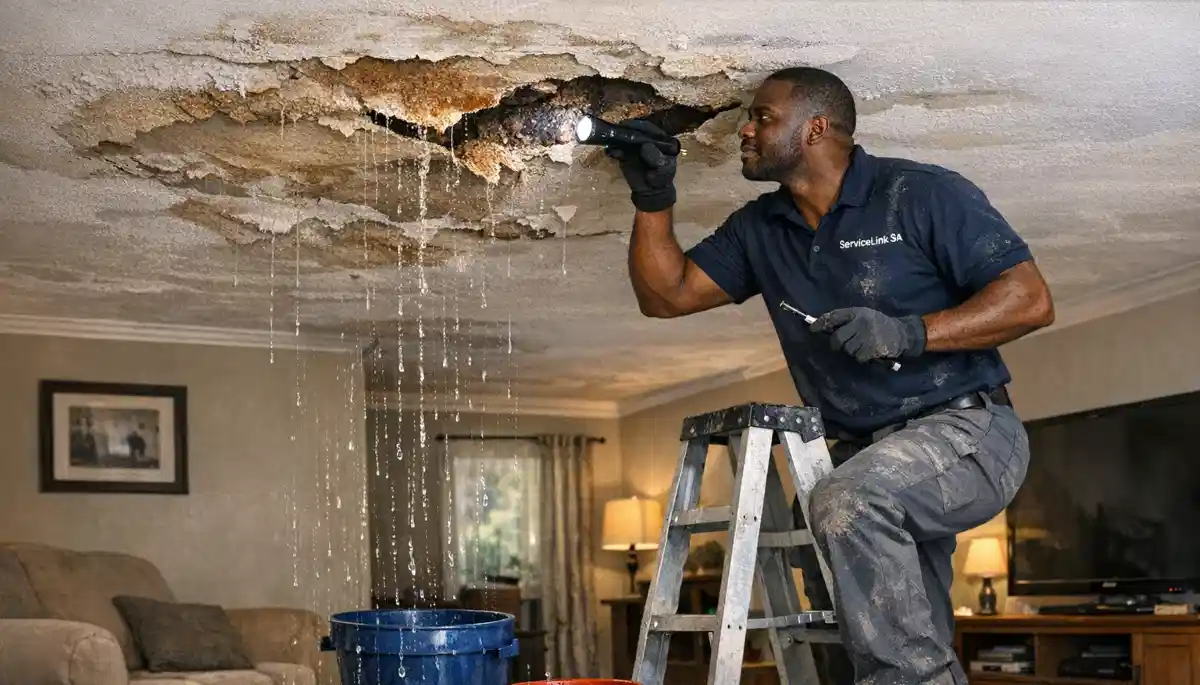
For ceiling leaks, place a bucket (or multiple buckets) under the drip. Punch a small hole in the ceiling at the lowest point of the bulge to let water drain in a controlled way—this prevents ceiling collapse.
🧊 Turn Up the Heat (Frozen Pipes)
If you suspect a frozen pipe, open the affected tap slightly. Apply heat to the frozen section using a hair dryer, heat lamp, or space heater. NEVER use an open flame.
⚠️ SAFETY WARNING:
Never attempt temporary fixes if: the pipe is near electrical sources, you need to use open flames, the leak is in a wall or ceiling (water may be near wiring), or you feel unsafe. Your safety comes first.
Read our how to fix a leaking pipe guide for more detailed temporary repair instructions.
🚨 IN A PLUMBING EMERGENCY RIGHT NOW?
Don’t wait—every minute increases damage. Call us now or request a quote for immediate emergency response.
📞 Or call us immediately: 073 138 4726 • 24/7 availability
🚫 5 Things You Should NEVER Do in a Plumbing Emergency
Mistake #1: Using Chemical Drain Cleaners
Chemical drain cleaners are dangerous to handle, damage pipes, and create hazardous conditions for plumbers. If you’ve used them, tell your emergency plumber immediately. Never use them in an emergency situation.
Mistake #2: Standing in Water to Reach Electrical Panels
Water conducts electricity. If there’s standing water near electrical outlets, appliances, or your distribution board, do NOT enter the water. Call the fire department or your electricity provider to shut off power from outside.
Mistake #3: Ignoring Small Leaks
“It’s just a drip” is the most expensive phrase in plumbing. A small drip today is a burst pipe tomorrow. Every major water emergency starts as a small problem that was ignored.
Mistake #4: Using a Plunger on a Completely Blocked Toilet
If the toilet is already overflowing, plunging can make it worse. Turn off the water supply to the toilet (valve behind the toilet). Then try plunging. If that doesn’t work, call a plumber.
Mistake #5: Waiting to Call “To See If It Gets Better”
Plumbing emergencies do not resolve themselves. They only get worse. The cost of emergency plumbing services is far less than the cost of water damage restoration. Call immediately.
📸 How to Document Damage for Insurance Claims
Proper documentation is critical for successful insurance claims after an urgent plumbing repair. Follow these steps:
- Take photos and videos BEFORE moving anything – Capture the leak source, water levels, damaged belongings, and affected areas. Video walkthroughs are excellent for context.
- Capture timestamps – Use your phone’s timestamp feature. If possible, include a newspaper or clock in some shots to prove when damage occurred.
- Document the water meter reading – Shows how much water was lost.
- Keep all receipts – Emergency plumbing services, water extraction, temporary accommodation, replacement items.
- Get a professional assessment – Your plumber’s report on the cause and extent of damage is valuable for claims.
- Don’t throw away damaged items – Insurance may want to inspect them. Photograph them thoroughly first.
Read our plumbing insurance claim guide for detailed information on filing claims.
📞 How to Find & Call the Right Emergency Plumber
Not all emergency plumbing services are equal. Here’s how to find a reliable emergency plumber fast:
ServiceLink SA connects you with verified, PIRB-registered emergency plumbers 24/7. Read our how ServiceLink SA works and how we protect homeowners pages.
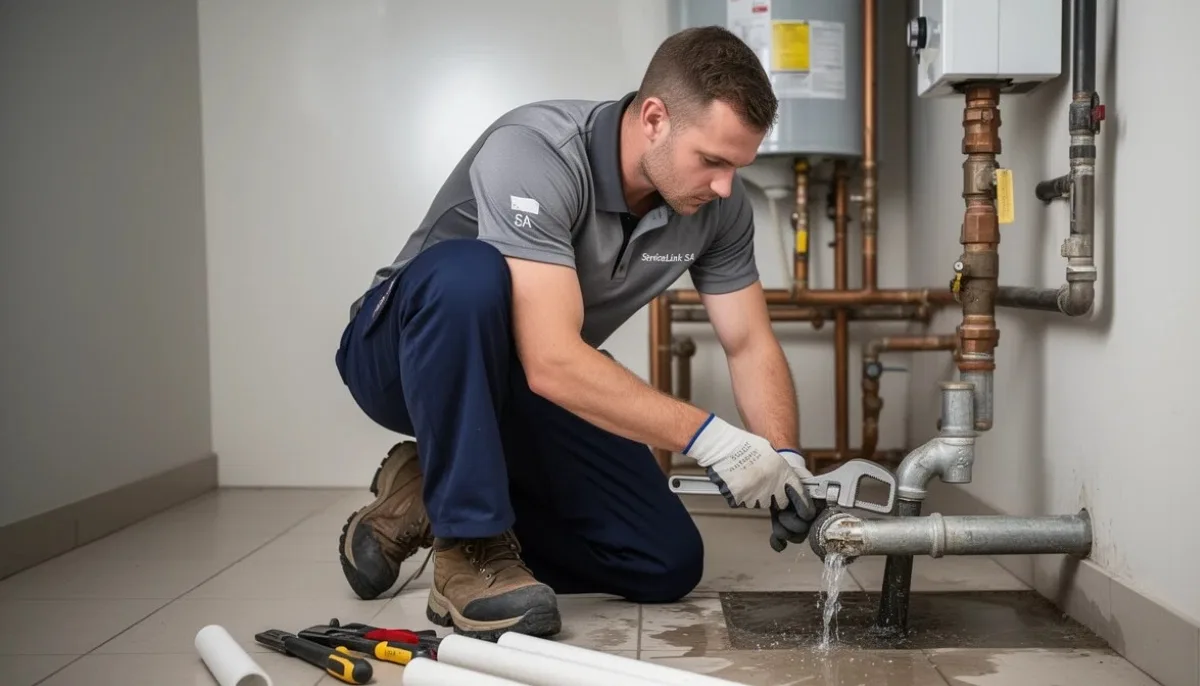
👨🔧 What to Expect When the Emergency Plumber Arrives
Knowing what happens during emergency plumbing services reduces stress:
- Assessment (5-15 minutes) – The plumber will assess the situation, confirm the water is off, and identify the source of the problem.
- Immediate stop-gap (15-30 minutes) – They’ll stop active leaking using temporary measures if needed.
- Repair plan discussion – They’ll explain the permanent repair needed, cost estimate, and timeline.
- Permanent repair (1-4 hours) – Depending on complexity, they’ll perform the permanent fix.
- Testing (15-30 minutes) – They’ll test the repair, check for other issues, and ensure everything is working.
- COC and payment – For permanent repairs, they’ll issue a COC. Discuss payment (emergency services may require payment on completion).
What to have ready: Access to the affected area, good lighting, and any documentation (photos, insurance info). Clear a path to the main water valve and geyser.
📋 Response Guide by Emergency Type
Different water emergency scenarios require slightly different responses:
| Emergency Type | Immediate Action | Don’t Forget |
|---|---|---|
| Burst Pipe | Shut off main water immediately | Turn off electricity near water |
| Geyser Leaking | Turn off geyser electricity at breaker, then shut main water | Don’t touch geyser—it may be hot and under pressure |
| Sewage Backup | Stop using all water immediately. Evacuate area. | Health hazard—wear gloves, mask, boots if you must be in area |
| Overflowing Toilet | Turn off toilet isolation valve (behind toilet) | Don’t keep flushing—it makes it worse |
| Frozen Pipe | Open affected tap, apply gentle heat (hair dryer) | NEVER use open flame (blowtorch, lighter) |
| Gas Leak | Evacuate immediately. Call from outside. | Do NOT use phones, switches, or anything that could create a spark |
For gas leaks, read our gas leak emergency guide (if applicable). For geyser issues, read our geyser leaking repair guide.
🛡️ Preventing Future Plumbing Emergencies
The best emergency plumbing services are the ones you never need. Here’s how to prevent emergencies:
📍 Know Your Main Water Shut-Off Valve
Locate it today. Label it. Show everyone in your home. In an emergency, knowing where it is saves minutes—and thousands in damage.
🧊 Insulate Exposed Pipes
Insulate pipes in attics, garages, and exterior walls to prevent freezing. Read our pipe insulation guide.
🎛️ Install Pressure Reducing Valve
If your water pressure exceeds 600kPa, install a PRV. High pressure stresses pipes and causes bursts.
🔧 Annual Professional Inspection
Schedule annual plumbing inspections to catch problems before they become emergencies. Use our free inspection service.
For a complete maintenance schedule, download our Home Plumbing Maintenance Checklist.
🏠 Navigating Insurance Claims After a Plumbing Emergency
After the urgent plumbing repair is complete, here’s how to handle insurance:
✅ What Insurance Typically Covers
- Sudden, accidental water damage
- Emergency plumbing services to stop the leak
- Water extraction and drying
- Damage to structure (ceilings, walls, floors)
- Damage to contents (furniture, carpets)
- Additional living expenses if home uninhabitable
❌ What Insurance Often Excludes
- Gradual leaks (ignored for months)
- Wear and tear or lack of maintenance
- Work by unlicensed plumbers (no COC)
- Pre-existing conditions
- Mold remediation (if not addressed promptly)
Claim filing tips: File immediately (most policies have deadlines). Provide all documentation (photos, receipts, plumber’s report). Don’t throw away damaged items until insurer inspects. Keep records of all communication.
Read our plumbing insurance claim guide for detailed assistance.
❌ 7 Costly Mistakes Homeowners Make in Plumbing Emergencies
Mistake #1: Not Knowing Where the Main Water Shut-Off Is
This is the #1 mistake. Every minute spent searching adds hundreds of litres of water damage. Find yours today. Label it. Share with family.
Mistake #2: Calling the First Number Without Verification
Some “emergency” numbers are lead generators that charge premium rates. Use verified emergency plumbing services like ServiceLink SA.
Mistake #3: Not Documenting Damage for Insurance
Photos and videos taken before cleanup are your best evidence for claims. Document everything before moving anything.
Mistake #4: Using a Plunger Incorrectly
A flat-bottom plunger (for sinks) won’t seal a toilet. Use the right type. Never plunge after using chemical drain cleaners.
Mistake #5: Ignoring Small Leaks
“It’s just a drip” becomes a burst pipe. Every major emergency starts as a small problem that was ignored.
Mistake #6: Attempting DIY Repairs Beyond Skill Level
A R200 DIY mistake can cause R50,000 in water damage. Know your limits. Call professionals for anything beyond basic tasks.
Mistake #7: Not Asking About Pricing Upfront
Emergency call-out fees vary widely (R500-R1,500+). Always ask for the call-out fee and hourly rate before they arrive.
📋 Real-World Emergency Case Studies
💧 Case 1: The 2am Burst Pipe in Sandton
Location: Sandton | Homeowner: Michael
Emergency: Pipe burst in ceiling at 2am. Water pouring through light fixtures.
Action taken: Homeowner knew main shut-off location (labelled). Shut water off in 45 seconds. Turned off electricity. Called emergency plumbing services.
Outcome: Plumber arrived within 60 minutes. Repaired burst pipe (R2,800). Water damage minimal (dried with towels). Insurance claim: R0 (no damage beyond repair).
Lesson: Knowing the main shut-off valve saved Michael R20,000+ in water damage restoration.
🚽 Case 2: The Saturday Night Sewage Backup
Location: Johannesburg | Homeowner: The Dlamini Family
Emergency: Sewage backing up through floor drain. Entire house at risk.
Action taken: Stopped using all water. Evacuated family to upper floor. Called emergency plumber.
Outcome: Plumber diagnosed main line blockage from tree roots. Cleared with hydro-jetting (R4,500). No sewage entered living areas because family stopped using water immediately.
Lesson: Stopping water use immediately prevented a catastrophic sewage backup into the home.
🧰 Build Your Plumbing Emergency Kit
Prepare this kit now—before you need it. Keep it accessible near your main water shut-off valve.
Essential Items (R300-R500 total)
- Pipe repair clamp (R150-R300)
- Silicone repair tape (R80-R150)
- Plumber’s epoxy putty (R100-R200)
- Adjustable wrench (to turn stubborn valves)
- Bucket (for catching drips)
- Towels or rags
Documentation Items
- List of emergency contacts including ServiceLink SA 073 138 4726
- Insurance policy number and claims phone number
- Photos of main water shut-off valve location
- Photos of geyser and its circuit breaker
- Water meter location
❓ Frequently Asked Questions About Plumbing Emergencies
What qualifies as a plumbing emergency?
A plumbing emergency requires immediate emergency plumbing services when: active water gushing from pipes/ceilings/walls, sewage backing up into your home, complete loss of water supply, geyser actively leaking from the tank, strong sewer gas smell throughout the house, or water near electrical outlets. If you’re unsure, call—better safe than sorry.
What should I do before the plumber arrives in an emergency?
What to do before plumber arrives emergency situations: 1) Shut off main water supply, 2) Turn off electricity in affected areas, 3) Document damage with photos/video, 4) Move valuables to dry areas, 5) Contain water with towels/buckets, 6) Call emergency plumbing services. Never stand in water to reach electrical panels.
How much do emergency plumbing services cost in South Africa?
Emergency plumbing services costs: call-out fees R500-R1,500 (vs R450-R650 standard), hourly rates R700-R1,300 (vs R450-R750 standard). A burst pipe repair costing R1,800 during business hours becomes R3,000-R5,000 after hours. The premium is significant but necessary to prevent catastrophic water damage. Always ask for pricing before they arrive.
Can I fix a burst pipe myself temporarily?
Yes, for accessible pipes you can apply temporary fixes like pipe repair clamps, silicone tape, or epoxy putty. However, permanent urgent plumbing repair should always be done by licensed professionals. Never attempt temporary fixes if the pipe is near electrical sources or if you feel unsafe. Your safety comes first.
Will my home insurance cover emergency plumbing repairs?
Most comprehensive home insurance policies cover sudden and accidental water emergency damage and the cost of emergency plumbing services to stop the leak. However, damage from gradual leaks, lack of maintenance, or known issues may be excluded. Document everything with photos, keep all receipts, and file claims promptly. Read our plumbing insurance claim guide for more.
How quickly can an emergency plumber reach me?
In major metro areas like Johannesburg, Pretoria, and Sandton, emergency plumber services typically arrive within 60-120 minutes. Response times vary by location, time of day, and demand. ServiceLink SA’s network helps reduce wait times by connecting you with the nearest available plumber. Call immediately—don’t wait to see if the problem gets worse.
What should I do if my geyser is leaking?
If your geyser is leaking: 1) Turn off the electricity supply to the geyser at the circuit breaker immediately, 2) Shut off the main water supply, 3) Open hot water taps to relieve pressure, 4) Call an emergency plumber. Do NOT touch the geyser—it may be hot and under pressure. A leaking geyser can burst at any time. Read our geyser leaking repair guide.
How do I find a reliable emergency plumber near me?
To find a reliable emergency plumber near you: 1) Save ServiceLink SA’s number 073 138 4726 before an emergency, 2) Use our platform to connect with verified, PIRB-registered emergency plumbers, 3) Ask for pricing upfront, 4) Verify PIRB registration. Never search during an emergency—you’ll make rushed decisions and potentially overpay.
✅ Final Thoughts: Be Prepared, Stay Calm, Act Fast
A plumbing emergency is one of the most stressful events a homeowner can face. But preparation turns panic into action. Knowing what to do before plumber arrives emergency situations demand can save your home from catastrophic damage.
Key takeaways for South African homeowners:
- Know your main water shut-off valve location TODAY—don’t search during an emergency
- Act within the first 5 minutes to prevent catastrophic water damage
- Document everything for insurance claims before cleanup begins
- Use verified emergency plumbing services through ServiceLink SA for reliable 24/7 response
- Never use chemical drain cleaners or stand in water near electricity
- Build an emergency kit with pipe clamps, tape, and putty
- Prevention is cheaper than emergency repairs—insulate pipes, maintain annually, know your system
Your action plan: Save this guide. Locate and label your main water shut-off valve today. Share the location with everyone in your home. Build your emergency kit. Then, save ServiceLink SA’s emergency number 073 138 4726 in your phone. When disaster strikes, you’ll be ready.
🚨 PLUMBING EMERGENCY? DON’T WAIT
Every minute increases damage. ServiceLink SA connects you with verified 24/7 emergency plumbers for immediate response.
📞 Call now for immediate help: 073 138 4726
Free inspections •
How to choose a plumber •
Insurance verification •
Our guarantees
📚 Official resources & standards referenced:
- Department of Water and Sanitation – Water emergency guidelines and conservation.
- SANS 10400 – South African National Standard for emergency plumbing and installations.
- Plumbing Industry Registration Board (PIRB) – Find registered emergency plumbers.
Information provided for general guidance based on industry research and DWS/SANS standards. In a water emergency, prioritize safety and call professional emergency plumbing services immediately.
Written by: ServiceLink SA Research Team
Emergency Plumbing & Water Damage Specialists
The ServiceLink SA Research Team comprises emergency plumbing experts, water damage restoration specialists, and home service professionals with decades of combined experience responding to water emergency calls across South Africa. Our team works directly with PIRB-registered emergency plumbers, insurance claim specialists, and water damage restoration professionals to bring you accurate, actionable information for what to do before plumber arrives emergency situations. We continuously update our guides to reflect current emergency response practices, insurance requirements, and real-world scenarios.
For more information about emergency plumbing and water damage, explore our related resources:
burst pipe emergency guide,
same day plumbing repairs,
water leak repair services,
how to fix a leaking pipe,
and underground pipe leak repair.
Our how ServiceLink SA works and
how we protect homeowners pages explain our verification process.
See our service areas page for 24/7 emergency coverage in your region.