Ready to Stop Fuel Theft?
ServiceLink SA connects you with verified fuel management system installers. Get free quotes today. If we can’t assist directly, we’ll connect you with our trusted partner companies to carry out your fuel management projects professionally and timeously.
Get Free Fuel Management Quotes
Servicing Johannesburg, Pretoria, Durban, Cape Town, Sandton, and across South Africa
Fuel Management Systems: Stop Diesel Theft with Real-Time Monitoring
📡 From manual dipsticks to cloud-based telemetry—your complete guide to modern fuel security technology
I once worked with a logistics company that had no idea how much fuel they were losing. Their tank had a simple dipstick. Every morning, the site manager would measure the level and record it in a notebook. When fuel went missing, they blamed “evaporation” or “driver error.” They had no way to know that a night-shift employee was stealing 1,000 litres every single week.
Then we installed a fuel management system for theft prevention. Within 48 hours, the system alerted them to a sudden 500-litre drop at 2am on a Sunday. CCTV review showed the employee filling personal containers. The theft stopped immediately. The savings? Over R1 million annually.
Diesel monitoring systems are the single most effective tool for preventing fuel theft. Unlike physical locks that can be cut or cameras that can be avoided, tank telemetry security provides real-time, tamper-evident data. You know exactly how much fuel is in your tank at all times. You get alerts when something is wrong. You have evidence to stop thieves.
This comprehensive technology guide covers everything you need to know about fuel management systems for theft prevention, including real time fuel monitoring to prevent theft, telemetry technology, remote monitoring capabilities, system components, and implementation best practices. For more on fuel management, read fuel management systems in South Africa.
Ready to stop fuel theft dead in its tracks? Let’s dive in.
📋 Table of Contents – Fuel Management Systems Guide
📊 What Is a Fuel Management System?
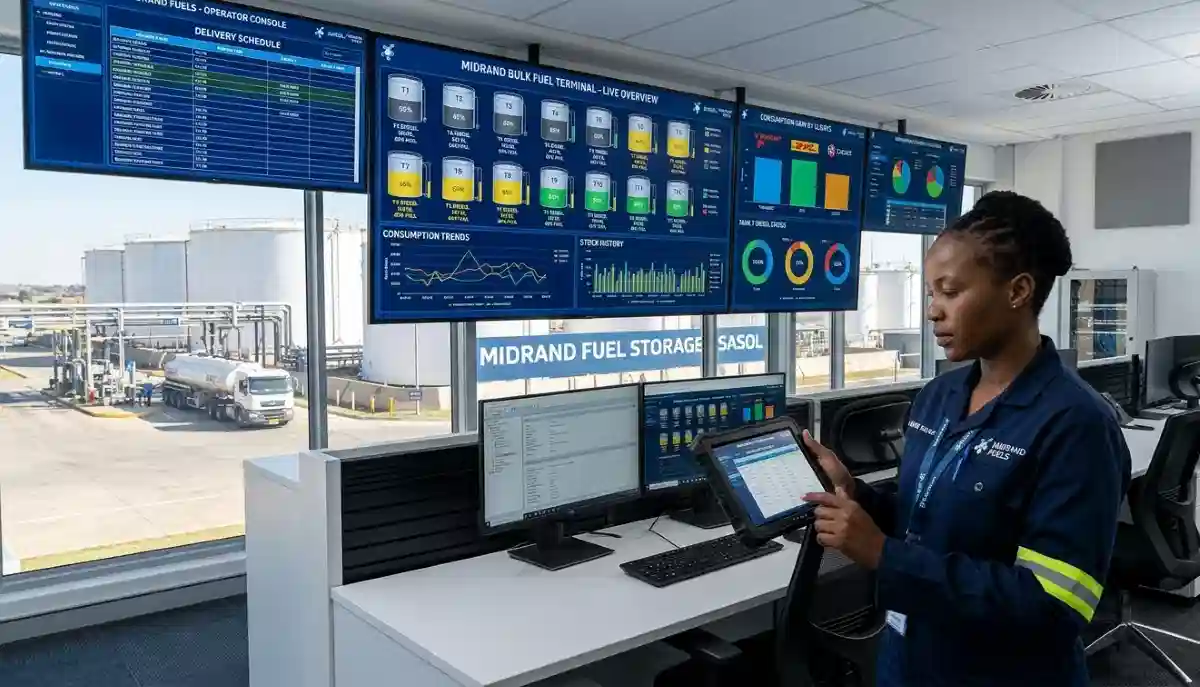
A fuel management system for theft prevention is an electronic system that continuously monitors fuel levels in storage tanks, tracks consumption, and alerts you to unusual activity. It replaces manual dipstick measurements with accurate, real-time data.
⚠️ The Core Concept
A fuel management system is like a security camera for your fuel tank—but better. It doesn’t just record what happens; it analyses data, detects anomalies, and alerts you immediately when something is wrong. You know about theft as it happens, not weeks later.
What a fuel management system provides:
- Real-time tank level monitoring: Know your fuel level at any moment
- Consumption tracking: See how much fuel is used over time
- Theft detection alerts: Instant notifications when unusual activity occurs
- Delivery verification: Confirm fuel received matches delivery ticket
- Access control integration: Track who dispensed fuel and when
- Historical reporting: Analyse consumption patterns and identify anomalies
- Remote access: View tank levels from anywhere via web or mobile app
How fuel management systems differ from manual methods:
| Characteristic | Manual (Dipstick) | Fuel Management System |
|---|---|---|
| Accuracy | ±5-10% (operator dependent) | ±0.1-0.5% (electronic) |
| Frequency | Once daily (if that) | Continuous (every few minutes) |
| Theft detection | Days or weeks later | Immediate (real-time alerts) |
| Evidence for prosecution | Poor (manual records easily disputed) | Excellent (tamper-proof electronic data) |
| Remote access | No (must be on site) | Yes (web or mobile app) |
| Integration with access control | No | Yes |
Why fuel management systems are essential for theft prevention:
- Manual methods miss theft: A dipstick once daily cannot detect theft that happens between measurements
- Manual records are easily falsified: Paper logs can be altered
- No accountability: Without electronic tracking, no one knows who took fuel or when
- Evidence is weak: Manual records are insufficient for prosecution or insurance claims
For more on system basics, read fuel management systems in South Africa.
📡 How Tank Telemetry Security Works
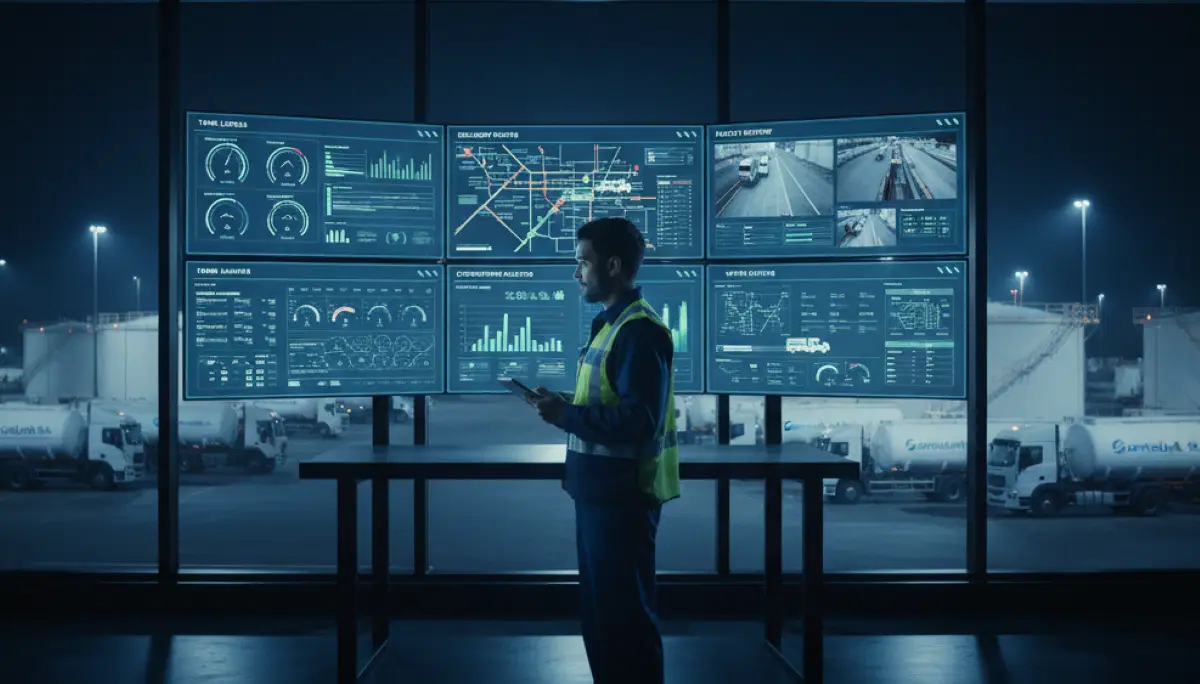
Tank telemetry security uses sensors and wireless communication to monitor fuel levels continuously:
The telemetry process:
- Sensor measures fuel level: A submersible probe or ultrasonic sensor measures the fuel level in the tank
- Data transmitted wirelessly: The sensor sends data via cellular, radio, or satellite to a cloud server
- Software analyses data: The cloud platform processes the data, calculating volume, consumption rates, and detecting anomalies
- Alerts triggered: If unusual activity is detected (sudden drop, out-of-hours usage), alerts are sent immediately
- User views data: You access the data via web dashboard or mobile app from anywhere
Types of telemetry sensors:
| Sensor Type | How It Works | Accuracy | Best For |
|---|---|---|---|
| Submersible probe | Pressure sensor submerged in fuel | ±0.1-0.2% | Most tanks (most common) |
| Ultrasonic sensor | Sound waves from top of tank | ±0.2-0.5% | Tanks where submersible not possible |
| Radar sensor | Radar waves from top of tank | ±0.1-0.3% | Large tanks, harsh environments |
| Capacitance probe | Measures electrical capacitance | ±0.5-1% | Small tanks, cost-sensitive applications |
Communication methods:
- Cellular (3G/4G/LTE): Most common. Uses mobile networks. Requires signal coverage.
- Radio (LoRa, Zigbee): Short-range. Good for sites with multiple nearby tanks. Lower ongoing costs.
- Satellite: For extremely remote sites without cellular coverage. Higher cost, slower updates.
- Ethernet/WiFi: For sites with existing network infrastructure. No cellular costs.
Data transmission frequency:
- Real-time mode: Data sent every 1-5 minutes. Best for theft detection. Higher data usage.
- Standard mode: Data sent every 15-60 minutes. Good for monitoring. Moderate data usage.
- Economy mode: Data sent every 1-4 hours. Basic monitoring only. Lowest data usage.
- Event-driven: Sends data only when significant changes occur (theft, delivery).
Telemetry security features:
- Encrypted transmission: Data is encrypted to prevent interception
- Tamper detection: Sensors detect if someone tries to remove or disable them
- Heartbeat monitoring: System alerts if a sensor stops communicating (possible sabotage)
- Data logging: All data is stored permanently and cannot be altered
For more on telemetry, read fuel management systems.
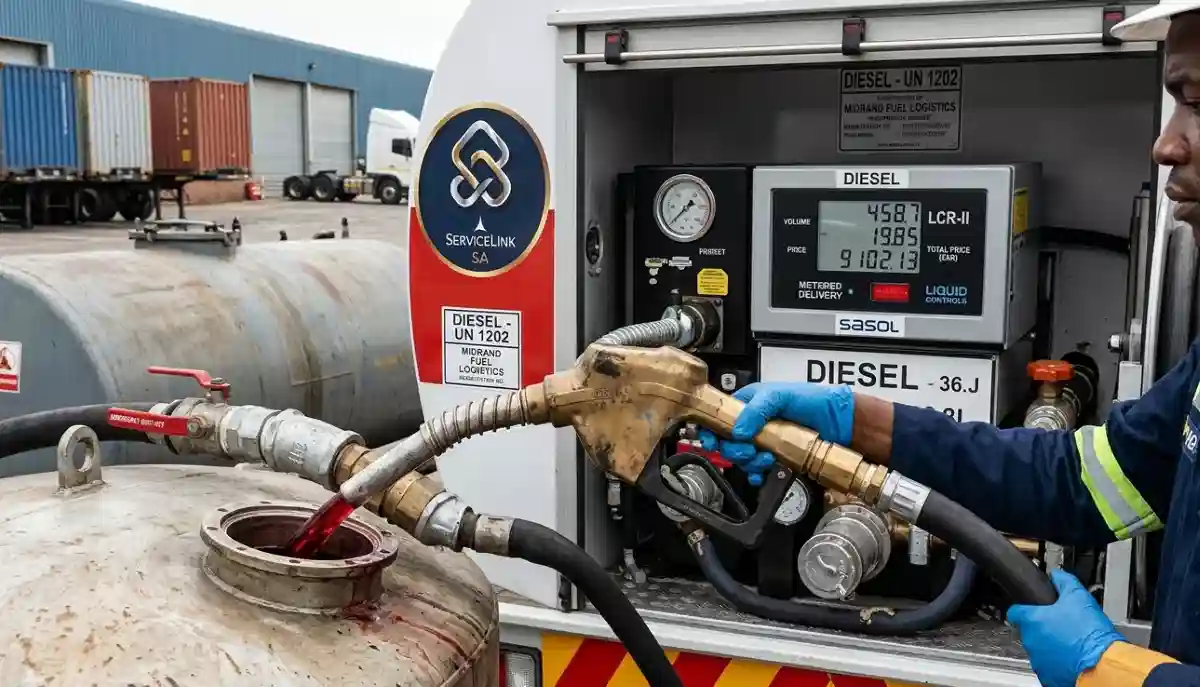
⚡ Real-Time Fuel Monitoring to Prevent Theft
Real time fuel monitoring to prevent theft is the most powerful feature of modern fuel management systems:
⚠️ Why Real-Time Matters
Without real-time monitoring, you discover theft days or weeks later. By then, the fuel is gone, the thief is long gone, and evidence has been lost. Real-time alerts let you catch theft in progress and stop it immediately.
How real-time monitoring detects theft:
- Sudden level drops: A rapid decrease in fuel level when no authorised dispensing should be happening
- Out-of-hours activity: Fuel level changes outside normal operating hours
- Unusual consumption rates: Fuel being dispensed faster than normal pump rates (siphoning or bulk theft)
- Negative trends: Gradual theft over time detected by consumption exceeding legitimate use
- Delivery discrepancies: Tank level increase doesn’t match delivery ticket amount
Real-time monitoring capabilities:
| Capability | What It Does | Theft Prevention Benefit |
|---|---|---|
| Live tank level display | Shows current fuel level | Know instantly if fuel is missing |
| Consumption rate tracking | Calculates fuel usage over time | Detect unusual consumption patterns |
| Instant alerts | Sends notifications for anomalies | Respond to theft as it happens |
| Historical graph | Shows level history over time | Identify theft patterns and times |
| Delivery verification | Confirms fuel received | Prevent supplier short-delivery |
| Access control integration | Links dispensing to user ID | Identify who dispensed fuel |
Example: Real-time theft detection in action
A logistics depot with 50,000L tank installed a fuel management system. On the third night, the system sent an alert at 2:17am: “Tank level dropped 1,500L in 12 minutes. Unusual consumption detected.” Security checked CCTV and found an employee filling personal containers. The theft was stopped, and the employee was dismissed. Estimated theft prevented: 10,000L+ annually (R200,000+).
Alert response times:
- SMS alert: Delivered within 10-30 seconds of detection
- Email alert: Delivered within 1-2 minutes
- App push notification: Delivered within 5-15 seconds
- Dashboard update: Live (continuous)
For more on real-time monitoring, read fuel management systems.
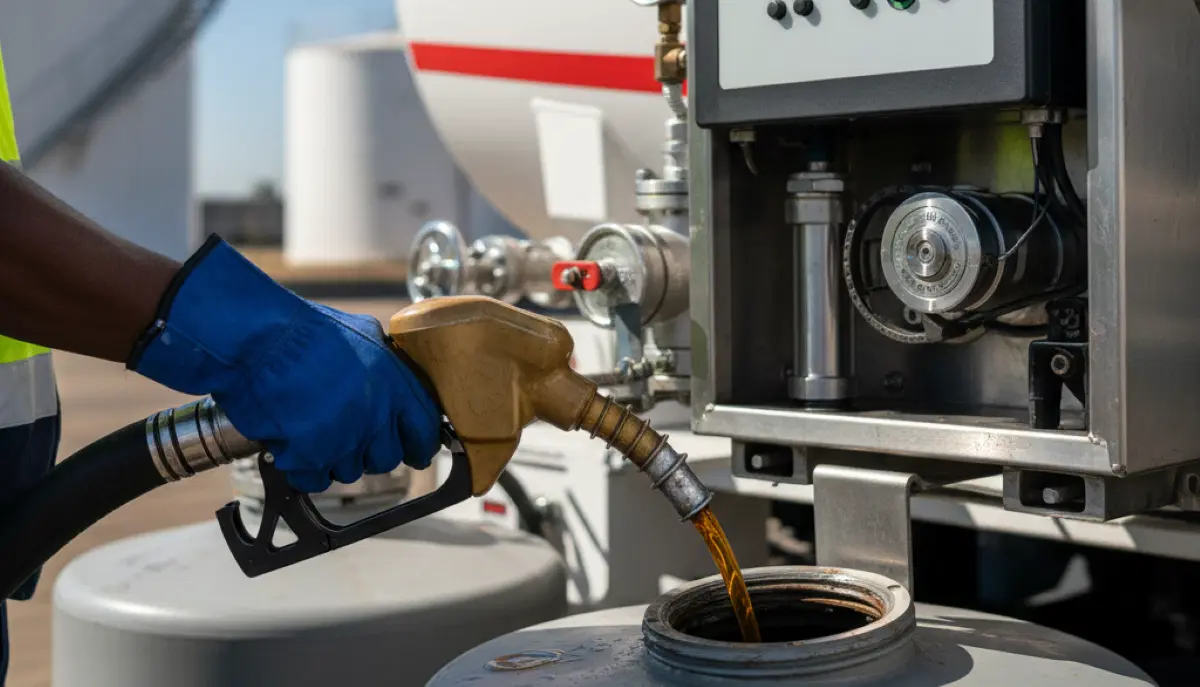
🔑 Key Features of Fuel Management Systems
Effective fuel management systems for theft prevention include these critical features:
1. Real-time level monitoring:
- Continuous tank level measurement (updates every 1-60 minutes)
- Accurate to ±0.1-0.5% of tank capacity
- Graphical display of level over time
- Historical data storage (minimum 12 months)
2. Theft detection alerts:
- Sudden drop alert (unexplained rapid level decrease)
- Out-of-hours usage alert (activity outside authorised times)
- Consumption anomaly alert (usage higher than normal patterns)
- Negative consumption alert (level increase without delivery record)
- Sensor tamper alert (if sensor is disabled or removed)
3. Delivery verification:
- Compare expected level increase (delivery ticket) with actual level increase
- Alert if delivery quantity doesn’t match level change
- Track delivery history and supplier performance
- Generate delivery discrepancy reports
4. Access control integration:
- Link dispensing to individual user IDs
- Record who dispensed, when, and how much
- Set time restrictions (only allow dispensing during authorised hours)
- Set volume limits (max litres per user or per session)
- Generate user activity reports
5. Reporting and analytics:
- Consumption reports (daily, weekly, monthly)
- Exception reports (unusual activity)
- Delivery reports (all deliveries with verification)
- User activity reports (who dispensed what)
- Inventory reconciliation reports
- Exportable data (Excel, CSV, PDF)
6. Remote access:
- Web-based dashboard (access from any computer)
- Mobile app (iOS and Android)
- Multi-site view (see all tanks from one screen)
- Role-based access control (different permissions for different users)
- Real-time alerts via SMS, email, or push notification
7. Integration capabilities:
- Fuel management system integration (comprehensive fuel tracking)
- Fleet management system integration (match fuel to vehicle odometer)
- Building management system integration (central monitoring)
- ERP integration (automated fuel cost allocation)
- CCTV integration (trigger recording on theft alerts)
Feature comparison by system type:
| Feature | Basic System | Standard System | Advanced System |
|---|---|---|---|
| Real-time level monitoring | ✅ 15-60 min updates | ✅ 5-15 min updates | ✅ 1-5 min updates |
| Theft alerts | ⚠️ Basic (email only) | ✅ SMS + email | ✅ SMS + email + push |
| Delivery verification | ❌ No | ✅ Manual | ✅ Automated |
| Access control integration | ❌ No | ✅ Basic | ✅ Advanced |
| Mobile app | ❌ No | ✅ Basic | ✅ Full featured |
| API integration | ❌ No | ⚠️ Limited | ✅ Full |
| Typical cost (installed) | R15,000-R30,000 | R30,000-R60,000 | R60,000-R120,000+ |
For more on system features, read fuel management systems.
Ready to Install a Fuel Management System?
ServiceLink SA connects you with verified fuel management system installers. Get free quotes today. If we can’t assist directly, we’ll connect you with our trusted partner companies to carry out your fuel management projects professionally and timeously.
Get Free Fuel Management Quotes
Real time fuel monitoring to prevent theft—get professional installation from certified specialists.
🔧 System Components
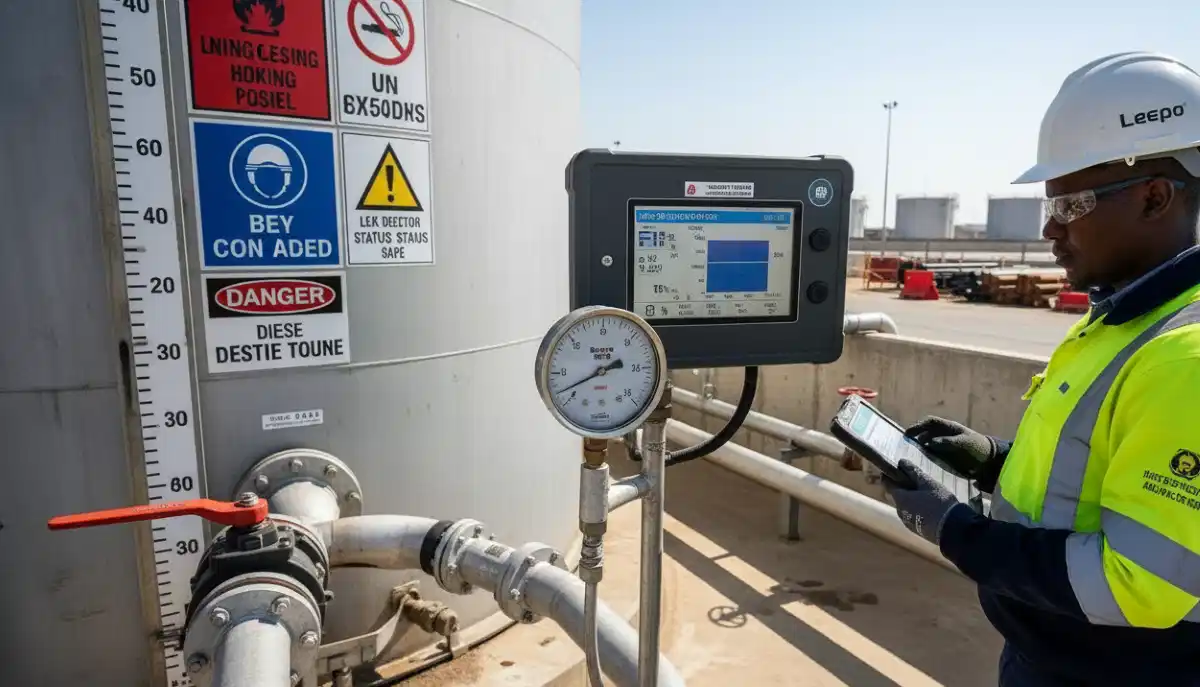
A complete diesel monitoring system includes several key components:
1. Tank level sensor (the “telemetry” device):
- Submersible probe installed inside the tank
- Measures fuel level continuously
- Accuracy: ±0.1-0.5% of tank capacity
- Transmits data via cellular, radio, or satellite
- Battery backup for power outages
- Cost: R5,000-R15,000 per tank
2. Gateway / control unit:
- Receives data from sensors
- Transmits data to cloud server
- May include local display for on-site viewing
- Can manage multiple sensors
- Cost: R8,000-R20,000 per site
3. Cloud software platform:
- Receives, stores, and analyses data
- Generates alerts and reports
- Provides web and mobile access
- Manages user permissions
- Cost: R5,000-R20,000 annually
4. Access control system (optional but recommended):
- Keypad or card reader at dispensing point
- Individual user authentication
- Integration with tank monitoring
- Records who dispensed and how much
- Cost: R10,000-R30,000 per dispensing point
5. Flow meter on dispensing pump (optional):
- Measures fuel dispensed at point of use
- Provides additional theft detection (compare tank level drop to dispensed volume)
- Integration with access control
- Cost: R5,000-R15,000 per dispensing point
Complete system cost breakdown:
| Component | Cost Range | Notes |
|---|---|---|
| Tank level sensor (per tank) | R5,000-R15,000 | Submersible probe recommended |
| Gateway / control unit | R8,000-R20,000 | One per site |
| Installation labour | R5,000-R15,000 | Per site |
| Software platform (annual) | R5,000-R20,000 | Per site |
| Access control (optional) | R10,000-R30,000 | Per dispensing point |
| Flow meter (optional) | R5,000-R15,000 | Per dispensing point |
| Total (basic system, 1 tank) | R23,000-R70,000 | One-time + annual software |
For more on components, read fuel management systems.
🔍 How Systems Detect Theft
Fuel management systems for theft prevention use multiple methods to detect theft:
1. Sudden drop detection:
The system monitors for rapid, unexplained decreases in fuel level. If the tank level drops faster than the maximum possible pump rate, it triggers an alert. This catches siphoning or bulk theft where thieves extract fuel quickly.
Example: Tank level drops 500L in 5 minutes. Maximum pump rate is 100 L/min. This is impossible by authorised dispensing—definitely theft.
2. Out-of-hours usage detection:
The system knows your authorised operating hours (e.g., 6am-6pm). Any fuel level change outside these hours triggers an alert. This catches employees or outsiders stealing after hours.
Example: Tank level drops 1,000L at 2am on Sunday. No authorised dispensing should occur. Alert sent immediately.
3. Consumption anomaly detection:
The system learns your normal consumption patterns. When actual consumption deviates significantly from expected, it triggers an alert. This catches gradual theft or unusual usage.
Example: Normal daily consumption is 4,000L. Today, consumption is 5,500L (+1,500L). Alert triggered for investigation.
4. Delivery discrepancy detection:
The system compares the expected level increase from a delivery ticket with the actual level increase after delivery. If they don’t match, it triggers an alert. This catches supplier short-delivery or theft during delivery.
Example: Delivery ticket says 10,000L delivered. Tank level increased by only 9,200L. Discrepancy of 800L (8%). Alert triggered.
5. Negative consumption detection:
The system alerts if tank level increases without a recorded delivery. This catches unauthorised fuel additions (unlikely) or sensor issues.
6. Sensor tamper detection:
The system detects if the level sensor is disconnected, disabled, or malfunctioning. It sends a “sensor tamper” alert. This catches thieves trying to disable monitoring before stealing.
Example: Sensor stops communicating at 1am. Alert sent. Security investigates.
Detection method comparison:
| Detection Method | What It Catches | Response Time | Effectiveness |
|---|---|---|---|
| Sudden drop detection | Bulk theft, siphoning | Immediate (seconds) | Very high |
| Out-of-hours detection | After-hours theft | Immediate (seconds) | Very high |
| Consumption anomaly | Gradual theft, unusual usage | Daily/weekly | High |
| Delivery discrepancy | Supplier short-delivery | Immediate | Very high |
| Sensor tamper | Attempts to disable monitoring | Immediate (seconds) | Very high |
For more on theft detection, read fuel management systems.
🔔 Alerts and Notifications
Timely alerts are the key to effective remote monitoring for theft prevention:
Types of alerts:
- Sudden drop alert: Rapid unexplained level decrease
- Out-of-hours usage alert: Activity outside authorised hours
- Low level alert: Tank level below threshold (reorder fuel)
- High level alert: Tank level above threshold (potential overfill)
- Delivery discrepancy alert: Delivered quantity doesn’t match level increase
- Consumption anomaly alert: Usage significantly higher than normal
- Sensor tamper alert: Sensor disconnected or malfunctioning
- Communication loss alert: No data received from site
Alert delivery methods:
| Method | Delivery Time | Best For | Pros | Cons |
|---|---|---|---|---|
| SMS | 10-30 seconds | Immediate response needed | Fast, works on any phone | Cost per message, character limit |
| 1-2 minutes | Detailed alerts, record keeping | Detailed, free, searchable | Slower, may be missed | |
| Push notification | 5-15 seconds | Mobile users | Fast, interactive | Requires app installation |
| Dashboard indicator | Live | Users actively monitoring | Visual, detailed | Requires active viewing |
| API/webhook | Seconds | Integration with other systems | Automated response | Requires technical setup |
Alert configuration best practices:
- Set up multiple alert recipients (not just one person who might be unavailable)
- Use different alert methods for different severity levels (SMS for critical, email for informational)
- Define escalation procedures (if first responder doesn’t acknowledge, escalate to next person)
- Test alerts regularly to ensure delivery
- Review alert logs to fine-tune thresholds (avoid false alarms)
- Document alert response procedures
Alert thresholds to configure:
- Sudden drop threshold: How many litres in how many minutes triggers alert (e.g., 500L in 10 minutes)
- Out-of-hours window: Define authorised hours (e.g., 6am-6pm weekdays, no weekends)
- Low level threshold: When to alert for reorder (e.g., 20% of capacity)
- High level threshold: When to alert for potential overfill (e.g., 90% of capacity)
- Consumption anomaly: Percentage deviation from normal (e.g., 20% above average)
- Delivery discrepancy: Percentage difference between ticket and actual (e.g., 5% difference)
For more on alerts, read fuel management systems.
📱 Remote Monitoring Capabilities
Remote monitoring allows you to oversee your fuel storage from anywhere:
What you can see remotely:
- Real-time tank levels for all tanks (multiple sites on one screen)
- Historical consumption graphs (daily, weekly, monthly)
- Delivery records and verification status
- Access control logs (who dispensed and when)
- Alert history and resolution status
- System health (sensor status, communication status)
Remote access options:
- Web dashboard: Access from any computer with internet browser. Full functionality.
- Mobile app (iOS/Android): Access from smartphone or tablet. Optimised for mobile viewing. Push notifications for alerts.
- API access: Programmatic access for integration with other systems.
Multi-site management:
For businesses with multiple locations, fuel management systems provide centralised visibility:
- View all tanks from all sites on one dashboard
- Compare consumption across sites
- Centralised alert management
- Consolidated reporting across all locations
- Role-based access (site managers see only their sites, executives see all)
Remote monitoring benefits for theft prevention:
- Immediate awareness: Know about theft as it happens, even if you’re not on site
- Evidence collection: All data is stored in the cloud, tamper-proof
- Multi-site oversight: Monitor all locations from one screen
- After-hours coverage: System watches your tanks 24/7/365
- Audit trail: Complete history of all fuel movements
Remote monitoring costs:
- Basic remote access (web dashboard): Included in most systems
- Mobile app: Usually included
- SMS alerts: May have per-message cost (R0.50-R1.00 each)
- Cellular data for sensors: R50-R200 per month per site (depending on update frequency)
For more on remote monitoring, read fuel management systems.
🔧 Implementation and Integration
Successful implementation of fuel management systems for theft prevention requires planning:
Implementation steps:
- Site assessment: Evaluate tank configuration, communication availability, power supply
- System design: Select appropriate sensors, gateway, and software based on site requirements
- Sensor installation: Install level sensors in tanks (professional installation required)
- Gateway installation: Install communication gateway with cellular or network connection
- Software configuration: Set up tank profiles, alert thresholds, user accounts
- Access control integration (optional): Connect dispensing system to monitoring
- Testing: Verify data accuracy, alert delivery, and system functionality
- Training: Train staff on system use, alert response, and reporting
- Go-live: Begin continuous monitoring
Integration with other systems:
- Access control systems: Link dispensing events to individual user IDs
- Fleet management systems: Match fuel consumption to vehicle odometer readings
- CCTV systems: Trigger recording on theft alerts
- Building management systems: Centralised monitoring of all site systems
- ERP systems: Automated fuel cost allocation and inventory management
IFSA management standards:
The Institute of Fleet Management South Africa provides standards for fuel management systems. See IFSA – Management standards.
Key IFSA requirements:
- Electronic fuel management systems required for all commercial fuel storage
- Real-time monitoring with alerting capabilities
- Access control with individual user identification
- Regular reporting and audit capabilities
- Data retention for minimum 5 years
- Integration with fleet management where applicable
Sasol fuel management technology:
Sasol, as a major fuel producer, provides technology standards for fuel management. See Sasol – Fuel management technology.
EE energy efficiency guidelines:
Energy efficiency guidelines from EE Publishers. See EE – Energy efficiency.
Choosing an installer:
- Verify experience with fuel management systems (ask for references)
- Ensure they provide ongoing support and maintenance
- Check that they offer training for your staff
- Confirm they can integrate with existing systems
- Get multiple quotes before deciding
- ServiceLink SA connects you with verified, experienced installers
For more on implementation, read fuel management systems.
❓ Frequently Asked Questions About Fuel Management Systems
What are fuel management systems for theft prevention?
Fuel management systems for theft prevention are electronic systems that continuously monitor fuel levels, detect unusual activity, and send real-time alerts when theft occurs. They replace manual dipstick measurements with accurate, tamper-evident data and enable immediate response to theft attempts.
How does a diesel monitoring system detect theft?
A diesel monitoring system detects theft through: sudden unexplained level drops (bulk theft), out-of-hours usage alerts (after-hours theft), consumption anomalies (unusual patterns), delivery discrepancies (supplier short-delivery), and sensor tamper alerts (attempts to disable monitoring). Real-time alerts enable immediate response.
What is tank telemetry security?
Tank telemetry security uses electronic sensors and wireless communication to monitor fuel levels remotely. Sensors measure fuel level continuously and transmit data to cloud servers. The system analyses data, detects anomalies, and sends instant alerts for theft or unusual activity. It provides 24/7/365 monitoring without human intervention.
How does real time fuel monitoring prevent theft?
Real time fuel monitoring to prevent theft works by detecting theft as it happens. When the system detects a sudden unexplained level drop, out-of-hours activity, or consumption anomaly, it sends an immediate alert via SMS, email, or push notification. Security can respond immediately—catching thieves in the act and stopping further theft.
What is telemetry in fuel management?
Telemetry in fuel management refers to the automatic measurement and wireless transmission of fuel level data from storage tanks to a central monitoring system. It enables remote visibility, real-time alerts, and data analysis without requiring someone to physically check the tank.
What is remote monitoring for fuel tanks?
Remote monitoring allows you to view fuel tank levels, consumption history, and alerts from anywhere via web dashboard or mobile app. You don’t need to be on site to know your fuel status. Remote monitoring enables multi-site management and immediate awareness of theft or problems.
How much does a fuel management system cost?
A basic diesel monitoring system for one tank costs R23,000-R70,000 installed, plus R5,000-R20,000 annual software fee. Standard systems with access control cost R50,000-R100,000. Advanced systems with full integration cost R100,000-R200,000+. Payback is typically 1-3 months through prevented theft.
What are the IFSA requirements for fuel management?
IFSA management standards require electronic fuel management systems for commercial fuel storage, real-time monitoring with alerting, access control with individual user identification, regular reporting, data retention for 5 years, and integration with fleet management where applicable. See IFSA – Management standards.
✅ Final Thoughts: Stop Fuel Theft with Technology
Fuel management systems for theft prevention are the single most effective tool for protecting your diesel investment. Unlike physical locks that can be cut or cameras that can be avoided, electronic monitoring provides tamper-evident, real-time data. You know exactly how much fuel is in your tank at all times. You get alerts when something is wrong. You have evidence to stop thieves and prosecute them.
Key takeaways from this guide:
- Fuel management systems for theft prevention provide real-time visibility and instant alerts
- Diesel monitoring systems detect theft through sudden drops, out-of-hours usage, and consumption anomalies
- Tank telemetry security uses sensors and wireless communication for continuous monitoring
- Real time fuel monitoring to prevent theft catches thieves in the act, not weeks later
- Telemetry enables remote visibility without physical tank checks
- Remote monitoring allows multi-site management from anywhere
- Alerts via SMS, email, and push notification enable immediate response
- Integration with access control tracks who dispensed fuel
- Systems pay for themselves in 1-3 months through prevented theft
- IFSA standards require electronic fuel management for commercial storage
- ServiceLink SA connects you with verified fuel management system installers
Your action plan: Assess your current fuel security. Calculate potential theft losses (even 500L/month costs R10,000+). Get quotes from verified installers for a fuel management system. Prioritise real-time monitoring with alerts. Install access control to track individual users. Train staff on alert response. Review data regularly. Stop fuel theft permanently.
Ready to Stop Fuel Theft with Technology?
ServiceLink SA connects you with verified fuel management system installers. Get free quotes today. If we can’t assist directly, we’ll connect you with our trusted partner companies to carry out your fuel management projects professionally and timeously.
📞 Call us: 073 138 4726 for immediate help finding fuel management system installers near you.
Fuel Management Systems •
Fleet Fueling Solutions •
Diesel Delivery •
Fuel Tank Installation •
Generator Fuel Services
📚 Official resources & standards referenced:
- Sasol – Fuel management technology – Technology standards for fuel management systems.
- IFSA – Institute of Fleet Management South Africa – Management standards for fuel systems.
- EE – Energy efficiency – Energy efficiency guidelines for fuel management.
- SABS – South African Bureau of Standards – Equipment standards for fuel monitoring systems.
Information provided for general guidance based on independent research and official sources. Fuel management technology, standards, and requirements change periodically. Always verify current requirements directly with IFSA and SABS.
Written by: ServiceLink SA Research Team
Fuel Management Technology & Security Specialists
The ServiceLink SA Research Team combines expertise from fuel management technology, telemetry systems, and security integration. Our analysts track IFSA management standards, monitor Sasol fuel management technology guidelines, analyse EE energy efficiency requirements, and maintain relationships with accredited fuel management system installers across South Africa. This guide draws on primary research, official IFSA, Sasol, and EE documentation, and direct experience with fuel management implementations at logistics depots, mines, farms, and manufacturing plants. Our mission is to help South African businesses implement effective fuel management systems for theft prevention, deploy diesel monitoring systems, and leverage tank telemetry security to protect their fuel investment. If we can’t assist directly, we’ll connect you with our trusted partner companies who specialise in professional fuel management system installations.
For more information about fuel management systems, explore our related resources: fuel management systems in South Africa, fleet fueling solutions, how to choose a bulk fuel supplier, fuel tank installation and setup, and fuel theft prevention for bulk storage. See our location-specific guides for Johannesburg, Sandton, Pretoria, Durban, and Cape Town.