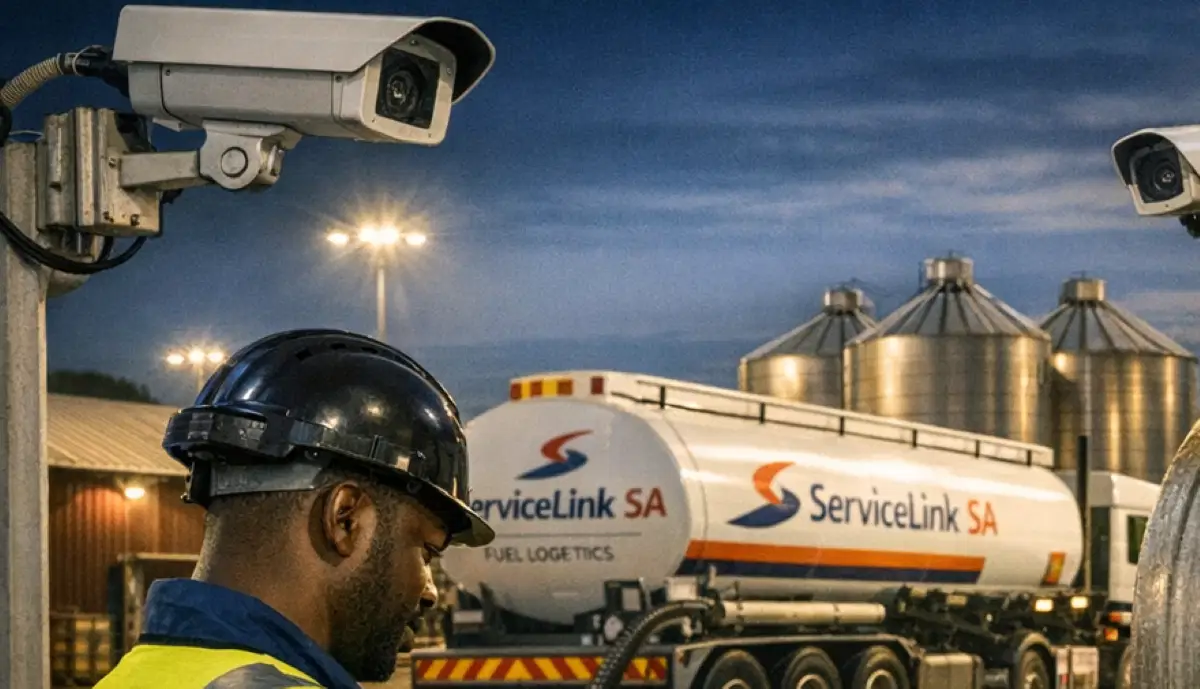
Worried About Fuel Theft?
ServiceLink SA connects you with verified security specialists for fuel storage protection. Get free quotes today. If we can’t assist directly, we’ll connect you with our trusted partner companies to carry out your fuel security projects professionally and timeously.
Servicing Johannesburg, Pretoria, Durban, Cape Town, Sandton, and across South Africa
Fuel Theft Prevention: How to Secure Your Bulk Diesel Storage
🔒 From lockable tanks to electronic monitoring—your complete guide to protecting your diesel investment
I once worked with a logistics company in Johannesburg that was losing over 15,000 litres of diesel every month. They couldn’t figure out where the fuel was going. Their records showed deliveries, but consumption didn’t match. They blamed evaporation, blamed drivers, blamed the supplier.
Then we installed electronic tank monitoring with access control. Within two weeks, the system caught a night-shift employee using a hidden key to access the tank and fill personal containers. For two years, that employee had been stealing an average of 500 litres per shift. Total theft: over 300,000 litres worth nearly R6 million.
Fuel theft prevention for bulk storage is not optional. With diesel prices high and theft syndicates becoming more sophisticated, unprotected tanks are an open invitation. Diesel theft prevention requires a layered approach: physical security, electronic monitoring, access control, and procedural safeguards.
This comprehensive security guide covers everything you need to know about bulk fuel security, including how to prevent diesel theft from storage tanks, tank security measures, fuel monitoring systems, and incident response. For more on fuel management, read fuel management systems in South Africa.
Ready to protect your fuel investment? Let’s dive in.
📋 Table of Contents – Fuel Theft Prevention Guide
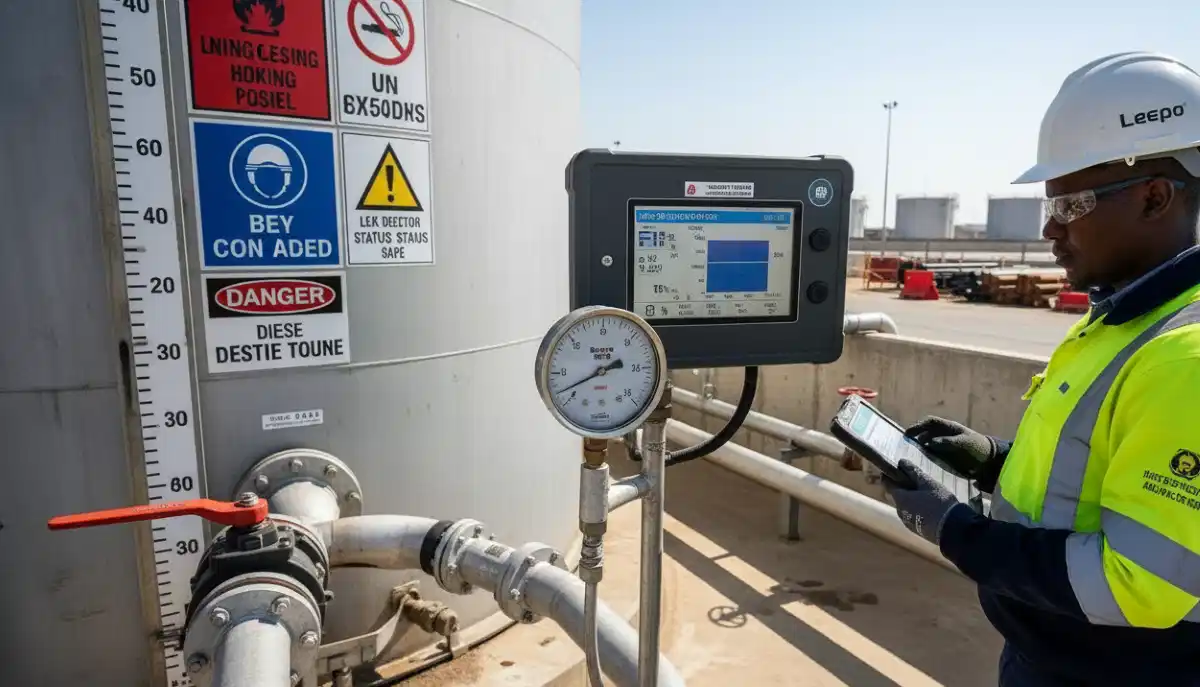
📊 The Scale of Fuel Theft in South Africa
Diesel theft prevention is critical given the scale of the problem:
⚠️ The Cost of Fuel Theft
Fuel theft costs South African businesses billions annually. A single 10,000L tank can be emptied in minutes by organised syndicates. Even “small” internal theft of 500L per week costs over R500,000 annually.
Types of fuel theft:
- Internal theft: Employees stealing fuel for personal use or resale
- External theft: Organised syndicates targeting unprotected tanks
- Delivery theft: Suppliers short-delivering or adulterating fuel
- Driver theft: Fleet drivers siphoning fuel or claiming false refuelling
- Meter tampering: Manipulating dispensing meters to record less than delivered
Common targets for fuel thieves:
- Remote farms and mines (low security, minimal surveillance)
- Logistics depots with overnight parking (unattended tanks)
- Construction sites (temporary storage, poor security)
- Unlocked or poorly secured tank dispensing systems
- Tanks without electronic monitoring (no theft detection)
Financial impact of fuel theft:
| Theft Volume (monthly) | Cost at R20/L | Annual Loss | Security Investment Payback |
|---|---|---|---|
| 500L (small internal theft) | R10,000 | R120,000 | 2-4 months |
| 2,000L (moderate theft) | R40,000 | R480,000 | 1-2 months |
| 5,000L (significant theft) | R100,000 | R1,200,000 | <1 month |
| 10,000L (syndicate theft) | R200,000 | R2,400,000 | Immediate |
For more on theft impact, read fuel management systems.
🔓 How Diesel Theft Happens
Understanding theft methods is essential for how to prevent diesel theft from storage tanks:
Common theft methods:
- Unauthorised dispensing: Using the tank’s own pump and hose without permission
- Siphoning: Inserting a hose through the filler neck to extract fuel
- Drilling: Drilling a hole in the tank (usually from underneath)
- Valve tampering: Opening drain valves or other outlets
- Meter manipulation: Tampering with delivery meters to short-change
- False deliveries: Collusion with supplier to record more than delivered
- Fake quality testing: Claiming samples taken when fuel was actually stolen
How thieves target tanks:
- Surveillance: Watching delivery schedules and security patterns
- Inside information: Employees or former employees sharing security details
- Remote locations: Targeting tanks without CCTV or guards
- Overnight hours: Stealing when sites are unattended
- Weekend theft: Stealing over weekends when monitoring is minimal
- During load shedding: Taking advantage of power outages affecting security systems
Signs of fuel theft:
- Fuel consumption higher than expected based on operations
- Tank level drops faster than usage justifies
- Discrepancies between delivery records and tank level increases
- Wet spots or stains around tank area (spills during theft)
- Tamper marks on locks, seals, or tank fittings
- Unusual vehicle activity near tank area (especially at night)
- Driver behaviour changes (taking longer routes, unexplained stops)
For more on detection, read fuel management systems.

🔒 Physical Security Measures
The first line of defence in tank security is physical barriers:
Lockable dispensing systems:
- Padlock on pump handle (basic, but easily cut)
- Lockable pump cabinet (more secure, conceals pump)
- Key-operated pump (requires key to activate)
- Electronic lock with keypad or card access (recommended)
- Tamper-proof padlocks (hardened steel, anti-cut)
Tank filler point security:
- Lockable filler cap (standard on most tanks)
- Anti-siphon device in filler neck (prevents hose insertion)
- Tamper-evident seals (show if cap was opened)
- Filler point located inside locked enclosure
Perimeter security:
- Fencing around tank area (2m minimum height)
- Gated access with lock
- Security lighting (motion-activated or always-on)
- CCTV cameras covering tank area (recorded, visible)
- Security signage (“CCTV in operation”)
- Bunding as physical barrier (makes access harder)
Alarm systems:
- Motion sensors in tank area
- Contact switches on tank access points
- Vibration sensors on tank (detect drilling)
- Integration with site security system
- Remote monitoring with alerts
Physical security checklist:
- ✅ Lockable dispensing system installed
- ✅ Lockable filler cap with anti-siphon device
- ✅ Fencing around tank area
- ✅ Security lighting covering tank area
- ✅ CCTV cameras recording tank area
- ✅ Security signage displayed
- ✅ Motion sensors or alarms installed
- ✅ Regular inspection of physical security
Physical security costs:
| Measure | Typical Cost | Effectiveness |
|---|---|---|
| Lockable pump cabinet | R2,000-R5,000 | Medium |
| Electronic keypad lock | R3,000-R8,000 | High |
| Anti-siphon filler device | R500-R1,500 | High |
| Security fencing (20m) | R10,000-R30,000 | High |
| CCTV system (2 cameras) | R8,000-R20,000 | High |
| Motion sensors + alarm | R3,000-R10,000 | High |
For more on physical security, read fuel tank installation.
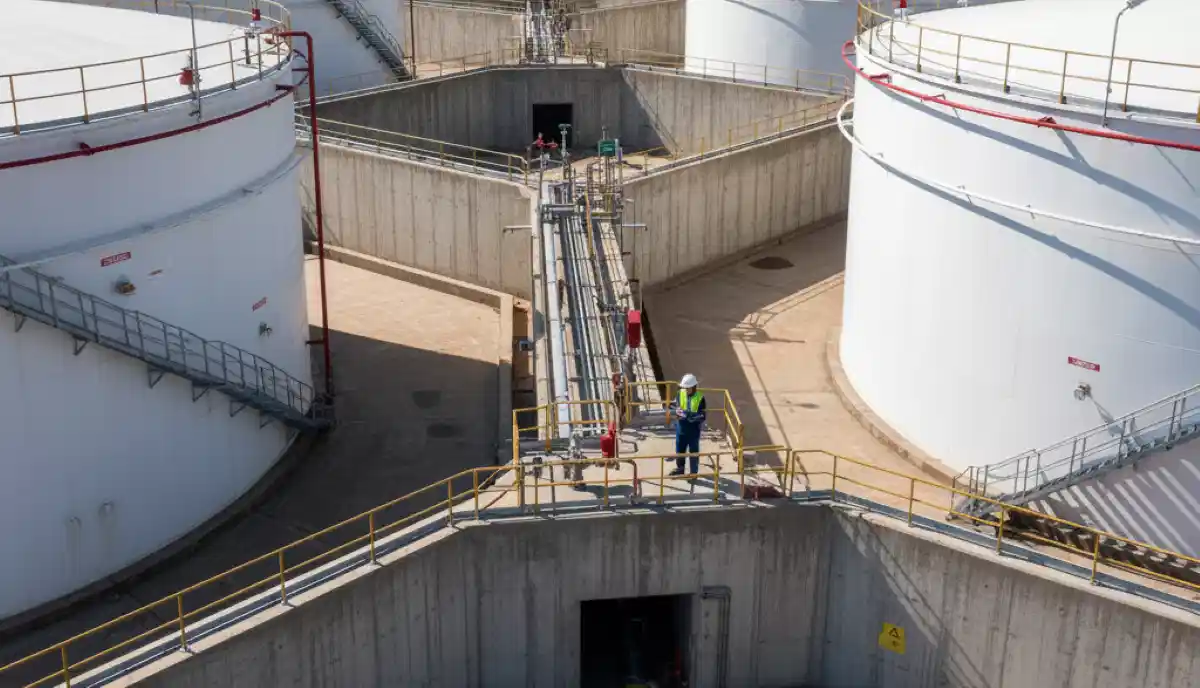
📊 Electronic Fuel Monitoring Systems
Fuel monitoring is the most effective tool for detecting and preventing theft:
What electronic monitoring provides:
- Real-time tank level data (viewable remotely)
- Historical consumption tracking
- Unusual consumption alerts (theft detection)
- Low and high level alarms
- Delivery verification (confirm fuel received)
- Integration with access control systems
- Reporting for audits and analysis
Key features to look for:
- Real-time level monitoring: Accurate tank level data updated frequently (every few minutes)
- Consumption rate alerts: Alert if consumption exceeds normal patterns
- Out-of-hours usage alerts: Alert if fuel is dispensed outside normal hours
- Delivery verification: Compare delivery records with actual tank level increase
- Historical reporting: Track consumption trends over time
- Remote access: View tank levels from anywhere via web or mobile app
- Integration capability: Connect to access control and building management systems
How monitoring detects theft:
- Sudden unexplained level drops (someone dispensing without authorisation)
- Gradual theft detection (consumption higher than expected over time)
- Out-of-hours usage (dispensing when site is closed)
- Delivery discrepancies (expected vs actual level increase)
- Pattern anomalies (unusual consumption patterns)
Electronic monitoring costs:
| Component | Typical Cost | Notes |
|---|---|---|
| Tank level sensor (submersible) | R5,000-R15,000 | Per tank |
| Monitoring control unit | R8,000-R20,000 | Per site |
| Monitoring software (annual) | R5,000-R20,000 | Per site |
| Installation labour | R5,000-R15,000 | One-time |
| Total (single tank) | R23,000-R70,000 | One-time + annual |
ROI of monitoring systems:
A monitoring system costing R50,000 that prevents 2,500L/month theft (R50,000 monthly at R20/L) pays for itself in one month. Even preventing 500L/month theft (R10,000 monthly) pays back in 5 months.
For more on monitoring, read fuel management systems.
🔑 Access Control Systems
Access control is critical for bulk fuel security:
Types of access control:
- Key-based: Physical keys for pump activation. Least secure (keys can be copied).
- Combination lock: Numeric code for pump activation. Better than keys, but codes can be shared.
- Keypad with PIN: Individual PINs for each user. Tracks who dispensed fuel. Recommended for small to medium sites.
- Card/fob system: Proximity cards or fobs for each user. Tracks dispensing by user. Good for larger sites.
- Biometric: Fingerprint or other biometric authentication. Most secure, tracks individual users. Best for high-risk sites.
Features of effective access control:
- Individual user identification (not shared codes)
- Time restrictions (only allow dispensing during authorised hours)
- Volume limits (limit litres per user or per session)
- Vehicle linking (fuel only dispensed to authorised vehicles)
- Audit trail (records who dispensed, when, how much)
- Integration with tank monitoring (match dispensing records to level changes)
- Remote management (add/remove users remotely)
Access control costs:
| System Type | Typical Cost | Security Level | Best For |
|---|---|---|---|
| Key-based | R500-R2,000 | Low | Very low-risk sites |
| Combination lock | R1,000-R3,000 | Low-Medium | Small sites, few users |
| Keypad with PIN | R5,000-R15,000 | Medium | Most commercial sites |
| Card/fob system | R10,000-R30,000 | High | Larger sites, many users |
| Biometric | R20,000-R50,000 | Very High | High-risk sites, mines |
Access control best practices:
- Issue unique credentials to each user (no sharing)
- Set time restrictions (e.g., only allow dispensing 6am-6pm)
- Set volume limits per user (e.g., max 500L per shift)
- Revoke credentials immediately when employees leave
- Regularly audit access logs for anomalies
- Integrate with CCTV (record video of each dispensing event)
- Require vehicle odometer entry for each dispensing (adds verification)
For more on access control, read fuel management systems.
Ready to Secure Your Fuel Storage?
ServiceLink SA connects you with verified security specialists for fuel theft prevention. Get free quotes today. If we can’t assist directly, we’ll connect you with our trusted partner companies to carry out your fuel security projects professionally and timeously.
How to prevent diesel theft from storage tanks—get professional security assessments from certified specialists.
📋 Procedural Safeguards and Audits
Technology alone isn’t enough—procedures and audits are essential for diesel theft prevention:
Key procedural safeguards:
- Two-person rule for deliveries: Two employees verify delivery quantities
- Sealed delivery hoses: Tamper-evident seals on delivery truck meters
- Delivery verification: Compare delivery ticket with tank level increase
- Regular inventory reconciliation: Match purchases to consumption
- Unexpected audits: Random checks of tank levels and records
- Driver fuel logs: Record odometer readings and fuel dispensed
- Exception reporting: Flag unusual consumption for investigation
Audit procedures:
- Daily: Compare tank level to expected based on operations
- Weekly: Full inventory reconciliation (opening stock + deliveries – dispensing = closing stock)
- Monthly: Review consumption patterns and investigate anomalies
- Quarterly: Independent audit of fuel records and security systems
- Annually: Full security review and risk assessment
Staff training requirements:
- Train all employees on fuel theft risks and consequences
- Teach proper fuel handling and recording procedures
- Explain how to spot and report suspicious activity
- Emphasise that fuel theft is a criminal offence (not just a policy violation)
- Provide refresher training annually
IFSA theft prevention guidelines:
The Institute of Fleet Management South Africa provides comprehensive theft prevention guidelines. See IFSA – Theft prevention guidelines.
Key IFSA recommendations:
- Implement fuel management systems on all storage tanks
- Conduct regular fuel audits (minimum quarterly)
- Use access control with individual user identification
- Monitor fuel consumption per vehicle/equipment
- Investigate any consumption anomalies immediately
- Maintain tamper-evident seals on tank access points
- Report all theft incidents to SAPS
For more on procedures, read fuel management systems.
🛡️ The Layered Security Approach
Effective bulk fuel security uses multiple layers of protection:
Layer 1: Deterrence (make theft unattractive):
- Visible CCTV cameras and signage
- Security lighting
- Warning signs (“24hr CCTV monitoring”)
- Visible locks and security measures
Layer 2: Physical barriers (make theft difficult):
- Lockable dispensing systems
- Anti-siphon devices
- Fencing and gated access
- Secure tank enclosures
Layer 3: Detection (catch theft quickly):
- Electronic tank monitoring (real-time alerts)
- Motion sensors and alarms
- CCTV recording
- Access control with audit trails
Layer 4: Procedural (prevent internal theft):
- Access control with individual user IDs
- Regular inventory reconciliation
- Unexpected audits
- Two-person delivery verification
Layer 5: Response (act on theft quickly):
- Immediate alert response procedures
- Security guard response (if applicable)
- SAPS reporting protocols
- Evidence preservation for prosecution
Security layering assessment:
| Layer | Measures in Place | Gaps | Priority |
|---|---|---|---|
| Deterrence | CCTV? Lighting? Signage? | Visible security? | Medium |
| Physical barriers | Locks? Fencing? Anti-siphon? | Tamper-proof? | High |
| Detection | Electronic monitoring? Alarms? | Real-time alerts? | Critical |
| Procedural | Access control? Audits? Training? | Individual tracking? | High |
| Response | Alert procedure? SAPS contact? | Response time? | Medium/Low |
For more on security layering, read fuel management systems for theft prevention.
📘 IFSA Theft Prevention Guidelines
The Institute of Fleet Management South Africa provides authoritative guidelines for diesel theft prevention. See IFSA – Theft prevention guidelines.
IFSA recommended best practices:
- Fuel management systems: Install electronic monitoring on all bulk tanks
- Access control: Unique user identification for all fuel dispensing
- Vehicle tracking: Integrate fuel consumption with vehicle odometer readings
- Regular audits: Conduct weekly inventory reconciliations
- Exception reporting: Flag and investigate unusual consumption patterns
- Driver training: Educate drivers on fuel theft consequences
- Security audits: Annual independent security assessment
- Incident reporting: Report all theft to SAPS and IFSA
SABS security standards:
See SABS – Security standards for tank security requirements. Key provisions:
- Lockable dispensing systems mandatory for commercial tanks
- Anti-siphon devices recommended
- Security lighting requirements for outdoor tanks
- CCTV coverage recommendations
- Access control requirements for tanks over 20,000L
SAPS fuel theft reporting:
See SAPS – Fuel theft reporting for reporting procedures:
- Report all fuel theft incidents to SAPS
- Provide evidence (CCTV footage, monitoring data, witness statements)
- Obtain case number for insurance claims
- Follow up with investigating officer
- Press charges to deter future theft
For more on IFSA guidelines, read fuel management systems.
🚨 Incident Response and Reporting
When fuel theft occurs, a rapid response is essential:
Immediate response steps:
- Confirm theft: Verify tank level discrepancy is not due to error or legitimate use
- Secure the scene: Preserve evidence (CCTV footage, monitoring data, physical evidence)
- Alert management: Notify site manager and security负责人
- Contact SAPS: Report the theft with all available evidence
- Document everything: Take photos, save monitoring data, record witness statements
- Review security: Identify how theft occurred and address vulnerabilities
- Notify insurance: File claim if theft exceeds deductible
- Enhance security: Implement additional measures to prevent recurrence
Evidence to preserve:
- Electronic monitoring data (tank levels, consumption history)
- CCTV footage (save before it’s overwritten)
- Access control logs (who accessed system)
- Delivery records (confirm no delivery occurred)
- Witness statements (anyone who saw suspicious activity)
- Physical evidence (tools left behind, vehicle tracks)
- Photographs of tank area and any damage
After theft actions:
- Conduct full security audit to identify vulnerabilities
- Repair any physical damage to tank or security systems
- Change access codes or credentials if compromised
- Review employee access and revoke unnecessary permissions
- Increase monitoring frequency temporarily
- Brief staff on the incident and reinforce security procedures
- Consider prosecuting offenders to deter future theft
Theft prevention ROI calculation:
Investment in security measures is easily justified by prevented losses:
- Monitoring system: R50,000
- Access control: R15,000
- CCTV: R15,000
- Physical security upgrades: R20,000
- Total investment: R100,000
- Monthly theft prevented: 5,000L = R100,000
- Payback period: 1 month
For more on incident response, read fuel management systems for theft prevention.
❓ Frequently Asked Questions About Fuel Theft Prevention
How can I prevent diesel theft from storage tanks?
How to prevent diesel theft from storage tanks requires a layered approach: physical security (locks, fencing), electronic monitoring (real-time level tracking), access control (individual user IDs), procedural safeguards (audits, two-person delivery verification), and staff training. No single measure is sufficient—use multiple layers.
What are the best fuel theft prevention systems?
Fuel theft prevention systems combine electronic tank monitoring (real-time levels, consumption alerts), access control (keypad or card system with individual user tracking), and CCTV (recorded, visible cameras). Integration between these systems provides the most effective protection against both internal and external theft.
How does fuel monitoring detect theft?
Fuel monitoring detects theft through: sudden unexplained level drops (someone dispensing without authorisation), consumption higher than expected over time, out-of-hours usage alerts, delivery discrepancies, and pattern anomalies. Real-time alerts allow immediate investigation and response.
What is bulk fuel security?
Bulk fuel security refers to measures protecting large-volume fuel storage from theft. Includes physical security (locks, fencing, lighting, CCTV), electronic monitoring (real-time level tracking, alerts), access control (individual user authentication), procedural safeguards (audits, delivery verification), and incident response procedures.
What are tank security best practices?
Tank security best practices: install lockable dispensing systems with electronic access control, use anti-siphon devices on filler necks, install CCTV covering tank area, implement electronic level monitoring with real-time alerts, conduct regular inventory reconciliations, perform unexpected audits, and train staff on theft prevention.
How do access control systems prevent fuel theft?
Access control systems prevent theft by requiring authentication (PIN, card, or biometric) to dispense fuel. Individual user IDs track who dispensed, when, and how much. Time restrictions prevent out-of-hours usage. Volume limits cap per-user dispensing. Audit trails identify anomalies for investigation.
What should I do if fuel is stolen?
If fuel is stolen: confirm theft (verify discrepancy not due to error), secure scene and preserve evidence (CCTV, monitoring data), alert management, report to SAPS (obtain case number), document everything with photos, review security vulnerabilities, notify insurance, and enhance security to prevent recurrence.
How much does fuel theft cost businesses?
Fuel theft costs South African businesses billions annually. A single 10,000L tank theft costs R200,000. Even “small” internal theft of 500L weekly costs over R500,000 annually. Security investments typically pay back in 1-3 months through prevented losses. See cost table in Section 1 for detailed examples.
✅ Final Thoughts: Protect Your Fuel Investment
Fuel theft prevention for bulk storage is not optional in South Africa’s current environment. With diesel prices high and theft syndicates sophisticated, unprotected tanks are an invitation to thieves. The cost of security is minimal compared to the cost of theft.
Key takeaways from this guide:
- Fuel theft prevention for bulk storage requires a layered approach
- Diesel theft prevention combines physical, electronic, and procedural measures
- Bulk fuel security starts with lockable dispensing and anti-siphon devices
- How to prevent diesel theft from storage tanks—electronic monitoring is most effective
- Tank security includes fencing, lighting, CCTV, and access control
- Fuel monitoring provides real-time alerts for unusual consumption
- Access control with individual user IDs prevents internal theft
- Regular audits and inventory reconciliation detect theft early
- IFSA guidelines and SABS standards provide authoritative best practices
- Security investments typically pay back in 1-3 months through prevented losses
- ServiceLink SA connects you with verified security specialists for fuel theft prevention
Your action plan: Assess your current fuel storage security. Identify gaps in physical security, electronic monitoring, access control, and procedures. Prioritise electronic monitoring (real-time level tracking with alerts). Install access control with individual user tracking. Implement regular inventory reconciliations. Train staff on theft prevention. Report all theft to SAPS. Protect your fuel investment.
Ready to Secure Your Fuel Storage?
ServiceLink SA connects you with verified security specialists for fuel theft prevention. Get free quotes today. If we can’t assist directly, we’ll connect you with our trusted partner companies to carry out your fuel security projects professionally and timeously.
📞 Call us: 073 138 4726 for immediate help finding fuel security specialists near you.
Fuel Management Systems •
Fuel Tank Installation •
Diesel Delivery •
Fleet Fueling Solutions •
Emergency Fuel Delivery
📚 Official resources & standards referenced:
- SABS – South African Bureau of Standards – Security standards for fuel storage tanks.
- IFSA – Institute of Fleet Management South Africa – Theft prevention guidelines and best practices.
- SAPS – South African Police Service – Fuel theft reporting procedures and case management.
- DMRE – Department of Mineral Resources and Energy – Storage security requirements.
Information provided for general guidance based on independent research and official sources. Security standards, theft patterns, and reporting procedures change periodically. Always verify current requirements directly with SABS, IFSA, and SAPS.
Written by: ServiceLink SA Research Team
Fuel Security & Theft Prevention Specialists
The ServiceLink SA Research Team combines expertise from security systems, fuel management, and loss prevention. Our analysts track SABS security standards, monitor IFSA theft prevention guidelines, analyse SAPS fuel theft reporting data, and maintain relationships with accredited security installers across South Africa. This guide draws on primary research, official SABS, IFSA, and SAPS documentation, and direct experience with fuel theft investigations and security upgrades at logistics depots, farms, mines, and construction sites. Our mission is to help South African businesses implement effective fuel theft prevention for bulk storage, apply diesel theft prevention best practices, and achieve bulk fuel security. If we can’t assist directly, we’ll connect you with our trusted partner companies who specialise in professional fuel security systems.
For more information about fuel theft prevention, explore our related resources: fuel management systems, fuel tank installation and setup, bulk diesel storage regulations, how to choose a bulk fuel supplier, and fuel management systems for theft prevention. See our location-specific guides for Johannesburg, Sandton, Pretoria, Durban, and Cape Town.