Need a Generator Day Tank?
ServiceLink SA connects you with verified installers specialising in generator day tanks and automatic refuelling systems. Get free quotes today. If we can’t assist directly, we’ll connect you with our trusted partner companies to carry out your generator fuel projects professionally and timeously.
Servicing Johannesburg, Pretoria, Durban, Cape Town, Sandton, and across South Africa
Diesel Day Tanks for Generators: Automatic Refuelling Solutions
⚡ From manual refuelling to fully automatic systems—your complete guide to generator day tanks
I once visited a data centre in Midrand during a particularly brutal week of stage 6 load shedding. Their backup generators were running 18 hours a day. But their refuelling process was entirely manual—a staff member had to physically check the generator’s built-in tank every four hours and call for a delivery when it got low. During one night shift, the staff member fell asleep. The generator ran dry. The data centre lost power for 45 minutes. The cost? Over R2 million in lost revenue and SLA penalties.
That data centre now has a diesel day tank for generators with automatic refuelling. The day tank feeds the generator continuously. When the day tank reaches a preset low level, a pump automatically transfers fuel from a larger bulk storage tank. No human intervention required. No risk of running dry.
For any business relying on backup generators during load shedding, generator day tank installation is not a luxury—it’s a necessity. Automatic refuelling tanks ensure your generators keep running as long as there’s fuel in your bulk storage.
This comprehensive equipment guide covers everything you need to know about diesel day tanks for generators, including day tank sizing for diesel generators, generator fuel system design, automatic transfer systems, installation requirements, and compliance standards. For more on generator fuel, read generator fuel supply and refilling in South Africa.
Ready to ensure your generator never runs dry? Let’s dive in.
📋 Table of Contents – Generator Day Tank Guide
⛽ What Is a Diesel Day Tank for Generators?
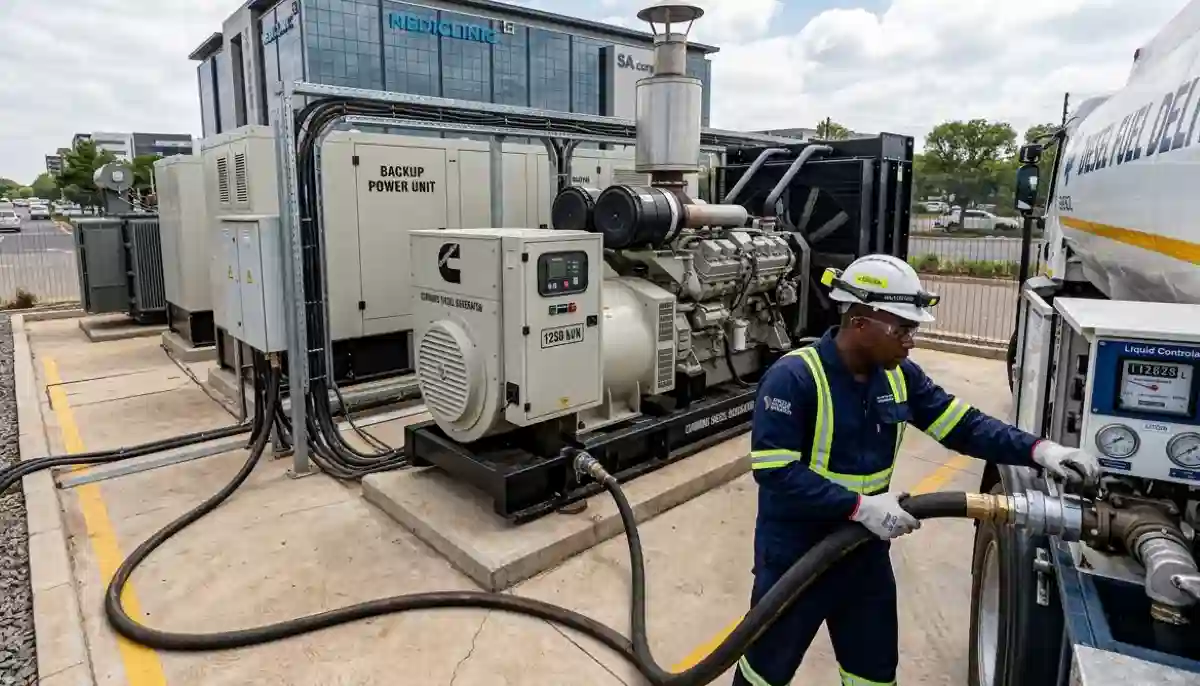
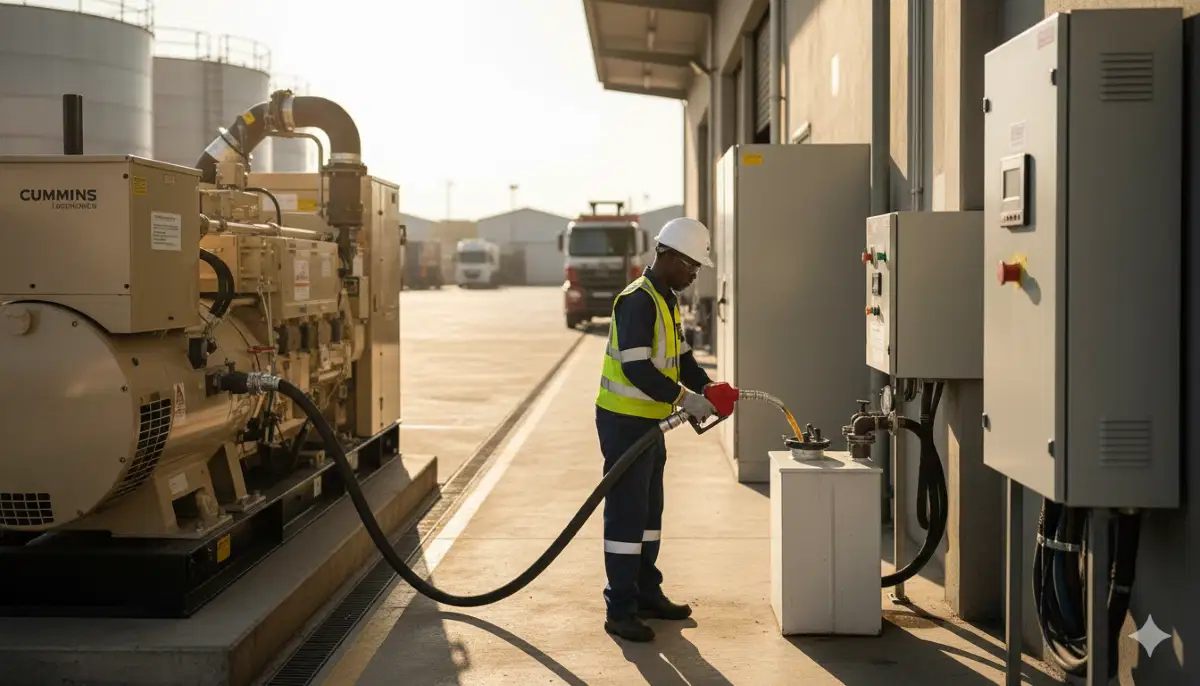
A diesel day tank for generators is a small, dedicated fuel tank that supplies diesel directly to a generator’s engine. It’s called a “day tank” because it typically holds enough fuel for 8-24 hours of generator operation. The day tank is automatically refilled from a larger bulk storage tank, ensuring the generator never runs out of fuel.
⚠️ The Core Concept
A day tank acts as a buffer between your bulk fuel storage and your generator. The generator draws fuel from the day tank. When the day tank level drops, a pump automatically transfers fuel from the bulk tank to refill it. Your generator always has fuel, even during extended outages.
Key characteristics of day tanks:
- Small capacity: Typically 500L – 5,000L (vs bulk storage 10,000L – 100,000L+)
- Generator-mounted or standalone: Can be mounted on generator skid or positioned nearby
- Automatic refuelling: Float switches or electronic sensors trigger transfer pump
- Double-skinned or bunded: Secondary containment required by SABS standards
- Low-level alarms: Alerts when day tank is low (or transfer pump fails)
- High-level shut-off: Prevents overfilling during transfer
- Leak detection: Sensors detect fuel leaks in bunded area
How day tanks differ from bulk storage:
| Characteristic | Day Tank | Bulk Storage Tank |
|---|---|---|
| Capacity | 500-5,000L | 10,000-100,000L+ |
| Purpose | Generator supply buffer | Long-term storage |
| Refuelling | Automatic from bulk tank | Manual from delivery tanker |
| Location | Near generator (often indoors) | External, away from buildings |
| Generator feed | Direct to generator engine | Via day tank or direct (if close) |
| Typical cost | R15,000-R80,000 installed | R50,000-R300,000+ installed |
Why “day tank”?
The name comes from the typical capacity—enough fuel for one day (8-24 hours) of generator operation. In practice, day tanks are often sized for 8-12 hours, with automatic refuelling ensuring continuous operation.
For more on generator fuel, read generator fuel services.
⚠️ Why Generators Need Day Tanks
During extended load shedding, diesel day tanks for generators provide critical benefits:
⚠️ The Cost of No Day Tank
Without a day tank, generators run directly from bulk storage or must be manually refuelled. Manual refuelling risks human error (forgetting to refill, overfilling, spills). Direct bulk storage feed risks fuel contamination and requires complex plumbing. A day tank solves both problems.
Benefits of day tanks for generators:
- Automatic refuelling: No human intervention required. Generator runs as long as bulk storage has fuel.
- Prevents generator dry-running: Day tank low-level alarm alerts before generator runs dry.
- Cleaner fuel supply: Day tanks can include filtration, ensuring clean fuel to generator.
- Simplified plumbing: One supply line from bulk tank to day tank, then short line to generator.
- Easy monitoring: Day tank level indicates remaining runtime at current load.
- Reduced contamination risk: Bulk tank fuel is filtered before entering day tank.
- Compliance: Day tanks meet SABS standards for generator fuel supply.
- Integration with building management: Day tank levels can be monitored remotely.
Common generator fuel problems that day tanks solve:
- Problem: Generator’s built-in tank is too small (typically 8-12 hours runtime). Solution: Day tank provides extended runtime with automatic refuelling.
- Problem: Bulk storage tank is too far from generator. Solution: Day tank near generator, fed from bulk tank via pump.
- Problem: Fuel contamination in bulk tank reaches generator. Solution: Filtration in day tank system protects generator.
- Problem: Staff forget to refuel generator during extended outages. Solution: Automatic refuelling eliminates human error.
- Problem: Spills during manual refuelling. Solution: Closed automatic system prevents spills.
Typical generator runtime with and without day tank:
| Generator Size | Built-in Tank Runtime | With Day Tank (500L) | With Day Tank (1,000L) | With Bulk Storage |
|---|---|---|---|---|
| 100kVA (20 L/hour) | 8-10 hours | 25-30 hours | 50-60 hours | Days/weeks (with automatic refill) |
| 250kVA (50 L/hour) | 8-10 hours | 10-12 hours | 20-24 hours | Days/weeks (with automatic refill) |
| 500kVA (100 L/hour) | 8-10 hours | 5-6 hours (undersized) | 10-12 hours | Days/weeks (with automatic refill) |
| 1,000kVA (200 L/hour) | 8-10 hours | 2-3 hours (undersized) | 5-6 hours | Days/weeks (with automatic refill) |
For more on generator runtime, read generator fuel supply and refilling.
⚙️ How Automatic Refuelling Systems Work
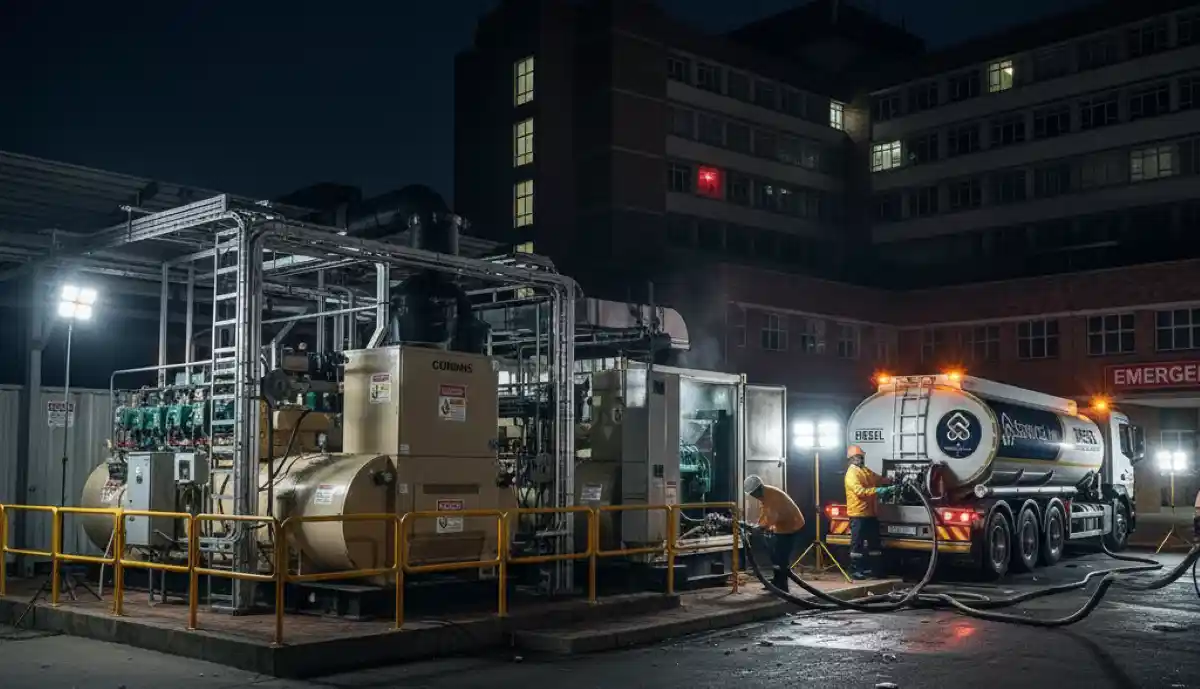
The generator fuel system with automatic refuelling operates seamlessly:
System components interaction:
- Bulk storage tank holds large fuel supply (10,000L – 100,000L+)
- Transfer pump moves fuel from bulk tank to day tank
- Day tank level sensors (float switches or ultrasonic) monitor fuel level
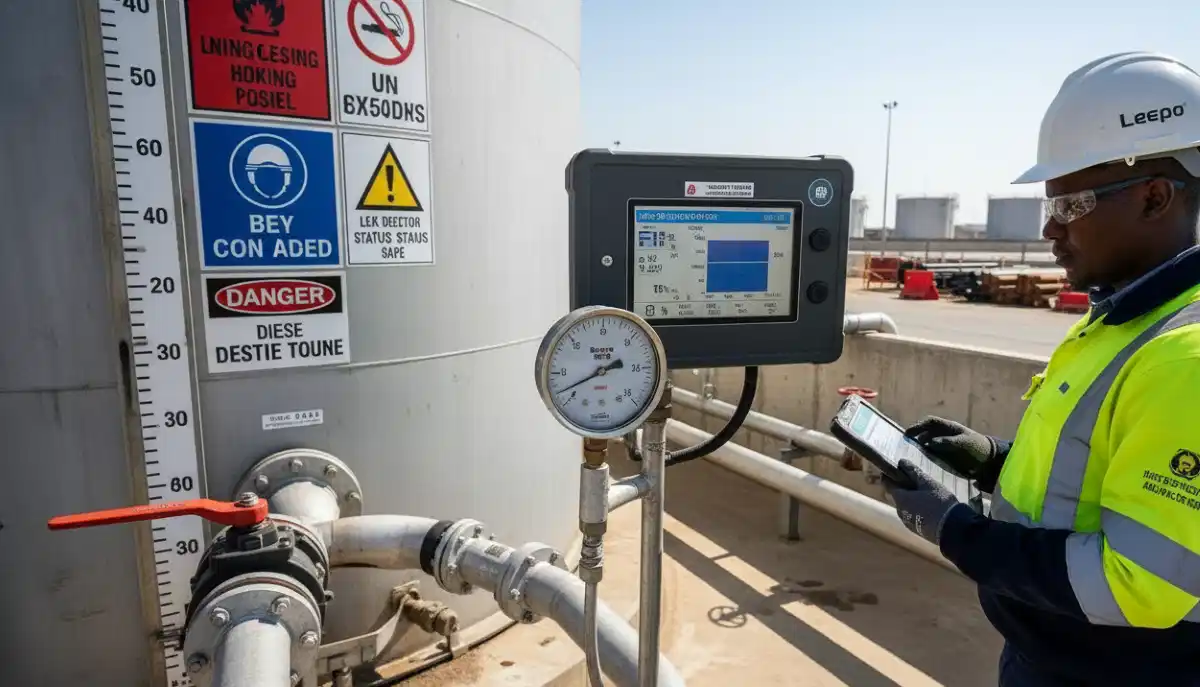
- Control panel receives level signals and controls transfer pump
- Generator draws fuel from day tank during operation
- When day tank reaches low level, control panel starts transfer pump
- Pump transfers fuel from bulk tank to day tank
- When day tank reaches high level, control panel stops transfer pump
- Cycle repeats automatically as generator consumes fuel
Automatic refuelling sequence:
| Event | Action | Trigger |
|---|---|---|
| Generator starts (load shedding) | Generator draws fuel from day tank | Grid power loss |
| Day tank level drops to 30% | Control panel monitors level | Float switch or sensor |
| Day tank level reaches 20% (low setpoint) | Control panel starts transfer pump | Low level switch |
| Pump transfers fuel from bulk tank to day tank | Day tank level rises | Flow continues |
| Day tank level reaches 80% (high setpoint) | Control panel stops transfer pump | High level switch |
| Generator continues running, consuming fuel | Day tank level drops again | Normal operation |
| Cycle repeats automatically | Generator runs as long as bulk tank has fuel | Continuous |
Safety features in automatic systems:
- Low-low level alarm: Alerts if day tank reaches 10% (transfer pump failure or empty bulk tank)
- High-high level alarm: Alerts if day tank exceeds 90% (stuck pump or faulty level switch)
- Leak detection: Sensors in bunding detect fuel leaks
- Pump run-time limiter: Prevents pump from running continuously if level switch fails
- Manual override: Allows manual pump control for maintenance
- Emergency stop: Immediate pump shutdown
Monitoring options:
- Local display: Level indicators on day tank and control panel
- Building management system (BMS) integration: Remote monitoring and alarms
- SMS/email alerts: Notifications for low level, high level, pump failure
- Web-based monitoring: View system status from anywhere
For more on system design, read fuel management systems in South Africa.
📏 Day Tank Sizing for Diesel Generators
Proper day tank sizing for diesel generators ensures reliable operation:
Step 1: Determine generator fuel consumption
Calculate generator fuel consumption at typical load (not just full load).
Typical generator fuel consumption by size:
| Generator Size (kVA) | Full Load (L/hour) | 75% Load (L/hour) | 50% Load (L/hour) | 25% Load (L/hour) |
|---|---|---|---|---|
| 50kVA | 10-12 | 8-10 | 6-8 | 4-6 |
| 100kVA | 18-22 | 14-18 | 10-14 | 8-10 |
| 250kVA | 45-55 | 35-45 | 25-35 | 18-25 |
| 500kVA | 90-110 | 70-90 | 50-70 | 35-50 |
| 1,000kVA | 180-220 | 140-180 | 100-140 | 70-100 |
| 2,000kVA | 360-440 | 280-360 | 200-280 | 140-200 |
Step 2: Determine desired day tank capacity
Day tanks are typically sized for 8-24 hours of operation. However, with automatic refuelling from bulk storage, the day tank only needs enough capacity to allow the transfer pump to cycle reasonably (not too frequently).
Recommended day tank sizes by generator size:
| Generator Size (kVA) | Minimum Day Tank | Recommended Day Tank | Runtime at 75% Load |
|---|---|---|---|
| 50-100kVA | 200L | 500L | 25-35 hours |
| 100-250kVA | 500L | 1,000L | 20-25 hours |
| 250-500kVA | 1,000L | 1,500L | 15-20 hours |
| 500-1,000kVA | 1,500L | 2,500L | 12-18 hours |
| 1,000-2,000kVA | 2,500L | 5,000L | 12-15 hours |
Sizing formula:
Day Tank Capacity (L) = Generator Consumption (L/hour) × Desired Runtime (hours) × 1.2 (buffer)
Example: 500kVA generator at 75% load (80 L/hour) × 12 hours × 1.2 = 1,152L → recommend 1,500L day tank
Important considerations:
- Larger day tanks mean less frequent transfer pump cycling (longer pump life)
- But larger day tanks require more space and higher cost
- Balance based on your specific needs and space constraints
- Consider future generator upgrades when sizing
- Day tank must be SABS-compliant with secondary containment
For more on sizing, read fuel storage tank sizes explained.
Ready to Install a Generator Day Tank?
ServiceLink SA connects you with verified installers specialising in generator day tanks and automatic refuelling systems. Get free quotes today. If we can’t assist directly, we’ll connect you with our trusted partner companies to carry out your generator fuel projects professionally and timeously.
Day tank sizing for diesel generators—get professional advice from certified installers.
🔧 Components of a Generator Fuel System
A complete generator fuel system with automatic refuelling includes several key components:
1. Bulk storage tank:
- 10,000L – 100,000L+ capacity
- Double-skinned or bunded for secondary containment
- Filling point for delivery tanker access
- Vent with flame arrestor
- Level gauge (electronic recommended)
2. Transfer pump:
- Submersible pump in bulk tank or external pump
- Capacity: 50-200 L/min depending on day tank size
- Automatic control from day tank level switches
- Manual override for maintenance
- Dry-run protection (shuts off if bulk tank empty)
3. Day tank:
- 500L – 5,000L capacity
- Double-skinned or bunded (SABS compliant)
- Low and high level switches (float or electronic)
- Low-low and high-high alarm switches
- Vent with flame arrestor
- Filtration (10-30 micron recommended)
- Water drain valve
4. Control panel:
- Receives level switch signals
- Controls transfer pump start/stop
- Provides alarm outputs (local and remote)
- Manual pump control for maintenance
- Pump run-time monitoring
5. Piping and valves:
- Supply line from bulk tank to day tank
- Supply line from day tank to generator
- Return line from generator to day tank (if applicable)
- Isolation valves for maintenance
- Check valves to prevent backflow
- Flexible connections for vibration isolation
6. Monitoring and alarms:
- Local level indicators
- Remote monitoring (BMS integration)
- SMS/email alerts for low level, high level, pump failure
- Leak detection sensors in bunding
Typical component costs:
| Component | Typical Cost Range |
|---|---|
| 500L double-skinned day tank | R15,000-R25,000 |
| 1,000L double-skinned day tank | R20,000-R35,000 |
| 2,500L double-skinned day tank | R35,000-R55,000 |
| 5,000L double-skinned day tank | R50,000-R80,000 |
| Transfer pump (100 L/min) | R5,000-R15,000 |
| Control panel with level switches | R8,000-R20,000 |
| Piping and fittings | R5,000-R15,000 |
| Installation labour | R10,000-R25,000 |
| Total (1,000L system installed) | R50,000-R110,000 |
For more on components, read fuel tank installation.
🔧 Installation Requirements
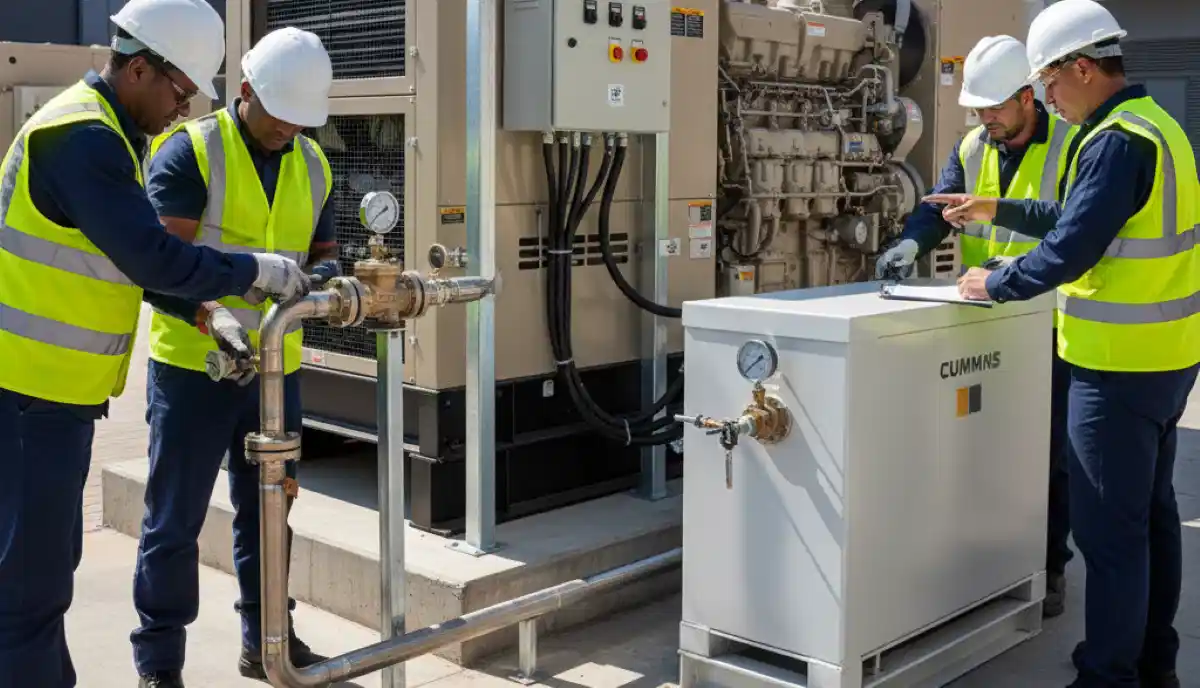
Professional generator day tank installation requires attention to several factors:
Location requirements:
- Day tank must be within 3-5 metres of generator (fuel line length)
- Adequate ventilation for day tank area (prevapor accumulation)
- Fire-rated enclosure if day tank is indoors (or in same room as generator)
- Spill containment (bunding or double-skinned tank) mandatory
- Access for maintenance and inspection
- Temperature range: 5°C – 40°C (avoid extreme heat or freezing)
Electrical requirements:
- Transfer pump must have proper electrical supply (voltage, phase as specified)
- Control panel must be weatherproof if outdoors
- All electrical connections must comply with ECASA standards. See ECASA – Generator electrical integration.
- Emergency stop button accessible near day tank
- Proper earthing for all electrical equipment
- Surge protection for control electronics
Piping requirements:
- Fuel lines must be diesel-resistant material (steel or approved synthetic)
- Minimum pipe size: 19mm (3/4″) for most installations, larger for high flow
- Slope pipes toward day tank for drainage
- Isolation valves at bulk tank and day tank
- Flexible connections at generator (vibration isolation)
- Leak detection along pipe routes (double-walled piping recommended for indoor runs)
Ventilation requirements:
- Day tank must have vent with flame arrestor
- Vent must discharge to safe location (not into building)
- If day tank indoors, room must have mechanical ventilation
- Vent pipe diameter as specified by tank manufacturer
Fire safety requirements:
- Fire extinguisher (9kg dry powder) within 5 metres of day tank
- Fire-rated wall or separation if day tank is near generator
- No ignition sources within 3 metres of day tank
- Emergency shutdown system connected to building fire alarm
Compliance documentation:
- SABS certificate for day tank
- Electrical compliance certificate (ECASA registered installer)
- DMRE storage permit (if applicable)
- Local authority approval (building plans if structural changes)
- Risk assessment and method statement
- Commissioning test report
For more on installation, read fuel tank installation.
📋 SABS Day Tank Standards
Diesel day tanks for generators must comply with SABS standards. See SABS – Day tank standards.
Key SABS requirements for day tanks:
- Secondary containment: Double-skinned or bunded at 110% capacity
- Construction: Steel or approved material, SABS certified
- Venting: Proper vent with flame arrestor
- Level monitoring: Low and high level switches required
- Overfill protection: High level shut-off for transfer pump
- Low level alarm: Alert when day tank is nearly empty
- Markings: Capacity, fuel type, manufacturer, date
- Access: Safe access for inspection and maintenance
- Fire safety: Fire extinguisher nearby, proper separation
SABS certification process:
- Day tanks must be manufactured by SABS-certified fabricators
- Tanks are tested and certified before sale
- Certification includes material certificates, weld tests, pressure tests
- Look for SABS mark on the tank data plate
- Do not accept non-certified tanks for generator installations
DMRE generator fuel regulations:
See DMRE – Generator fuel regulations for complete requirements. Key provisions:
- Storage permits for day tanks over certain capacity
- Regular inspections by DMRE officials
- Record keeping for fuel deliveries and usage
- Emergency response plans for fuel spills
- Training requirements for personnel
Consequences of non-compliance:
- Fines from DMRE (up to R10 million)
- Invalidated insurance (if day tank causes damage)
- Environmental damage liability
- Prohibition on generator use until compliance achieved
- Legal action from authorities
For more on standards, read bulk diesel storage regulations.
⚡ ECASA Generator Electrical Integration
The Electrical Contractors Association of South Africa (ECASA) sets standards for generator electrical integration. See ECASA – Generator electrical integration.
Key ECASA requirements for day tank electrical systems:
- Installation must be done by ECASA-registered electrician
- Control panel must meet SABS electrical standards
- Wiring must be suitable for environment (weatherproof if outdoors)
- Emergency stop must be clearly marked and accessible
- Proper earthing for all electrical components
- Surge protection for control electronics
- Integration with generator control system (if applicable)
- Compliance certificate required after installation
Integration with generator controls:
- Day tank low level alarm can be connected to generator control panel
- Generator can be programmed to shut down before day tank runs dry
- Remote monitoring of day tank levels via generator’s telemetry system
- Automatic start/stop of transfer pump based on day tank levels
Common electrical issues to avoid:
- ❌ Non-ECASA registered installer (invalidates compliance)
- ❌ Undersized wiring causing voltage drop
- ❌ No surge protection for control electronics
- ❌ Improper earthing (fire risk)
- ❌ Control panel not weatherproof for outdoor installation
- ❌ No emergency stop accessible
Choosing an ECASA-registered installer:
- Verify ECASA registration number
- Check references for generator day tank installations
- Ensure they provide electrical compliance certificate
- Ask about warranty on electrical work
- ServiceLink SA connects you with verified ECASA-registered installers
For more on electrical compliance, read generator fuel services.
🛠️ Maintenance Requirements
Regular maintenance of diesel day tanks for generators ensures reliable operation:
Weekly maintenance (owner responsibility):
- Visual inspection for leaks (tank, pipes, fittings, pump)
- Check day tank fuel level (verify against gauge)
- Inspect vent for blockages (insects, debris)
- Check bunding for water accumulation
- Verify alarm lights/indicators function
Monthly maintenance (owner responsibility):
- Test low level alarm (simulate low level, verify alarm)
- Test transfer pump operation (manual override)
- Check water drain valve (drain any water from day tank bottom)
- Inspect fuel filters (replace if dirty)
- Check all electrical connections for tightness
- Document all maintenance in logbook
Quarterly maintenance (owner or service provider):
- Fuel quality testing (water content, microbial growth)
- Replace fuel filters (recommended)
- Test high level shut-off (simulate high level, verify pump stops)
- Inspect bunding for cracks or damage
- Test emergency stop function
Annual maintenance (professional required):
- Professional inspection of day tank (structural integrity)
- Calibrate level switches and sensors
- Service transfer pump (replace seals, bearings as needed)
- Test leak detection system
- Full fuel quality laboratory analysis
- Update compliance documentation
Maintenance log requirements:
- Date of inspection/maintenance
- Name of person performing work
- Findings and observations
- Actions taken (repairs, replacements)
- Parts replaced (manufacturer, batch numbers)
- Test results (alarms, pump operation)
- Fuel quality test results
- Keep records for 5 years minimum
Signs of problems requiring immediate attention:
- Fuel smell around day tank area
- Visible leaks (drips, puddles, staining)
- Transfer pump running continuously (faulty level switch)
- Transfer pump not running when day tank low
- Generator running rough (fuel contamination)
- Alarm lights not functioning
- Water in fuel (cloudy appearance)
For more on maintenance, read fuel tank cleaning and maintenance.
❓ Frequently Asked Questions About Generator Day Tanks
What is a diesel day tank for generators?
A diesel day tank for generators is a small fuel tank (500-5,000L) that supplies fuel directly to the generator. It is automatically refilled from a larger bulk storage tank, ensuring the generator never runs out of fuel during extended load shedding. Day tanks include level controls, alarms, and safety features.
How does automatic refuelling for generators work?
Automatic refuelling tanks use level sensors in the day tank. When the day tank level drops to a preset low point, a control panel starts a transfer pump that moves fuel from the bulk storage tank to the day tank. When the day tank reaches a preset high level, the pump stops. The cycle repeats automatically as the generator consumes fuel.
What size day tank do I need for my generator?
Day tank sizing for diesel generators depends on generator fuel consumption and desired runtime. Formula: Generator consumption (L/hour) × desired runtime (hours) × 1.2 buffer. Example: 500kVA generator (80 L/hour) × 12 hours × 1.2 = 1,152L → recommend 1,500L day tank.
What are the SABS requirements for generator day tanks?
SABS requires day tanks to have secondary containment (110% capacity), proper venting with flame arrestor, low and high level switches, overfill protection, low level alarms, clear markings, safe access, and fire safety equipment. Day tanks must be manufactured by SABS-certified fabricators.
How much does a generator day tank cost?
A 1,000L double-skinned day tank costs R20,000-R35,000. With transfer pump, control panel, piping, and installation, total installed cost is R50,000-R110,000. Larger tanks (2,500-5,000L) cost R70,000-R160,000 installed. ROI is rapid—preventing one generator dry-run can save millions.
What is generator fuel system integration with day tanks?
A generator fuel system includes bulk storage tank, transfer pump, day tank, control panel, piping, and monitoring. The system automatically maintains day tank level, provides alarms for low/high levels, and can integrate with building management systems for remote monitoring and alerts.
What is automatic transfer in generator fuel systems?
Automatic transfer refers to the automated refuelling process where the transfer pump moves fuel from bulk storage to day tank without human intervention. Level sensors trigger pump start/stop. This ensures the generator always has fuel during extended outages.
How often should generator day tanks be inspected?
Day tanks require weekly visual inspections (owner), monthly functional tests (owner), quarterly fuel quality testing, and annual professional inspections. Regular maintenance includes checking for leaks, testing alarms, draining water, replacing filters, and documenting all activities. See maintenance section above for details.
✅ Final Thoughts: Never Let Your Generator Run Dry
Diesel day tanks for generators are essential infrastructure for any business relying on backup power during load shedding. With automatic refuelling from bulk storage, your generator will run as long as there’s fuel in your tank—no human intervention required, no risk of running dry.
Key takeaways from this guide:
- Diesel day tanks for generators provide automatic refuelling from bulk storage
- Generator day tank installation eliminates manual refuelling and human error
- Automatic refuelling tanks use level sensors and transfer pumps for hands-free operation
- Day tank sizing for diesel generators formula: consumption × hours × 1.2 buffer
- Generator fuel system components include bulk tank, transfer pump, day tank, controls, and piping
- Automatic transfer systems ensure continuous fuel supply during extended outages
- SABS standards require secondary containment, level controls, alarms, and safety features
- ECASA-registered electricians must handle electrical integration
- Regular maintenance and inspections are mandatory for reliability and compliance
- ServiceLink SA connects you with verified installers for complete generator day tank solutions
Your action plan: Calculate your generator’s fuel consumption at typical load. Determine desired runtime (12-24 hours). Size your day tank using the formula. Get quotes from verified installers for complete system (bulk tank, day tank, pump, controls, installation). Ensure SABS and ECASA compliance. Implement regular maintenance schedule. Never worry about generator fuel again.
Ready to Install a Generator Day Tank?
ServiceLink SA connects you with verified installers specialising in generator day tanks and automatic refuelling systems. Get free quotes today. If we can’t assist directly, we’ll connect you with our trusted partner companies to carry out your generator fuel projects professionally and timeously.
📞 Call us: 073 138 4726 for immediate help finding generator day tank installers near you.
Generator Fuel Services •
Fuel Tank Installation •
Diesel Delivery •
Emergency Fuel Delivery •
Fuel Management Systems
📚 Official resources & standards referenced:
- SABS – South African Bureau of Standards – Day tank standards, SANS 10089-3, and tank certification.
- ECASA – Electrical Contractors Association of South Africa – Generator electrical integration standards and registered installers.
- DMRE – Department of Mineral Resources and Energy – Generator fuel regulations and storage permits.
- DFFE – Department of Forestry, Fisheries and the Environment – Environmental compliance for fuel storage.
Information provided for general guidance based on independent research and official sources. Day tank regulations, electrical standards, and compliance requirements change periodically. Always verify current requirements directly with SABS, ECASA, and DMRE.
Written by: ServiceLink SA Research Team
Generator Fuel Systems & Automatic Refuelling Specialists
The ServiceLink SA Research Team combines expertise from generator systems engineering, fuel storage, and electrical integration. Our analysts track SABS day tank standards, monitor ECASA electrical integration requirements, analyse DMRE generator fuel regulations, and maintain relationships with accredited installers across South Africa. This guide draws on primary research, official SABS, ECASA, and DMRE documentation, and direct experience with generator installations at data centres, hospitals, manufacturing plants, and commercial buildings. Our mission is to help South African businesses understand diesel day tanks for generators, implement generator day tank installation, and benefit from automatic refuelling tanks for reliable backup power during load shedding. If we can’t assist directly, we’ll connect you with our trusted partner companies who specialise in professional generator fuel system installations.
For more information about generator day tanks, explore our related resources: generator fuel supply and refilling, fuel tank installation and setup, fuel management systems, how to choose a bulk fuel supplier, bulk diesel storage regulations, and fuel storage tank sizes explained. See our location-specific guides for Johannesburg, Sandton, Pretoria, Durban, and Cape Town.