
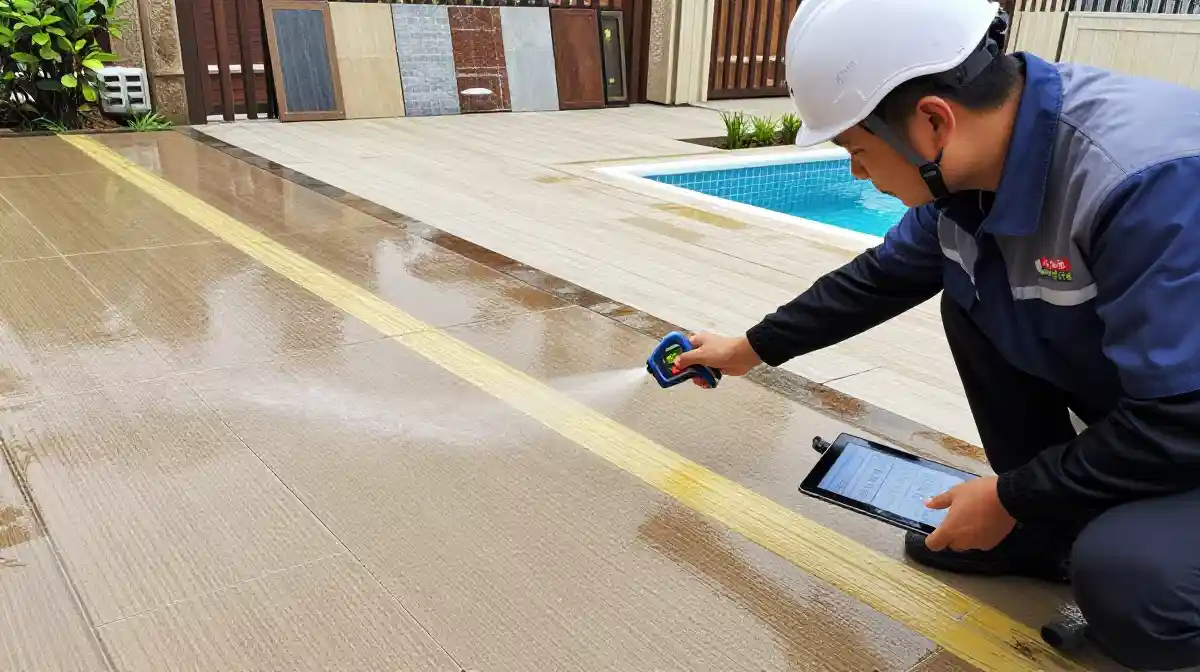
Need Compliant Non-Slip Tiles?
Get free quotes from verified tiling specialists who understand slip rating standards and SABS compliance for your project.
Servicing Gauteng, Johannesburg, Pretoria, and across South Africa
Non-Slip Tile Requirements: SABS Building Regulations Explained SA
⚖️ From R-ratings to legal compliance – everything you need to know about slip-resistant flooring
You’re building a new patio or renovating a bathroom. You choose beautiful tiles. But have you considered slip resistance? A wet tile floor can be dangerously slippery – and as a property owner, you could be held liable for injuries.
I’ve worked on countless projects across Gauteng, Johannesburg, and Pretoria where homeowners had no idea about non slip tile requirements sabs building regulations until an accident happened. The good news? Understanding R rating tiles and SABS standards is simple once you know what to look for.
In this complete guide to slip rating standards, I’ll answer what are the sabs requirements for non slip tiles in clear, practical terms. You’ll learn about R-ratings (R9 to R13), the coefficient of friction standards, where different ratings are required, how to test tiles, and what the law says about liability. By the end, you’ll be able to choose safe, compliant tiles for every area of your home and business.
For more safety guidance, check out our guides on non-slip outdoor tiles, commercial kitchen tiling requirements, best outdoor tiling materials, and building regulations guide.
📋 Table of Contents – Non-Slip Tile Regulations Guide
⚠️ Why Slip Resistance Matters – Safety & Liability
Before diving into non slip tile requirements sabs building regulations, understand why it matters:
The Statistics:
- Slip and fall accidents are among the most common home injuries
- Wet surfaces increase slip risk by 500% or more
- Pool decks, bathrooms, and patios account for most outdoor falls
- Elderly family members and young children are most at risk
- Property owners can be held liable for injuries caused by unsafe surfaces
What Makes Tiles Slippery:
- Water, rain, pool splashes, and spills create a lubricating layer
- Polished or glossy finishes have no texture for grip
- Algae and mould create a slippery biofilm
- Soap or cleaning residues leave slippery films
Legal Requirements: Under South African law (SANS 10400 and SABS slip resistance standards), outdoor areas and wet areas must have appropriate slip resistance. Property owners can be held liable for injuries caused by non-compliant flooring.
Read our building regulations guide for more on legal requirements.
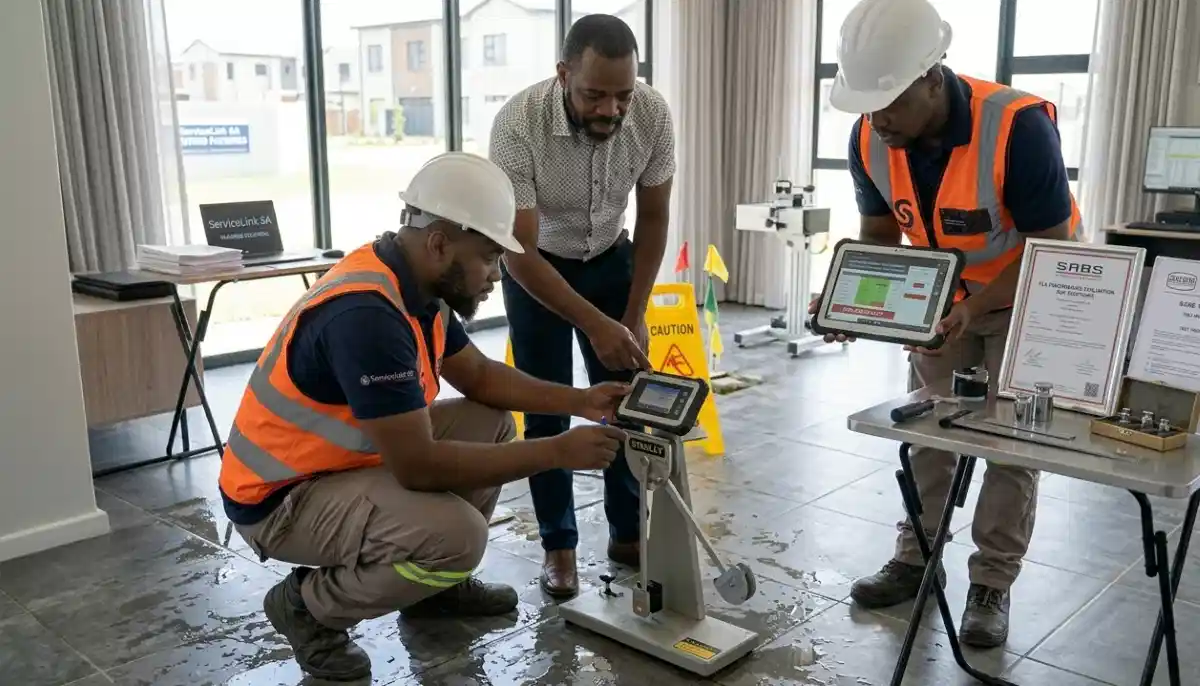
📊 R-Ratings Explained – R9 to R13 for R Rating Tiles
The R-rating (Ramp rating) is the international standard for measuring slip resistance. Here’s what each R rating tiles level means:
| R-Rating | Slip Resistance Level | Suitable For | When Wet |
|---|---|---|---|
| R9 | Low | Indoor dry areas only – NOT for wet areas | Slippery – dangerous when wet |
| R10 | Moderate | Covered patios, verandas, dry outdoor areas | Moderate slip risk – caution needed |
| R11 | Good | Open patios, walkways, bathrooms, kitchens | Good grip – suitable for most residential |
| R12 | High | Pool decks, wet areas, ramps, commercial kitchens | Excellent grip – safe when wet |
| R13 | Maximum | Industrial areas, steep ramps, commercial pools | Maximum grip – can be rough underfoot |
Recommendations for South African Homes:
- Bathroom floors: R11 minimum (R12 recommended for showers)
- Kitchen floors: R11 minimum
- Covered patios (roofed): R10 minimum, R11 recommended
- Open patios (exposed to rain): R11 minimum
- Pool decks and surrounds: R12 minimum
- Outdoor stairs and ramps: R12 minimum
- Driveways and walkways: R11 minimum
- Balconies (exposed): R11 minimum
For more on outdoor requirements, read our non-slip outdoor tiles guide.
📏 Coefficient of Friction (COF) Standards
The coefficient of friction is another measure of slip resistance used alongside R-ratings:
What Is COF?
The coefficient of friction measures the grip between a tile surface and a person’s foot or shoe. A higher number means more grip. Two types:
- Static COF (SCOF): Resistance to starting movement (standing still)
- Dynamic COF (DCOF): Resistance to continuing movement (walking)
Recommended COF Values:
- Interior dry areas: SCOF 0.5+ or DCOF 0.42+
- Interior wet areas (bathrooms, kitchens): DCOF 0.6+
- Exterior wet areas (patios, pool decks): DCOF 0.8+
- Ramps and slopes: DCOF 1.0+
R-Rating vs COF: R-ratings are more common in South Africa and Europe. COF is more common in the US. For SABS compliance, R-ratings are the standard. Always check both if available.
According to SANS 10400 building regulations, wet areas must meet minimum slip resistance standards.
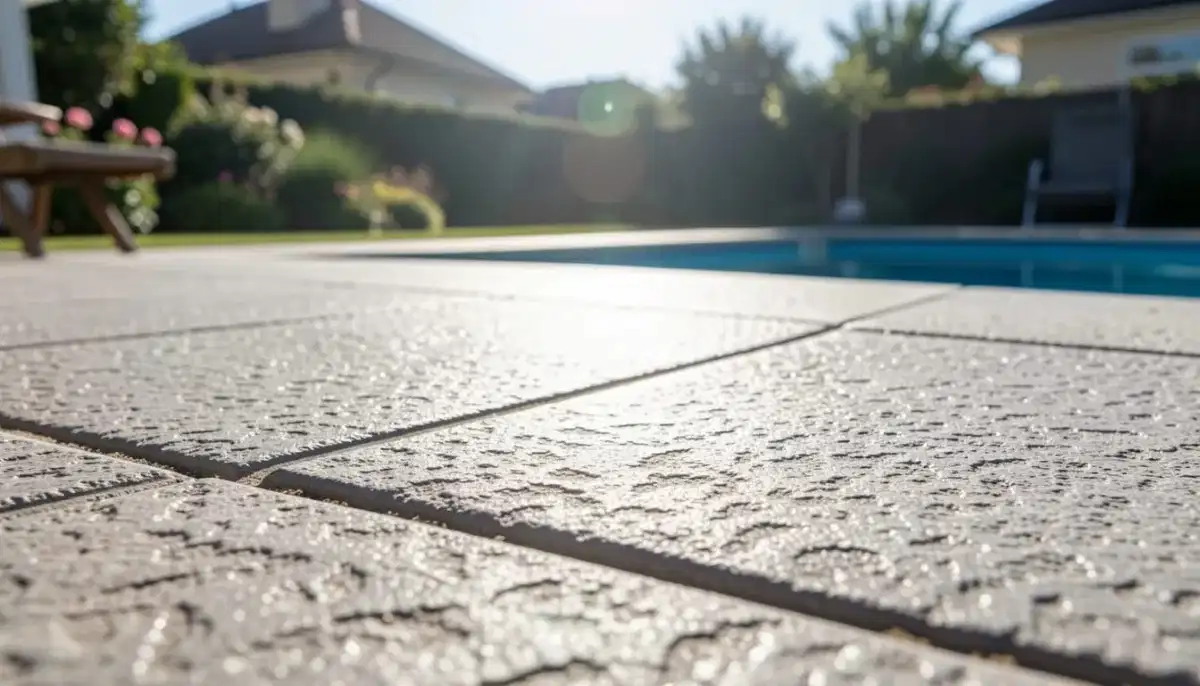
Need Help Choosing Compliant Tiles?
Get free quotes from verified tiling specialists who understand slip rating standards and can recommend SABS-compliant options for your project.
Free inspections available. Fully insured contractors.
🏠 SABS Requirements by Area – What R-Rating Where
Specific non slip tile requirements sabs building regulations by location:
| Area / Application | Minimum R-Rating | Recommended R-Rating | Notes |
|---|---|---|---|
| Bathroom floors (dry) | R10 | R11 | Higher for showers and wet areas |
| Shower floors | R11 | R12 | Constant water exposure – high slip risk |
| Kitchen floors | R10 | R11 | Spills, grease, water – R11 recommended |
| Covered patio (roofed) | R10 | R11 | Wind-blown rain still reaches |
| Open patio (exposed) | R11 | R11-R12 | Rain, dew, sprinklers |
| Pool deck | R11 | R12 | Constant water exposure – R12 strongly recommended – read pool deck guide |
| Outdoor stairs/ramps | R11 | R12 | Higher fall risk – stricter standards |
| Driveways/walkways | R10 | R11 | Rain exposure – R11 recommended |
| Commercial kitchen | R11 | R12 | Grease, water, heavy traffic – read commercial kitchen guide |
| Public accessible areas | R11 | R12 | Higher liability – stricter standards |
For outdoor material recommendations, read our best materials for outdoor tiling guide.
🔬 How Tiles Are Tested – The Ramp Test
Understanding the testing process helps you trust slip rating standards:
The Ramp Test (DIN 51130):
A person walks on an oil-wetted ramp wearing special boots. The ramp angle increases until slipping occurs. The angle determines the R-rating:
- R9: Slips at 3-6 degrees (very low grip)
- R10: Slips at 6-10 degrees (low grip)
- R11: Slips at 10-19 degrees (good grip)
- R12: Slips at 19-27 degrees (high grip)
- R13: Slips at 27-35+ degrees (maximum grip)
The Pendulum Test (ASTM E303 / BS 7976):
A rubber slider swings across the wet tile surface. The friction measurement determines slip resistance. Used for COF values.
What to Ask Suppliers:
- “What is the R-rating of this tile?”
- “Do you have certification documentation?”
- “Has this tile been tested according to SABS standards?”
- “What is the COF value for wet conditions?”
Always ask for certification – don’t rely on visual inspection alone.
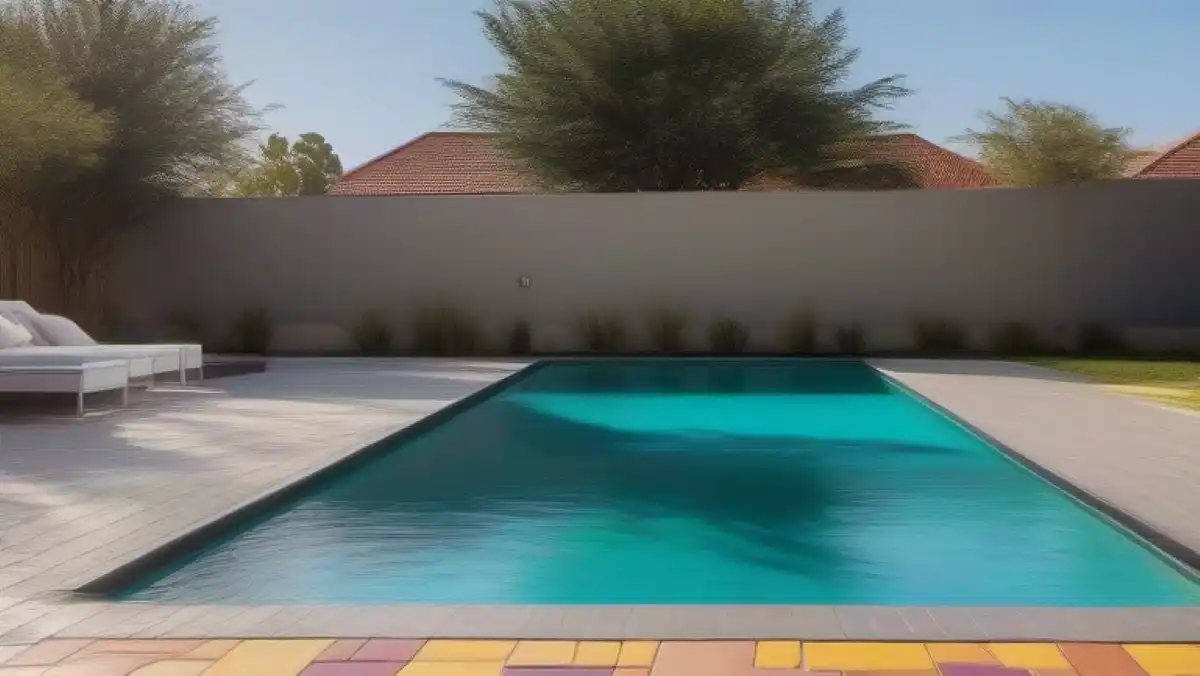
🔍 How to Identify Non-Slip Tiles
Ways to ensure your tiles meet non slip tile requirements sabs building regulations:
1. Check the Packaging or Specification Sheet
Manufacturers must state the R-rating on packaging or technical data sheets. Look for “R11”, “R12”, etc. If not stated, ask – don’t assume.
2. Look for SABS Mark
SABS-approved tiles carry a certification mark. This indicates compliance with South African safety standards.
3. Feel the Texture
Non-slip tiles have visible texture – raised patterns, grit, or matte finishes. Glossy or polished tiles are usually low slip resistance (R9-R10).
4. The Wet Foot Test (DIY)
Take a sample tile home. Wet the surface and your bare foot. Step onto the tile and try to slide your foot. If it slides easily, it’s not non-slip.
5. Ask for Certification
Request the manufacturer’s test certification. Legitimate suppliers will provide this.
What to Avoid:
- Polished porcelain (very slippery when wet – R9)
- Glossy ceramic (slippery – R9-R10)
- High-gloss natural stone (marble, polished granite – R9)
- Any tile without a stated R-rating
For safe outdoor options, read our non-slip outdoor tiles guide.
⚖️ Legal Liability – What the Law Says
Understanding your legal obligations regarding non slip tile requirements sabs building regulations:
For Homeowners (Residential):
- You can be held liable if someone is injured on your property due to unsafe flooring
- Visitors (guests, delivery personnel, tradespeople) have the right to safe premises
- Insurance claims may be denied if flooring doesn’t meet standards
- Rental properties have higher liability – tenants and their guests must be safe
For Businesses (Commercial):
- Strict liability for customer and employee safety
- Occupational Health and Safety Act requires safe working conditions
- Lawsuits from slip-and-fall accidents can be devastating
- Health inspectors check slip resistance in commercial kitchens
For Tilers and Contractors:
- Installing non-compliant tiles in wet areas could result in liability
- Professional tilers should advise clients on slip resistance requirements
- Read our contractors liability insurance guide
Building Inspections: Local authorities may inspect slip resistance, especially for commercial spaces and new builds. Failure to comply can result in fines or closure orders. Read our building inspection guide.
Learn about how we verify contractors and what is ServiceLink SA.
🚫 Common Mistakes to Avoid with Non-Slip Tiles
⚠️ Warning: These Mistakes Create Dangerous Slip Hazards
Avoid these errors when selecting tiles for wet or outdoor areas.
- Choosing style over safety: “But the polished tile looks so good!” – until someone slips and breaks a bone. Never prioritise appearance over slip resistance outdoors or in wet areas.
- Assuming all outdoor tiles are non-slip: Many “outdoor” tiles are only R9 or R10 – inadequate for wet areas. Always check the R-rating.
- Using indoor tiles outdoors: Indoor tiles (even textured ones) are not rated for outdoor slip resistance. They become dangerously slippery when wet.
- Not testing tiles before buying: Trusting a salesperson’s word without testing is risky. Always do the wet foot test or ask for certification.
- Sealing with glossy sealer: Some sealers create a slippery film. Use penetrating sealers that don’t affect slip resistance.
- No slope for drainage: Even the most slip-resistant tile becomes hazardous with standing water. Ensure proper drainage – read waterproofing guide.
- Not maintaining the surface: Algae, mould, and dirt buildup create slippery biofilms. Regular cleaning preserves slip resistance.
- Ignoring transitions: Where tile meets other flooring, height differences create trip hazards – use proper transition strips.
🏢 Commercial vs Residential Requirements
Non slip tile requirements sabs building regulations differ between residential and commercial applications:
| Factor | Residential | Commercial |
|---|---|---|
| Minimum R-rating (wet areas) | R11 | R12 (often mandatory) |
| Testing requirements | Manufacturer certification | Independent testing may be required |
| Inspection frequency | Rare | Regular health and safety inspections |
| Liability risk | Moderate | High – lawsuits more common |
| Documentation needed | Keep for records | Must be available for inspection |
| Enforcement | Complaint-driven | Proactive inspections by authorities |
For commercial kitchens specifically, read our commercial kitchen tiling requirements guide.
❓ Frequently Asked Questions About Non-Slip Tile Requirements
What are the SABS requirements for non-slip tiles?
What are the sabs requirements for non slip tiles – SABS requires that tiles in wet areas (bathrooms, kitchens, pool decks, patios) have minimum R11 slip resistance, with R12 recommended for high-risk areas like pool decks and showers. Tiles must be tested according to DIN 51130 (ramp test) and carry certification. For commercial spaces, R12 is often mandatory. Always ask for certification documentation.
What is the difference between R10, R11, R12, and R13 tiles?
R rating tiles indicate slip resistance levels: R9 (lowest – indoor dry only), R10 (moderate – covered patios), R11 (good – bathrooms, kitchens, open patios), R12 (high – pool decks, wet areas, commercial kitchens), R13 (maximum – industrial areas). For most residential wet areas, R11 is minimum, R12 is better. For pool decks, R12 is strongly recommended.
Can I use R9 tiles on a bathroom floor?
No – R9 tiles are NOT suitable for bathroom floors. They become dangerously slippery when wet. Bathroom floors require minimum R11, with R12 recommended for showers. Using R9 tiles in wet areas creates a serious slip hazard and may void your insurance. Always check the R-rating before buying tiles for wet areas.
How do I test if my existing tiles are non-slip?
The wet foot test: wet the tile surface and your bare foot. Step onto the tile and try to slide your foot. If it slides easily, the tile is not sufficiently non-slip. For a more accurate test, you can hire a professional to perform a slip resistance test using a pendulum tester. This is recommended for commercial spaces or if you have had slip accidents.
Are polished porcelain tiles non-slip?
No – polished porcelain tiles are very slippery when wet (typically R9). They should never be used outdoors or in wet areas like bathrooms. If you love the look of polished porcelain, consider honed (matte) or textured porcelain instead, which offer better slip resistance (R10-R11). For wet areas, choose R11 or R12 rated tiles with visible texture.
What R-rating do I need for a pool deck?
Pool decks require R12 minimum. The constant water exposure and bare feet create high slip risk. R12 tiles have excellent grip even when wet. For commercial pools, R13 may be required. Never use R10 or R11 tiles on pool decks – they are not safe. Read our non-slip outdoor tiles guide for recommendations.
Do I need non-slip tiles in a covered patio?
Yes – even covered patios can get wet from wind-blown rain, morning dew, or wet feet from the pool. Covered patios should have at least R10-rated tiles, but R11 is recommended for safety. Don’t assume “covered” means dry – moisture always finds a way. Safety should never be compromised.
Can I make my existing tiles less slippery?
Yes – options include: applying a non-slip coating (clear grit additive), acid etching for natural stone, or adding anti-slip strips. However, these are temporary fixes. For permanent safety, replace dangerous tiles with properly rated R rating tiles. The cost of replacement is worth preventing a serious fall injury. Read our replacement cost guide.
✅ Final Thoughts: Safety First, Style Second
Non slip tile requirements sabs building regulations exist to protect people – your family, guests, customers, and employees. A beautiful floor is worthless if it sends someone to the emergency room.
The good news? You don’t have to sacrifice style for safety. Modern non-slip tiles come in hundreds of beautiful designs – stone-look, wood-look, concrete-look, and even polished-look with textured finishes. You can have the aesthetic you want AND the safety you need.
Know your R-ratings: R11 for bathrooms and kitchens, R12 for pool decks and wet areas. Ask for certification. Test before buying. And never, ever compromise on safety for the sake of appearance.
Key takeaways for non-slip tile requirements:
- R11 minimum for bathrooms, kitchens, and open patios
- R12 minimum for pool decks, showers, and commercial wet areas
- R9-R10 are for indoor dry areas only – NOT for wet areas
- Always ask for SABS certification and R-rating documentation
- Polished tiles are dangerously slippery when wet – avoid in wet areas
- Textured, matte, or grit-coated finishes provide the best grip
- Property owners can be held liable for slip-and-fall injuries
- Use ServiceLink SA to find tilers who understand slip resistance standards
Your next step: Ready to choose safe, compliant tiles? Get free quotes from verified tiling specialists who understand non slip tile requirements sabs building regulations and can recommend the right tiles for your project.
Need Help Choosing Compliant Non-Slip Tiles?
Get free quotes from verified tiling specialists who understand slip rating standards and SABS compliance for your project.
📞 Call us: 073 138 4726 to discuss your non-slip tile requirements.
Free inspections •
Fully insured contractors •
Workmanship guarantees
Are You a Tiling Professional?
Join ServiceLink SA’s network of verified tiling contractors. Get qualified leads for residential and commercial tiling projects.
📚 Official resources & standards referenced:
- SABS – South African Bureau of Standards for slip resistance standards, R-rating specifications, and testing methodologies.
- SANS 10400 – South African National Standard for building regulations and safety requirements for flooring.
Information provided for general guidance. Always verify R-ratings with manufacturers and consult professionals for specific applications.
Written by: ServiceLink SA Research Team
Building Safety & Compliance Specialists
The ServiceLink SA Research Team has extensive experience with building safety standards, including SABS slip resistance requirements. Our team works with tilers, building inspectors, and safety consultants to understand the practical application of non slip tile requirements sabs building regulations. We’ve seen the devastating consequences of non-compliant flooring – and the peace of mind that comes with proper safety standards. This guide helps homeowners and businesses make informed, safe choices.
For more information about non-slip tile requirements, explore our related resources: non-slip outdoor tiles guide, commercial kitchen tiling requirements, best outdoor tiling materials, and building regulations guide. Learn about our process on what is ServiceLink SA and how we verify contractors. Find tilers in your area: Gauteng, Johannesburg, and Pretoria. For related services, see our building construction and waterproofing guides.