
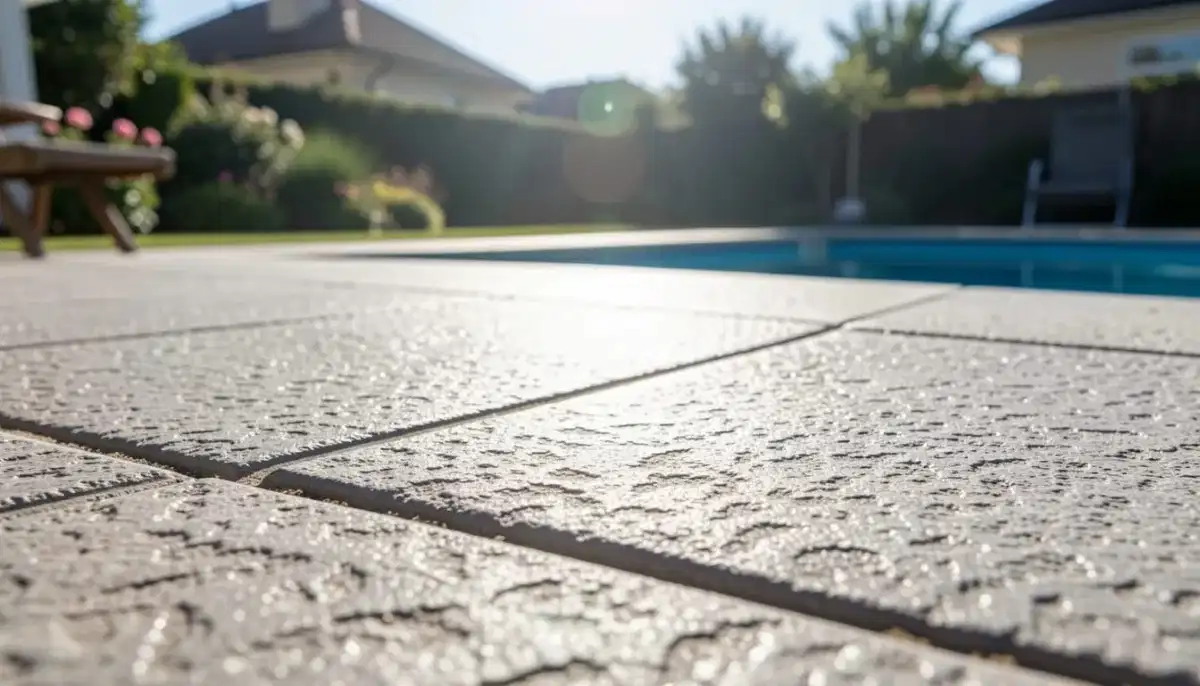
Need Safe, Stylish Outdoor Tiles?
Get free quotes from verified tiling specialists who understand anti slip outdoor tiles requirements and can recommend the best options for your space.
Servicing Western Cape, Cape Town, Camps Bay, and across South Africa
Outdoor Non Slip Tiles: Best Options for Safety & Style SA
🛡️ From pool decks to patios – the complete guide to choosing slip-resistant tiles that look great and keep everyone safe
You’re hosting a braai. Someone spills a drink. The kids run from the pool, dripping water across your beautiful patio. Then someone slips. In that moment, you realise that style without safety is a disaster waiting to happen.
I’ve seen it happen. I’ve been called to homes across the Western Cape, from Cape Town to Camps Bay, where beautiful outdoor spaces became danger zones. Glossy tiles that look stunning in the showroom become ice rinks when wet. And the result? Broken bones, head injuries, and lawsuits.
The good news? You don’t have to choose between safety and style. Modern outdoor non slip tiles come in hundreds of beautiful designs – from natural stone looks to contemporary concrete finishes. The key is understanding slip resistance ratings, choosing the right materials, and installing them correctly.
In this complete guide to anti slip outdoor tiles, I’ll explain everything: what slip resistance ratings mean (R9 to R13), the best materials for different outdoor areas, how to test tiles for slip resistance, installation requirements, and maintenance. You’ll learn to choose slip resistant tiles that keep your family safe without compromising your design vision.
For more outdoor tiling advice, check out our guides on best materials for outdoor tiling, patio tiling guide, driveway tiling guide, and balcony waterproof tiling. For technical standards, read non-slip tile requirements – SABS building regulations.
📋 Table of Contents – Outdoor Non Slip Tiles Guide
⚠️ Why Slip Resistance Matters for Outdoor Tiles
Safety flooring isn’t just a nice-to-have – it’s essential for preventing accidents:
The Statistics:
- Slip and fall accidents are among the most common home injuries
- Wet surfaces increase slip risk by 500% or more
- Pool decks and patios account for a significant percentage of outdoor falls
- Elderly family members and young children are most at risk
- Property owners can be held liable for injuries caused by unsafe surfaces
What Makes Outdoor Tiles Slippery:
- Water: Rain, pool splashes, hose water, and spills create a lubricating layer
- Smooth finishes: Polished, glossy, or highly smooth tiles have no texture for grip
- Algae and mould: Organic growth creates a biofilm that’s extremely slippery
- Soap or cleaning residues: Some cleaners leave slippery films
- Wet feet: Bare feet have less grip than shoes, especially when wet
Legal Requirements:
Under South African law (SANS 10400 and SABS standards), outdoor areas accessible to the public or used by family members must have appropriate slip resistance. Property owners can be held liable for injuries caused by unsafe flooring. For commercial properties (restaurants, hotels, rental units), non-compliance can result in lawsuits and insurance claims being denied.
For detailed legal requirements, read our non-slip tile requirements guide.
📊 Understanding R-Ratings – Slip Resistance Standards
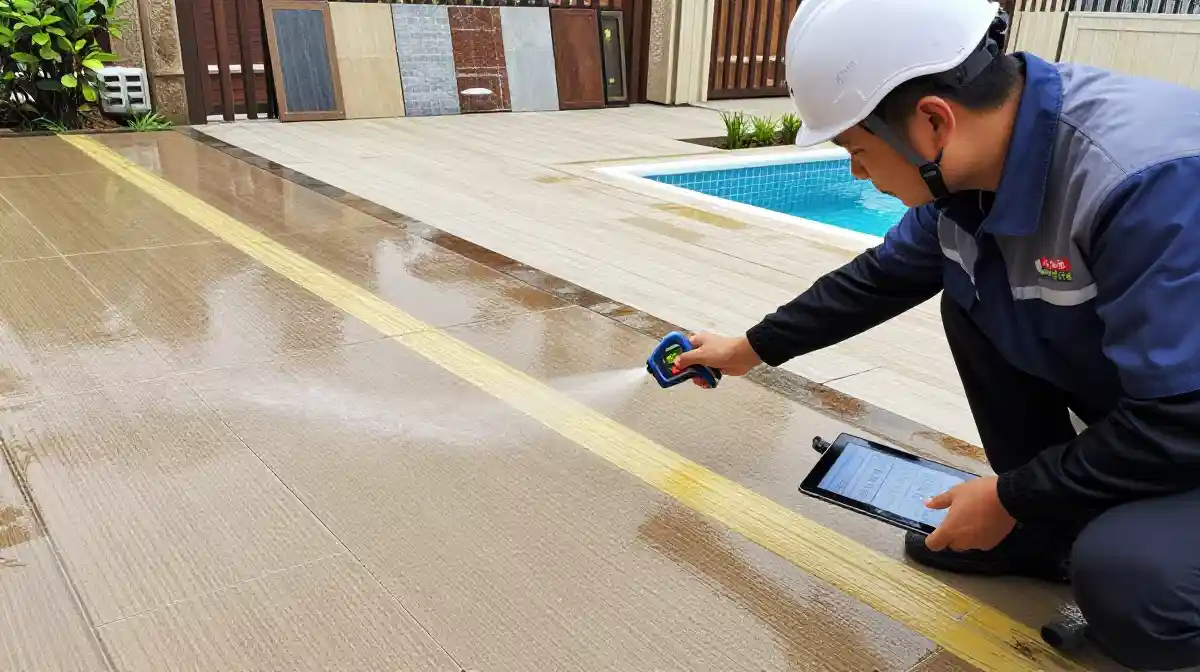
The R-rating (Ramp rating) is the international standard for measuring slip resistance. Here’s what each rating means for outdoor non slip tiles:
| R-Rating | Slip Resistance Level | Suitable For | When Wet |
|---|---|---|---|
| R9 | Low | Indoor dry areas only – NOT for outdoor | Slippery – dangerous when wet |
| R10 | Moderate | Covered patios, verandas, dry outdoor areas | Moderate slip risk – caution needed |
| R11 | Good | Open patios, walkways, pool surrounds (minimal water) | Good grip – suitable for most residential |
| R12 | High | Pool decks, wet areas, ramps, commercial kitchens | Excellent grip – safe when wet |
| R13 | Maximum | Industrial areas, steep ramps, commercial pools | Maximum grip – can be rough underfoot |
Recommendations for South African Homes:
- Covered patios (roofed): R10 minimum, R11 recommended
- Open patios (exposed to rain): R11 minimum
- Pool decks and surrounds: R12 minimum (R13 for commercial pools)
- Outdoor stairs and ramps: R12 minimum
- Driveways and walkways: R11 minimum
- Balconies (exposed): R11 minimum
✅ Pro Tip:
For areas around pools or where barefoot walking is common (Camps Bay beach homes, for example), choose R12 tiles. The higher slip resistance is worth the slightly rougher texture – bare feet grip better on R12 than R11.
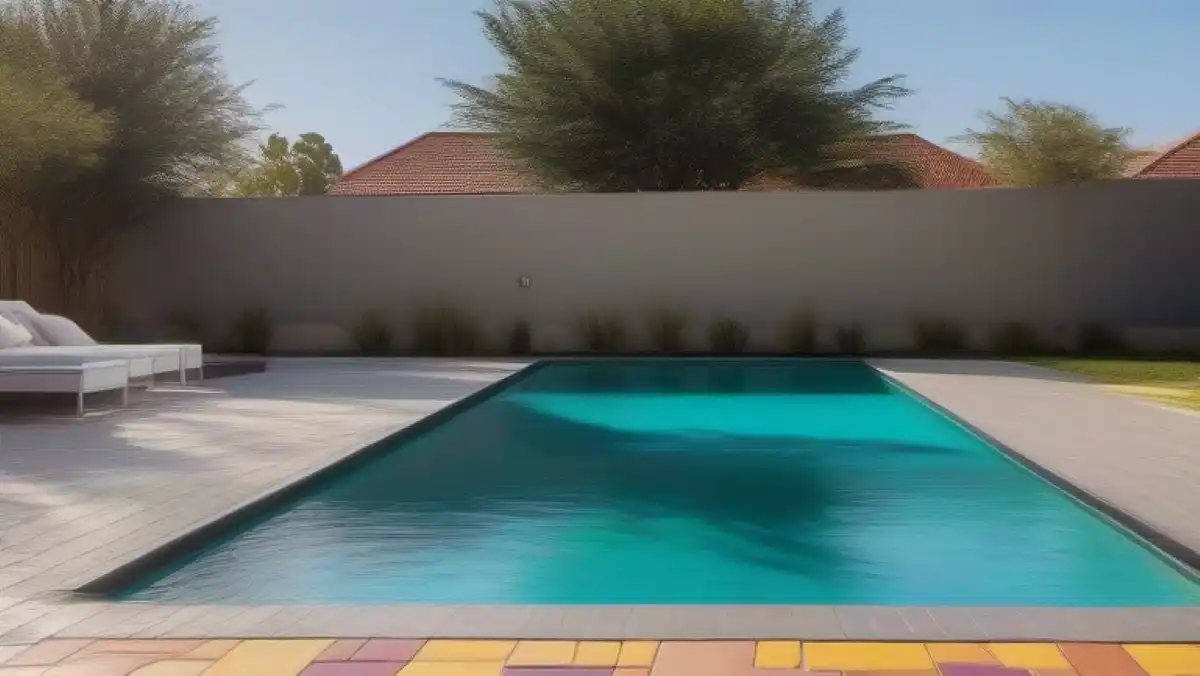
Not Sure Which R-Rating You Need?
Get free quotes from verified tiling specialists who can assess your outdoor space and recommend the right best non slip tiles for outdoor areas for your specific situation.
Free inspections available. Beat Your Quote guarantee.
🧱 Best Materials for Outdoor Non Slip Tiles
Here are the top materials for anti slip outdoor tiles, ranked by safety and durability:
| Material | Slip Resistance | Durability | Style Options | Price/m² | Best For |
|---|---|---|---|---|---|
| Textured Porcelain | R11-R12 | Excellent | Excellent – stone, wood, concrete looks | R300 – R800 | Patios, pool decks, walkways |
| Quarry Tiles | R11-R12 | Excellent | Limited – reds, browns, greys | R200 – R400 | Commercial kitchens, utility areas |
| Natural Stone – Travertine | R10-R11 (honed) | Good | Excellent – warm, earthy | R400 – R900 | Patios, pool surrounds, Mediterranean style |
| Natural Stone – Slate | R11-R12 | Excellent | Good – dark greys, greens, blacks | R300 – R700 | Modern patios, walkways, wet areas |
| Natural Stone – Sandstone | R10-R11 | Fair | Good – warm, sandy colours | R250 – R500 | Garden paths, low-traffic areas |
| Rubber Pavers | R12-R13 | Good | Fair – limited colours | R300 – R600 | Play areas, pool decks (soft landing) |
| Concrete Pavers (textured) | R10-R11 | Good | Good – many colours and patterns | R150 – R350 | Driveways, walkways, budget projects |
Top Recommendation for Most Homes: Textured porcelain tiles with R11 or R12 rating. They offer the best combination of safety, durability, style options, and low maintenance. Available in wood-look, stone-look, and concrete-look finishes.
For a complete material comparison, read our best materials for outdoor tiling guide.
🏠 Choosing Non-Slip Tiles by Application
Different outdoor areas have different requirements for outdoor non slip tiles:
Pool Decks and Surrounds:
- Required R-rating: R12 minimum (R13 for commercial pools)
- Best materials: Textured porcelain, slate, rubber pavers
- Key considerations: Must stay cool underfoot, resist chlorine/salt, dry quickly
- Avoid: Polished stone, smooth porcelain, dark colours (get too hot)
Patios and Entertainment Areas:
- Required R-rating: R10-R11 depending on roof cover
- Best materials: Textured porcelain, travertine, slate
- Key considerations: Comfortable for bare feet, stain-resistant (food/drink spills)
- Avoid: Glossy finishes, highly textured stone (uncomfortable)
Driveways and Walkways:
- Required R-rating: R11 minimum
- Best materials: Textured porcelain, concrete pavers, quarry tiles
- Key considerations: Must handle vehicle weight, oil stains, weather exposure
- Avoid: Natural stone (can stain from oil), thin tiles (crack under vehicles)
Outdoor Stairs and Ramps:
- Required R-rating: R12 minimum (higher risk of falls)
- Best materials: Textured porcelain with contrasting nosing strips
- Key considerations: Edge visibility, consistent texture across whole step
- Avoid: Tiles without nosing, smooth finishes
Balconies and Rooftop Terraces:
- Required R-rating: R11 minimum (R12 for wet areas)
- Best materials: Light-coloured textured porcelain (reflects heat, stays cool)
- Key considerations: Weight limitations, waterproofing, drainage
- Avoid: Heavy natural stone (weight issues), dark colours (heat)
For specific balcony advice, read our balcony waterproof tiling guide. For driveways, see driveway tiling guide.
🔬 How to Test Tiles for Slip Resistance
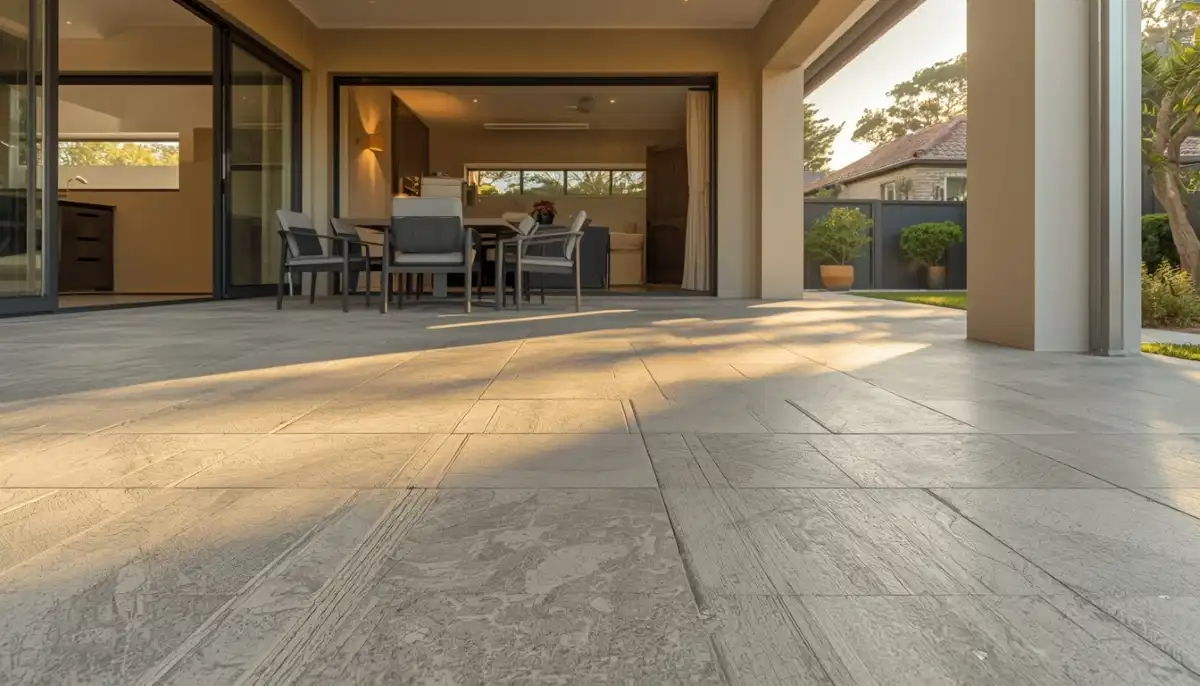
Before buying anti slip outdoor tiles, test them yourself:
The Wet Foot Test (DIY):
- Take a sample tile home (or visit a showroom with water available)
- Wet the tile surface thoroughly
- Wet your bare foot or shoe sole
- Step onto the wet tile and try to slide your foot
- Also try standing on an angle (if possible) to test grip
What to Look For:
- Good grip: Foot should not slide easily; you should feel texture grabbing your skin
- Poor grip: Foot slides with minimal pressure; surface feels smooth even when wet
- Warning: If the tile feels slippery when wet in the showroom, it will be dangerous at home
Professional Testing Methods:
- Ramp test (DIN 51130): The official method for R-ratings. A person walks on an oil-wetted ramp while wearing special boots. The angle at which slipping occurs determines the rating.
- Pendulum test (ASTM E303): A rubber slider swings across the wet tile surface. The friction measurement determines slip resistance.
- Manufacturer certification: Reputable tile brands provide R-ratings on their products. Look for this on packaging.
Red Flags When Shopping:
- Manufacturer can’t provide R-rating – don’t buy
- Tile feels smooth to touch (no texture) – likely slippery when wet
- Salesperson says “it should be fine” without data – find another supplier
🎨 Finishes and Textures That Improve Safety
The finish of your slip resistant tiles dramatically affects safety:
Safe Finishes for Outdoors:
- Matte: Non-reflective, provides good grip. Most common for outdoor porcelain.
- Textured: Surface has raised patterns or grit for maximum grip. Best for wet areas.
- Honed: Smooth but matte – moderate grip. Suitable for covered patios.
- Flamed: Heat-treated surface creates rough, natural texture. Excellent for natural stone.
- Brushed: Softly textured, between honed and flamed. Good for travertine.
- Grip-enhanced: Some manufacturers add microscopic grit particles to the glaze.
Dangerous Finishes for Outdoors (Avoid Completely):
- ❌ Polished – high-gloss, mirror-like – extremely slippery when wet
- ❌ Glossy – any shiny finish – dangerous outdoors
- ❌ Lappato – semi-polished with subtle sheen – still too slippery for wet areas
Texture Patterns That Work Well:
- Slate texture: Natural cleft surface – excellent grip
- Wood grain: Grooves mimic wood – good grip and stylish
- Stone pebble: Raised rounded bumps – very good grip, comfortable underfoot
- Linear grooves: Parallel lines – good for directional slip resistance (stairs)
- Grit coating: Microscopic particles – excellent grip, can be rough on bare feet
🔧 Installation Tips for Maximum Slip Resistance
Proper installation preserves the slip resistance of your anti slip outdoor tiles:
During Installation:
- Don’t over-grout: Grout that smears across tile surfaces can fill texture and reduce grip. Clean thoroughly during installation.
- Use proper spacers: Consistent joints (3-5mm) prevent edges from becoming slip hazards
- Ensure proper slope: 2% minimum slope prevents water pooling – standing water is slippery regardless of tile
- Don’t seal textured tiles with glossy sealers: Some sealers create a film that reduces slip resistance. Use penetrating sealers only.
- For natural stone: Use honed or textured finishes – never polish outdoor stone
What to Tell Your Installer:
- Make it clear that slip resistance is a priority
- Ask them to be careful not to fill tile textures with grout or sealer
- Request that they test a sample area for slip resistance after grouting
For complete installation guidance, read our patio tiling installation guide.
🚫 Common Mistakes to Avoid with Non-Slip Tiles
⚠️ Warning: These Mistakes Create Dangerous Slip Hazards
Avoid these errors when choosing and installing outdoor non slip tiles.
- Choosing style over safety: “But the polished tile looks so good!” – until someone slips and breaks a bone. Never prioritise appearance over slip resistance outdoors.
- Assuming all outdoor tiles are non-slip: Many “outdoor” tiles are not adequately slip-resistant. Always check the R-rating – don’t assume.
- Using indoor tiles outdoors: Indoor tiles (even textured ones) are not rated for outdoor slip resistance. They become dangerously slippery when wet.
- Not testing tiles before buying: Trusting a salesperson’s word without testing is risky. Always do the wet foot test.
- Sealing with glossy sealer: Some sealers create a slippery film. Use penetrating sealers that don’t affect slip resistance.
- Allowing grout to fill texture: Improper grouting can fill the textured surface, reducing slip resistance. Clean thoroughly during installation.
- No slope for drainage: Even the most slip-resistant tile becomes hazardous with standing water. Ensure proper drainage.
- Not maintaining the surface: Algae, mould, and dirt buildup create slippery biofilms. Regular cleaning preserves slip resistance.
🧽 Maintaining Non-Slip Properties
Proper maintenance preserves the slip resistance of your safety flooring:
Regular Cleaning (Weekly):
- Sweep or hose down to remove dirt and debris
- For textured tiles, use a stiff broom to clean into grooves
- Avoid soap-based cleaners that leave slippery residues
Deep Cleaning (Monthly):
- Use a pressure washer on low setting (avoid damaging grout)
- For algae or mould, use an outdoor tile cleaner with algaecide
- Scrub textured areas with a stiff brush
- Rinse thoroughly – cleaner residues can be slippery
What to Avoid:
- Abrasive scrubbers on glazed tiles (can scratch and reduce texture)
- Bleach on natural stone (damages surface)
- Wax or acrylic finishes (create slippery film)
- Sealers that leave a glossy surface (use penetrating sealers only)
When to Reseal:
- Natural stone: every 1-2 years
- Grout lines: every 1-2 years
- Porcelain: not needed (tile itself), but grout needs sealing
For more cleaning guidance, read our tile cleaning methods guide.
💰 Non-Slip Outdoor Tile Cost Guide
Here’s what you can expect to pay for outdoor non slip tiles in South Africa:
| Tile Type | Material Cost/m² | Installation/m² | Total Installed/m² | Typical R-Rating |
|---|---|---|---|---|
| Textured Porcelain | R300 – R800 | R200 – R350 | R500 – R1,150 | R11-R12 |
| Quarry Tiles | R200 – R400 | R200 – R300 | R400 – R700 | R11-R12 |
| Slate (natural stone) | R300 – R700 | R250 – R400 | R550 – R1,100 | R11-R12 |
| Travertine (honed) | R400 – R900 | R250 – R400 | R650 – R1,300 | R10-R11 |
| Rubber Pavers | R300 – R600 | R150 – R250 | R450 – R850 | R12-R13 |
| Concrete Pavers (textured) | R150 – R350 | R100 – R200 | R250 – R550 | R10-R11 |
Example Project Costs:
- 30m² patio with textured porcelain (R11): R15,000 – R34,500
- 50m² pool deck with R12 porcelain: R25,000 – R57,500
- 100m² driveway with textured porcelain (R11): R50,000 – R115,000
For a complete breakdown of outdoor tiling costs, read our tile installation cost per square meter guide.
❓ Frequently Asked Questions About Outdoor Non Slip Tiles
What is the best non slip tile for outdoor areas?
The best non slip tiles for outdoor areas are textured porcelain tiles with R11 or R12 rating. They offer excellent slip resistance, durability, low maintenance, and come in many styles (stone-look, wood-look, concrete-look). For pool decks specifically, choose R12-rated tiles. For natural stone lovers, slate or honed travertine are good options but require sealing.
What does R11 mean for tiles?
R11 is a slip resistance rating indicating that a tile provides “good” grip. R11 tiles are suitable for open patios, walkways, and areas exposed to rain. They pass the ramp test at 11-19 degrees. For pool decks and wet areas, R12 is recommended. R9 and R10 are for indoor or covered areas only – they become slippery when wet.
Are porcelain tiles slippery when wet?
It depends on the finish. Polished or glossy porcelain tiles are VERY slippery when wet – never use them outdoors. However, textured porcelain tiles with R11 or R12 ratings are specifically designed to be slip-resistant when wet. Always check the R-rating – if it’s not provided, assume the tile is slippery.
Can I make my existing outdoor tiles less slippery?
Yes – options include: applying a non-slip coating (clear grit additive), acid etching for natural stone, or adding anti-slip strips. However, these are temporary fixes. For permanent safety, replace dangerous tiles with properly rated anti slip outdoor tiles. The cost of replacement is worth preventing a serious fall injury.
What is the least slippery tile for pool decks?
The least slippery tiles for pool decks are R12-rated textured porcelain, slate, or rubber pavers. Textured porcelain is most popular – it’s durable, low-maintenance, and available in many styles. Slate provides excellent natural slip resistance but requires sealing. Rubber pavers are very slip-resistant and soft underfoot but have a different aesthetic.
How do I clean non-slip outdoor tiles without losing grip?
Sweep or hose down weekly. For deeper cleaning, use a pressure washer on low setting (not too close to grout). Avoid soap-based cleaners that leave slippery residues – use outdoor tile cleaner instead. For algae or mould, use a cleaner with algaecide and scrub with a stiff brush. Never wax or apply glossy sealers to textured tiles.
Are there non-slip tiles that look like wood?
Yes – textured porcelain wood-look tiles with R11 or R12 ratings are very popular. They have realistic wood grain textures that provide slip resistance while maintaining the appearance of timber. These are excellent for patios, pool decks, and outdoor entertainment areas. They don’t rot, warp, or fade like real wood.
Do I need non-slip tiles for a covered patio?
Yes – even covered patios can get wet from wind-blown rain, spilled drinks, or wet feet from the pool. Covered patios should have at least R10-rated tiles, but R11 is recommended. Don’t assume “covered” means dry – moisture always finds a way. Safety should never be compromised.
✅ Final Thoughts: Safety Never Goes Out of Style
Choosing outdoor non slip tiles isn’t about sacrificing beauty for safety – it’s about understanding that true beauty includes keeping your family safe. Modern tile technology offers stunning designs with excellent slip resistance. You can have the Mediterranean patio of your dreams AND a surface that won’t send anyone to the emergency room.
The key is knowing what to look for: R-ratings, textured finishes, proper installation, and regular maintenance. Don’t trust a salesperson who says “it should be fine” without providing ratings. Don’t fall in love with a glossy tile that becomes an ice rink when wet. And never, ever compromise on safety for the sake of style.
Key takeaways for outdoor non slip tiles:
- R10 for covered patios, R11 for open patios, R12 for pool decks
- Textured porcelain is the best all-around choice – safe, durable, stylish
- Always test tiles with the wet foot test before buying
- Avoid polished, glossy, or smooth finishes outdoors completely
- Proper installation preserves slip resistance – don’t over-grout
- Regular cleaning prevents algae and biofilm buildup
- The cost of quality non-slip tiles is far less than the cost of a fall injury
Your next step: Ready to choose safe, stylish tiles for your outdoor space? Get free quotes from verified tiling specialists who understand R-ratings and can recommend the best non slip tiles for outdoor areas for your specific situation.
Ready to Choose Safe, Stylish Outdoor Tiles?
Get free quotes from verified tiling specialists who understand anti slip outdoor tiles requirements and can help you select the perfect tiles for your space.
📞 Call us: 073 138 4726 to discuss your outdoor tiling project.
Free inspections •
Beat Your Quote guarantee •
Why choose us
Are You an Outdoor Tiling Specialist?
Join ServiceLink SA’s network of verified tiling contractors. Get qualified leads for non-slip, patio, and outdoor tiling projects.
📚 Official resources & standards referenced:
- SABS – South African Bureau of Standards for slip resistance standards (R-ratings) and testing methodologies.
- SANS 10400 – South African National Standard for safety regulations and building code requirements for slip-resistant flooring.
Information provided for general guidance. Always verify R-ratings with manufacturers and consult professionals for specific applications.
Written by: Innocent T Hanyani
Construction & Home Services Industry Specialist | 21+ Years Experience
Innocent T Hanyani has over two decades of experience working across South Africa’s construction and home improvement sectors. Throughout his career, he has specialised in outdoor tiling safety – helping homeowners understand R-ratings, choose appropriate materials, and avoid dangerous slip hazards. He has investigated numerous slip-and-fall accidents and knows firsthand the devastating consequences of choosing style over safety. His practical experience helps homeowners make informed decisions that protect their families while creating beautiful outdoor spaces.
For more information about non-slip outdoor tiling, explore our related resources: best materials for outdoor tiling, non-slip tile requirements – SABS building regulations, patio tiling guide, driveway tiling guide, and balcony waterproof tiling guide. Learn about our process on what is ServiceLink SA and how we verify contractors. Find tilers in your area: Western Cape, Cape Town, and Camps Bay. For related services, see our waterproofing and building construction guides.