

Planning a Balcony Tiling Project?
Get free quotes from verified tiling specialists who have experience with waterproof balcony tiles and understand proper drainage and membrane systems. Emergency services available.
Get Free Balcony Tiling Quotes
Servicing Western Cape, Cape Town, Camps Bay, and across South Africa
Balcony Waterproof Tiling Systems: Complete Installation Guide SA
🏢 From the penthouse to the beach house – everything you need to know about waterproofing and tiling balconies
You’ve just finished your dream balcony. The view is spectacular – whether it’s Table Mountain in Cape Town, the ocean in Camps Bay, or the city skyline. You’ve chosen beautiful tiles, planned the furniture, and can’t wait to entertain. But there’s a problem you can’t see: water.
I’ve been called to homes across the Western Cape where beautiful balconies were leaking into rooms below. The tiles looked fine. The grout looked fine. But water was penetrating, rotting structures, damaging ceilings, and causing thousands in repairs. The culprit? Inadequate or failed balcony waterproof tiling.
Balconies are different from patios. They’re suspended structures with rooms below. When water penetrates a balcony, it doesn’t just sit on the ground – it damages the ceiling below, the walls, and the structural integrity of your home. And fixing it means ripping everything out and starting over.
In this complete guide to waterproof balcony tiles, I’ll cover everything: why balconies need special waterproofing, membrane systems, balcony drainage requirements, tile selection for external decks, and step-by-step installation. You’ll learn how to waterproof and tile a balcony correctly – or how to ensure your contractor does it right.
For more related advice, check out our guides on grouting and waterproofing for durable tiling, water damage under tiles, patio tiling guide, and tiling insurance claim process.
📋 Table of Contents – Balcony Waterproof Tiling Guide
🏢 Why Balconies Need Special Waterproofing
Balcony waterproof tiling is fundamentally different from ground-level tiling:
Key Differences from Patios:
- Suspended structure: Balconies have rooms below – water doesn’t drain into the ground, it damages ceilings and walls below
- No natural drainage: Water cannot percolate into soil – must be directed to drains
- Higher stakes: Failure means internal water damage, not just wet ground
- Structural concerns: Water can corrode reinforcing steel in concrete balconies
- Legal requirements: SANS 10400 requires waterproof membranes on all suspended slabs
What Happens Without Proper Waterproofing:
Water finds a way. Through cracked grout, through tile edges, through movement joints. Once under the tiles, it sits on the waterproof membrane (or concrete if no membrane). If the membrane fails or doesn’t exist, water penetrates the concrete slab, rusts reinforcing steel, and drips into the room below. The damage is often hidden until it’s catastrophic.
For more on waterproofing standards, read our waterproofing guide and building construction guide.
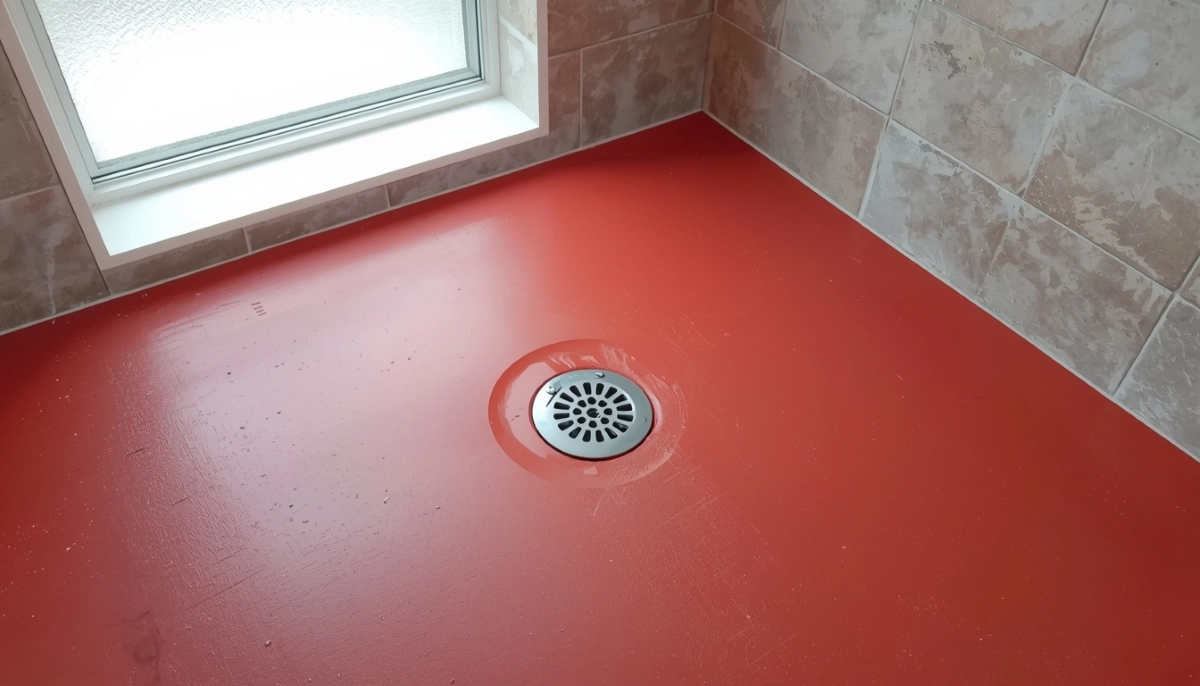
⚠️ Consequences of Waterproofing Failure
The cost of fixing failed balcony waterproof tiling is enormous. Here’s what happens when it fails:
Immediate Consequences:
- Water stains on ceiling below the balcony
- Peeling paint or bubbling plaster on interior walls
- Musty odours from mould growth
- Loose or hollow-sounding tiles (adhesive failure)
- Cracked or crumbling grout
Long-Term Consequences (if ignored):
- Structural damage: Water rusts reinforcing steel in concrete. Rust expands (up to 10x original volume), cracking the concrete from inside. This is called spalling – and it can compromise the entire balcony structure.
- Mould infestation: Hidden mould behind walls and under tiles releases spores into living spaces, causing respiratory issues and allergies.
- Rotting wood: For timber-framed balconies, water causes wood rot, leading to structural collapse.
- Insurance claim denial: Many policies exclude gradual water damage from poor maintenance or improper installation.
- Complete balcony replacement: The only fix for severe water damage is removing everything – tiles, membrane, and potentially the concrete slab – and starting over.
⚠️ Critical Warning:
If you see water stains on the ceiling below your balcony, you already have a waterproofing failure. Do not wait. Delaying repair will turn a R10,000 problem into a R100,000+ problem. Call a professional for emergency services immediately.
For more on identifying water damage, read our water damage under tiles guide.
🛡️ Waterproofing Membrane Systems – Options Compared
Choosing the right membrane is critical for balcony waterproof tiling. Here are the options:
| Membrane Type | Pros | Cons | Cost/m² | Best For |
|---|---|---|---|---|
| Liquid-Applied Membrane | Seamless, bonds to concrete, flexible, easy to apply around drains | Requires perfect application, multiple coats, curing time | R150 – R300 | Most balconies – best all-around choice |
| Sheet Membrane (Torch-On) | Very durable, factory-controlled thickness, excellent for large areas | Seams are weak points, requires torch (fire risk), difficult around drains | R200 – R400 | Large commercial balconies, flat roofs |
| Cementitious Waterproofing | Affordable, easy to apply, bonds well | Less flexible (cracks with building movement), not as durable | R100 – R200 | Budget projects, low-movement areas |
| Polyurethane Liquid Membrane | Extremely flexible, excellent chemical resistance, UV-resistant | Expensive, requires professional application | R250 – R500 | High-end residential, exposed balconies |
Top Recommendation: Two-component polyurethane liquid membrane. It’s flexible enough to accommodate building movement, bonds tenaciously to concrete, and provides seamless protection around drains and penetrations.
Critical Requirements for All Membranes:
- Must be applied to clean, dry, sound concrete
- Must extend up walls (minimum 150mm above finished tile level)
- Must form watertight seals around drains and penetrations
- Must be protected from UV during curing (tile within specified time)
- Must comply with SABS standards for membrane systems
Need Professional Balcony Waterproofing?
Get free quotes from verified tiling and waterproofing specialists who understand balcony drainage, membrane systems, and proper tile installation.
Get Free Balcony Waterproofing Quotes
Free inspections available. Fully insured contractors.
💧 Balcony Drainage – Critical for Success
Even the best waterproof balcony tiles will fail without proper drainage. Water must not pool on the surface.
Slope Requirements:
- Minimum slope: 2% (20mm drop per 1 meter)
- Ideal slope: 2-3% for most balconies
- Slope must direct water to drains – never toward the building
- Slope must be in the structural slab BEFORE waterproofing
Drainage Types:
- Point drains: Single drain at low point – most common for smaller balconies
- Linear drains: Channel drain across balcony width – better for larger balconies, cleaner look
- Scupper drains: Drain through parapet wall – for balconies without internal drains
- Slot drains: Narrow, invisible drain – modern aesthetic, more expensive
Drain Installation Requirements:
- Drains must be installed BEFORE waterproofing
- Waterproof membrane must form a watertight seal around drain flange
- Drain grate must be removable for cleaning
- Drain must be sized for expected rainfall (SA building code requirements)
Testing Drainage:
Before tiling, flood test the balcony. Fill with 50mm of water (block drains temporarily). Mark water level. Wait 24-48 hours. If water level drops, there’s a leak. DO NOT tile until all leaks are fixed.
✅ Pro Tip:
In coastal areas like Camps Bay, consider installing a secondary drainage layer (drainage mat) between the membrane and tiles. This allows any water that penetrates the grout to drain to the main drains, providing an extra safety layer.

🧱 Best Tiles for Waterproof Balcony Tiling
Choosing the right tiles for external deck tiling is essential:
| Tile Type | Slip Resistance | Water Absorption | UV Resistance | Price/m² | Best For |
|---|---|---|---|---|---|
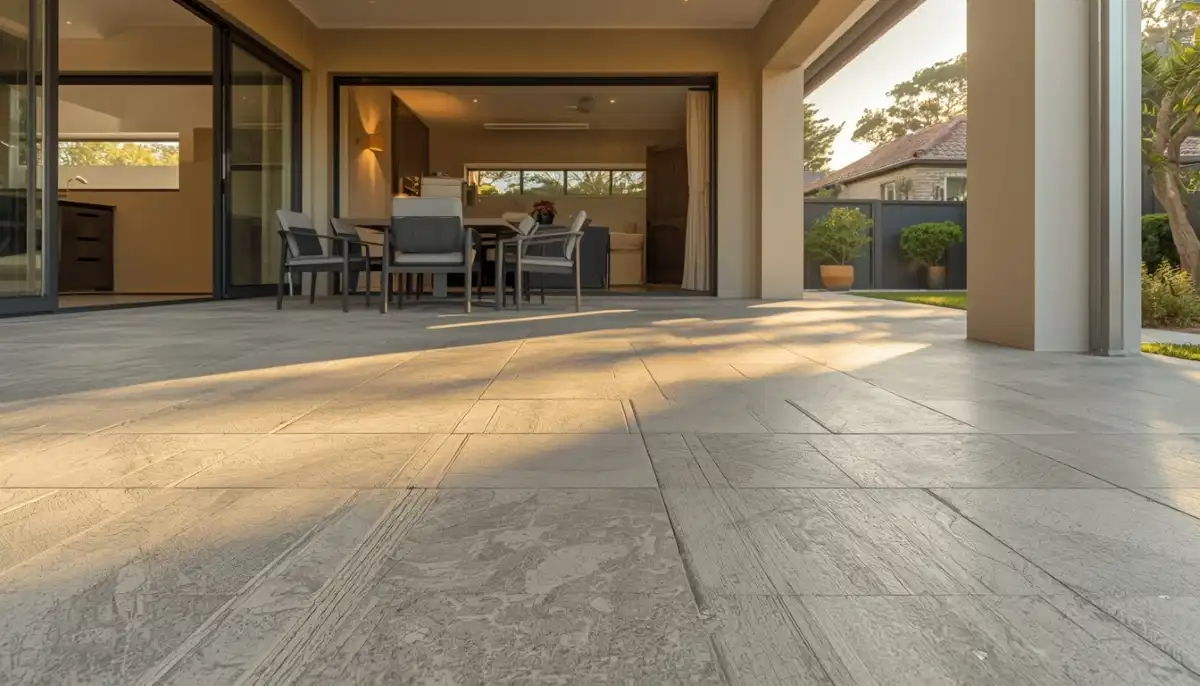
| Textured Porcelain | R11-R12 | 0.1%-0.5% | Excellent | R300 – R800 | Most balconies – best all-around |
| Slate (natural stone) | R11-R12 | 0.5%-1% | Good | R300 – R700 | Natural look, textured finish |
| Quarry Tiles | R11-R12 | 0.5%-2% | Good | R200 – R400 | Budget option, durable |
| Wood-Look Porcelain | R10-R11 | 0.1%-0.5% | Excellent | R350 – R800 | Warm, natural appearance |
Critical Requirements for Balcony Tiles:
- Slip resistance: R11 minimum (R12 for wet areas)
- Water absorption: Under 0.5% (porcelain) – prevents freeze-thaw damage
- UV resistance: Colours won’t fade in direct sunlight
- Thickness: Minimum 8mm (10mm recommended for durability)
Tiles to AVOID for Balconies:
- ❌ Polished or glossy tiles – dangerously slippery when wet
- ❌ Indoor ceramic tiles – absorb water, crack in freeze-thaw
- ❌ Marble or soft limestone – etch from rain (acidic), stain easily
- ❌ Glass tiles – slippery when wet, can crack
For more on outdoor tile selection, read our non-slip outdoor tiles guide.
🔧 Step-by-Step Balcony Waterproof Tiling Installation
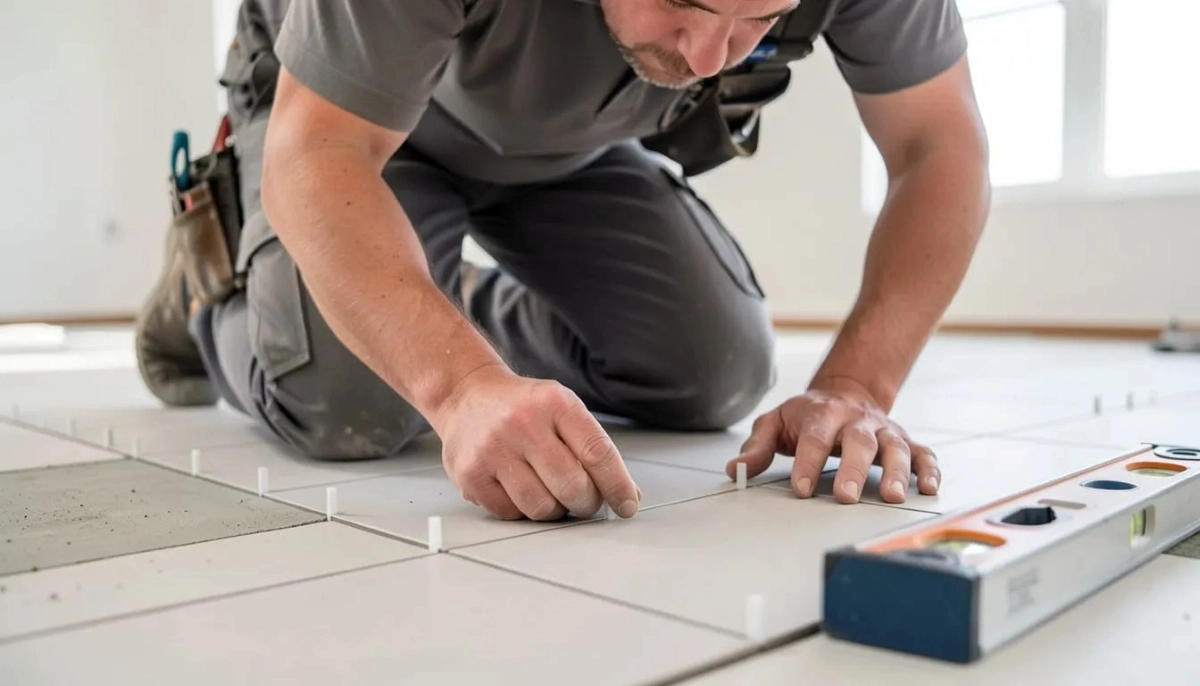
Here’s the complete process for professional how to waterproof and tile a balcony:
Tools and Materials Needed:
- Waterproofing membrane (liquid or sheet)
- Primer for membrane
- Porcelain tiles (R11+, under 0.5% absorption)
- Flexible polymer-modified thin-set adhesive
- Flexible polymer-modified grout (outdoor-rated)
- Drainage components (drains, channels)
- Tile spacers (3-5mm)
- Rubber mallet and beating block
- Level and straight edge
- Wet saw with diamond blade
Step 1: Prepare Concrete Slab
Clean concrete thoroughly – remove all dirt, oil, and laitance. Repair any cracks. Ensure proper slope (2% minimum) to drains. Grind down any high spots.
Step 2: Install Drainage Components
Install drains, channels, or scuppers. Ensure they’re at the lowest points of the slab.
Step 3: Apply Primer
Apply primer to clean, dry concrete. Allow to dry per manufacturer instructions.
Step 4: Apply Waterproofing Membrane
Apply 2-3 coats of liquid membrane (or install sheet membrane). Ensure membrane extends up walls minimum 150mm. Form watertight seals around drains and penetrations. Allow to cure fully (24-48 hours per coat).
Step 5: Flood Test
Block drains, fill with 50mm water, mark level, wait 24-48 hours. If water level drops – find and fix leaks. DO NOT proceed until test passes.
Step 6: Protect Membrane
Apply protection layer (if required by membrane manufacturer) to prevent damage during tiling.
Step 7: Apply Adhesive and Install Tiles
Use flexible, polymer-modified thin-set. Apply with notched trowel (8-10mm). Back-butter each tile. Use spacers (3-5mm). Maintain slope – tiles must not create birdbaths (low spots).
Step 8: Allow Adhesive to Cure
Wait 48-72 hours before grouting. Protect from rain during curing.
Step 9: Grout
Use flexible, polymer-modified outdoor grout. Apply with rubber float. After 15-30 minutes, wipe with damp sponge.
Step 10: Final Cure
Wait 7 days before regular use. Keep furniture off for 7-14 days.
🧹 Grouting and Sealing for Balconies
Balcony grout must withstand weather, UV, and movement:
Grout Requirements:
- Use flexible, polymer-modified grout (standard grout cracks from building movement)
- Epoxy grout is best – completely waterproof, chemical-resistant, strongest
- Wider joints: 3-5mm minimum (accommodates expansion)
- Never use unsanded grout on balconies (too weak)
Movement Joints (Expansion Joints):
- Required every 2-3 meters in each direction
- Required at all walls, corners, and changes in plane
- Required at the junction of balcony and building
- Fill with flexible sealant (silicone or polyurethane), not grout
- Movement joints must extend through the tile layer only (not through membrane)
Sealing Requirements:
- Porcelain tiles: Do not need sealing (tile itself)
- Grout lines: MUST be sealed (even polymer-modified grout)
- Natural stone tiles: Must be sealed before and after grouting
- Sealer type: Penetrating sealer only – never topical/film-forming
- Reseal schedule: Every 1-2 years
For more on grouting, read our grouting and waterproofing guide.
🔨 Retrofitting Waterproofing on Existing Balconies
If your existing balcony is leaking, you have options:
Option 1: Full Replacement (Recommended)
Remove all tiles, old adhesive, and failed waterproofing. Repair concrete as needed. Install new waterproofing membrane. Install new tiles. This is the only guaranteed permanent fix.
Option 2: Tiling Over Existing (With New Waterproofing Layer)
If existing tiles are sound, you can install a new waterproofing membrane OVER the existing tiles, then new tiles on top. This adds height (may affect door thresholds) and requires careful detailing at edges. Only works if existing tiles are perfectly bonded.
Option 3: Liquid Membrane Over Existing Tiles (Temporary Fix)
Some liquid membranes can be applied directly over existing tiles, then new tiles installed. This is a band-aid – not recommended for long-term solutions. The old adhesive beneath could still fail.
Option 4: Injection Grouting (For Concrete Cracks Only)
If the leak is through a specific crack in the concrete slab (not through the tile bed), injection grouting can fill the crack. This treats the symptom, not the cause – the waterproofing above is still failed.
⚠️ Warning:
Do NOT simply re-grout a leaking balcony. The grout is not the waterproofing layer – the membrane is. Re-grouting without fixing the membrane will stop leaks temporarily (days or weeks), but water will find another path. You’ll waste money and time. Fix the root cause: the failed waterproofing.
For existing water damage, read our tiling insurance claim process guide.
🚫 Common Mistakes to Avoid in Balcony Waterproof Tiling
⚠️ Warning: These Mistakes Ruin Balcony Tiling Installations
Avoid these errors when planning your balcony waterproof tiling project.
- Skipping the waterproofing membrane: “The tiles and grout will be enough” – NO. Grout is NOT waterproof. Without a membrane, your balcony WILL leak. This is not optional – it’s required by SANS standards.
- No slope or inadequate slope: Flat balconies trap water. Standing water finds its way through any imperfection. Ensure 2% minimum slope.
- No flood test before tiling: The flood test is your only assurance that the membrane is intact. Skipping it is gambling with your home.
- Using standard indoor adhesive and grout: Outdoor conditions require flexible, polymer-modified products. Standard products crack and fail.
- No movement joints: Balconies expand and contract. Without movement joints, tiles will crack or pop off. Install every 2-3 meters.
- Membrane not extended up walls: Water wicks up. Membrane must extend minimum 150mm above finished tile level, sealed to the wall.
- Damaging membrane during tiling: Walking on uncured membrane, dropping tools, or using sharp trowels can puncture the membrane. Protect it during installation.
- Tiling over existing membrane without testing: If the existing membrane failed once, it will fail again. Remove and replace – don’t gamble.
🧽 Maintaining Your Waterproof Balcony
Proper maintenance extends the life of your waterproof balcony tiles:
Regular Maintenance (Monthly):
- Keep drains clear of leaves and debris – clogged drains cause water pooling
- Check for cracked or missing grout – repair immediately
- Inspect movement joints – ensure sealant is intact
- Look for any signs of water staining on ceiling below
Annual Maintenance:
- Reseal grout lines (if not epoxy grout)
- Reseal natural stone tiles
- Have professional inspection of membrane (via flood test or moisture meter)
- Check drainage slope hasn’t changed (settlement can affect slope)
Cleaning:
- Sweep or hose down weekly
- Use pH-neutral outdoor tile cleaner – never acid-based cleaners
- For algae or mould, use outdoor cleaner with algaecide
- Avoid pressure washers on high setting – can damage grout and membrane
Warning Signs to Watch For:
- Water stains on ceiling below – ACT IMMEDIATELY
- Cracked or missing grout – repair within weeks
- Loose or hollow-sounding tiles – investigate cause
- Efflorescence (white powder) on tile surfaces – indicates moisture migration
For more cleaning guidance, read our tile cleaning methods guide.
💰 Balcony Waterproof Tiling Cost Guide
Here’s what you can expect to pay for balcony waterproof tiling in South Africa:
| Item | Cost Range | Notes |
|---|---|---|
| Waterproofing membrane (liquid)/m² | R150 – R300 | 2-3 coats, includes primer和 |
| Waterproofing membrane (sheet)/m² | R200 – R400 | Torch-on or peel-and-stick和 |
| Textured porcelain tiles/m² | R300 – R800 | R11-R12 rated, under 0.5% absorption和 |
| Installation (tiling)/m² | R200 – R350 | Specialist balcony tiler required和 |
| Drain installation (per drain) | R1,000 – R2,500 | Materials and labour和 |
| Concrete repair (if needed) | R2,000 – R10,000 | Crack repair, levelling, spalling repair和 |
| New balcony (20m²) – full installation | R18,000 – R35,000 | Membrane + tiles + installation和 |
| Retrofit (remove and replace) – 20m² | R25,000 – R50,000 | Includes demolition, new membrane, new tiles和 |
Example Project Costs:
- New 20m² balcony with textured porcelain: R18,000 – R35,000
- Retrofit (remove and replace) 20m² balcony: R25,000 – R50,000
- Luxury 30m² balcony with premium porcelain: R35,000 – R65,000
For a complete breakdown of tile costs, read our tile installation cost per square meter guide.
❓ Frequently Asked Questions About Balcony Waterproof Tiling
Do I need to waterproof my balcony before tiling?
YES. This is not optional. Balcony waterproof tiling requires a proper waterproofing membrane under the tiles. Grout and tiles are NOT waterproof. Without a membrane, water will penetrate through grout and cracks, damaging the concrete slab and leaking into rooms below. SANS 10400 requires waterproof membranes on all suspended slabs.
What is the best waterproofing system for balconies?
The best system is a two-component polyurethane liquid membrane. It’s flexible (accommodates building movement), bonds tenaciously to concrete, forms seamless protection around drains, and is durable under tiles. Apply 2-3 coats, flood test before tiling, then protect during tile installation. For large balconies, sheet membranes (torch-on) are also excellent.
How much slope does a balcony need for drainage?
Balcony drainage requires minimum 2% slope (20mm drop per 1 meter). This slope must be in the structural concrete slab BEFORE waterproofing. The tiles should follow this slope – never create slope with tile adhesive (too thin, will fail). Proper slope ensures water flows to drains, not toward the building.
How do I fix a leaking balcony without removing tiles?
You generally can’t. A leaking balcony means the waterproofing membrane has failed. The only permanent fix is removing tiles, removing old membrane, installing new membrane, and re-tiling. Temporary fixes (sealants, coatings over tiles) fail within months. Don’t waste money on band-aids – do it right once.
Can I tile directly over an existing waterproof membrane?
Only if the existing membrane is intact and perfectly bonded. This requires flood testing first. However, if the membrane is old or questionable, it’s safer to remove and replace. Tiling over a failed membrane guarantees future leaks – and you’ll have to remove the new tiles to fix it. For peace of mind, start fresh.
How long does balcony waterproofing last?
Properly installed waterproof balcony tiles with quality membrane last 15-25 years. Liquid membranes may need replacement after 15-20 years; sheet membranes can last 20-25+ years. Factors affecting lifespan: UV exposure (during installation), building movement, maintenance, and quality of original installation. Annual inspections extend life.
What tiles are best for a balcony?
Best external deck tiling tiles: textured porcelain with R11 slip resistance, water absorption under 0.5%, and 8-10mm thickness. Wood-look porcelain is popular for warm appearance. Slate provides natural texture. Avoid polished, glossy, or indoor-rated tiles – they become dangerously slippery and absorb water.
Is a leaking balcony covered by home insurance?
It depends. Most policies cover “sudden and accidental” water damage (burst pipe). They typically EXCLUDE gradual water damage from poor maintenance, failed waterproofing, or improper installation. Read your policy carefully. Document everything. If the leak caused interior damage, that may be covered even if the balcony repair isn’t. Read our tiling insurance claim guide for details.
✅ Final Thoughts: Protect Your Home with Proper Balcony Waterproofing
A beautiful balcony is a joy – but only if it’s properly waterproofed. The cost of doing it right is small compared to the cost of fixing water damage to rooms below, replacing rotted structures, and dealing with mould.
Balcony waterproof tiling is not a DIY project. It requires knowledge of membrane systems, drainage engineering, movement joints, and specialised materials. One mistake – a missed seal around a drain, a puncture in the membrane, inadequate slope – and water will find its way through.
Invest in quality materials: a flexible liquid membrane, porcelain tiles with R11 slip resistance, flexible polymer-modified adhesive and grout, and proper drainage components. Hire verified specialists who understand balcony requirements. And never, ever skip the flood test – it’s your only proof that the waterproofing works.
Key takeaways for balcony waterproof tiling:
- Waterproofing membrane is NOT optional – it’s required by law
- Minimum 2% slope to drains – water must not pool
- Flood test before tiling – verify no leaks
- Use flexible, polymer-modified adhesives and grout
- Install movement joints every 2-3 meters
- Choose R11+ rated porcelain tiles with low water absorption
- Hire verified specialists – this is not a DIY project
Your next step: Ready to waterproof and tile your balcony? Get free quotes from verified tiling and waterproofing specialists who understand membrane systems, drainage, and proper installation.
Ready to Waterproof and Tile Your Balcony?
Get free quotes from verified tiling and waterproofing specialists who understand balcony waterproof tiling systems, drainage, and proper installation.
📞 Call us: 073 138 4726 to discuss your balcony project.
Free inspections •
Emergency services •
Fully insured contractors
Are You a Waterproofing or Tiling Specialist?
Join ServiceLink SA’s network of verified contractors. Get qualified leads for balcony, roof, and waterproofing projects.
📚 Official resources & standards referenced:
- SANS 10400 – South African National Standard for waterproofing standards, balcony drainage requirements, and building regulations.
- SABS – South African Bureau of Standards for membrane standards and waterproofing material specifications.
Information provided for general guidance. Balcony waterproofing requires professional assessment – always consult qualified specialists.
Written by: Innocent T Hanyani
Construction & Home Services Industry Specialist | 21+ Years Experience
Innocent T Hanyani has over two decades of experience working across South Africa’s construction and home improvement sectors. Throughout his career, he has managed hundreds of balcony waterproofing and tiling projects – from beachfront apartments in Camps Bay to high-rise penthouses in Cape Town. His practical experience helps homeowners understand the critical importance of proper membranes, drainage slope, and flood testing. He has seen beautiful balconies ruined by skipped waterproofing and entire apartments damaged by undetected leaks. His advice prioritises doing it right the first time.
For more information about balcony and outdoor tiling, explore our related resources: grouting and waterproofing guide, water damage under tiles, patio tiling guide, and tiling insurance claim process. Learn about our process on how ServiceLink SA works and how we protect homeowners. Find specialists in your area: Western Cape, Cape Town, and Camps Bay. For related services, see our waterproofing and building construction guides.